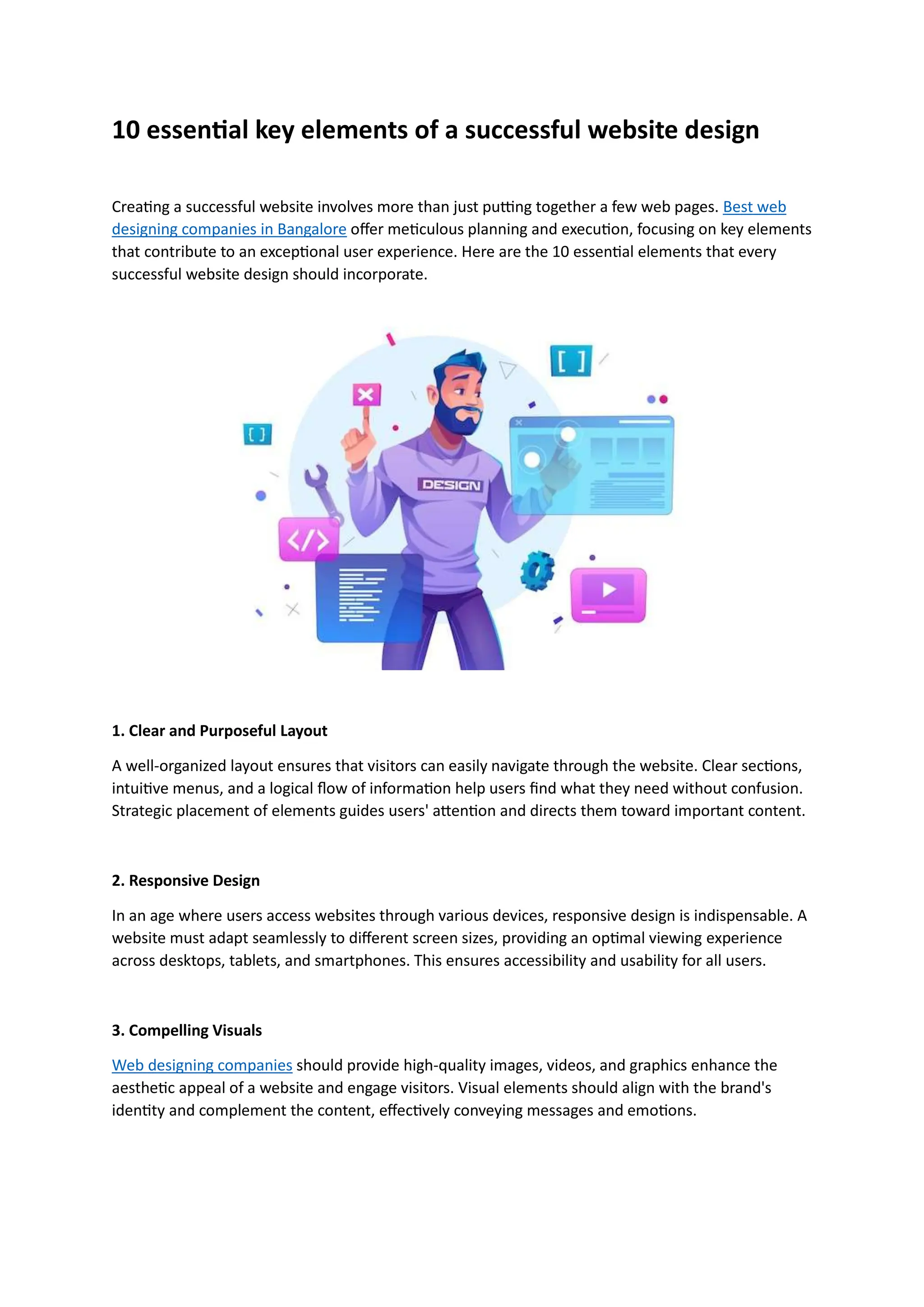
10 essential key elements of a successful website design
Creating a successful website involves more than just putting together a few web pages. Best web
designing companies in Bangalore offer meticulous planning and execution, focusing on key elements
that contribute to an exceptional user experience. Here are the 10 essential elements that every
successful website design should incorporate.
1. Clear and Purposeful Layout
A well-organized layout ensures that visitors can easily navigate through the website. Clear sections,
intuitive menus, and a logical flow of information help users find what they need without confusion.
Strategic placement of elements guides users' attention and directs them toward important content.
2. Responsive Design
In an age where users access websites through various devices, responsive design is indispensable. A
website must adapt seamlessly to different screen sizes, providing an optimal viewing experience
across desktops, tablets, and smartphones. This ensures accessibility and usability for all users.
3. Compelling Visuals
Web designing companies should provide high-quality images, videos, and graphics enhance the
aesthetic appeal of a website and engage visitors. Visual elements should align with the brand's
identity and complement the content, effectively conveying messages and emotions.
4. Intuitive Navigation
User-friendly navigation is crucial for keeping visitors on the site. Clear menu structures, breadcrumb
trails, and search functionalities simplify the browsing experience, allowing users to move effortlessly
between pages and find information quickly.
5. Strong Call-to-Action (CTA)
Strategic placement of compelling CTAs prompts visitors to take desired actions, whether it's making
a purchase, subscribing to a newsletter, or contacting the company. CTAs should be clear, concise,
and visually distinct to attract attention.
6. Engaging Content
High-quality, relevant content is the key of a successful website. Informative articles, engaging blog
posts, product descriptions, and multimedia content captivate visitors and encourage them to
explore further. Valuable content establishes credibility and keeps users returning for more.
7. Loading Speed Optimization
A fast-loading website is crucial for user satisfaction. Optimizing images, minimizing HTTP requests,
and utilizing caching techniques contribute to faster loading times, reducing bounce rates and
improving search engine rankings.
8. SEO-Friendly Structure
Implementing SEO best practices tells that the website rank will be high on search engines. This
includes using relevant keywords, creating descriptive meta tags, optimizing images, and having a
well-structured URL hierarchy.
9. Trust Indicators
Building trust is essential for converting visitors into customers. Trust indicators such as client
testimonials, security badges, certifications, and a transparent privacy policy reassure users and
establish credibility.
10. Regular Maintenance and Updates
A successful website is not static; it requires ongoing maintenance and updates. Regularly checking
for broken links, updating content, improving security measures, and staying current with design
trends and technology enhancements is crucial for sustained success.
Conclusion: A successful website design is a harmonious blend of functionality, aesthetics, and user-
centred features. By incorporating these 10 essential elements into the design process, a website can
effectively engage visitors, build trust, and achieve its intended goals.
To learn more, visit our website:
Website: www.zinavo.com
Mail: info@zinavo.com
Phone: 080-41531025
Call: +91-77602 45945
https://maps.app.goo.gl/Gahnbugcr9MNTuzE7

10 essential key elements of a successful website design.docx

  • 1.
    10 essential keyelements of a successful website design Creating a successful website involves more than just putting together a few web pages. Best web designing companies in Bangalore offer meticulous planning and execution, focusing on key elements that contribute to an exceptional user experience. Here are the 10 essential elements that every successful website design should incorporate. 1. Clear and Purposeful Layout A well-organized layout ensures that visitors can easily navigate through the website. Clear sections, intuitive menus, and a logical flow of information help users find what they need without confusion. Strategic placement of elements guides users' attention and directs them toward important content. 2. Responsive Design In an age where users access websites through various devices, responsive design is indispensable. A website must adapt seamlessly to different screen sizes, providing an optimal viewing experience across desktops, tablets, and smartphones. This ensures accessibility and usability for all users. 3. Compelling Visuals Web designing companies should provide high-quality images, videos, and graphics enhance the aesthetic appeal of a website and engage visitors. Visual elements should align with the brand's identity and complement the content, effectively conveying messages and emotions.
  • 2.
    4. Intuitive Navigation User-friendlynavigation is crucial for keeping visitors on the site. Clear menu structures, breadcrumb trails, and search functionalities simplify the browsing experience, allowing users to move effortlessly between pages and find information quickly. 5. Strong Call-to-Action (CTA) Strategic placement of compelling CTAs prompts visitors to take desired actions, whether it's making a purchase, subscribing to a newsletter, or contacting the company. CTAs should be clear, concise, and visually distinct to attract attention. 6. Engaging Content High-quality, relevant content is the key of a successful website. Informative articles, engaging blog posts, product descriptions, and multimedia content captivate visitors and encourage them to explore further. Valuable content establishes credibility and keeps users returning for more. 7. Loading Speed Optimization A fast-loading website is crucial for user satisfaction. Optimizing images, minimizing HTTP requests, and utilizing caching techniques contribute to faster loading times, reducing bounce rates and improving search engine rankings. 8. SEO-Friendly Structure Implementing SEO best practices tells that the website rank will be high on search engines. This includes using relevant keywords, creating descriptive meta tags, optimizing images, and having a well-structured URL hierarchy. 9. Trust Indicators Building trust is essential for converting visitors into customers. Trust indicators such as client testimonials, security badges, certifications, and a transparent privacy policy reassure users and establish credibility. 10. Regular Maintenance and Updates A successful website is not static; it requires ongoing maintenance and updates. Regularly checking for broken links, updating content, improving security measures, and staying current with design trends and technology enhancements is crucial for sustained success.
  • 3.
    Conclusion: A successfulwebsite design is a harmonious blend of functionality, aesthetics, and user- centred features. By incorporating these 10 essential elements into the design process, a website can effectively engage visitors, build trust, and achieve its intended goals. To learn more, visit our website: Website: www.zinavo.com Mail: info@zinavo.com Phone: 080-41531025 Call: +91-77602 45945 https://maps.app.goo.gl/Gahnbugcr9MNTuzE7