Industrial Relation
Santosh Shrestha
Definition
“ Industrial relations deal with either the relationships
between the state and employers’ and the workers’ organization
and the relation between the occupational organizations
themselves.”
 International Labor Organization (ILO)
Industry relations are the relations of all those associated in
productive work including
industry, agriculture, mining, commerce, finance, transport and
other services. The main aspects are the establishment of the
conditions under which the proceeds of the work are divided as
dividends, salaries and wages between
shareholders, employers, management and work people of
various grades- manual, clerical and technical.
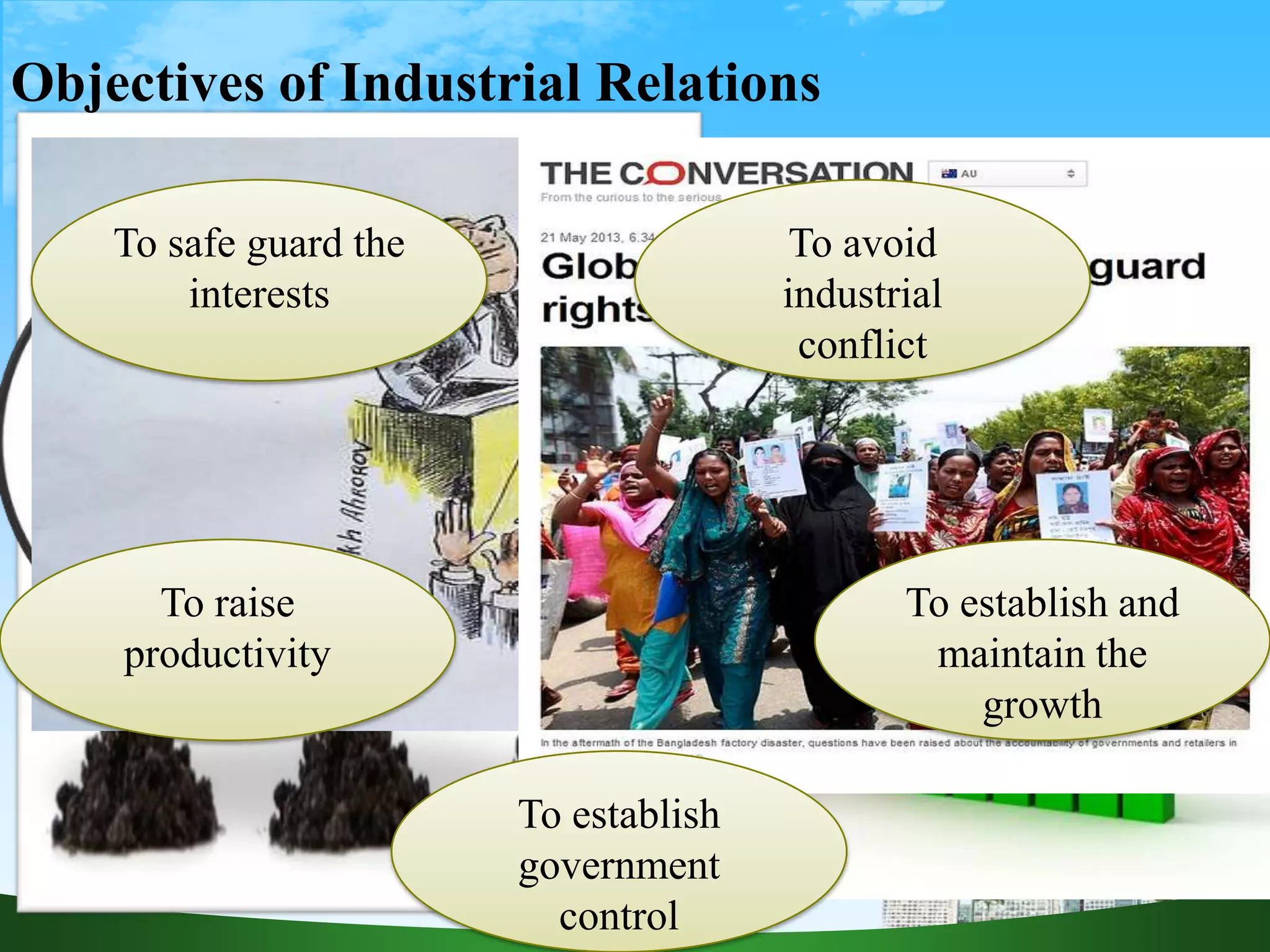
Objectives of Industrial Relations
To safe guard the
interests
To avoid
industrial
conflict
To establish and
maintain the
growth
To raise
productivity
To establish
government
control
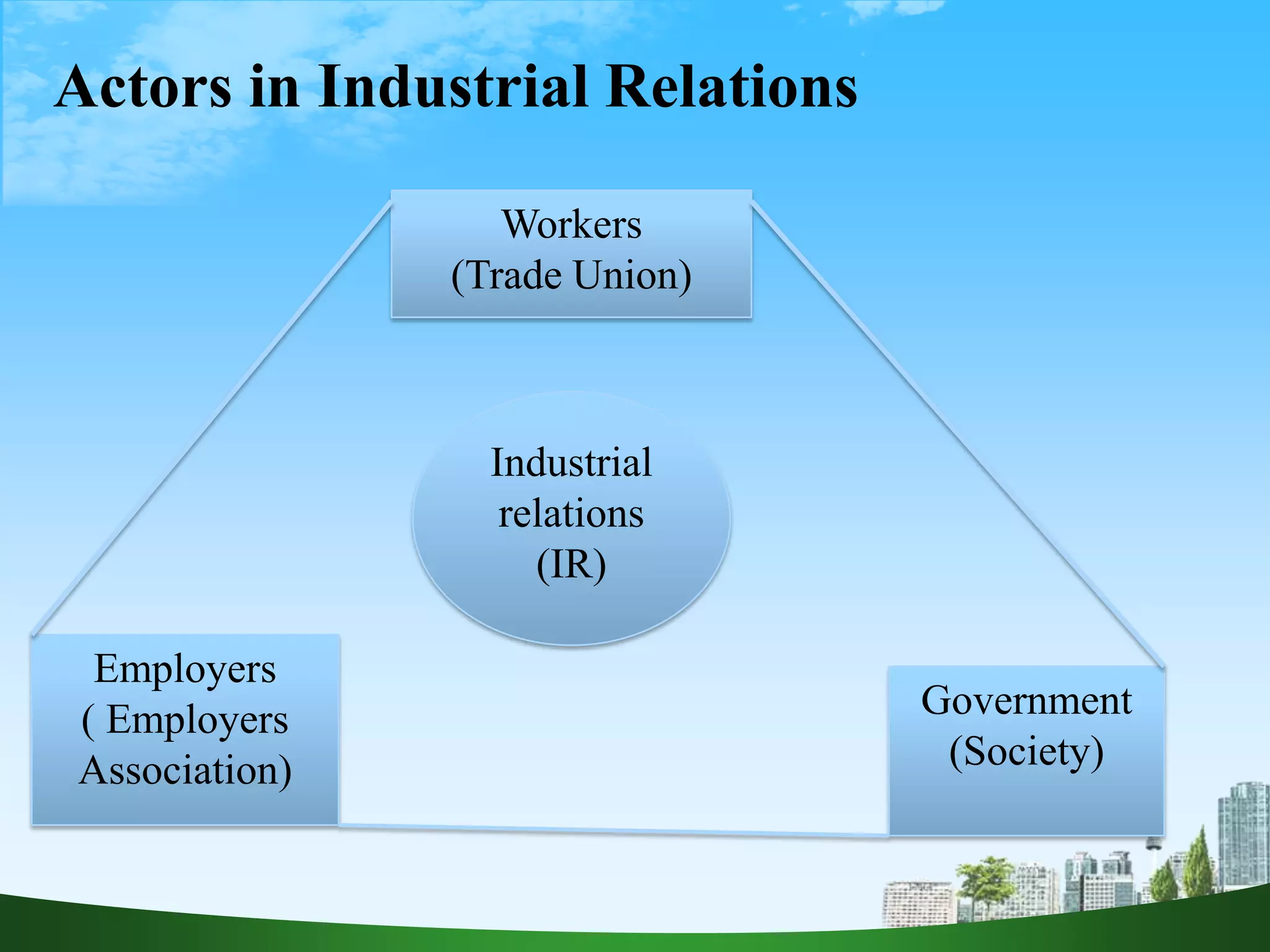
Actors in Industrial Relations
Workers
(Trade Union)
Government
(Society)
Employers
( Employers
Association)
Industrial
relations
(IR)
So it is concerned with managing inter relationship among the
three major actors.
 a. Workers represented by trade unions.
 b. Employers represented by employers associations.
 c. Society represented by the government and various
pressure groups.
Employee relations or industrial relations are relations
between the employer and the labor. Labor relations refer to
the tripartite (Involving three parties) relations of workers
(employees) employers, and lately government
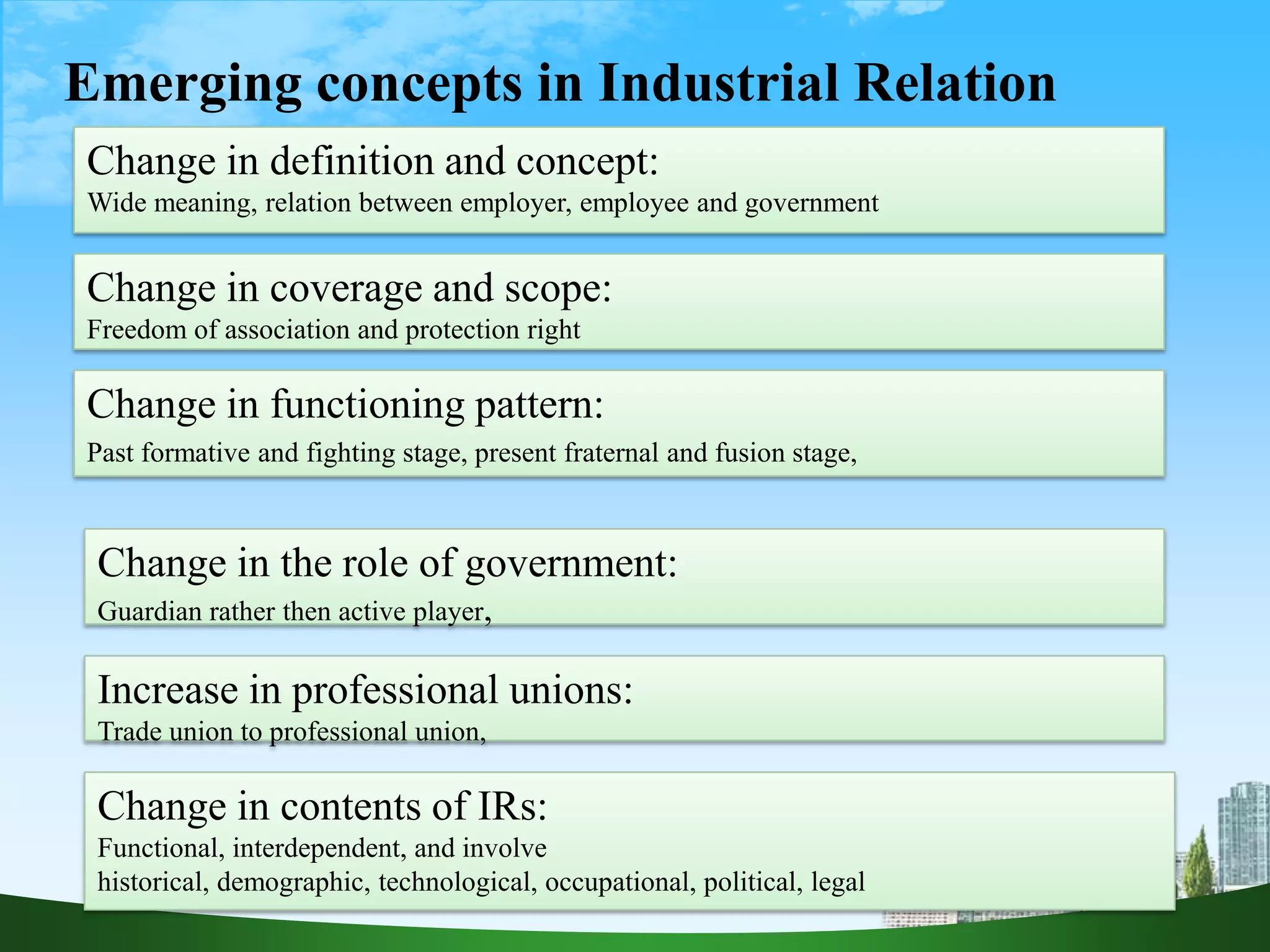
Emerging concepts in Industrial Relation
Change in definition and concept:
Wide meaning, relation between employer, employee and government
Increase in professional unions:
Trade union to professional union,
Change in the role of government:
Guardian rather then active player,
Change in functioning pattern:
Past formative and fighting stage, present fraternal and fusion stage,
Change in coverage and scope:
Freedom of association and protection right
Change in contents of IRs:
Functional, interdependent, and involve
historical, demographic, technological, occupational, political, legal
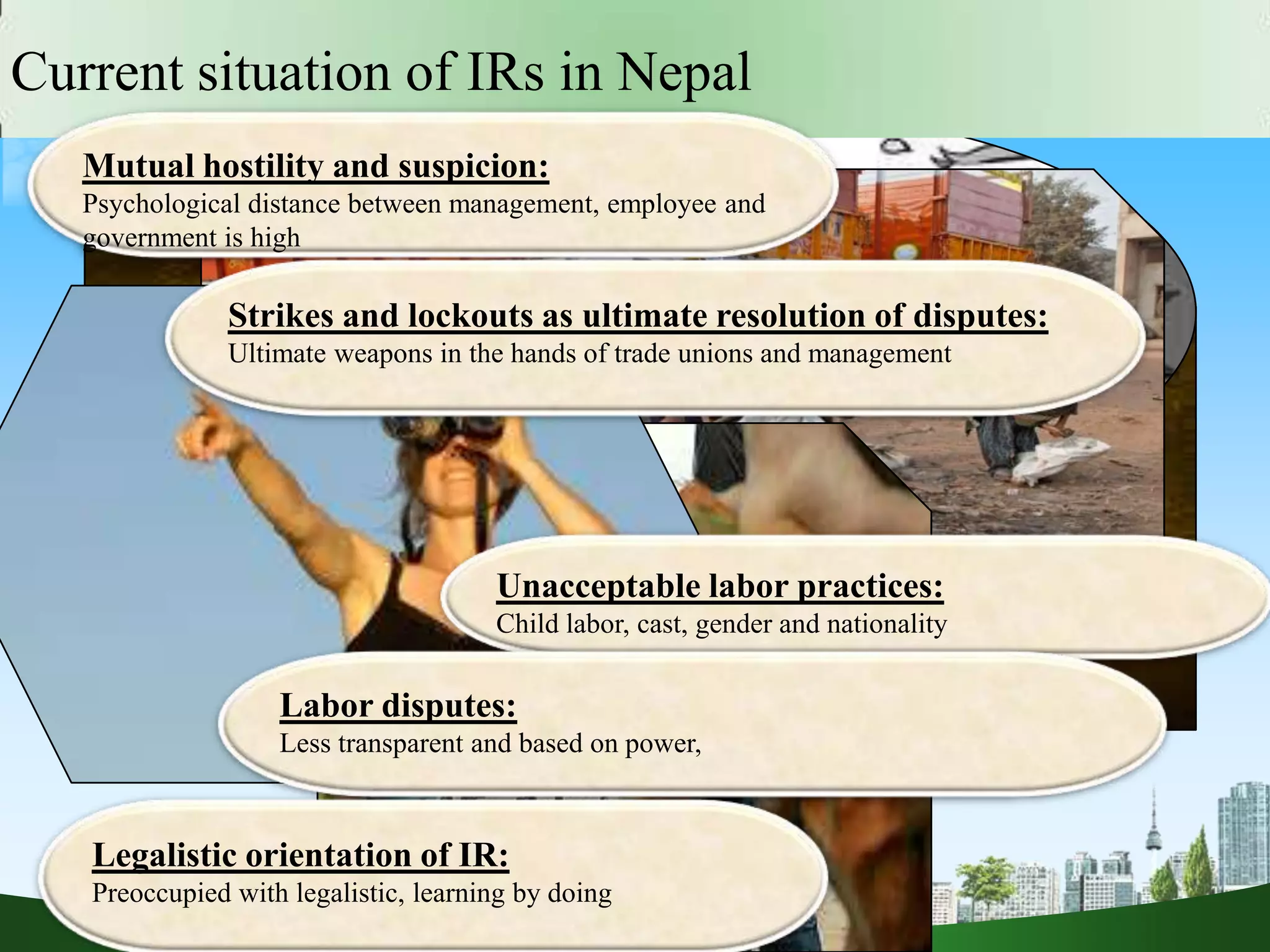
Current situation of IRs in Nepal
Mutual hostility and suspicion:
Psychological distance between management, employee and
government is high
Strikes and lockouts as ultimate resolution of disputes:
Ultimate weapons in the hands of trade unions and management
Unacceptable labor practices:
Child labor, cast, gender and nationality
Labor disputes:
Less transparent and based on power,
Legalistic orientation of IR:
Preoccupied with legalistic, learning by doing
Industrial relation

Industrial relation

  • 1.
  • 2.
    Definition “ Industrial relationsdeal with either the relationships between the state and employers’ and the workers’ organization and the relation between the occupational organizations themselves.”  International Labor Organization (ILO) Industry relations are the relations of all those associated in productive work including industry, agriculture, mining, commerce, finance, transport and other services. The main aspects are the establishment of the conditions under which the proceeds of the work are divided as dividends, salaries and wages between shareholders, employers, management and work people of various grades- manual, clerical and technical.
  • 3.
    Objectives of IndustrialRelations To safe guard the interests To avoid industrial conflict To establish and maintain the growth To raise productivity To establish government control
  • 4.
    Actors in IndustrialRelations Workers (Trade Union) Government (Society) Employers ( Employers Association) Industrial relations (IR)
  • 5.
    So it isconcerned with managing inter relationship among the three major actors.  a. Workers represented by trade unions.  b. Employers represented by employers associations.  c. Society represented by the government and various pressure groups. Employee relations or industrial relations are relations between the employer and the labor. Labor relations refer to the tripartite (Involving three parties) relations of workers (employees) employers, and lately government
  • 6.
    Emerging concepts inIndustrial Relation Change in definition and concept: Wide meaning, relation between employer, employee and government Increase in professional unions: Trade union to professional union, Change in the role of government: Guardian rather then active player, Change in functioning pattern: Past formative and fighting stage, present fraternal and fusion stage, Change in coverage and scope: Freedom of association and protection right Change in contents of IRs: Functional, interdependent, and involve historical, demographic, technological, occupational, political, legal
  • 7.
    Current situation ofIRs in Nepal Mutual hostility and suspicion: Psychological distance between management, employee and government is high Strikes and lockouts as ultimate resolution of disputes: Ultimate weapons in the hands of trade unions and management Unacceptable labor practices: Child labor, cast, gender and nationality Labor disputes: Less transparent and based on power, Legalistic orientation of IR: Preoccupied with legalistic, learning by doing