THE BAROQUE LYRIC
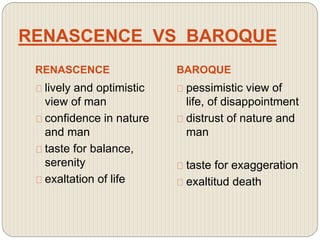
RENASCENCE VS BAROQUE 
RENASCENCE BAROQUE 
lively and optimistic 
view of man 
confidence in nature 
and man 
taste for balance, 
serenity 
exaltation of life 
pessimistic view of 
life, of disappointment 
distrust of nature and 
man 
taste for exaggeration 
exaltitud death
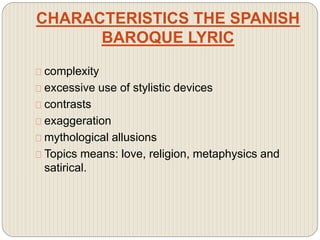
CHARACTERISTICS THE SPANISH 
BAROQUE LYRIC 
complexity 
excessive use of stylistic devices 
contrasts 
exaggeration 
mythological allusions 
Topics means: love, religion, metaphysics and 
satirical.
TWO BAROQUE STYLISTIC 
TRENDS: 
- Conceptismo: tends to concision and wit 
searches using word associations, 
misunderstandings, etc. Give more importance to 
the bottom than to the form. Representative 
writer: Quevedo. 
- Culteranismo: through metaphors, cultism 
looking expressiveness and beauty away from 
common. Give more importance to the form than 
to the botton. language. Representative writer: 
Góngora.
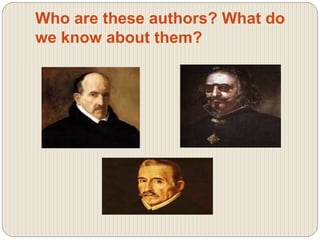
Who are these authors? What do 
we know about them?

The baroque lyric

  • 1.
  • 2.
    RENASCENCE VS BAROQUE RENASCENCE BAROQUE lively and optimistic view of man confidence in nature and man taste for balance, serenity exaltation of life pessimistic view of life, of disappointment distrust of nature and man taste for exaggeration exaltitud death
  • 3.
    CHARACTERISTICS THE SPANISH BAROQUE LYRIC complexity excessive use of stylistic devices contrasts exaggeration mythological allusions Topics means: love, religion, metaphysics and satirical.
  • 4.
    TWO BAROQUE STYLISTIC TRENDS: - Conceptismo: tends to concision and wit searches using word associations, misunderstandings, etc. Give more importance to the bottom than to the form. Representative writer: Quevedo. - Culteranismo: through metaphors, cultism looking expressiveness and beauty away from common. Give more importance to the form than to the botton. language. Representative writer: Góngora.
  • 5.
    Who are theseauthors? What do we know about them?