
#THETRUTHABOUTVERMOUTH§A`q
THE TRUTH ABOUT VERMOUTH
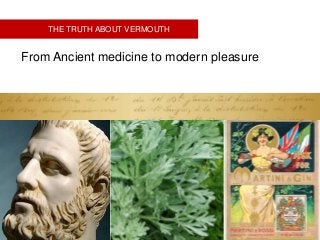
From Ancient medicine to modern pleasure
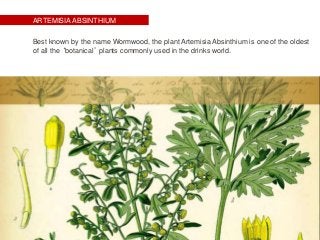
ARTEMISIA ABSINTHIUM
Best known by the name Wormwood, the plant Artemisia Absinthium is one of the oldest
of all the ‘botanical’ plants commonly used in the drinks world.
FROM THE ANCIENT WORLD
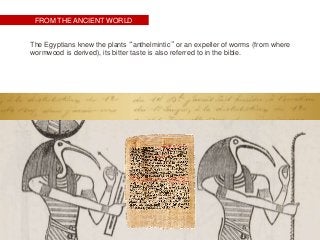
The Egyptians knew the plants “anthelmintic” or an expeller of worms (from where
wormwood is derived), its bitter taste is also referred to in the bible.
TO THE FAR EAST
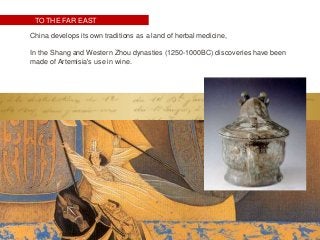
China develops its own traditions as a land of herbal medicine,
In the Shang and Western Zhou dynasties (1250-1000BC) discoveries have been
made of Artemisia's use in wine.
THE ANCIENT GREEKS
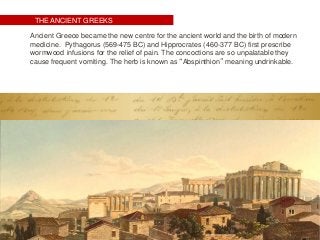
Ancient Greece became the new centre for the ancient world and the birth of modern
medicine. Pythagorus (569-475 BC) and Hipprocrates (460-377 BC) first prescribe
wormwood infusions for the relief of pain. The concoctions are so unpalatable they
cause frequent vomiting. The herb is known as “Abspinthion” meaning undrinkable.
THE WINE OF HIPPOCRATES
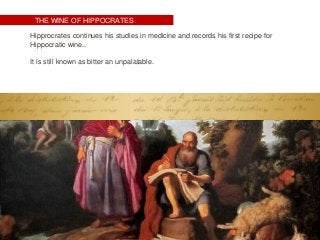
Hipprocrates continues his studies in medicine and records his first recipe for
Hippocratic wine..
It is still known as bitter an unpalatable.
ROMAN PLEASURE
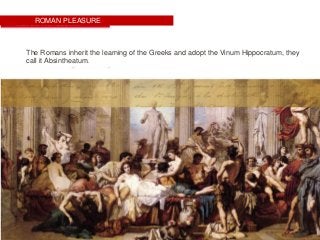
The Romans inherit the learning of the Greeks and adopt the Vinum Hippocratum, they
call it Absintheatum.
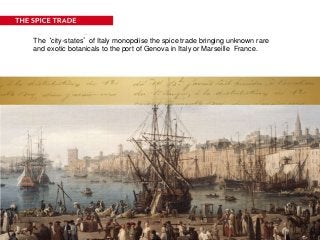
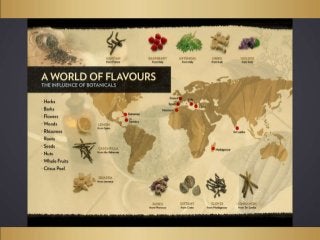
The ‘city-states’ of Italy monopolise the spice trade bringing unknown rare
and exotic botanicals to the port of Genova in Italy or Marseille France.
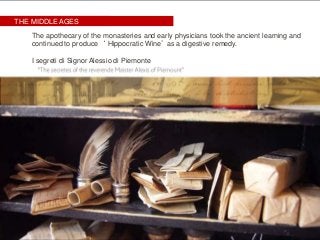
The apothecary of the monasteries and early physicians took the ancient learning and
continued to produce ‘ Hippocratic Wine’ as a digestive remedy.
I segreti di Signor Alessio di Piemonte
THE MIDDLE AGES
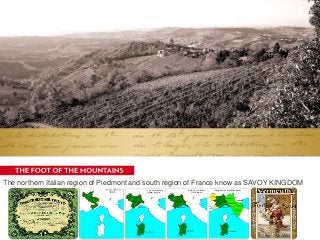
The northern Italian region of Piedmont and south region of France know as SAVOY KINGDOM
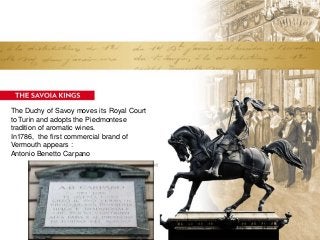
The Duchy of Savoy moves its Royal Court
to Turin and adopts the Piedmontese
tradition of aromatic wines.
In1786, the first commercial brand of
Vermouth appears :
Antonio Benetto Carpano
VERMOUTH REIGNS
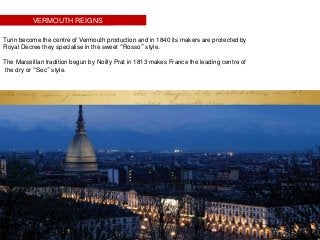
Turin become the centre of Vermouth production and in 1840 its makers are protected by
Royal Decree they specialise in the sweet “Rosso” style.
The Marseillan tradition begun by Noilly Prat in 1813 makes France the leading centre of
the dry or “Sec” style.
.
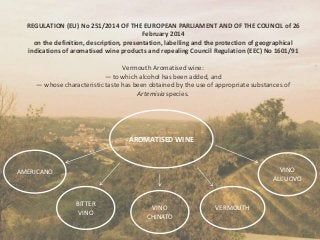
REGULATION (EU) No 251/2014 OF THE EUROPEAN PARLIAMENT AND OF THE COUNCIL of 26
February 2014
on the definition, description, presentation, labelling and the protection of geographical
indications of aromatised wine products and repealing Council Regulation (EEC) No 1601/91
Vermouth Aromatised wine:
— to which alcohol has been added, and
— whose characteristic taste has been obtained by the use of appropriate substances of
Artemisia species.
AROMATISED WINE
AMERICANO
VINO
CHINATO
VERMOUTH
VINO
ALL’UOVO
BITTER
VINO
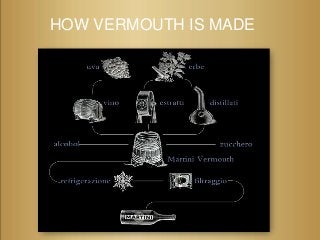
HOW VERMOUTH IS MADE
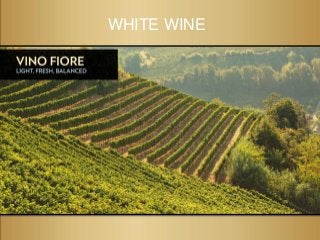
WHITE WINE
#THETRUTHABOUTVERMOUTH
@MrGiuseppeGallo
facebook/mixologistsociety
giuseppemrgallo
MORE INFO : info@giuseppegallo.co.uk
WWW.GIUSEPPEGALLO.CO.UK

The Truth About Vermouth

  • 1.
  • 2.
    THE TRUTH ABOUTVERMOUTH From Ancient medicine to modern pleasure
  • 3.
    ARTEMISIA ABSINTHIUM Best knownby the name Wormwood, the plant Artemisia Absinthium is one of the oldest of all the ‘botanical’ plants commonly used in the drinks world.
  • 4.
    FROM THE ANCIENTWORLD The Egyptians knew the plants “anthelmintic” or an expeller of worms (from where wormwood is derived), its bitter taste is also referred to in the bible.
  • 5.
    TO THE FAREAST China develops its own traditions as a land of herbal medicine, In the Shang and Western Zhou dynasties (1250-1000BC) discoveries have been made of Artemisia's use in wine.
  • 6.
    THE ANCIENT GREEKS AncientGreece became the new centre for the ancient world and the birth of modern medicine. Pythagorus (569-475 BC) and Hipprocrates (460-377 BC) first prescribe wormwood infusions for the relief of pain. The concoctions are so unpalatable they cause frequent vomiting. The herb is known as “Abspinthion” meaning undrinkable.
  • 7.
    THE WINE OFHIPPOCRATES Hipprocrates continues his studies in medicine and records his first recipe for Hippocratic wine.. It is still known as bitter an unpalatable.
  • 8.
    ROMAN PLEASURE The Romansinherit the learning of the Greeks and adopt the Vinum Hippocratum, they call it Absintheatum.
  • 9.
    The ‘city-states’ ofItaly monopolise the spice trade bringing unknown rare and exotic botanicals to the port of Genova in Italy or Marseille France.
  • 10.
    The apothecary ofthe monasteries and early physicians took the ancient learning and continued to produce ‘ Hippocratic Wine’ as a digestive remedy. I segreti di Signor Alessio di Piemonte THE MIDDLE AGES
  • 11.
    The northern Italianregion of Piedmont and south region of France know as SAVOY KINGDOM
  • 12.
    The Duchy ofSavoy moves its Royal Court to Turin and adopts the Piedmontese tradition of aromatic wines. In1786, the first commercial brand of Vermouth appears : Antonio Benetto Carpano
  • 13.
    VERMOUTH REIGNS Turin becomethe centre of Vermouth production and in 1840 its makers are protected by Royal Decree they specialise in the sweet “Rosso” style. The Marseillan tradition begun by Noilly Prat in 1813 makes France the leading centre of the dry or “Sec” style. .
  • 14.
    REGULATION (EU) No251/2014 OF THE EUROPEAN PARLIAMENT AND OF THE COUNCIL of 26 February 2014 on the definition, description, presentation, labelling and the protection of geographical indications of aromatised wine products and repealing Council Regulation (EEC) No 1601/91 Vermouth Aromatised wine: — to which alcohol has been added, and — whose characteristic taste has been obtained by the use of appropriate substances of Artemisia species. AROMATISED WINE AMERICANO VINO CHINATO VERMOUTH VINO ALL’UOVO BITTER VINO
  • 15.
  • 16.
  • 18.

Editor's Notes

  • #4 Controversial at times (due to its physchoactive element - thujone) and often misunderstood, this magical herb has more myth and mystery attached to it than perhaps any other.
  • #10 Later, in the middle ages Italian merchants control of the spice trade and brought rare and exotic botanicals to the port of Genova allowing for the creation of more complex and distinct aromatic wines. Genova’s most famous son, Christopher Columbus was the first to bring in previously unknown ingredients from the Caribbean like Quassia wood. Turin became famous for its aromatic wines across Europe
  • #12 Piedmont – “The foot of the mountains”   Over time the practice of infusing wine with herbs was passed down through skilled hands who sought to master the methods of capturing the pure essence of these natural extracts. But it was in the northern Italian region of Piedmont that this local tradition became a skilled craft.   Piedmont, meaning “at the foot of the mountains was the ideal location for producing aromatic wines. Here the Alps and fertile soils provided a rich source of herbs and the cool climate provided light and delicate wines. Pioneering work by men like Signor Alessio of Piedmont in the 1600s led to a rediscovery of aromatic wine and from that moment it became firmly an Italian tradition.  
  • #13 The Savoia Kings   In 1563, The Duchy of Savoy had moved their Royal Court to Piedmont where they later adopted the tradition of drinking aromatic wines. By 1768, they had become so popular that they were decreed the “aperitivo di corte”. Their popularity quickly spread through the Royal Courts of Europe. In Bavaria it became known as “Wermut Wein” (as the best varieties contain wormwood - the herb Artemisia) and then on to France where it was to be called “Vermouth”.  
  • #16 The quest for perfection continues today in the hands of our passionate artisans who have dedicated themselves to the crafting of MARTINI.
  • #17 The quest for perfection continues today in the hands of our passionate artisans who have dedicated themselves to the crafting of MARTINI.
  • #18 The quest for perfection continues today in the hands of our passionate artisans who have dedicated themselves to the crafting of MARTINI.
  • #19 The quest for perfection continues today in the hands of our passionate artisans who have dedicated themselves to the crafting of MARTINI.