Adolescents in Foster Care
and Emotional Resiliency
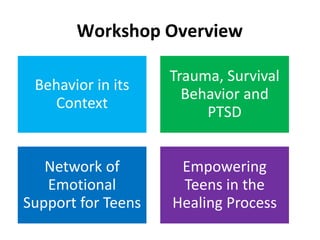
Workshop Overview
Behavior in its
Context
Trauma, Survival
Behavior and
PTSD
Network of
Emotional
Support for Teens
Empowering
Teens in the
Healing Process
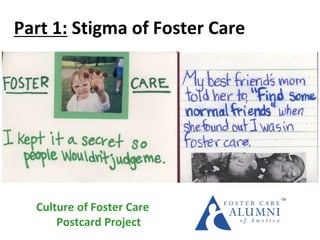
Part 1: Stigma of Foster Care
Culture of Foster Care
Postcard Project
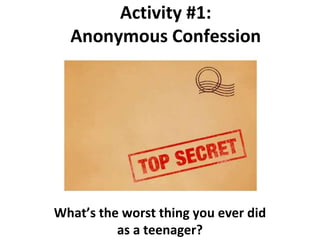
Activity #1:
Anonymous Confession
What’s the worst thing you ever did
as a teenager?
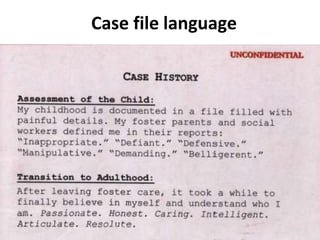
Case file language
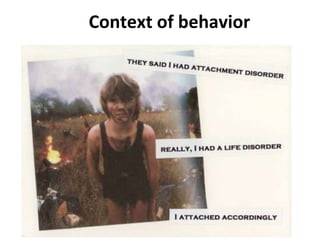
Context of behavior
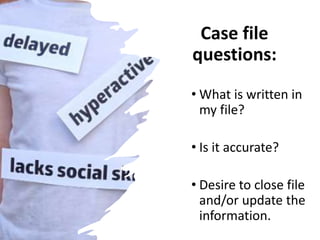
Case file
questions:
• What is written in
my file?
• Is it accurate?
• Desire to close file
and/or update the
information.
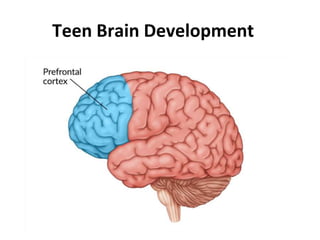
Teen Brain Development
Magnified consequences
• Consequences and Risks: In general, foster children
and foster alumni operate by a different set of rules and
consequences. And they have a lot more paperwork!
• Let's say you're a teenager and you act out. Will you:
a.) Be transferred to a totally different place to live?
b.) Be grounded for a month?
• Let's say you're in college and you do a poor job of
budgeting. Are you:
a.) Now homeless?
b.) Able to call Mom or Dad to bail you out?
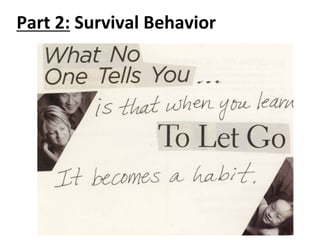
Part 2: Survival Behavior
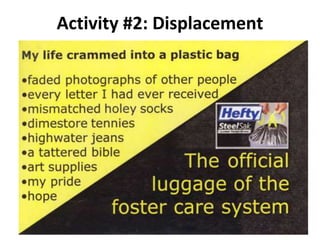
Activity #2: Displacement
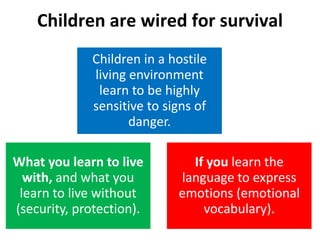
Children are wired for survival
Children in a hostile
living environment
learn to be highly
sensitive to signs of
danger.
What you learn to live
with, and what you
learn to live without
(security, protection).
If you learn the
language to express
emotions (emotional
vocabulary).
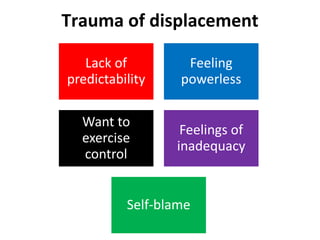
Trauma of displacement
Lack of
predictability
Feeling
powerless
Want to
exercise
control
Feelings of
inadequacy
Self-blame
Foster care and PTSD
• Former foster children experience PTSD at
twice the rate of Vietnam war veterans.
• At least one-fourth of foster care alumni have
PTSD.
• In young children, PTSD includes disorganized
and agitated behavior, including difficulty in
concentrating in school…which can look like
ADHD.
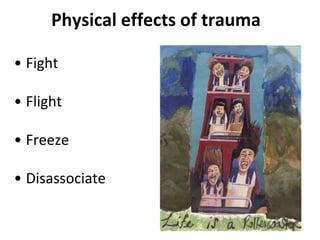
Physical effects of trauma
• Fight
• Flight
• Freeze
• Disassociate
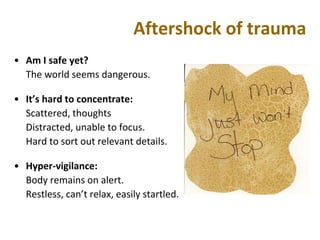
Aftershock of trauma
• Am I safe yet?
The world seems dangerous.
• It’s hard to concentrate:
Scattered, thoughts
Distracted, unable to focus.
Hard to sort out relevant details.
• Hyper-vigilance:
Body remains on alert.
Restless, can’t relax, easily startled.
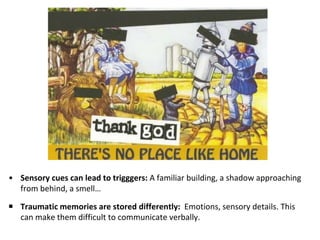
• Sensory cues can lead to trigggers: A familiar building, a shadow approaching
from behind, a smell…
■ Traumatic memories are stored differently: Emotions, sensory details. This
can make them difficult to communicate verbally.
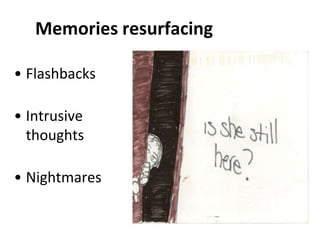
Memories resurfacing
• Flashbacks
• Intrusive
thoughts
• Nightmares
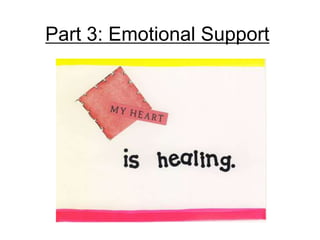
Part 3: Emotional Support
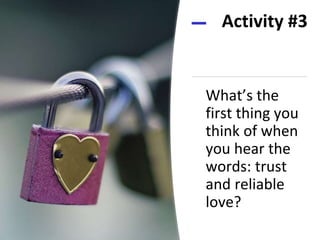
What’s the
first thing you
think of when
you hear the
words: trust
and reliable
love?
Activity #3
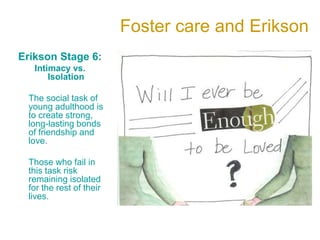
Foster care and Erikson
Erikson Stage 6:
Intimacy vs.
Isolation
The social task of
young adulthood is
to create strong,
long-lasting bonds
of friendship and
love.
Those who fail in
this task risk
remaining isolated
for the rest of their
lives.
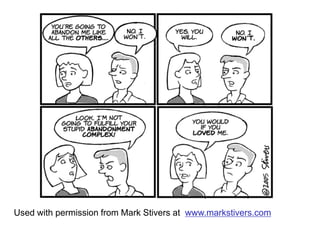
Used with permission from Mark Stivers at www.markstivers.com
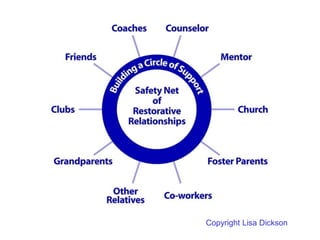
Copyright Lisa Dickson
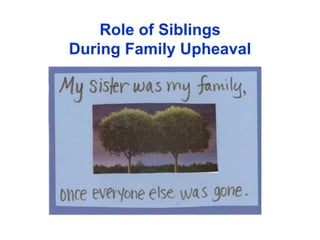
Role of Siblings
During Family Upheaval
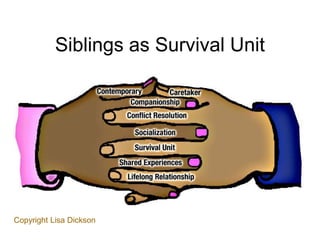
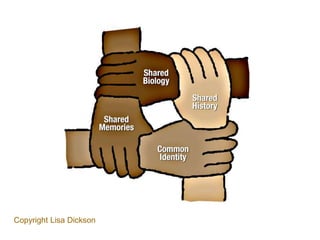
Siblings as Survival Unit
Copyright Lisa Dickson
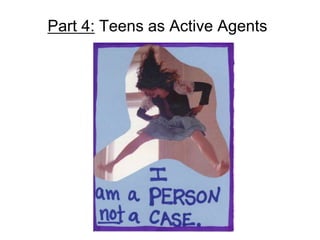
Part 4: Teens as Active Agents
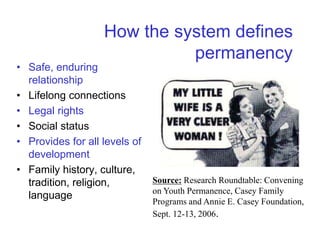
How the system defines
permanency
• Safe, enduring
relationship
• Lifelong connections
• Legal rights
• Social status
• Provides for all levels of
development
• Family history, culture,
tradition, religion,
language
Source: Research Roundtable: Convening
on Youth Permanence, Casey Family
Programs and Annie E. Casey Foundation,
Sept. 12-13, 2006.
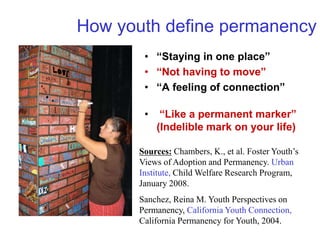
How youth define permanency
• “Staying in one place”
• “Not having to move”
• “A feeling of connection”
• “Like a permanent marker”
(Indelible mark on your life)
Sources: Chambers, K., et al. Foster Youth’s
Views of Adoption and Permanency. Urban
Institute, Child Welfare Research Program,
January 2008.
Sanchez, Reina M. Youth Perspectives on
Permanency, California Youth Connection,
California Permanency for Youth, 2004.
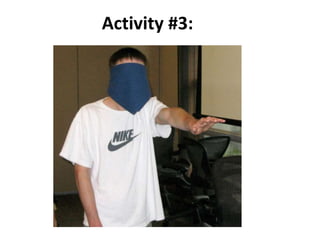
Activity #3:
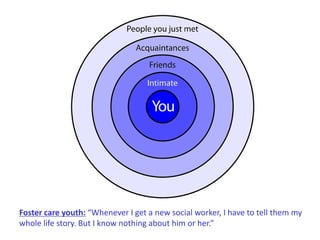
Foster care youth: “Whenever I get a new social worker, I have to tell them my
whole life story. But I know nothing about him or her.”
Forgiveness
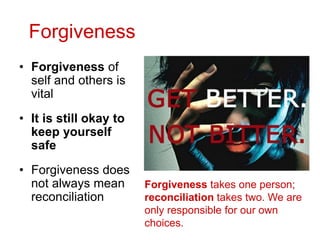
• Forgiveness of
self and others is
vital
• It is still okay to
keep yourself
safe
• Forgiveness does
not always mean
reconciliation
Forgiveness takes one person;
reconciliation takes two. We are
only responsible for our own
choices.
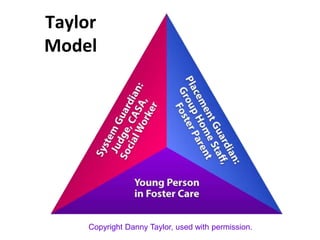
Taylor
Model
Copyright Danny Taylor, used with permission.
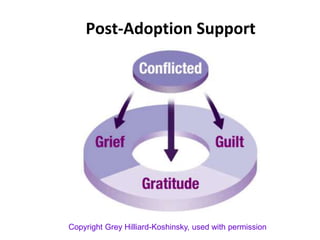
Post-Adoption Support
Copyright Grey Hilliard-Koshinsky, used with permission
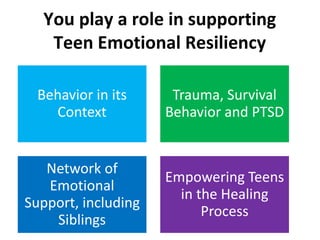
You play a role in supporting
Teen Emotional Resiliency
Behavior in its
Context
Trauma, Survival
Behavior and PTSD
Network of
Emotional
Support, including
Siblings
Empowering Teens
in the Healing
Process
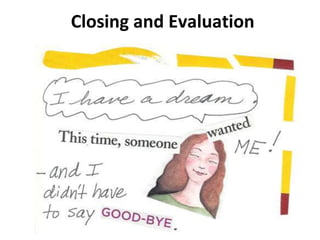
Closing and Evaluation

2023 Emotional Resiliency.pptx

  • 1.
    Adolescents in FosterCare and Emotional Resiliency
  • 2.
    Workshop Overview Behavior inits Context Trauma, Survival Behavior and PTSD Network of Emotional Support for Teens Empowering Teens in the Healing Process
  • 3.
    Part 1: Stigmaof Foster Care Culture of Foster Care Postcard Project
  • 4.
    Activity #1: Anonymous Confession What’sthe worst thing you ever did as a teenager?
  • 5.
  • 6.
  • 7.
    Case file questions: • Whatis written in my file? • Is it accurate? • Desire to close file and/or update the information.
  • 8.
  • 9.
    Magnified consequences • Consequencesand Risks: In general, foster children and foster alumni operate by a different set of rules and consequences. And they have a lot more paperwork! • Let's say you're a teenager and you act out. Will you: a.) Be transferred to a totally different place to live? b.) Be grounded for a month? • Let's say you're in college and you do a poor job of budgeting. Are you: a.) Now homeless? b.) Able to call Mom or Dad to bail you out?
  • 10.
  • 11.
  • 12.
    Children are wiredfor survival Children in a hostile living environment learn to be highly sensitive to signs of danger. What you learn to live with, and what you learn to live without (security, protection). If you learn the language to express emotions (emotional vocabulary).
  • 13.
    Trauma of displacement Lackof predictability Feeling powerless Want to exercise control Feelings of inadequacy Self-blame
  • 14.
    Foster care andPTSD • Former foster children experience PTSD at twice the rate of Vietnam war veterans. • At least one-fourth of foster care alumni have PTSD. • In young children, PTSD includes disorganized and agitated behavior, including difficulty in concentrating in school…which can look like ADHD.
  • 15.
    Physical effects oftrauma • Fight • Flight • Freeze • Disassociate
  • 16.
    Aftershock of trauma •Am I safe yet? The world seems dangerous. • It’s hard to concentrate: Scattered, thoughts Distracted, unable to focus. Hard to sort out relevant details. • Hyper-vigilance: Body remains on alert. Restless, can’t relax, easily startled.
  • 17.
    • Sensory cuescan lead to trigggers: A familiar building, a shadow approaching from behind, a smell… ■ Traumatic memories are stored differently: Emotions, sensory details. This can make them difficult to communicate verbally.
  • 18.
    Memories resurfacing • Flashbacks •Intrusive thoughts • Nightmares
  • 19.
  • 20.
    What’s the first thingyou think of when you hear the words: trust and reliable love? Activity #3
  • 21.
    Foster care andErikson Erikson Stage 6: Intimacy vs. Isolation The social task of young adulthood is to create strong, long-lasting bonds of friendship and love. Those who fail in this task risk remaining isolated for the rest of their lives.
  • 22.
    Used with permissionfrom Mark Stivers at www.markstivers.com
  • 24.
  • 25.
    Role of Siblings DuringFamily Upheaval
  • 26.
    Siblings as SurvivalUnit Copyright Lisa Dickson
  • 27.
  • 29.
    Part 4: Teensas Active Agents
  • 30.
    How the systemdefines permanency • Safe, enduring relationship • Lifelong connections • Legal rights • Social status • Provides for all levels of development • Family history, culture, tradition, religion, language Source: Research Roundtable: Convening on Youth Permanence, Casey Family Programs and Annie E. Casey Foundation, Sept. 12-13, 2006.
  • 31.
    How youth definepermanency • “Staying in one place” • “Not having to move” • “A feeling of connection” • “Like a permanent marker” (Indelible mark on your life) Sources: Chambers, K., et al. Foster Youth’s Views of Adoption and Permanency. Urban Institute, Child Welfare Research Program, January 2008. Sanchez, Reina M. Youth Perspectives on Permanency, California Youth Connection, California Permanency for Youth, 2004.
  • 32.
  • 33.
    Foster care youth:“Whenever I get a new social worker, I have to tell them my whole life story. But I know nothing about him or her.”
  • 34.
    Forgiveness • Forgiveness of selfand others is vital • It is still okay to keep yourself safe • Forgiveness does not always mean reconciliation Forgiveness takes one person; reconciliation takes two. We are only responsible for our own choices.
  • 35.
  • 36.
    Post-Adoption Support Copyright GreyHilliard-Koshinsky, used with permission
  • 37.
    You play arole in supporting Teen Emotional Resiliency Behavior in its Context Trauma, Survival Behavior and PTSD Network of Emotional Support, including Siblings Empowering Teens in the Healing Process
  • 38.