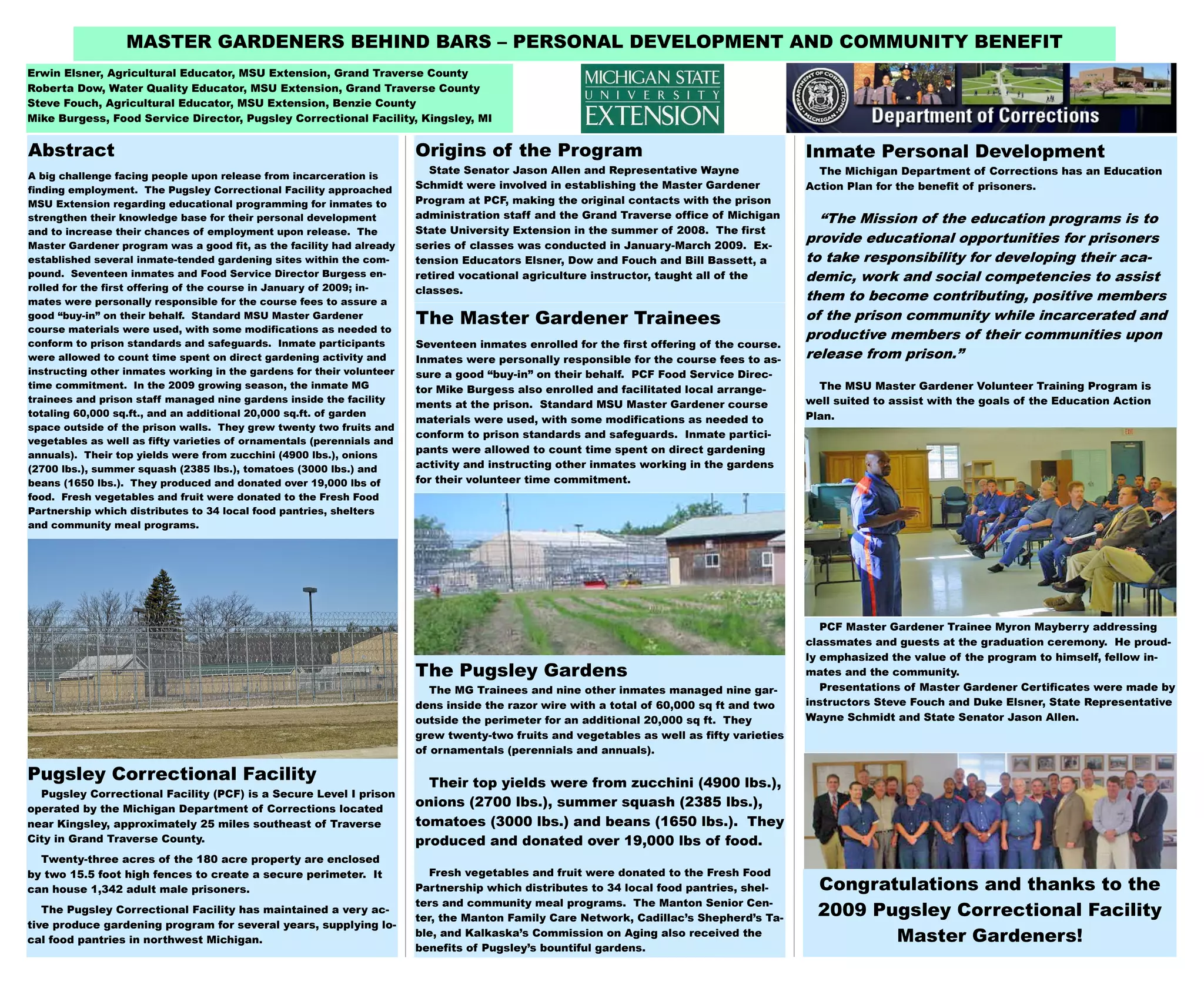
MASTER GARDENERS BEHIND BARS – PERSONAL DEVELOPMENT AND COMMUNITY BENEFIT
Erwin Elsner, Agricultural Educator, MSU Extension, Grand Traverse County
Roberta Dow, Water Quality Educator, MSU Extension, Grand Traverse County
Steve Fouch, Agricultural Educator, MSU Extension, Benzie County
Mike Burgess, Food Service Director, Pugsley Correctional Facility, Kingsley, MI


Abstract                                                               Origins of the Program                                             Inmate Personal Development
                                                                         State Senator Jason Allen and Representative Wayne                 The Michigan Department of Corrections has an Education
A big challenge facing people upon release from incarceration is
finding employment. The Pugsley Correctional Facility approached       Schmidt were involved in establishing the Master Gardener          Action Plan for the benefit of prisoners.
MSU Extension regarding educational programming for inmates to         Program at PCF, making the original contacts with the prison
strengthen their knowledge base for their personal development         administration staff and the Grand Traverse office of Michigan       “The Mission of the education programs is to
and to increase their chances of employment upon release. The          State University Extension in the summer of 2008. The first
Master Gardener program was a good fit, as the facility had already    series of classes was conducted in January-March 2009. Ex-
                                                                                                                                          provide educational opportunities for prisoners
established several inmate-tended gardening sites within the com-      tension Educators Elsner, Dow and Fouch and Bill Bassett, a        to take responsibility for developing their aca-
pound. Seventeen inmates and Food Service Director Burgess en-         retired vocational agriculture instructor, taught all of the       demic, work and social competencies to assist
rolled for the first offering of the course in January of 2009; in-    classes.
mates were personally responsible for the course fees to assure a                                                                         them to become contributing, positive members
good “buy-in” on their behalf. Standard MSU Master Gardener
                                                                       The Master Gardener Trainees                                       of the prison community while incarcerated and
course materials were used, with some modifications as needed to
                                                                                                                                          productive members of their communities upon
conform to prison standards and safeguards. Inmate participants        Seventeen inmates enrolled for the first offering of the course.
were allowed to count time spent on direct gardening activity and      Inmates were personally responsible for the course fees to as-     release from prison.”
instructing other inmates working in the gardens for their volunteer   sure a good “buy-in” on their behalf. PCF Food Service Direc-
time commitment. In the 2009 growing season, the inmate MG             tor Mike Burgess also enrolled and facilitated local arrange-        The MSU Master Gardener Volunteer Training Program is
trainees and prison staff managed nine gardens inside the facility                                                                        well suited to assist with the goals of the Education Action
                                                                       ments at the prison. Standard MSU Master Gardener course
totaling 60,000 sq.ft., and an additional 20,000 sq.ft. of garden                                                                         Plan.
                                                                       materials were used, with some modifications as needed to
space outside of the prison walls. They grew twenty two fruits and
                                                                       conform to prison standards and safeguards. Inmate partici-
vegetables as well as fifty varieties of ornamentals (perennials and
                                                                       pants were allowed to count time spent on direct gardening
annuals). Their top yields were from zucchini (4900 lbs.), onions
(2700 lbs.), summer squash (2385 lbs.), tomatoes (3000 lbs.) and       activity and instructing other inmates working in the gardens
beans (1650 lbs.). They produced and donated over 19,000 lbs of        for their volunteer time commitment.
food. Fresh vegetables and fruit were donated to the Fresh Food
Partnership which distributes to 34 local food pantries, shelters
and community meal programs.


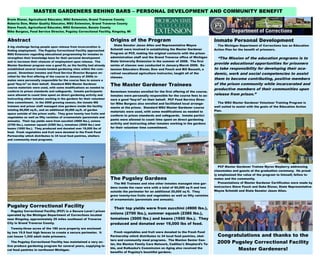
                                                                                                                                             PCF Master Gardener Trainee Myron Mayberry addressing
                                                                                                                                          classmates and guests at the graduation ceremony. He proud-
                                                                                                                                          ly emphasized the value of the program to himself, fellow in-
                                                                       The Pugsley Gardens                                                mates and the community.
                                                                          The MG Trainees and nine other inmates managed nine gar-           Presentations of Master Gardener Certificates were made by
                                                                       dens inside the razor wire with a total of 60,000 sq ft and two    instructors Steve Fouch and Duke Elsner, State Representative
                                                                       outside the perimeter for an additional 20,000 sq ft. They         Wayne Schmidt and State Senator Jason Allen.
                                                                       grew twenty-two fruits and vegetables as well as fifty varieties
                                                                       of ornamentals (perennials and annuals).

Pugsley Correctional Facility                                            Their top yields were from zucchini (4900 lbs.),
  Pugsley Correctional Facility (PCF) is a Secure Level I prison
operated by the Michigan Department of Corrections located
                                                                       onions (2700 lbs.), summer squash (2385 lbs.),
near Kingsley, approximately 25 miles southeast of Traverse            tomatoes (3000 lbs.) and beans (1650 lbs.). They
City in Grand Traverse County.                                         produced and donated over 19,000 lbs of food.
  Twenty-three acres of the 180 acre property are enclosed
by two 15.5 foot high fences to create a secure perimeter. It            Fresh vegetables and fruit were donated to the Fresh Food
can house 1,342 adult male prisoners.                                  Partnership which distributes to 34 local food pantries, shel-       Congratulations and thanks to the
                                                                       ters and community meal programs. The Manton Senior Cen-
   The Pugsley Correctional Facility has maintained a very ac-
                                                                       ter, the Manton Family Care Network, Cadillac’s Shepherd’s Ta-
                                                                                                                                            2009 Pugsley Correctional Facility
tive produce gardening program for several years, supplying lo-
cal food pantries in northwest Michigan.
                                                                       ble, and Kalkaska’s Commission on Aging also received the                   Master Gardeners!
                                                                       benefits of Pugsley’s bountiful gardens.

C:\Fakepath\E Elsner Michingan Master Gardenersbehind Bars

  • 1.
    MASTER GARDENERS BEHINDBARS – PERSONAL DEVELOPMENT AND COMMUNITY BENEFIT Erwin Elsner, Agricultural Educator, MSU Extension, Grand Traverse County Roberta Dow, Water Quality Educator, MSU Extension, Grand Traverse County Steve Fouch, Agricultural Educator, MSU Extension, Benzie County Mike Burgess, Food Service Director, Pugsley Correctional Facility, Kingsley, MI Abstract Origins of the Program Inmate Personal Development State Senator Jason Allen and Representative Wayne The Michigan Department of Corrections has an Education A big challenge facing people upon release from incarceration is finding employment. The Pugsley Correctional Facility approached Schmidt were involved in establishing the Master Gardener Action Plan for the benefit of prisoners. MSU Extension regarding educational programming for inmates to Program at PCF, making the original contacts with the prison strengthen their knowledge base for their personal development administration staff and the Grand Traverse office of Michigan “The Mission of the education programs is to and to increase their chances of employment upon release. The State University Extension in the summer of 2008. The first Master Gardener program was a good fit, as the facility had already series of classes was conducted in January-March 2009. Ex- provide educational opportunities for prisoners established several inmate-tended gardening sites within the com- tension Educators Elsner, Dow and Fouch and Bill Bassett, a to take responsibility for developing their aca- pound. Seventeen inmates and Food Service Director Burgess en- retired vocational agriculture instructor, taught all of the demic, work and social competencies to assist rolled for the first offering of the course in January of 2009; in- classes. mates were personally responsible for the course fees to assure a them to become contributing, positive members good “buy-in” on their behalf. Standard MSU Master Gardener The Master Gardener Trainees of the prison community while incarcerated and course materials were used, with some modifications as needed to productive members of their communities upon conform to prison standards and safeguards. Inmate participants Seventeen inmates enrolled for the first offering of the course. were allowed to count time spent on direct gardening activity and Inmates were personally responsible for the course fees to as- release from prison.” instructing other inmates working in the gardens for their volunteer sure a good “buy-in” on their behalf. PCF Food Service Direc- time commitment. In the 2009 growing season, the inmate MG tor Mike Burgess also enrolled and facilitated local arrange- The MSU Master Gardener Volunteer Training Program is trainees and prison staff managed nine gardens inside the facility well suited to assist with the goals of the Education Action ments at the prison. Standard MSU Master Gardener course totaling 60,000 sq.ft., and an additional 20,000 sq.ft. of garden Plan. materials were used, with some modifications as needed to space outside of the prison walls. They grew twenty two fruits and conform to prison standards and safeguards. Inmate partici- vegetables as well as fifty varieties of ornamentals (perennials and pants were allowed to count time spent on direct gardening annuals). Their top yields were from zucchini (4900 lbs.), onions (2700 lbs.), summer squash (2385 lbs.), tomatoes (3000 lbs.) and activity and instructing other inmates working in the gardens beans (1650 lbs.). They produced and donated over 19,000 lbs of for their volunteer time commitment. food. Fresh vegetables and fruit were donated to the Fresh Food Partnership which distributes to 34 local food pantries, shelters and community meal programs. PCF Master Gardener Trainee Myron Mayberry addressing classmates and guests at the graduation ceremony. He proud- ly emphasized the value of the program to himself, fellow in- The Pugsley Gardens mates and the community. The MG Trainees and nine other inmates managed nine gar- Presentations of Master Gardener Certificates were made by dens inside the razor wire with a total of 60,000 sq ft and two instructors Steve Fouch and Duke Elsner, State Representative outside the perimeter for an additional 20,000 sq ft. They Wayne Schmidt and State Senator Jason Allen. grew twenty-two fruits and vegetables as well as fifty varieties of ornamentals (perennials and annuals). Pugsley Correctional Facility Their top yields were from zucchini (4900 lbs.), Pugsley Correctional Facility (PCF) is a Secure Level I prison operated by the Michigan Department of Corrections located onions (2700 lbs.), summer squash (2385 lbs.), near Kingsley, approximately 25 miles southeast of Traverse tomatoes (3000 lbs.) and beans (1650 lbs.). They City in Grand Traverse County. produced and donated over 19,000 lbs of food. Twenty-three acres of the 180 acre property are enclosed by two 15.5 foot high fences to create a secure perimeter. It Fresh vegetables and fruit were donated to the Fresh Food can house 1,342 adult male prisoners. Partnership which distributes to 34 local food pantries, shel- Congratulations and thanks to the ters and community meal programs. The Manton Senior Cen- The Pugsley Correctional Facility has maintained a very ac- ter, the Manton Family Care Network, Cadillac’s Shepherd’s Ta- 2009 Pugsley Correctional Facility tive produce gardening program for several years, supplying lo- cal food pantries in northwest Michigan. ble, and Kalkaska’s Commission on Aging also received the Master Gardeners! benefits of Pugsley’s bountiful gardens.