Fighting
Female Genital Mutilation
with
Maps
FGM
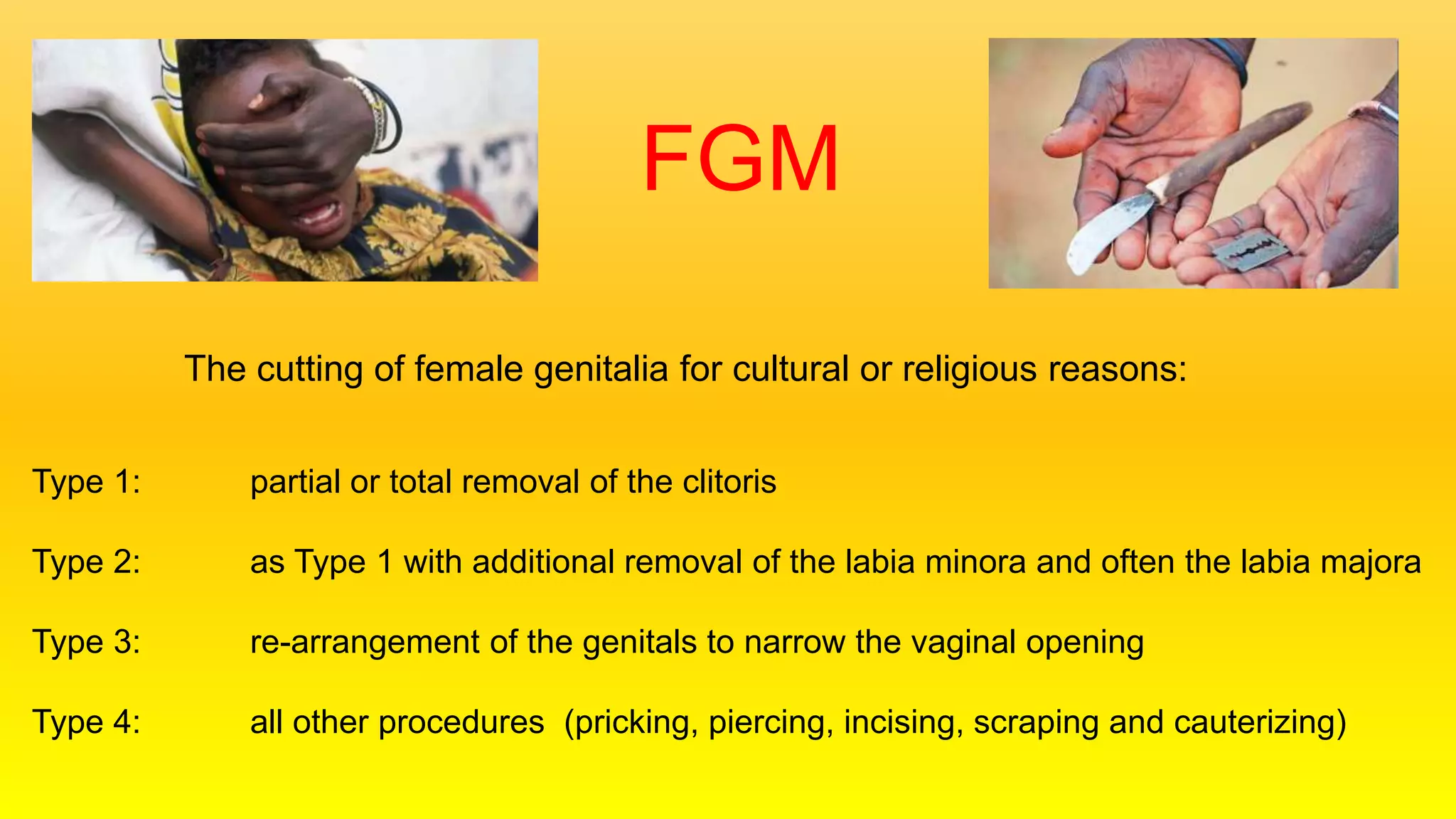
The cutting of female genitalia for cultural or religious reasons:
Type 1: partial or total removal of the clitoris
Type 2: as Type 1 with additional removal of the labia minora and often the labia majora
Type 3: re-arrangement of the genitals to narrow the vaginal opening
Type 4: all other procedures (pricking, piercing, incising, scraping and cauterizing)
Girls are rounded up during the
‘Cutting Season’
when they are on school holidays
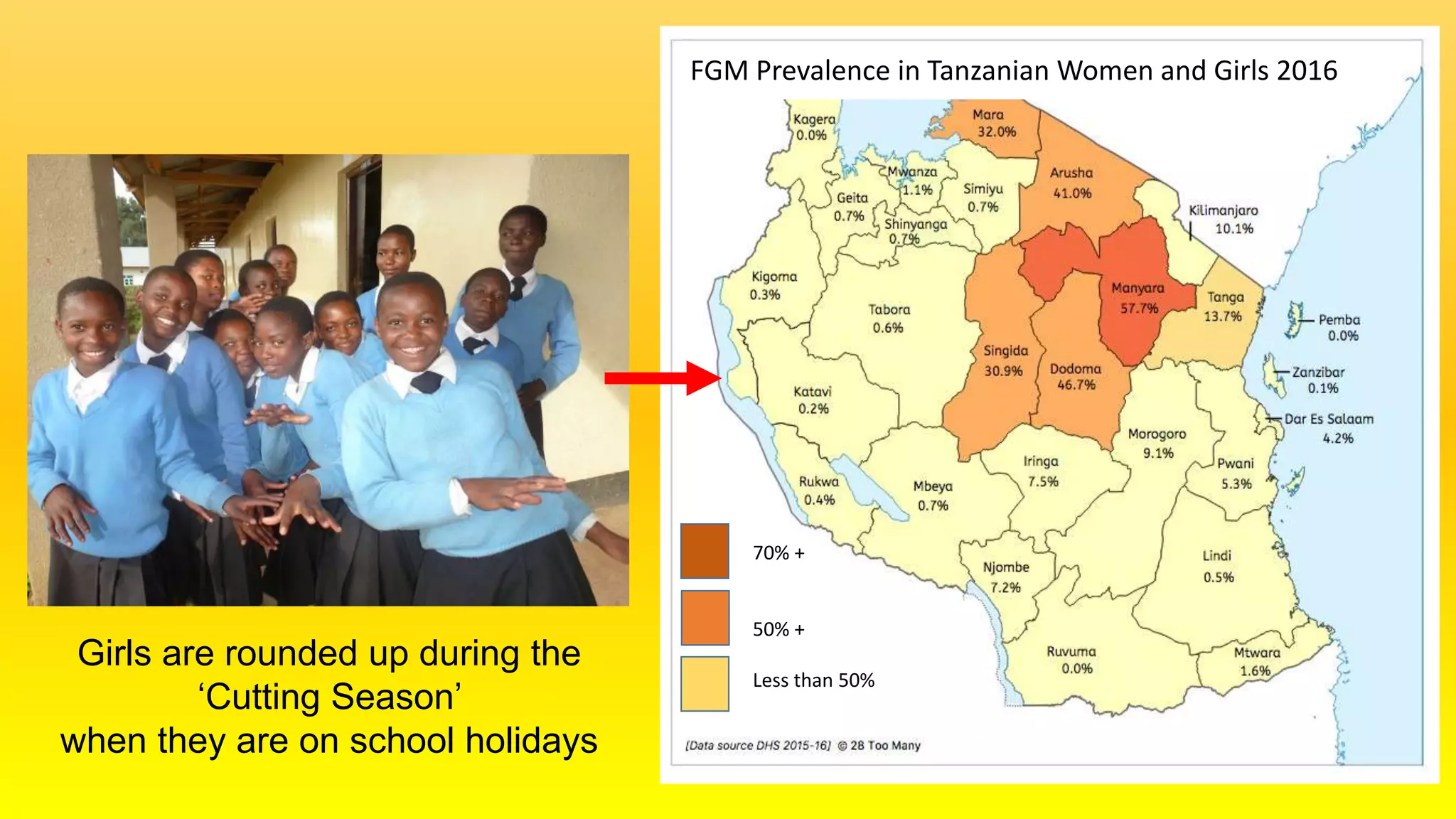
70% +
50% +
Less than 50%
FGM Prevalence in Tanzanian Women and Girls 2016
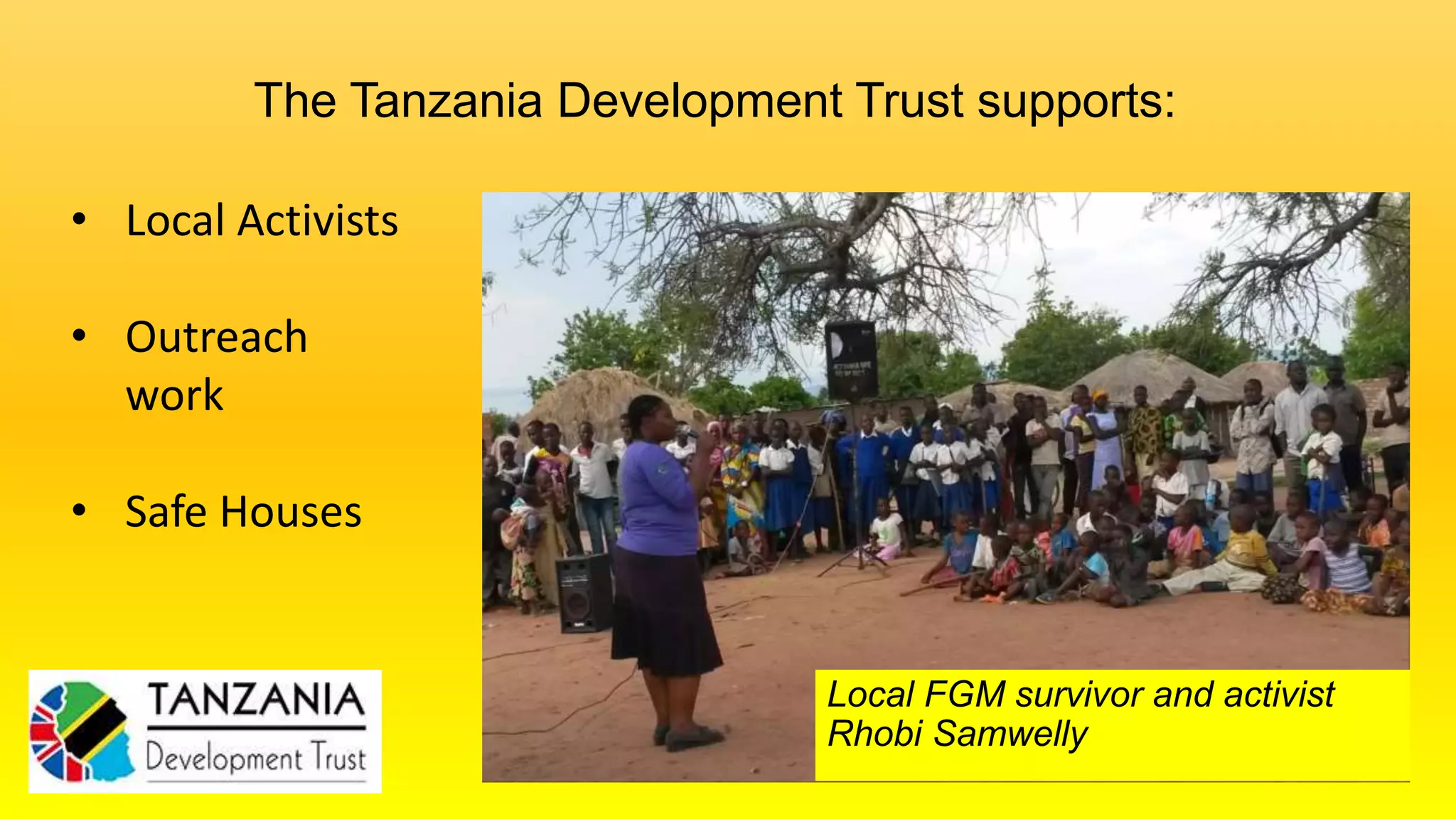
Local FGM survivor and activist
Rhobi Samwelly
The Tanzania Development Trust supports:
• Local Activists
• Outreach
work
• Safe Houses
But girls cannot find the safehouses:
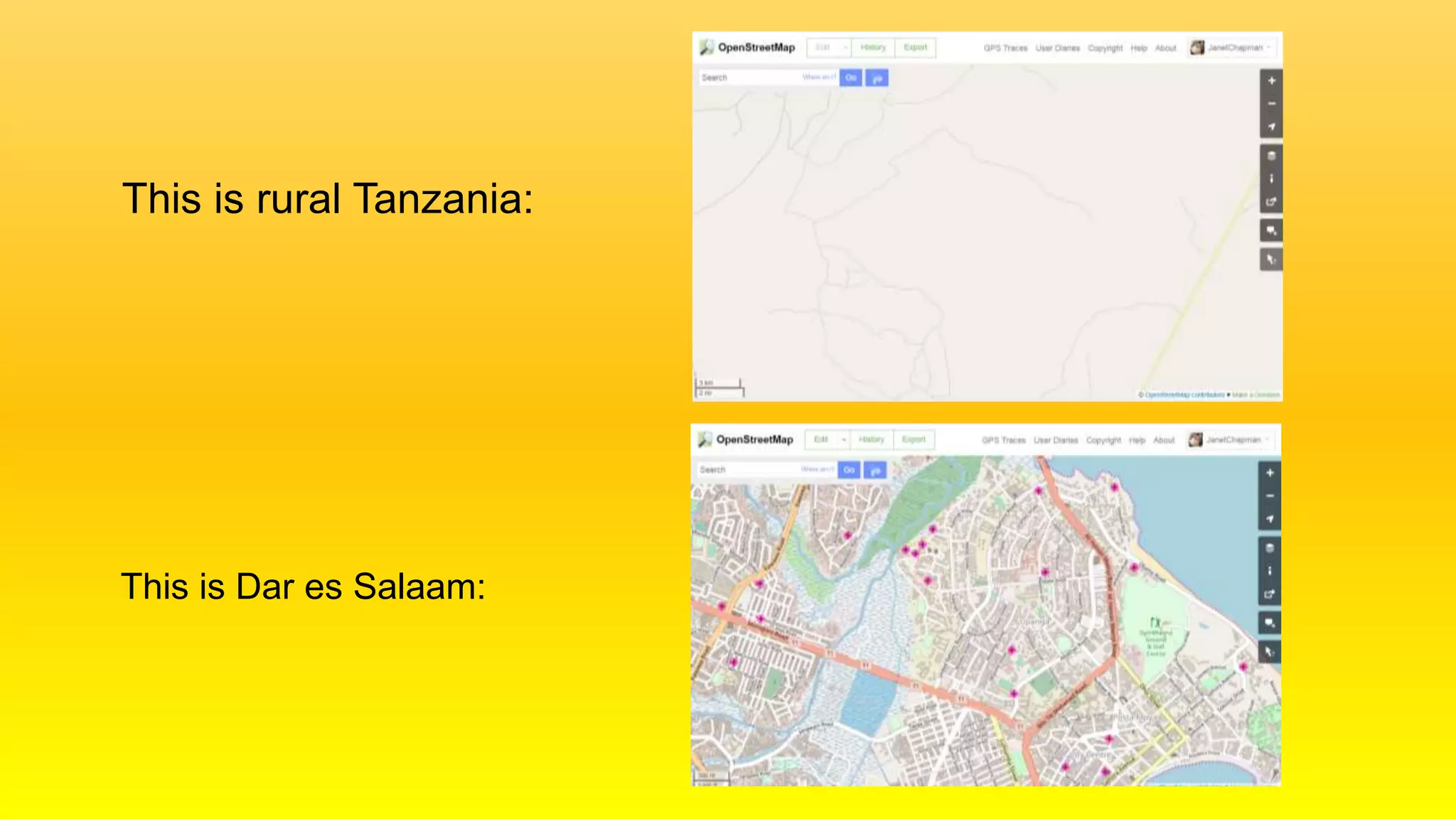
And safehouse staff cannot find them:
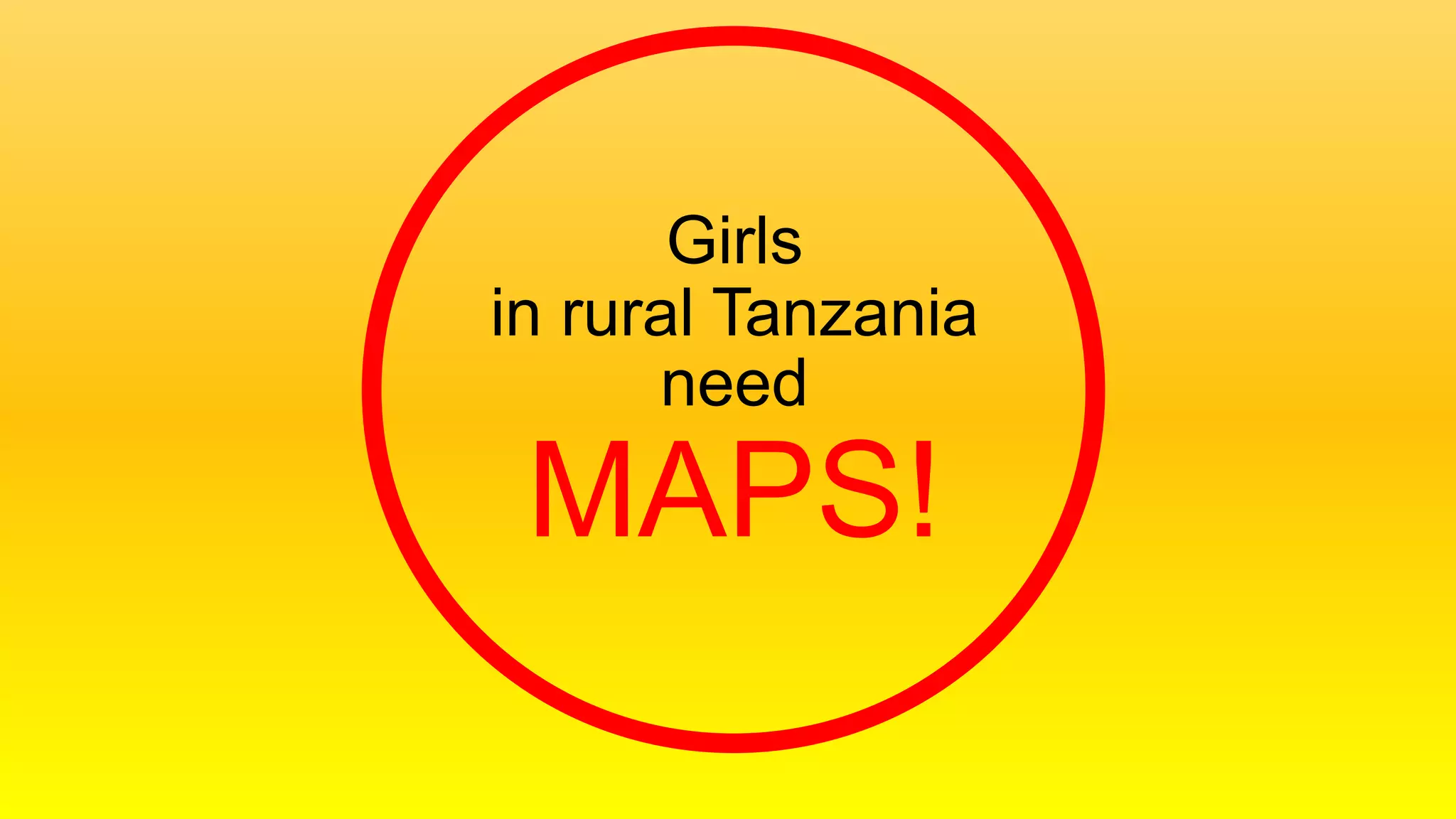
This is rural Tanzania:
This is Dar es Salaam:
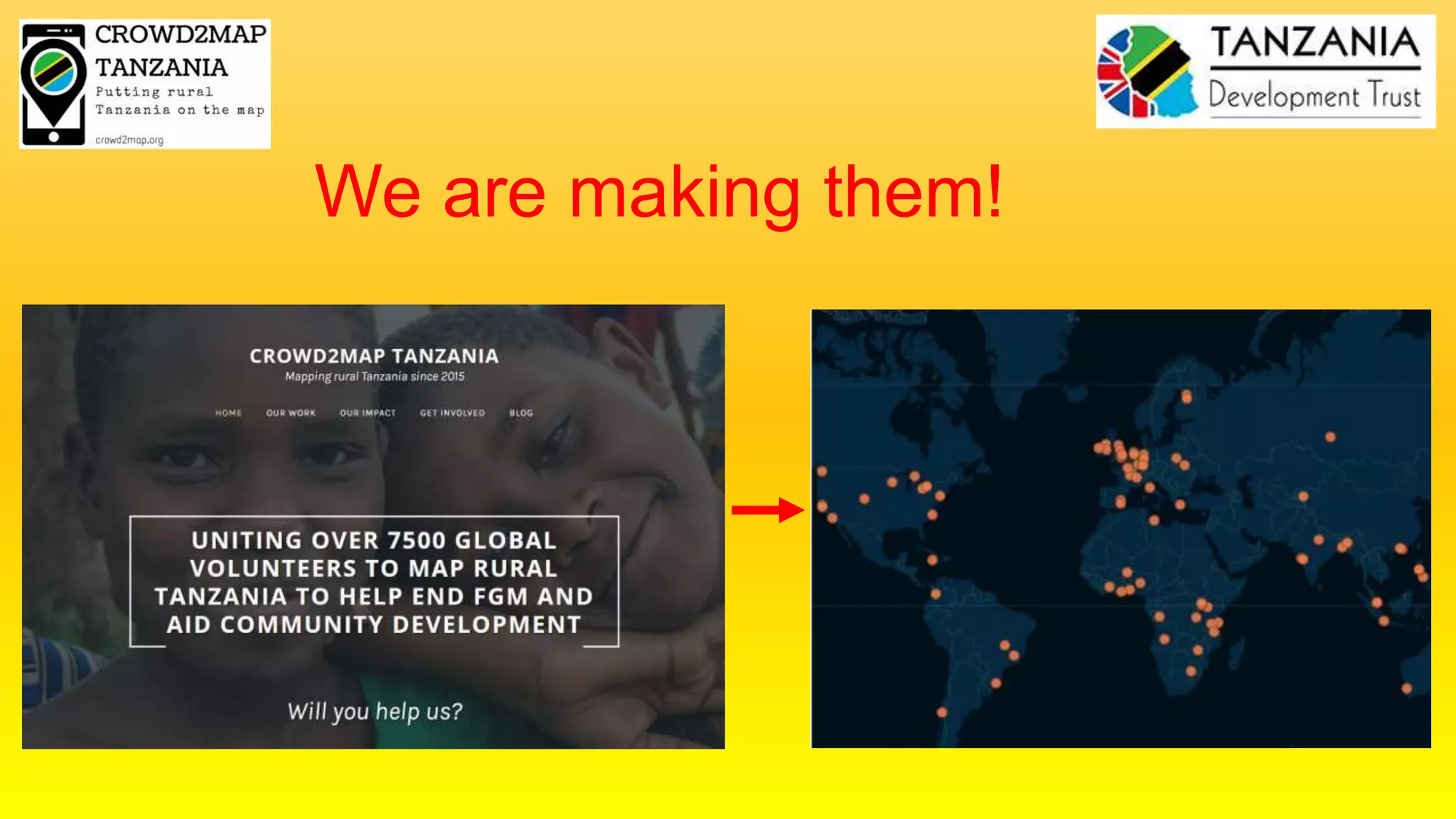
Girls
in rural Tanzania
need
MAPS!
We are making them!
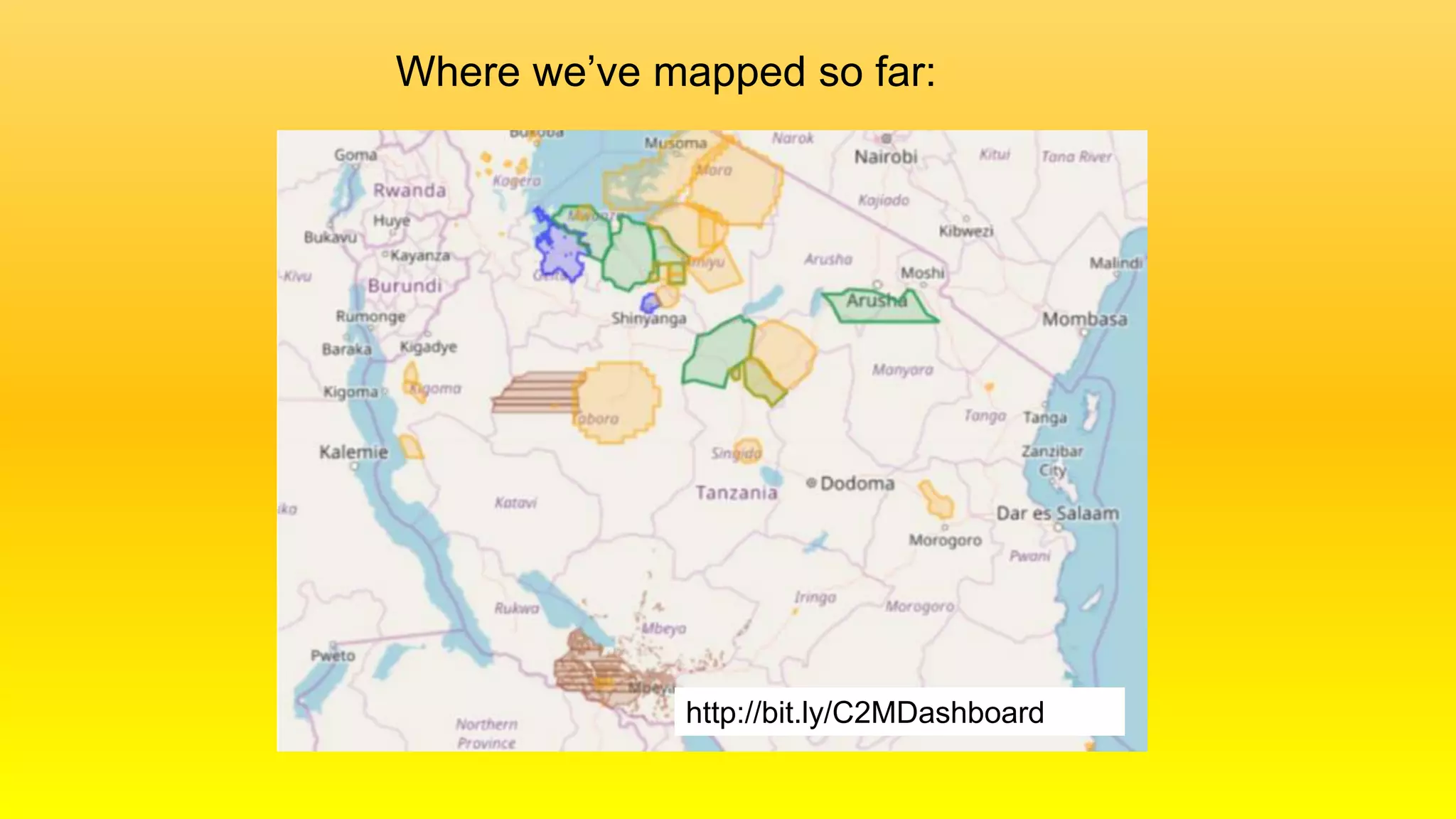
http://bit.ly/C2MDashboard
Where we’ve mapped so far:
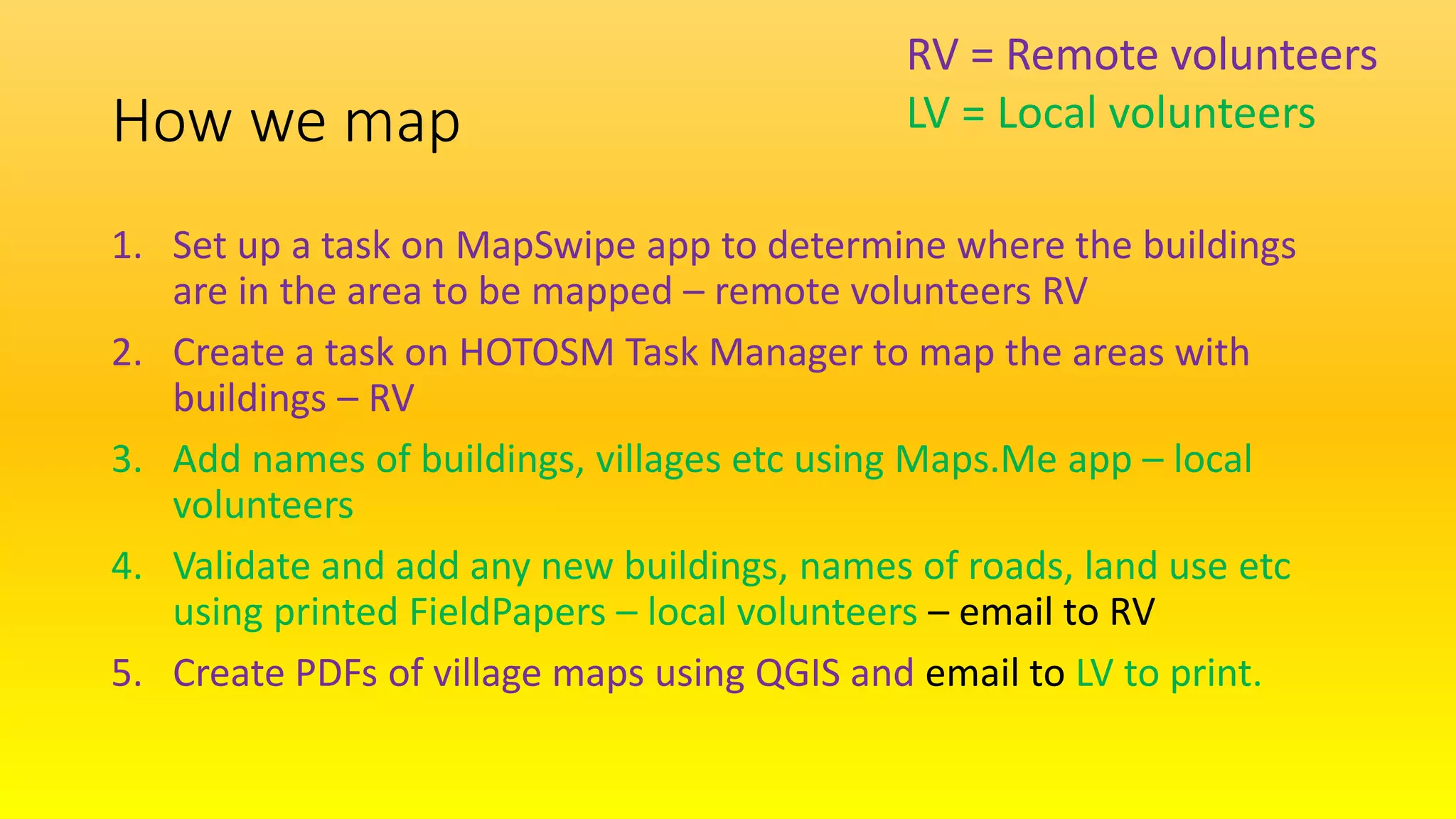
How we map
1. Set up a task on MapSwipe app to determine where the buildings
are in the area to be mapped – remote volunteers RV
2. Create a task on HOTOSM Task Manager to map the areas with
buildings – RV
3. Add names of buildings, villages etc using Maps.Me app – local
volunteers
4. Validate and add any new buildings, names of roads, land use etc
using printed FieldPapers – local volunteers – email to RV
5. Create PDFs of village maps using QGIS and email to LV to print.
RV = Remote volunteers
LV = Local volunteers
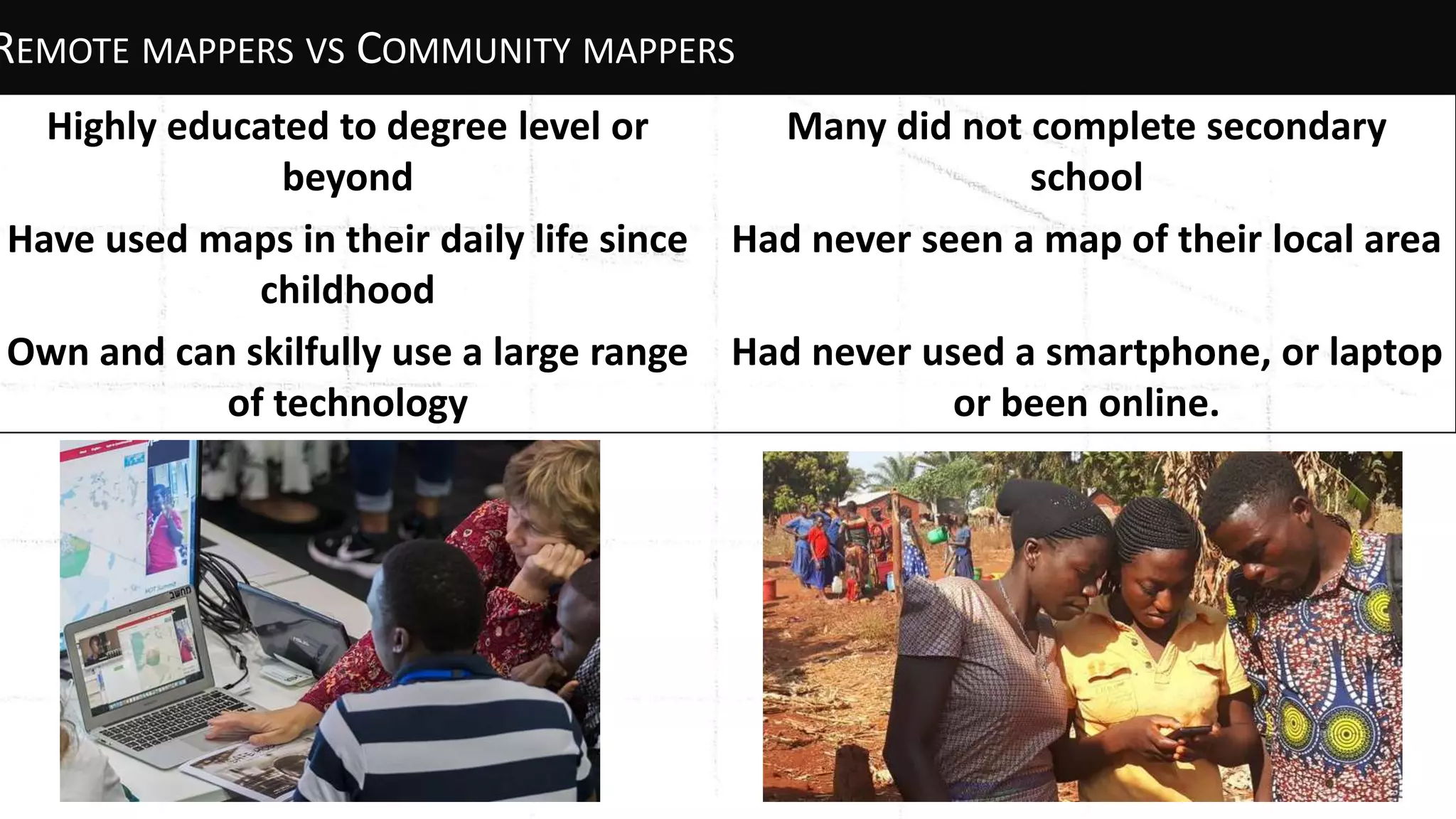
REMOTE MAPPERS VS COMMUNITY MAPPERS
Highly educated to degree level or
beyond
Many did not complete secondary
school
Have used maps in their daily life since
childhood
Had never seen a map of their local area
Own and can skilfully use a large range
of technology
Had never used a smartphone, or laptop
or been online.
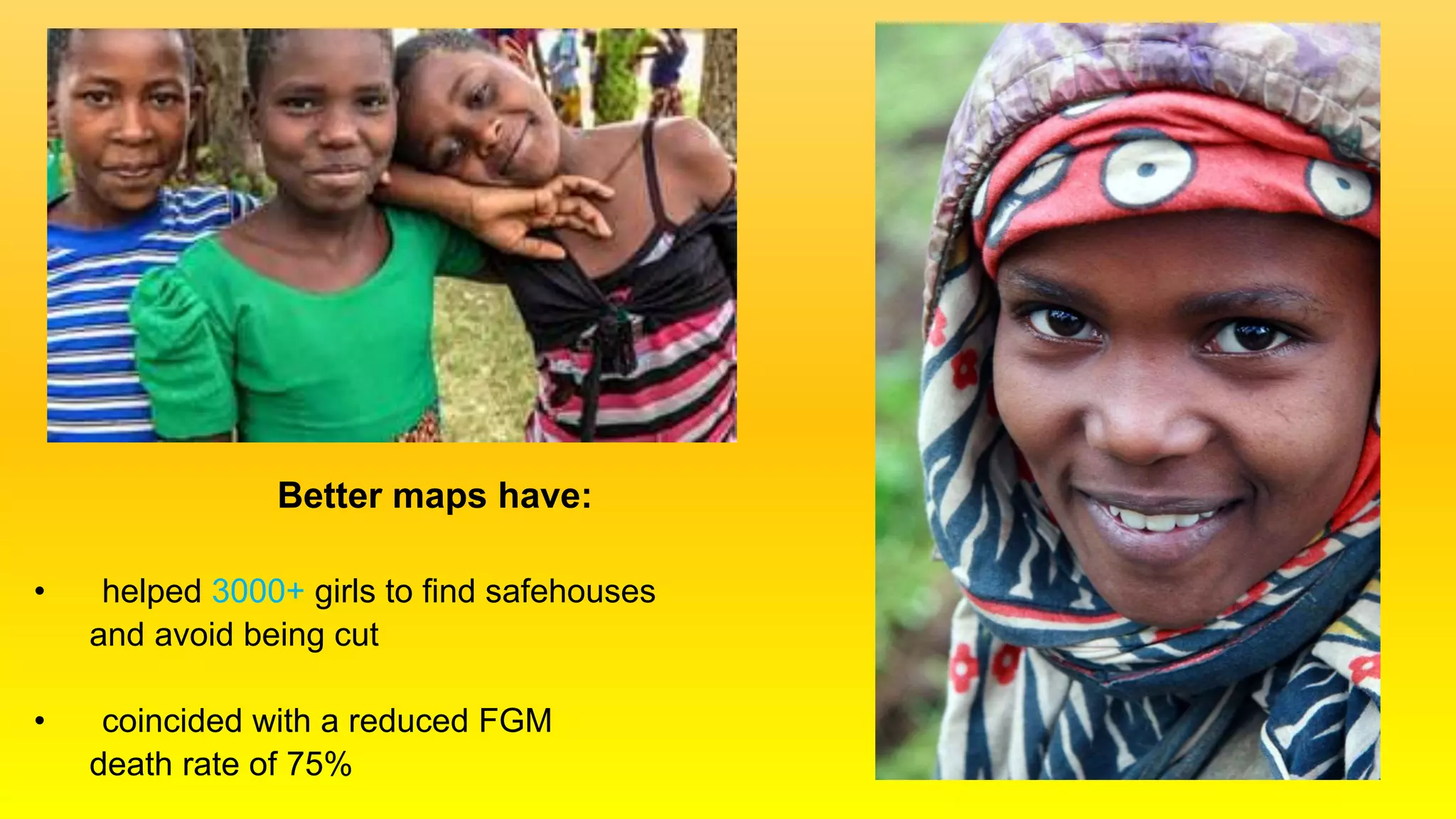
Better maps have:
• helped 3000+ girls to find safehouses
and avoid being cut
• coincided with a reduced FGM
death rate of 75%
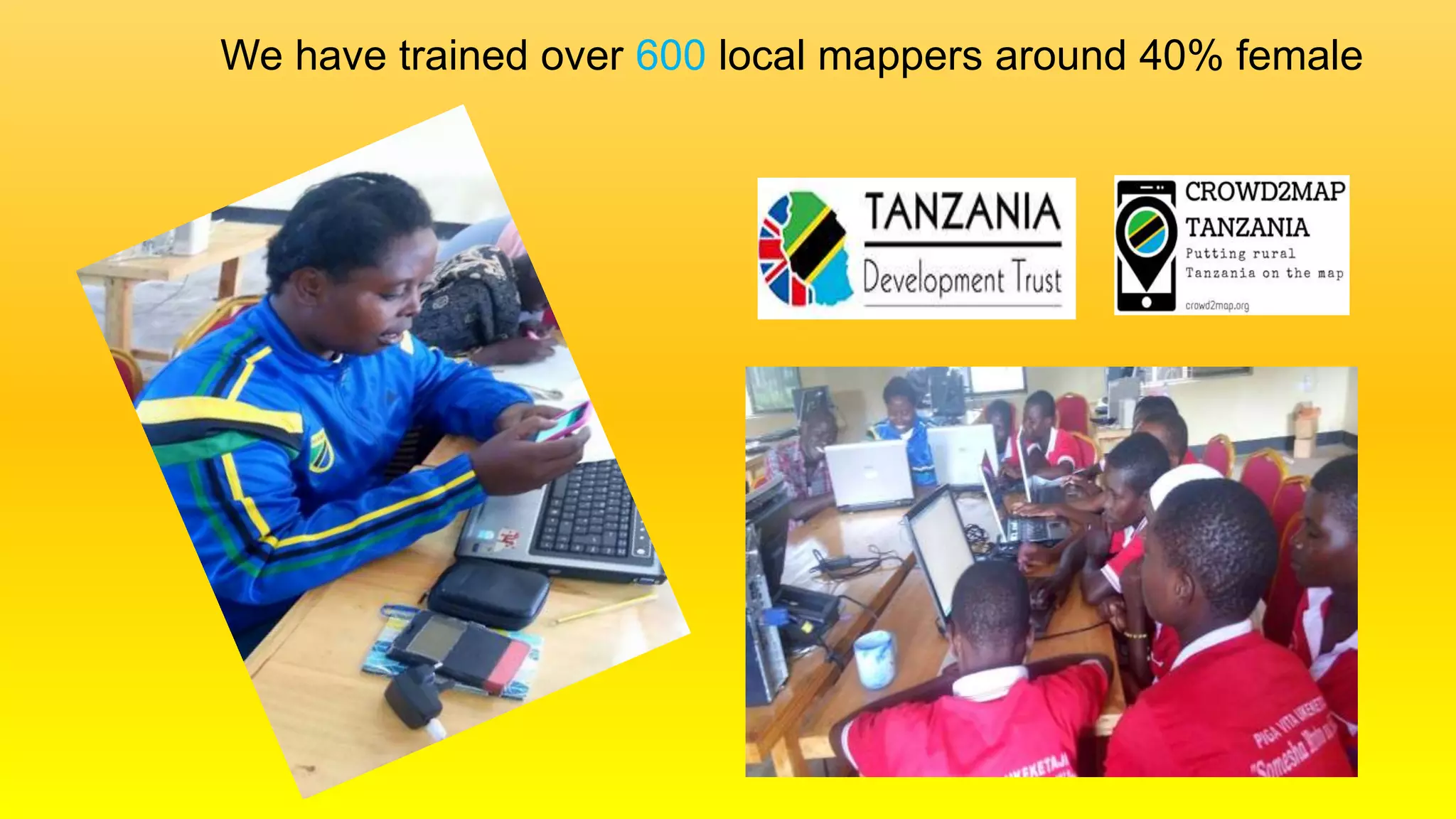
We have trained over 600 local mappers around 40% female
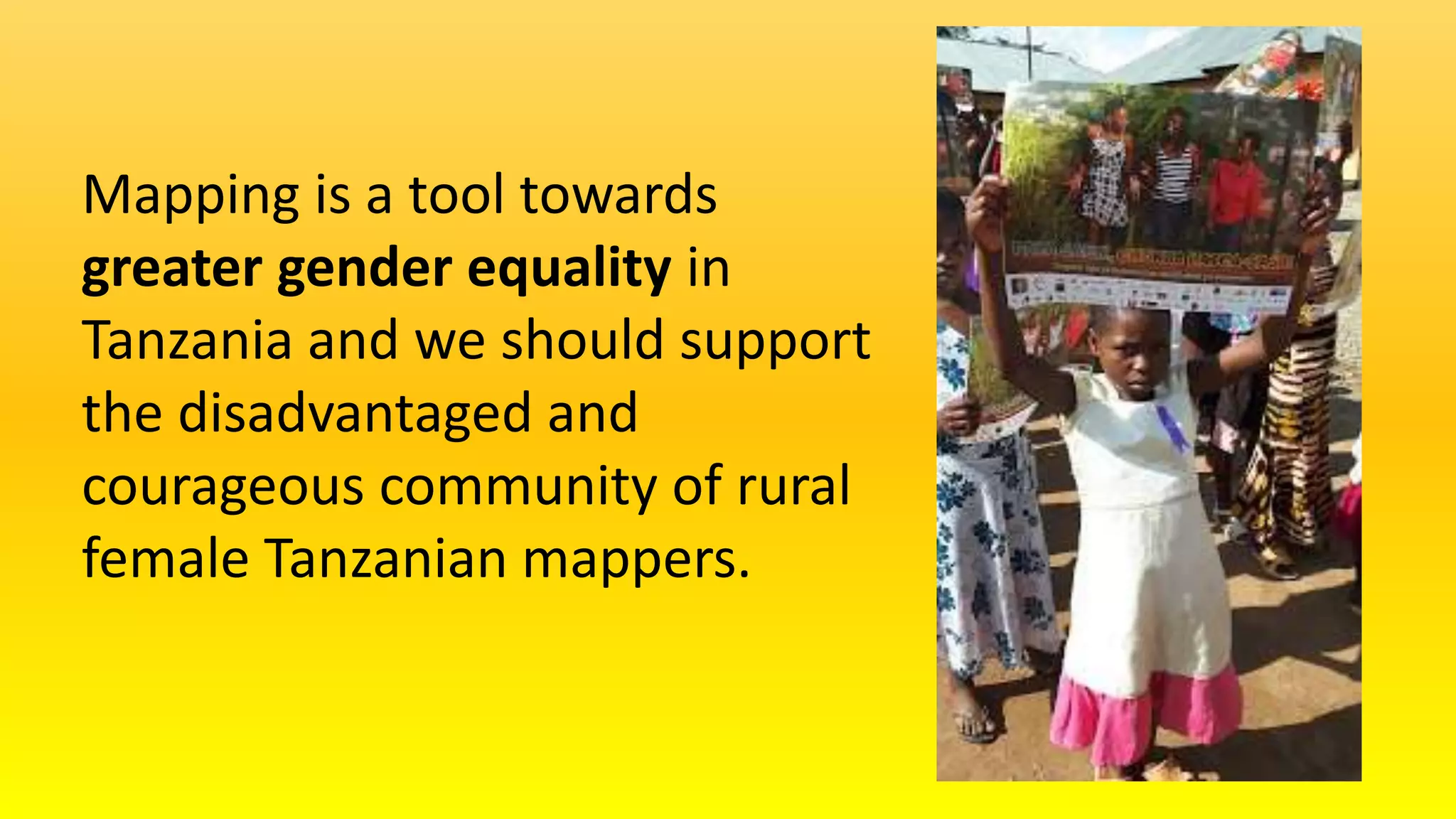
Mapping is a tool towards
greater gender equality in
Tanzania and we should support
the disadvantaged and
courageous community of rural
female Tanzanian mappers.
j.chapman@tanzdevtrust.org
@crowd2map
Please join us!

State of the Map Milan 2018 - Crowd2map presentation on fighting FGM with maps

  • 1.
  • 2.
    FGM The cutting offemale genitalia for cultural or religious reasons: Type 1: partial or total removal of the clitoris Type 2: as Type 1 with additional removal of the labia minora and often the labia majora Type 3: re-arrangement of the genitals to narrow the vaginal opening Type 4: all other procedures (pricking, piercing, incising, scraping and cauterizing)
  • 3.
    Girls are roundedup during the ‘Cutting Season’ when they are on school holidays 70% + 50% + Less than 50% FGM Prevalence in Tanzanian Women and Girls 2016
  • 4.
    Local FGM survivorand activist Rhobi Samwelly The Tanzania Development Trust supports: • Local Activists • Outreach work • Safe Houses
  • 5.
    But girls cannotfind the safehouses: And safehouse staff cannot find them:
  • 6.
    This is ruralTanzania: This is Dar es Salaam:
  • 7.
  • 8.
  • 9.
  • 10.
    How we map 1.Set up a task on MapSwipe app to determine where the buildings are in the area to be mapped – remote volunteers RV 2. Create a task on HOTOSM Task Manager to map the areas with buildings – RV 3. Add names of buildings, villages etc using Maps.Me app – local volunteers 4. Validate and add any new buildings, names of roads, land use etc using printed FieldPapers – local volunteers – email to RV 5. Create PDFs of village maps using QGIS and email to LV to print. RV = Remote volunteers LV = Local volunteers
  • 11.
    REMOTE MAPPERS VSCOMMUNITY MAPPERS Highly educated to degree level or beyond Many did not complete secondary school Have used maps in their daily life since childhood Had never seen a map of their local area Own and can skilfully use a large range of technology Had never used a smartphone, or laptop or been online.
  • 12.
    Better maps have: •helped 3000+ girls to find safehouses and avoid being cut • coincided with a reduced FGM death rate of 75%
  • 13.
    We have trainedover 600 local mappers around 40% female
  • 14.
    Mapping is atool towards greater gender equality in Tanzania and we should support the disadvantaged and courageous community of rural female Tanzanian mappers.
  • 15.

Editor's Notes