Downloaded 16 times

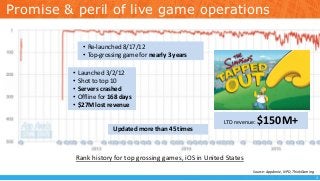

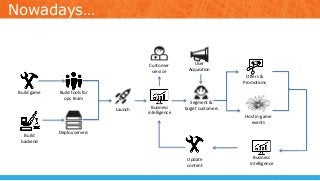
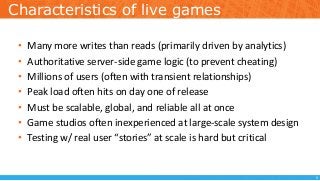

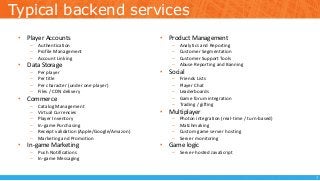



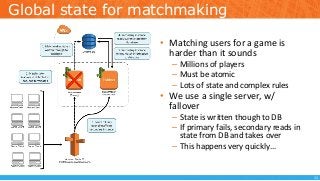


The huge growth in online games over the last few years presents unique challenges in terms of scalability and backend infrastructure. Launch day can mean an immediate increase in load from a few hundred to millions of users, each of whom may be conducting dozens of transactions per minute as they purchase extra weapons or gear. Games often process many more writes than reads, some of which are low-latency and compute-intensive while others are high-latency but must be shared among hundreds of global servers. Multiplayer games require enough global player state to allow for matchmaking, while not allowing for a single point of failure. Games require both centralized servers to allow for frequent updates and decentralized ones to allow for low-latency play worldwide. And to prevent cheating, authoritative logic needs to stay server-side. With $24 billion in revenue in 2014 (and projected to grow 4x that by 2020), the online game industry is in need of all the creative solutions that researchers can offer. This talk will outline specific high-performance computing challenges faced by games and the pros and cons of the current solutions being used.


