(Lean) Six Sigma Project Charter
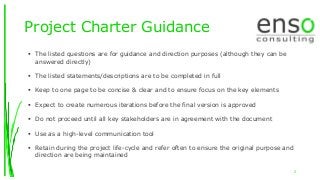
Project Charter Guidance
2
 The listed questions are for guidance and direction purposes (although they can be
answered directly)
 The listed statements/descriptions are to be completed in full
 Keep to one page to be concise & clear and to ensure focus on the key elements
 Expect to create numerous iterations before the final version is approved
 Do not proceed until all key stakeholders are in agreement with the document
 Use as a high-level communication tool
 Retain during the project life-cycle and refer often to ensure the original purpose and
direction are being maintained
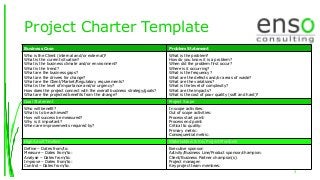
Project Charter Template
3
Business Case Problem Statement
Who is the Client (internal and/or external)?
What is the current situation?
What is the business climate and/or environment?
What is the trend?
What are the business gaps?
What are the drivers for change?
What are the Client/Market/Regulatory requirements?
What is the level of importance and/or urgency?
How does the project connect with the overall business strategy/goals?
What are the projected benefits from the change?
What is the problem?
How do you know it is a problem?
When did the problem first occur?
Where is it occurring?
What is the frequency?
What are the defects and/or areas of waste?
What are the variations?
What is the level of complexity?
What are the impacts?
What is the cost of poor quality (soft and hard)?
Goal Statement Project Scope
Who will benefit?
What is to be achieved?
How will success be measured?
Why is it important?
When are improvements required by?
In scope activities:
Out of scope activities:
Process start point:
Process end point:
Critical to quality:
Primary metric:
Consequential metric:
High-Level Timeline Stakeholders & Key Project Members
Define – Dates from/to:
Measure – Dates from/to:
Analyse – Dates from/to:
Improve – Dates from/to:
Control – Dates from/to:
Executive sponsor:
Activity/Business Line/Product sponsor/champion:
Client/Business Partner champion(s):
Project manager:
Key project team members:

(Lean) Six Sigma Project Charter Template

  • 1.
    (Lean) Six SigmaProject Charter
  • 2.
    Project Charter Guidance 2 The listed questions are for guidance and direction purposes (although they can be answered directly)  The listed statements/descriptions are to be completed in full  Keep to one page to be concise & clear and to ensure focus on the key elements  Expect to create numerous iterations before the final version is approved  Do not proceed until all key stakeholders are in agreement with the document  Use as a high-level communication tool  Retain during the project life-cycle and refer often to ensure the original purpose and direction are being maintained
  • 3.
    Project Charter Template 3 BusinessCase Problem Statement Who is the Client (internal and/or external)? What is the current situation? What is the business climate and/or environment? What is the trend? What are the business gaps? What are the drivers for change? What are the Client/Market/Regulatory requirements? What is the level of importance and/or urgency? How does the project connect with the overall business strategy/goals? What are the projected benefits from the change? What is the problem? How do you know it is a problem? When did the problem first occur? Where is it occurring? What is the frequency? What are the defects and/or areas of waste? What are the variations? What is the level of complexity? What are the impacts? What is the cost of poor quality (soft and hard)? Goal Statement Project Scope Who will benefit? What is to be achieved? How will success be measured? Why is it important? When are improvements required by? In scope activities: Out of scope activities: Process start point: Process end point: Critical to quality: Primary metric: Consequential metric: High-Level Timeline Stakeholders & Key Project Members Define – Dates from/to: Measure – Dates from/to: Analyse – Dates from/to: Improve – Dates from/to: Control – Dates from/to: Executive sponsor: Activity/Business Line/Product sponsor/champion: Client/Business Partner champion(s): Project manager: Key project team members: