Becoming a BI
Developer
HASSUG 7/14/2015
HOUSTON, TX
DEREK WILSON
Becoming a BI Developer
Different end users with different expectations
Reports and clarity versus proper normalization
Transaction speed is not a core requirement
Preprocessing of data to store aggregates for ease of reporting tools to leverage
AdventureWorks (OLTP)
Quick review of structures
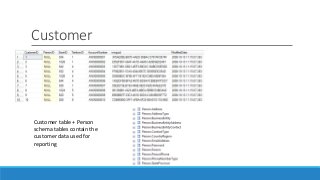
Customer
Customer table + Person
schema tables contain the
customer data used for
reporting
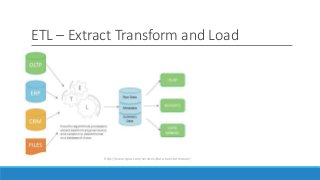
ETL – Extract Transform and Load
http://www.sqiar.com/services/data-transformation/
AdventureWorks DW
Star Schema
Load Process
OLAP
Available on - http://msftdbprodsamples.codeplex.com/
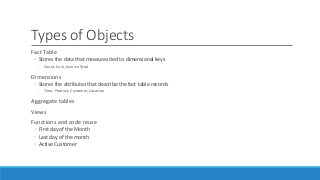
Types of Objects
Fact Table
◦ Stores the data that measures tied to dimensional keys
◦ Count, Sum, Invoice Total
Dimensions
◦ Stores the attributes that describe the fact table records
◦ Time, Product, Customer, Location
Aggregate tables
Views
Functions and code reuse
◦ First day of the Month
◦ Last day of the month
◦ Active Customer
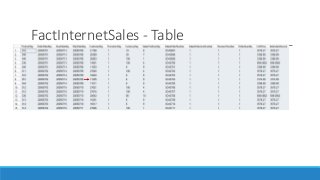
FactInternetSales - Table
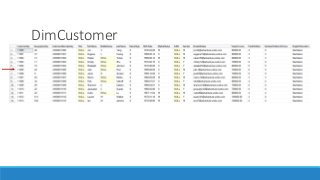
DimCustomer
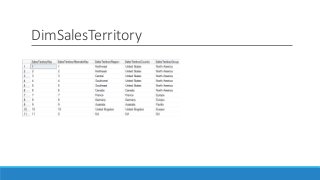
DimSalesTerritory
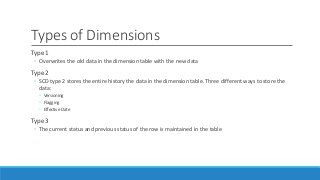
Types of Dimensions
Type 1
◦ Overwrites the old data in the dimension table with the new data
Type 2
◦ SCD type 2 stores the entire history the data in the dimension table. Three different ways to store the
data:
◦ Versioning
◦ Flagging
◦ Effective Date
Type 3
◦ The current status and previous status of the row is maintained in the table
Designing for Reporting Tools
How does each tool consume data?
What is the best way to stage the data for the tool to leverage?
Always refer to best practices when starting.
SSRS
Powerview
Tableau
Reporting Speeds
Know the audience
How often will they view the report?
Are you emailing the report versus online viewing?
How fast should a report run?
◦ It Depends
◦ Dashboards – as fast a possible
◦ Summary Reports - minutes
◦ Detail Operational Reports – minutes/hours
◦ Cubes – as fast as possible

Contact
Derek Wilson
www.derekewilson.com
Email: derek@derekewilson.com

Becoming a bi developer

  • 1.
    Becoming a BI Developer HASSUG7/14/2015 HOUSTON, TX DEREK WILSON
  • 2.
    Becoming a BIDeveloper Different end users with different expectations Reports and clarity versus proper normalization Transaction speed is not a core requirement Preprocessing of data to store aggregates for ease of reporting tools to leverage
  • 3.
  • 4.
    Customer Customer table +Person schema tables contain the customer data used for reporting
  • 5.
    ETL – ExtractTransform and Load http://www.sqiar.com/services/data-transformation/
  • 6.
    AdventureWorks DW Star Schema LoadProcess OLAP Available on - http://msftdbprodsamples.codeplex.com/
  • 7.
    Types of Objects FactTable ◦ Stores the data that measures tied to dimensional keys ◦ Count, Sum, Invoice Total Dimensions ◦ Stores the attributes that describe the fact table records ◦ Time, Product, Customer, Location Aggregate tables Views Functions and code reuse ◦ First day of the Month ◦ Last day of the month ◦ Active Customer
  • 8.
  • 9.
  • 10.
  • 11.
    Types of Dimensions Type1 ◦ Overwrites the old data in the dimension table with the new data Type 2 ◦ SCD type 2 stores the entire history the data in the dimension table. Three different ways to store the data: ◦ Versioning ◦ Flagging ◦ Effective Date Type 3 ◦ The current status and previous status of the row is maintained in the table
  • 12.
    Designing for ReportingTools How does each tool consume data? What is the best way to stage the data for the tool to leverage? Always refer to best practices when starting. SSRS Powerview Tableau
  • 13.
    Reporting Speeds Know theaudience How often will they view the report? Are you emailing the report versus online viewing? How fast should a report run? ◦ It Depends ◦ Dashboards – as fast a possible ◦ Summary Reports - minutes ◦ Detail Operational Reports – minutes/hours ◦ Cubes – as fast as possible
  • 14.