Acrochordons
Skin tags Papillomas Soft wart Soft fibromas Pedunculated, filiform,  cutaneous tags
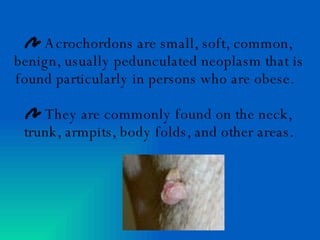
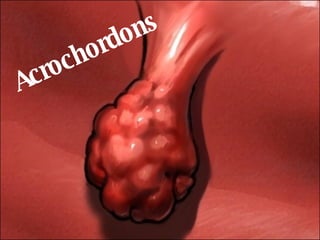
Acrochordons are small, soft, common, benign, usually pedunculated neoplasm that is found particularly in persons who are obese.  They are commonly found on the neck, trunk, armpits, body folds, and other areas.
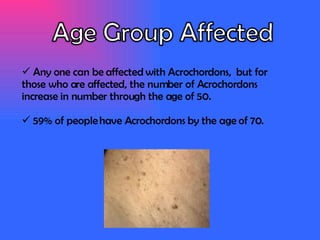
Any one can be affected with Acrochordons,  but for those who are affected, the number of Acrochordons increase in number through the age of 50.  59% of people have Acrochordons by the age of 70.
Hormone Imbalances Liver Problems (hepatitis) Overexposure to the sun Viral infections Repeated exposure to X-rays, chemicals, and radioactive  substances Acne Obesity Autoimmune diseases Bacterial skin infections (impetigo and cellulitis) High levels of growth factors (during pregnancy or acrogmegaly) Insulin resistance Actinic keratosis Allergic reaction
Incidence Rate/Risk Factors Skin Chafing and irritation Pregnancy Acrogmegaly (gigantism) Insulin resistance Human papilloma virus Obesity Type 2 Diabetes Crohn’s Disease
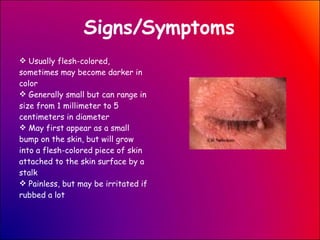
Signs/Symptoms Usually flesh-colored, sometimes may become darker in color Generally small but can range in size from 1 millimeter to 5 centimeters in diameter May first appear as a small bump on the skin, but will grow into a flesh-colored piece of skin attached to the skin surface by a stalk Painless, but may be irritated if rubbed a lot
Treatments/Preventions You need to talk to your doctor about a treatment plan; they also need to be differentiated from neurofibromas and other benign skin lesions. Treatment plans may include:  Cryotherapy – freezing the Acrochordon so it falls off Surgical Excision – removed surgically with scissors Electrosurgery – electric current is applied to it and it falls off Ligation – suture is tied around the neck of the Acrochordon to remove it There is no known way to prevent Acrochordons because their cause is unclear
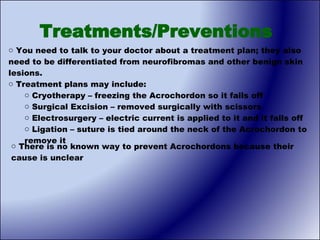
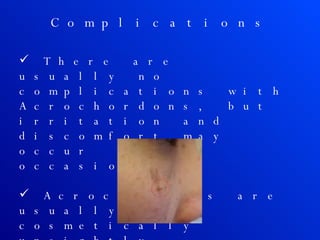
Complications There are usually no complications with Acrochordons, but irritation and discomfort may occur occasionally. Acrochordons are usually cosmetically unsightly.
http://www.emedicine.com/derm/topic606.htm http://www.medicinenet.com/skin_tag/article.htm http://www.articlesbase.com/alternative-medicine-articles/acrochordons-causes-symptoms-and-treatments-367546.html http://www.health.am/encyclopedia/more/acrochordons/ http://healthlibrary.epnet.com/GetContent.aspx?token=b93d114e-5009-4f6a-9917-6c594254fcc7+&chunkiid=180086

Acrochordons

  • 1.
  • 2.
    Skin tags PapillomasSoft wart Soft fibromas Pedunculated, filiform, cutaneous tags
  • 3.
    Acrochordons are small,soft, common, benign, usually pedunculated neoplasm that is found particularly in persons who are obese. They are commonly found on the neck, trunk, armpits, body folds, and other areas.
  • 4.
    Any one canbe affected with Acrochordons, but for those who are affected, the number of Acrochordons increase in number through the age of 50. 59% of people have Acrochordons by the age of 70.
  • 5.
    Hormone Imbalances LiverProblems (hepatitis) Overexposure to the sun Viral infections Repeated exposure to X-rays, chemicals, and radioactive substances Acne Obesity Autoimmune diseases Bacterial skin infections (impetigo and cellulitis) High levels of growth factors (during pregnancy or acrogmegaly) Insulin resistance Actinic keratosis Allergic reaction
  • 6.
    Incidence Rate/Risk FactorsSkin Chafing and irritation Pregnancy Acrogmegaly (gigantism) Insulin resistance Human papilloma virus Obesity Type 2 Diabetes Crohn’s Disease
  • 7.
    Signs/Symptoms Usually flesh-colored,sometimes may become darker in color Generally small but can range in size from 1 millimeter to 5 centimeters in diameter May first appear as a small bump on the skin, but will grow into a flesh-colored piece of skin attached to the skin surface by a stalk Painless, but may be irritated if rubbed a lot
  • 8.
    Treatments/Preventions You needto talk to your doctor about a treatment plan; they also need to be differentiated from neurofibromas and other benign skin lesions. Treatment plans may include: Cryotherapy – freezing the Acrochordon so it falls off Surgical Excision – removed surgically with scissors Electrosurgery – electric current is applied to it and it falls off Ligation – suture is tied around the neck of the Acrochordon to remove it There is no known way to prevent Acrochordons because their cause is unclear
  • 9.
    Complications There areusually no complications with Acrochordons, but irritation and discomfort may occur occasionally. Acrochordons are usually cosmetically unsightly.
  • 10.
    http://www.emedicine.com/derm/topic606.htm http://www.medicinenet.com/skin_tag/article.htm http://www.articlesbase.com/alternative-medicine-articles/acrochordons-causes-symptoms-and-treatments-367546.htmlhttp://www.health.am/encyclopedia/more/acrochordons/ http://healthlibrary.epnet.com/GetContent.aspx?token=b93d114e-5009-4f6a-9917-6c594254fcc7+&chunkiid=180086