By Brad Wilson, 4/23/22. https://www.slideshare.net/bradwilson581525/presentations
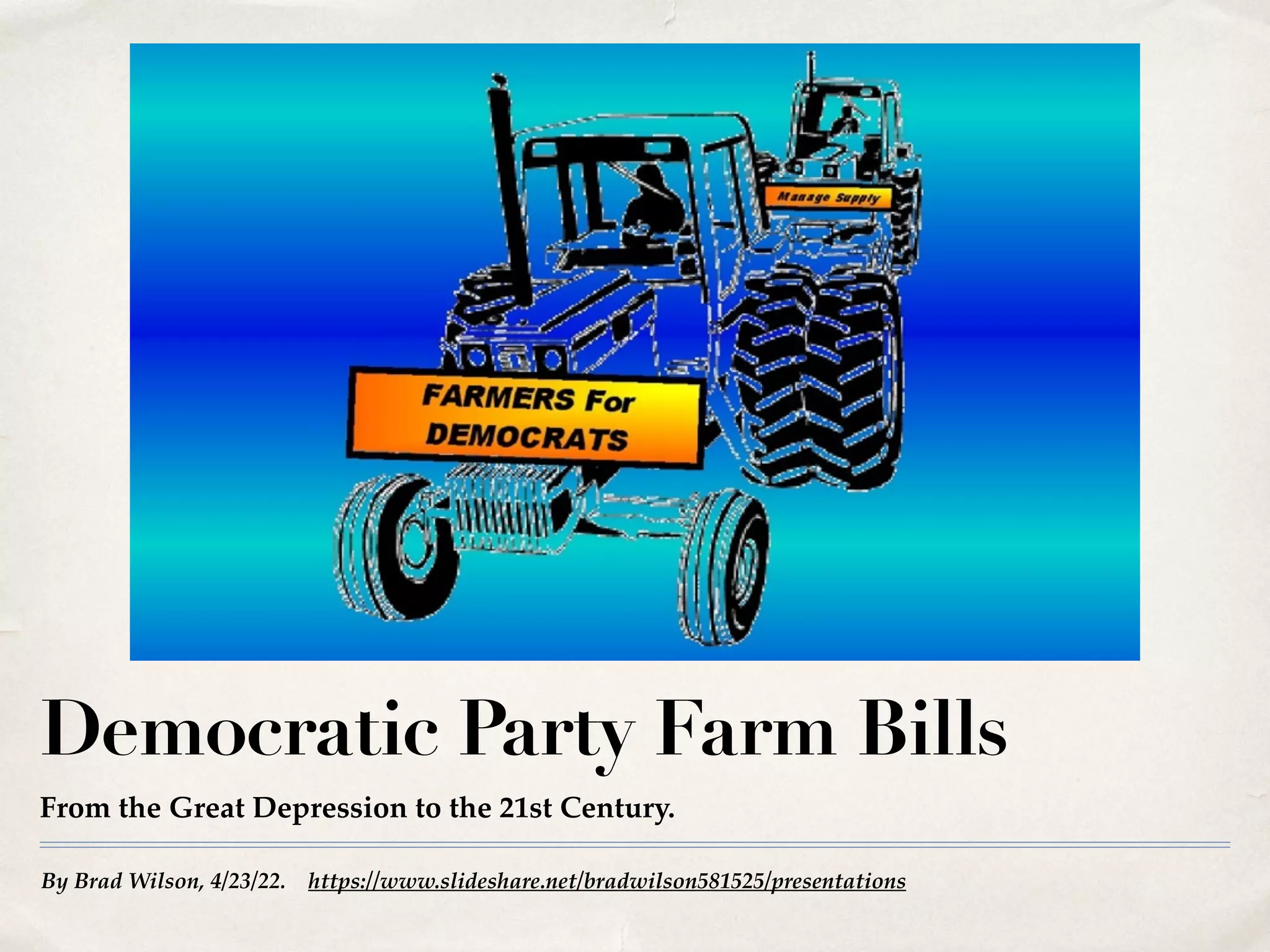
Democratic Party Farm Bills
From the Great Depression to the 21st Century.
By Brad Wilson, 4/23/22
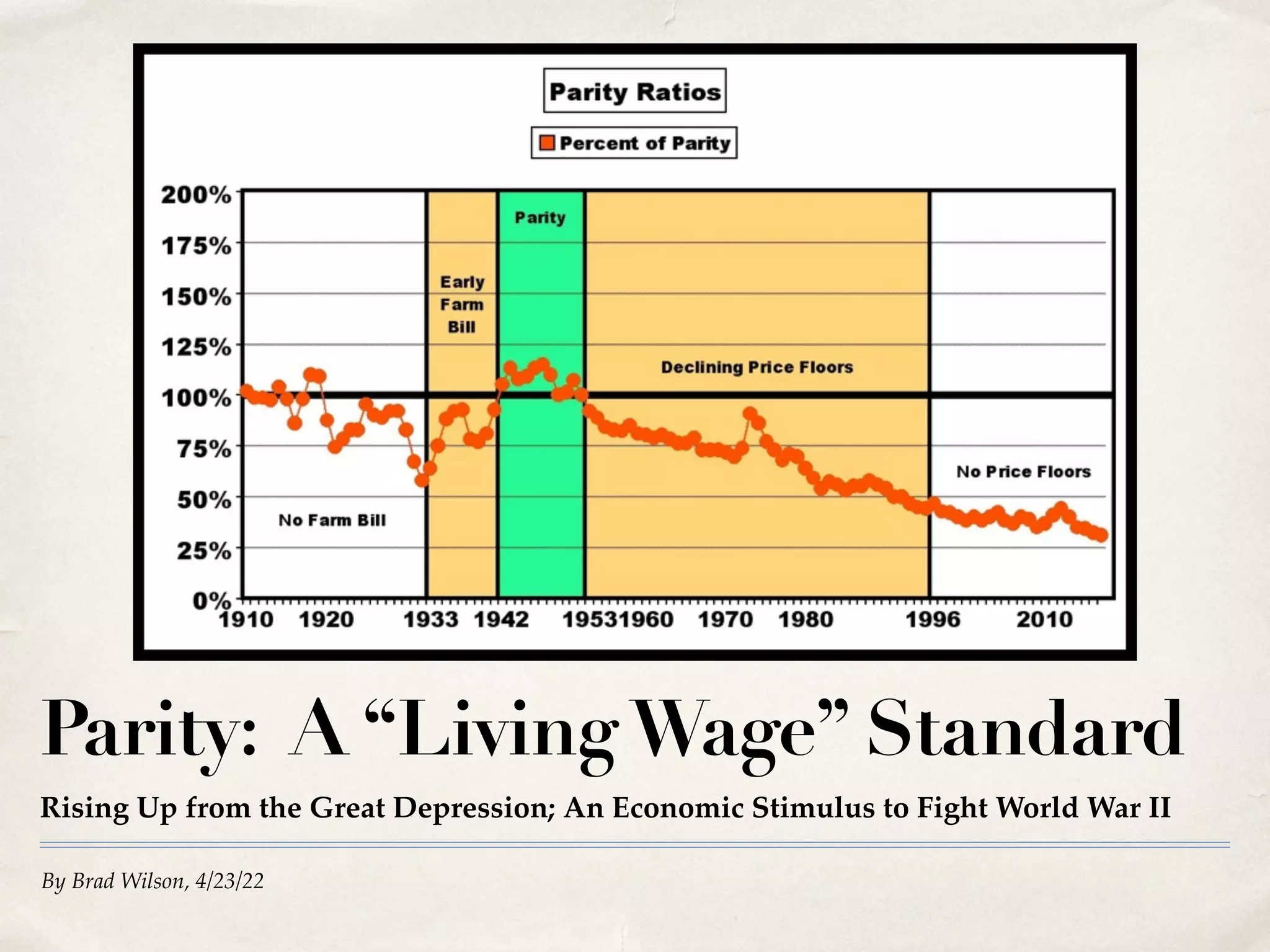
Parity: A “LivingWage” Standard
Rising Up from the Great Depression; An Economic Stimulus to Fight World War II
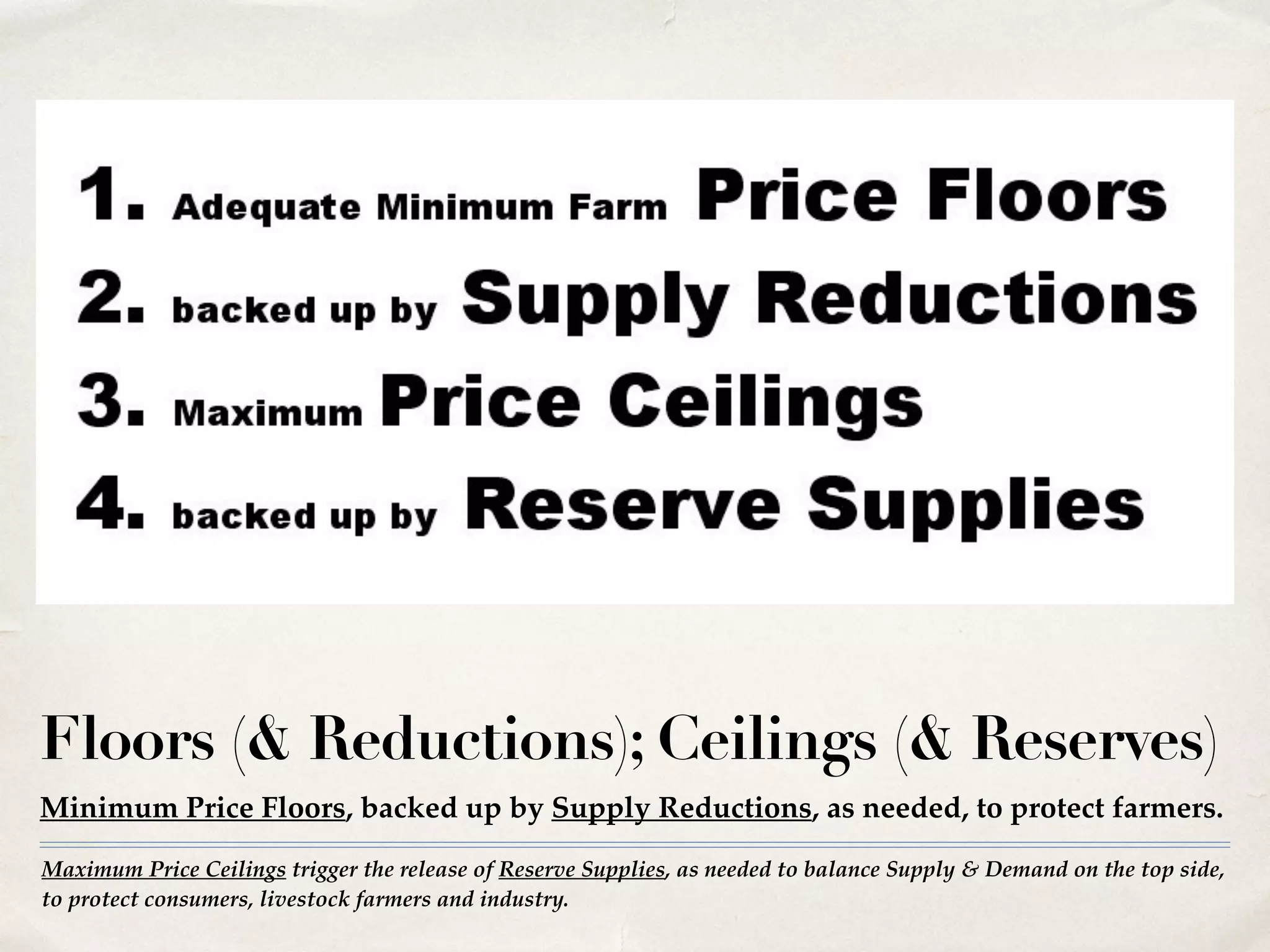
Maximum Price Ceilings trigger the release of Reserve Supplies, as needed to balance Supply & Demand on the top side,
to protect consumers, livestock farmers and industry.
Floors (& Reductions); Ceilings (& Reserves)
Minimum Price Floors, backed up by Supply Reductions, as needed, to protect farmers.
Date
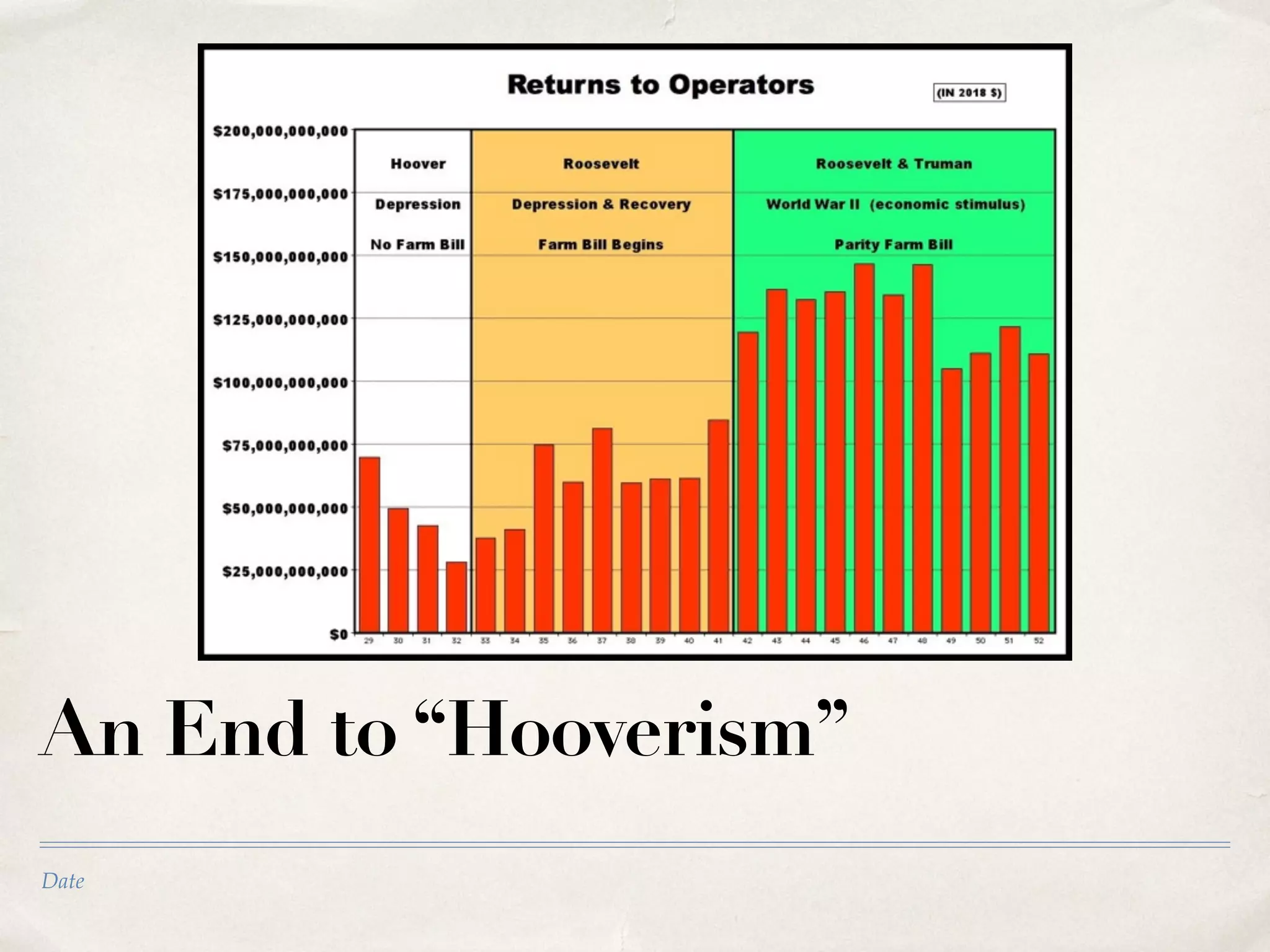
An End to “Hooverism”
Date
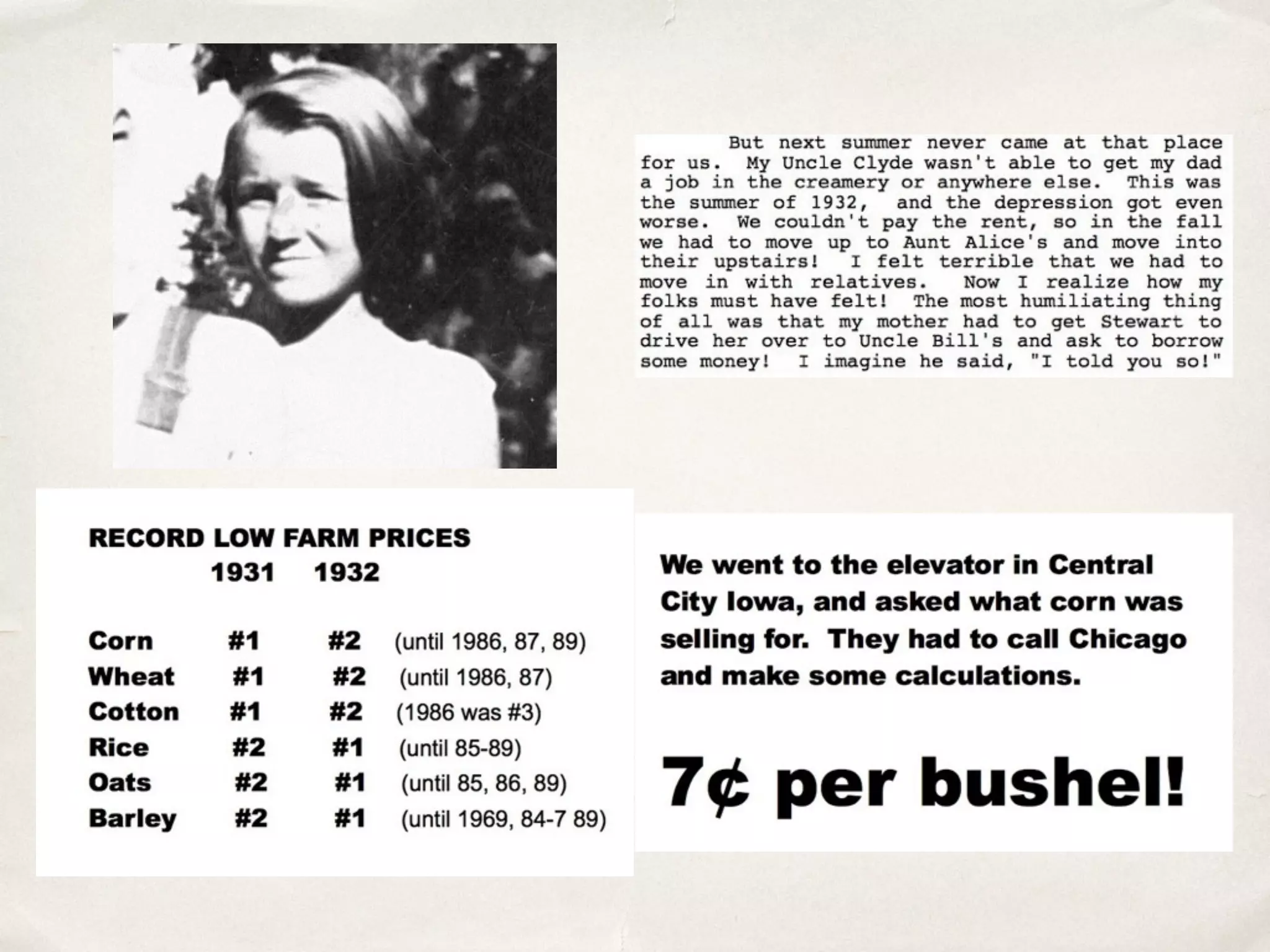
Oversupply: Farm Prices Crash 63%!
Farm Implement & Auto Manufacturers Managed their supply, prices fell only 6% & 16%.
Date
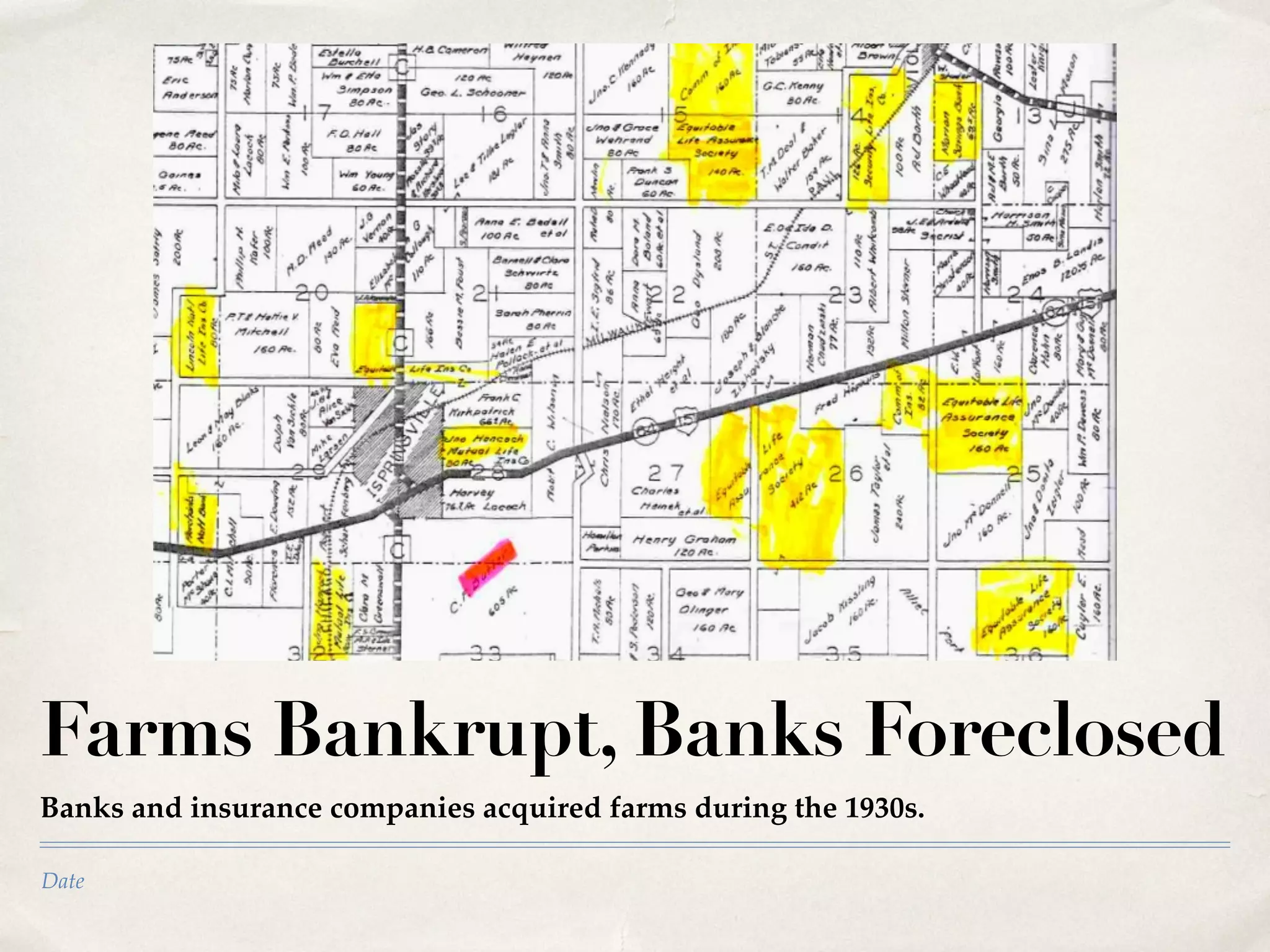
Farms Bankrupt, Banks Foreclosed
Banks and insurance companies acquired farms during the 1930s.
Date
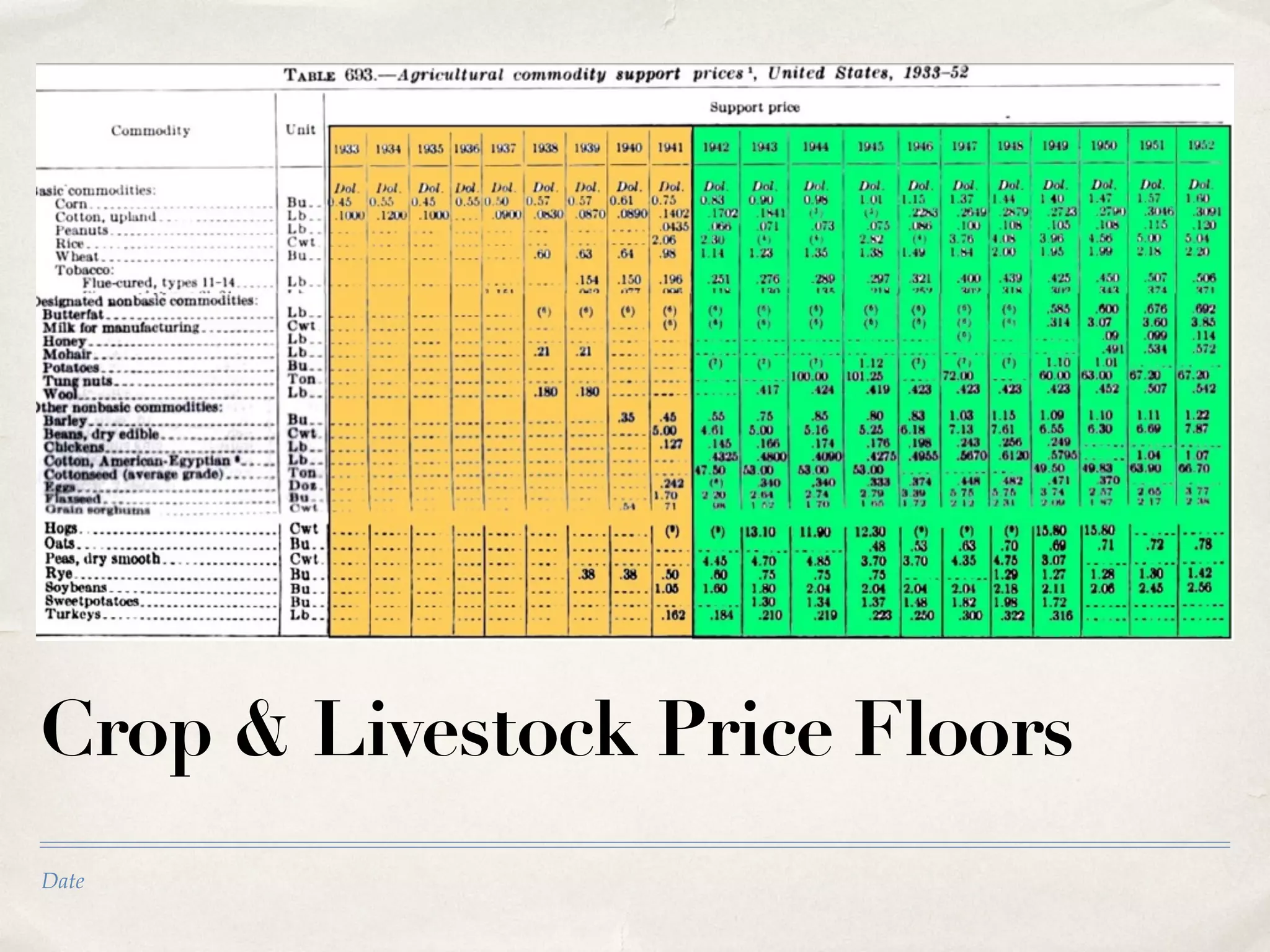
Crop & Livestock Price Floors
Date
Date
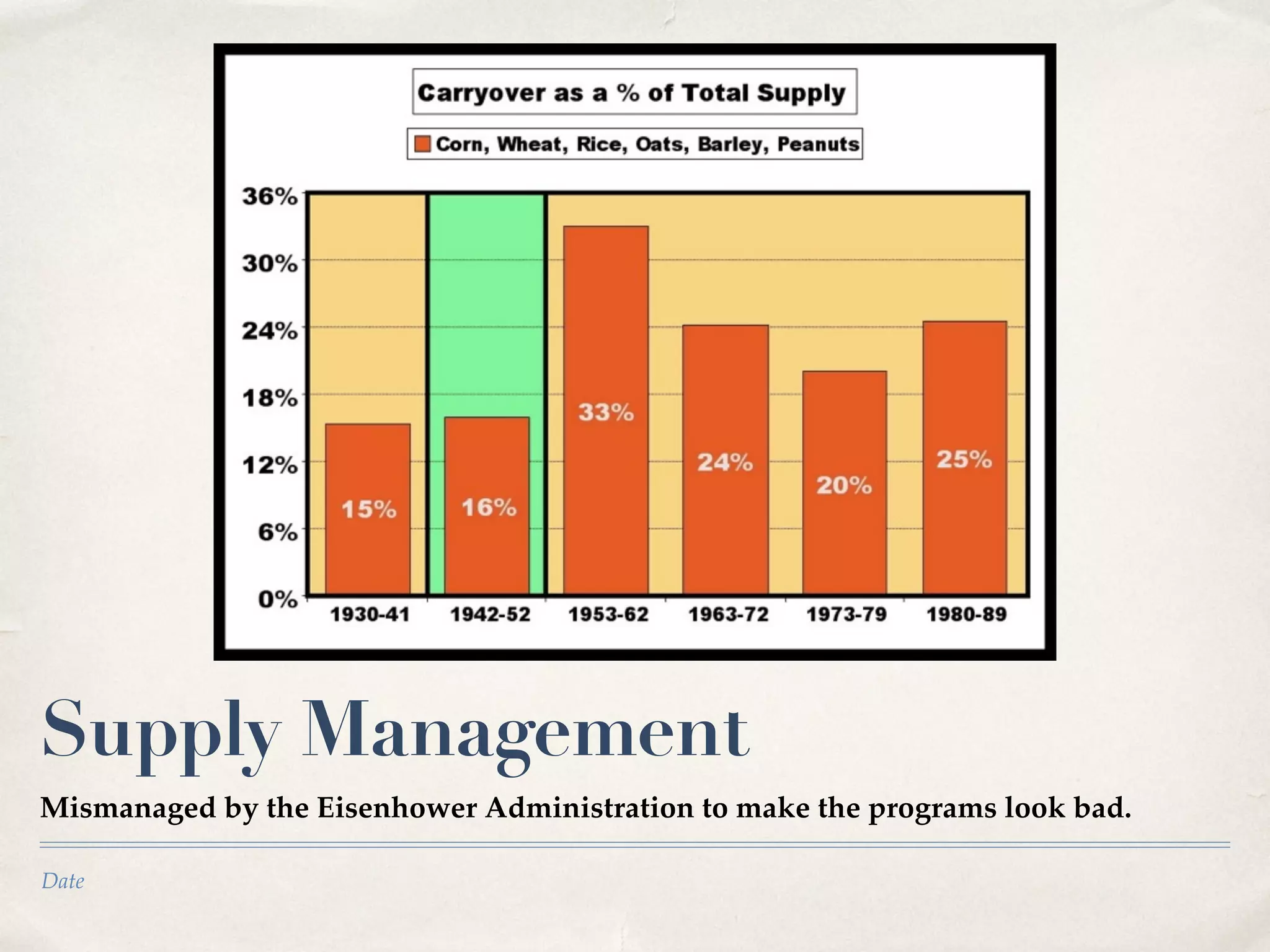
Supply Management
Mismanaged by the Eisenhower Administration to make the programs look bad.
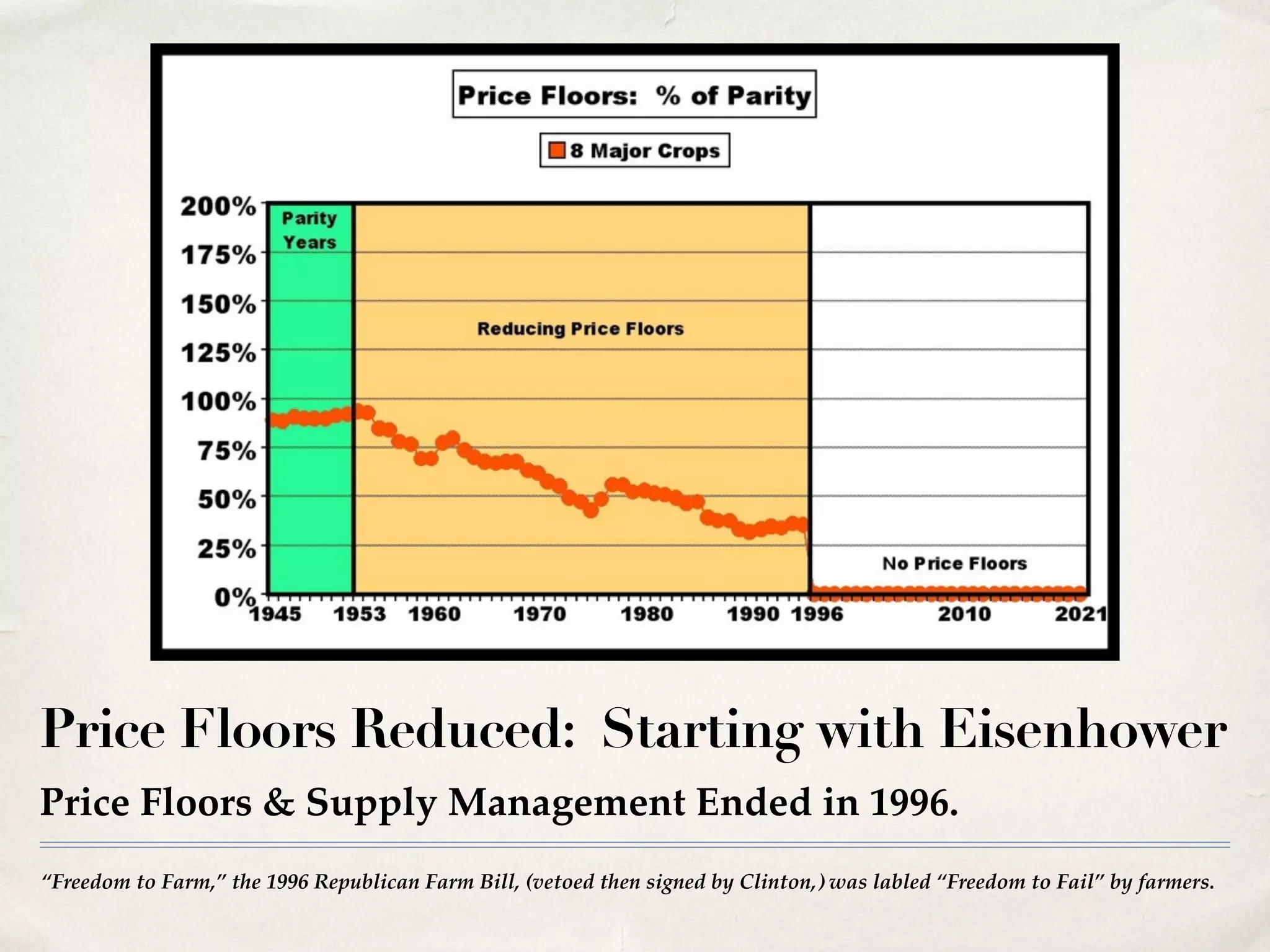
“Freedom to Farm,” the 1996 Republican Farm Bill, (vetoed then signed by Clinton,) was labled “Freedom to Fail” by farmers.
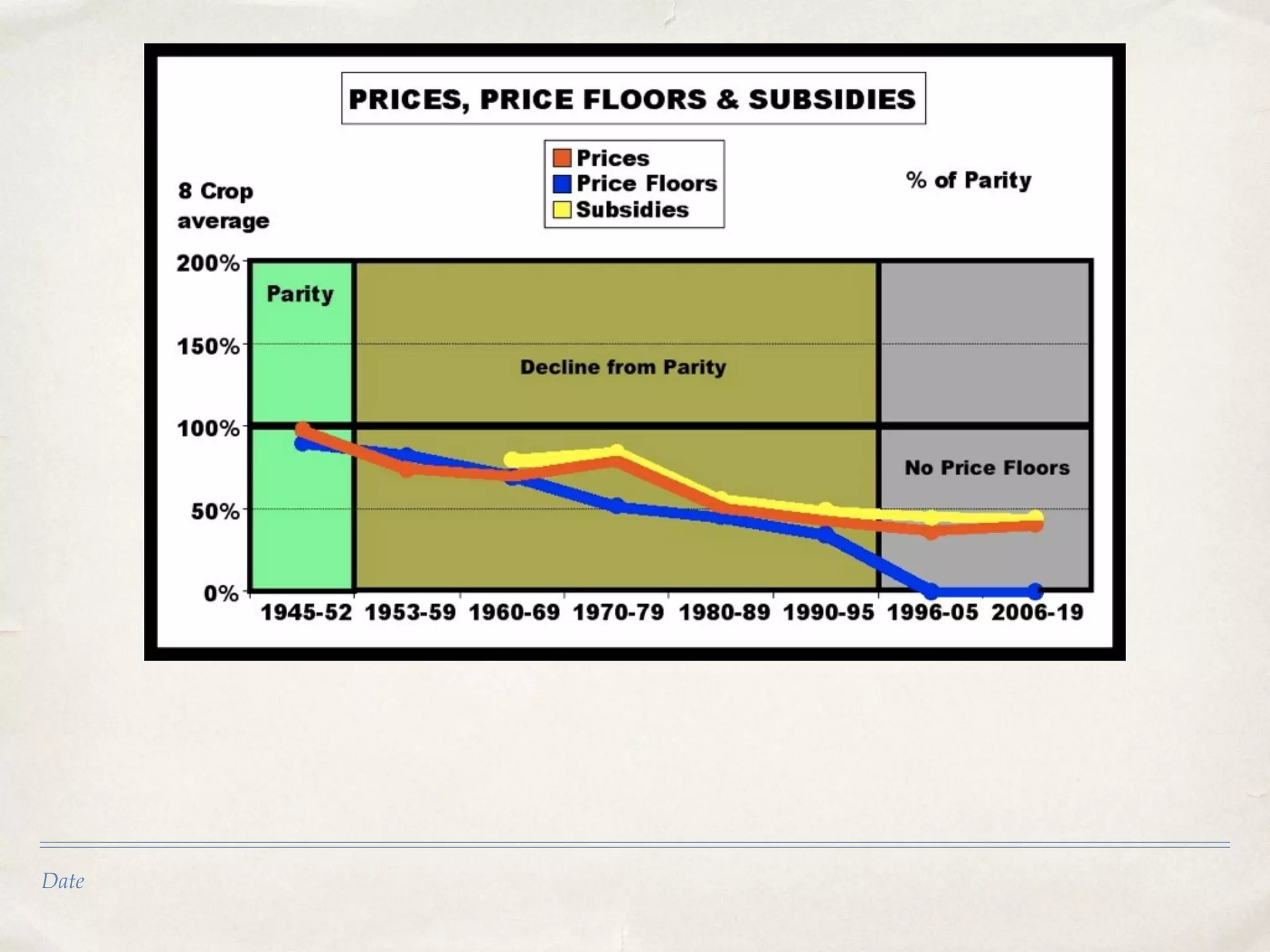
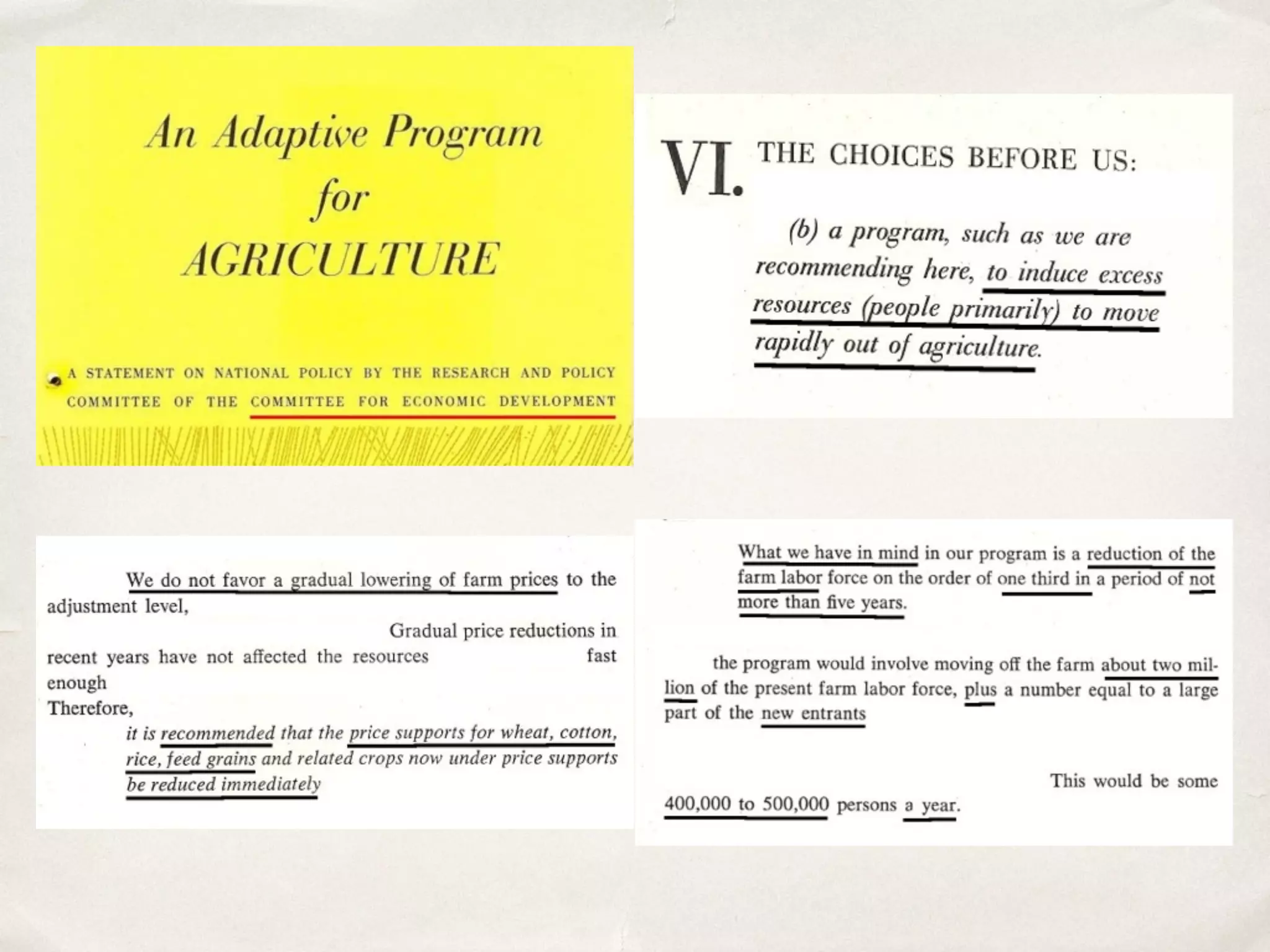
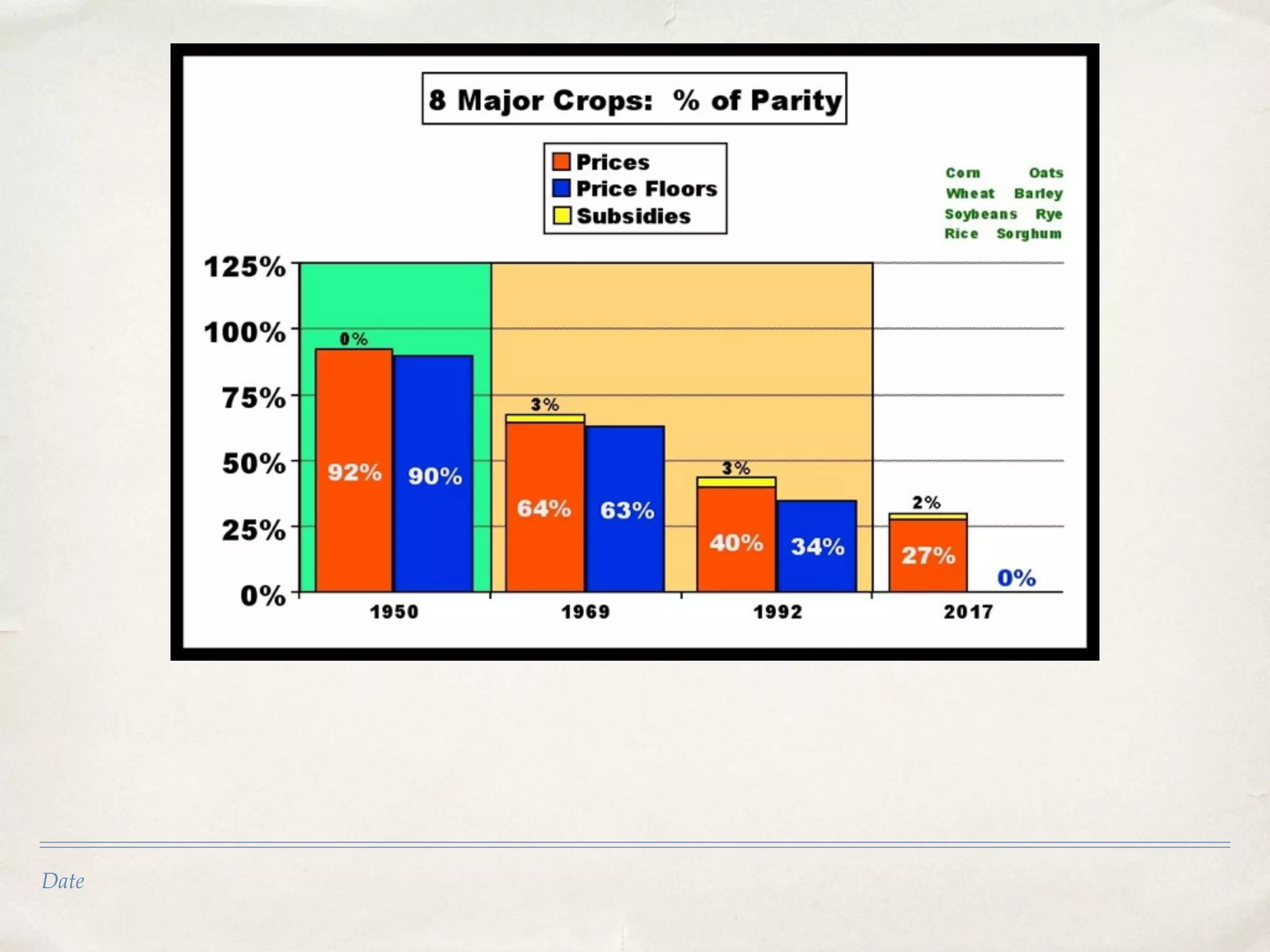
Price Floors Reduced: Starting with Eisenhower
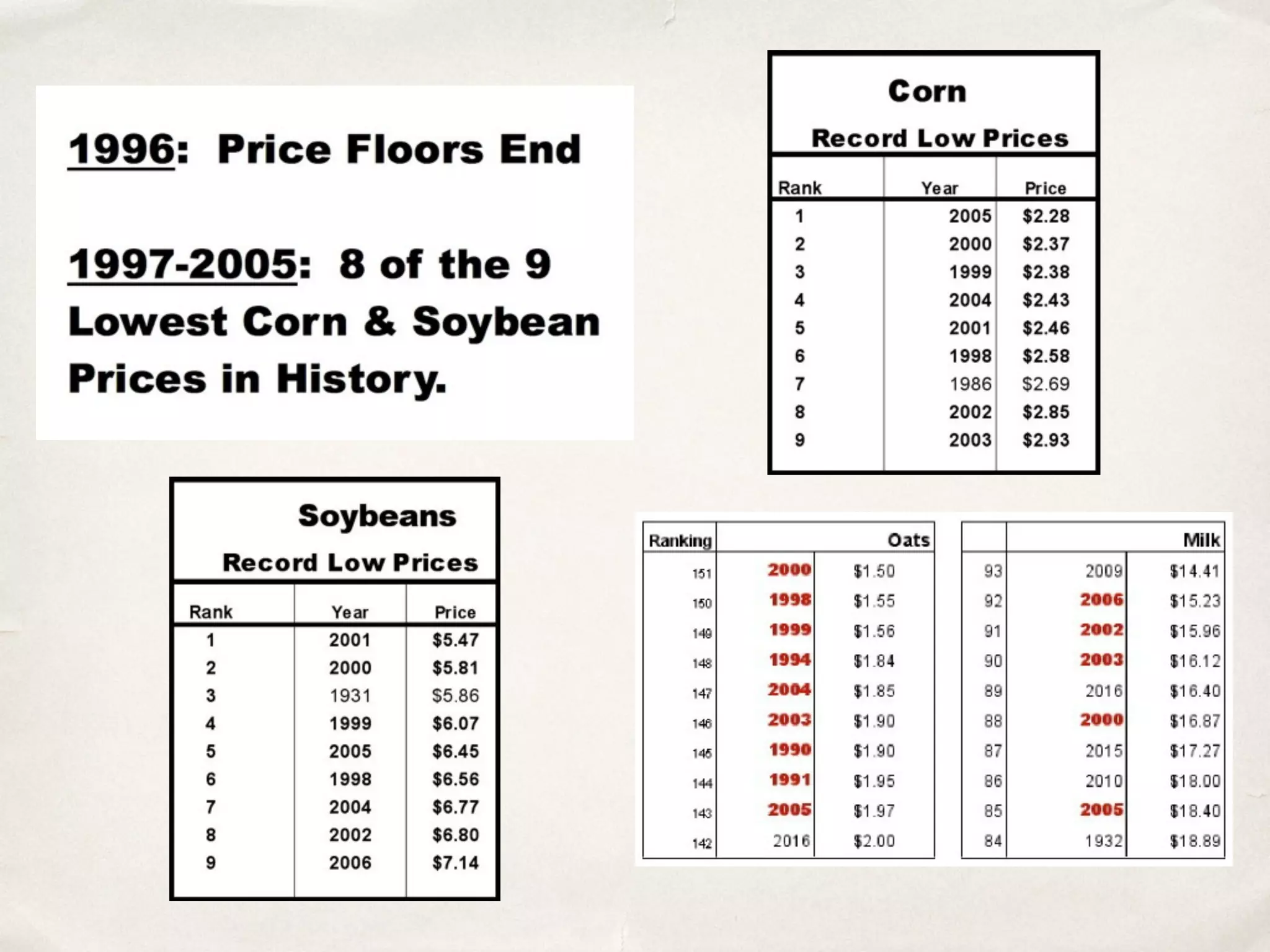
Price Floors & Supply Management Ended in 1996.
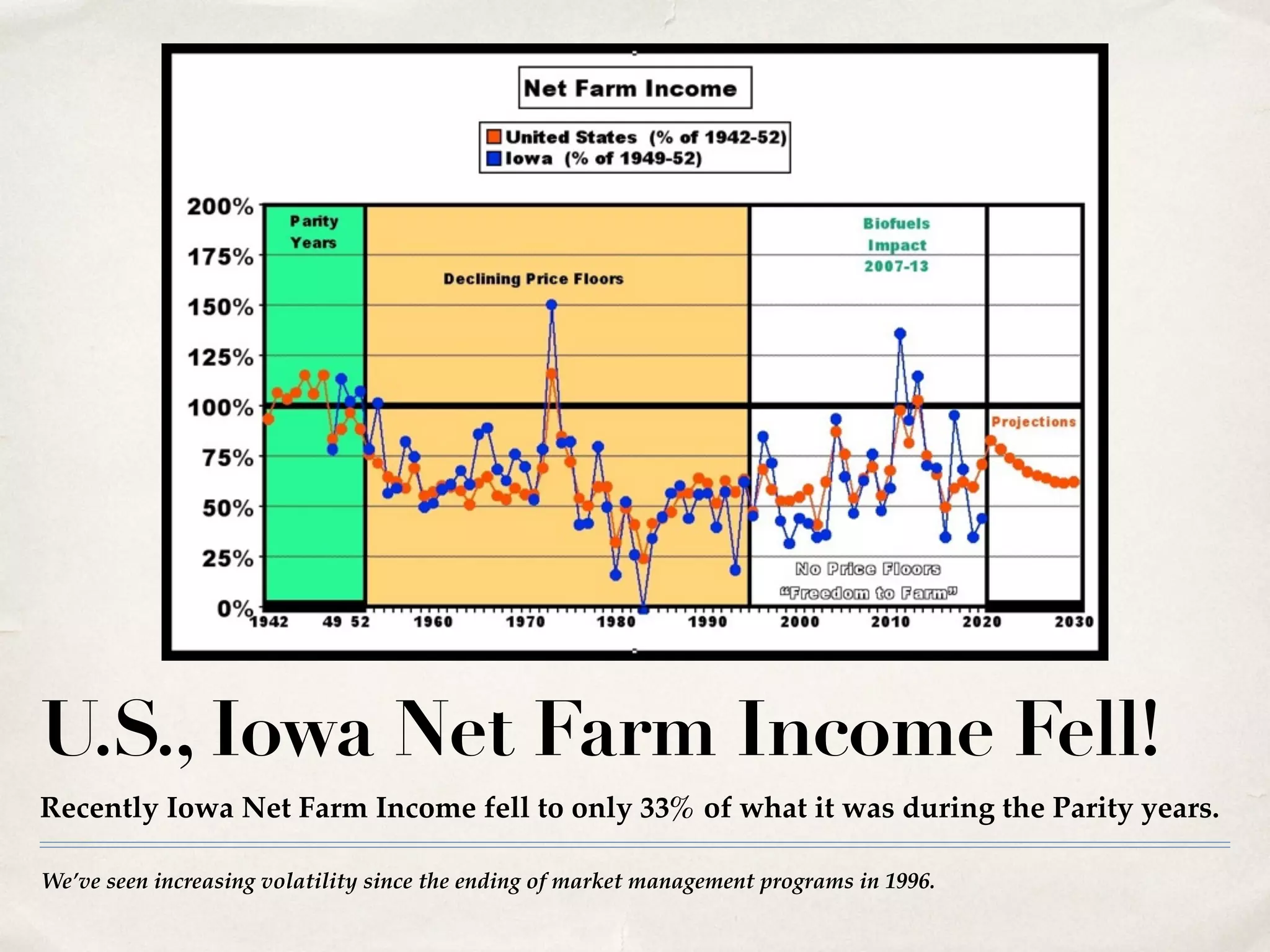
We’ve seen increasing volatility since the ending of market management programs in 1996.
U.S., Iowa Net Farm Income Fell!
Recently Iowa Net Farm Income fell to only 33% of what it was during the Parity years.
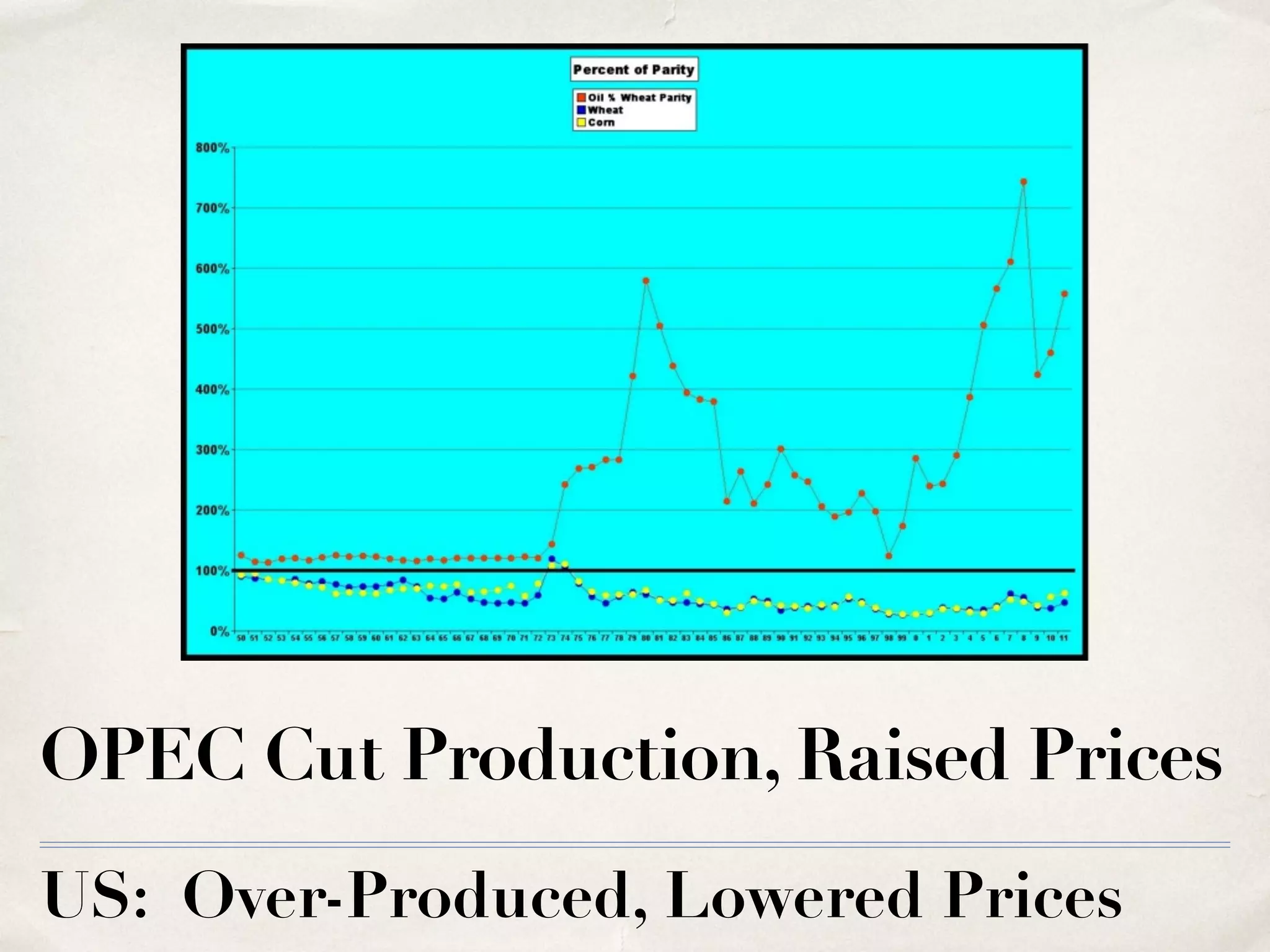
OPEC Cut Production, Raised Prices
US: Over-Produced, Lowered Prices
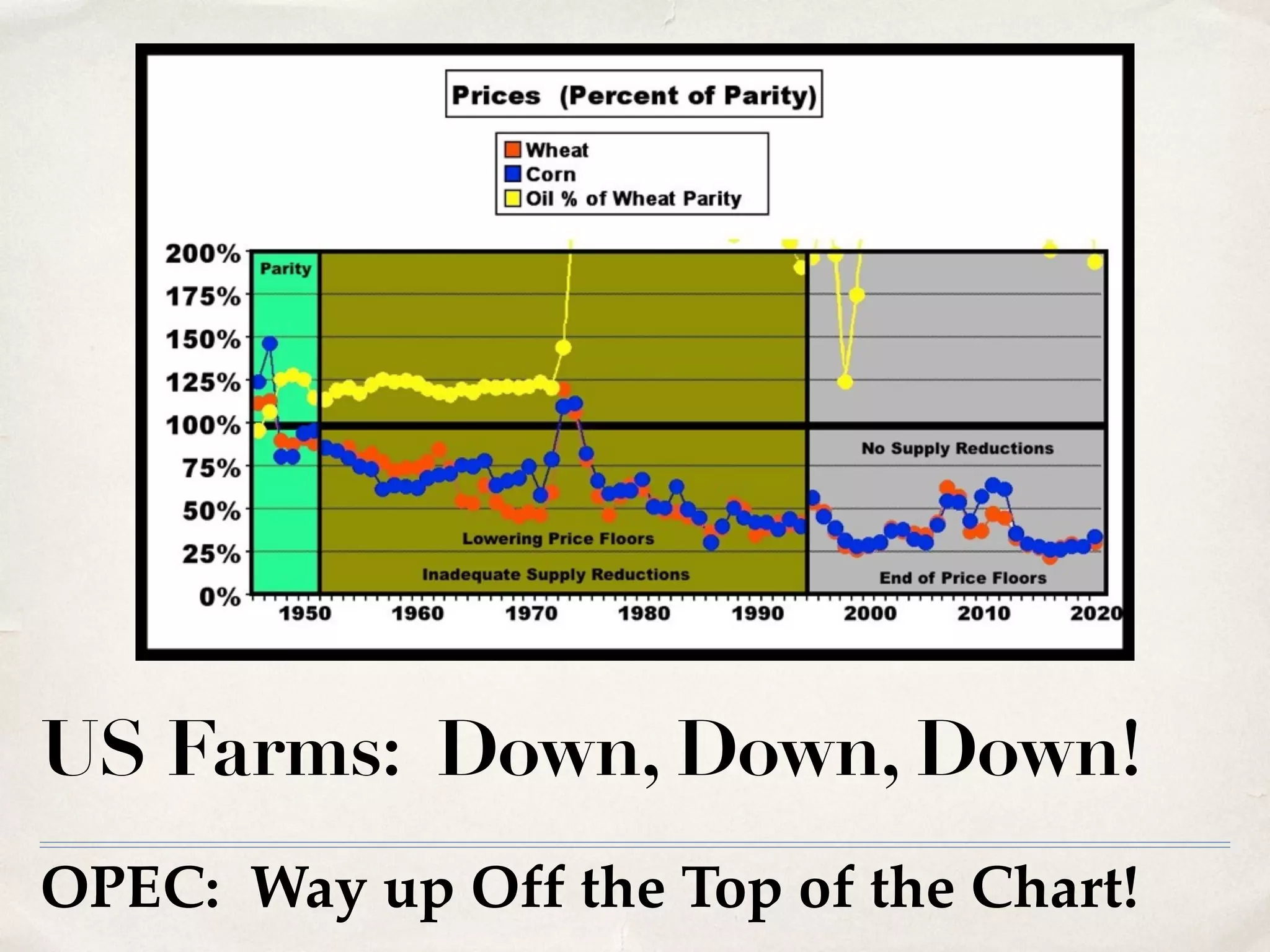
US Farms: Down, Down, Down!
OPEC: Way up Off the Top of the Chart!
Date
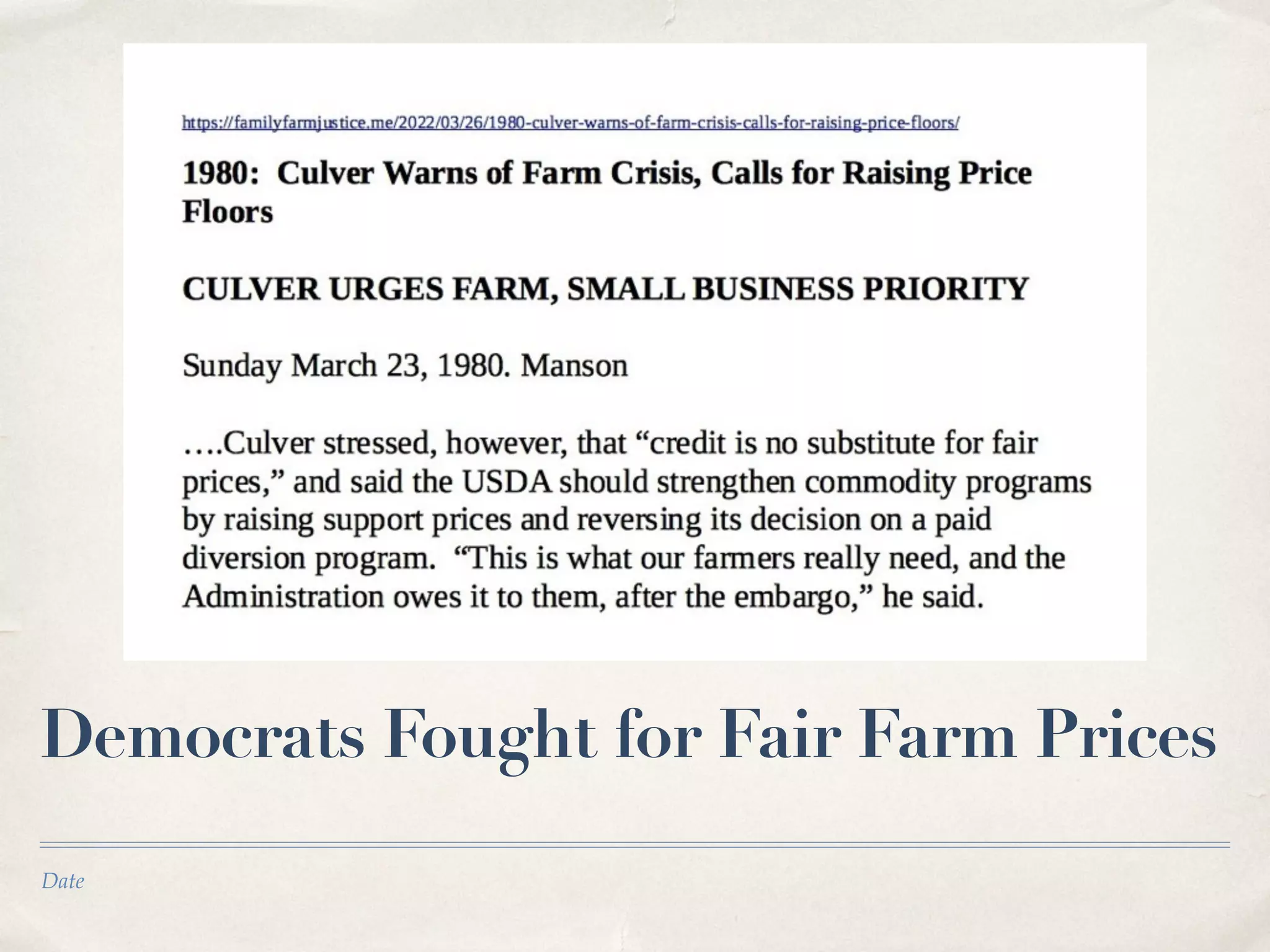
Democrats Fought for Fair Farm Prices
01
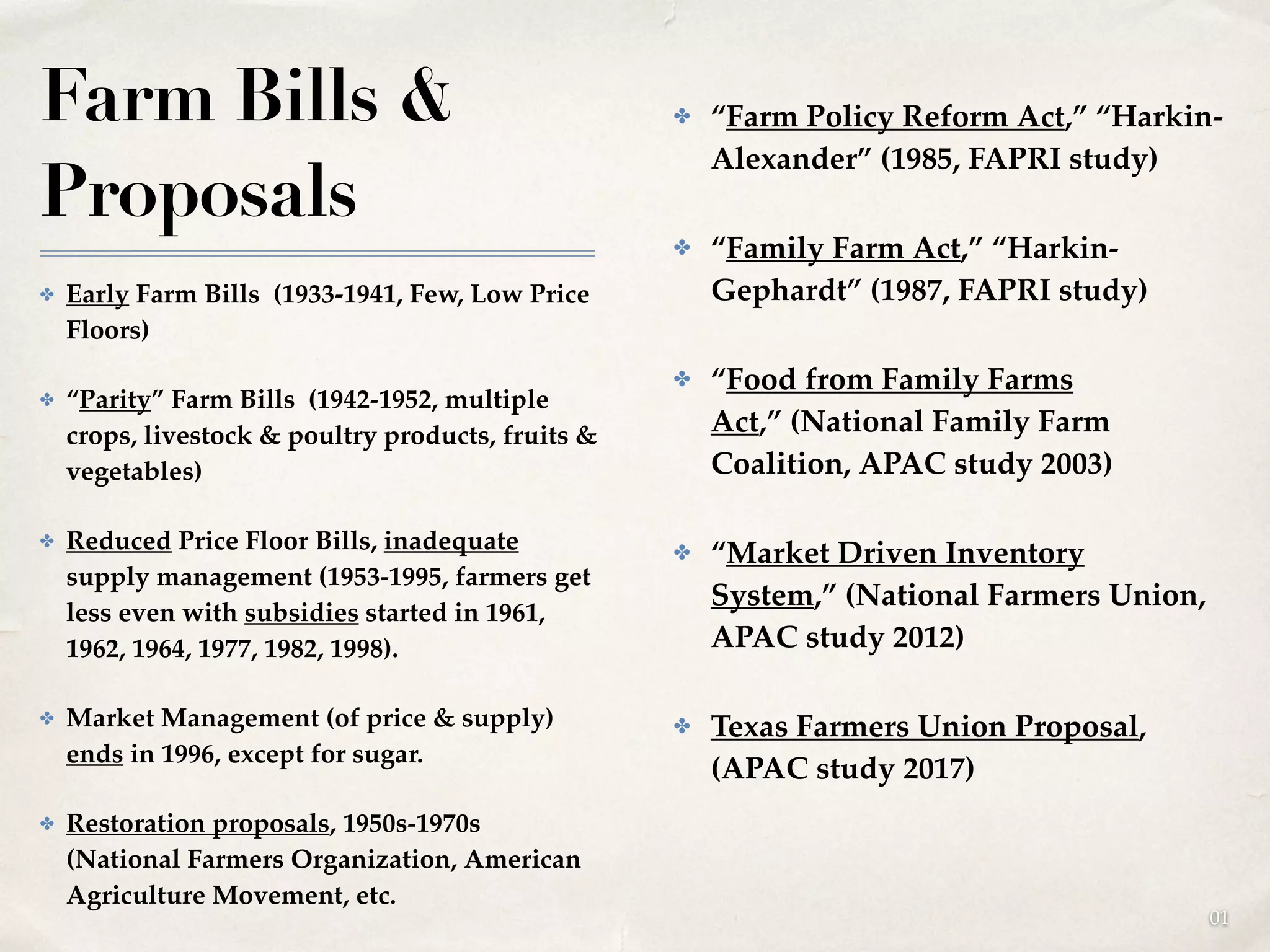
Farm Bills &
Proposals
✤ Early Farm Bills (1933-1941, Few, Low Price
Floors)!
✤ “Parity” Farm Bills (1942-1952, multiple
crops, livestock & poultry products, fruits &
vegetables)!
✤ Reduced Price Floor Bills, inadequate
supply management (1953-1995, farmers get
less even with subsidies started in 1961,
1962, 1964, 1977, 1982, 1998).!
✤ Market Management (of price & supply)
ends in 1996, except for sugar.!
✤ Restoration proposals, 1950s-1970s
(National Farmers Organization, American
Agriculture Movement, etc.
✤ “Farm Policy Reform Act,” “Harkin-
Alexander” (1985, FAPRI study)!
✤ “Family Farm Act,” “Harkin-
Gephardt” (1987, FAPRI study)!
✤ “Food from Family Farms
Act,” (National Family Farm
Coalition, APAC study 2003)!
✤ “Market Driven Inventory
System,” (National Farmers Union,
APAC study 2012)!
✤ Texas Farmers Union Proposal,
(APAC study 2017)!
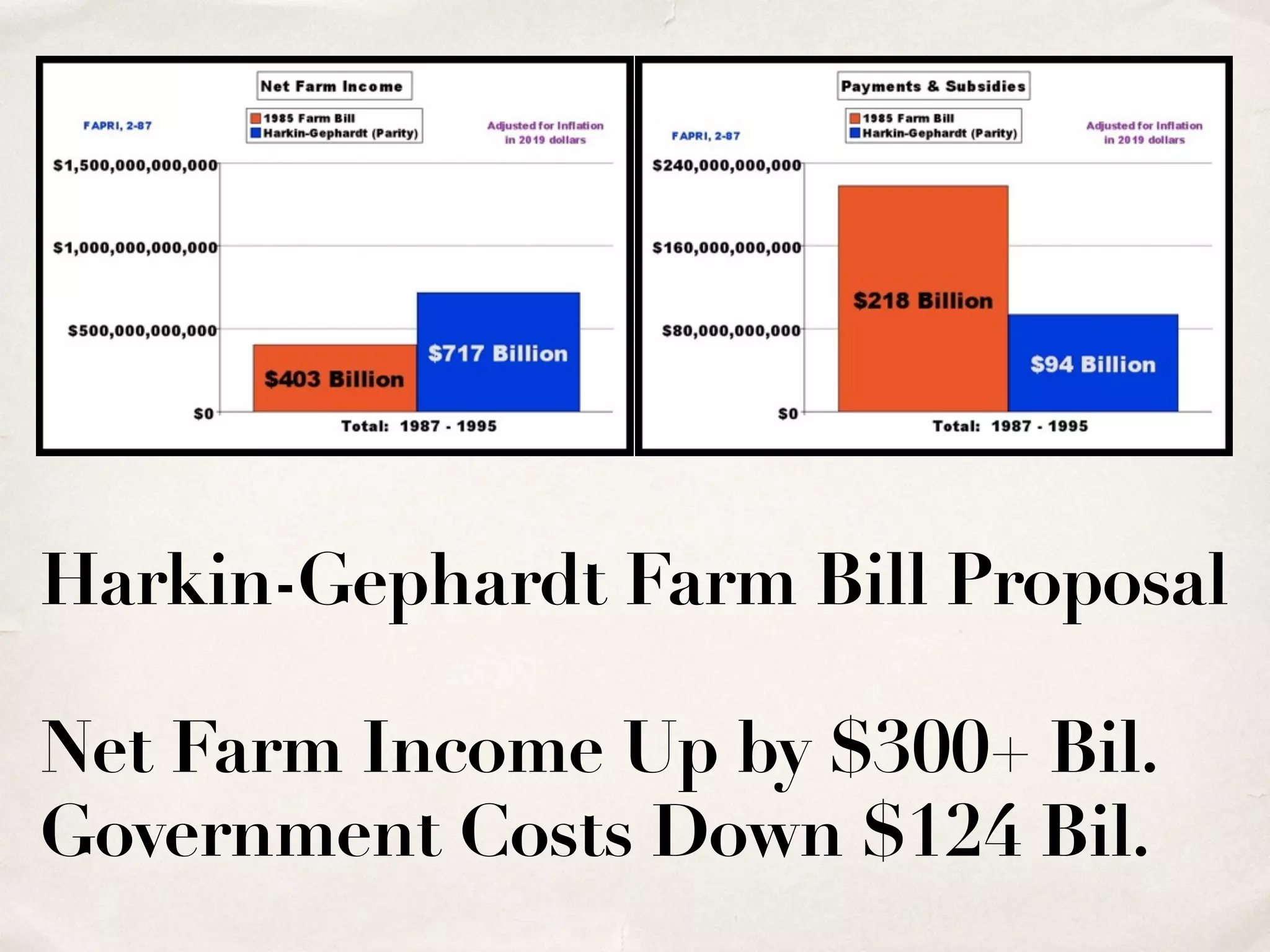
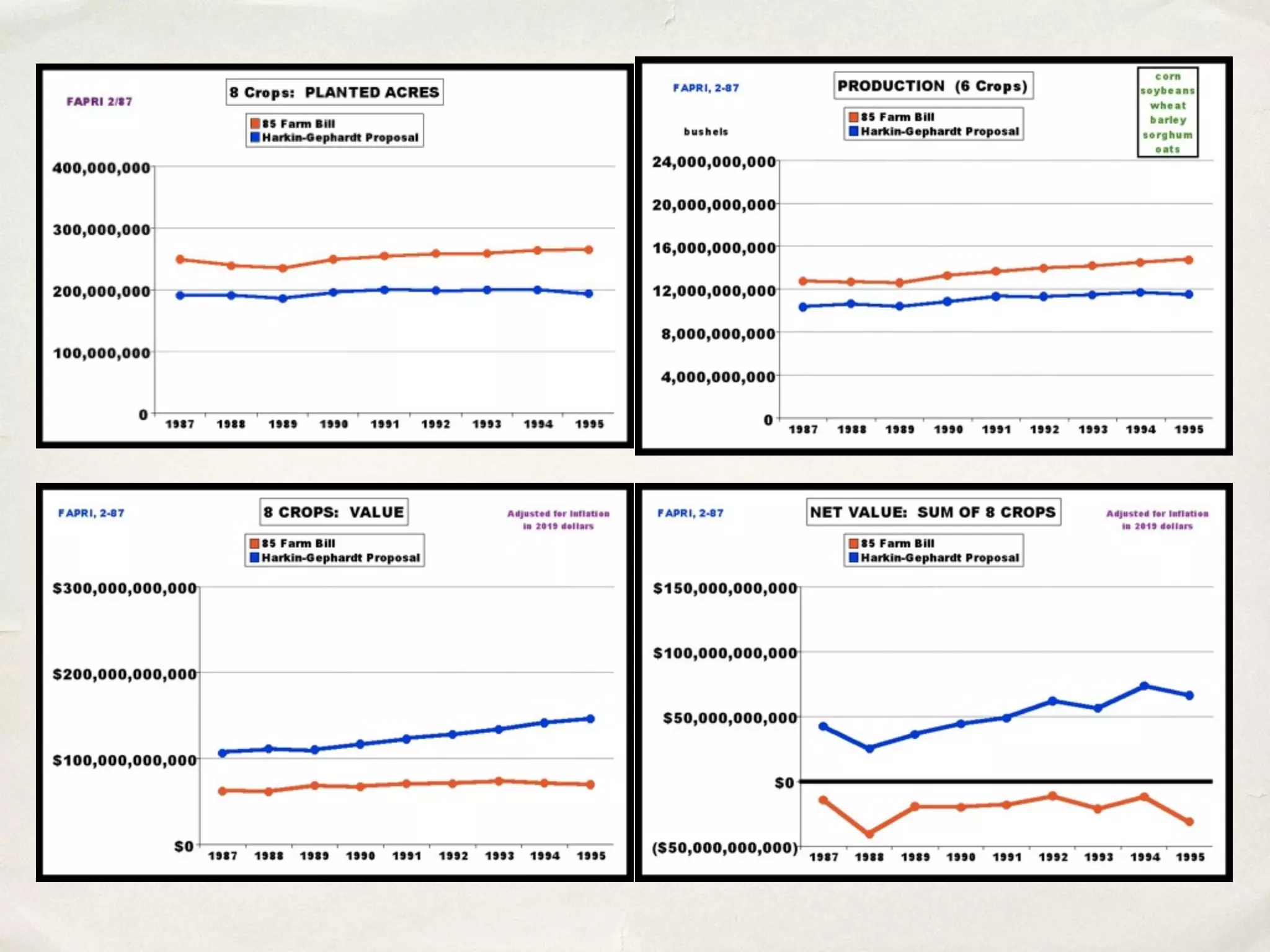
Harkin-Gephardt Farm Bill Proposal
!
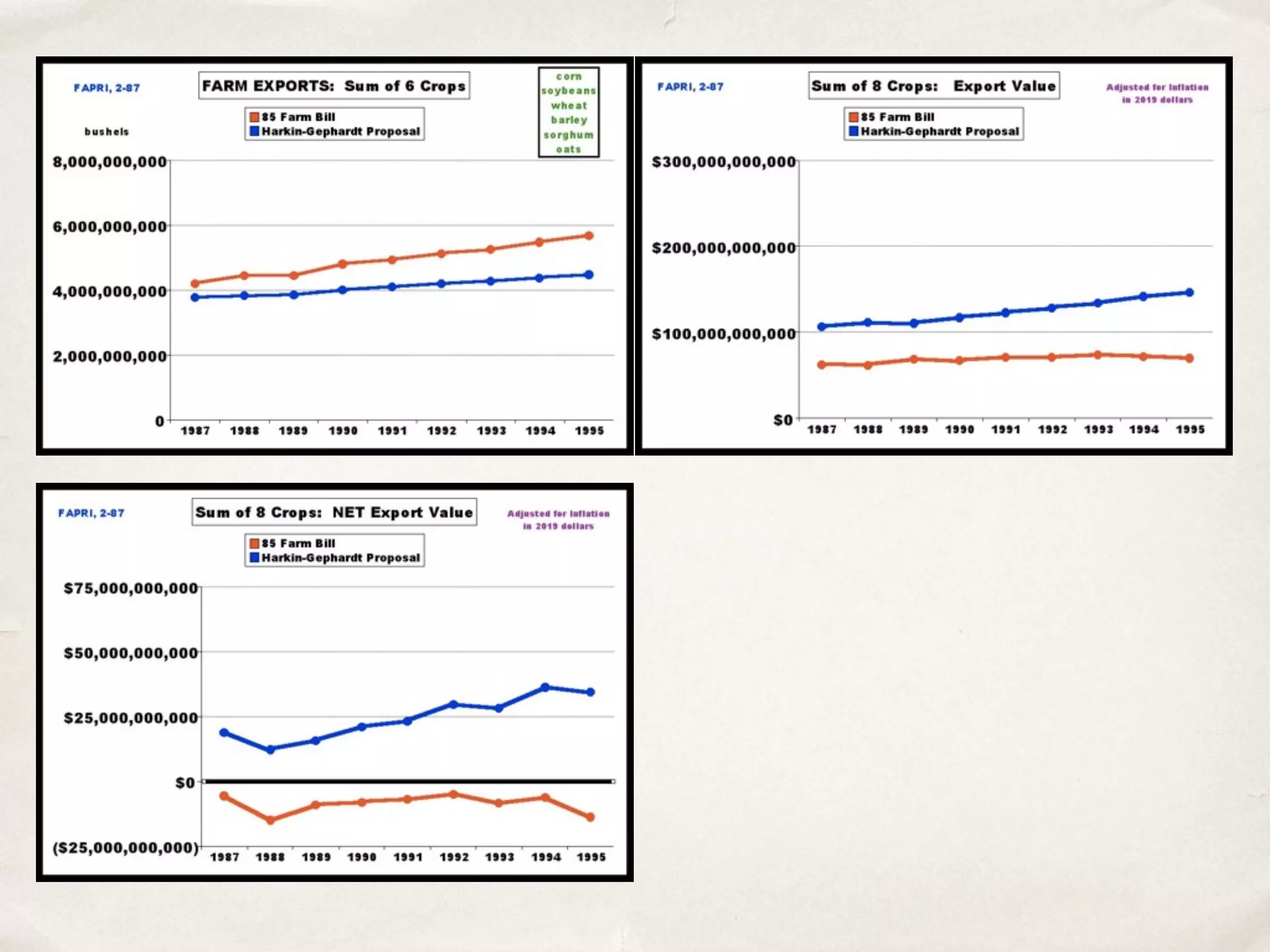
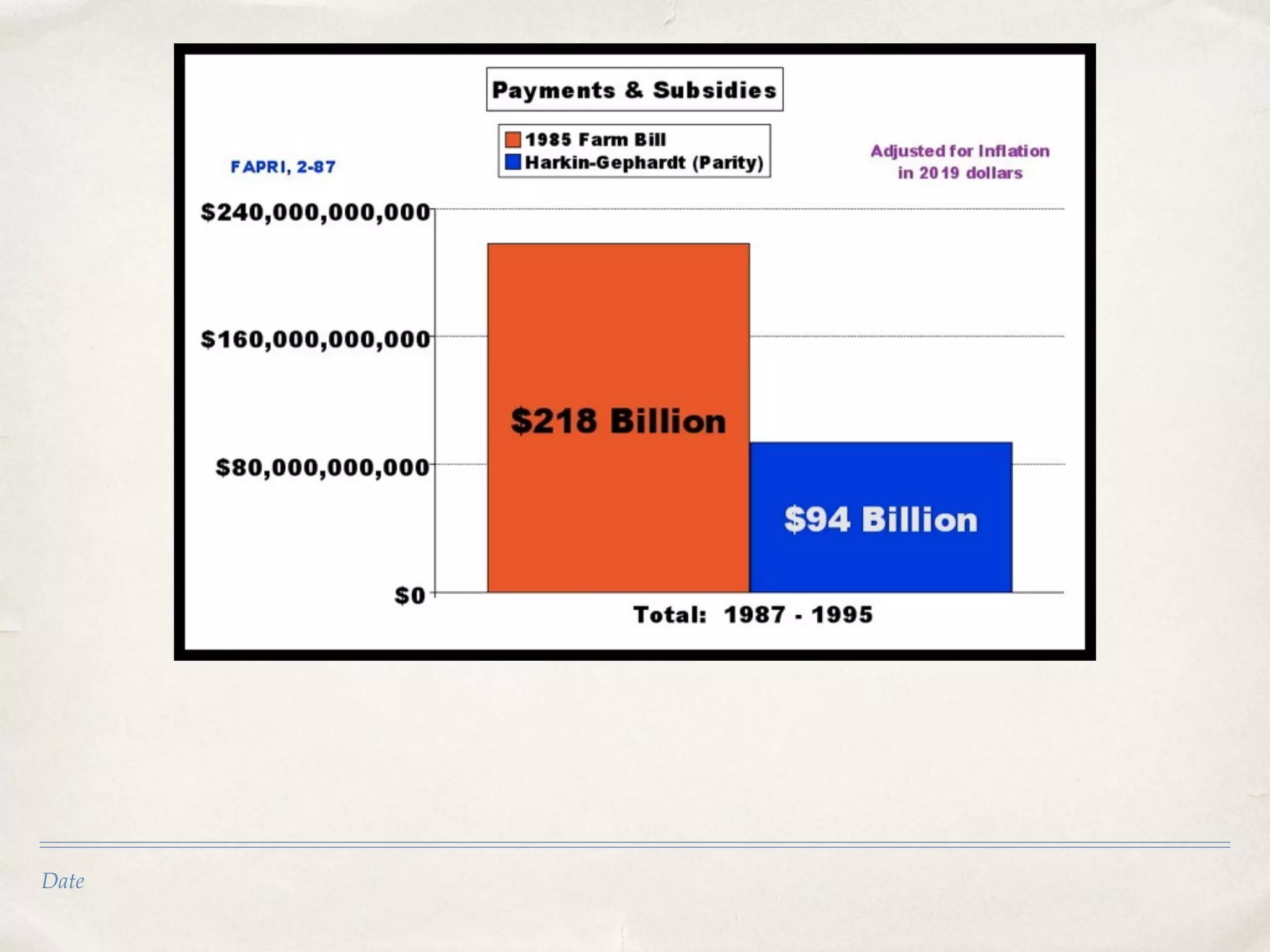
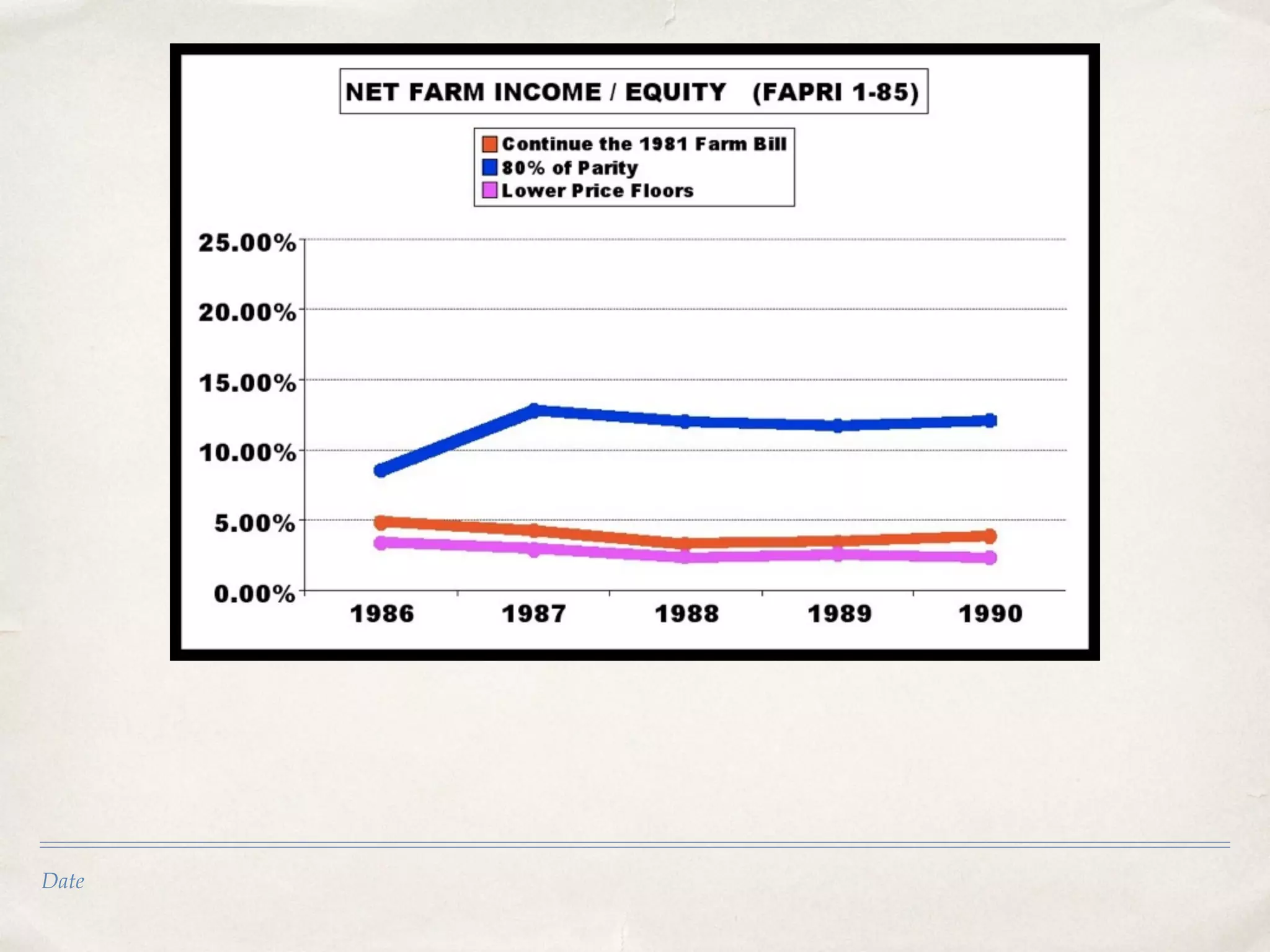
Net Farm Income Up by $300+ Bil.
Government Costs Down $124 Bil.
Date
Date
Date
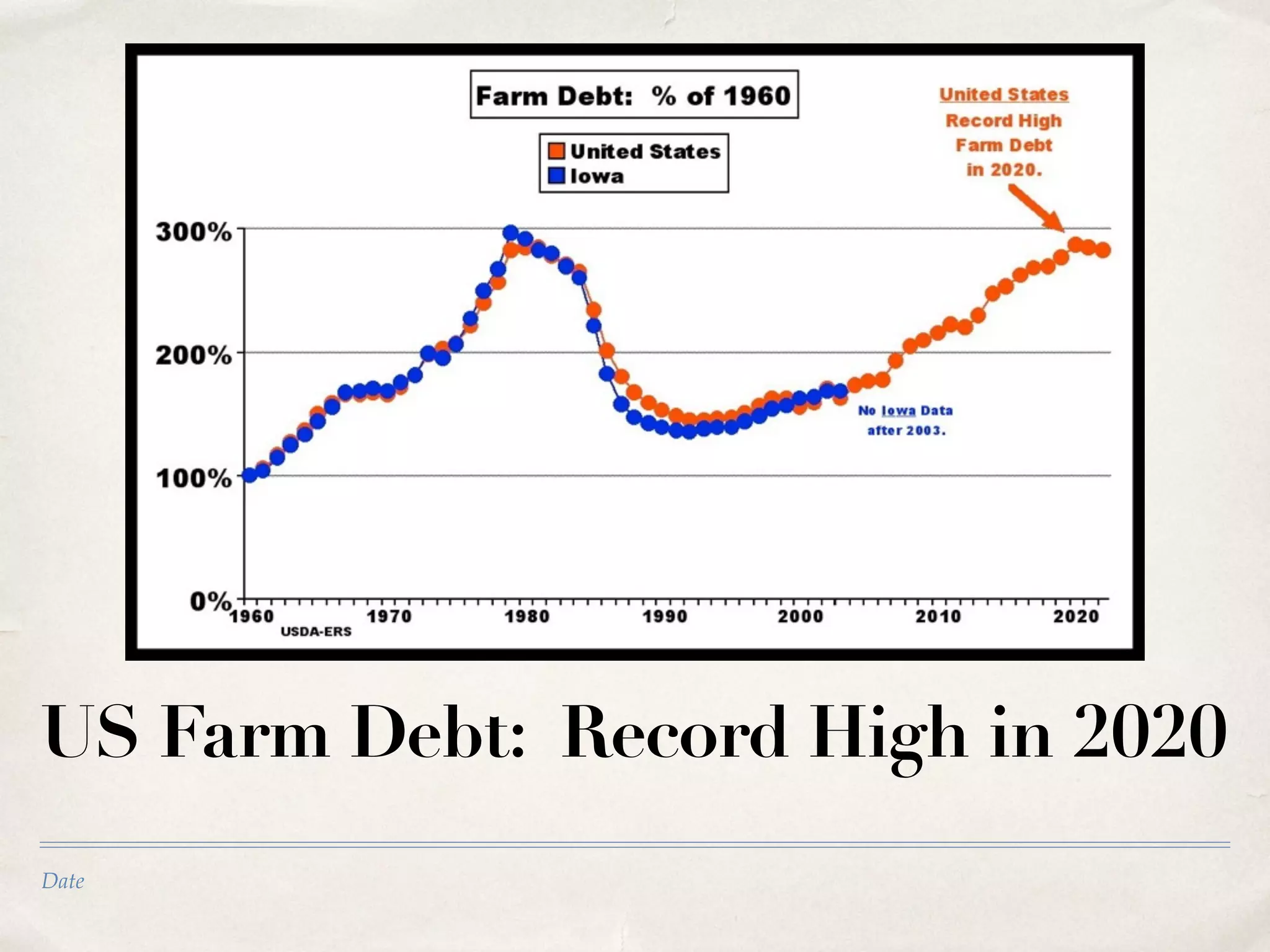
US Farm Debt: Record High in 2020
Date
Date
Date
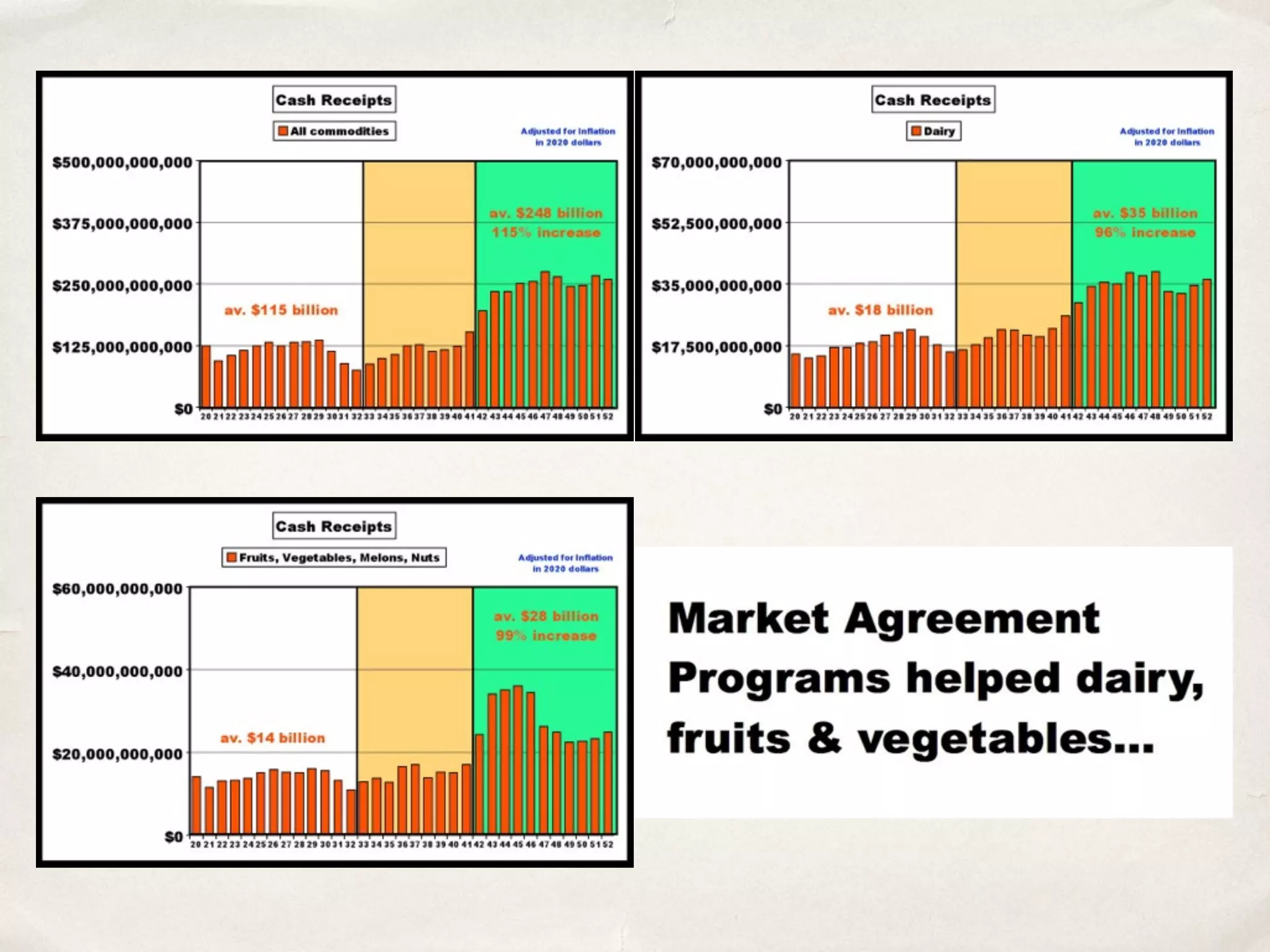
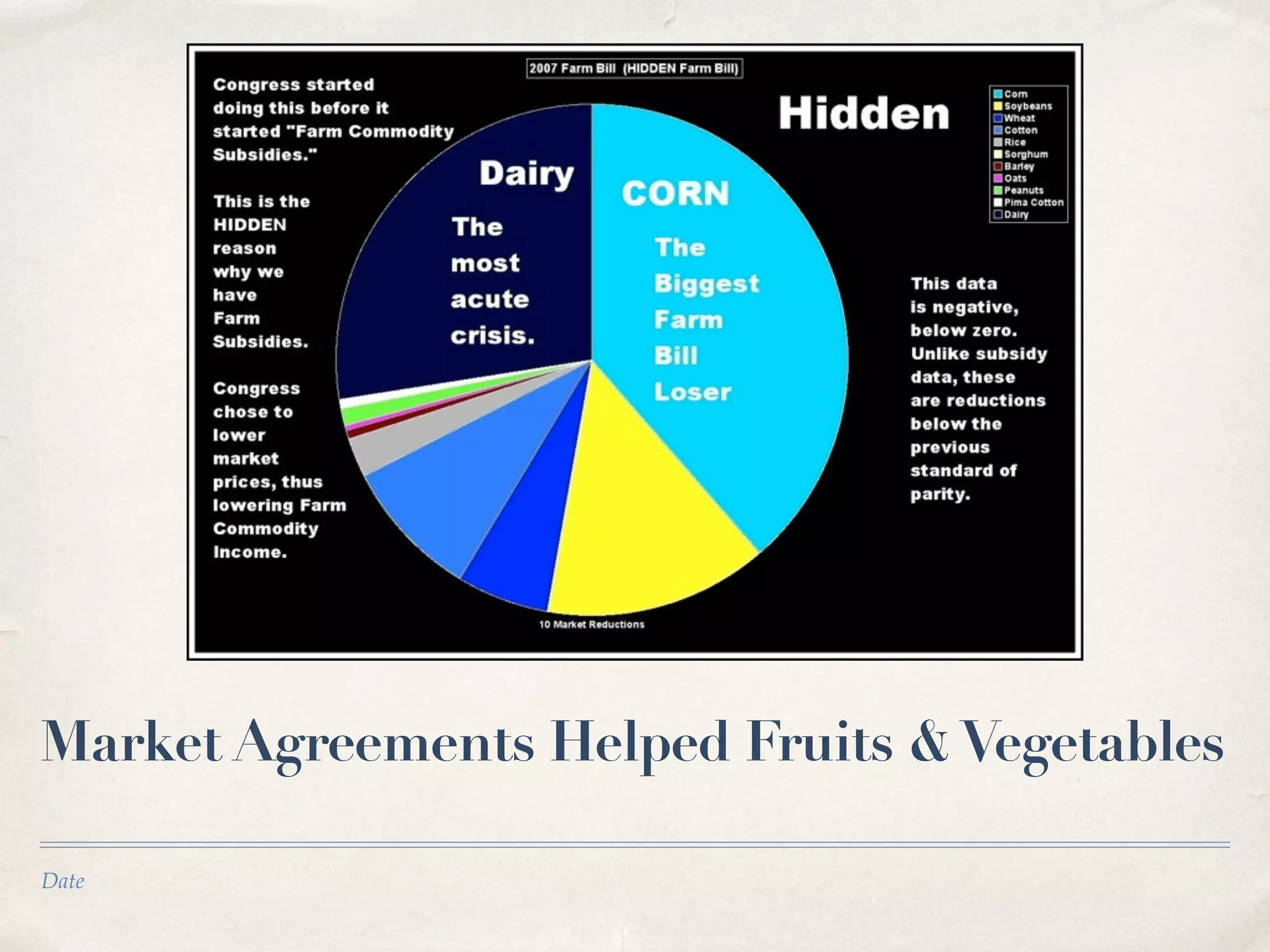
Market Agreements Helped Fruits &Vegetables
Date
Date
Date
Date
Date
Date
Date
Date
Date
Date
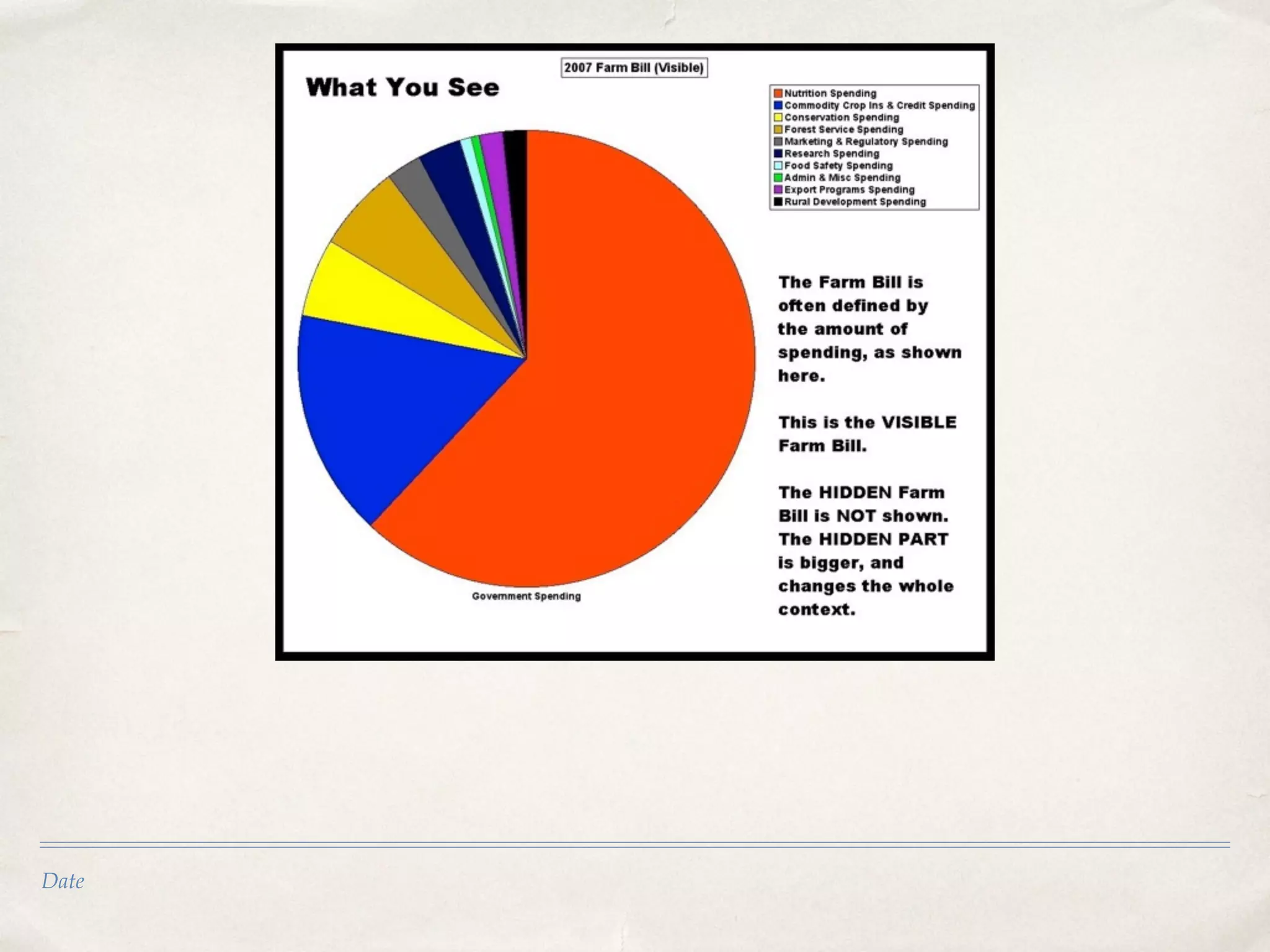
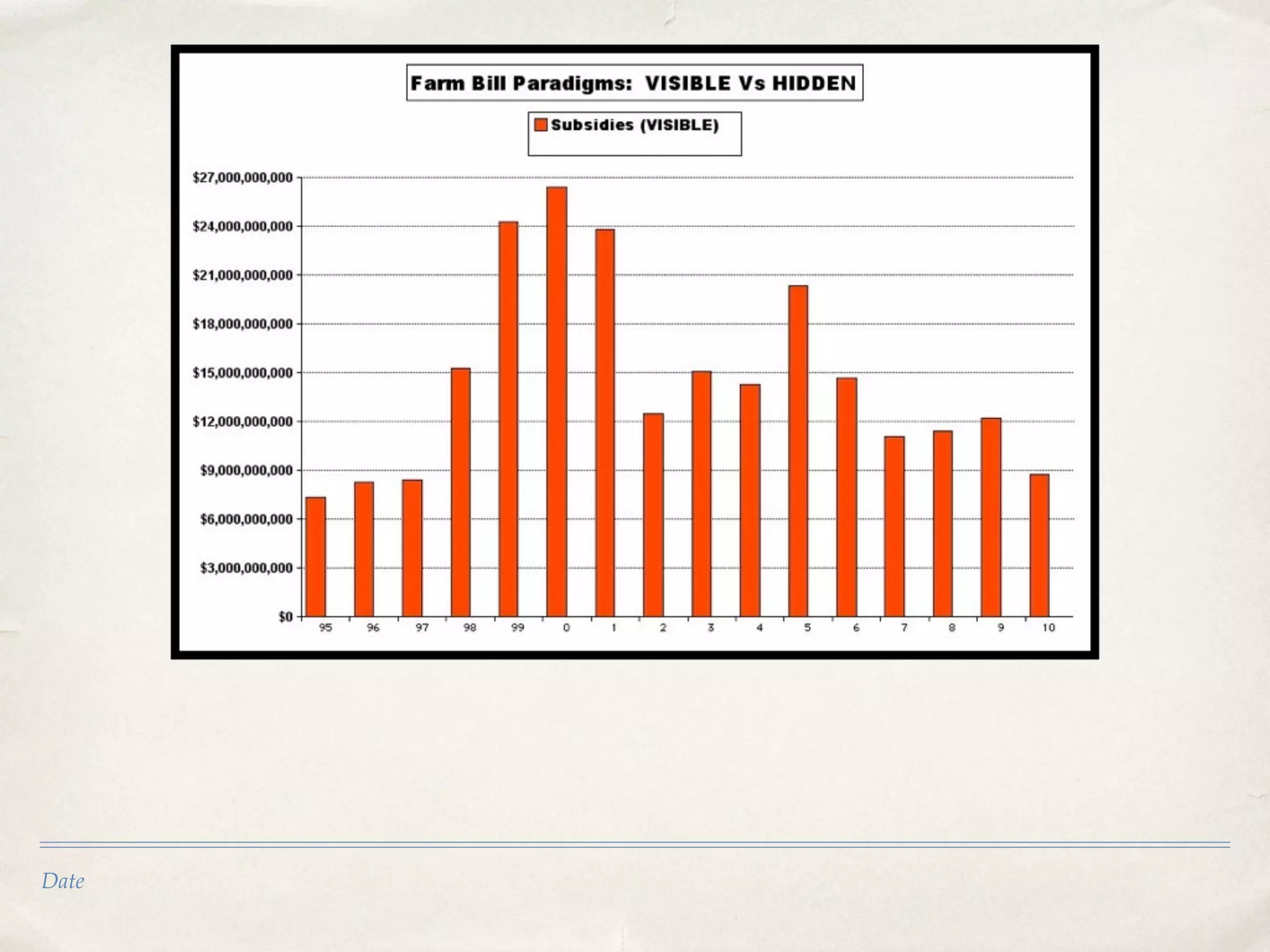
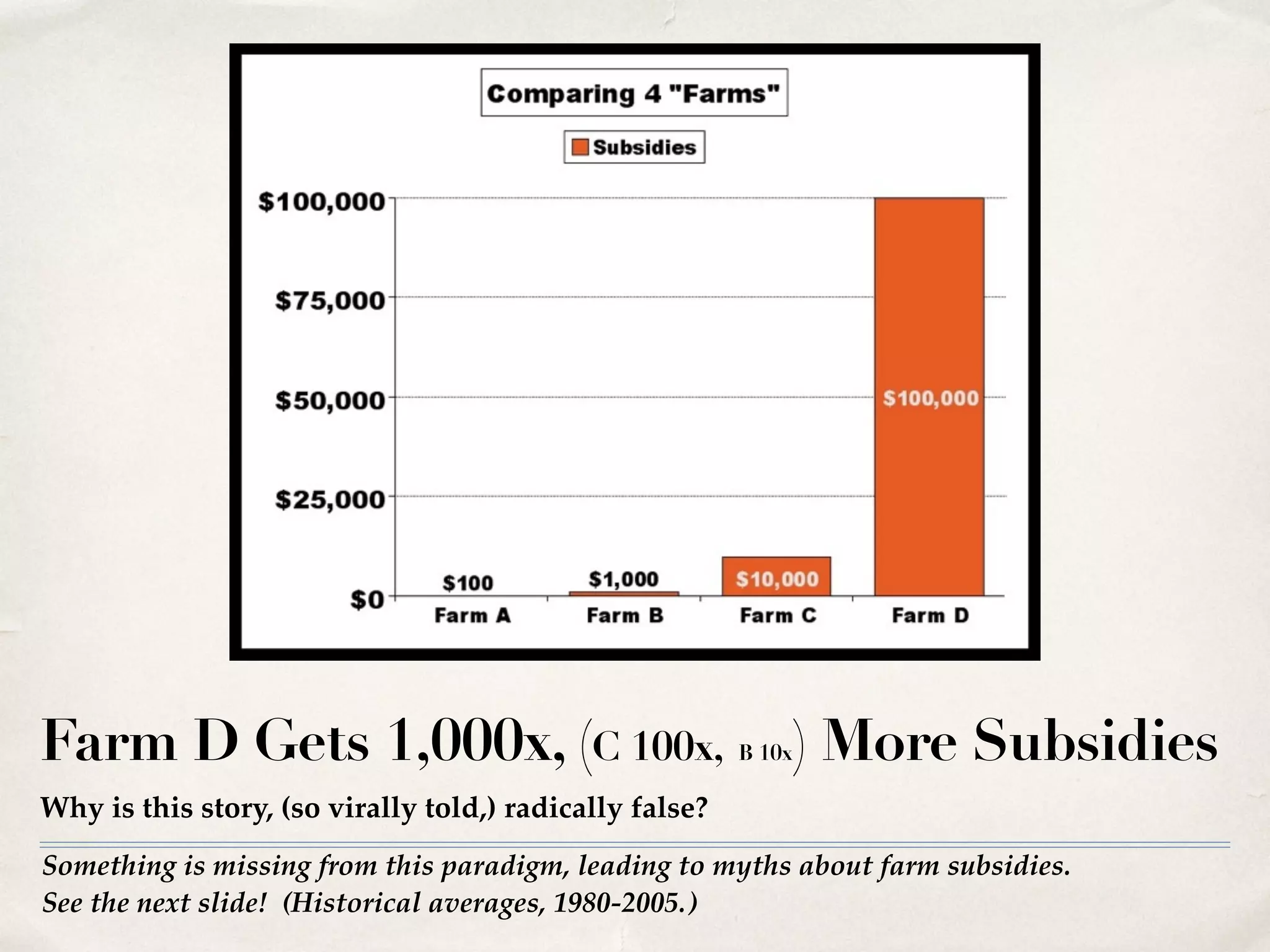
Something is missing from this paradigm, leading to myths about farm subsidies.!
See the next slide! (Historical averages, 1980-2005.)
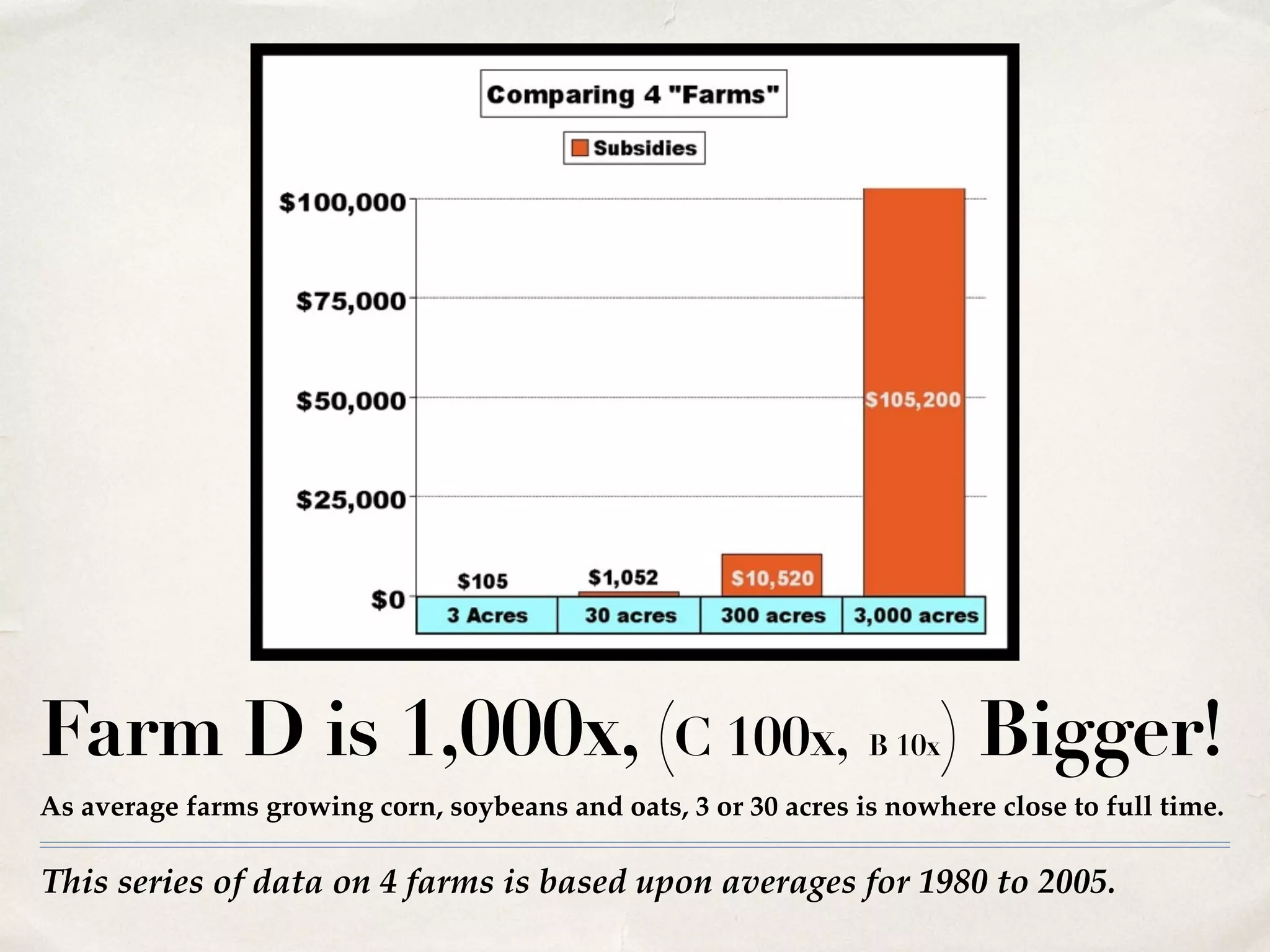
Farm D Gets 1,000x, (C 100x, B 10x) More Subsidies
Why is this story, (so virally told,) radically false?
This series of data on 4 farms is based upon averages for 1980 to 2005.
Farm D is 1,000x, (C 100x, B 10x) Bigger!
As average farms growing corn, soybeans and oats, 3 or 30 acres is nowhere close to full time.
Date
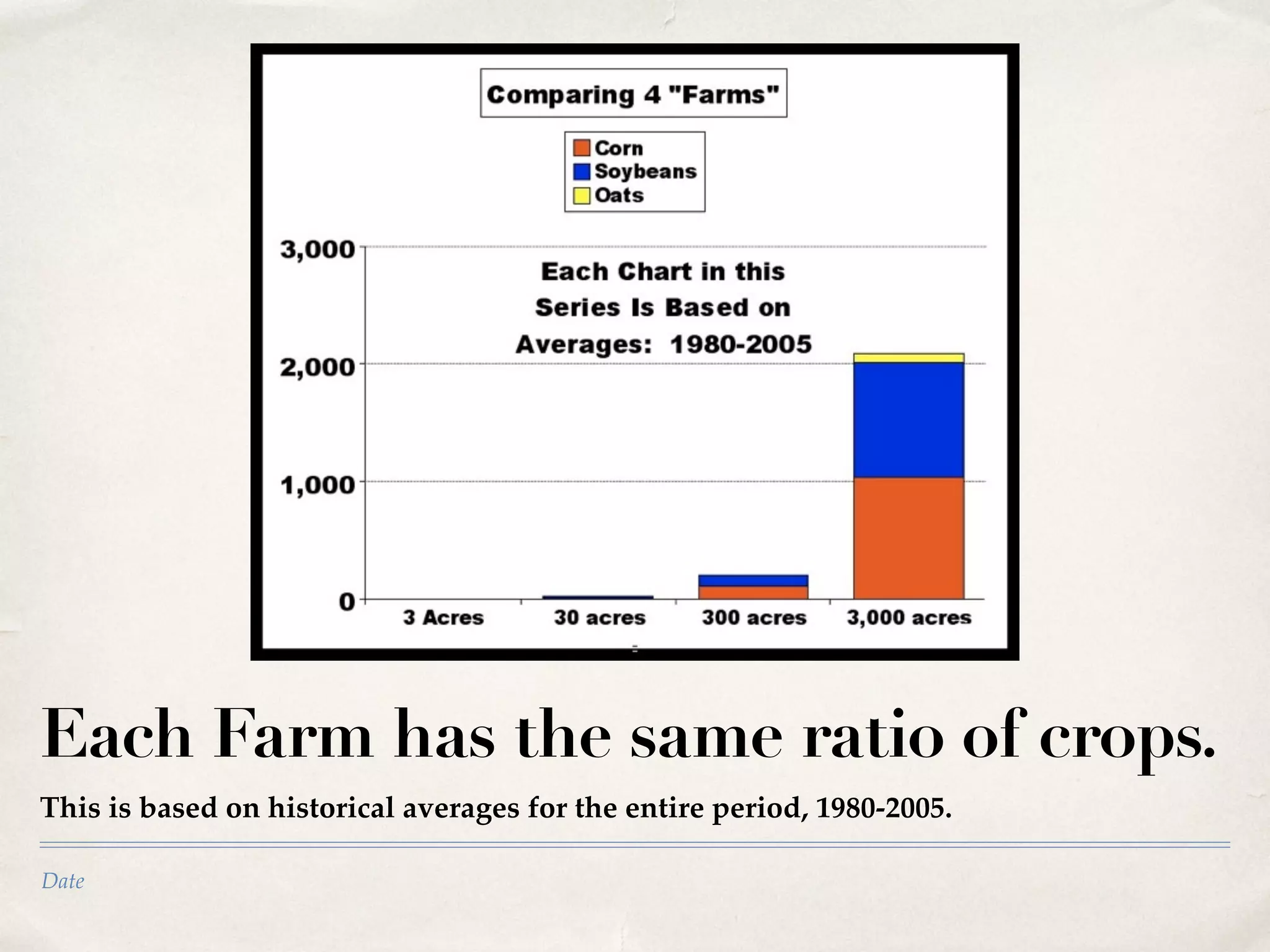
Each Farm has the same ratio of crops.
This is based on historical averages for the entire period, 1980-2005.
Date
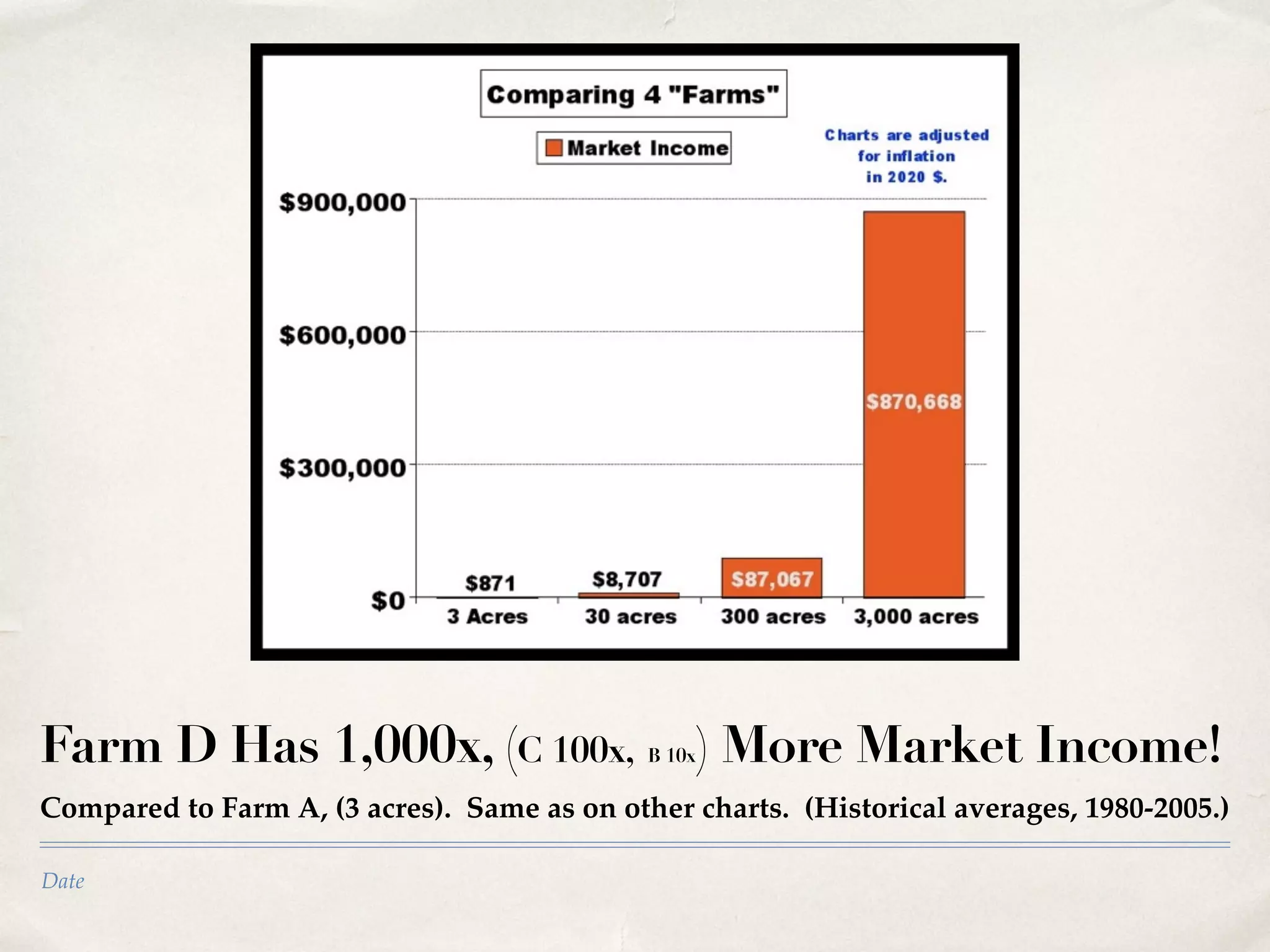
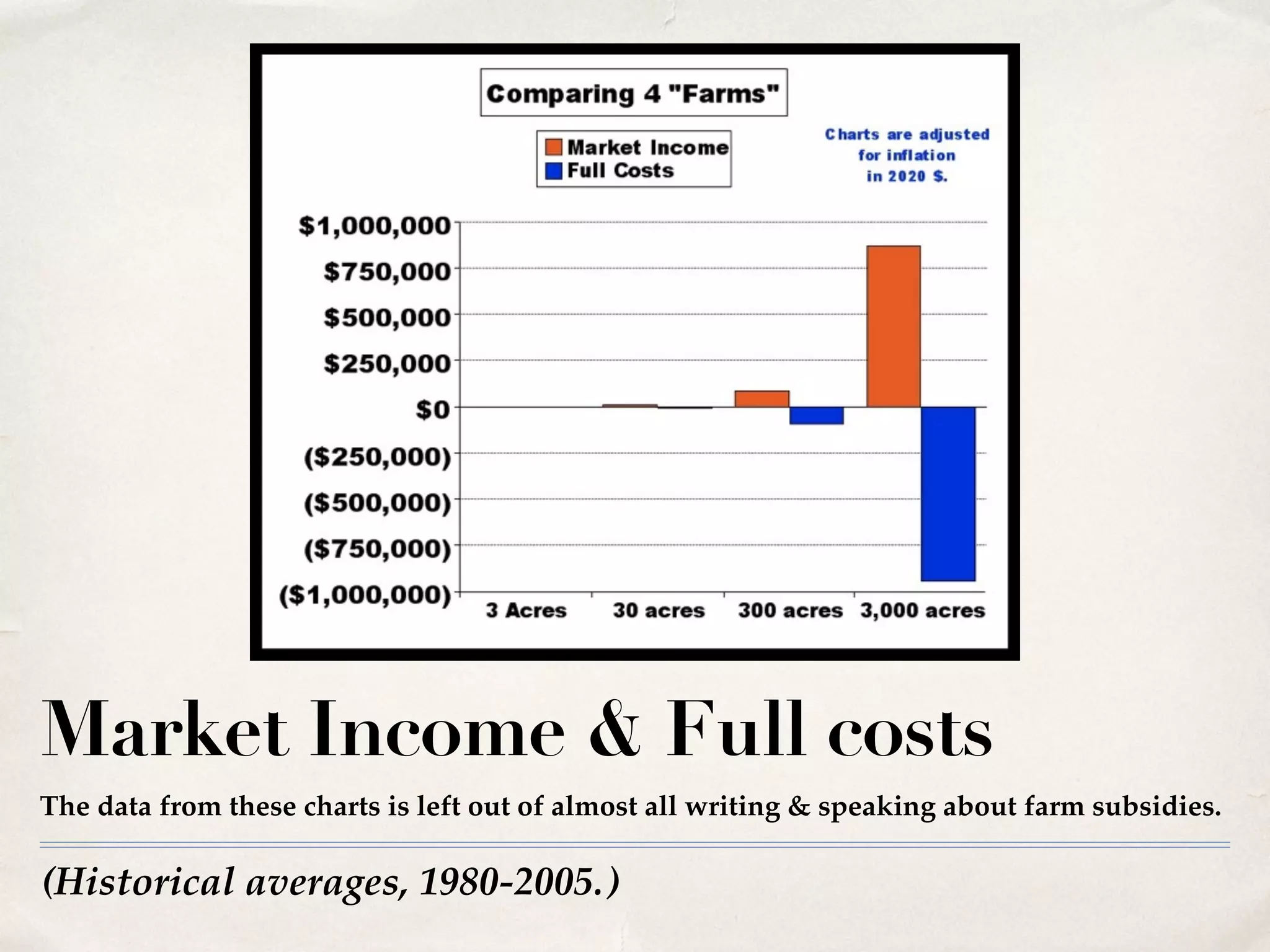
Farm D Has 1,000x, (C 100x, B 10x) More Market Income!
Compared to Farm A, (3 acres). Same as on other charts. (Historical averages, 1980-2005.)
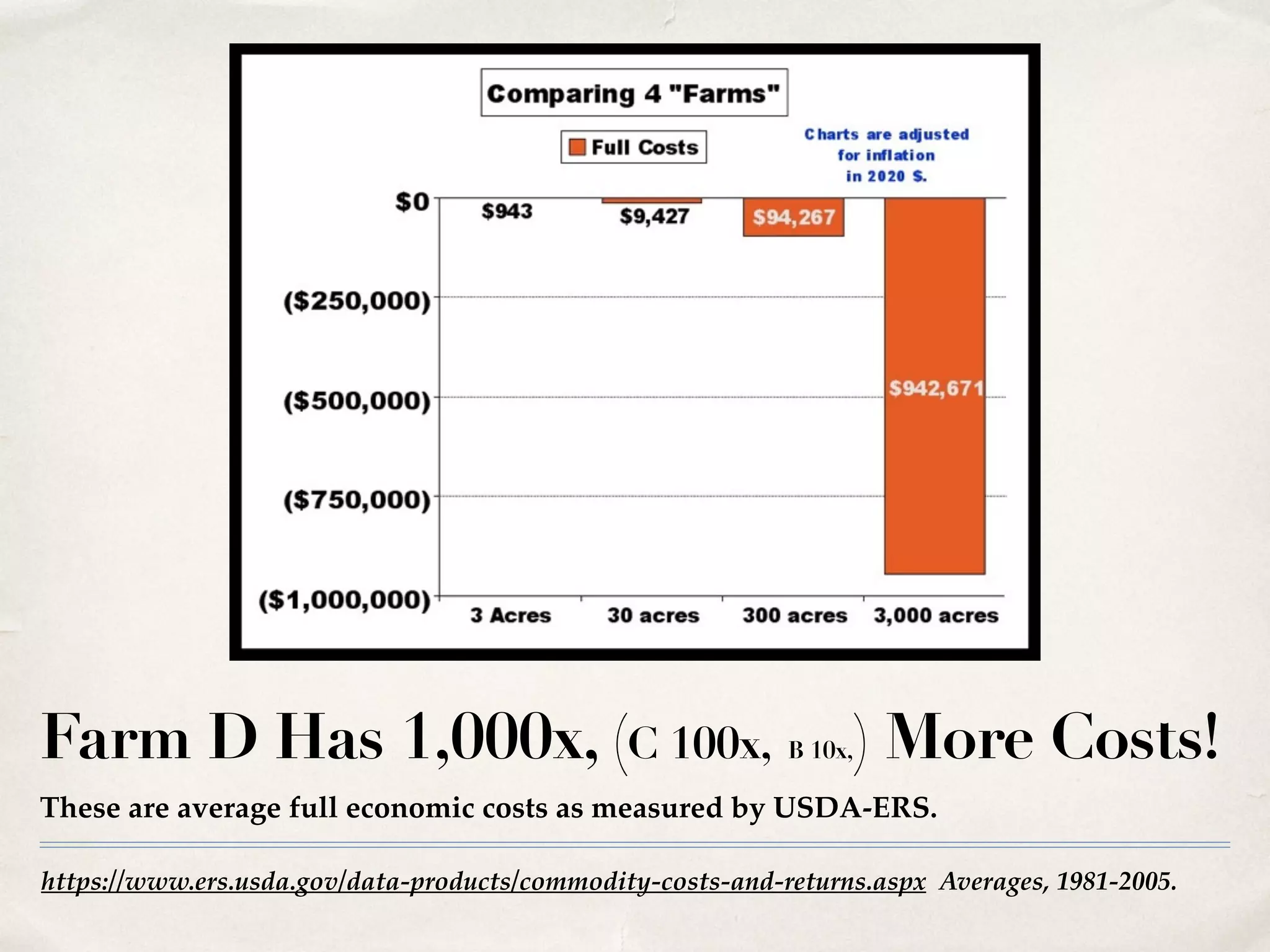
https://www.ers.usda.gov/data-products/commodity-costs-and-returns.aspx Averages, 1981-2005.
Farm D Has 1,000x, (C 100x, B 10x,) More Costs!
These are average full economic costs as measured by USDA-ERS.
(Historical averages, 1980-2005.)
Market Income & Full costs
The data from these charts is left out of almost all writing & speaking about farm subsidies.
Date
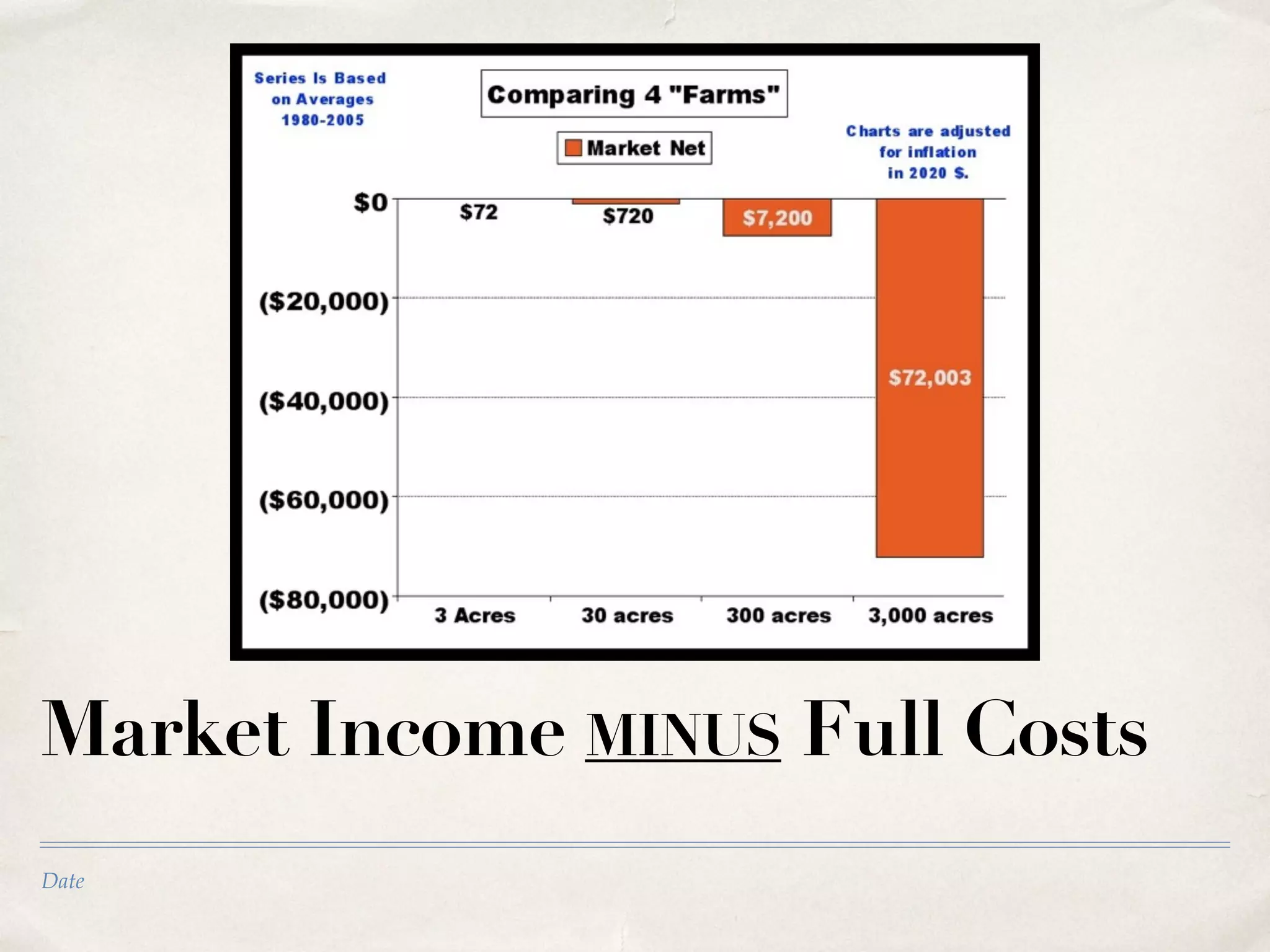
Market Income MINUS Full Costs
Date
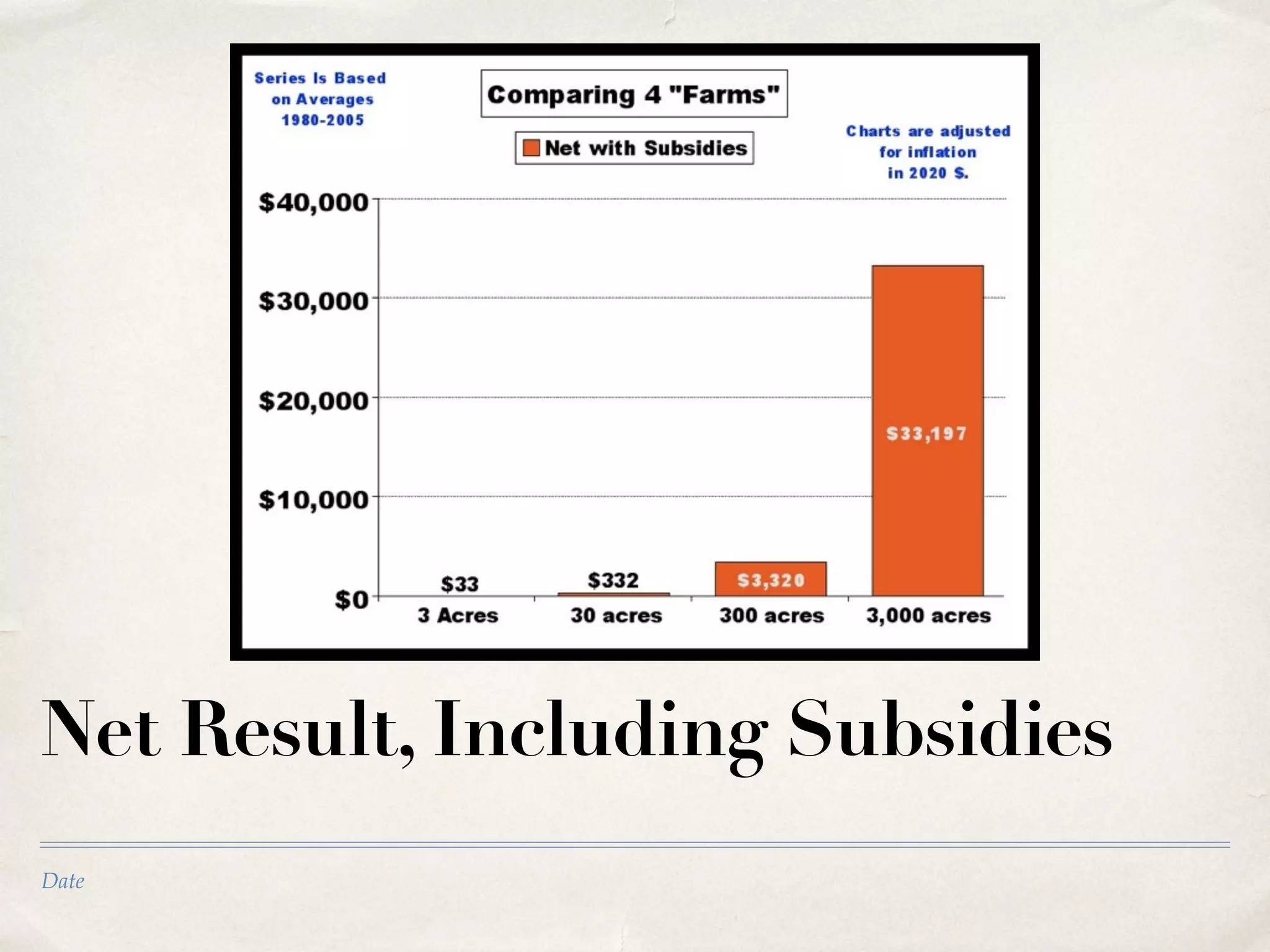
Net Result, Including Subsidies
Date
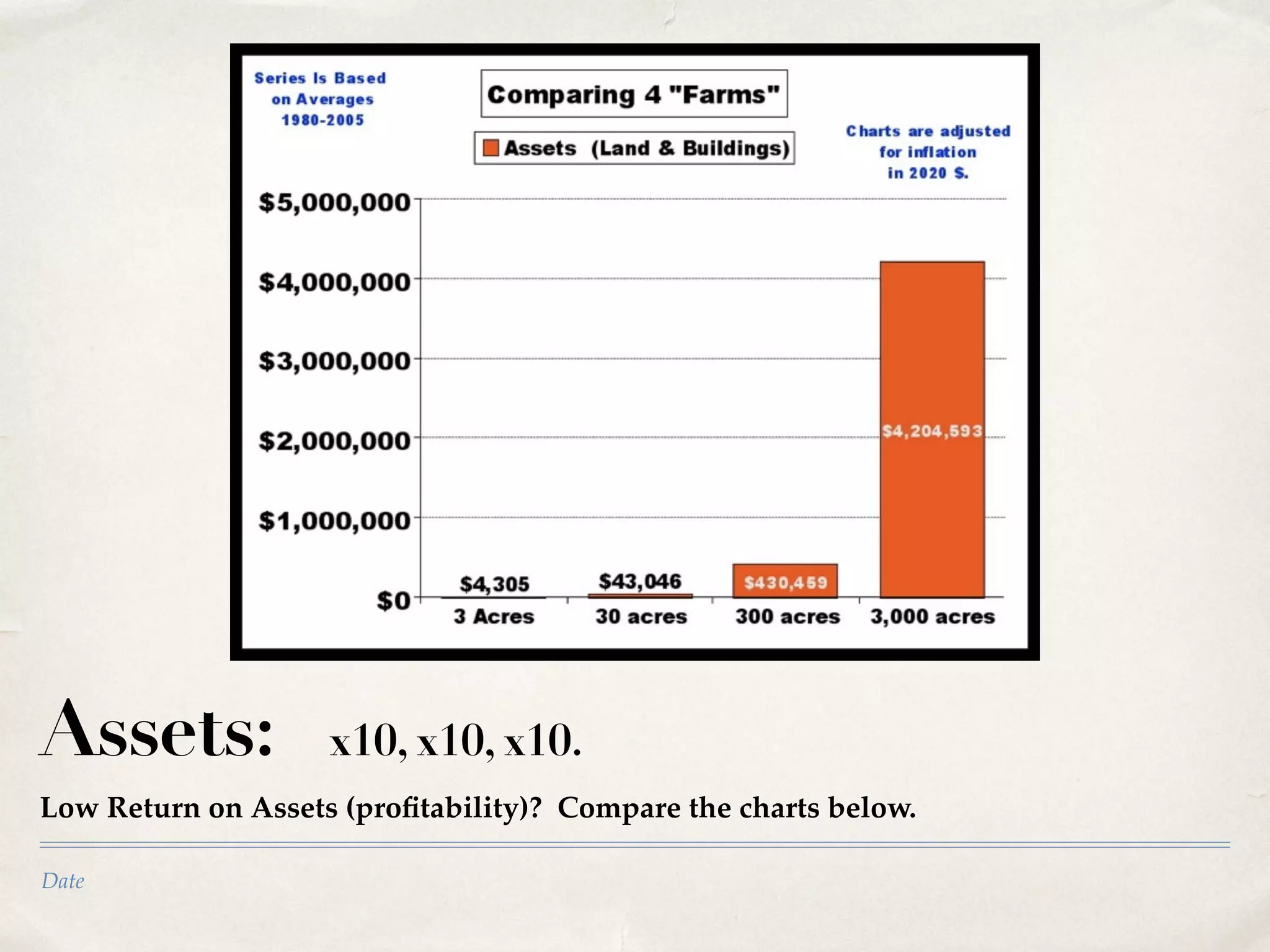
Assets: x10, x10, x10.
Low Return on Assets (profitability)? Compare the charts below.
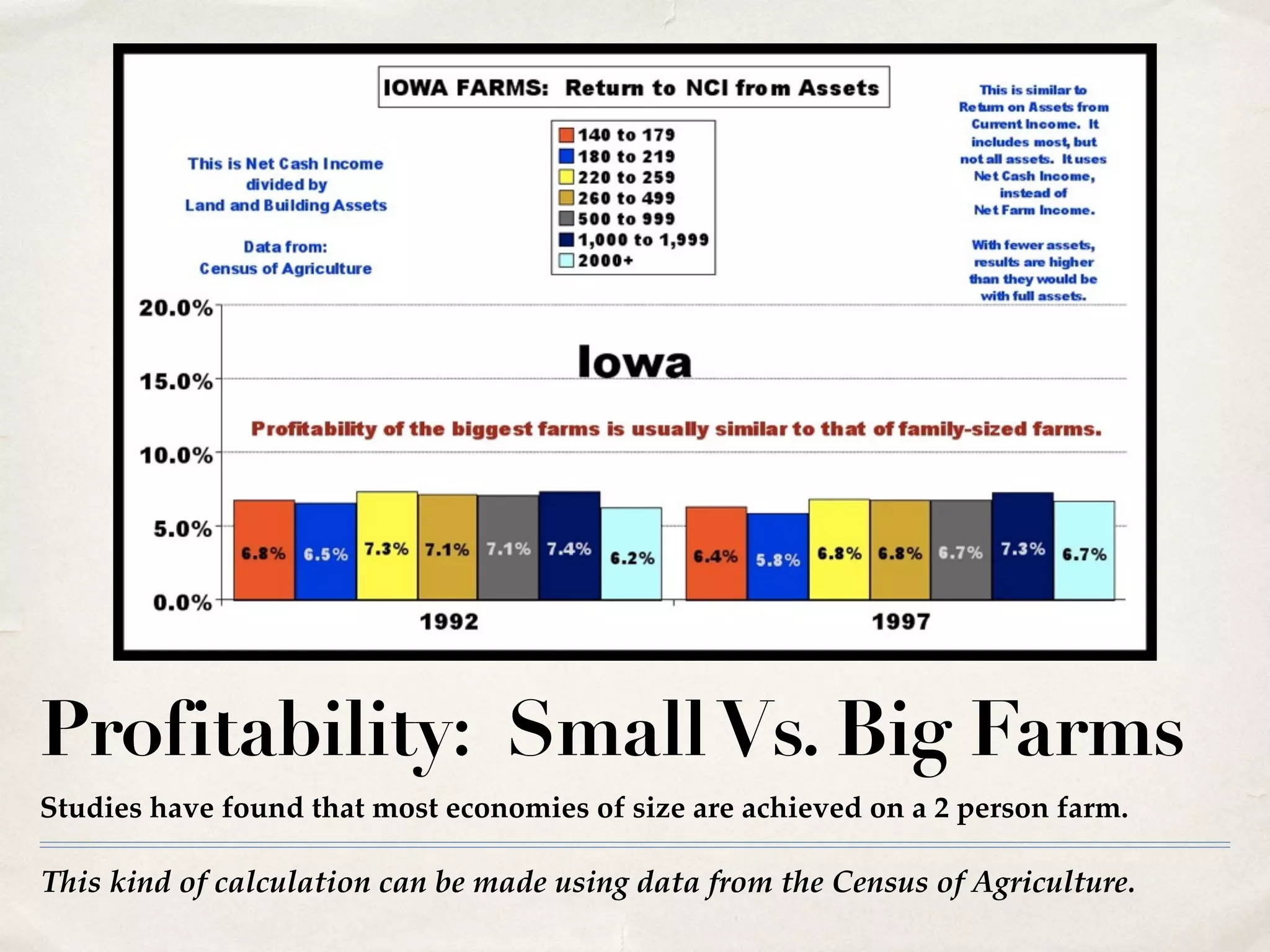
This kind of calculation can be made using data from the Census of Agriculture.
Profitability: SmallVs. Big Farms
Studies have found that most economies of size are achieved on a 2 person farm.
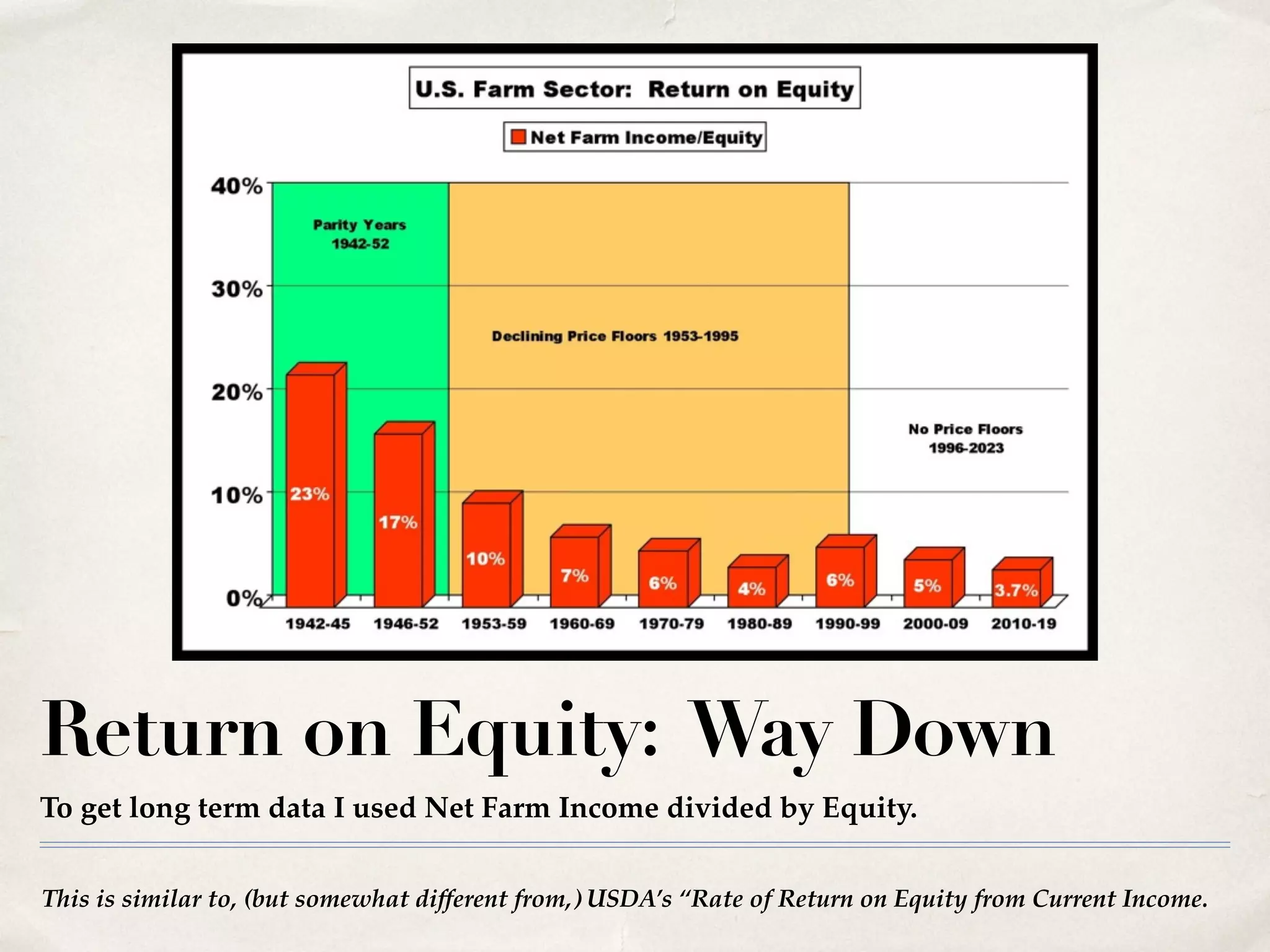
This is similar to, (but somewhat different from,) USDA’s “Rate of Return on Equity from Current Income.
Return on Equity: Way Down
To get long term data I used Net Farm Income divided by Equity.
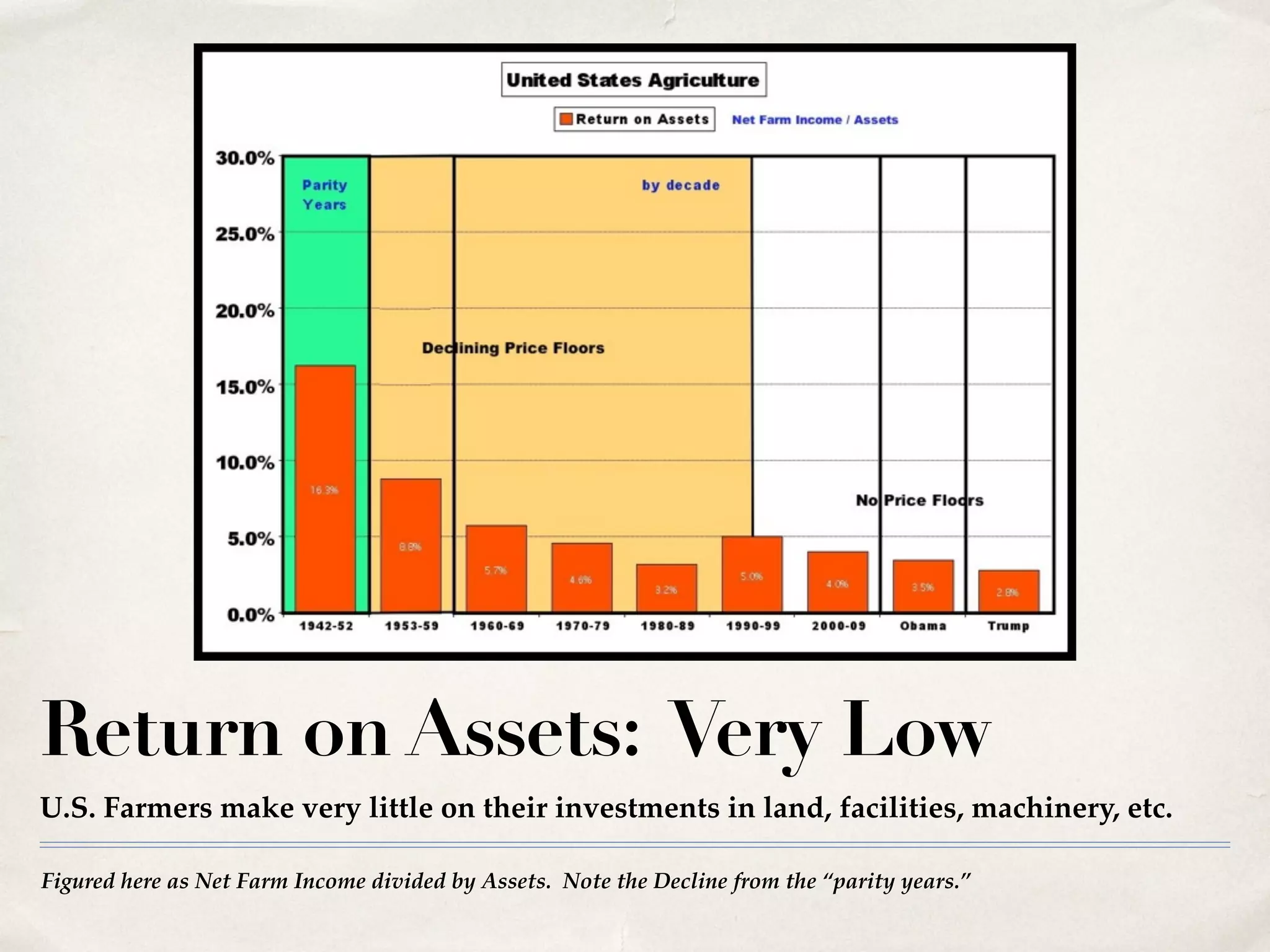
Figured here as Net Farm Income divided by Assets. Note the Decline from the “parity years.”
Return on Assets: Very Low
U.S. Farmers make very little on their investments in land, facilities, machinery, etc.
Date
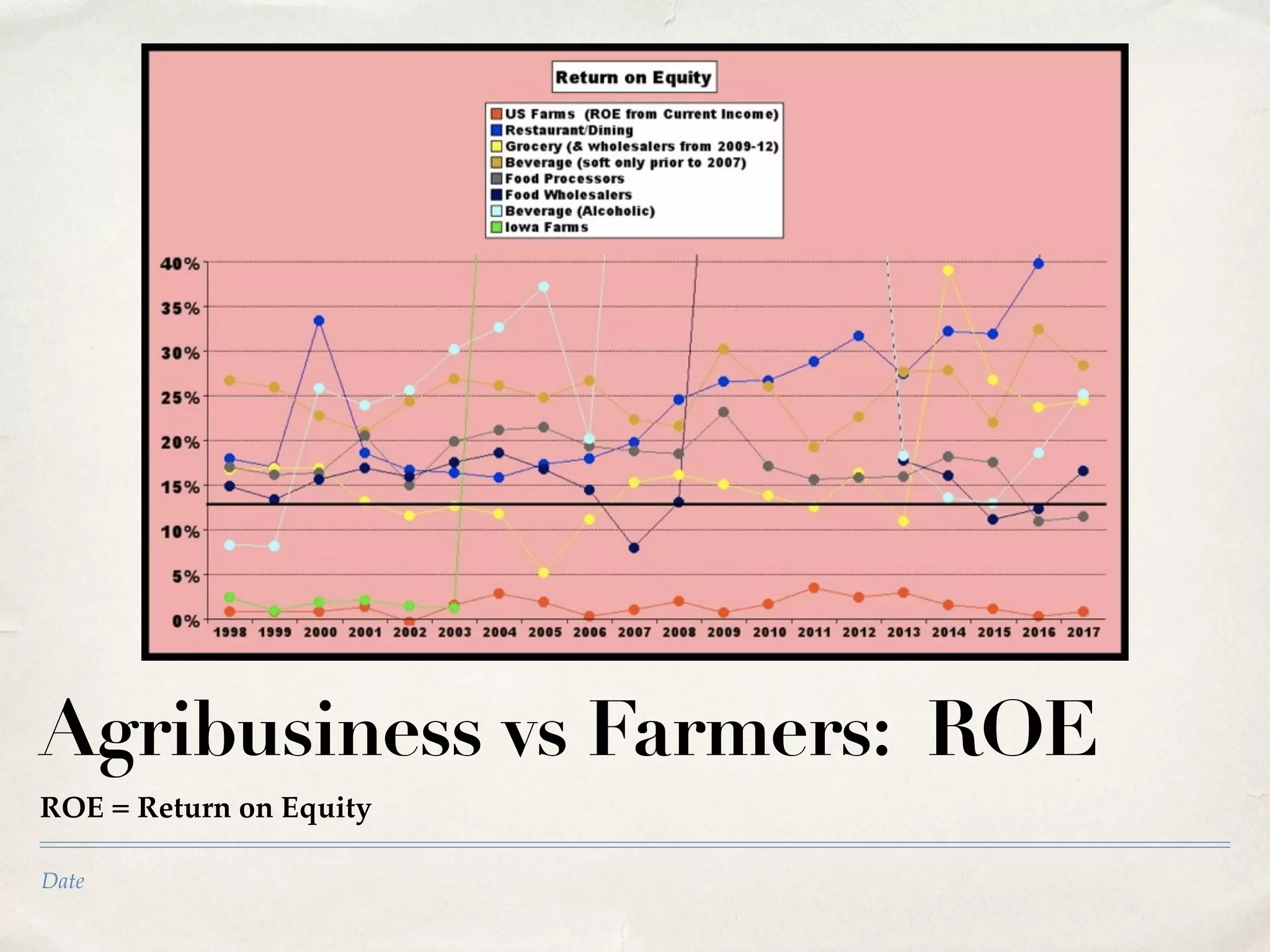
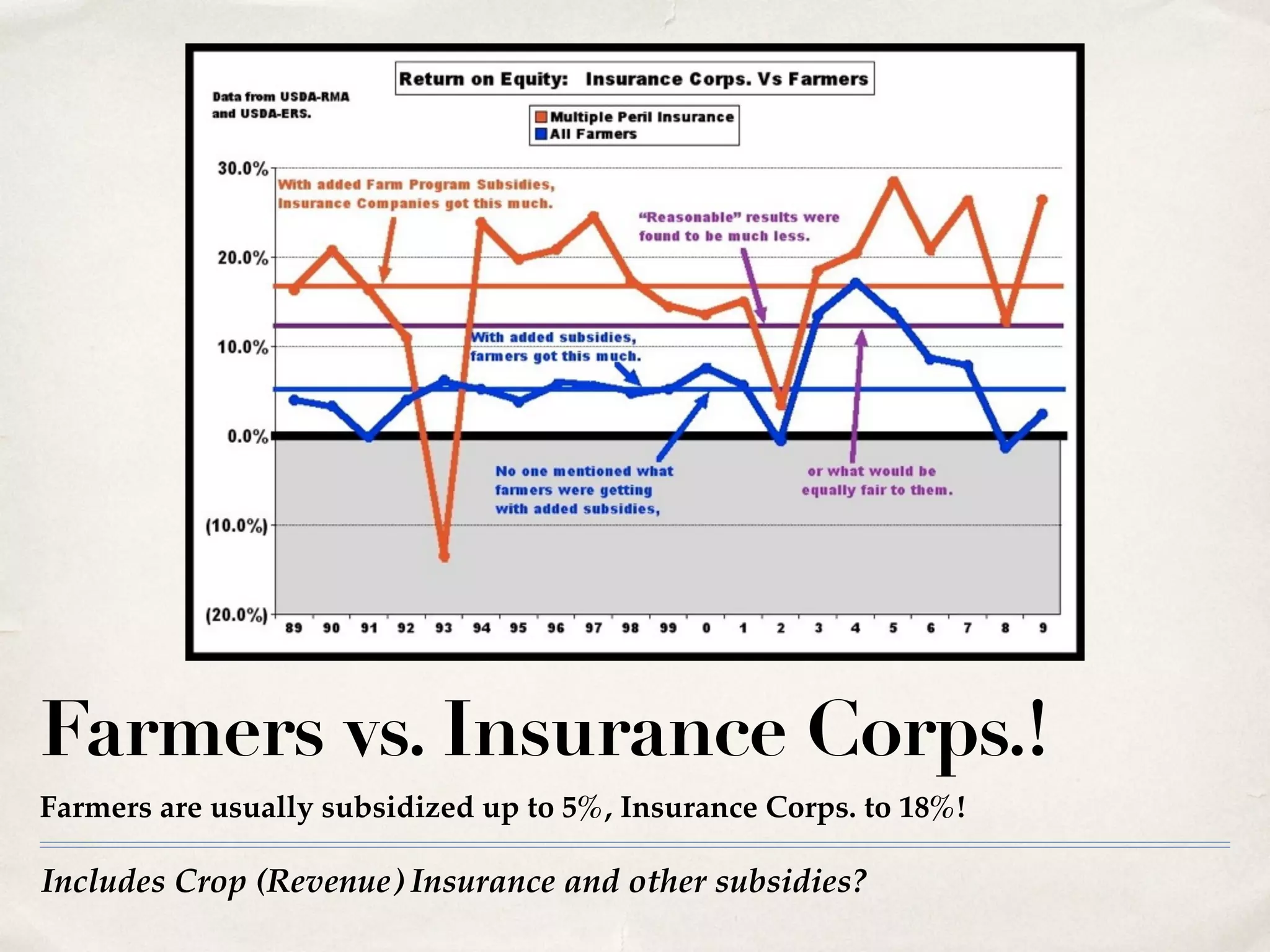
Agribusiness vs Farmers: ROE
ROE = Return on Equity
Includes Crop (Revenue) Insurance and other subsidies?
Farmers vs. Insurance Corps.!
Farmers are usually subsidized up to 5%, Insurance Corps. to 18%!
Date
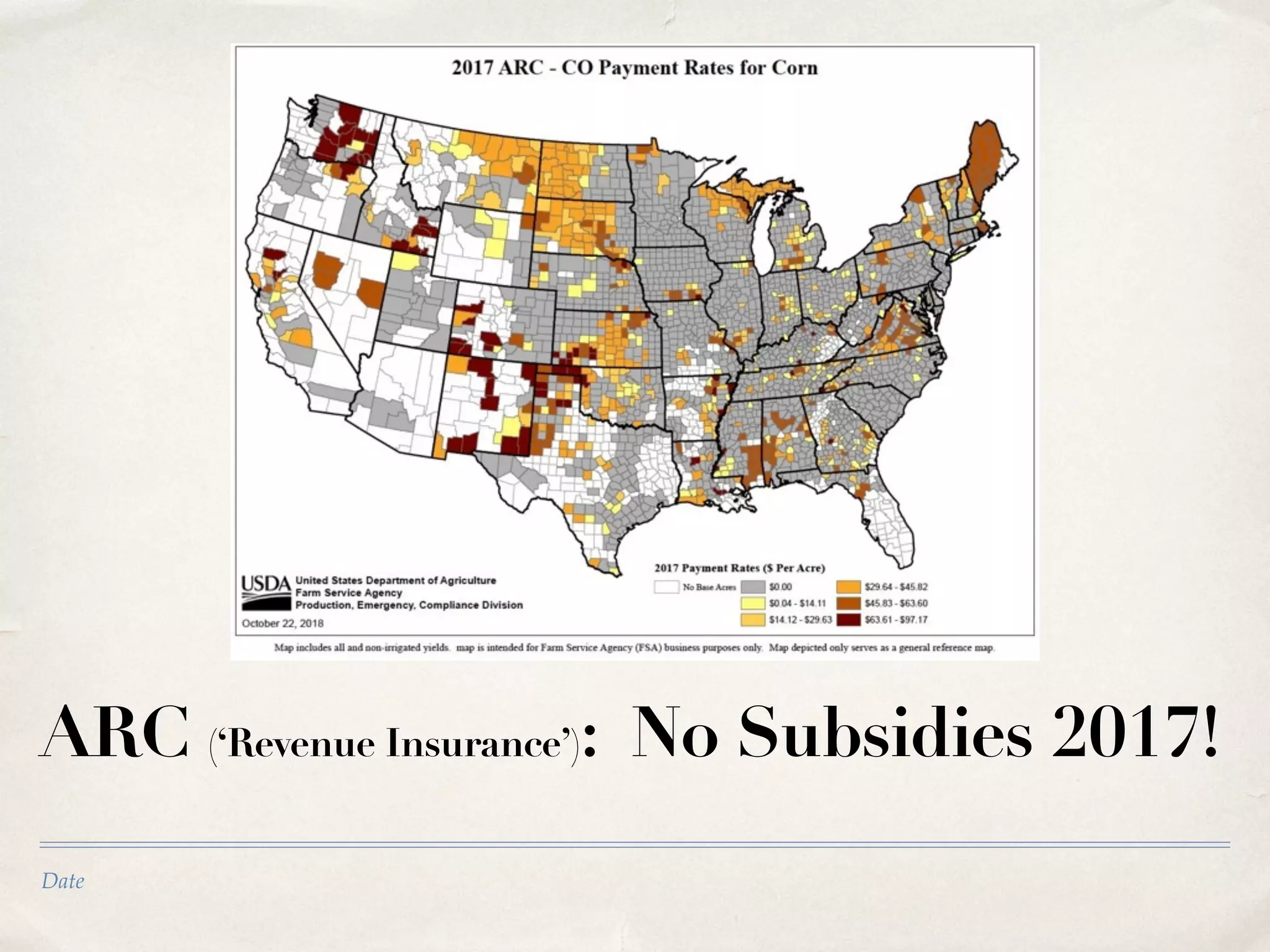
ARC (‘Revenue Insurance’): No Subsidies 2017!
Date
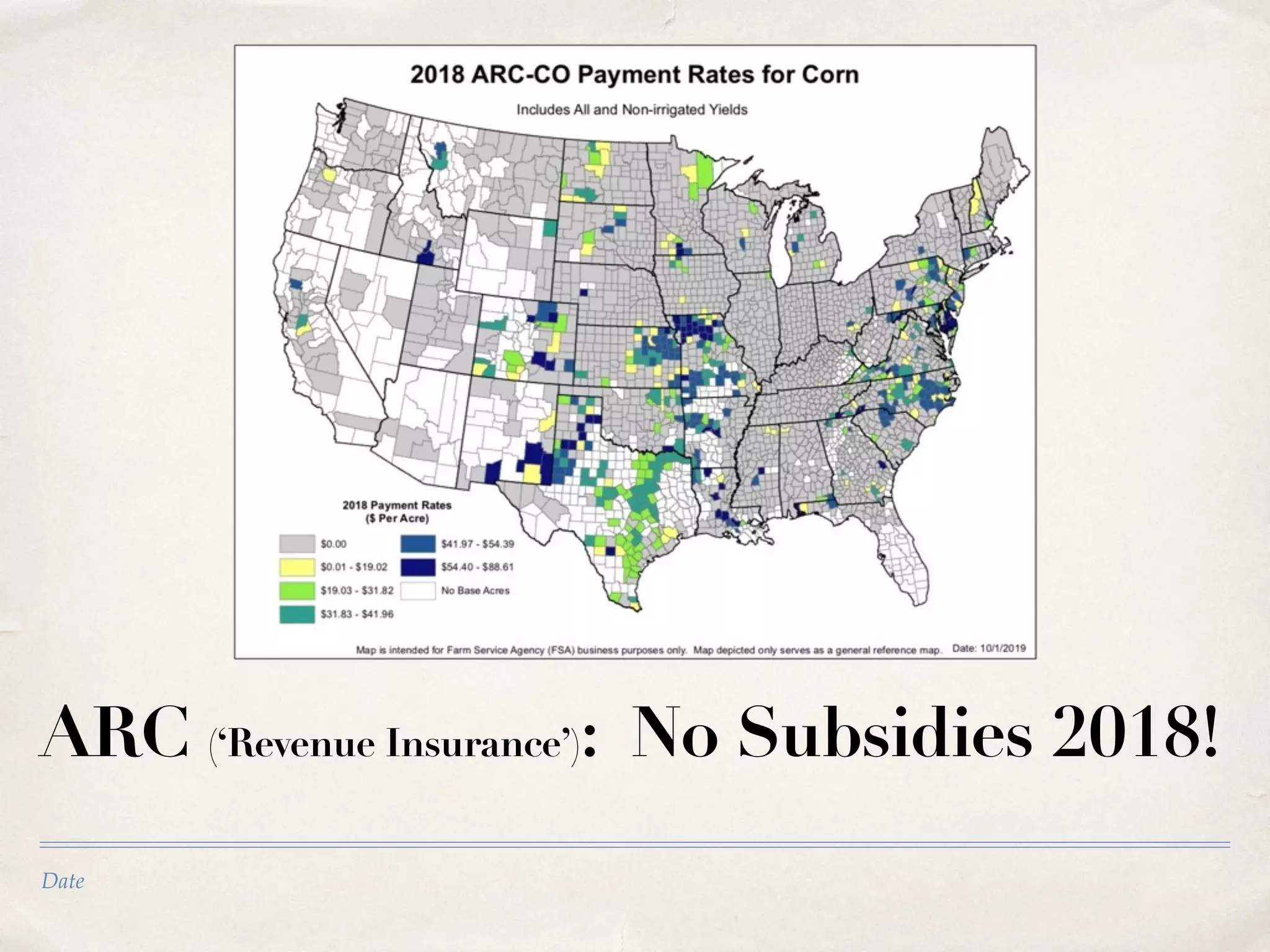
ARC (‘Revenue Insurance’): No Subsidies 2018!
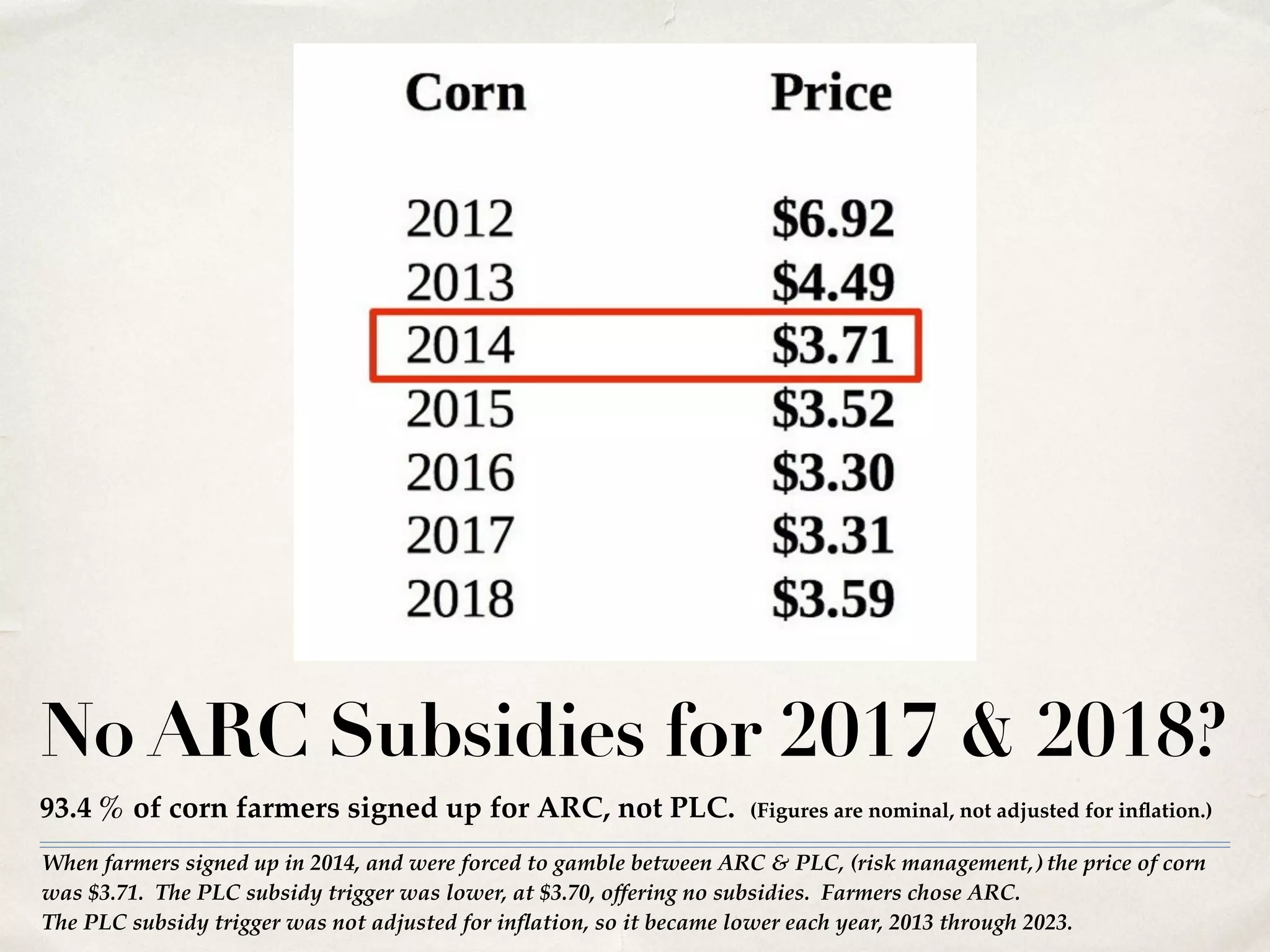
When farmers signed up in 2014, and were forced to gamble between ARC & PLC, (risk management,) the price of corn
was $3.71. The PLC subsidy trigger was lower, at $3.70, offering no subsidies. Farmers chose ARC.!
The PLC subsidy trigger was not adjusted for inflation, so it became lower each year, 2013 through 2023.
No ARC Subsidies for 2017 & 2018?
93.4 % of corn farmers signed up for ARC, not PLC. (Figures are nominal, not adjusted for inflation.)

Democratic Party Farm Programs.pdf

  • 1.
    By Brad Wilson,4/23/22. https://www.slideshare.net/bradwilson581525/presentations Democratic Party Farm Bills From the Great Depression to the 21st Century.
  • 2.
    By Brad Wilson,4/23/22 Parity: A “LivingWage” Standard Rising Up from the Great Depression; An Economic Stimulus to Fight World War II
  • 3.
    Maximum Price Ceilingstrigger the release of Reserve Supplies, as needed to balance Supply & Demand on the top side, to protect consumers, livestock farmers and industry. Floors (& Reductions); Ceilings (& Reserves) Minimum Price Floors, backed up by Supply Reductions, as needed, to protect farmers.
  • 4.
    Date An End to“Hooverism”
  • 5.
    Date Oversupply: Farm PricesCrash 63%! Farm Implement & Auto Manufacturers Managed their supply, prices fell only 6% & 16%.
  • 6.
    Date Farms Bankrupt, BanksForeclosed Banks and insurance companies acquired farms during the 1930s.
  • 8.
  • 9.
  • 10.
    Date Supply Management Mismanaged bythe Eisenhower Administration to make the programs look bad.
  • 12.
    “Freedom to Farm,”the 1996 Republican Farm Bill, (vetoed then signed by Clinton,) was labled “Freedom to Fail” by farmers. Price Floors Reduced: Starting with Eisenhower Price Floors & Supply Management Ended in 1996.
  • 13.
    We’ve seen increasingvolatility since the ending of market management programs in 1996. U.S., Iowa Net Farm Income Fell! Recently Iowa Net Farm Income fell to only 33% of what it was during the Parity years.
  • 15.
    OPEC Cut Production,Raised Prices US: Over-Produced, Lowered Prices
  • 16.
    US Farms: Down,Down, Down! OPEC: Way up Off the Top of the Chart!
  • 18.
    Date Democrats Fought forFair Farm Prices
  • 20.
    01 Farm Bills & Proposals ✤Early Farm Bills (1933-1941, Few, Low Price Floors)! ✤ “Parity” Farm Bills (1942-1952, multiple crops, livestock & poultry products, fruits & vegetables)! ✤ Reduced Price Floor Bills, inadequate supply management (1953-1995, farmers get less even with subsidies started in 1961, 1962, 1964, 1977, 1982, 1998).! ✤ Market Management (of price & supply) ends in 1996, except for sugar.! ✤ Restoration proposals, 1950s-1970s (National Farmers Organization, American Agriculture Movement, etc. ✤ “Farm Policy Reform Act,” “Harkin- Alexander” (1985, FAPRI study)! ✤ “Family Farm Act,” “Harkin- Gephardt” (1987, FAPRI study)! ✤ “Food from Family Farms Act,” (National Family Farm Coalition, APAC study 2003)! ✤ “Market Driven Inventory System,” (National Farmers Union, APAC study 2012)! ✤ Texas Farmers Union Proposal, (APAC study 2017)!
  • 21.
    Harkin-Gephardt Farm BillProposal ! Net Farm Income Up by $300+ Bil. Government Costs Down $124 Bil.
  • 24.
  • 25.
  • 28.
    Date US Farm Debt:Record High in 2020
  • 29.
  • 30.
  • 31.
  • 32.
  • 33.
  • 34.
  • 35.
  • 36.
  • 37.
  • 38.
  • 39.
  • 40.
  • 41.
  • 42.
    Something is missingfrom this paradigm, leading to myths about farm subsidies.! See the next slide! (Historical averages, 1980-2005.) Farm D Gets 1,000x, (C 100x, B 10x) More Subsidies Why is this story, (so virally told,) radically false?
  • 43.
    This series ofdata on 4 farms is based upon averages for 1980 to 2005. Farm D is 1,000x, (C 100x, B 10x) Bigger! As average farms growing corn, soybeans and oats, 3 or 30 acres is nowhere close to full time.
  • 44.
    Date Each Farm hasthe same ratio of crops. This is based on historical averages for the entire period, 1980-2005.
  • 45.
    Date Farm D Has1,000x, (C 100x, B 10x) More Market Income! Compared to Farm A, (3 acres). Same as on other charts. (Historical averages, 1980-2005.)
  • 46.
    https://www.ers.usda.gov/data-products/commodity-costs-and-returns.aspx Averages, 1981-2005. FarmD Has 1,000x, (C 100x, B 10x,) More Costs! These are average full economic costs as measured by USDA-ERS.
  • 47.
    (Historical averages, 1980-2005.) MarketIncome & Full costs The data from these charts is left out of almost all writing & speaking about farm subsidies.
  • 48.
  • 49.
  • 50.
    Date Assets: x10, x10,x10. Low Return on Assets (profitability)? Compare the charts below.
  • 51.
    This kind ofcalculation can be made using data from the Census of Agriculture. Profitability: SmallVs. Big Farms Studies have found that most economies of size are achieved on a 2 person farm.
  • 52.
    This is similarto, (but somewhat different from,) USDA’s “Rate of Return on Equity from Current Income. Return on Equity: Way Down To get long term data I used Net Farm Income divided by Equity.
  • 53.
    Figured here asNet Farm Income divided by Assets. Note the Decline from the “parity years.” Return on Assets: Very Low U.S. Farmers make very little on their investments in land, facilities, machinery, etc.
  • 54.
    Date Agribusiness vs Farmers:ROE ROE = Return on Equity
  • 55.
    Includes Crop (Revenue)Insurance and other subsidies? Farmers vs. Insurance Corps.! Farmers are usually subsidized up to 5%, Insurance Corps. to 18%!
  • 56.
  • 57.
  • 58.
    When farmers signedup in 2014, and were forced to gamble between ARC & PLC, (risk management,) the price of corn was $3.71. The PLC subsidy trigger was lower, at $3.70, offering no subsidies. Farmers chose ARC.! The PLC subsidy trigger was not adjusted for inflation, so it became lower each year, 2013 through 2023. No ARC Subsidies for 2017 & 2018? 93.4 % of corn farmers signed up for ARC, not PLC. (Figures are nominal, not adjusted for inflation.)