Object Oriented
Programming
Encapsulation
Group Members:
 Oman Mahmood
 Abdul Rehman
 Basit Ali
Objectives:
 What is Encapsulation?
 Why Encapsulation?
 Syntax
 Example
 Advantages and achievements
What is Encapsulation?
 "A language mechanism for restricting access to some of
the object's components"
 Encapsulation is the process of combining data and
functions into a single unit called class.
 Data is only accessible through the functions present
inside the class.
What is Encapsulation?
 Hiding the implementation details and providing
restrictive access leads to the concept of abstract data
type.
 Data encapsulation led to the important concept of data
hiding.
Why Encapsulation?
 "It gives us secure and consistence results".
Means that it gives the user access to a limited data and
keeps our valuable data which can change our program or
increase the possibilities of mistakes hidden from the
user.
 We can understand this more by this example:
Assume we made a Rectangle class that contained four
variables - length, width, area, and perimeter.
Why Encapsulation?
 Please note that area and perimeter are derived from
length and width, so that changing length would change
both area and perimeter. If you did not use proper
information hiding (encapsulation), then another
program utilizing that Rectangle class could alter the
length without altering the area, and you would have an
inconsistent Rectangle..
Why Encapsulation?
 Using encapsulation, we can create a function that, if a
program wanted to change the length of the rectangle,
that the object would appropriately update its area and
perimeter without being inconsistent.
 The ideal is to keep as many of the details of each class
hidden from all other classes as possible.
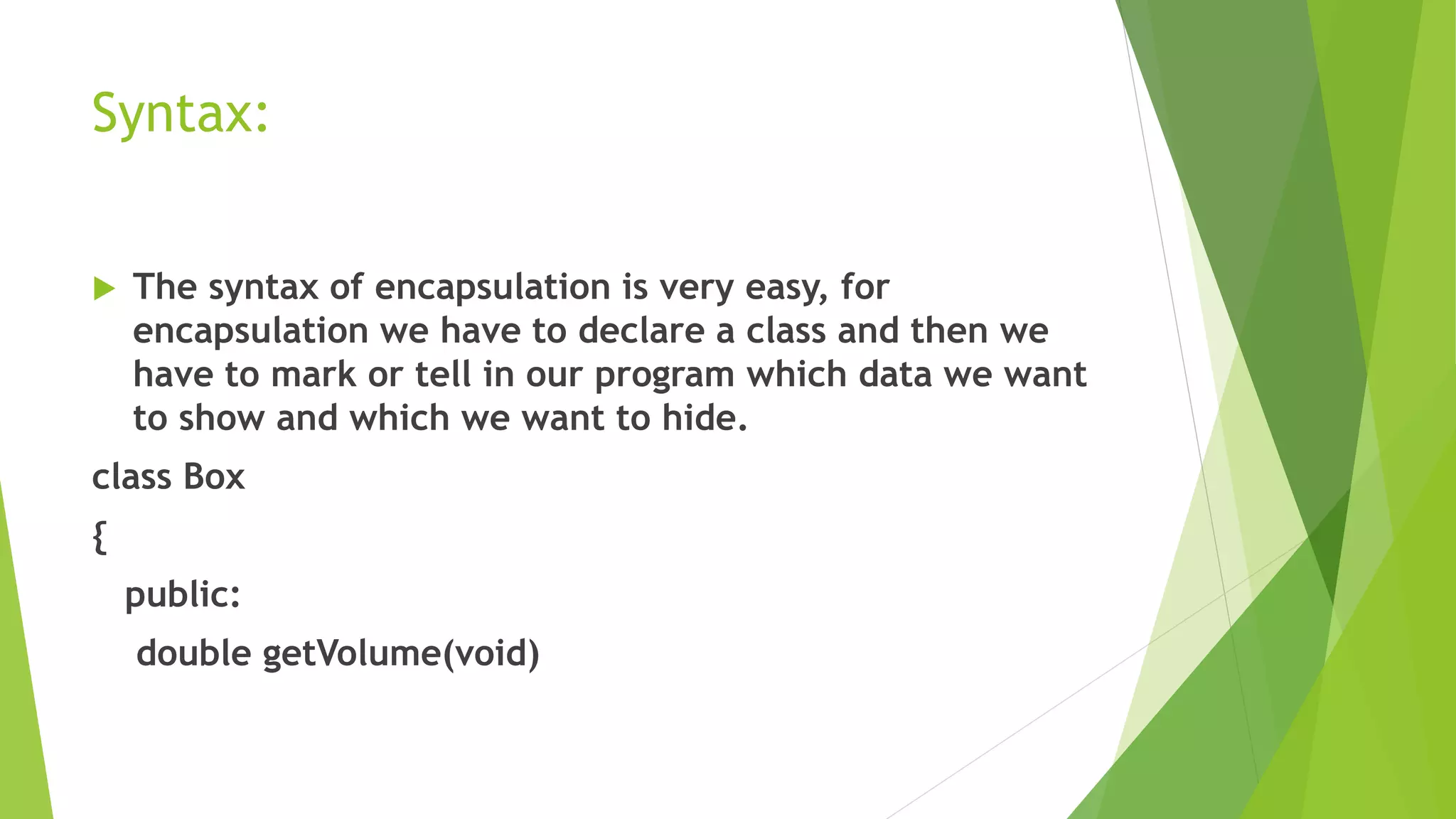
Syntax:
 The syntax of encapsulation is very easy, for
encapsulation we have to declare a class and then we
have to mark or tell in our program which data we want
to show and which we want to hide.
class Box
{
public:
double getVolume(void)
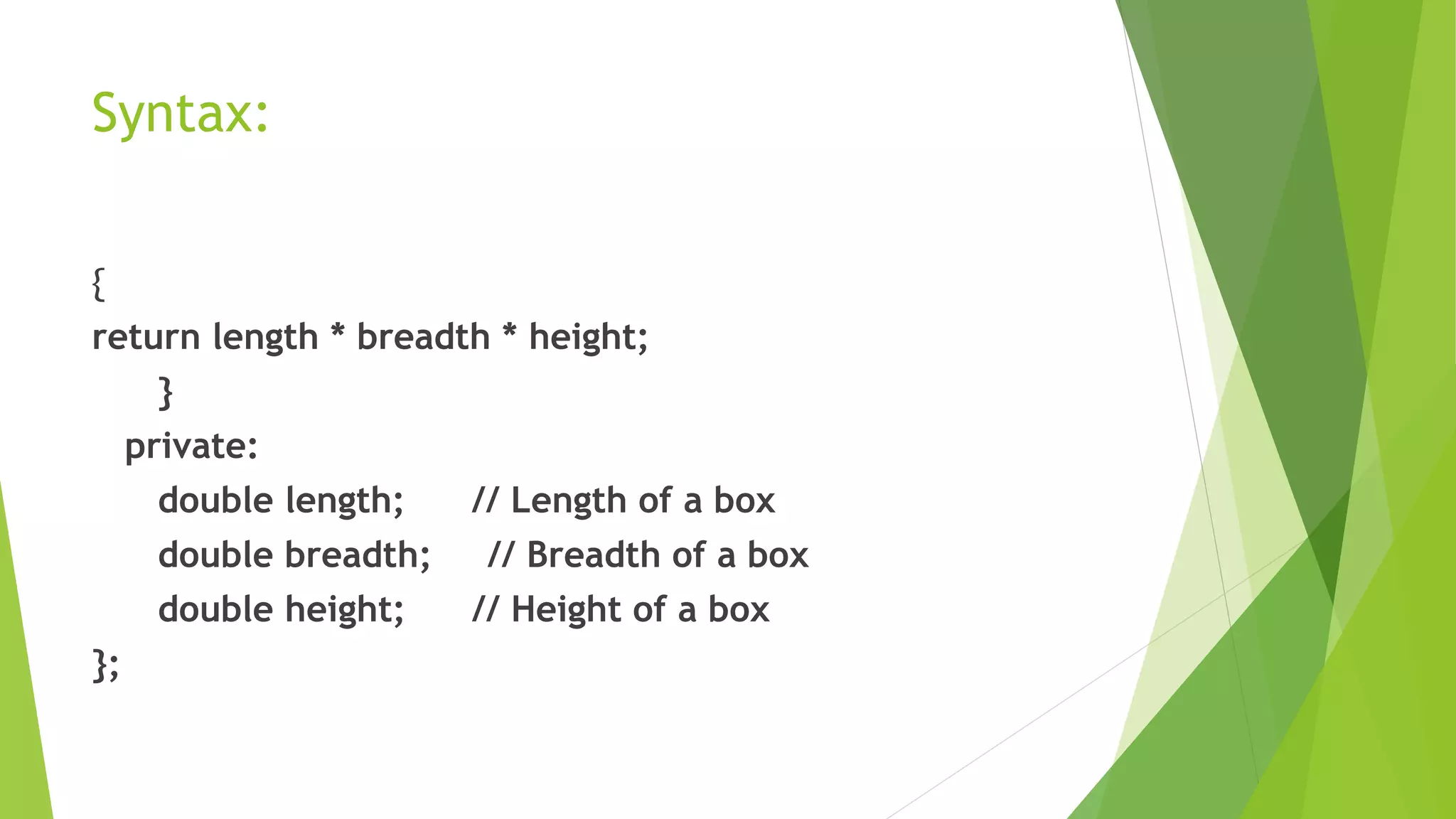
Syntax:
{
return length * breadth * height;
}
private:
double length; // Length of a box
double breadth; // Breadth of a box
double height; // Height of a box
};
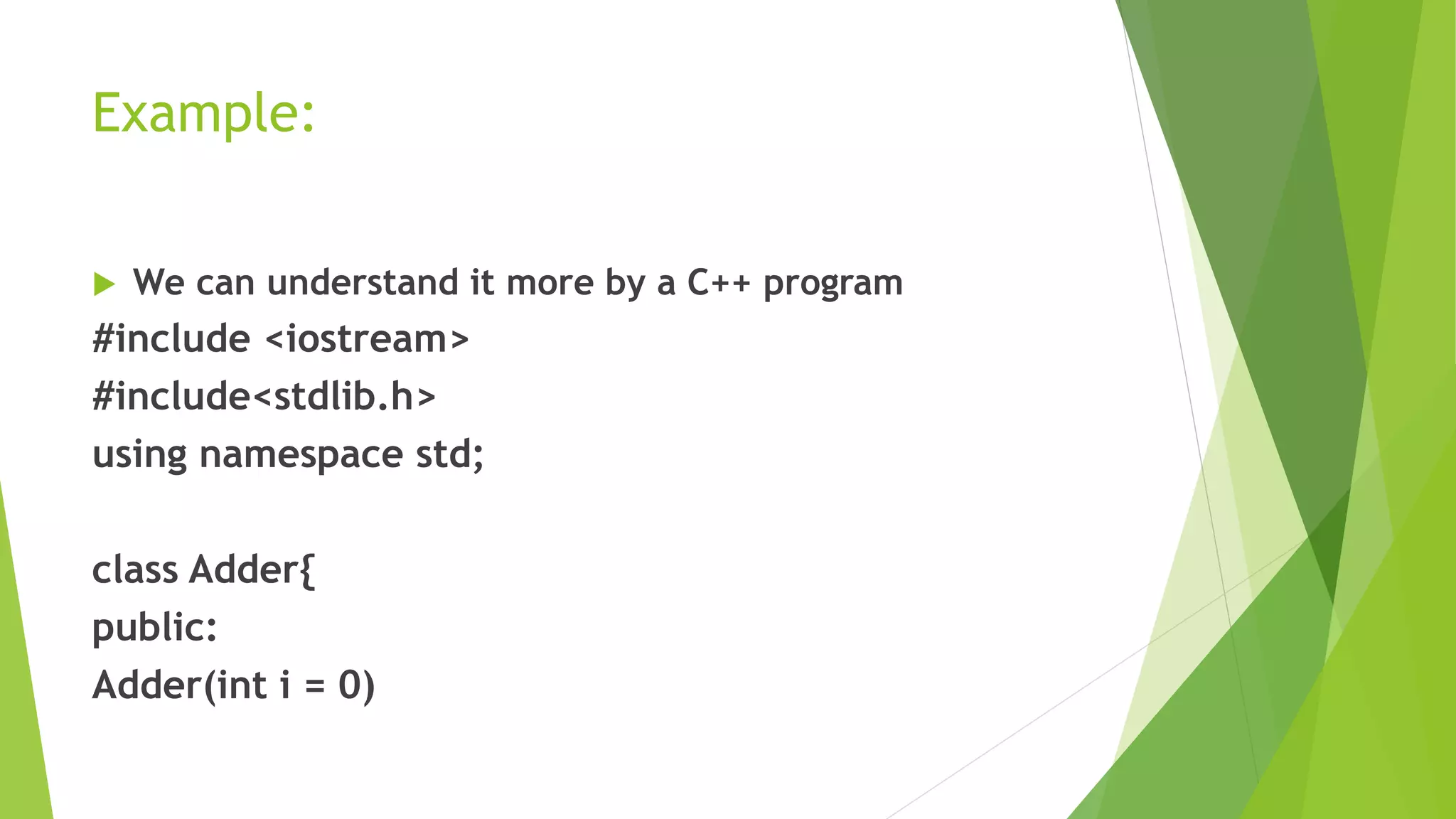
Example:
 We can understand it more by a C++ program
#include <iostream>
#include<stdlib.h>
using namespace std;
class Adder{
public:
Adder(int i = 0)
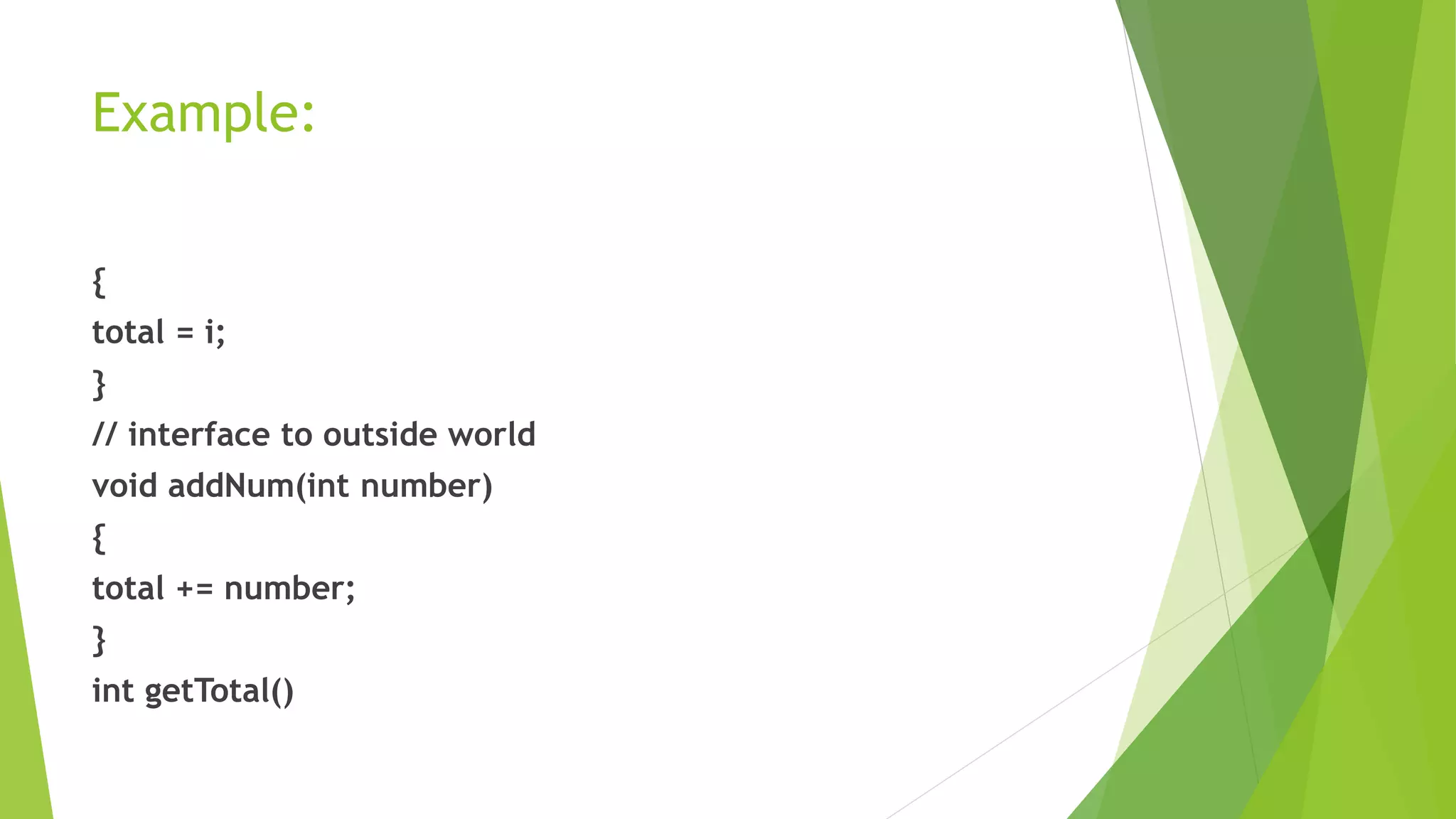
Example:
{
total = i;
}
// interface to outside world
void addNum(int number)
{
total += number;
}
int getTotal()
Example:
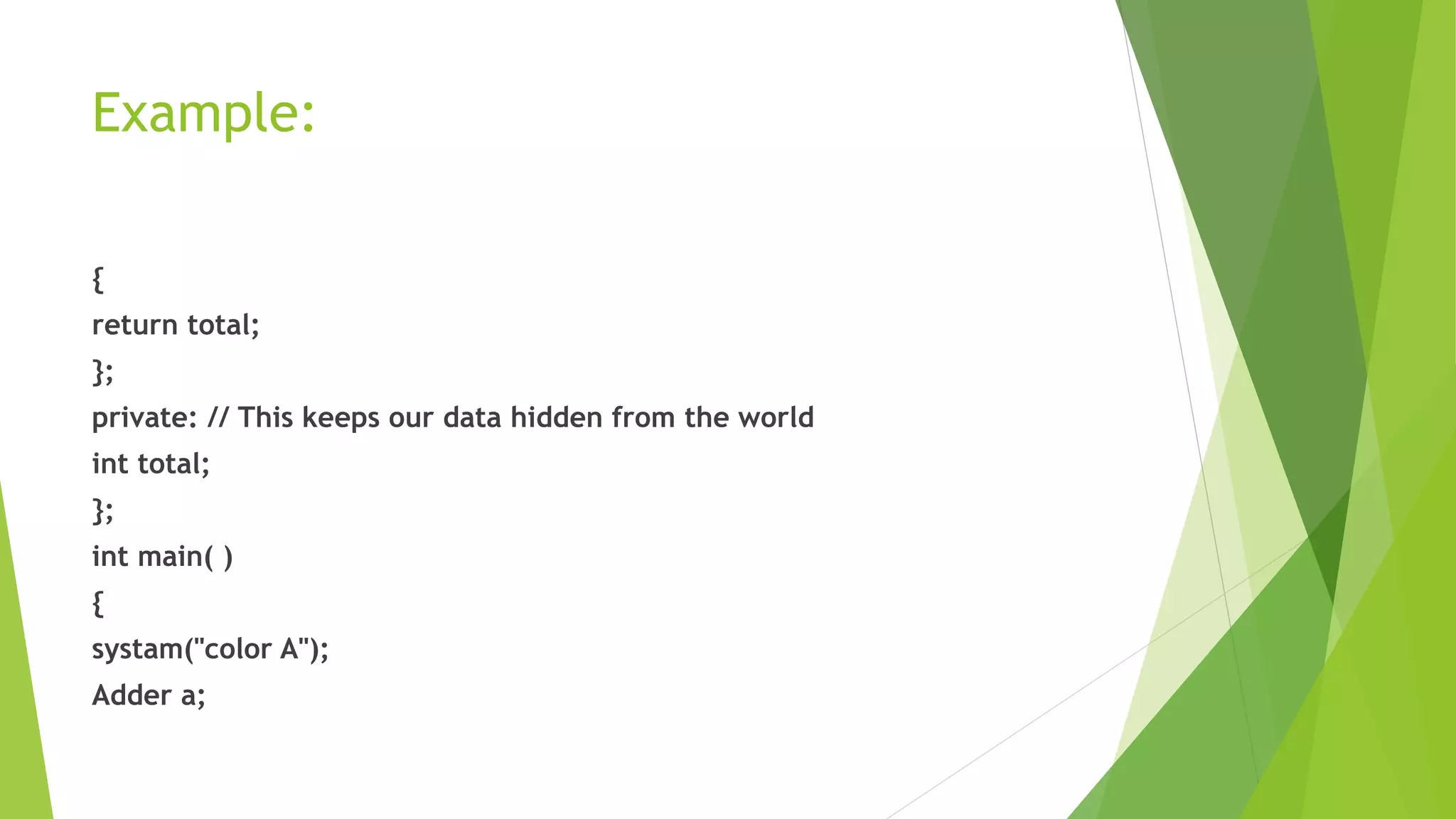
{
return total;
};
private: // This keeps our data hidden from the world
int total;
};
int main( )
{
systam("color A");
Adder a;
Example:
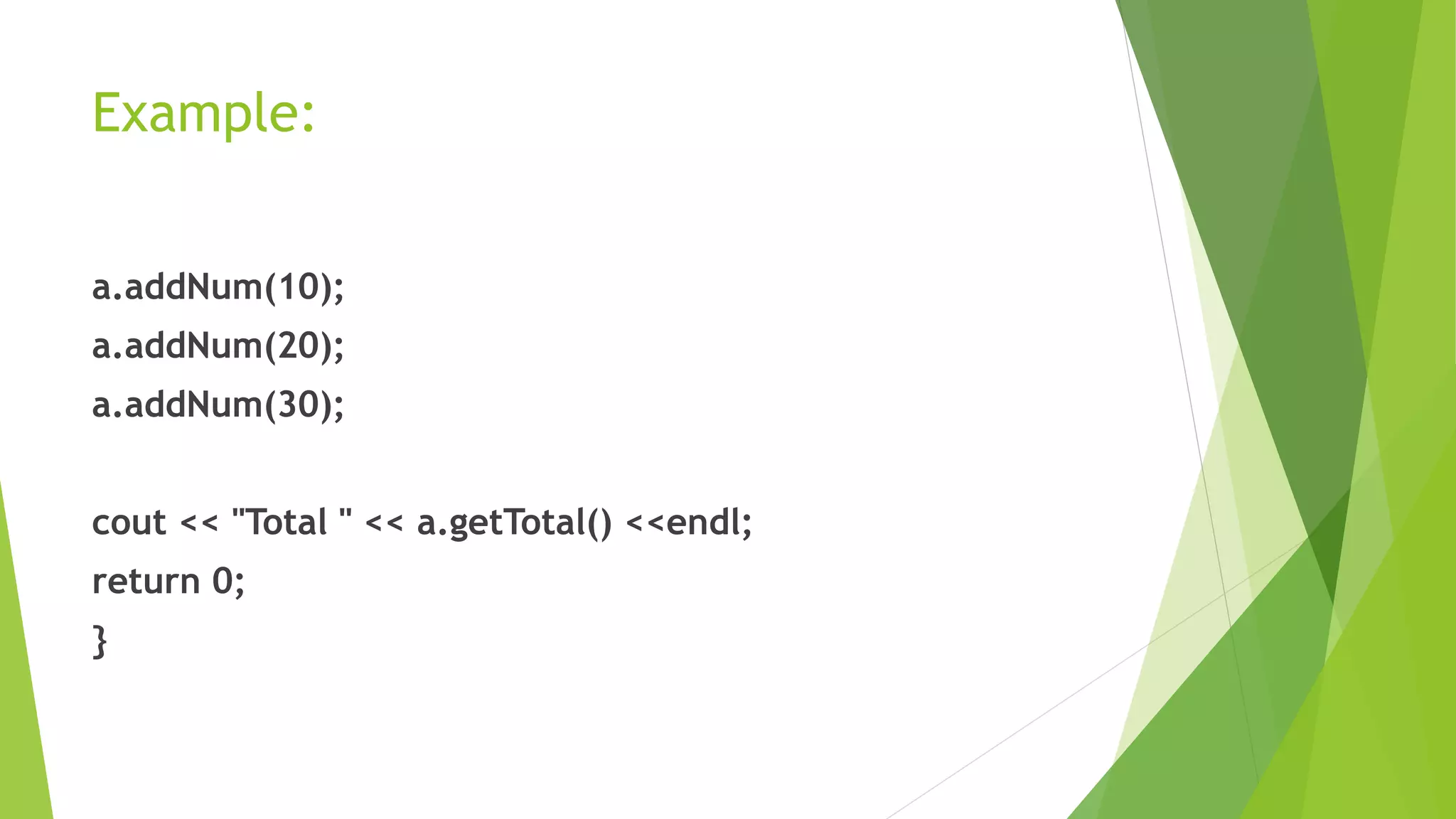
a.addNum(10);
a.addNum(20);
a.addNum(30);
cout << "Total " << a.getTotal() <<endl;
return 0;
}
Example:
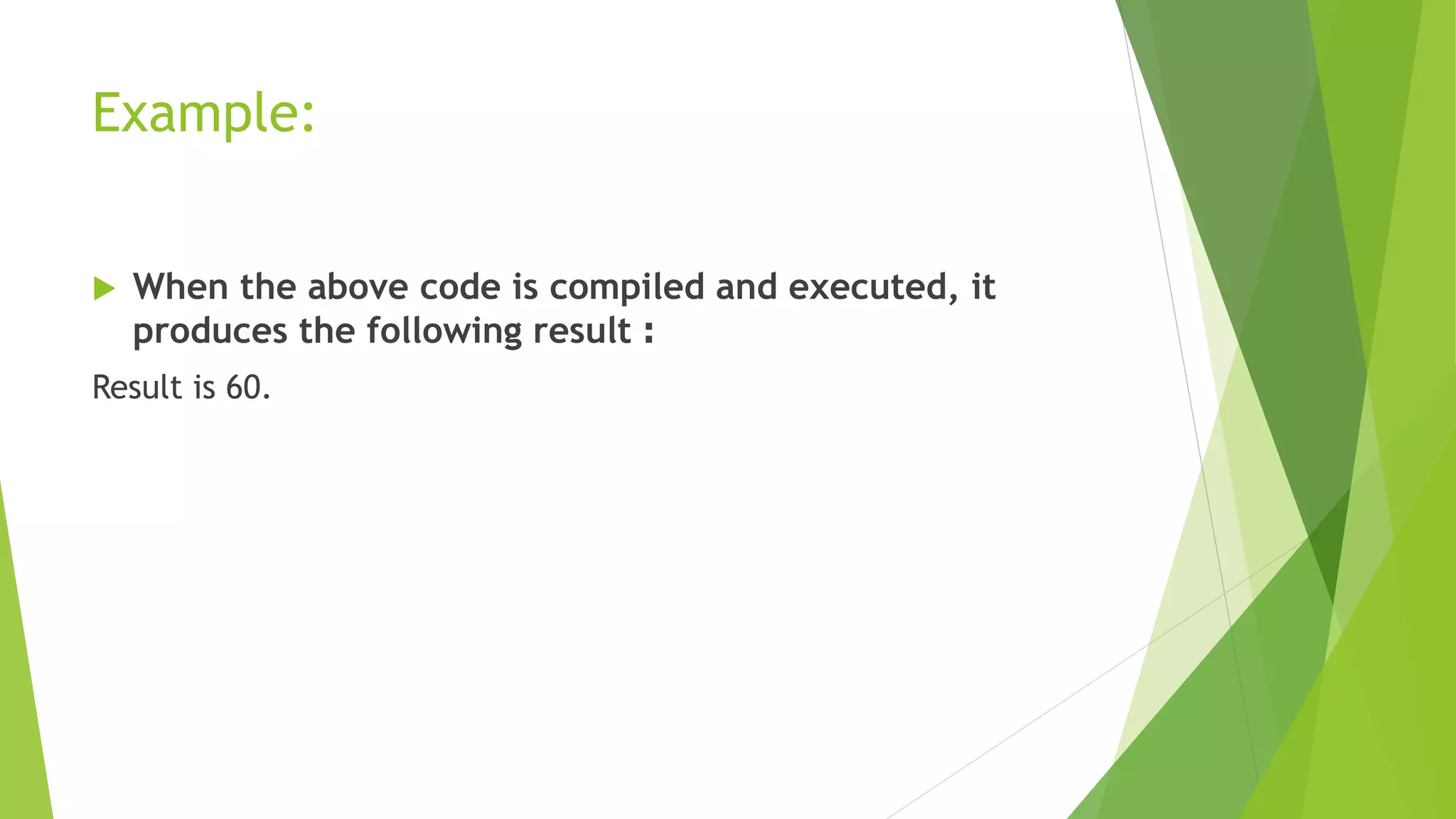
 When the above code is compiled and executed, it
produces the following result :
Result is 60.
Advantages and Achievements
 Makes Maintenance of Application Easier.
 Improves the Understandability of the Application
 Enhanced Security

Encapsulation C++

  • 2.
  • 3.
    Group Members:  OmanMahmood  Abdul Rehman  Basit Ali
  • 4.
    Objectives:  What isEncapsulation?  Why Encapsulation?  Syntax  Example  Advantages and achievements
  • 5.
    What is Encapsulation? "A language mechanism for restricting access to some of the object's components"  Encapsulation is the process of combining data and functions into a single unit called class.  Data is only accessible through the functions present inside the class.
  • 6.
    What is Encapsulation? Hiding the implementation details and providing restrictive access leads to the concept of abstract data type.  Data encapsulation led to the important concept of data hiding.
  • 7.
    Why Encapsulation?  "Itgives us secure and consistence results". Means that it gives the user access to a limited data and keeps our valuable data which can change our program or increase the possibilities of mistakes hidden from the user.  We can understand this more by this example: Assume we made a Rectangle class that contained four variables - length, width, area, and perimeter.
  • 8.
    Why Encapsulation?  Pleasenote that area and perimeter are derived from length and width, so that changing length would change both area and perimeter. If you did not use proper information hiding (encapsulation), then another program utilizing that Rectangle class could alter the length without altering the area, and you would have an inconsistent Rectangle..
  • 9.
    Why Encapsulation?  Usingencapsulation, we can create a function that, if a program wanted to change the length of the rectangle, that the object would appropriately update its area and perimeter without being inconsistent.  The ideal is to keep as many of the details of each class hidden from all other classes as possible.
  • 10.
    Syntax:  The syntaxof encapsulation is very easy, for encapsulation we have to declare a class and then we have to mark or tell in our program which data we want to show and which we want to hide. class Box { public: double getVolume(void)
  • 11.
    Syntax: { return length *breadth * height; } private: double length; // Length of a box double breadth; // Breadth of a box double height; // Height of a box };
  • 12.
    Example:  We canunderstand it more by a C++ program #include <iostream> #include<stdlib.h> using namespace std; class Adder{ public: Adder(int i = 0)
  • 13.
    Example: { total = i; } //interface to outside world void addNum(int number) { total += number; } int getTotal()
  • 14.
    Example: { return total; }; private: //This keeps our data hidden from the world int total; }; int main( ) { systam("color A"); Adder a;
  • 15.
  • 16.
    Example:  When theabove code is compiled and executed, it produces the following result : Result is 60.
  • 17.
    Advantages and Achievements Makes Maintenance of Application Easier.  Improves the Understandability of the Application  Enhanced Security