Learning
Sight Words
by EAR
the Neuroscience of Word Recognition
@rfugal
facebook.com/assisted.immersion
“If you’re going to innovate, you have to
understand the value of what you’re replacing.”
— Steve Krug
Learning Sight Words by EAR
is an alternative or supplement to
Phonemic Decoding (Phonics)
Phonemic Decoding is a scaffold.
It’s a useful scaffold, but it is not reading.
For the fluent reader, 99.99…% of words read are Sight Words
There are three parts to phonemic decoding:
1. Deconstruction
(e.g. identifying the three letters of cat, C–A–T),
2. Phoneme Assignment
(e.g. C=/k/, A=/æ/, T=/t/),
3. and Phoneme Blending.
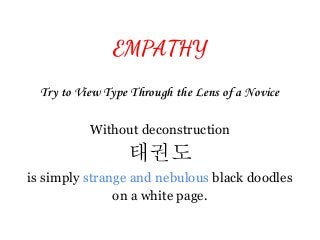
EMPATHY
Try to View Type Through the Lens of a Novice
Without deconstruction
태권도
is simply strange and nebulous black doodles
on a white page.
태권도
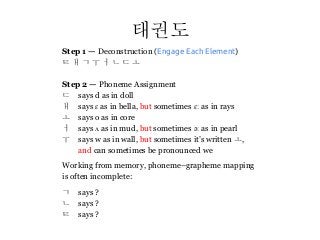
Step 1 — Deconstruction (Engage Each Element)
ㅌ ㅐ ㄱ ㅜ ㅓ ㄴ ㄷ ㅗ
Step 2 — Phoneme Assignment
ㄷ says d as in doll
ㅐ says ɛ as in bella, but sometimes ɛː as in rays
ㅗ says o as in core
ㅓ says ʌ as in mud, but sometimes əː as in pearl
ㅜ says w as in wall, but sometimes it’s written ㅗ,
and can sometimes be pronounced we
Working from memory, phoneme–grapheme mapping
is often incomplete:
ㄱ says ?
ㄴ says ?
ㅌ says ?
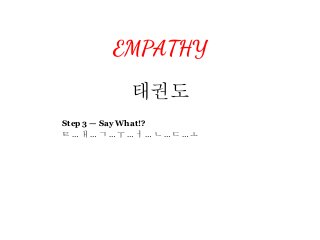
EMPATHY
태권도
Step 3 — Say What!?
ㅌ … ㅐ … ㄱ … ㅜ … ㅓ … ㄴ … ㄷ … ㅗ
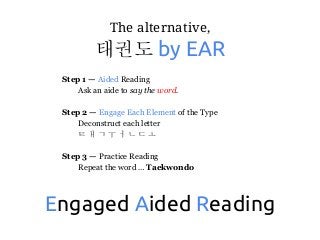
The alternative,
태권도 by EAR
Step 1 — Aided Reading
Ask an aide to say the word.
Step 2 — Engage Each Element of the Type
Deconstruct each letter
ㅌ ㅐ ㄱ ㅜ ㅓ ㄴ ㄷ ㅗ
Step 3 — Practice Reading
Repeat the word … Taekwondo
Engaged Aided Reading
Getting to Fluency
The theory is
Engagement
is the secret sauce
that makes
phonemic decoding instruction
so valuable in
developing fluency
Phoneme Assignment
and Phoneme Blending
are simply a Scaffold—
the Aide.
Engagement
is the secret sauce
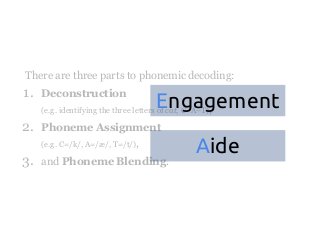
There are three parts to phonemic decoding:
1. Deconstruction
(e.g. identifying the three letters of cat, C–A–T),
2. Phoneme Assignment
(e.g. C=/k/, A=/æ/, T=/t/),
3. and Phoneme Blending.
Engagement
Aide
glossary
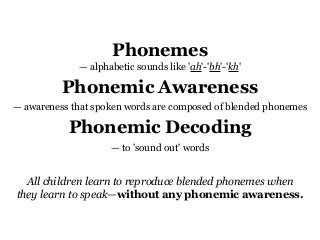
Phonemes
— alphabetic sounds like 'ah'-'bh'-'kh'
Phonemic Awareness
— awareness that spoken words are composed of blended phonemes
Phonemic Decoding
— to 'sound out' words
All children learn to reproduce blended phonemes when
they learn to speak—without any phonemic awareness.
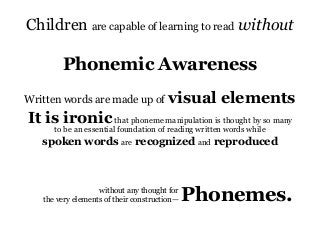
Children are capable of learning to read without
Phonemic Awareness
Written words are made up of visual elements
It is ironicthat phoneme manipulation is thought by so many
to be an essential foundation of reading written words while
spoken words are recognized and reproduced
Phonemes.without any thought for
the very elements of their construction—
@rfugal
facebook.com/assisted.immersion
I want to present my research at
SXSW EDU
@ Austin, TX
March 5–8, 2018
vote at panelpicker.sxsw.com/vote/

Learning Sight Words by EAR

  • 1.
    Learning Sight Words by EAR theNeuroscience of Word Recognition @rfugal facebook.com/assisted.immersion
  • 2.
    “If you’re goingto innovate, you have to understand the value of what you’re replacing.” — Steve Krug
  • 3.
    Learning Sight Wordsby EAR is an alternative or supplement to Phonemic Decoding (Phonics) Phonemic Decoding is a scaffold. It’s a useful scaffold, but it is not reading. For the fluent reader, 99.99…% of words read are Sight Words
  • 4.
    There are threeparts to phonemic decoding: 1. Deconstruction (e.g. identifying the three letters of cat, C–A–T), 2. Phoneme Assignment (e.g. C=/k/, A=/æ/, T=/t/), 3. and Phoneme Blending.
  • 5.
    EMPATHY Try to ViewType Through the Lens of a Novice Without deconstruction 태권도 is simply strange and nebulous black doodles on a white page.
  • 6.
    태권도 Step 1 —Deconstruction (Engage Each Element) ㅌ ㅐ ㄱ ㅜ ㅓ ㄴ ㄷ ㅗ Step 2 — Phoneme Assignment ㄷ says d as in doll ㅐ says ɛ as in bella, but sometimes ɛː as in rays ㅗ says o as in core ㅓ says ʌ as in mud, but sometimes əː as in pearl ㅜ says w as in wall, but sometimes it’s written ㅗ, and can sometimes be pronounced we Working from memory, phoneme–grapheme mapping is often incomplete: ㄱ says ? ㄴ says ? ㅌ says ?
  • 7.
    EMPATHY 태권도 Step 3 —Say What!? ㅌ … ㅐ … ㄱ … ㅜ … ㅓ … ㄴ … ㄷ … ㅗ
  • 8.
    The alternative, 태권도 byEAR Step 1 — Aided Reading Ask an aide to say the word. Step 2 — Engage Each Element of the Type Deconstruct each letter ㅌ ㅐ ㄱ ㅜ ㅓ ㄴ ㄷ ㅗ Step 3 — Practice Reading Repeat the word … Taekwondo Engaged Aided Reading
  • 9.
  • 10.
    The theory is Engagement isthe secret sauce that makes phonemic decoding instruction so valuable in developing fluency
  • 11.
    Phoneme Assignment and PhonemeBlending are simply a Scaffold— the Aide. Engagement is the secret sauce
  • 12.
    There are threeparts to phonemic decoding: 1. Deconstruction (e.g. identifying the three letters of cat, C–A–T), 2. Phoneme Assignment (e.g. C=/k/, A=/æ/, T=/t/), 3. and Phoneme Blending. Engagement Aide
  • 13.
  • 14.
    Phonemes — alphabetic soundslike 'ah'-'bh'-'kh' Phonemic Awareness — awareness that spoken words are composed of blended phonemes Phonemic Decoding — to 'sound out' words All children learn to reproduce blended phonemes when they learn to speak—without any phonemic awareness.
  • 15.
    Children are capableof learning to read without Phonemic Awareness Written words are made up of visual elements It is ironicthat phoneme manipulation is thought by so many to be an essential foundation of reading written words while spoken words are recognized and reproduced Phonemes.without any thought for the very elements of their construction—
  • 16.
    @rfugal facebook.com/assisted.immersion I want topresent my research at SXSW EDU @ Austin, TX March 5–8, 2018 vote at panelpicker.sxsw.com/vote/