Understanding Your
Body Armor
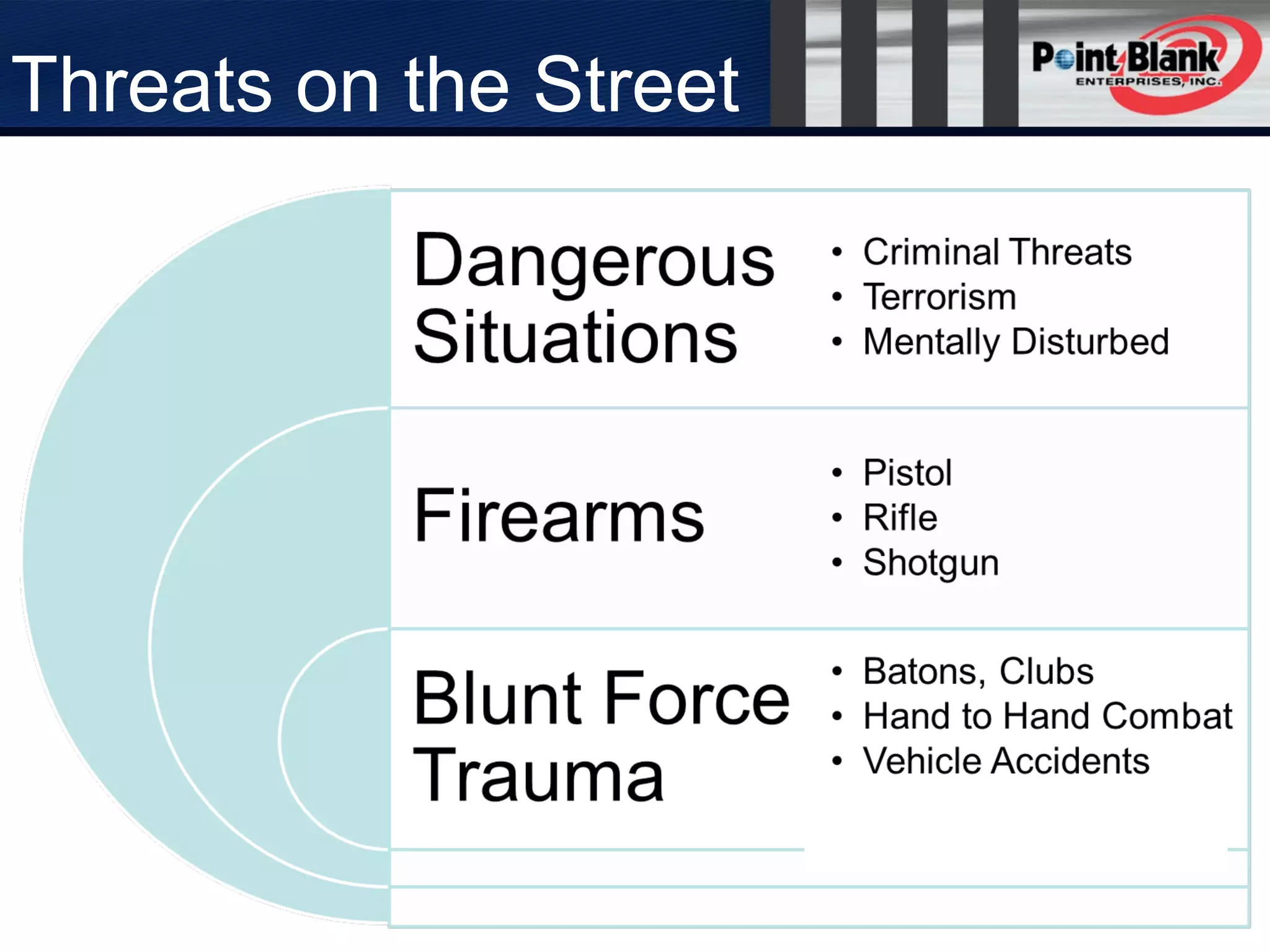
Threats on the Street
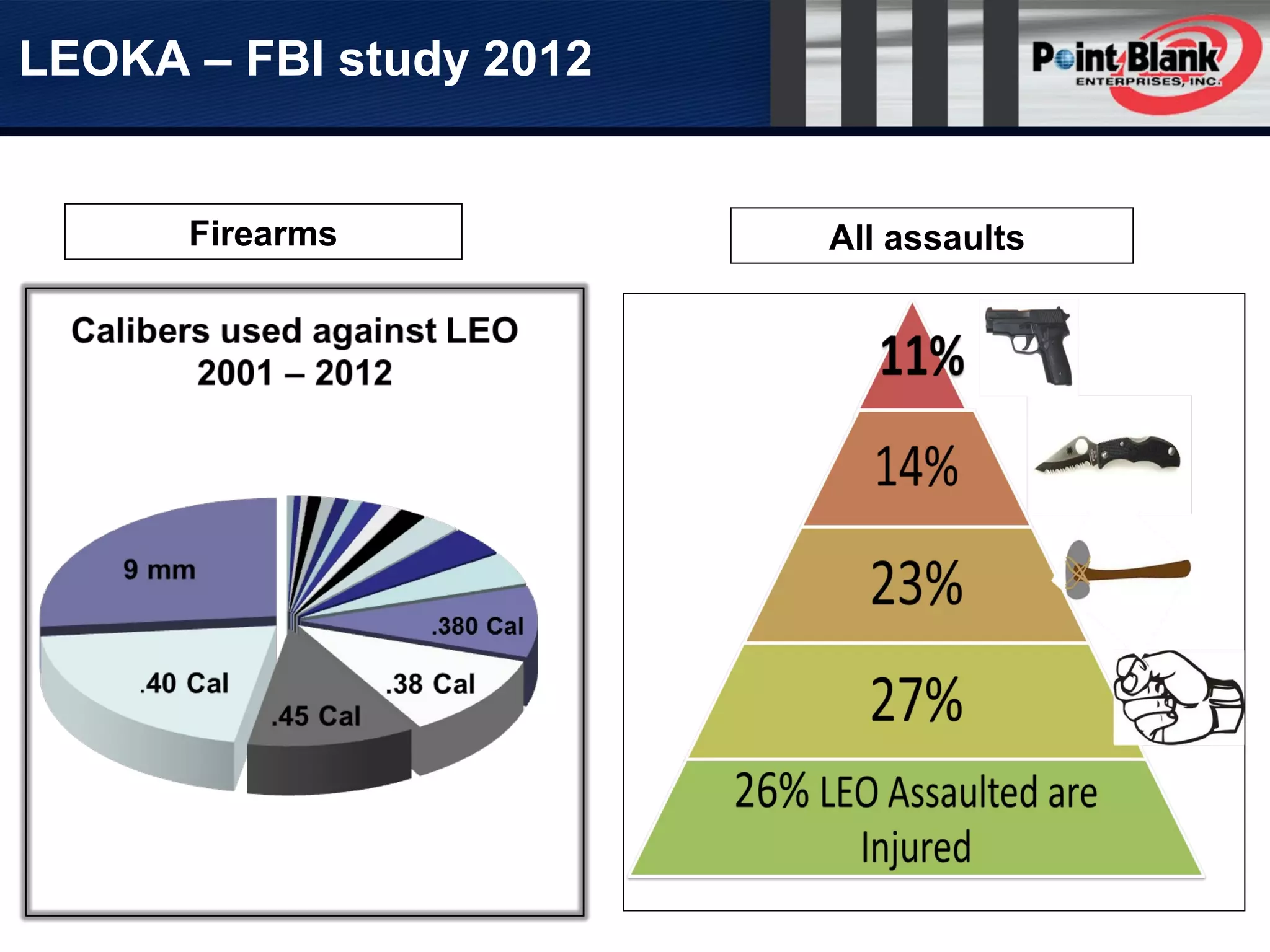
LEOKA – FBI study 2012
Firearms All assaults
LEOKA 2010
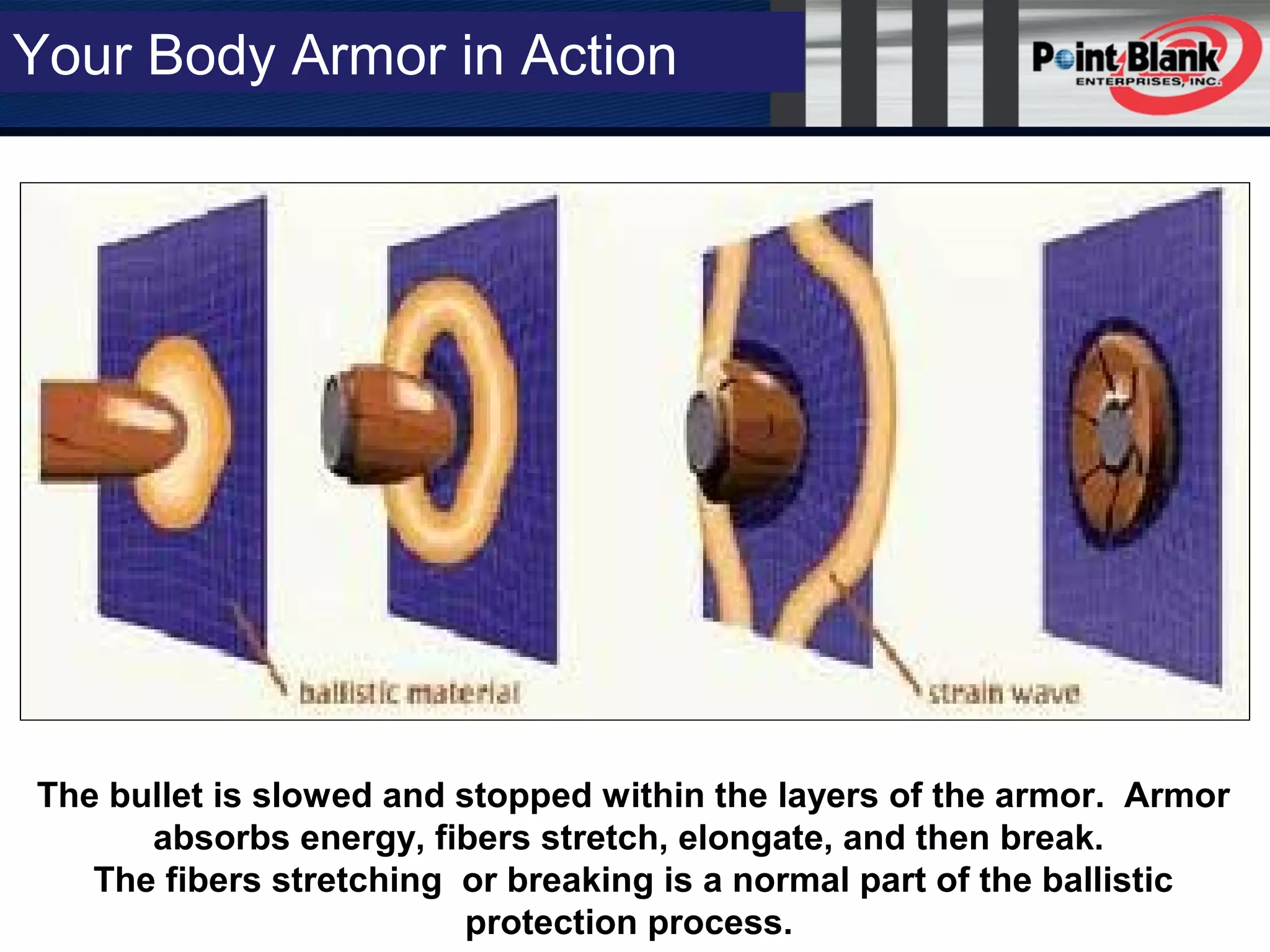
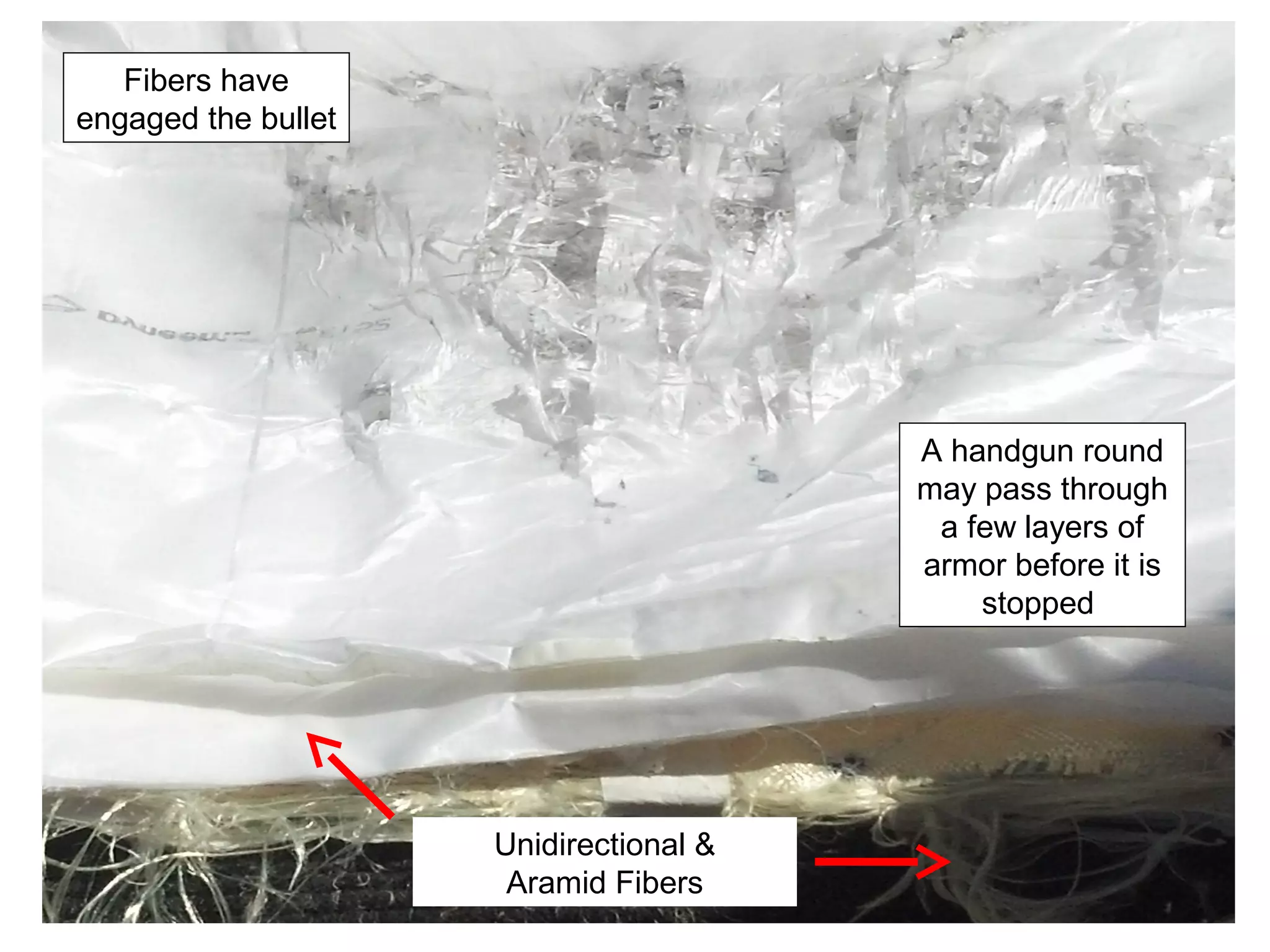
The bullet is slowed and stopped within the layers of the armor. Armor
absorbs energy, fibers stretch, elongate, and then break.
The fibers stretching or breaking is a normal part of the ballistic
protection process.
Your Body Armor in Action
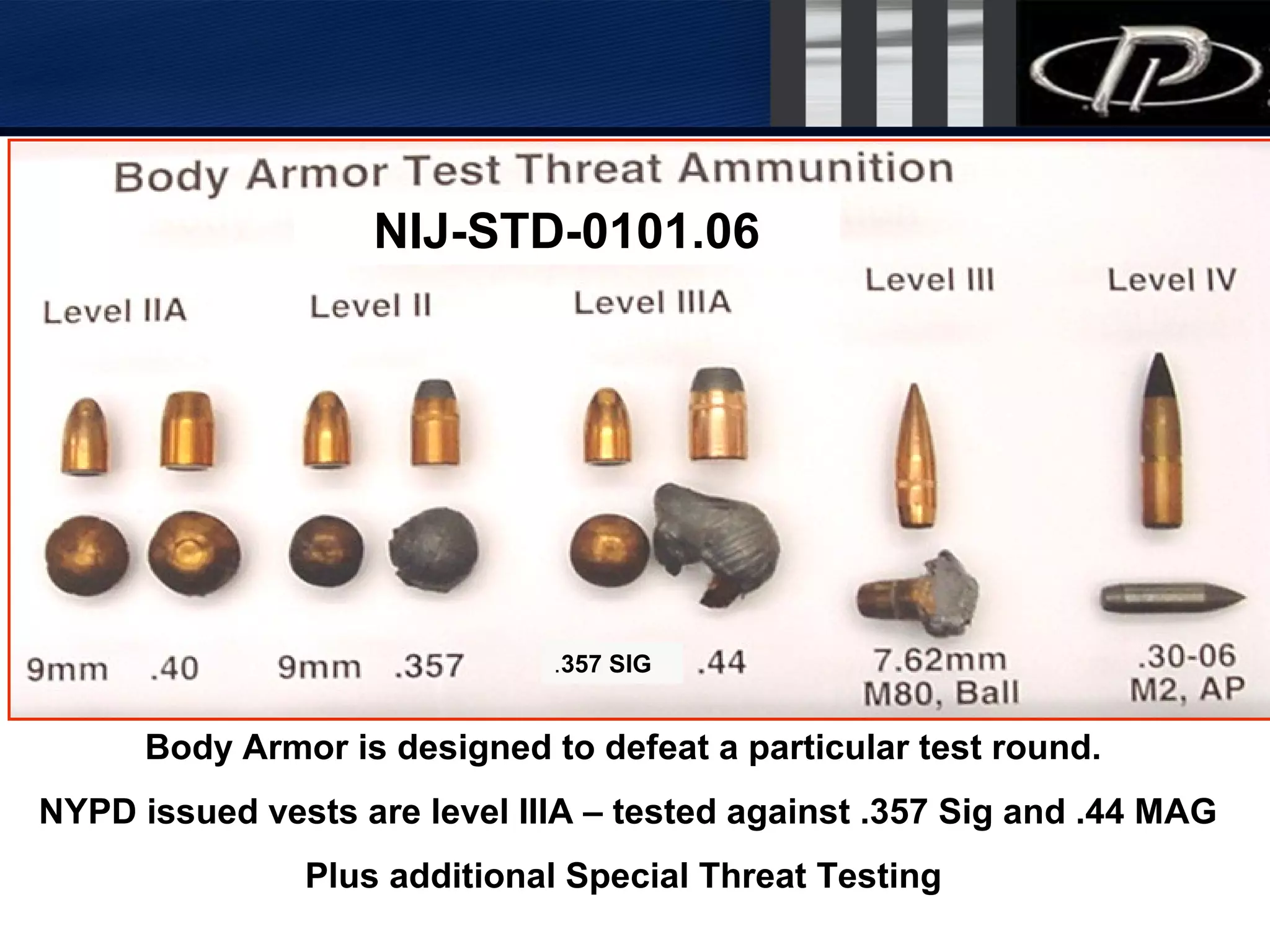
Body Armor Test Threat Ammunition
Body Armor is designed to defeat a particular test round.
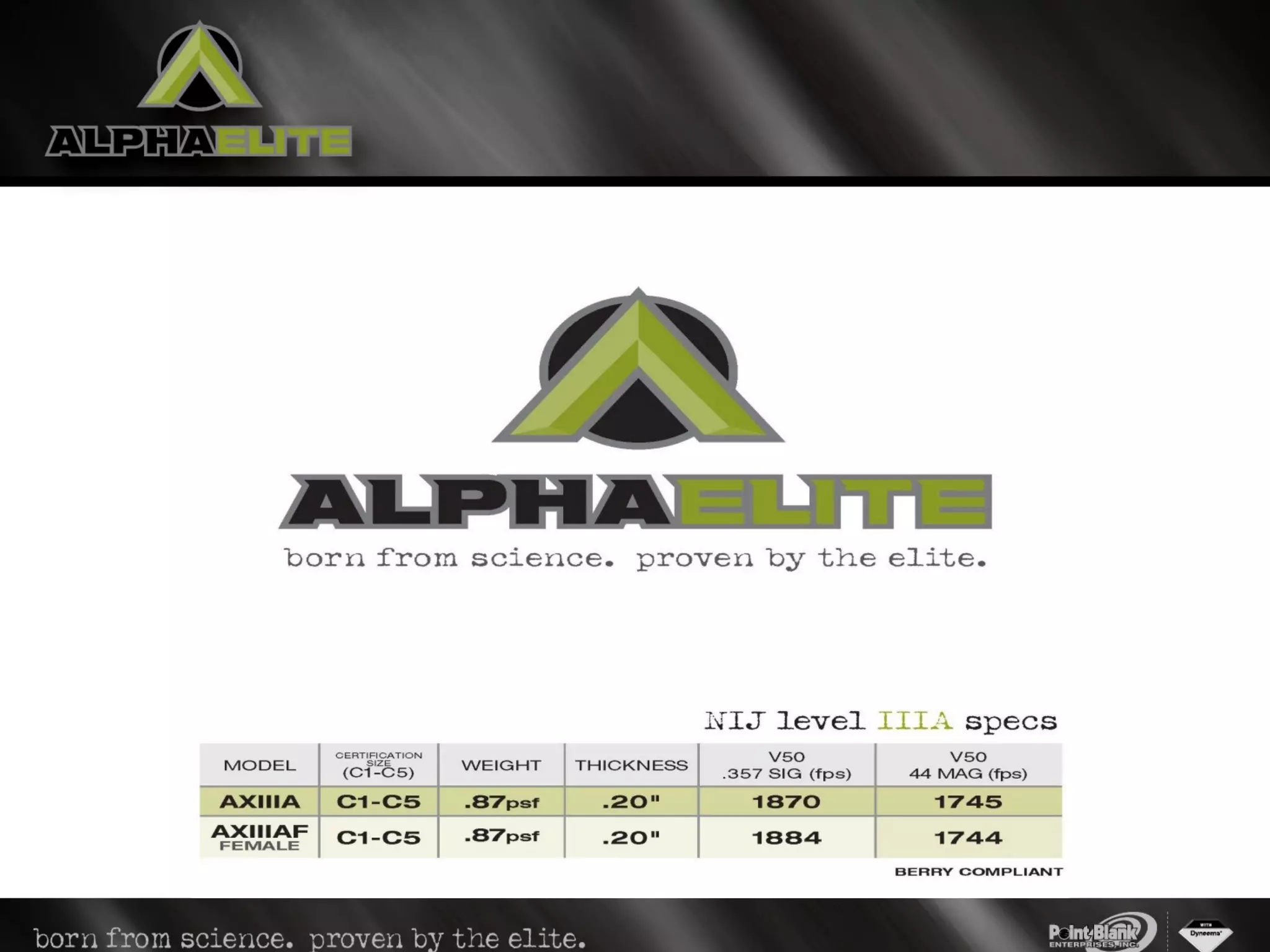
NYPD issued vests are level IIIA – tested against .357 Sig and .44 MAG
Plus additional Special Threat Testing
.357 SIG
NIJ-STD-0101.06
Fibers have
engaged the bullet
A handgun round
may pass through
a few layers of
armor before it is
stopped
Unidirectional &
Aramid Fibers
AXIIIA Armor is Tri Compliant
Ballistic vest has been tested against three different testing
protocols
• National Institute of Justice test standard 0101.06
• FBI testing protocol
• DEA testing protocol
These testing procedures are designed to duplicate current
threats, physical environments, and possible law
enforcement situations.
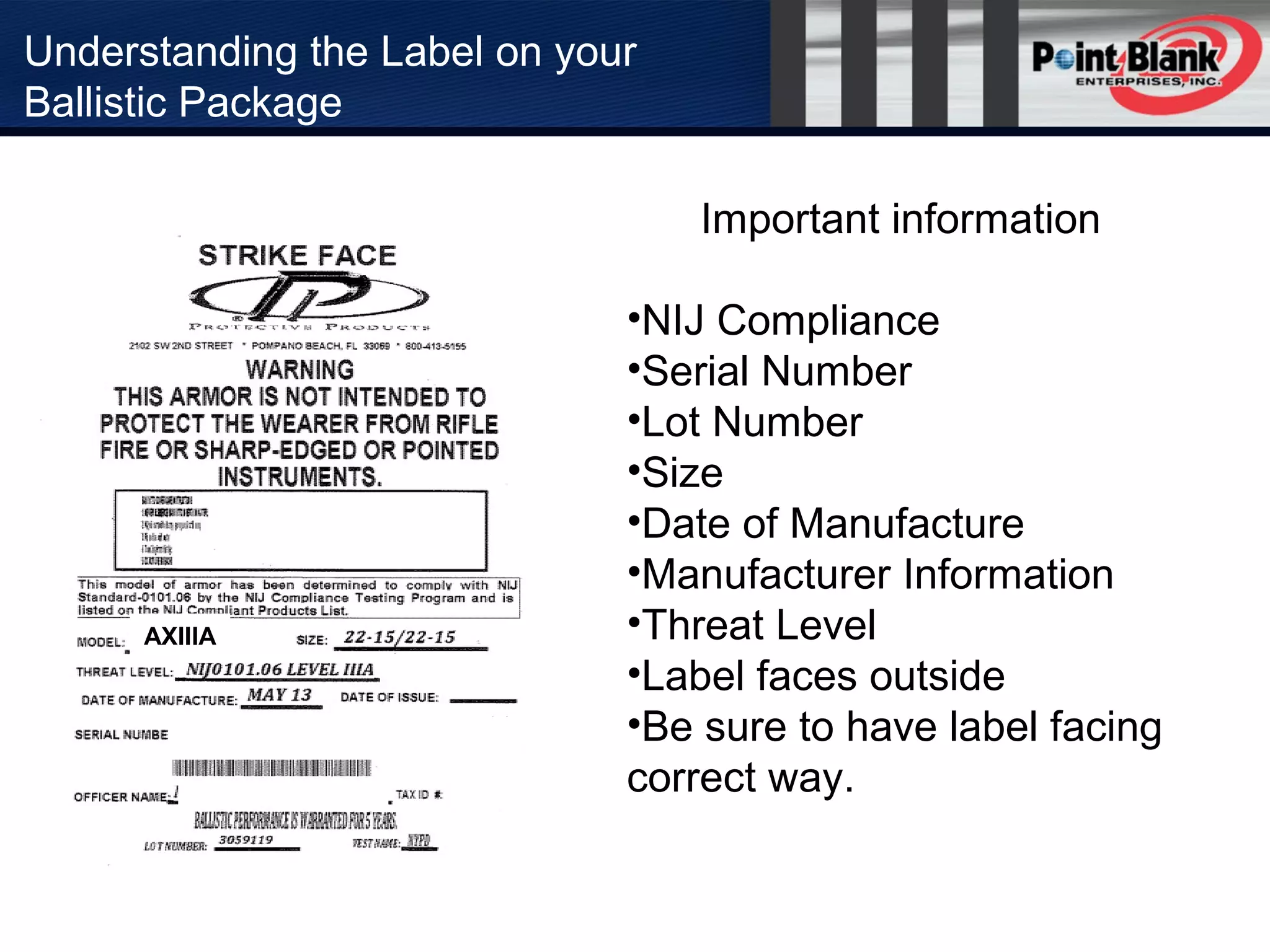
Understanding the Label on your
Ballistic Package
Important information
•NIJ Compliance
•Serial Number
•Lot Number
•Size
•Date of Manufacture
•Manufacturer Information
•Threat Level
•Label faces outside
•Be sure to have label facing
correct way.
AXIIIA
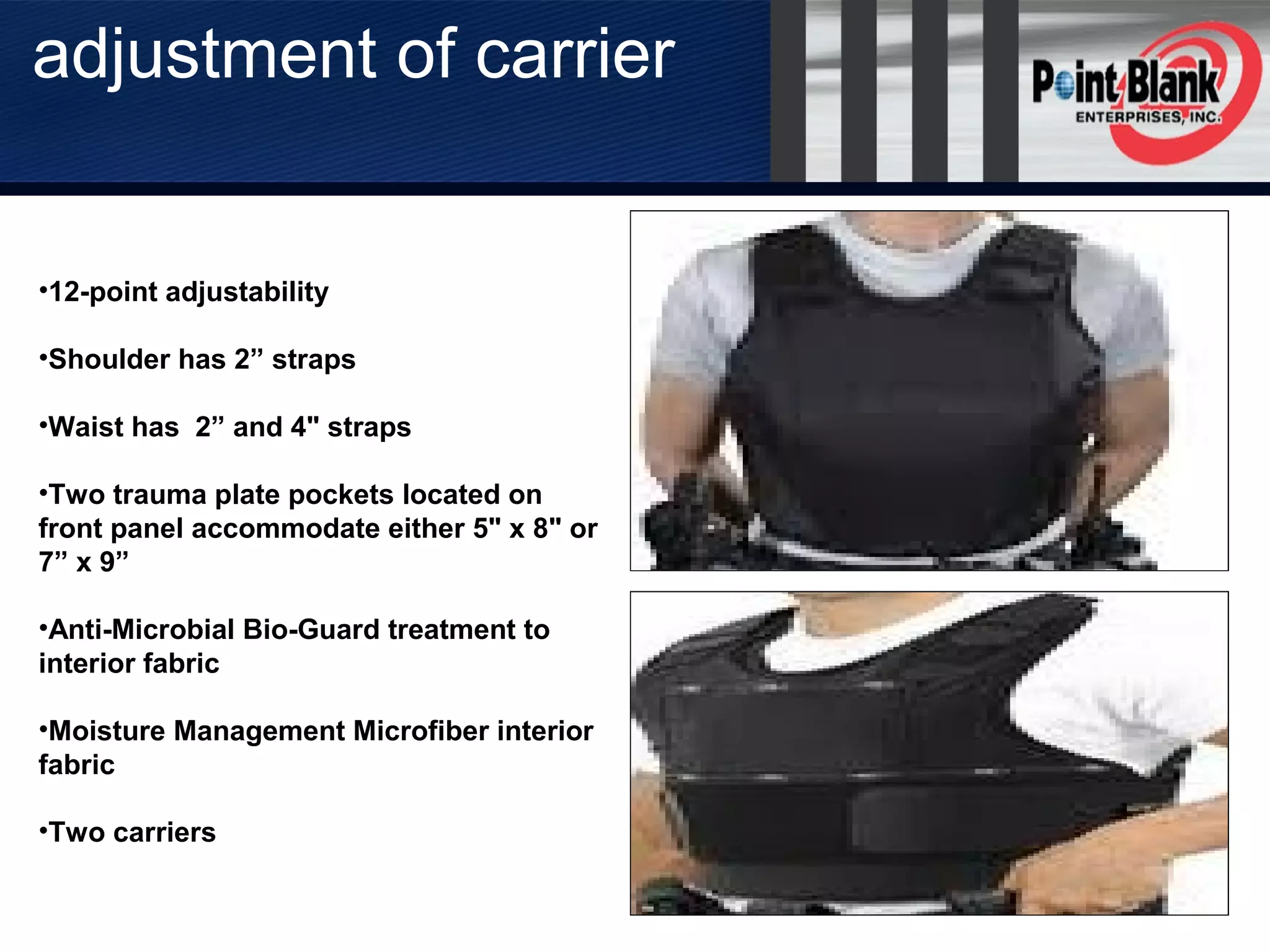
•12-point adjustability
•Shoulder has 2” straps
•Waist has 2” and 4" straps
•Two trauma plate pockets located on
front panel accommodate either 5" x 8" or
7” x 9”
•Anti-Microbial Bio-Guard treatment to
interior fabric
•Moisture Management Microfiber interior
fabric
•Two carriers
adjustment of carrier
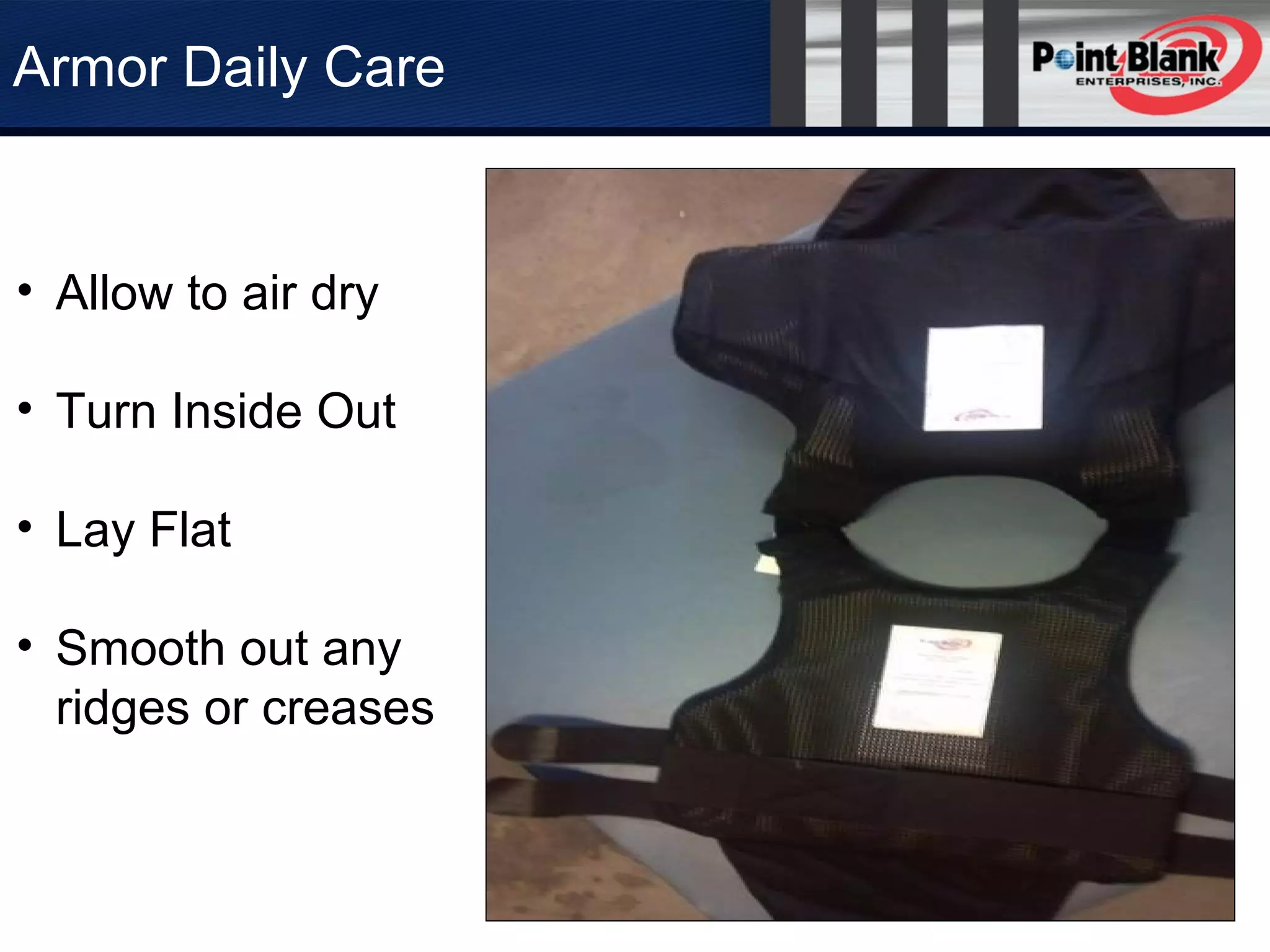
Armor Daily Care
• Allow to air dry
• Turn Inside Out
• Lay Flat
• Smooth out any
ridges or creases
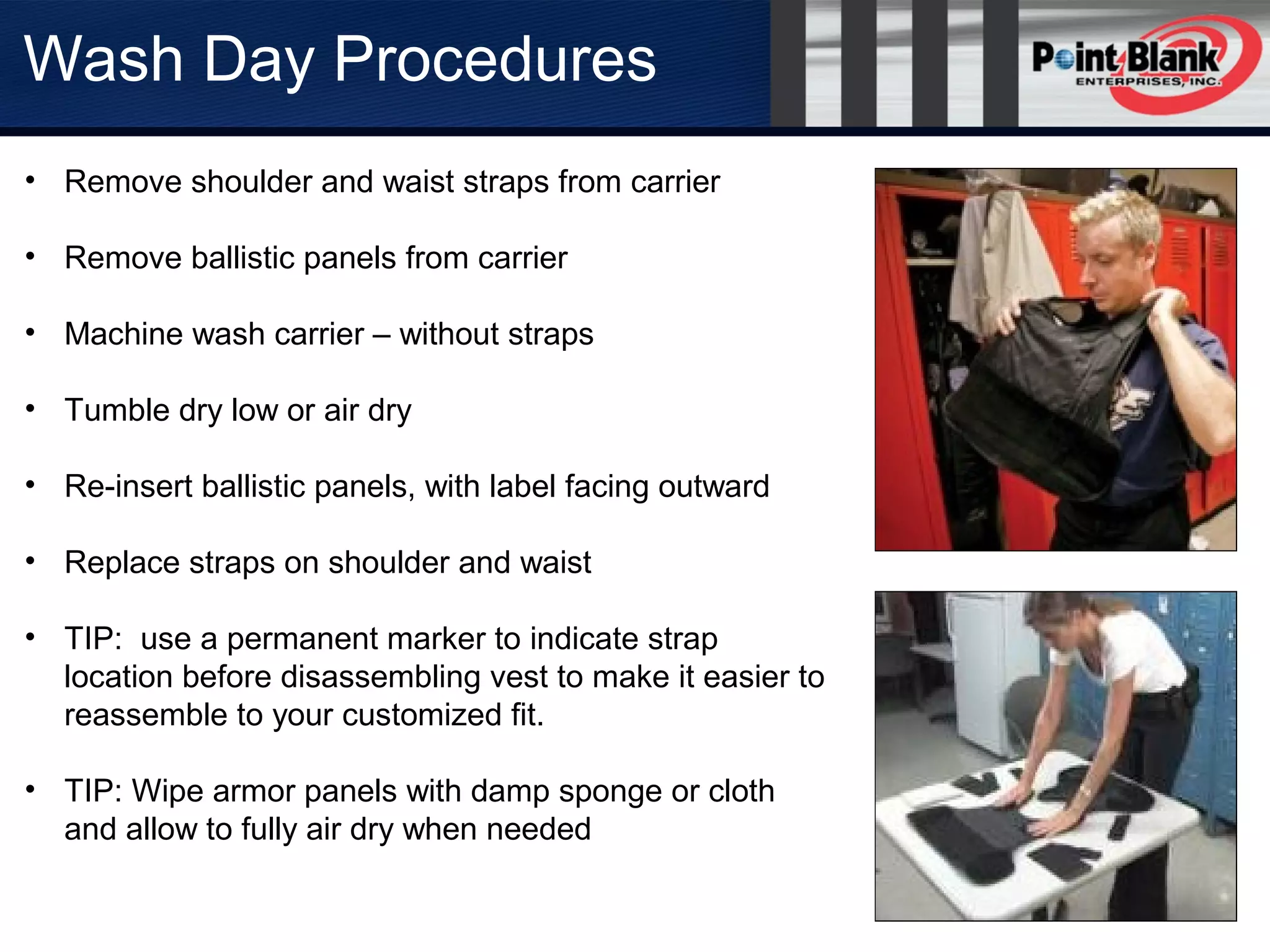
Wash Day Procedures
• Remove shoulder and waist straps from carrier
• Remove ballistic panels from carrier
• Machine wash carrier – without straps
• Tumble dry low or air dry
• Re-insert ballistic panels, with label facing outward
• Replace straps on shoulder and waist
• TIP: use a permanent marker to indicate strap
location before disassembling vest to make it easier to
reassemble to your customized fit.
• TIP: Wipe armor panels with damp sponge or cloth
and allow to fully air dry when needed
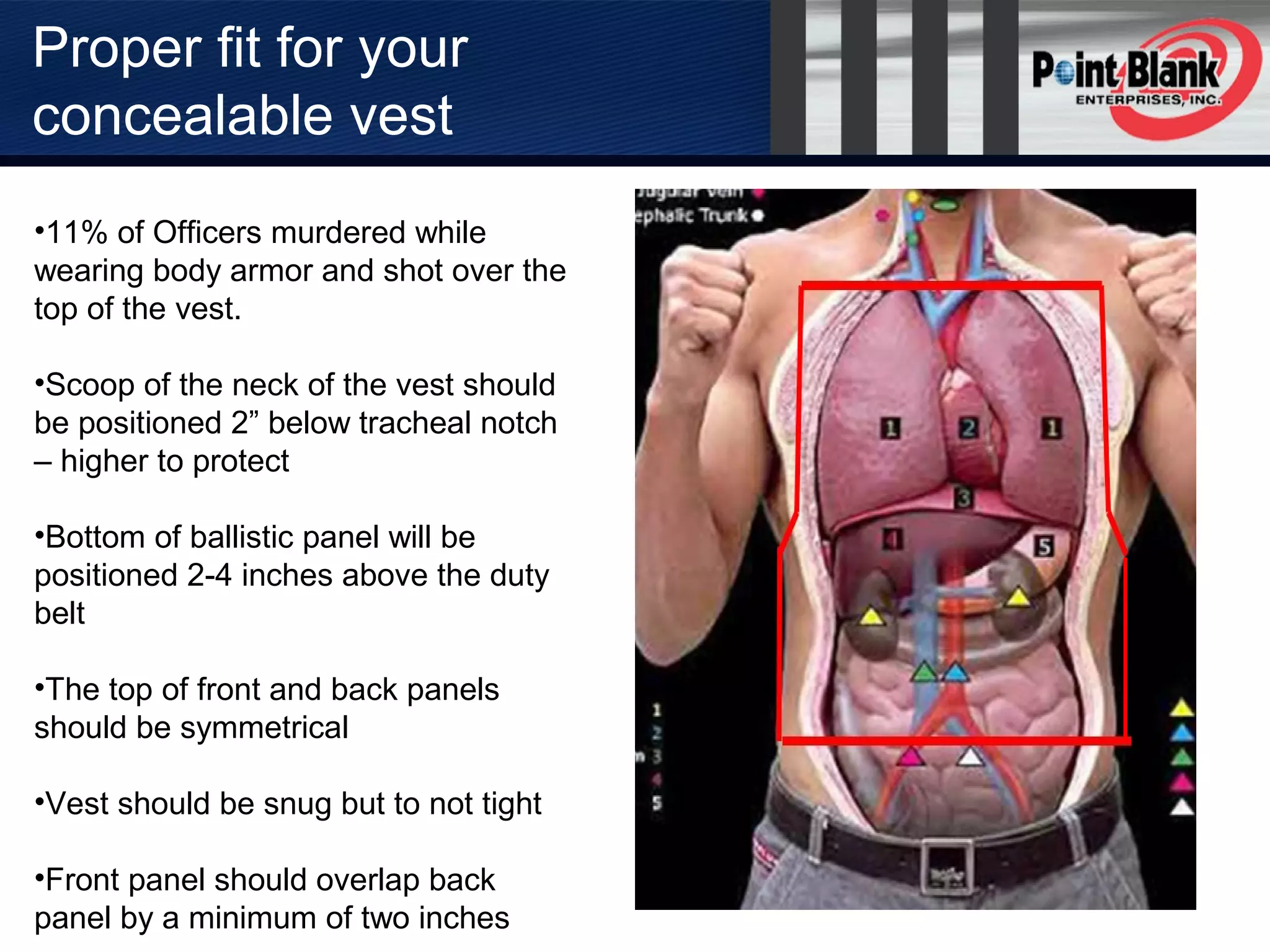
Proper fit for your
concealable vest
•11% of Officers murdered while
wearing body armor and shot over the
top of the vest.
•Scoop of the neck of the vest should
be positioned 2” below tracheal notch
– higher to protect
•Bottom of ballistic panel will be
positioned 2-4 inches above the duty
belt
•The top of front and back panels
should be symmetrical
•Vest should be snug but to not tight
•Front panel should overlap back
panel by a minimum of two inches
LEOKA 2010
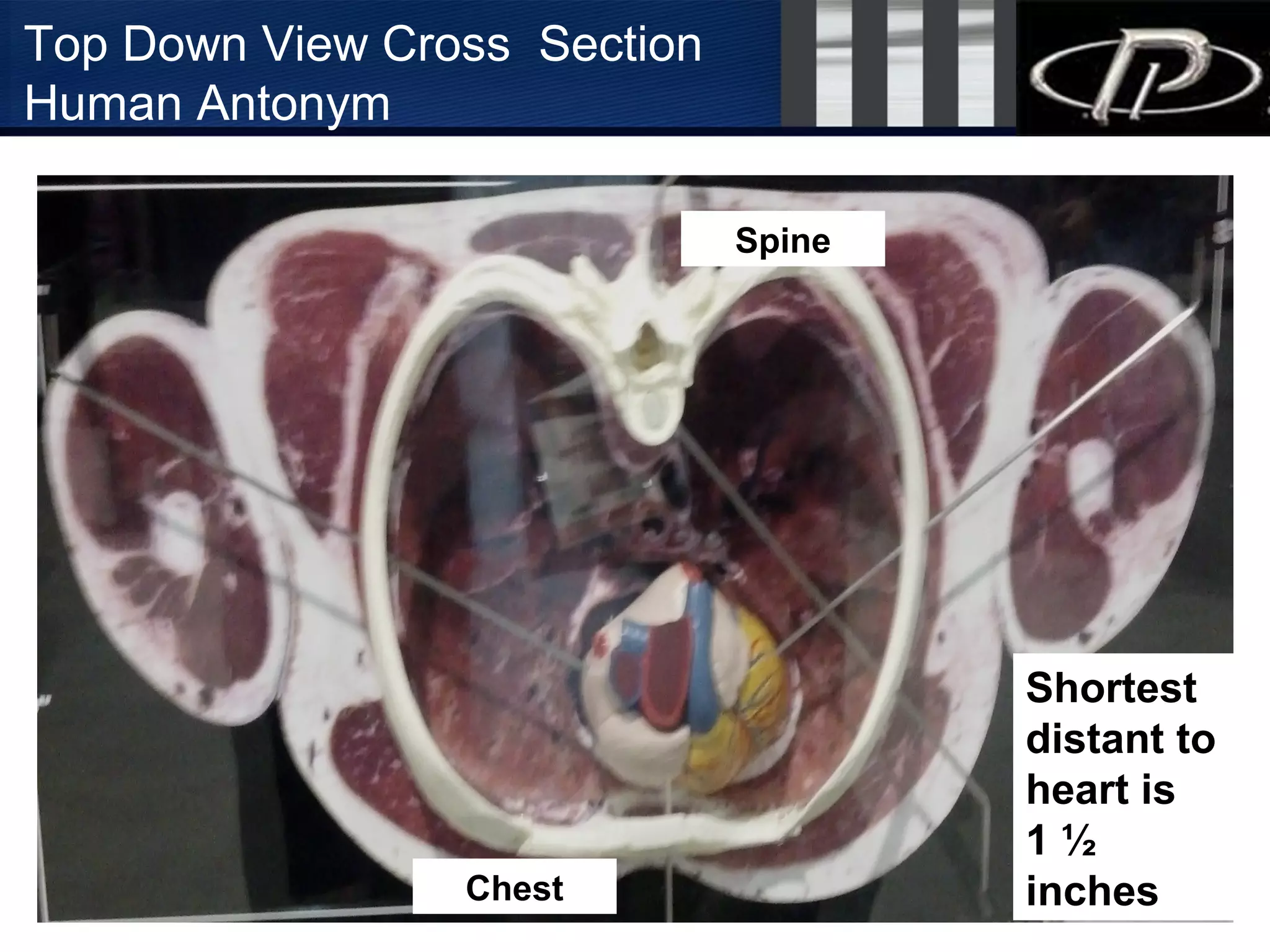
Top Down View Cross Section
Human Antonym
Chest
Spine
Shortest
distant to
heart is
1 ½
inches
• Your body armor should be tested against threats you face in the
environment you work - Tri Compliant – FBI, DEA, FRAG
• Your armor is level IIIA or Level II – it should stop your duty round
• Wear your body armor properly
• Body armor can help to make a dangerous job safer
• Inspect and maintain your armor and carrier
• Purchased one of the best available armor solution you can based
on weight, ballistic protection and coverage.
• Every additional pound on the torso adds seven pounds of force
on to the knees.
Conclusion

Wear, Care and Use of concealable armor 3 2-15

  • 1.
  • 2.
  • 3.
    LEOKA – FBIstudy 2012 Firearms All assaults
  • 4.
    LEOKA 2010 The bulletis slowed and stopped within the layers of the armor. Armor absorbs energy, fibers stretch, elongate, and then break. The fibers stretching or breaking is a normal part of the ballistic protection process. Your Body Armor in Action
  • 5.
    Body Armor TestThreat Ammunition Body Armor is designed to defeat a particular test round. NYPD issued vests are level IIIA – tested against .357 Sig and .44 MAG Plus additional Special Threat Testing .357 SIG NIJ-STD-0101.06
  • 7.
    Fibers have engaged thebullet A handgun round may pass through a few layers of armor before it is stopped Unidirectional & Aramid Fibers
  • 8.
    AXIIIA Armor isTri Compliant Ballistic vest has been tested against three different testing protocols • National Institute of Justice test standard 0101.06 • FBI testing protocol • DEA testing protocol These testing procedures are designed to duplicate current threats, physical environments, and possible law enforcement situations.
  • 9.
    Understanding the Labelon your Ballistic Package Important information •NIJ Compliance •Serial Number •Lot Number •Size •Date of Manufacture •Manufacturer Information •Threat Level •Label faces outside •Be sure to have label facing correct way. AXIIIA
  • 10.
    •12-point adjustability •Shoulder has2” straps •Waist has 2” and 4" straps •Two trauma plate pockets located on front panel accommodate either 5" x 8" or 7” x 9” •Anti-Microbial Bio-Guard treatment to interior fabric •Moisture Management Microfiber interior fabric •Two carriers adjustment of carrier
  • 11.
    Armor Daily Care •Allow to air dry • Turn Inside Out • Lay Flat • Smooth out any ridges or creases
  • 12.
    Wash Day Procedures •Remove shoulder and waist straps from carrier • Remove ballistic panels from carrier • Machine wash carrier – without straps • Tumble dry low or air dry • Re-insert ballistic panels, with label facing outward • Replace straps on shoulder and waist • TIP: use a permanent marker to indicate strap location before disassembling vest to make it easier to reassemble to your customized fit. • TIP: Wipe armor panels with damp sponge or cloth and allow to fully air dry when needed
  • 13.
    Proper fit foryour concealable vest •11% of Officers murdered while wearing body armor and shot over the top of the vest. •Scoop of the neck of the vest should be positioned 2” below tracheal notch – higher to protect •Bottom of ballistic panel will be positioned 2-4 inches above the duty belt •The top of front and back panels should be symmetrical •Vest should be snug but to not tight •Front panel should overlap back panel by a minimum of two inches
  • 14.
    LEOKA 2010 Top DownView Cross Section Human Antonym Chest Spine Shortest distant to heart is 1 ½ inches
  • 15.
    • Your bodyarmor should be tested against threats you face in the environment you work - Tri Compliant – FBI, DEA, FRAG • Your armor is level IIIA or Level II – it should stop your duty round • Wear your body armor properly • Body armor can help to make a dangerous job safer • Inspect and maintain your armor and carrier • Purchased one of the best available armor solution you can based on weight, ballistic protection and coverage. • Every additional pound on the torso adds seven pounds of force on to the knees. Conclusion

Editor's Notes

  • #2 My greatest strength as a consultant is to be ignorant and ask a few questions. Peter Drucker