Patent Prosecution
Highway
ASHLEY SLOAT | February 23, 2021
This presentation is for information purposes only and does not constitute legal advice.
Global PPH and IP5 PPH
• Prevents multiple countries from duplicating the same
work
• PPH request may be filed in the USPTO based on the
work product of any office participating in either pilot
program
– Positive result from PCT or national work product
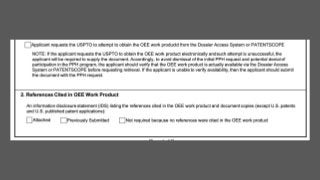
• Single request form
• Permits accelerated processing for FREE
• https://www.wipo.int/pct/en/filing/pct_pph.html
Global PPH and IP5 PPH
• PCT/PPH
– Started January 29, 2010 and renewed thereafter
– Fast tracking if positive report from: ISA, IPEA, EPO, JPO,
USPTO
• IP5
– January 6, 2016 and renewed thereafter
– Fast tracking if positive report from: EPO, JPO, KIPO, SIPO,
USPTO
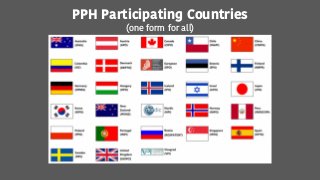
PPH Participating Countries
(one form for all)
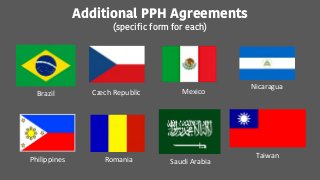
Additional PPH Agreements
(specific form for each)
Brazil Czech Republic Mexico
Nicaragua
Philippines Romania Saudi Arabia
Taiwan
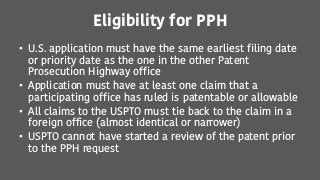
Eligibility for PPH
• U.S. application must have the same earliest filing date
or priority date as the one in the other Patent
Prosecution Highway office
• Application must have at least one claim that a
participating office has ruled is patentable or allowable
• All claims to the USPTO must tie back to the claim in a
foreign office (almost identical or narrower)
• USPTO cannot have started a review of the patent prior
to the PPH request
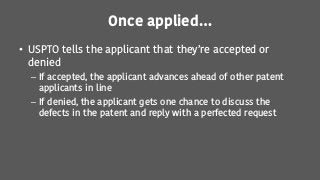
Once applied…
• USPTO tells the applicant that they’re accepted or
denied
– If accepted, the applicant advances ahead of other patent
applicants in line
– If denied, the applicant gets one chance to discuss the
defects in the patent and reply with a perfected request
EPO PPH Quirks
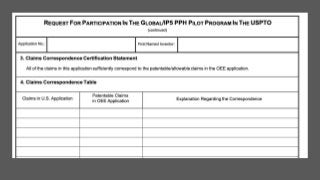
• Table showing how each claim of the 2nd application
corresponds to an allowed claim of the 1st application
• EPO will still conduct its own search and examination,
and will independently consider whether the
application meets EPC patentability requirements
• Offers own accelerated examination – PACE
– Less onerous than PPH
– More flexible for claims that can be presented
– Request not placed in public file
• UKIPO views PPH more favorably than EPO
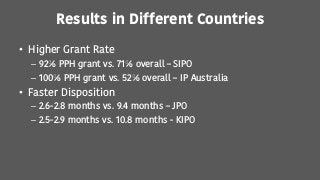
Results in Different Countries
• Higher Grant Rate
– 92% PPH grant vs. 71% overall – SIPO
– 100% PPH grant vs. 52% overall – IP Australia
• Faster Disposition
– 2.6-2.8 months vs. 9.4 months – JPO
– 2.5-2.9 months vs. 10.8 months - KIPO
Caveats
• Examiner in one country may raise objections and make
adverse comments on claims allowed elsewhere
• Each participating office has own “support,” “clarity,”
and “enablement” criteria
• PPH request preparation + prosecution – may not be
much less than non-PPH examination

Patent Prosecution Highway: Fast Tracking Your Application

  • 1.
    Patent Prosecution Highway ASHLEY SLOAT| February 23, 2021 This presentation is for information purposes only and does not constitute legal advice.
  • 2.
    Global PPH andIP5 PPH • Prevents multiple countries from duplicating the same work • PPH request may be filed in the USPTO based on the work product of any office participating in either pilot program – Positive result from PCT or national work product • Single request form • Permits accelerated processing for FREE • https://www.wipo.int/pct/en/filing/pct_pph.html
  • 3.
    Global PPH andIP5 PPH • PCT/PPH – Started January 29, 2010 and renewed thereafter – Fast tracking if positive report from: ISA, IPEA, EPO, JPO, USPTO • IP5 – January 6, 2016 and renewed thereafter – Fast tracking if positive report from: EPO, JPO, KIPO, SIPO, USPTO
  • 4.
  • 5.
    Additional PPH Agreements (specificform for each) Brazil Czech Republic Mexico Nicaragua Philippines Romania Saudi Arabia Taiwan
  • 6.
    Eligibility for PPH •U.S. application must have the same earliest filing date or priority date as the one in the other Patent Prosecution Highway office • Application must have at least one claim that a participating office has ruled is patentable or allowable • All claims to the USPTO must tie back to the claim in a foreign office (almost identical or narrower) • USPTO cannot have started a review of the patent prior to the PPH request
  • 10.
    Once applied… • USPTOtells the applicant that they’re accepted or denied – If accepted, the applicant advances ahead of other patent applicants in line – If denied, the applicant gets one chance to discuss the defects in the patent and reply with a perfected request
  • 11.
    EPO PPH Quirks •Table showing how each claim of the 2nd application corresponds to an allowed claim of the 1st application • EPO will still conduct its own search and examination, and will independently consider whether the application meets EPC patentability requirements • Offers own accelerated examination – PACE – Less onerous than PPH – More flexible for claims that can be presented – Request not placed in public file • UKIPO views PPH more favorably than EPO
  • 12.
    Results in DifferentCountries • Higher Grant Rate – 92% PPH grant vs. 71% overall – SIPO – 100% PPH grant vs. 52% overall – IP Australia • Faster Disposition – 2.6-2.8 months vs. 9.4 months – JPO – 2.5-2.9 months vs. 10.8 months - KIPO
  • 13.
    Caveats • Examiner inone country may raise objections and make adverse comments on claims allowed elsewhere • Each participating office has own “support,” “clarity,” and “enablement” criteria • PPH request preparation + prosecution – may not be much less than non-PPH examination