Political and Economic Motives for Milk Consumption Project by: Alex Finch Melissa Henderson Jack Bryson
Complex Questions How do different grocery stores act as socio-spaces which reflect and cater to different economic and social groups through their milk selection?
Methodology We then considered three factors in analysis Price of milk available Types of Milk available (Skim, whole, where it is from etc.) Observations of visual cues
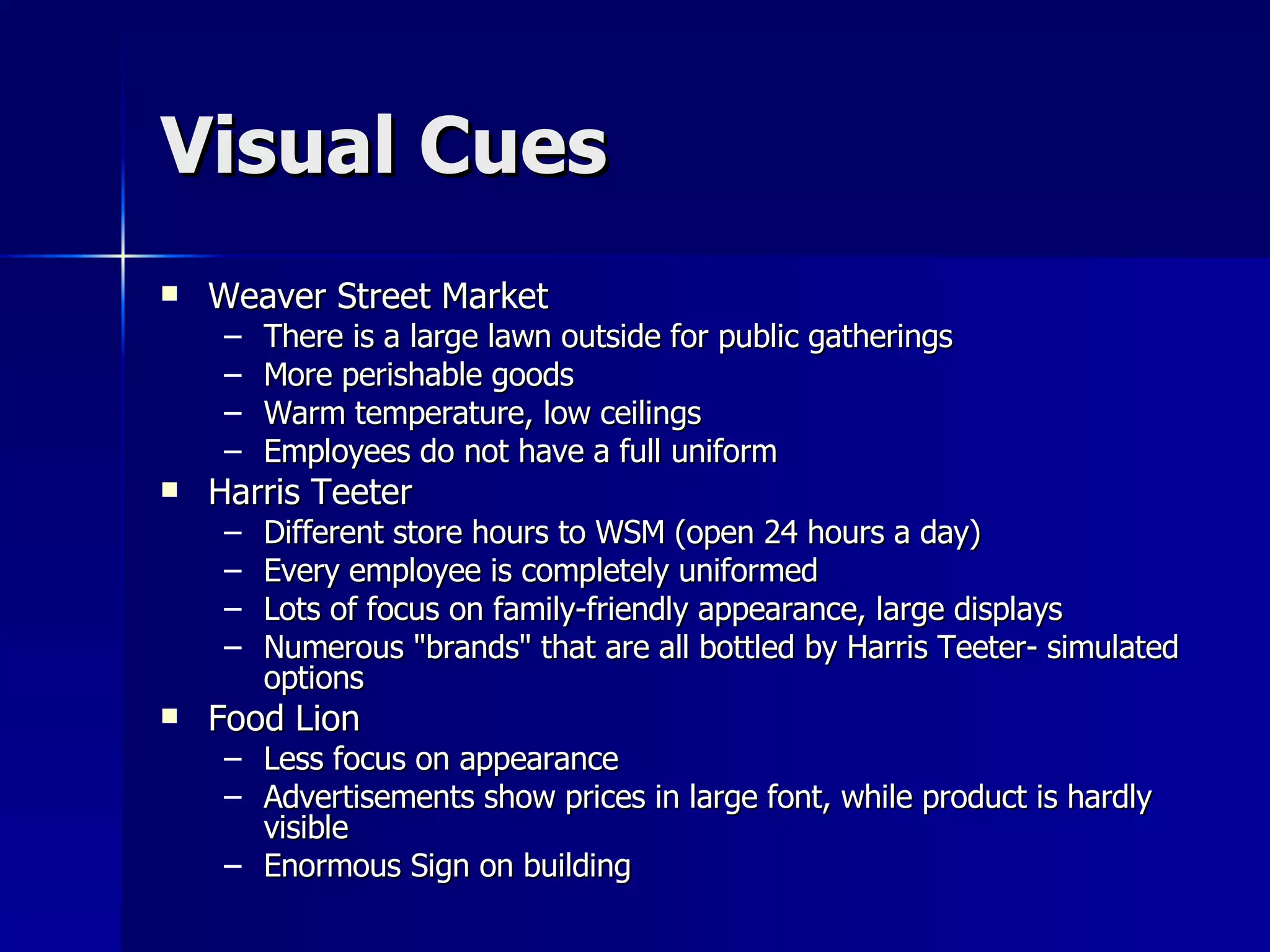
Visual Cues Weaver Street Market There is a large lawn outside for public gatherings  More perishable goods  Warm temperature, low ceilings Employees do not have a full uniform  Harris Teeter Different store hours to WSM (open 24 hours a day)  Every employee is completely uniformed  Lots of focus on family-friendly appearance, large displays  Numerous "brands" that are all bottled by Harris Teeter- simulated options  Food Lion Less focus on appearance  Advertisements show prices in large font, while product is hardly visible  Enormous Sign on building
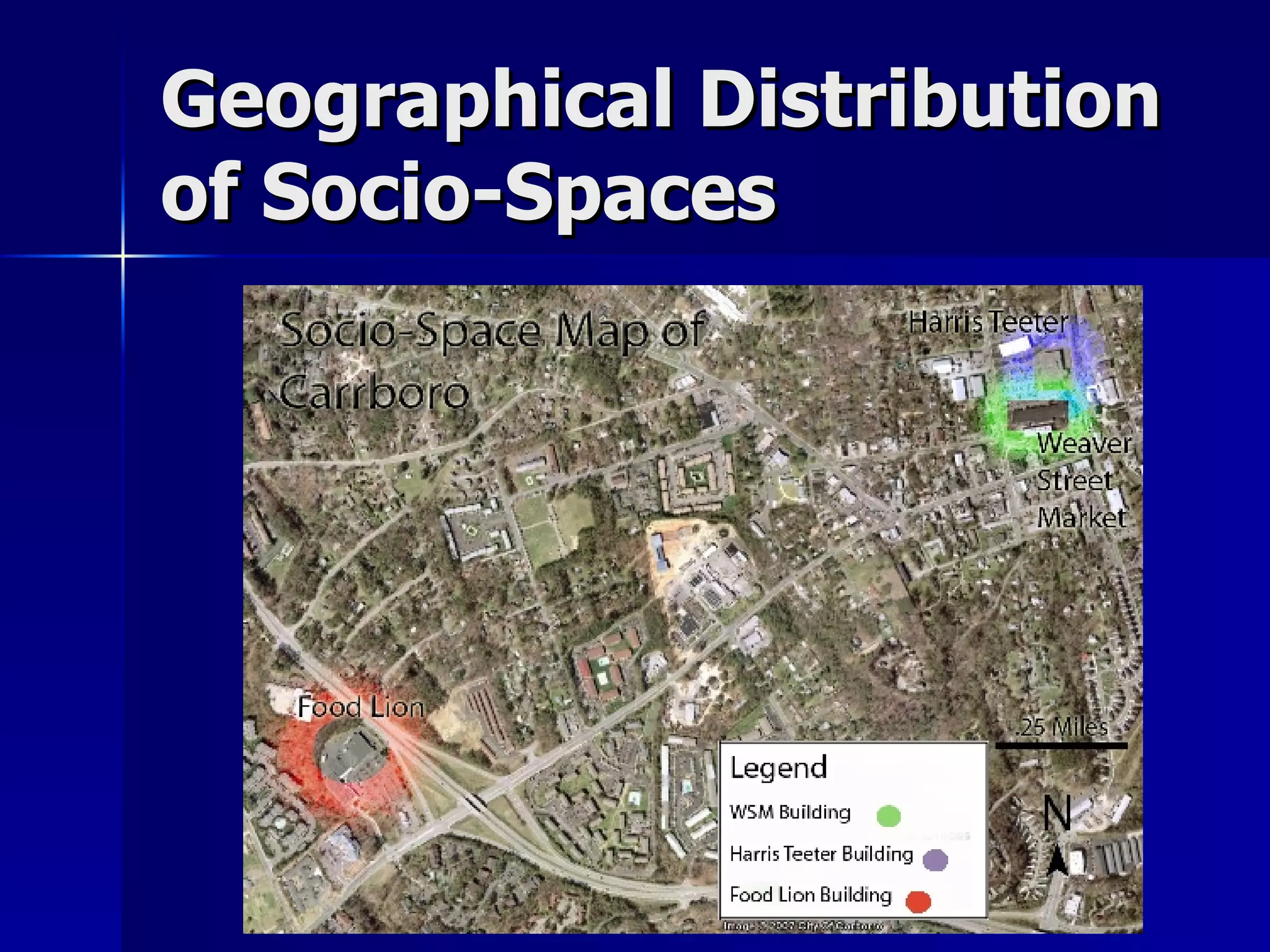
Geographical Distribution of Socio-Spaces
Milk Prices
Harris Teeter Milk Sales
Geographic Supply- Food Lion Buys all milk from Maryland and Virginia Milk Cooperative
Geographic Supply- Teeter HT buys from a private supplier, and M&V coop but only raw milk as well as some organic products Hunter Farms processes all HT brands
Geographic Supply-WSM WSM tends to buy from small, isolated dairies.
Conclusions Each grocery store has a different target audience WSM targets people who have beliefs and values that they are willing and able to support despite a higher pricing scheme- a higher economic class Food Lion targets people who are almost solely interested in price as is shown through their visual cues, supply scheme, and pricing techniques Harris Teeter is a middle ground store that is family oriented and generally more expensive but they also captures elements of the market interested only in price by having the cheapest milk in the study

Milkpresentation

  • 1.
    Political and EconomicMotives for Milk Consumption Project by: Alex Finch Melissa Henderson Jack Bryson
  • 2.
    Complex Questions Howdo different grocery stores act as socio-spaces which reflect and cater to different economic and social groups through their milk selection?
  • 3.
    Methodology We thenconsidered three factors in analysis Price of milk available Types of Milk available (Skim, whole, where it is from etc.) Observations of visual cues
  • 4.
    Visual Cues WeaverStreet Market There is a large lawn outside for public gatherings More perishable goods Warm temperature, low ceilings Employees do not have a full uniform Harris Teeter Different store hours to WSM (open 24 hours a day) Every employee is completely uniformed Lots of focus on family-friendly appearance, large displays Numerous "brands" that are all bottled by Harris Teeter- simulated options Food Lion Less focus on appearance Advertisements show prices in large font, while product is hardly visible Enormous Sign on building
  • 5.
  • 6.
  • 7.
  • 8.
    Geographic Supply- FoodLion Buys all milk from Maryland and Virginia Milk Cooperative
  • 9.
    Geographic Supply- TeeterHT buys from a private supplier, and M&V coop but only raw milk as well as some organic products Hunter Farms processes all HT brands
  • 10.
    Geographic Supply-WSM WSMtends to buy from small, isolated dairies.
  • 11.
    Conclusions Each grocerystore has a different target audience WSM targets people who have beliefs and values that they are willing and able to support despite a higher pricing scheme- a higher economic class Food Lion targets people who are almost solely interested in price as is shown through their visual cues, supply scheme, and pricing techniques Harris Teeter is a middle ground store that is family oriented and generally more expensive but they also captures elements of the market interested only in price by having the cheapest milk in the study