Slides from my talk at TEDxLondon. Top tips for mobile learning, and an intro to m-Ubuntu, an amazing mobile project in South Africa
video version here: http://moblearn.blogspot.co.uk/2011/12/mobile-learning-at-tedxlondon.html
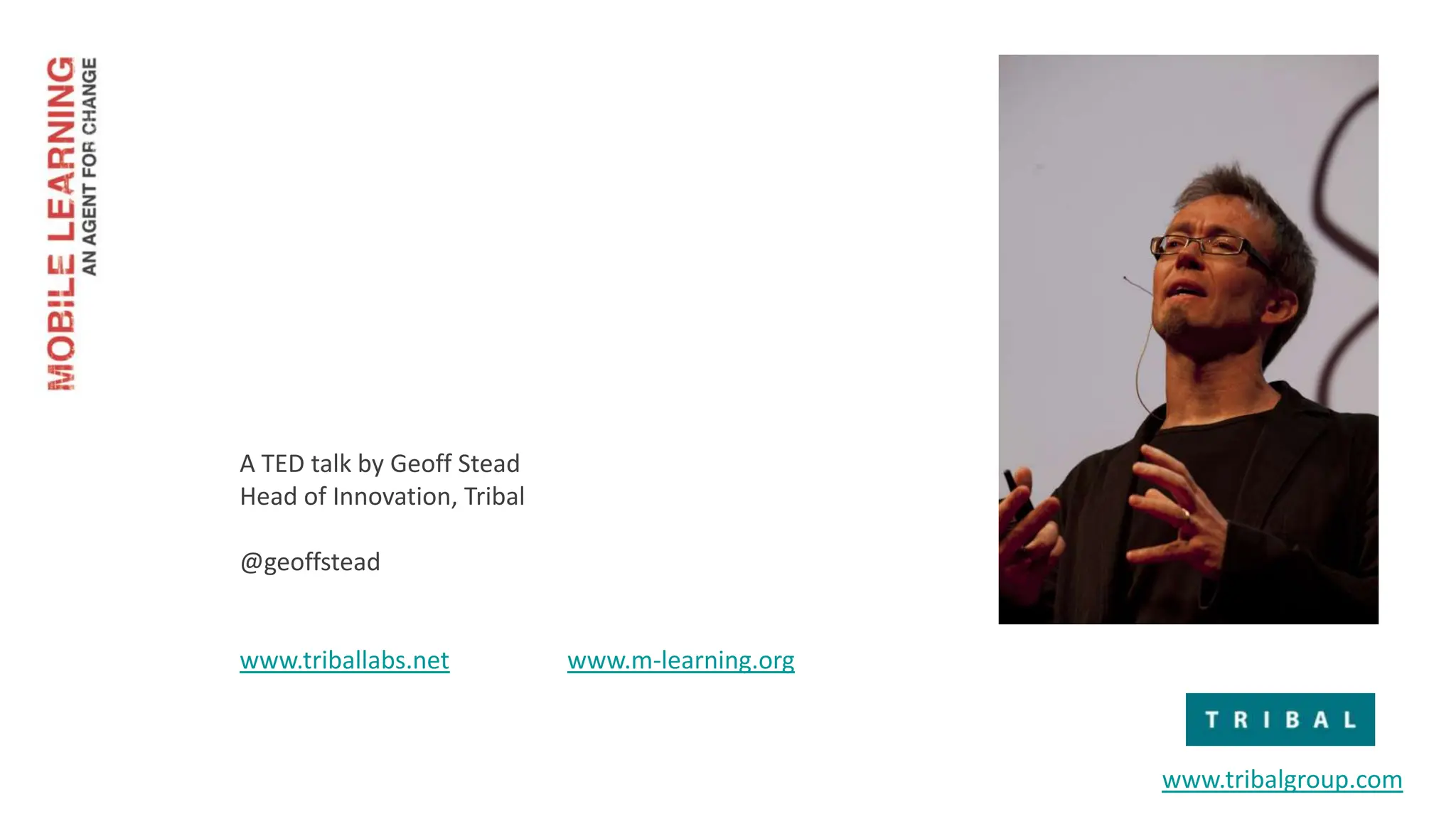
A TED talkby Geoff Stead @geoffstead www.triballabs.net www.m-learning.org
6.
A TED talkby Geoff Stead
Head of Innovation, Tribal
@geoffstead
www.triballabs.net www.m-learning.org
www.tribalgroup.com
Editor's Notes
#2 I’d like to introduce you to a word. Ubuntu. Ubuntu is an African concept that doesn’t translate easily into English. It means “together humanity”, I make myself more complete by helping those around me to be complete. It is an awesome word. And it is the philosophy behind the collective of projects I would like to tell you about. You can’t have missed the fact that mobile phones are everywhere, and even the most rural of places are getting connected. This is not just a 1st world issue - 90% of the people in our planet are living in reach of wireless internet. If we all gave away our spare phones to someone without one, there would be enough for ¾ of the entire population to be connected via their phone. Outside education - phones are transforming how we communicate. And where. And when. They have fundamentally changed how we look up information. They have generated new kinds of job that didn’t even exist 10 years ago. New types of entertainment. New forms of art. They have even created new crimes that didn’t exist 10 years ago ... So why not new ways to learn?
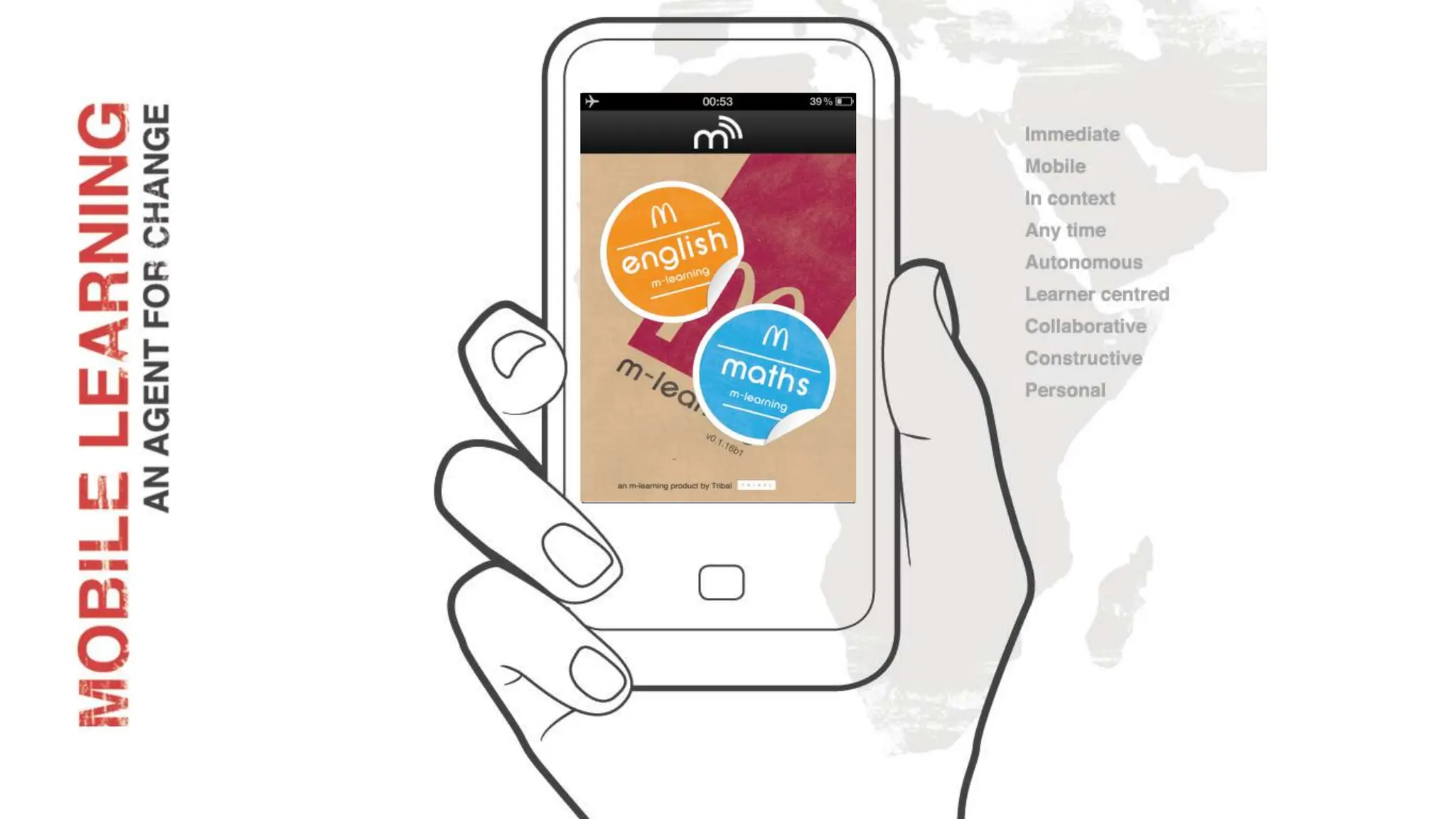
#3 This is already happening - it is called mobile learning. Bringing smartphones into the class to enhance learning smartphones can replace a bunch of tools or resources schools would otherwise buy:They are cameras, writing tools, eBook readers, calculators, diaries, reference books They are simpler to learn than dedicated educational technologies, and probably cheaper But more importantly they are agents for change - encouraging new ways of teaching – building the kinds of skills we will all need in the future:Learner centered: Learning is mobile and can happen anywhere. It can be collaborative. It can also be intensely private. Teacher is no longer the source of all facts, but rather a collaborator and guide In the UK I mostly work with learners NOT in school. Kids who have dropped out. Young offenders. The unemployed. Adults in training but unable to read and write. People for whom traditional school didn’t work out. I build software to support their learning – often making use of mobile phones as a stimulus. But a few years ago I happened to meet a fellow South African who shared my passion for education, and wanted to take these same ideas back into South Africa, to mainstream schools
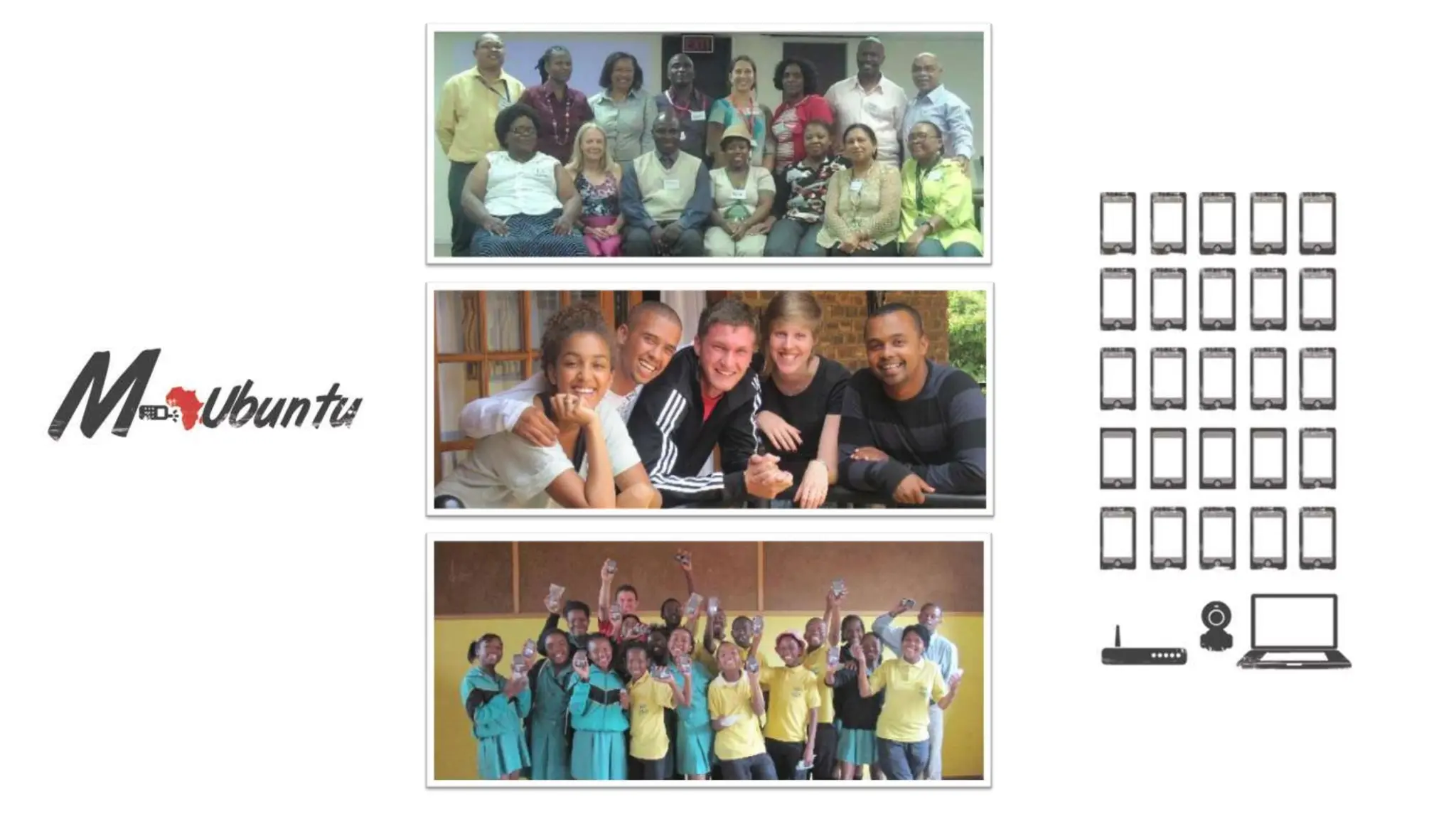
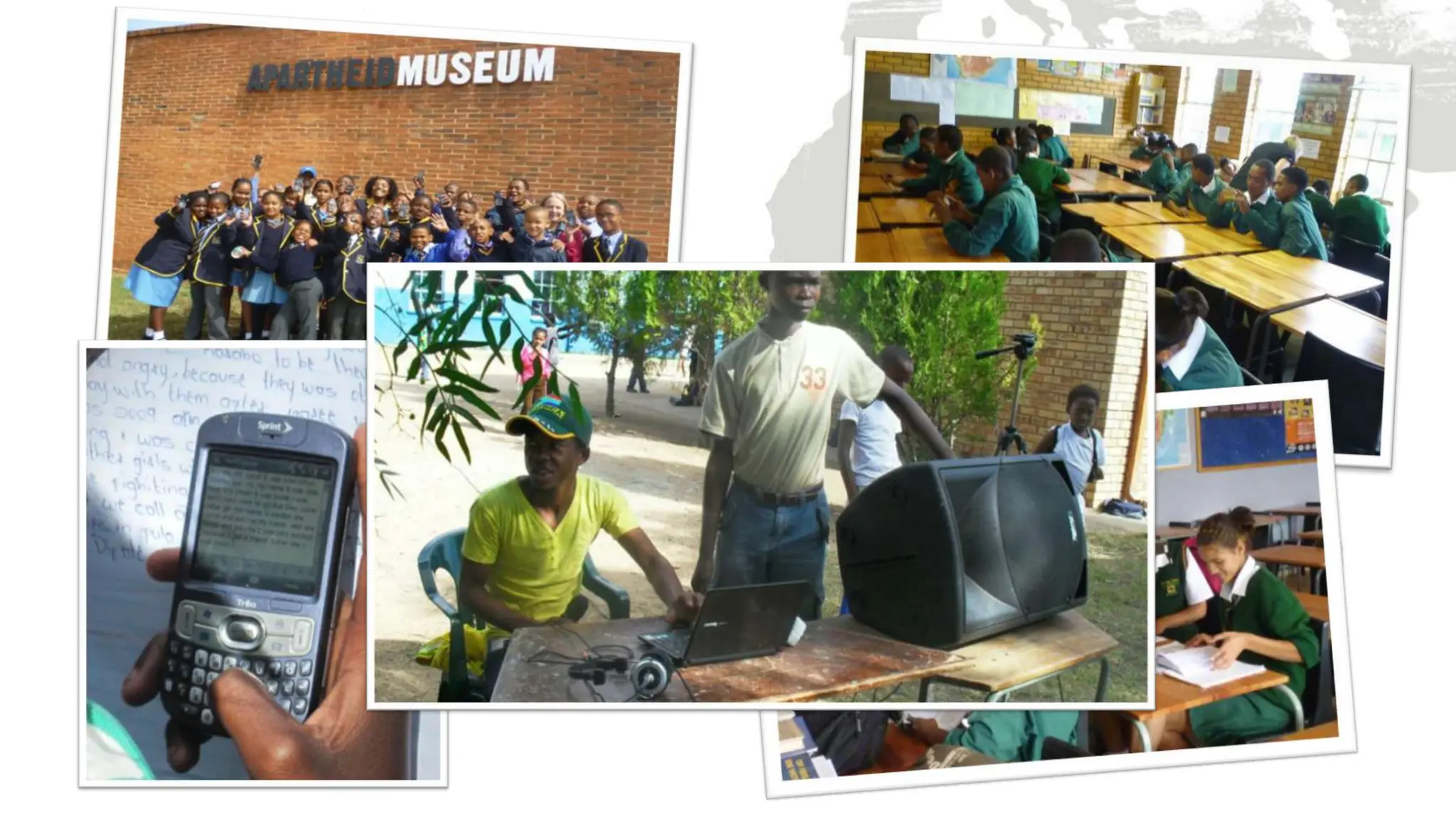
#4 And we did! The projects are collectively called m-ubuntu, and use mobile learning as a stimulus to encourage critical debate between teachers, and improve the quality of teaching. The model is simple: They take refurbished smartphones, with some educational software and tools installed onto them, and use them to improve teaching and learning. The results have been inspiring. Local teachers even won a grant from the US to go to Washington and share what they had learned with American teachers! But the inspiration is not merely putting smartphones into poor schools – it is about using them as an agent for change. They real wins happen when teachers work with other teachers to discuss how best to use these new tools. Or when something goes wrong, and they need to ask a student for help. A real shift in the power balance. As they struggle to figure out how to adapt their existing lessons to include mobile devices - staff and students end up working together in new ways to improve their shared learning.
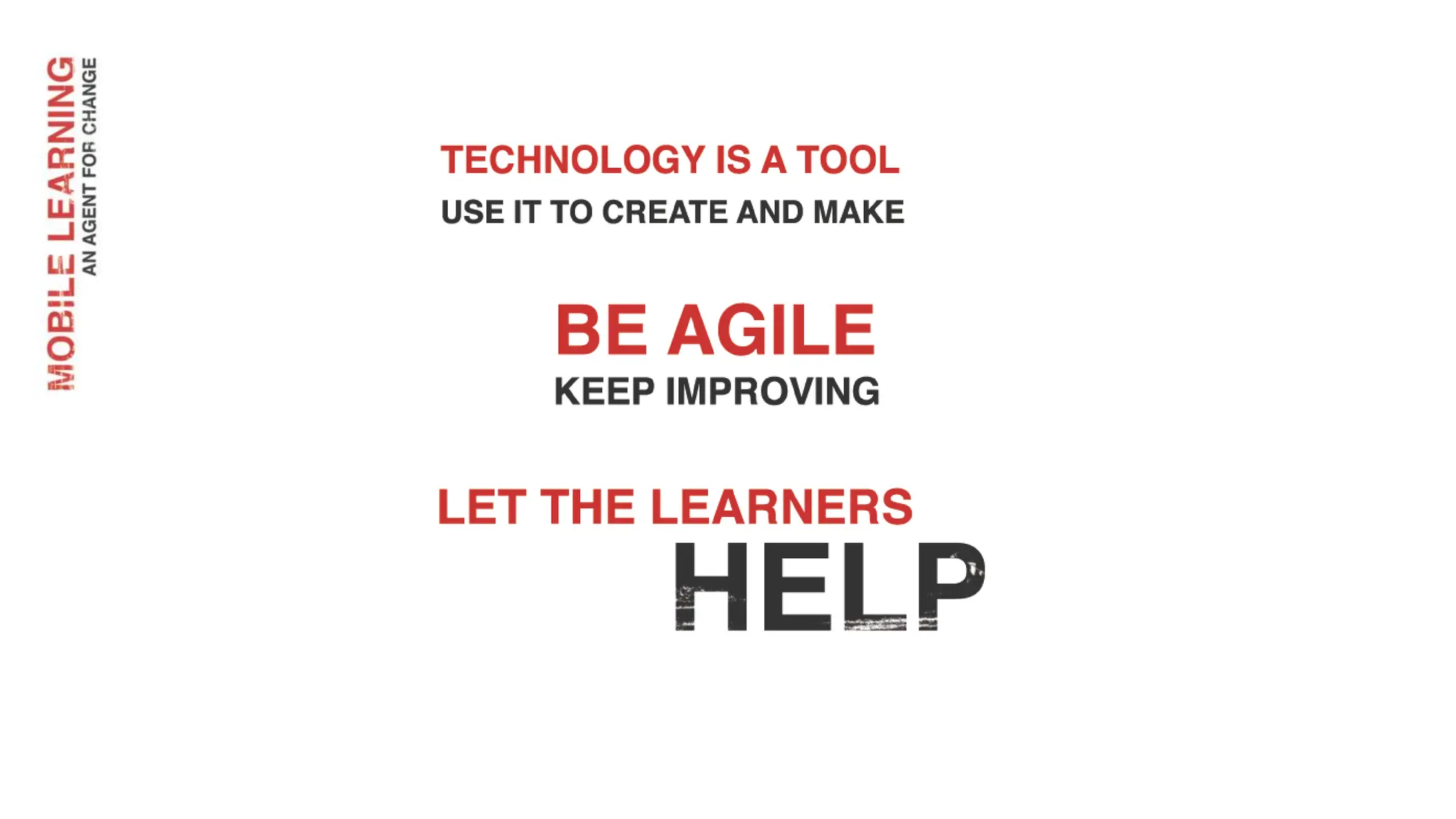
#6 If you want to try this for yourself, here are my 3 top tips:<<slide: 1: Phones are tools to do stuff; 2: Be agile. Keep improving; 3: Let the kids help >> Firstly – use the phones as tools to do stuff. Record music. Film a movie. Build an app. This is what they are made for, and makes for the best learning. Secondly – It won’t be right first time, but if you try again it will get better. And the time after than even better. It is OK to make mistakes – so plan in flexibility Thirdly – Share the burden with your students. Discuss this learning adventure with them. Let the kids learn about the phones, and become your technical support. By building autonomy and problem solving skills they will be learning some real future skills Mobile Learning IS disruptive. When you invite it into the classroom you open the door to all sorts of new risks and challenges. But by facing those challenges, and working together with students to resolve them, you will be a whole lot closer to building skills to deal with the many unknowns of tomorrow.
#7 If you want to try this for yourself, here are my 3 top tips:<<slide: 1: Phones are tools to do stuff; 2: Be agile. Keep improving; 3: Let the kids help >> Firstly – use the phones as tools to do stuff. Record music. Film a movie. Build an app. This is what they are made for, and makes for the best learning. Secondly – It won’t be right first time, but if you try again it will get better. And the time after than even better. It is OK to make mistakes – so plan in flexibility Thirdly – Share the burden with your students. Discuss this learning adventure with them. Let the kids learn about the phones, and become your technical support. By building autonomy and problem solving skills they will be learning some real future skills Mobile Learning IS disruptive. When you invite it into the classroom you open the door to all sorts of new risks and challenges. But by facing those challenges, and working together with students to resolve them, you will be a whole lot closer to building skills to deal with the many unknowns of tomorrow.