
On Governance… (Part 1) Gini Courter UUA Moderator http://justgini.blogspot.com/
Democracy Definition : government by the people in which the supreme  power is vested in the people  and exercised  directly by them  or by their  elected agents  under a free electoral system  Abraham Lincoln : "of the people, by the people, and for the people"  There are two broad types of democracy – direct democracy and representative democracy.
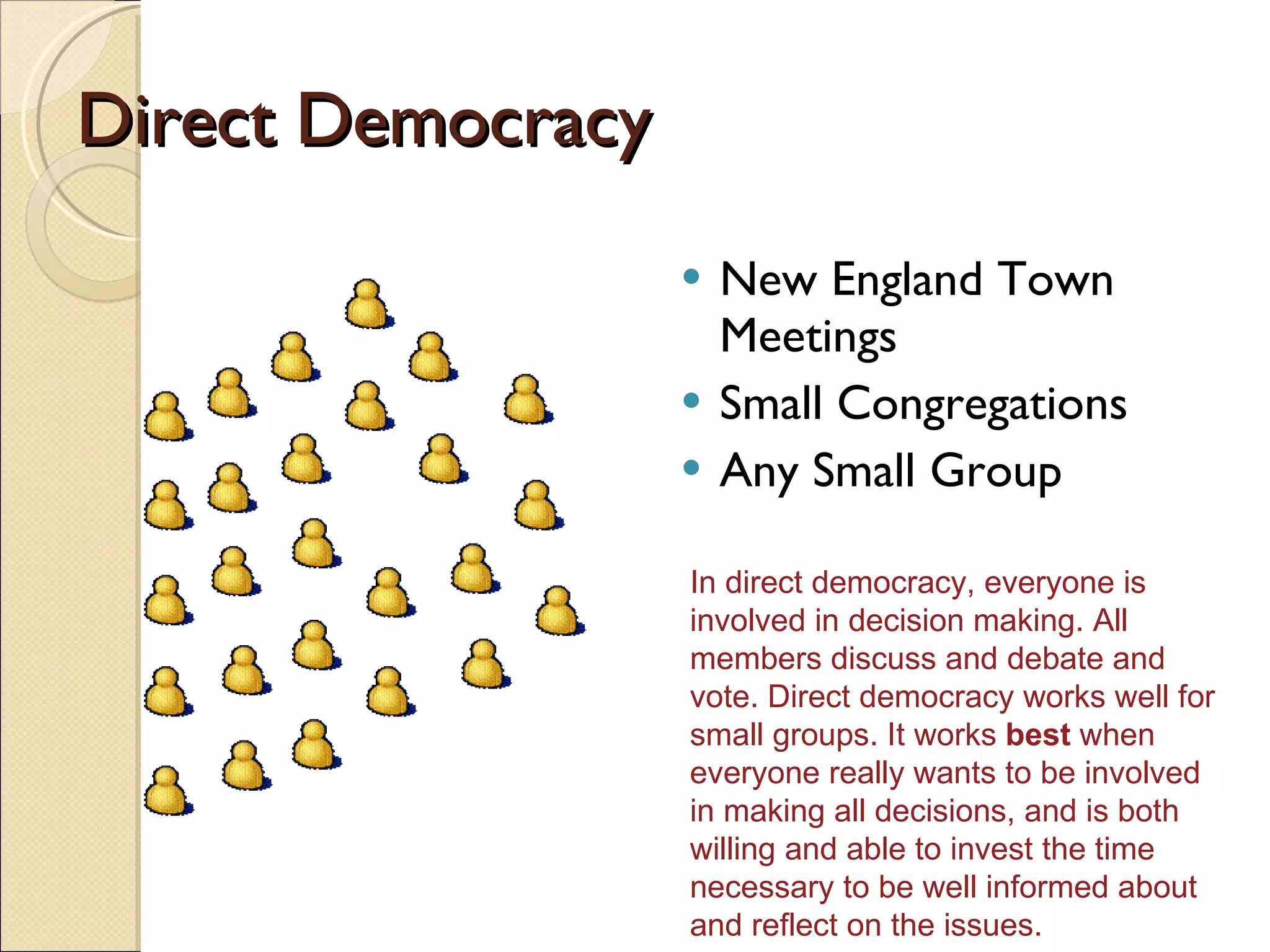
Direct Democracy New England Town Meetings Small Congregations Any Small Group In direct democracy, everyone is involved in decision making. All members discuss and debate and vote. Direct democracy works well for small groups. It works  best  when everyone really wants to be involved in making all decisions, and is both willing and able to invest the time necessary to be well informed about and reflect on the issues.
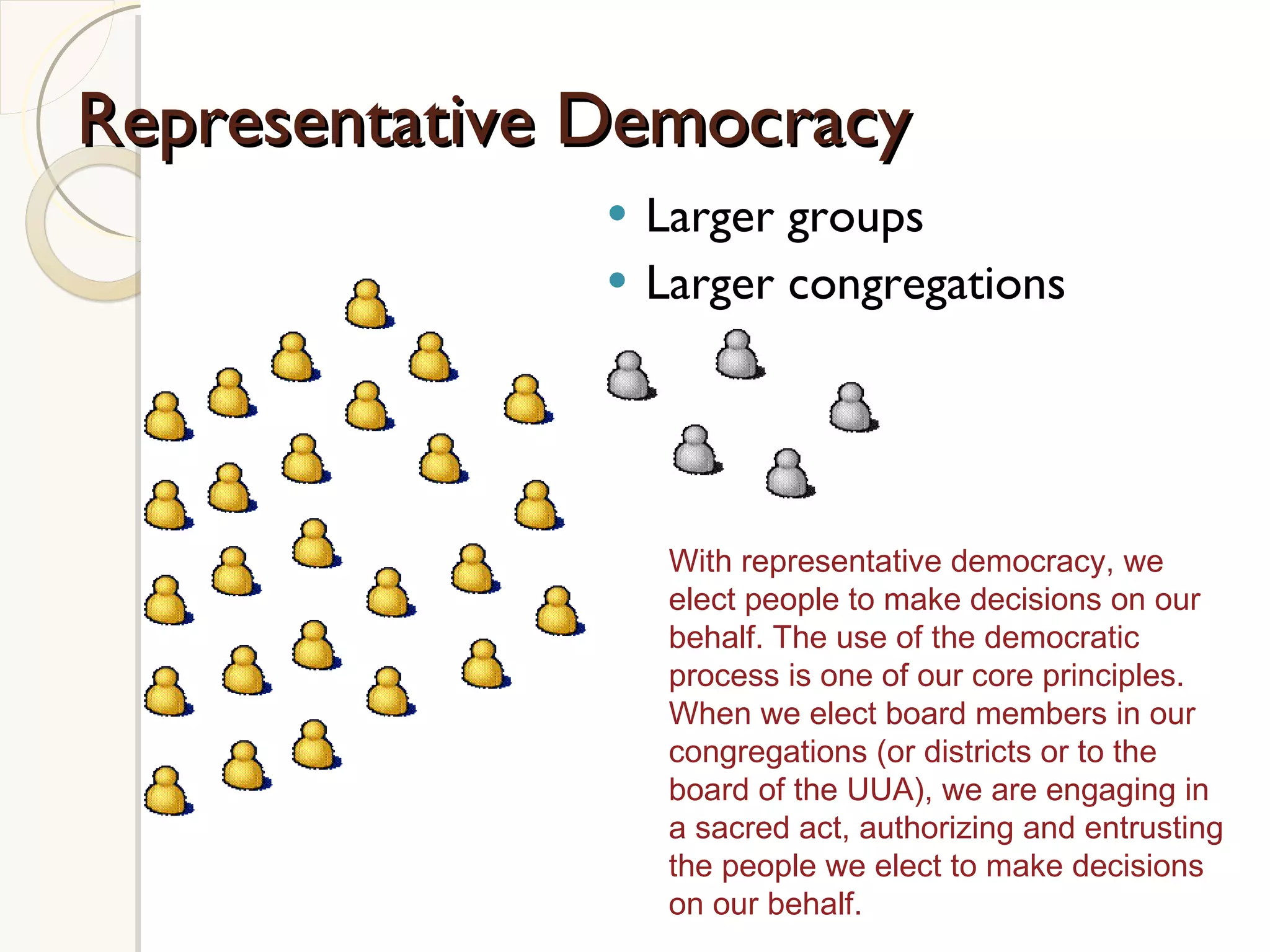
Representative Democracy Larger groups Larger congregations With representative democracy, we elect people to make decisions on our behalf. The use of the democratic process is one of our core principles. When we elect board members in our congregations (or districts or to the board of the UUA), we are engaging in a sacred act, authorizing and entrusting the people we elect to make decisions on our behalf.
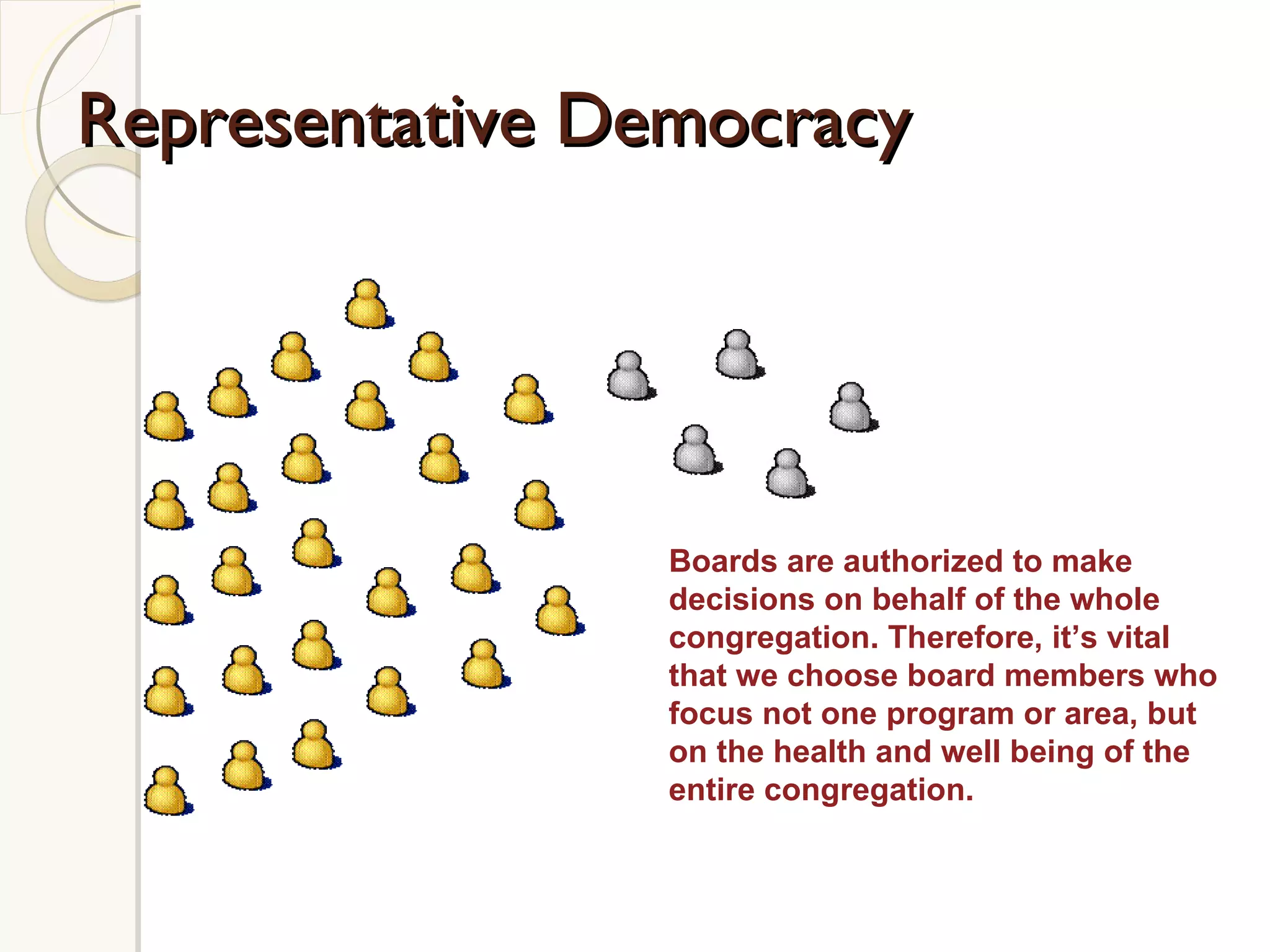
Representative Democracy Boards are authorized to make decisions on behalf of the whole congregation. Therefore, it’s vital that we choose board members who focus not one program or area, but on the health and well being of the entire congregation.
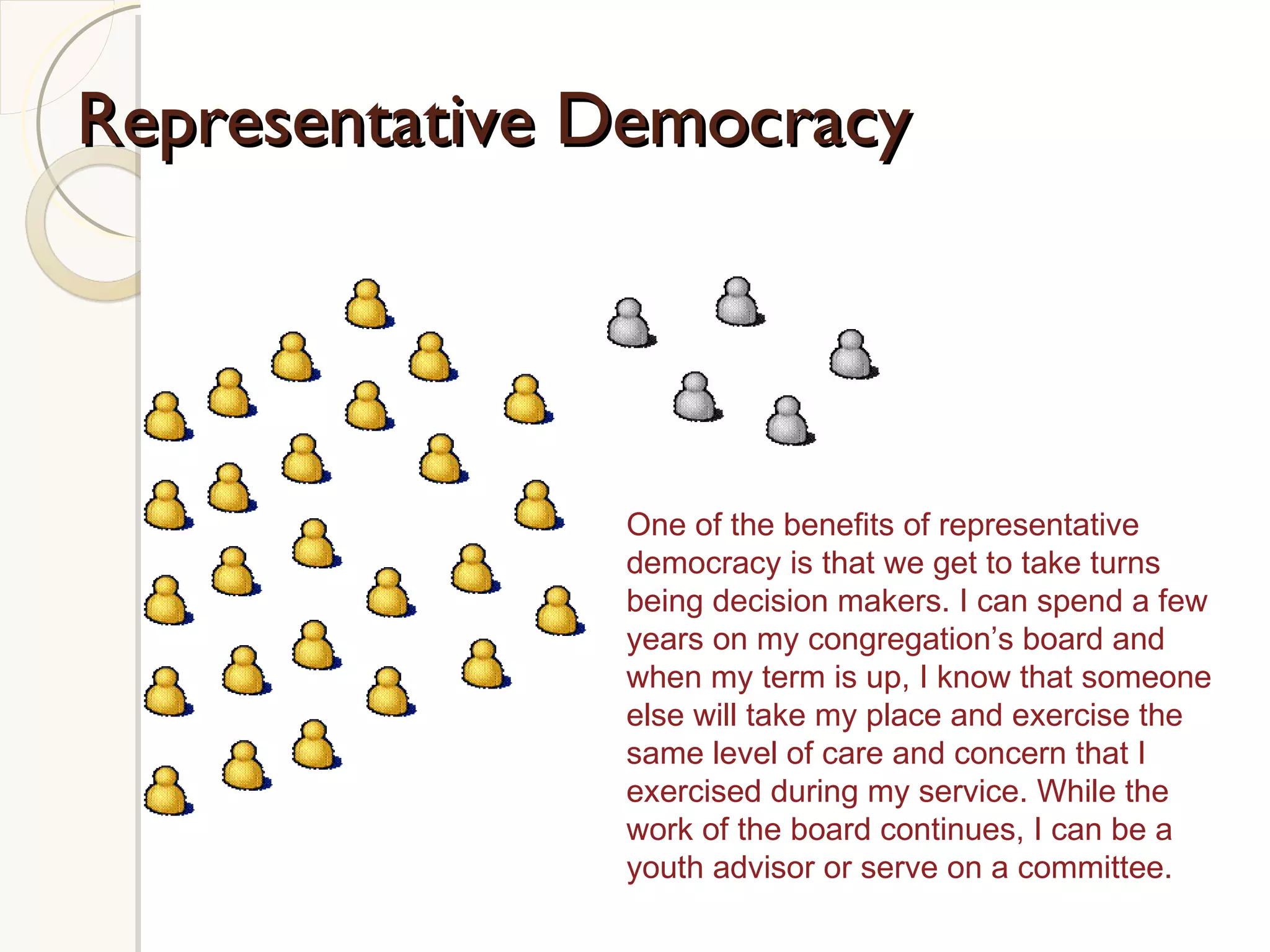
Representative Democracy One of the benefits of representative democracy is that we get to take turns being decision makers. I can spend a few years on my congregation’s board and when my term is up, I know that someone else will take my place and exercise the same level of care and concern that I exercised during my service. While the work of the board continues, I can be a youth advisor or serve on a committee.
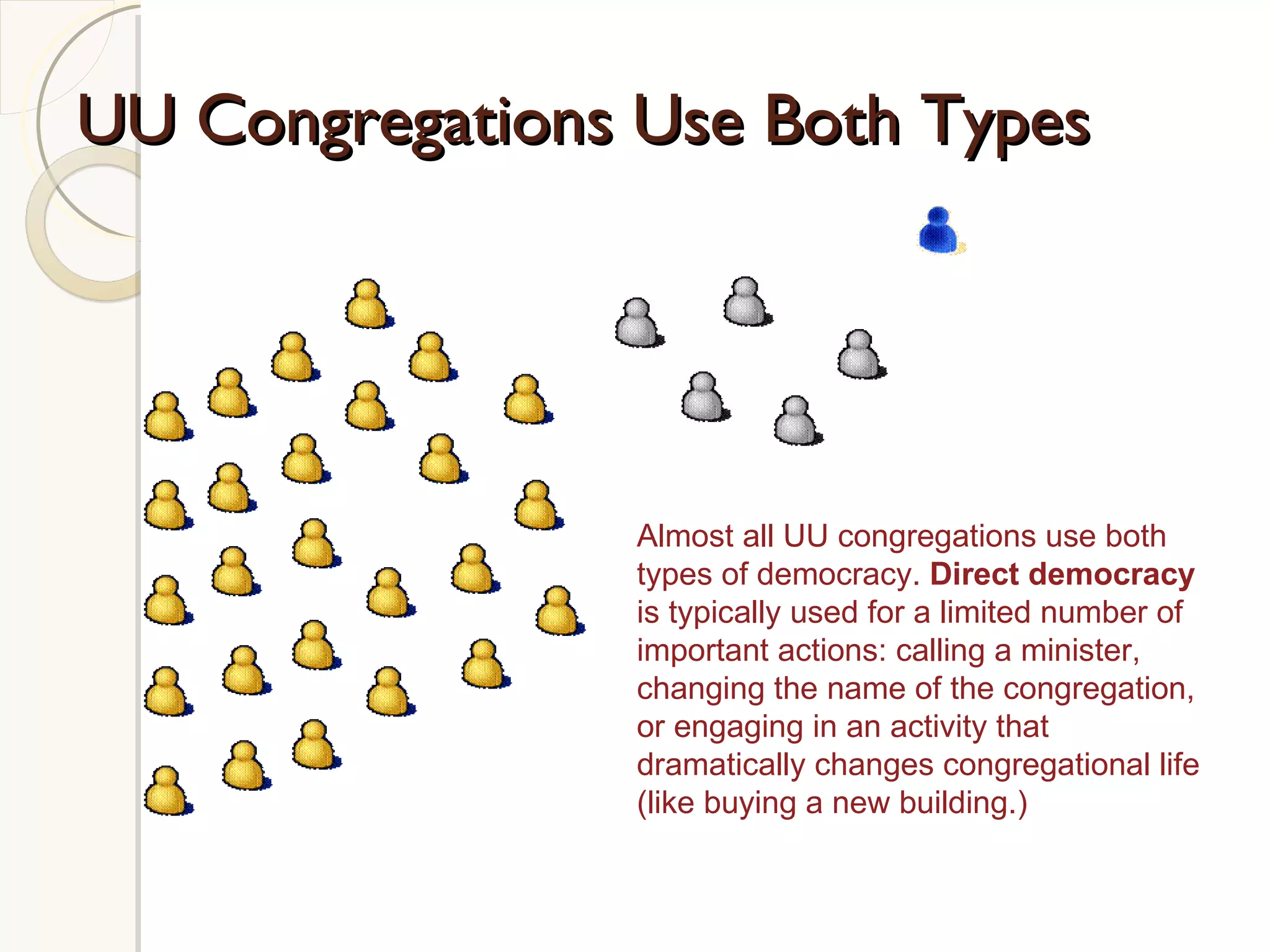
UU Congregations Use Both Types Almost all UU congregations use both types of democracy.  Direct democracy  is typically used for a limited number of important actions: calling a minister, changing the name of the congregation, or engaging in an activity that dramatically changes congregational life (like buying a new building.)
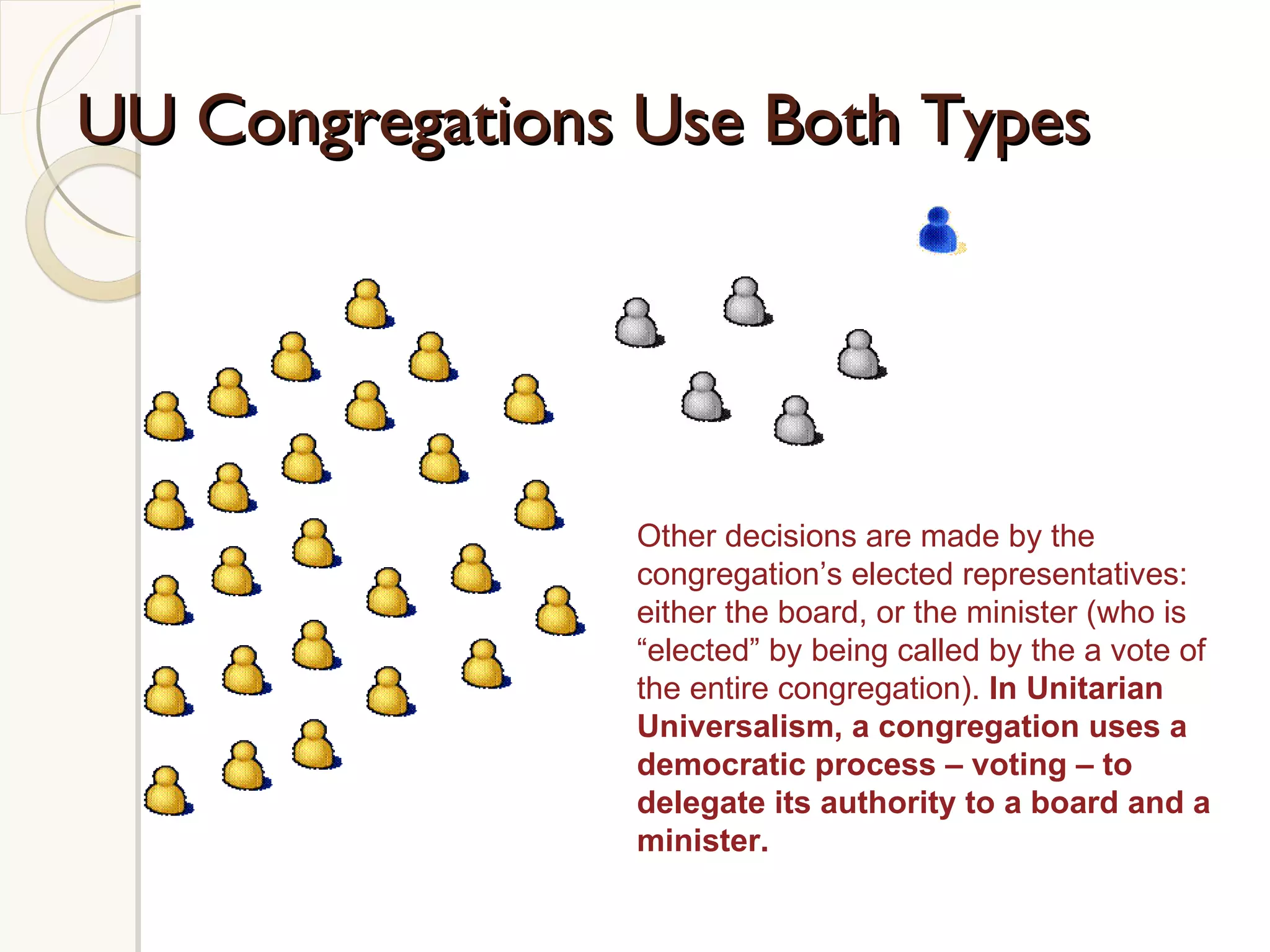
UU Congregations Use Both Types Other decisions are made by the congregation’s elected representatives: either the board, or the minister (who is “elected” by being called by the a vote of the entire congregation).  In Unitarian Universalism, a congregation uses a democratic process – voting – to delegate its authority to a board and a minister.
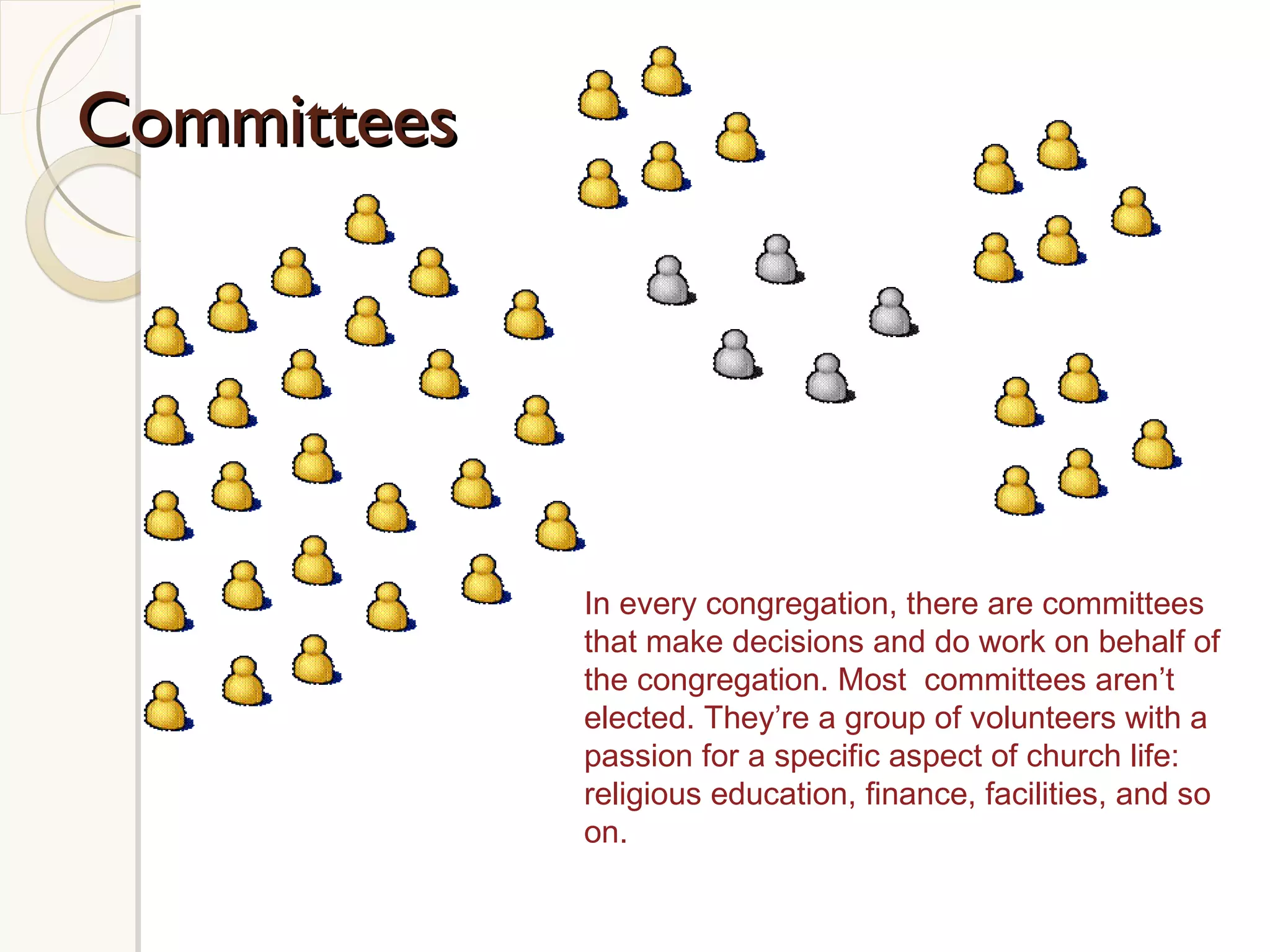
Committees In every congregation, there are committees that make decisions and do work on behalf of the congregation. Most  committees aren’t elected. They’re a group of volunteers with a passion for a specific aspect of church life: religious education, finance, facilities, and so on.
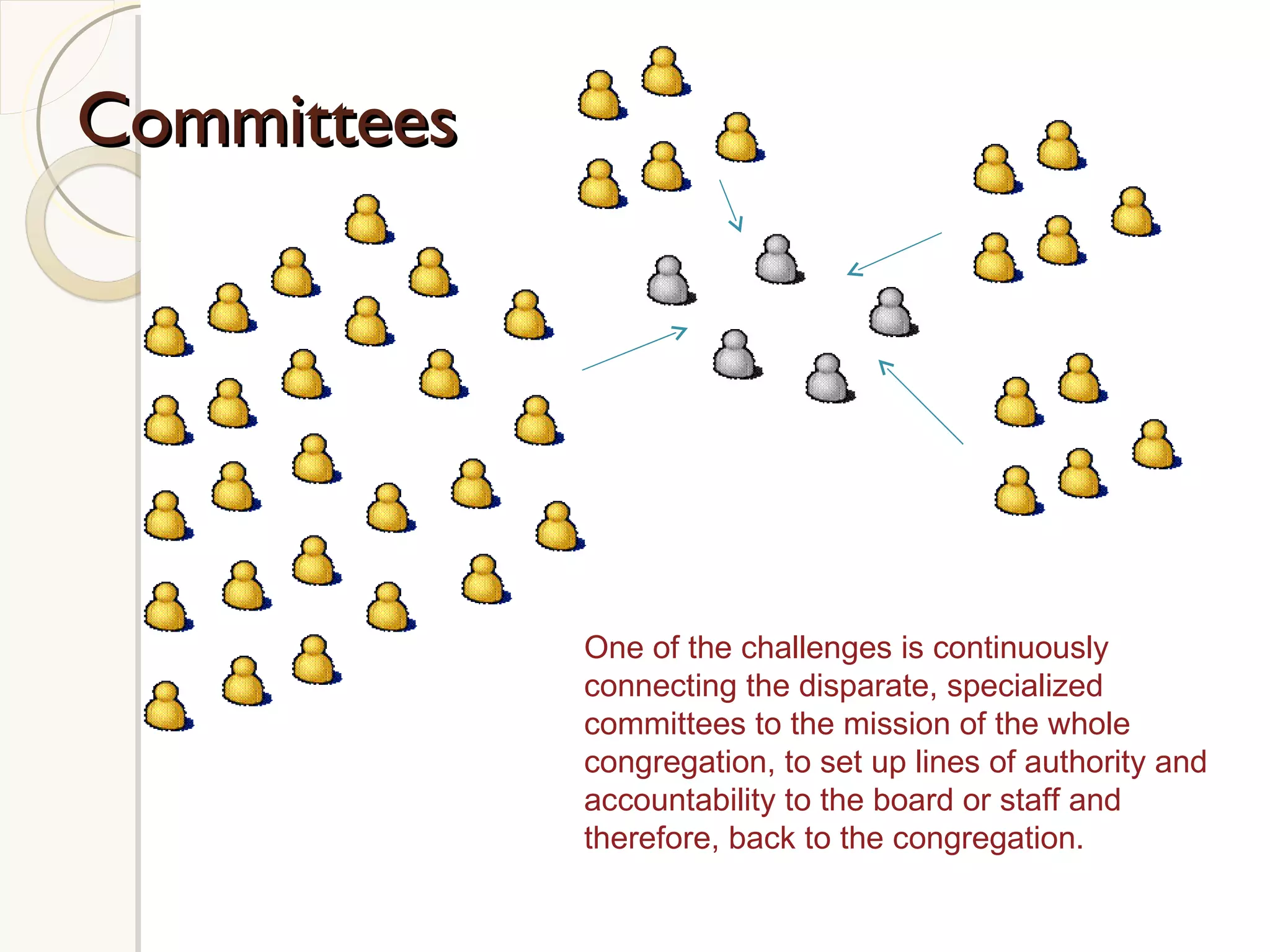
Committees One of the challenges is continuously connecting the disparate, specialized committees to the mission of the whole congregation, to set up lines of authority and accountability to the board or staff and therefore, back to the congregation.
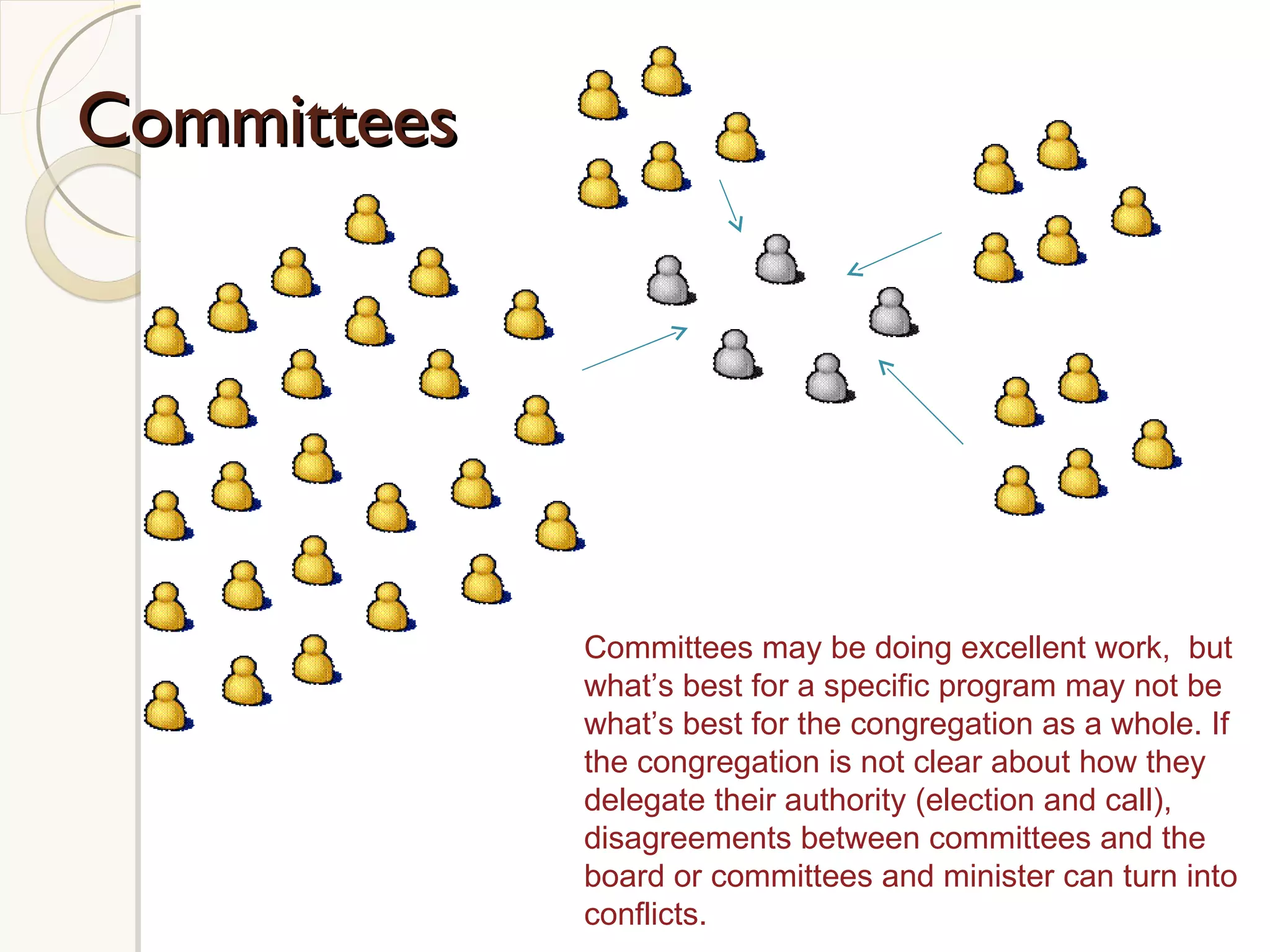
Committees Committees may be doing excellent work,  but what’s best for a specific program may not be what’s best for the congregation as a whole. If the congregation is not clear about how they delegate their authority (election and call), disagreements between committees and the board or committees and minister can turn into conflicts.
AUTHORIZATION
How Congregations Authorize Boards are authorized through election.  Ministers are authorized through call.  Committees need to be authorized by the board or the minister.  In smaller congregations, most committees  should  receive authorization from the board. In larger congregations, and in congregations of all sizes that use policy governance, most committees  should  receive authorization from the minister.
ROLES & AUTHORIZATION Committees, Boards, and Staff
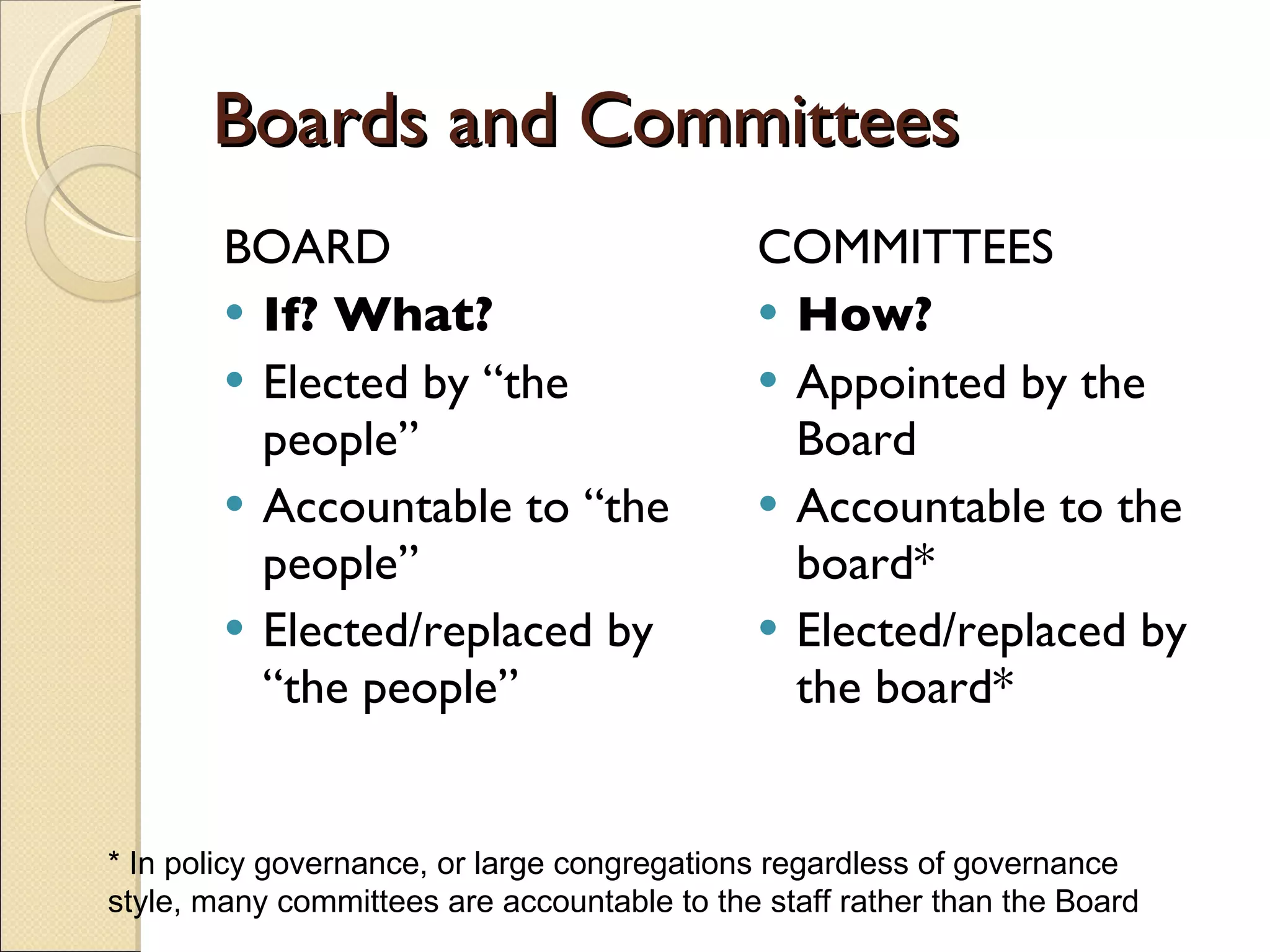
Boards and Committees BOARD If? What?   Elected by “the people” Accountable to “the people” Elected/replaced by “the people”  COMMITTEES How?  Appointed by the Board Accountable to the board* Elected/replaced by the board* * In policy governance, or large congregations regardless of governance style, many committees are accountable to the staff rather than the Board
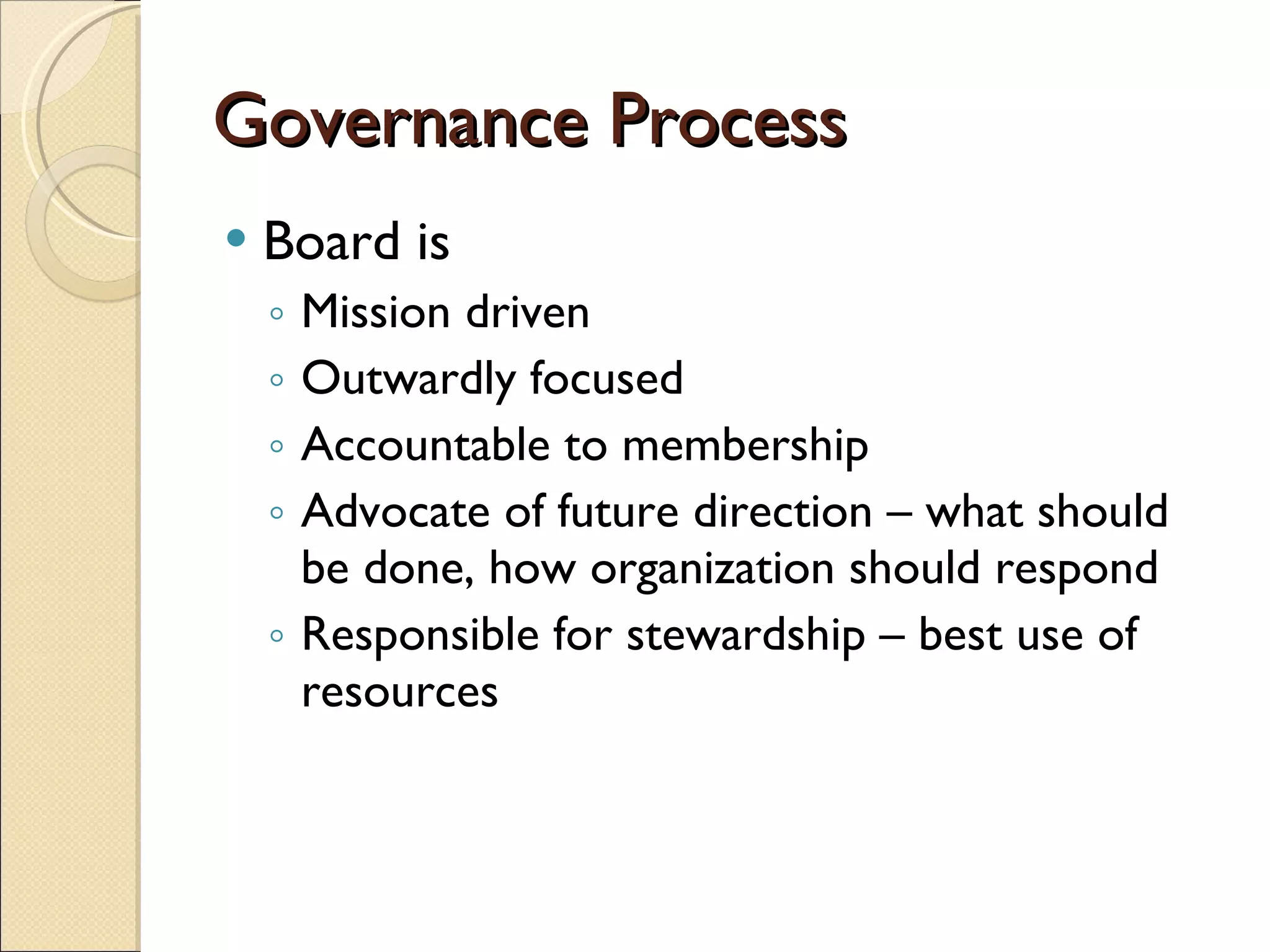
Governance Process Board is  Mission driven Outwardly focused Accountable to membership Advocate of future direction – what should be done, how organization should respond Responsible for stewardship – best use of resources
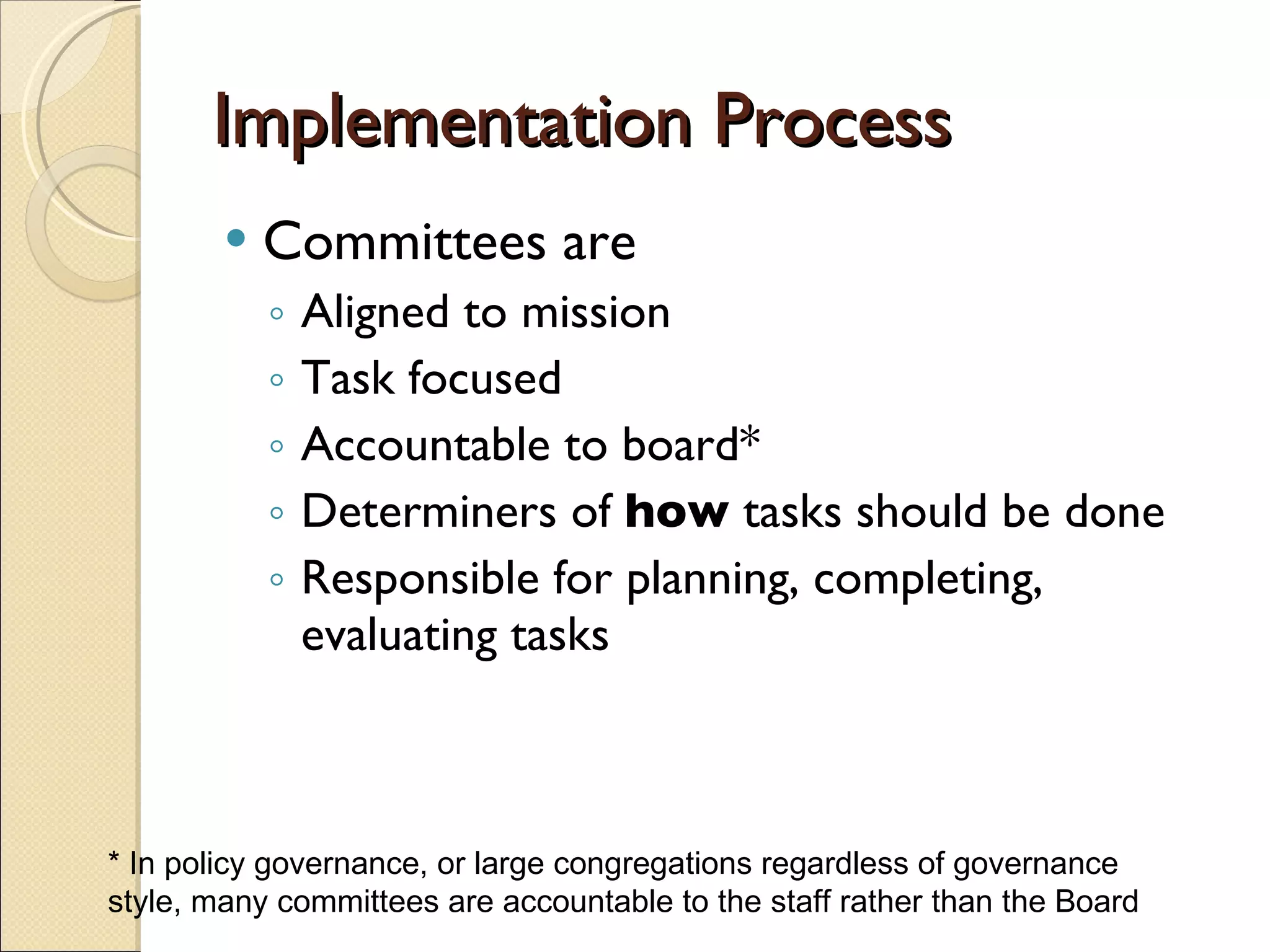
Implementation Process Committees are  Aligned to mission Task focused Accountable to board* Determiners of  how  tasks should be done Responsible for planning, completing, evaluating tasks * In policy governance, or large congregations regardless of governance style, many committees are accountable to the staff rather than the Board
SHARED MINISTRY Notes on
Shared Ministry Responsibility for the ministry of the congregation is shared by elected lay leaders (Board) and called religious professionals (Minister) Both Board and Minister are accountable to the congregation Shared ministry isn’t having a one lay service every month, or having lay people do other work  of a religious professional. Shared ministry is lay people doing the work of governance, while ministers do the work of professional ministry.  If both the laity and clergy are doing their work excellently, the result is an excellent shared ministry.
Shared Ministry Requires clear boundaries Freedom of the pulpit, freedom of the pew Shared ministry is a partnership. The minister guarantees the laity freedom of the pew. The congregation guarantees the minister freedom of the pulpit. It is the job of the laity – not the clergy -- to defend freedom of the pulpit.

Uu Governance Part 1

  • 1.
    On Governance… (Part1) Gini Courter UUA Moderator http://justgini.blogspot.com/
  • 2.
    Democracy Definition :government by the people in which the supreme power is vested in the people and exercised directly by them or by their elected agents under a free electoral system Abraham Lincoln : "of the people, by the people, and for the people" There are two broad types of democracy – direct democracy and representative democracy.
  • 3.
    Direct Democracy NewEngland Town Meetings Small Congregations Any Small Group In direct democracy, everyone is involved in decision making. All members discuss and debate and vote. Direct democracy works well for small groups. It works best when everyone really wants to be involved in making all decisions, and is both willing and able to invest the time necessary to be well informed about and reflect on the issues.
  • 4.
    Representative Democracy Largergroups Larger congregations With representative democracy, we elect people to make decisions on our behalf. The use of the democratic process is one of our core principles. When we elect board members in our congregations (or districts or to the board of the UUA), we are engaging in a sacred act, authorizing and entrusting the people we elect to make decisions on our behalf.
  • 5.
    Representative Democracy Boardsare authorized to make decisions on behalf of the whole congregation. Therefore, it’s vital that we choose board members who focus not one program or area, but on the health and well being of the entire congregation.
  • 6.
    Representative Democracy Oneof the benefits of representative democracy is that we get to take turns being decision makers. I can spend a few years on my congregation’s board and when my term is up, I know that someone else will take my place and exercise the same level of care and concern that I exercised during my service. While the work of the board continues, I can be a youth advisor or serve on a committee.
  • 7.
    UU Congregations UseBoth Types Almost all UU congregations use both types of democracy. Direct democracy is typically used for a limited number of important actions: calling a minister, changing the name of the congregation, or engaging in an activity that dramatically changes congregational life (like buying a new building.)
  • 8.
    UU Congregations UseBoth Types Other decisions are made by the congregation’s elected representatives: either the board, or the minister (who is “elected” by being called by the a vote of the entire congregation). In Unitarian Universalism, a congregation uses a democratic process – voting – to delegate its authority to a board and a minister.
  • 9.
    Committees In everycongregation, there are committees that make decisions and do work on behalf of the congregation. Most committees aren’t elected. They’re a group of volunteers with a passion for a specific aspect of church life: religious education, finance, facilities, and so on.
  • 10.
    Committees One ofthe challenges is continuously connecting the disparate, specialized committees to the mission of the whole congregation, to set up lines of authority and accountability to the board or staff and therefore, back to the congregation.
  • 11.
    Committees Committees maybe doing excellent work, but what’s best for a specific program may not be what’s best for the congregation as a whole. If the congregation is not clear about how they delegate their authority (election and call), disagreements between committees and the board or committees and minister can turn into conflicts.
  • 12.
  • 13.
    How Congregations AuthorizeBoards are authorized through election. Ministers are authorized through call. Committees need to be authorized by the board or the minister. In smaller congregations, most committees should receive authorization from the board. In larger congregations, and in congregations of all sizes that use policy governance, most committees should receive authorization from the minister.
  • 14.
    ROLES & AUTHORIZATIONCommittees, Boards, and Staff
  • 15.
    Boards and CommitteesBOARD If? What? Elected by “the people” Accountable to “the people” Elected/replaced by “the people” COMMITTEES How? Appointed by the Board Accountable to the board* Elected/replaced by the board* * In policy governance, or large congregations regardless of governance style, many committees are accountable to the staff rather than the Board
  • 16.
    Governance Process Boardis Mission driven Outwardly focused Accountable to membership Advocate of future direction – what should be done, how organization should respond Responsible for stewardship – best use of resources
  • 17.
    Implementation Process Committeesare Aligned to mission Task focused Accountable to board* Determiners of how tasks should be done Responsible for planning, completing, evaluating tasks * In policy governance, or large congregations regardless of governance style, many committees are accountable to the staff rather than the Board
  • 18.
  • 19.
    Shared Ministry Responsibilityfor the ministry of the congregation is shared by elected lay leaders (Board) and called religious professionals (Minister) Both Board and Minister are accountable to the congregation Shared ministry isn’t having a one lay service every month, or having lay people do other work of a religious professional. Shared ministry is lay people doing the work of governance, while ministers do the work of professional ministry. If both the laity and clergy are doing their work excellently, the result is an excellent shared ministry.
  • 20.
    Shared Ministry Requiresclear boundaries Freedom of the pulpit, freedom of the pew Shared ministry is a partnership. The minister guarantees the laity freedom of the pew. The congregation guarantees the minister freedom of the pulpit. It is the job of the laity – not the clergy -- to defend freedom of the pulpit.

Editor's Notes

  • #2 For more on UU governance, see http://justgini.blogspot.com/