Steps to theResearch Process Identify and develop your topic: State your topic as a question. Identify the main concepts or keywords. 2. Find background information: - Look up your keywords in the indexes of encyclopedias. Read articles to set up research. Note relevant items in the bibliographies.
3.
Steps to theResearch Process 3. Use Media and Books: Use guided keyword searches to find info. on topic or subject. Cite the location of information. 4. Find Internet Sources: - Use search engines and any bibliography info.
4.
Steps to theResearch Process 5. Evaluate What You Find: May need to narrow your topic if you have too much info. May need to broaden topic if not enough info. 6. Cite Your Sources: - Give credit where credit is due; Give proper credit to the authors of used material.
5.
Reference Materials Encyclopedia- multiple volumes; general information about a variety of subjects General Biographical References - Info. About birth date, nationality, major accomplishments of outstanding people Atlases - maps and geographical info. Almanacs - used to be written every year to give the previous year’s data on weather, records, economy, government, tons of facts; now they are updated regularly on-line. Periodicals - Information published on regular basis (newspapers, magazines, journals, etc.
6.
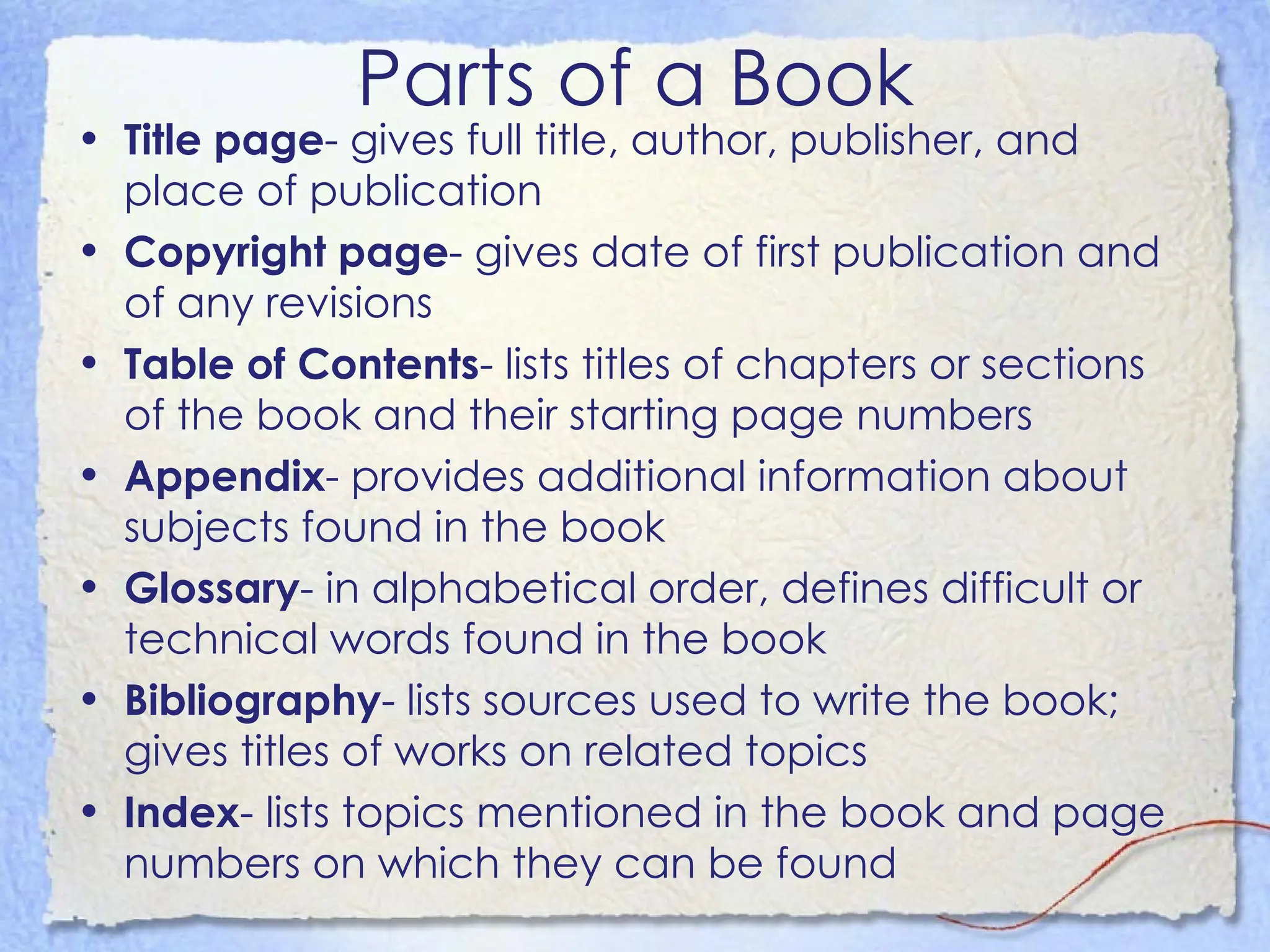
Parts of aBook Title page - gives full title, author, publisher, and place of publication Copyright page - gives date of first publication and of any revisions Table of Contents - lists titles of chapters or sections of the book and their starting page numbers Appendix - provides additional information about subjects found in the book Glossary - in alphabetical order, defines difficult or technical words found in the book Bibliography - lists sources used to write the book; gives titles of works on related topics Index - lists topics mentioned in the book and page numbers on which they can be found