TRADITIONAL INSTRUMENTS: MAKING TARRAÑOLAS 2º ESO pupils from IES San Tomé de Freixeiro
Introduction Tarrañolas are percussion instruments. They are made with two rectangular strips of wood with a small joint, which are held between the fingers in such a way that one strip keeps fixed and the other can be  moved .
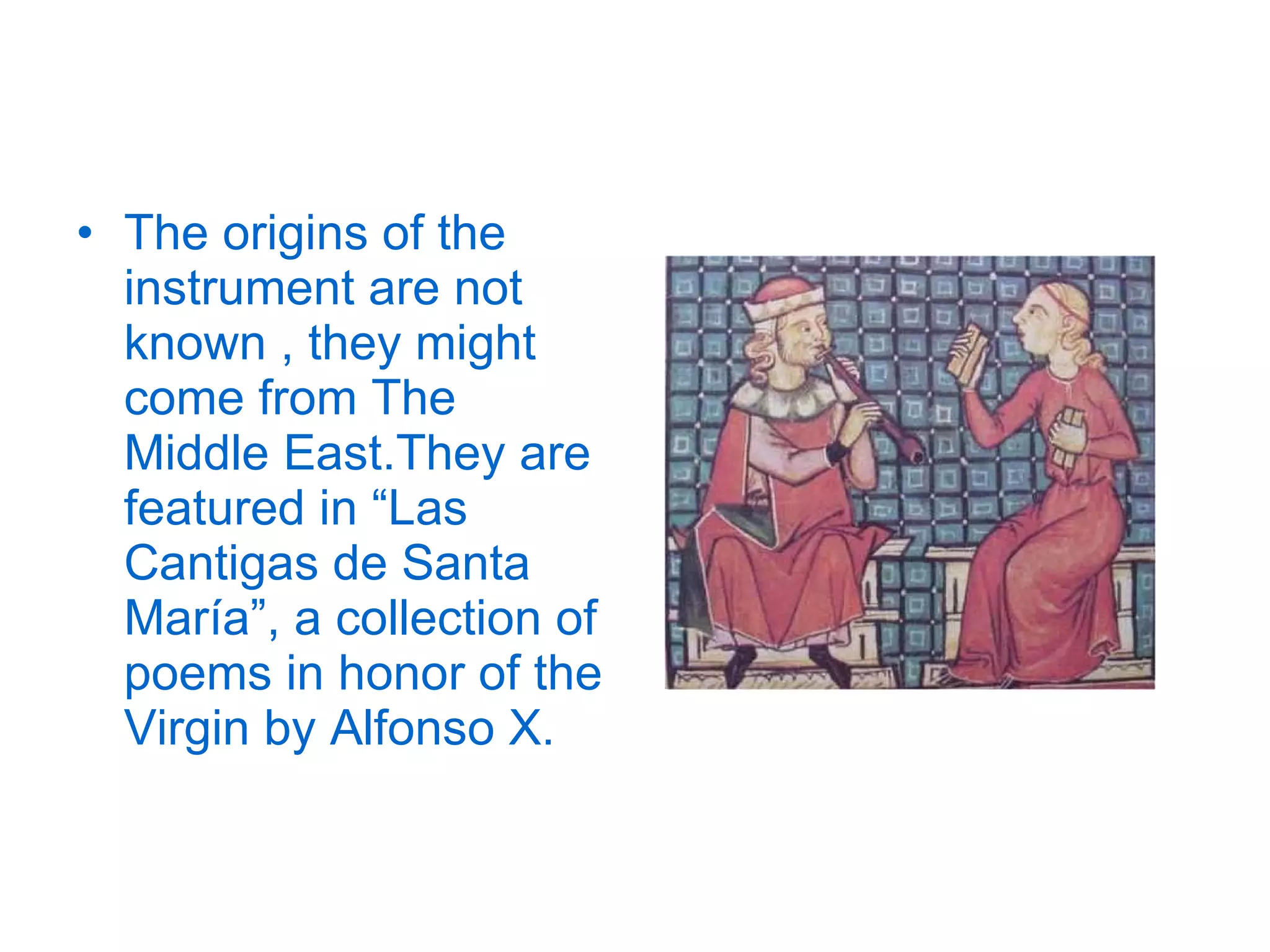
The origins of the instrument are not known , they might come from The Middle East.They are featured in “Las Cantigas de Santa María”, a collection of poems in honor of the Virgin by Alfonso X.
PROCESO DE CONSTRUCCIÓN 1º.-  Types of Wood  2º.-  Processing of Wood 3º.-Stencilling 4º.- Cutting 5º.- Planing and sanding 6º.- Personalization 7º.- Polishing 8º.- Finishing
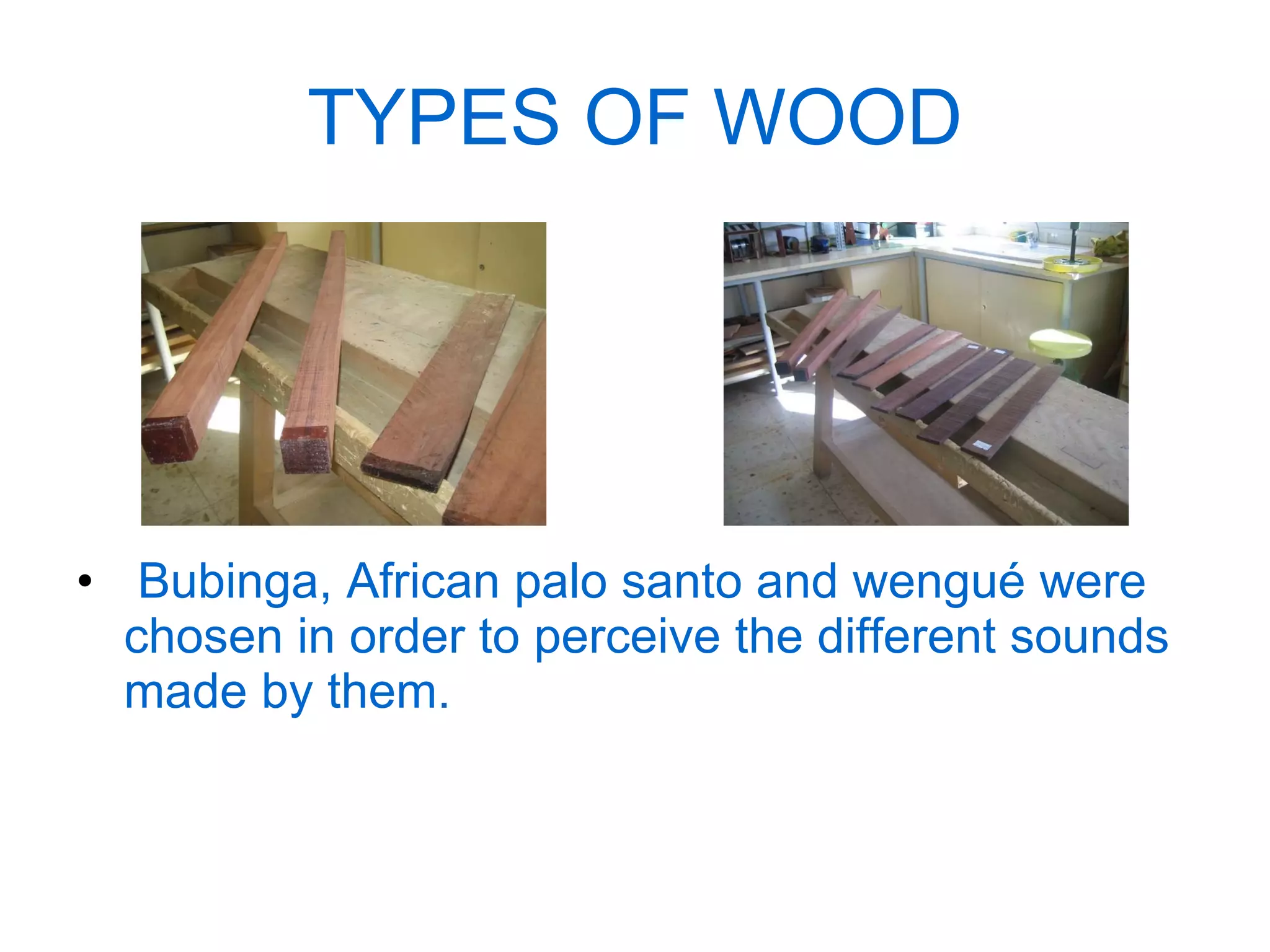
TYPES OF WOOD Bubinga, African palo santo and wengué were chosen in order to perceive the different sounds  made by them.
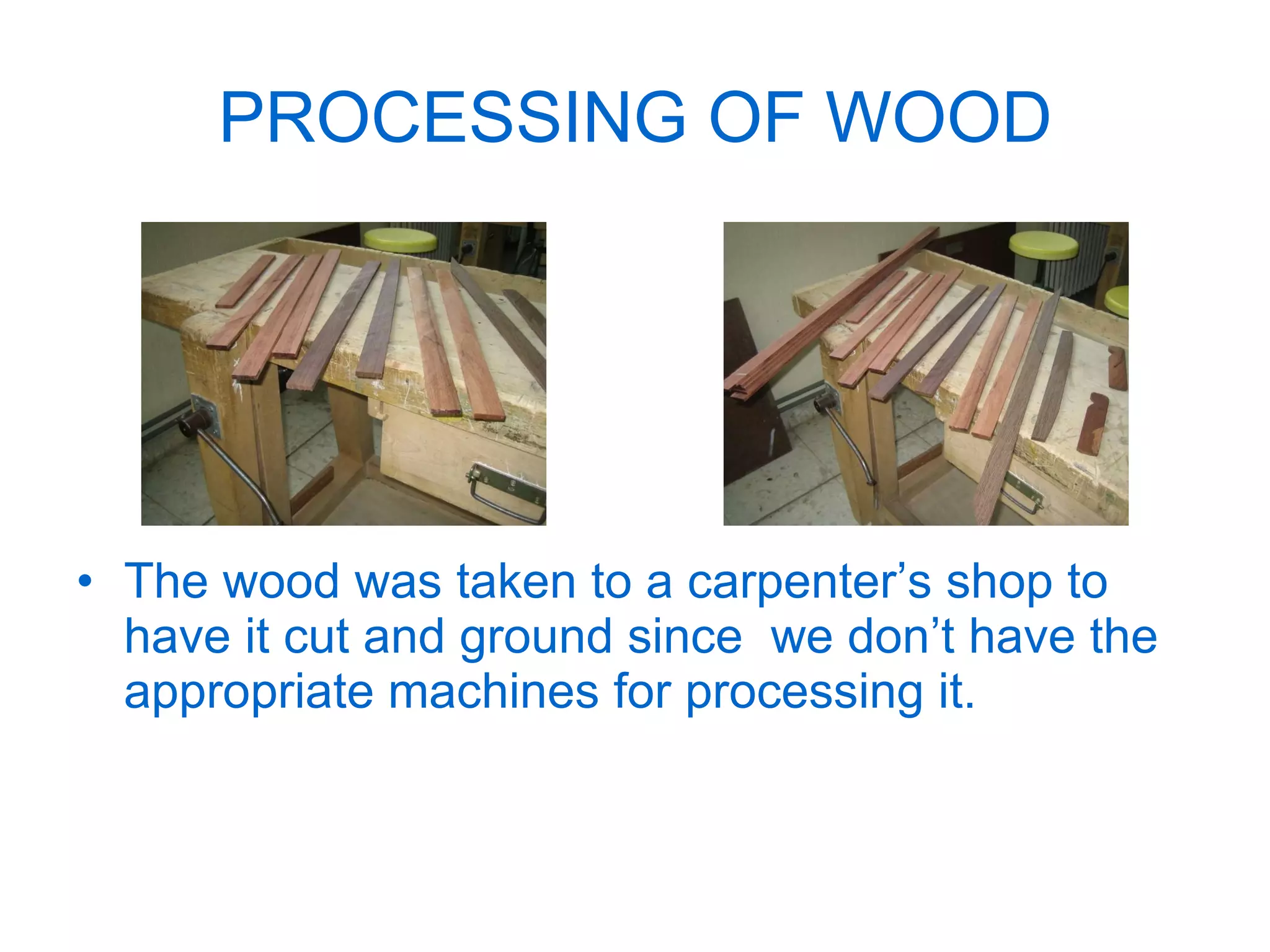
PROCESSING OF WOOD The wood was taken to a carpenter’s shop to have it cut and ground since  we don’t have the appropriate machines for processing it.
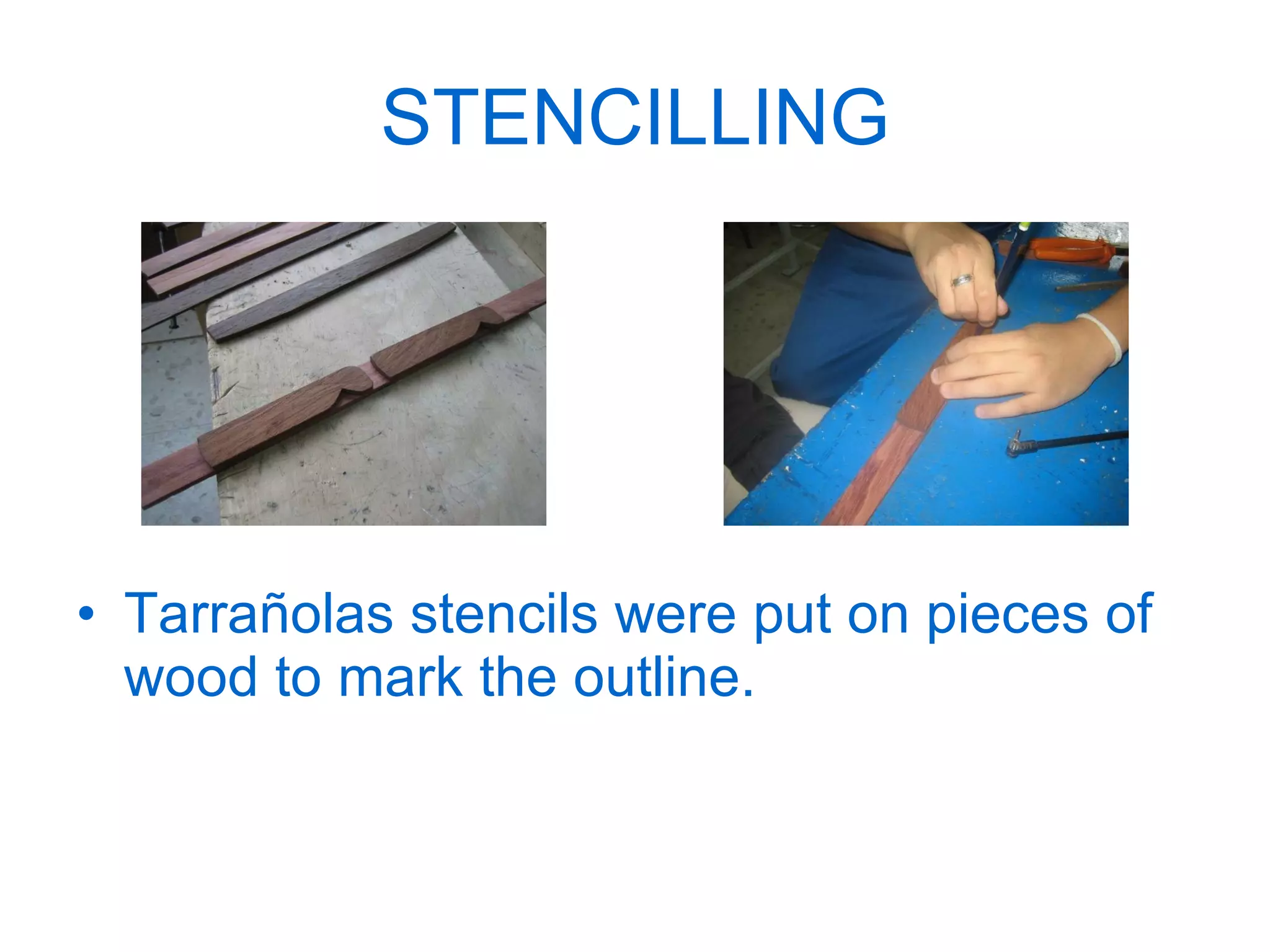
STENCILLING Tarrañolas stencils were put on pieces of wood to mark the outline.
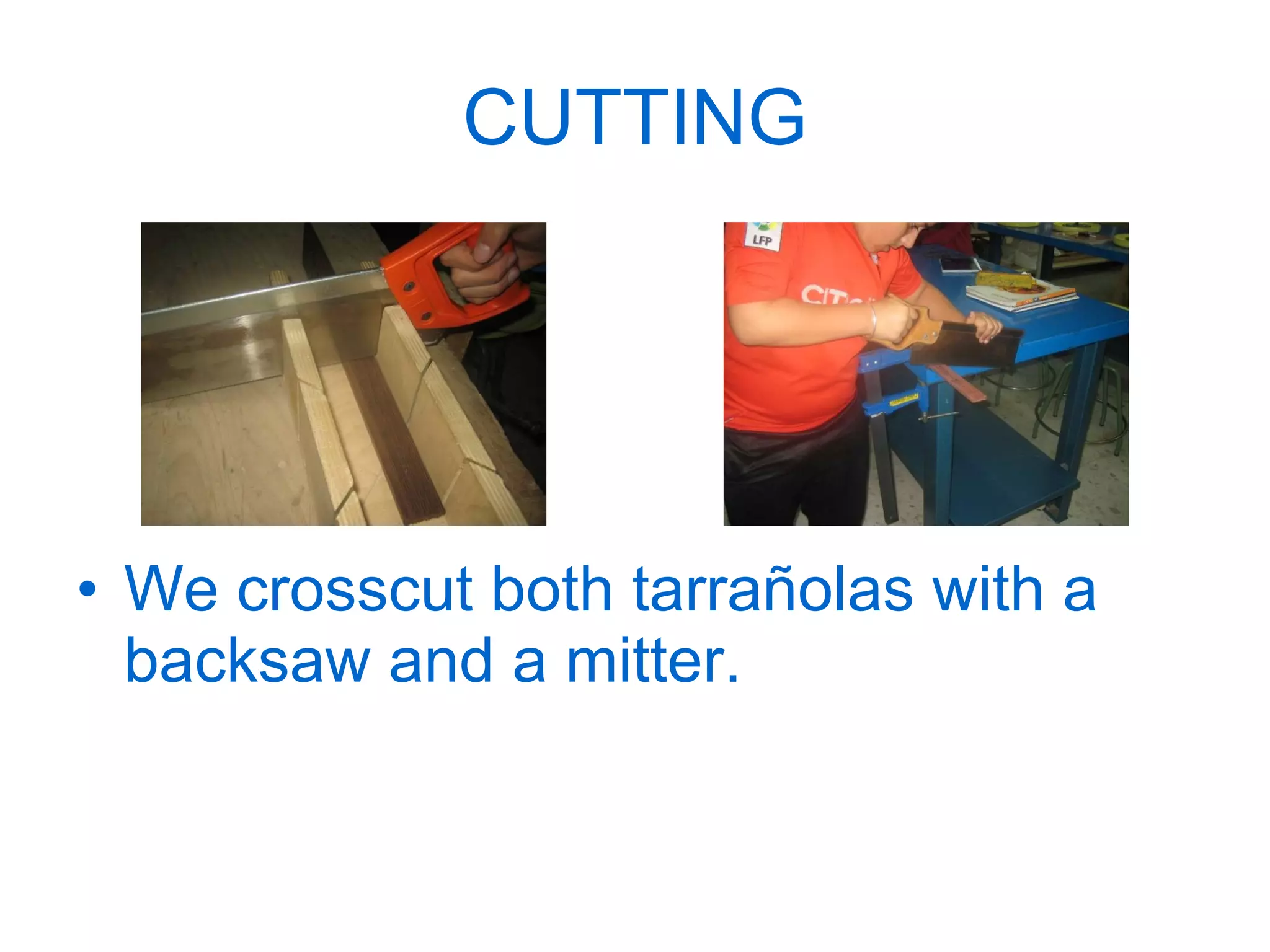
CUTTING We crosscut both tarrañolas with a backsaw and a mitter.
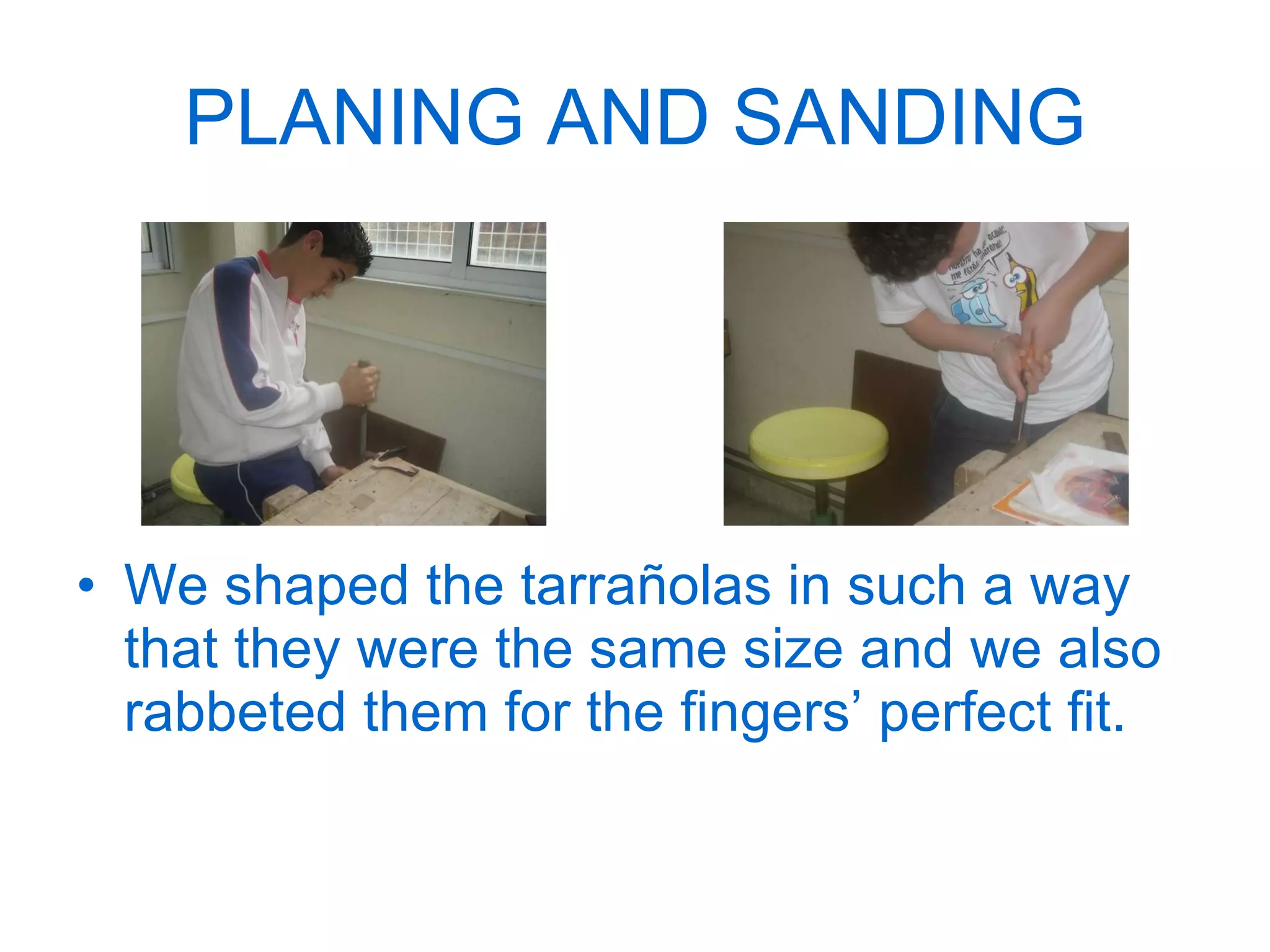
PLANING AND SANDING We shaped the tarrañolas in such a way that they were the same size and we also rabbeted them for the fingers’ perfect fit.
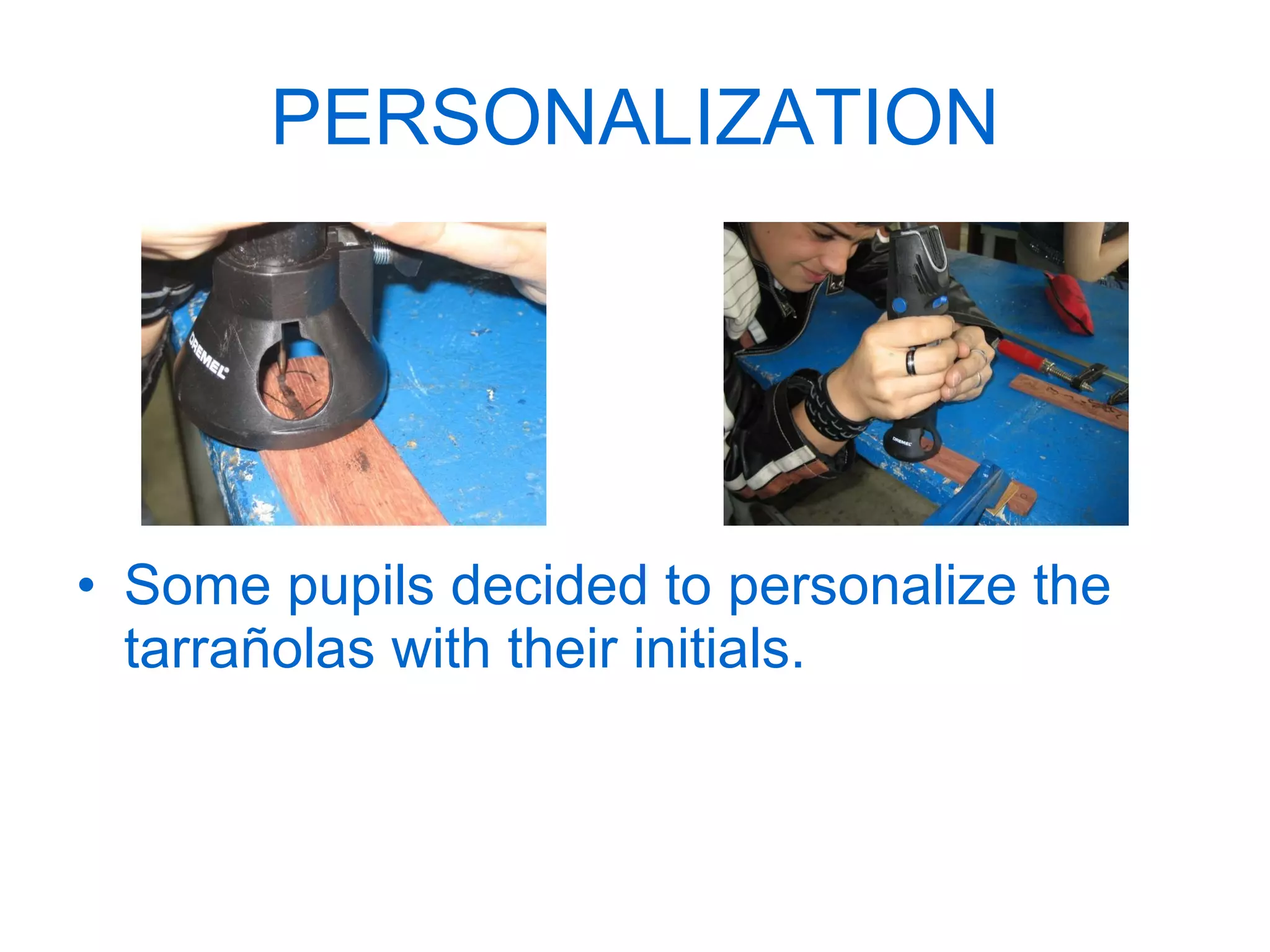
PERSONALIZATION Some pupils decided to personalize the tarrañolas with their initials.
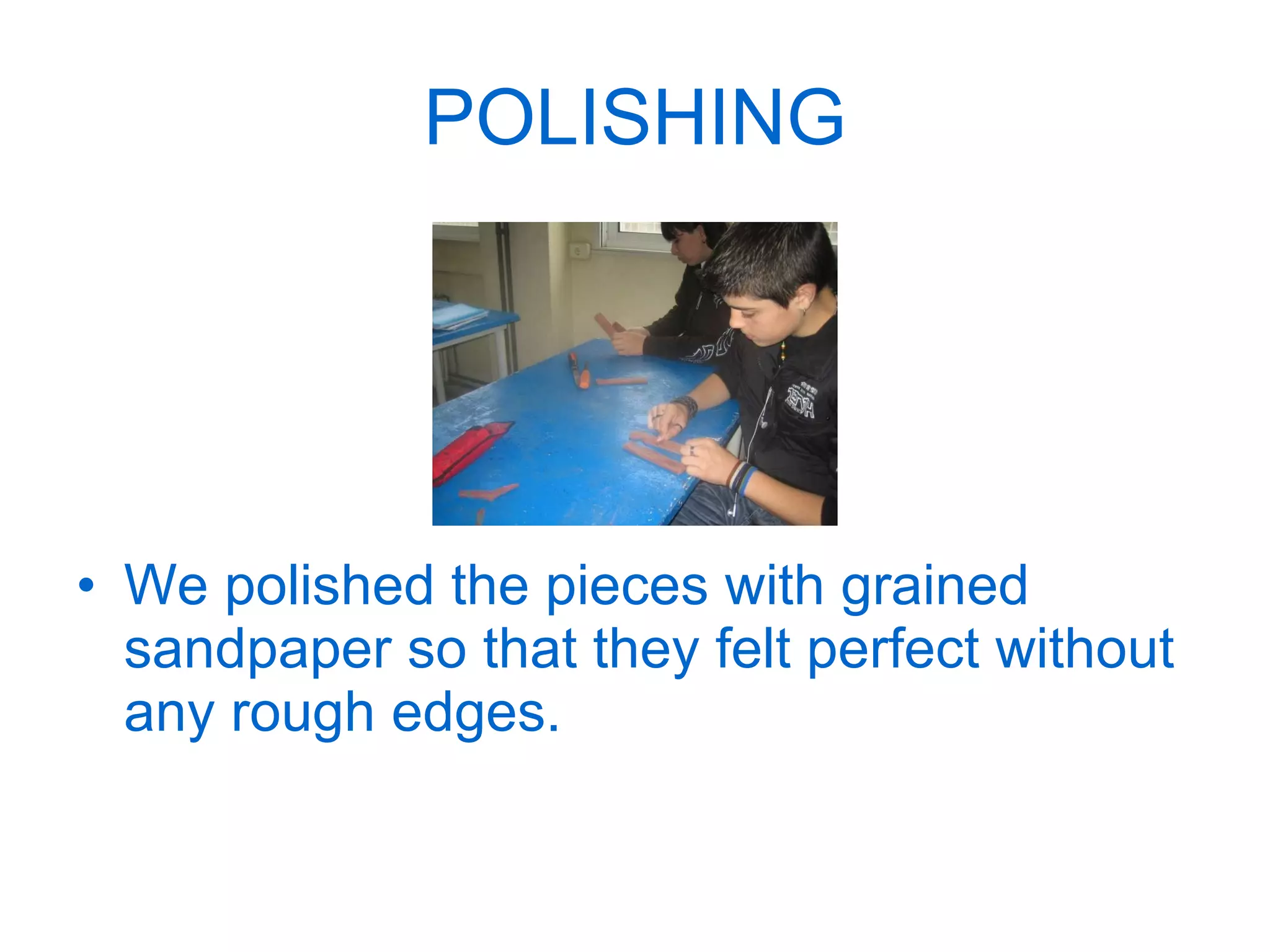
POLISHING We polished the pieces with grained sandpaper so that they felt perfect without any rough edges.
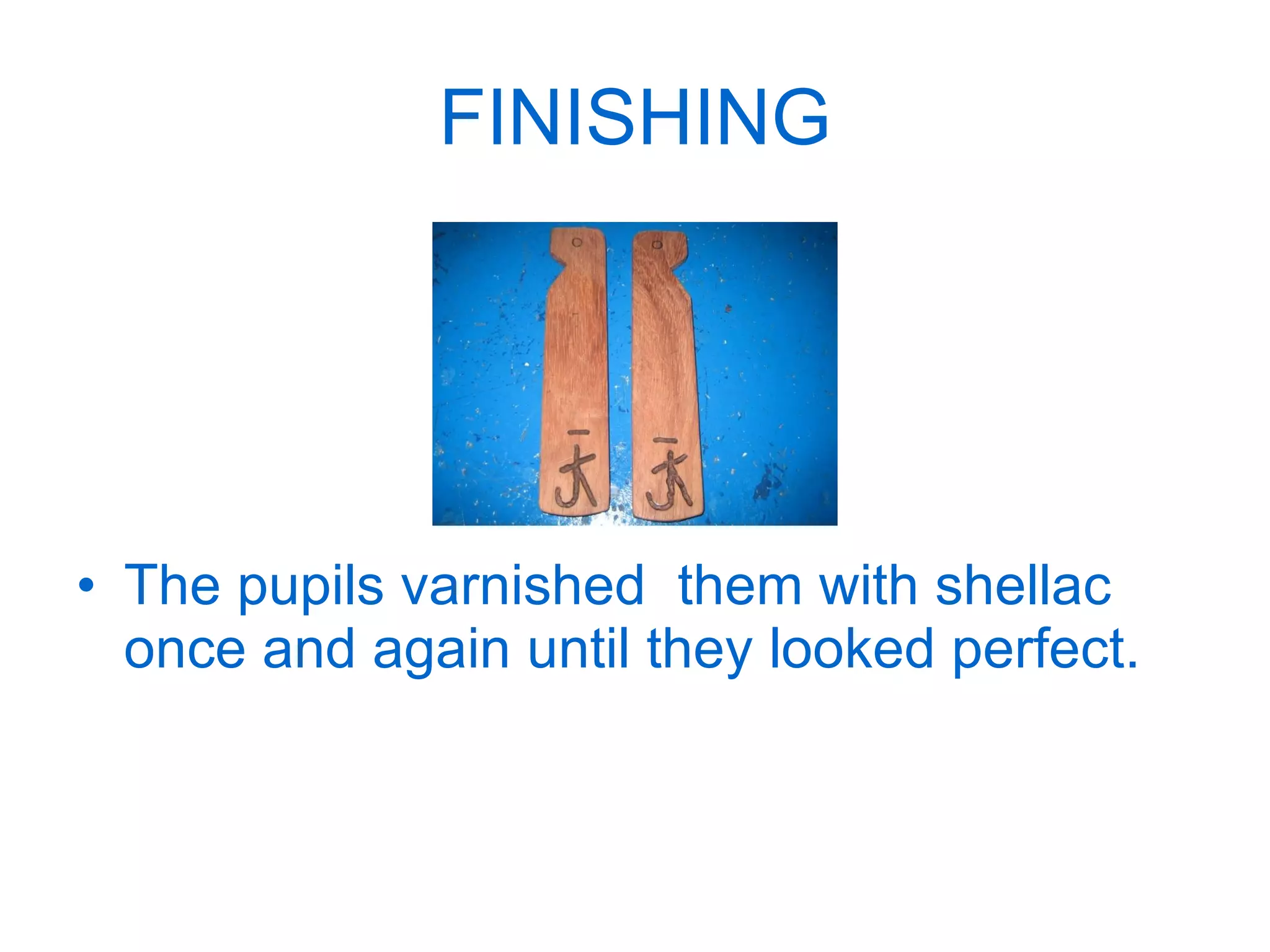
FINISHING The pupils varnished  them with shellac once and again until they looked perfect.

Making tarrañolas

  • 1.
    TRADITIONAL INSTRUMENTS: MAKINGTARRAÑOLAS 2º ESO pupils from IES San Tomé de Freixeiro
  • 2.
    Introduction Tarrañolas arepercussion instruments. They are made with two rectangular strips of wood with a small joint, which are held between the fingers in such a way that one strip keeps fixed and the other can be moved .
  • 3.
    The origins ofthe instrument are not known , they might come from The Middle East.They are featured in “Las Cantigas de Santa María”, a collection of poems in honor of the Virgin by Alfonso X.
  • 4.
    PROCESO DE CONSTRUCCIÓN1º.- Types of Wood 2º.- Processing of Wood 3º.-Stencilling 4º.- Cutting 5º.- Planing and sanding 6º.- Personalization 7º.- Polishing 8º.- Finishing
  • 5.
    TYPES OF WOODBubinga, African palo santo and wengué were chosen in order to perceive the different sounds made by them.
  • 6.
    PROCESSING OF WOODThe wood was taken to a carpenter’s shop to have it cut and ground since we don’t have the appropriate machines for processing it.
  • 7.
    STENCILLING Tarrañolas stencilswere put on pieces of wood to mark the outline.
  • 8.
    CUTTING We crosscutboth tarrañolas with a backsaw and a mitter.
  • 9.
    PLANING AND SANDINGWe shaped the tarrañolas in such a way that they were the same size and we also rabbeted them for the fingers’ perfect fit.
  • 10.
    PERSONALIZATION Some pupilsdecided to personalize the tarrañolas with their initials.
  • 11.
    POLISHING We polishedthe pieces with grained sandpaper so that they felt perfect without any rough edges.
  • 12.
    FINISHING The pupilsvarnished them with shellac once and again until they looked perfect.