Objectify
Dependency Injection for
 Scala Web Applications
Learndot


Arthur Gonigberg
 arthur.gonigberg.com
What is
                       Objectify?


- Lightweight framework that integrates with Scalatra and helps you structure your web
application
- Inspired by James Gollick’s similarly named Ruby framework -- moving Ruby apps closer to
Java
Why Objectify?


- With Scalatra services were defined all over the place with posts/gets/puts etc all in various
files -- api definition all over the place
- Shared functionality and codification was done via inheritance

-   Codify how services are structured, and how they should function
-   Central definition of all paths, policies, responders -- all in one spot
-   Single responsibility for classes/separation of concerns
-   Injection without singletons
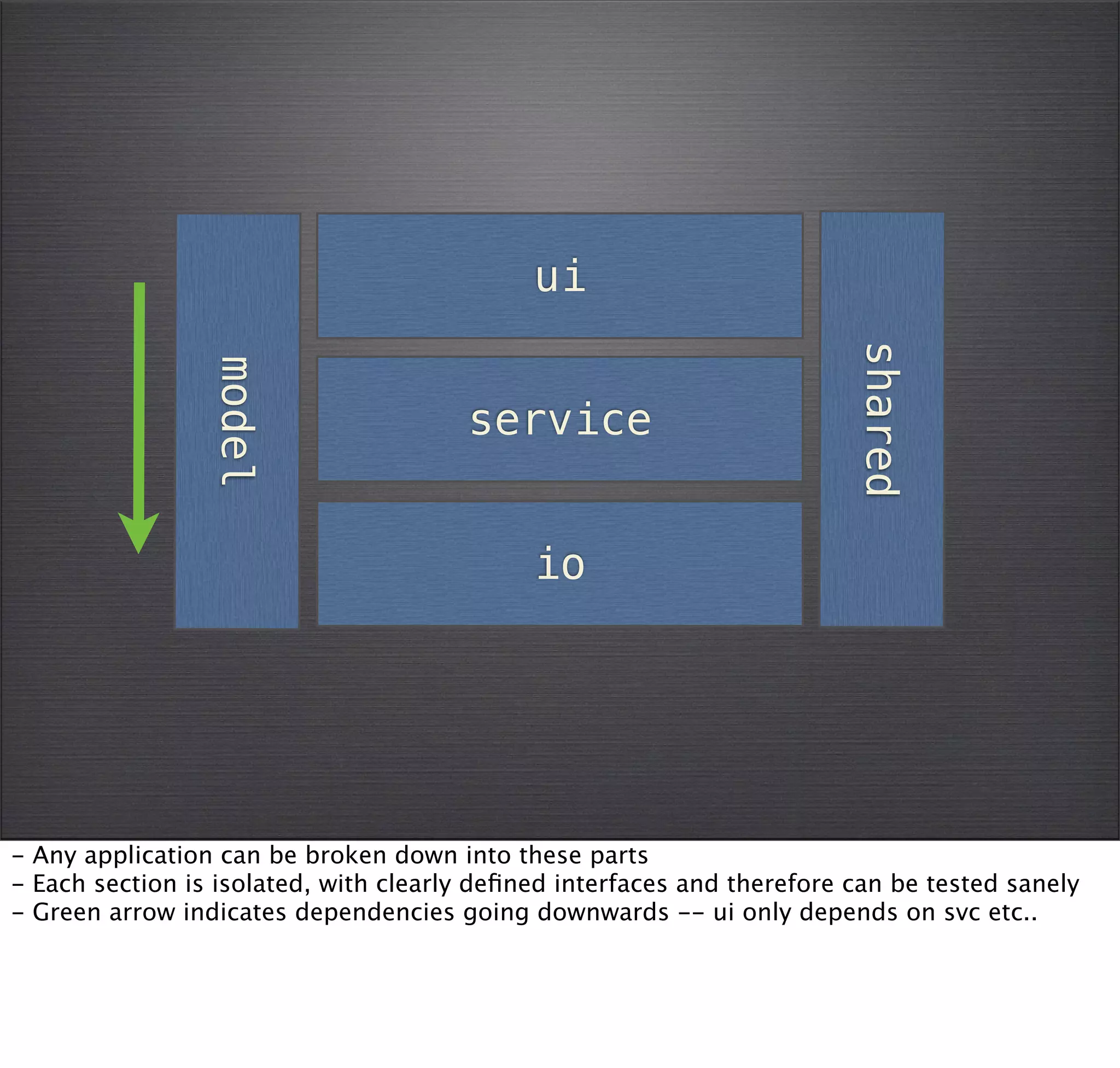
ui


                                                                         shared
                 model


                                       service


                                             io


- Any application can be broken down into these parts
- Each section is isolated, with clearly defined interfaces and therefore can be tested sanely
- Green arrow indicates dependencies going downwards -- ui only depends on svc etc..
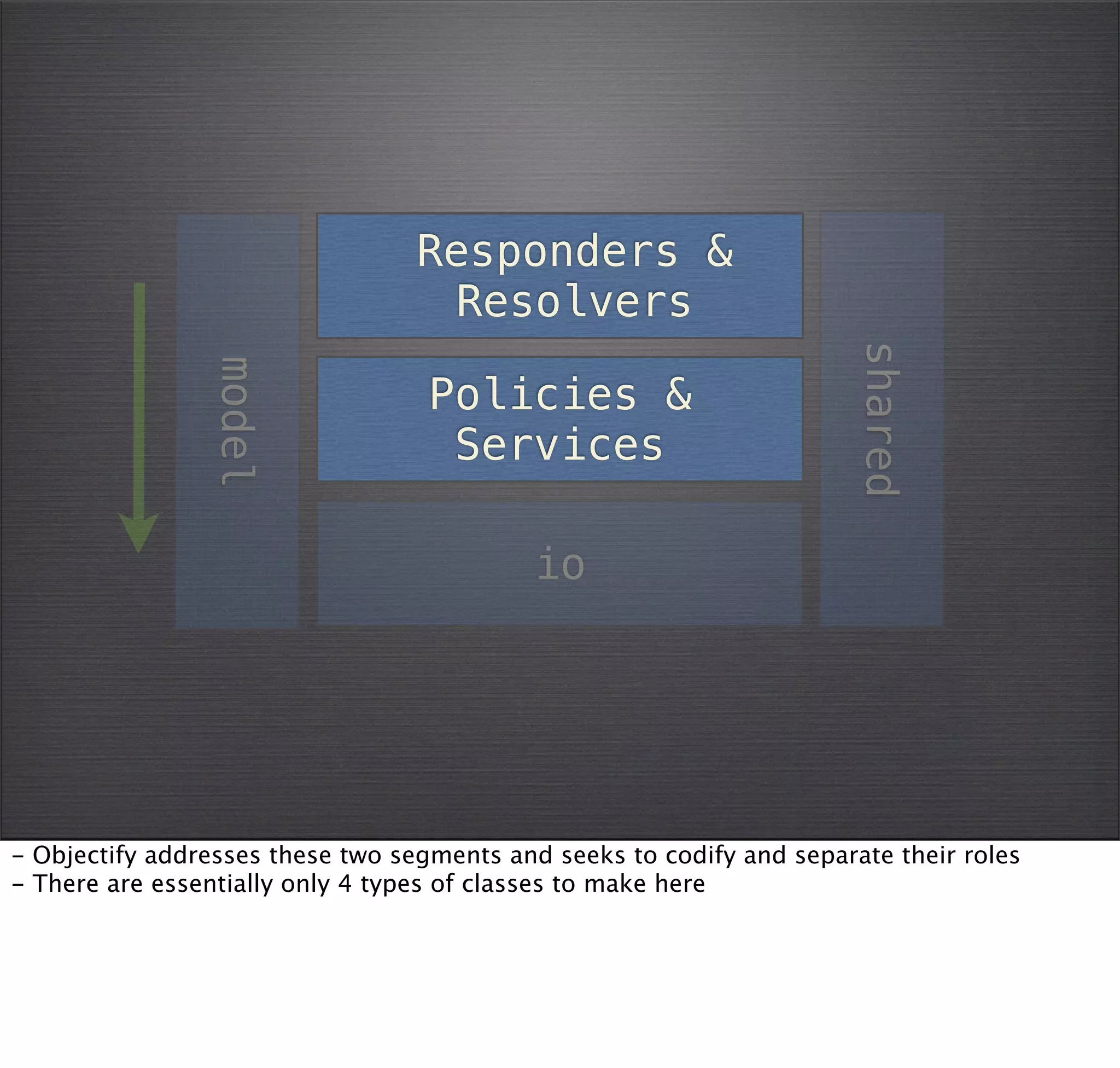
Responders &
                                   Resolvers


                                                                       shared
                model


                                   Policies &
                                    Services

                                           io


- Objectify addresses these two segments and seeks to codify and separate their roles
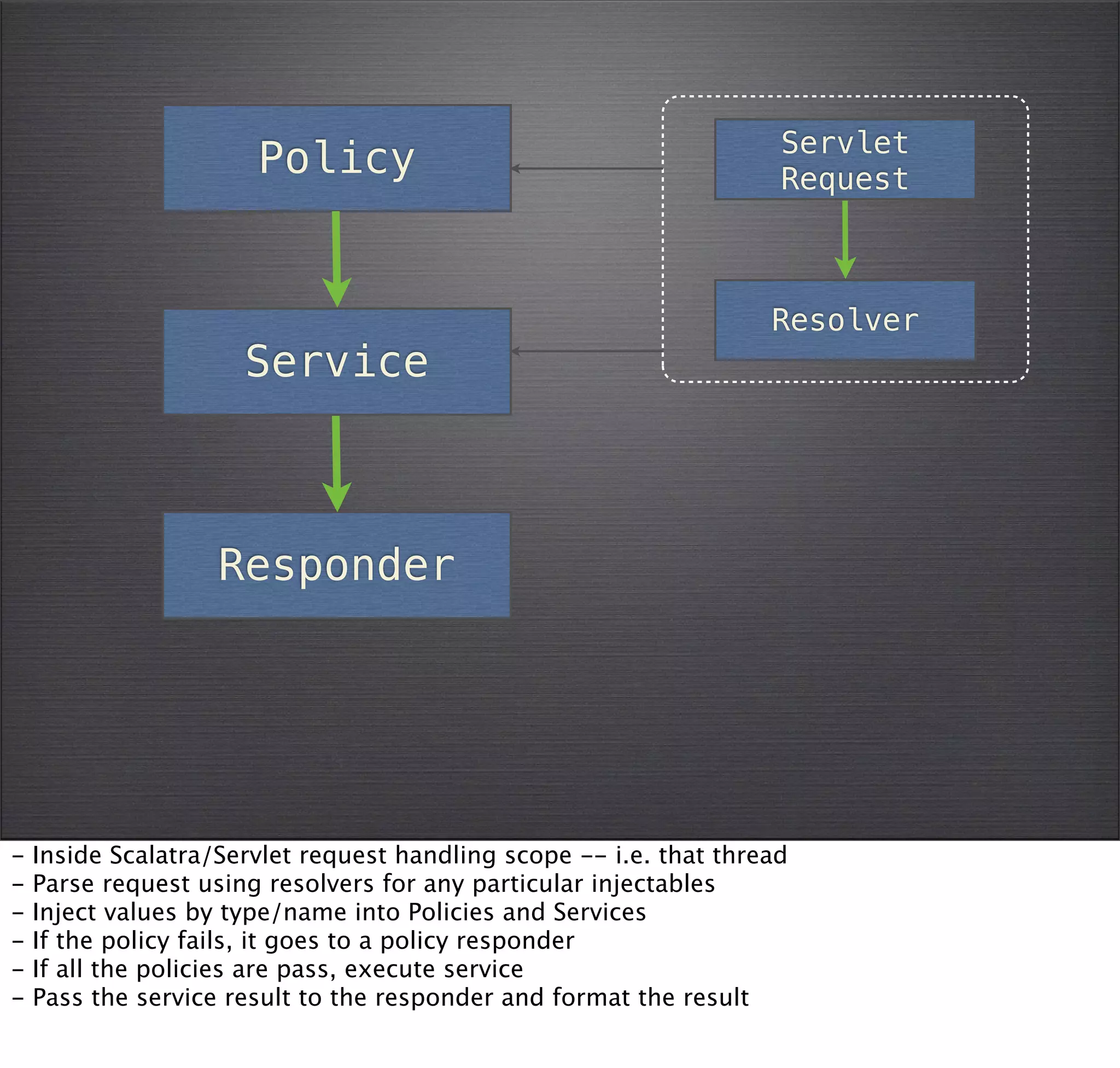
- There are essentially only 4 types of classes to make here
Servlet
                       Policy                                        Request


                                                                    Resolver
                      Service


                    Responder


-   Inside Scalatra/Servlet request handling scope -- i.e. that thread
-   Parse request using resolvers for any particular injectables
-   Inject values by type/name into Policies and Services
-   If the policy fails, it goes to a policy responder
-   If all the policies are pass, execute service
-   Pass the service result to the responder and format the result
Why Scala is
                        Awesome!


-   Scala is really well suited to this
-   Higher order functions, implicits, closures etc. are amazing for building a DSL
-   Type safety allows you to maintain sanity when building and testing
-   Ability to rely on well-tested and widely-used frameworks from Java land
So how do we use
                it?


- Some code examples ahead
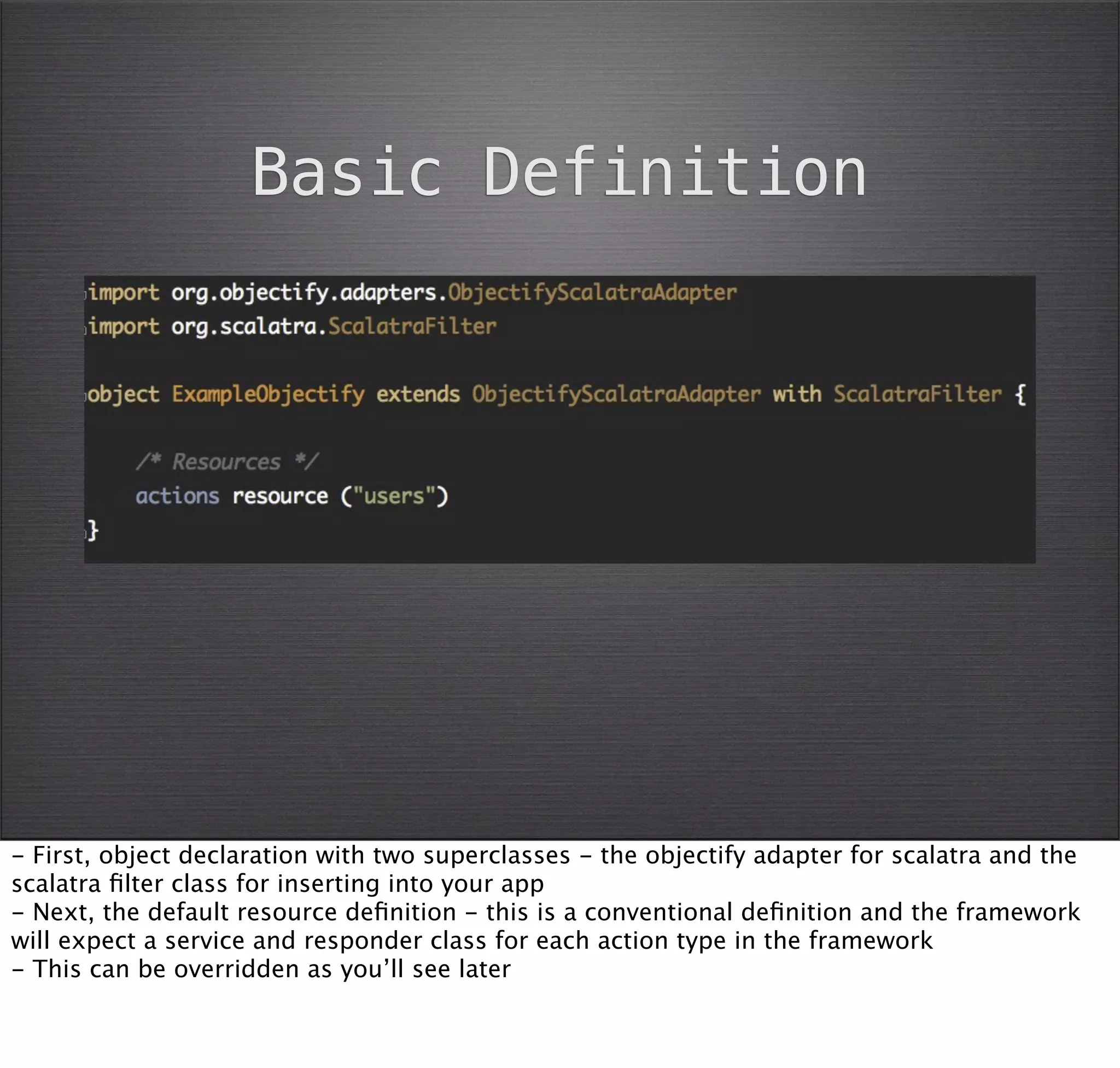
Basic Definition


- First, object declaration with two superclasses - the objectify adapter for scalatra and the
scalatra filter class for inserting into your app
- Next, the default resource definition - this is a conventional definition and the framework
will expect a service and responder class for each action type in the framework
- This can be overridden as you’ll see later
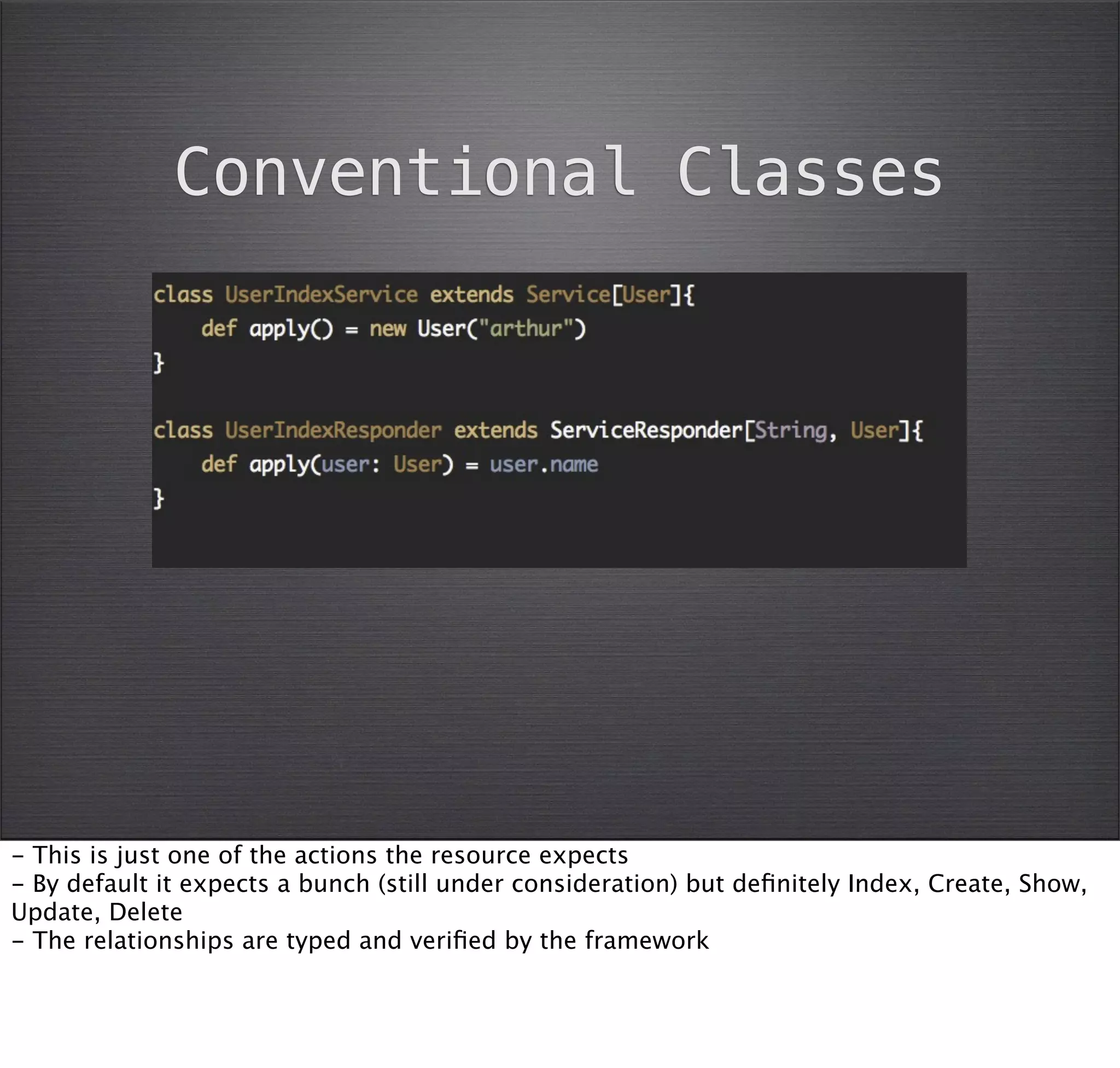
Conventional Classes


- This is just one of the actions the resource expects
- By default it expects a bunch (still under consideration) but definitely Index, Create, Show,
Update, Delete
- The relationships are typed and verified by the framework
Global policies,
 local policies
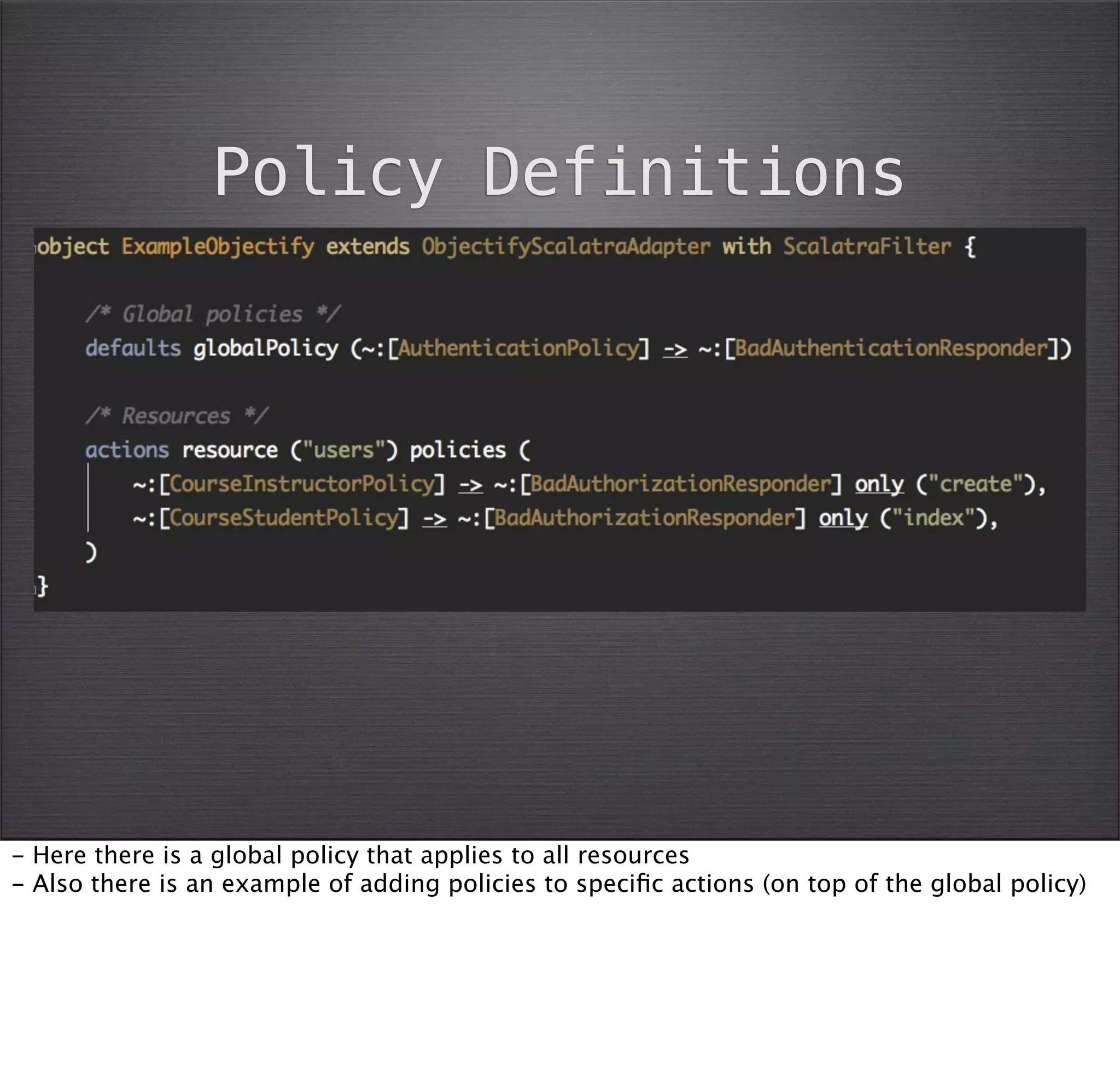
Policy Definitions


- Here there is a global policy that applies to all resources
- Also there is an example of adding policies to specific actions (on top of the global policy)
What about
                         Resolvers?


- The services and policies are pretty useless without access to the request in some capacity
- Reusable, single-responsibility classes that can be chained
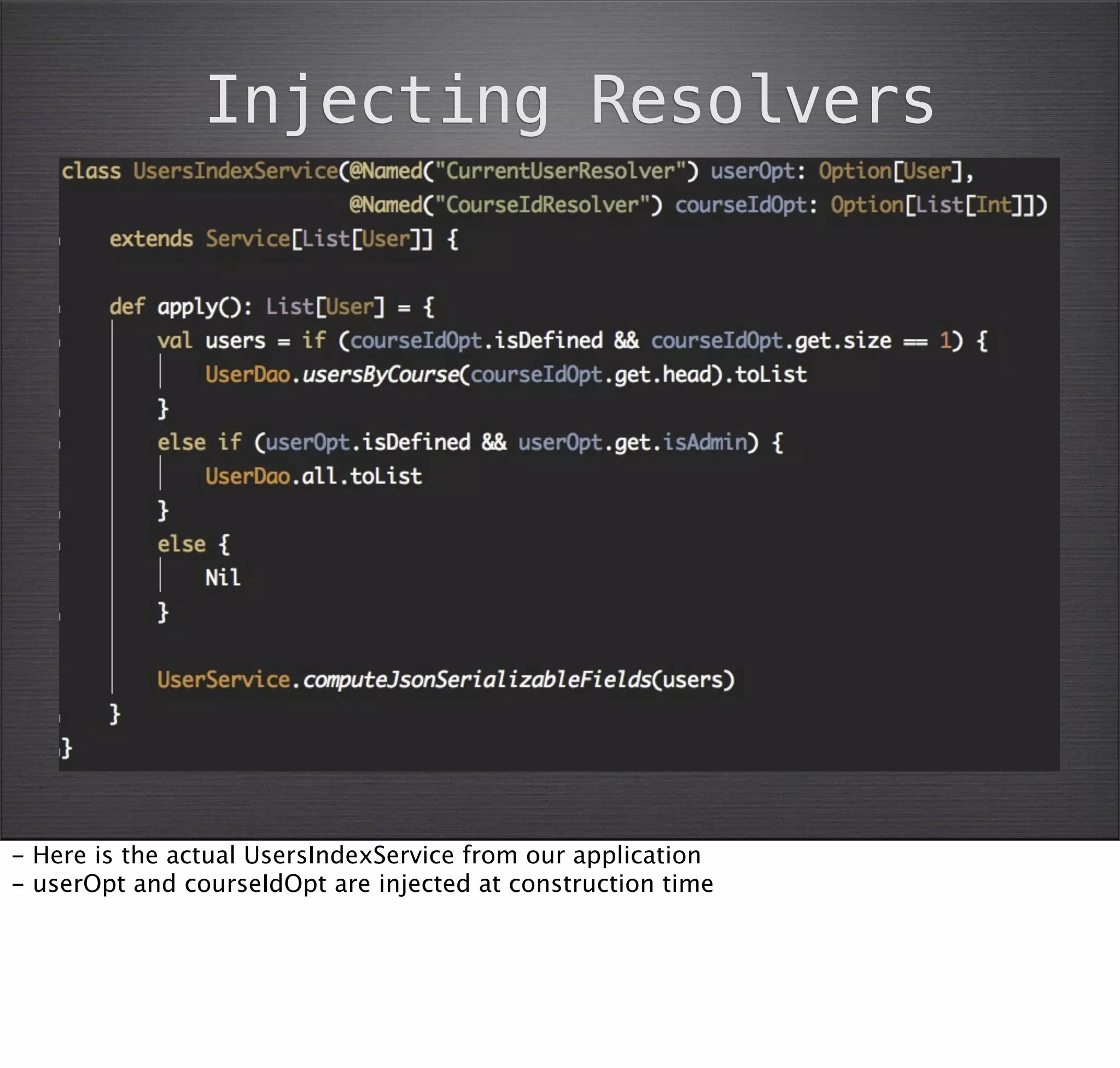
Injecting Resolvers


- Here is the actual UsersIndexService from our application
- userOpt and courseIdOpt are injected at construction time
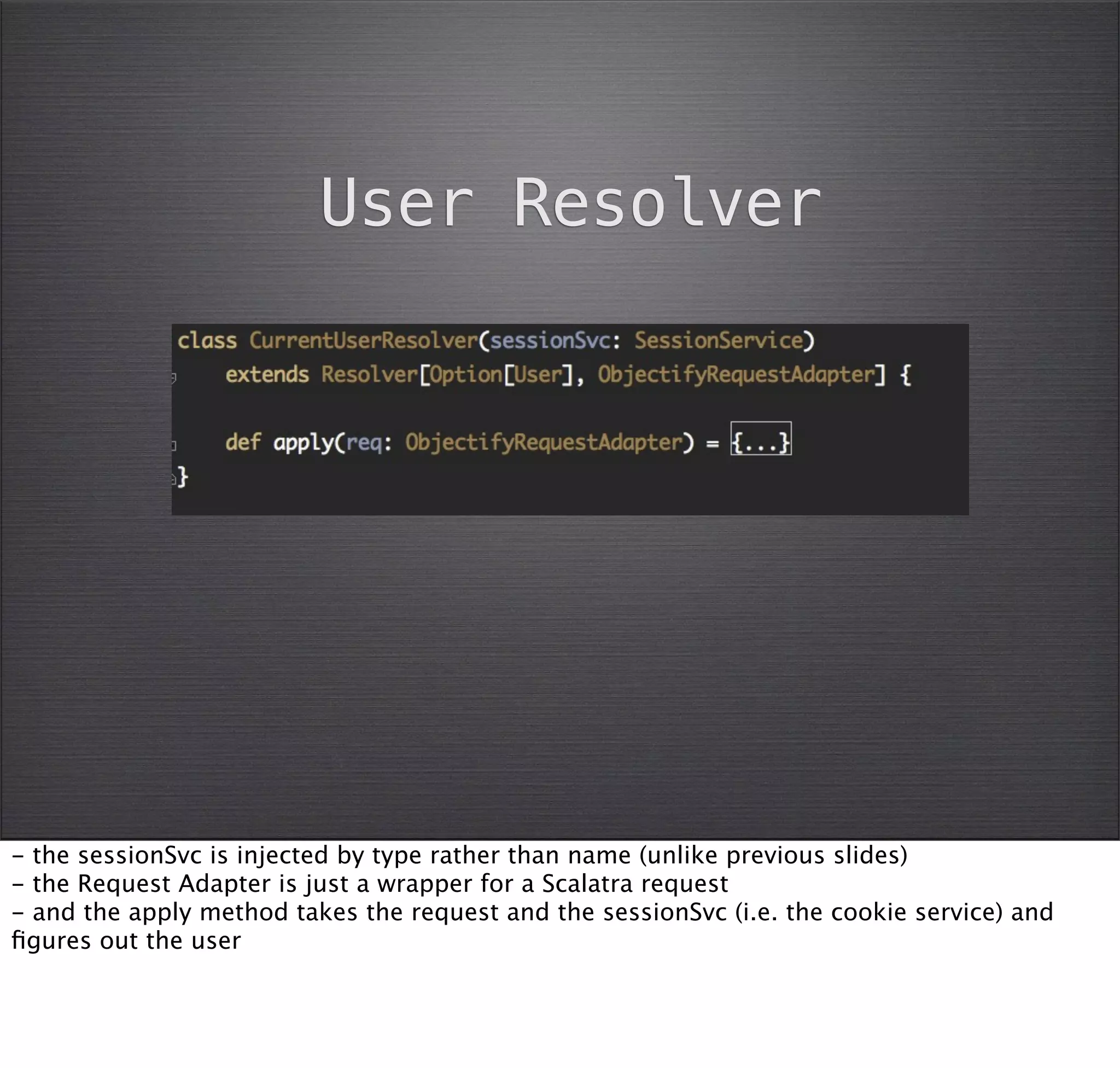
User Resolver


- the sessionSvc is injected by type rather than name (unlike previous slides)
- the Request Adapter is just a wrapper for a Scalatra request
- and the apply method takes the request and the sessionSvc (i.e. the cookie service) and
figures out the user
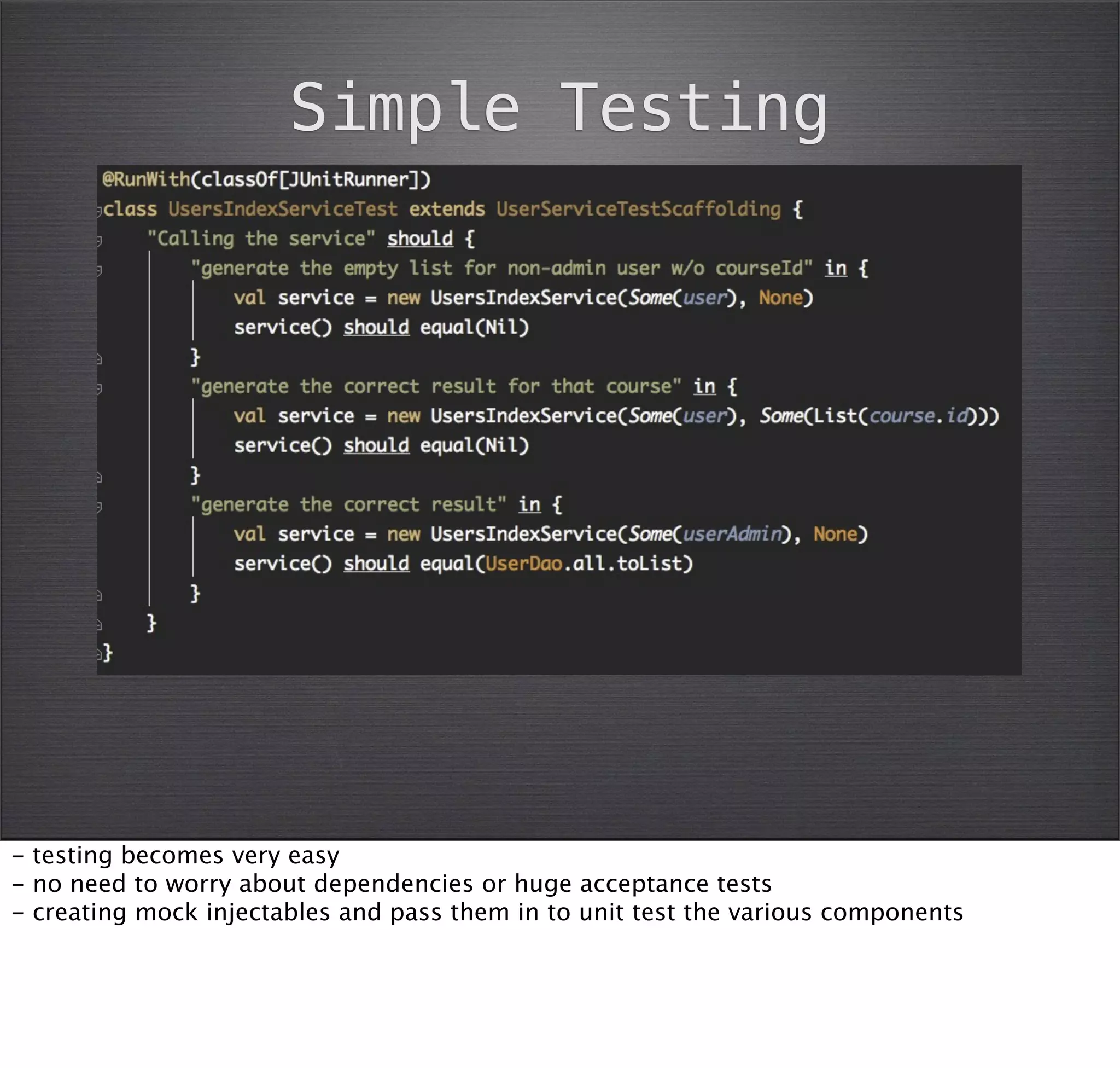
Simple Testing


- testing becomes very easy
- no need to worry about dependencies or huge acceptance tests
- creating mock injectables and pass them in to unit test the various components
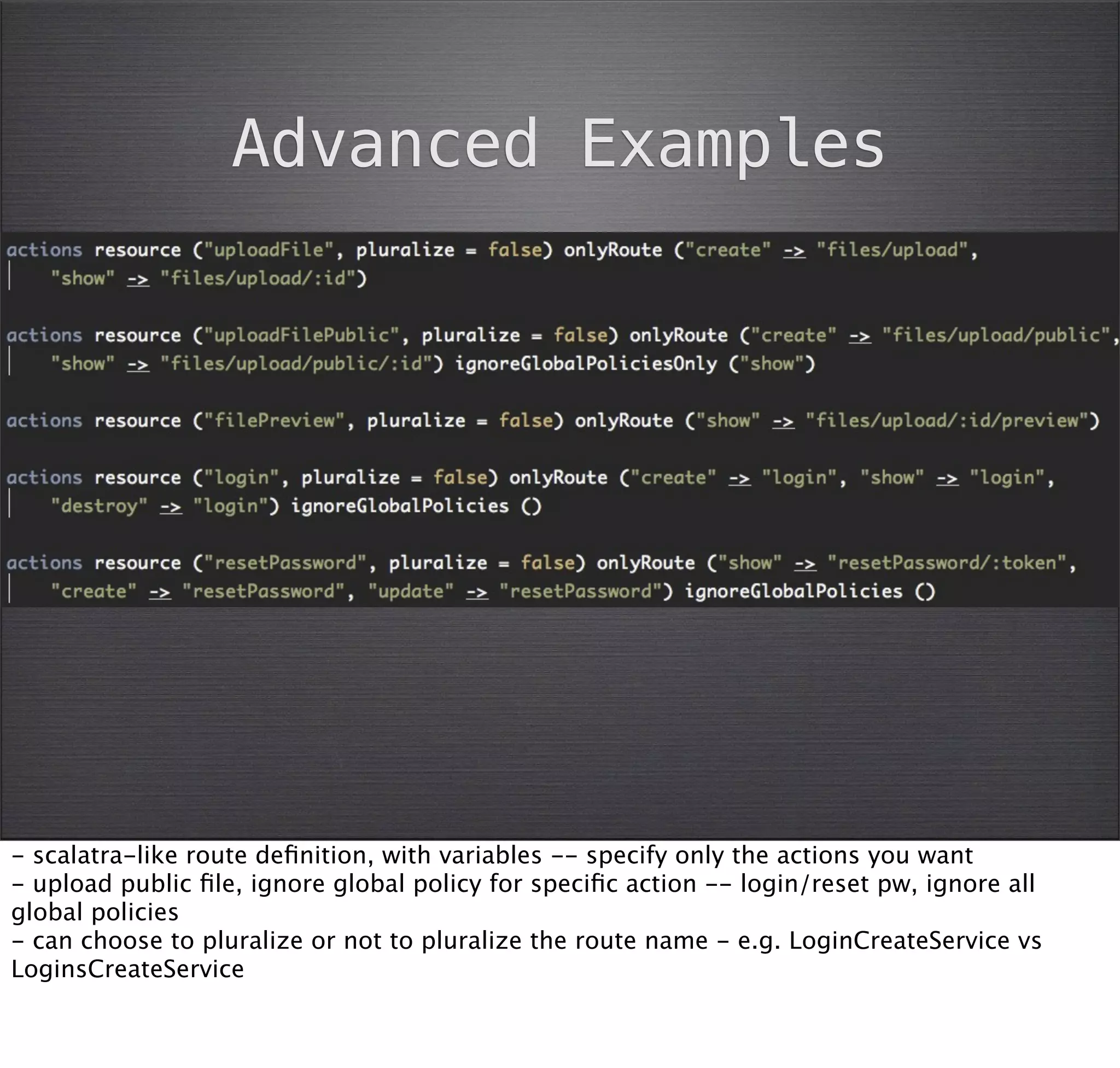
Advanced Examples


- scalatra-like route definition, with variables -- specify only the actions you want
- upload public file, ignore global policy for specific action -- login/reset pw, ignore all
global policies
- can choose to pluralize or not to pluralize the route name - e.g. LoginCreateService vs
LoginsCreateService
Benefits of
                          Objectify


- how does it help us?
Simplicity


- it’s a very, very small framework -- less than 1000 lines of code
- there’s no magic, it doesn’t do anything complicated
Conciseness


- using the Scala DSL makes configuration very concise and easy but also allows for
complexity and customization at almost every level
- despite having more classes, they will all be very short and manageable
- small focused classes, means small focused tests
Simpler, shorter
                tests


- biggest advantage so far has been the dramatic speed increase in running the tests
- the unit tests are self explanatory and concise
Better
             Maintainability


- this is probably the biggest benefit
- since all the services, responders and policies are mostly decoupled you can be sure that
making a change in one service will not affect any other services -- most of the logic you
need to tweak will be in these services
- conventional structure promotes consistency so there is no guess work in figuring out the
behaviour of an API call
Going Forward


- first goal is open sourcing the framework
- this requires much better documentation and some code comments/cleanup
- no stability issues but also hasn’t been tested under a huge load -- need more production
usage
- support other web frameworks
Questions?


maybe demo if people are interested

Scala meetup - Objectify

  • 1.
  • 2.
  • 3.
    What is Objectify? - Lightweight framework that integrates with Scalatra and helps you structure your web application - Inspired by James Gollick’s similarly named Ruby framework -- moving Ruby apps closer to Java
  • 4.
    Why Objectify? - WithScalatra services were defined all over the place with posts/gets/puts etc all in various files -- api definition all over the place - Shared functionality and codification was done via inheritance - Codify how services are structured, and how they should function - Central definition of all paths, policies, responders -- all in one spot - Single responsibility for classes/separation of concerns - Injection without singletons
  • 5.
    ui shared model service io - Any application can be broken down into these parts - Each section is isolated, with clearly defined interfaces and therefore can be tested sanely - Green arrow indicates dependencies going downwards -- ui only depends on svc etc..
  • 6.
    Responders & Resolvers shared model Policies & Services io - Objectify addresses these two segments and seeks to codify and separate their roles - There are essentially only 4 types of classes to make here
  • 7.
    Servlet Policy Request Resolver Service Responder - Inside Scalatra/Servlet request handling scope -- i.e. that thread - Parse request using resolvers for any particular injectables - Inject values by type/name into Policies and Services - If the policy fails, it goes to a policy responder - If all the policies are pass, execute service - Pass the service result to the responder and format the result
  • 8.
    Why Scala is Awesome! - Scala is really well suited to this - Higher order functions, implicits, closures etc. are amazing for building a DSL - Type safety allows you to maintain sanity when building and testing - Ability to rely on well-tested and widely-used frameworks from Java land
  • 9.
    So how dowe use it? - Some code examples ahead
  • 10.
    Basic Definition - First,object declaration with two superclasses - the objectify adapter for scalatra and the scalatra filter class for inserting into your app - Next, the default resource definition - this is a conventional definition and the framework will expect a service and responder class for each action type in the framework - This can be overridden as you’ll see later
  • 11.
    Conventional Classes - Thisis just one of the actions the resource expects - By default it expects a bunch (still under consideration) but definitely Index, Create, Show, Update, Delete - The relationships are typed and verified by the framework
  • 12.
  • 13.
    Policy Definitions - Herethere is a global policy that applies to all resources - Also there is an example of adding policies to specific actions (on top of the global policy)
  • 14.
    What about Resolvers? - The services and policies are pretty useless without access to the request in some capacity - Reusable, single-responsibility classes that can be chained
  • 15.
    Injecting Resolvers - Hereis the actual UsersIndexService from our application - userOpt and courseIdOpt are injected at construction time
  • 16.
    User Resolver - thesessionSvc is injected by type rather than name (unlike previous slides) - the Request Adapter is just a wrapper for a Scalatra request - and the apply method takes the request and the sessionSvc (i.e. the cookie service) and figures out the user
  • 17.
    Simple Testing - testingbecomes very easy - no need to worry about dependencies or huge acceptance tests - creating mock injectables and pass them in to unit test the various components
  • 18.
    Advanced Examples - scalatra-likeroute definition, with variables -- specify only the actions you want - upload public file, ignore global policy for specific action -- login/reset pw, ignore all global policies - can choose to pluralize or not to pluralize the route name - e.g. LoginCreateService vs LoginsCreateService
  • 19.
    Benefits of Objectify - how does it help us?
  • 20.
    Simplicity - it’s avery, very small framework -- less than 1000 lines of code - there’s no magic, it doesn’t do anything complicated
  • 21.
    Conciseness - using theScala DSL makes configuration very concise and easy but also allows for complexity and customization at almost every level - despite having more classes, they will all be very short and manageable - small focused classes, means small focused tests
  • 22.
    Simpler, shorter tests - biggest advantage so far has been the dramatic speed increase in running the tests - the unit tests are self explanatory and concise
  • 23.
    Better Maintainability - this is probably the biggest benefit - since all the services, responders and policies are mostly decoupled you can be sure that making a change in one service will not affect any other services -- most of the logic you need to tweak will be in these services - conventional structure promotes consistency so there is no guess work in figuring out the behaviour of an API call
  • 24.
    Going Forward - firstgoal is open sourcing the framework - this requires much better documentation and some code comments/cleanup - no stability issues but also hasn’t been tested under a huge load -- need more production usage - support other web frameworks
  • 25.
    Questions? maybe demo ifpeople are interested