Predicting Winning Price in Real
Time Bidding with Censored Data
Wush Wu#, Mi-Yen Yeh*, and Ming-Syan Chen#
#: Dept. of Electrical Engineering, National Taiwan University
*:Inst. of Information Science, Academia Sinica
Outline
● Introduction of Real-Time Bidding (RTB)
● Introduction of Winning Price
● Modeling Winning Price
● Experiments
● Conclusions
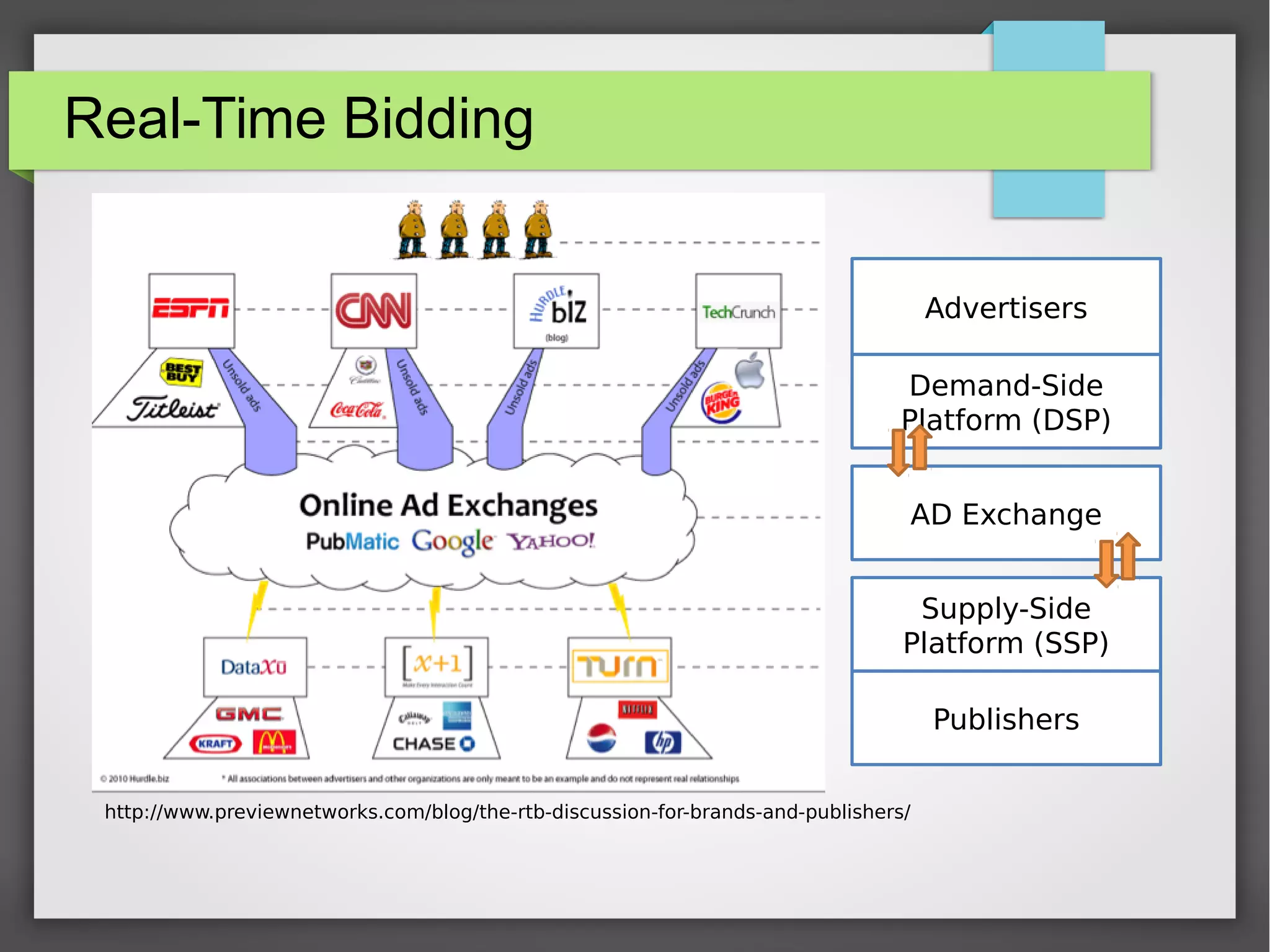
Real-Time Bidding
http://www.previewnetworks.com/blog/the-rtb-discussion-for-brands-and-publishers/
Advertisers
Publishers
Demand-Side
Platform (DSP)
Supply-Side
Platform (SSP)
AD Exchange
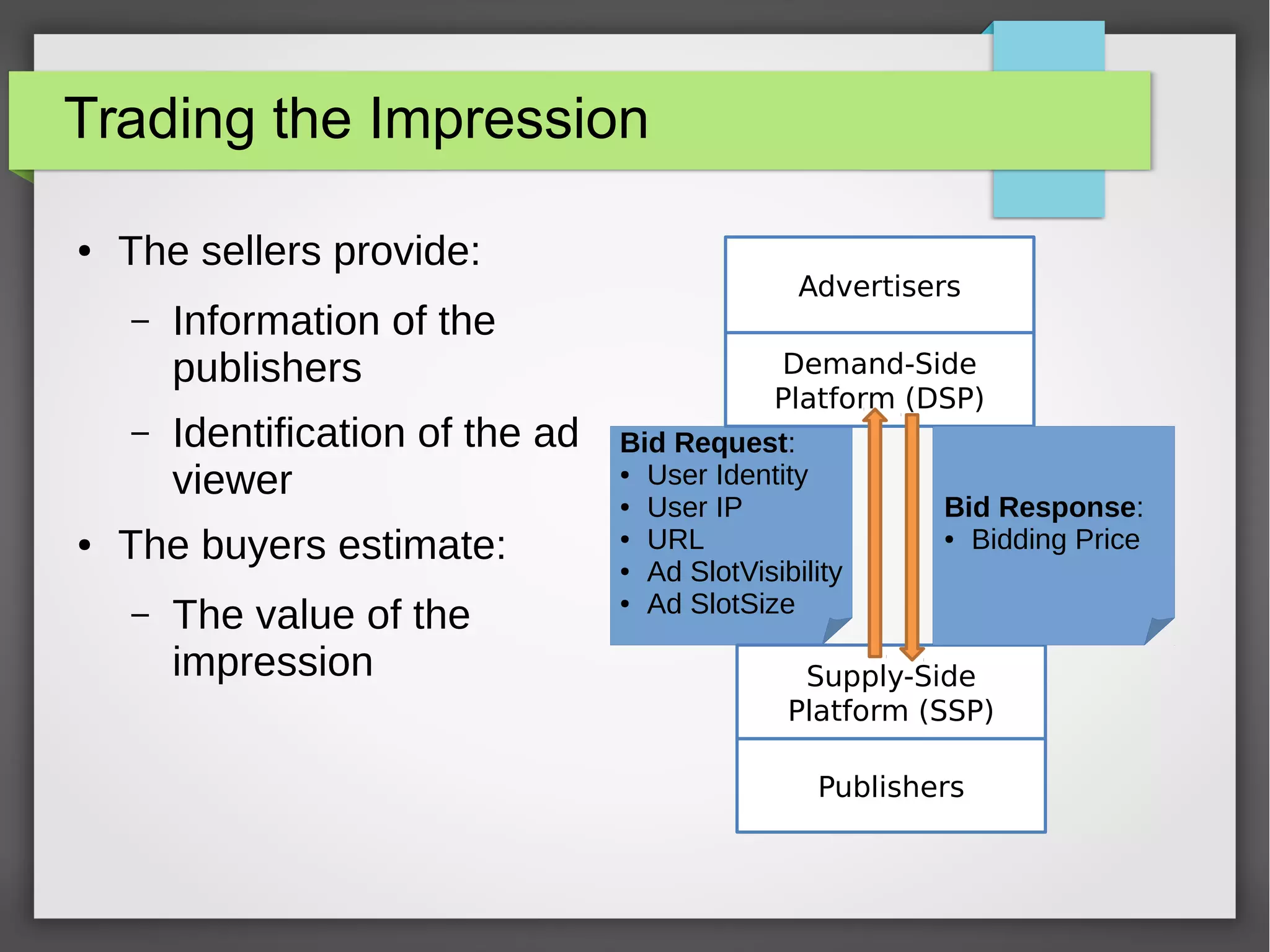
Trading the Impression
● The sellers provide:
– Information of the
publishers
– Identification of the ad
viewer
● The buyers estimate:
– The value of the
impression
Bid Request:
● User Identity
● User IP
● URL
● Ad SlotVisibility
● Ad SlotSize
Advertisers
Publishers
Demand-Side
Platform (DSP)
Supply-Side
Platform (SSP)
Bid Response:
● Bidding Price
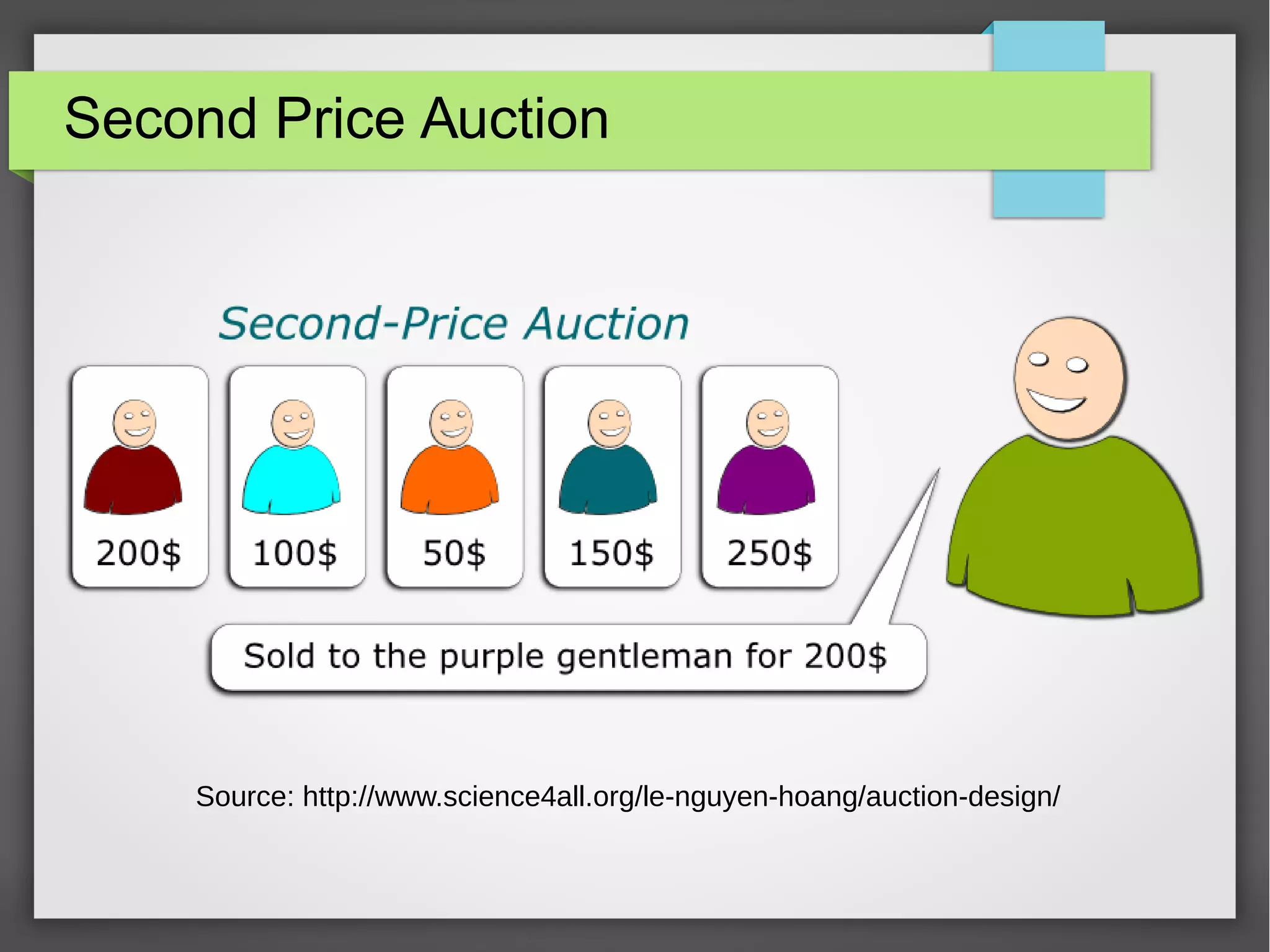
Second Price Auction
Source: http://www.science4all.org/le-nguyen-hoang/auction-design/
Outline
● Introduction of Real-Time Bidding (RTB)
● Introduction of Winning Price
● Modeling Winning Price
● Experiments
● Conclusions
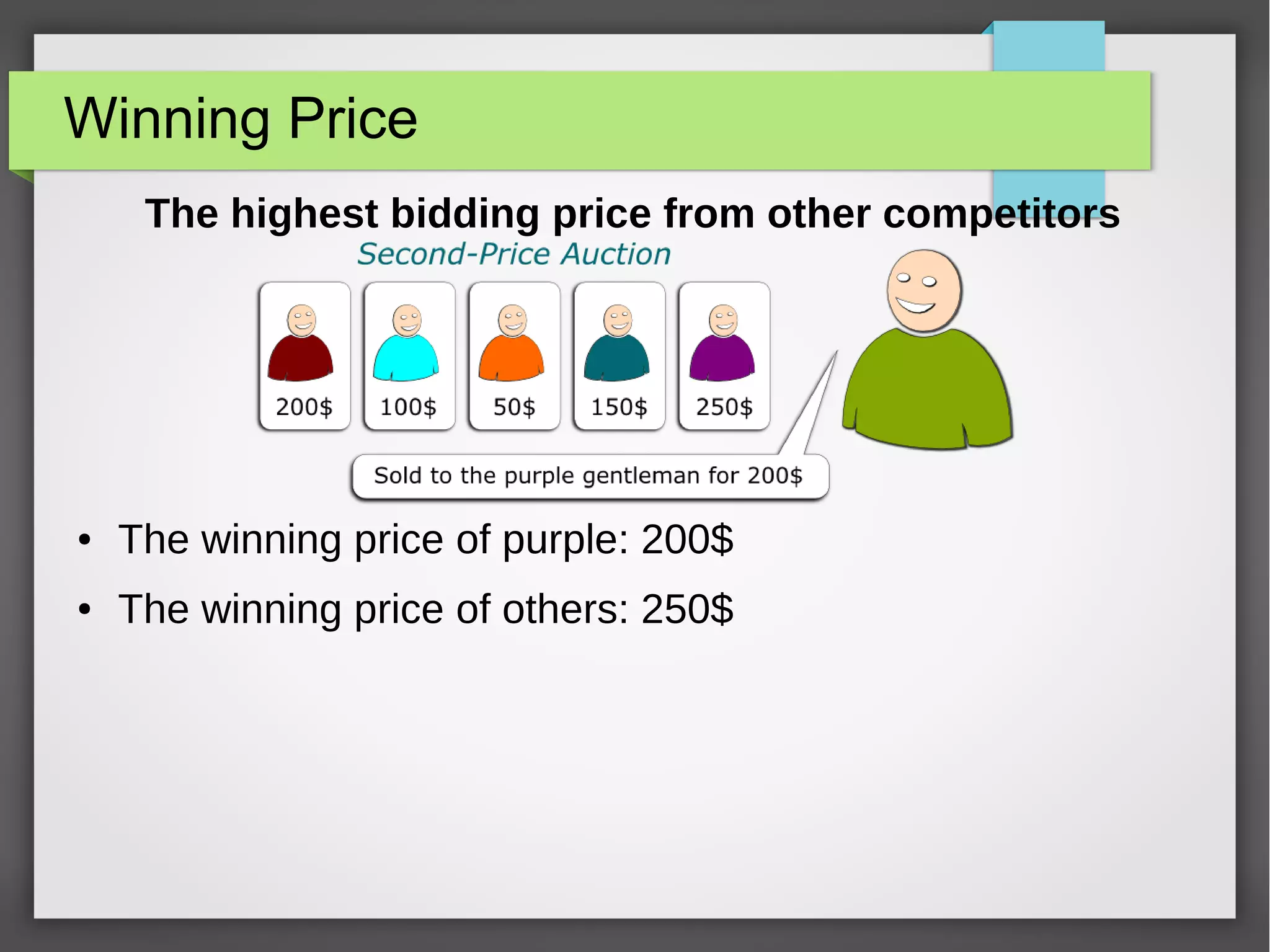
Winning Price
The highest bidding price from other competitors
● The winning price of purple: 200$
● The winning price of others: 250$
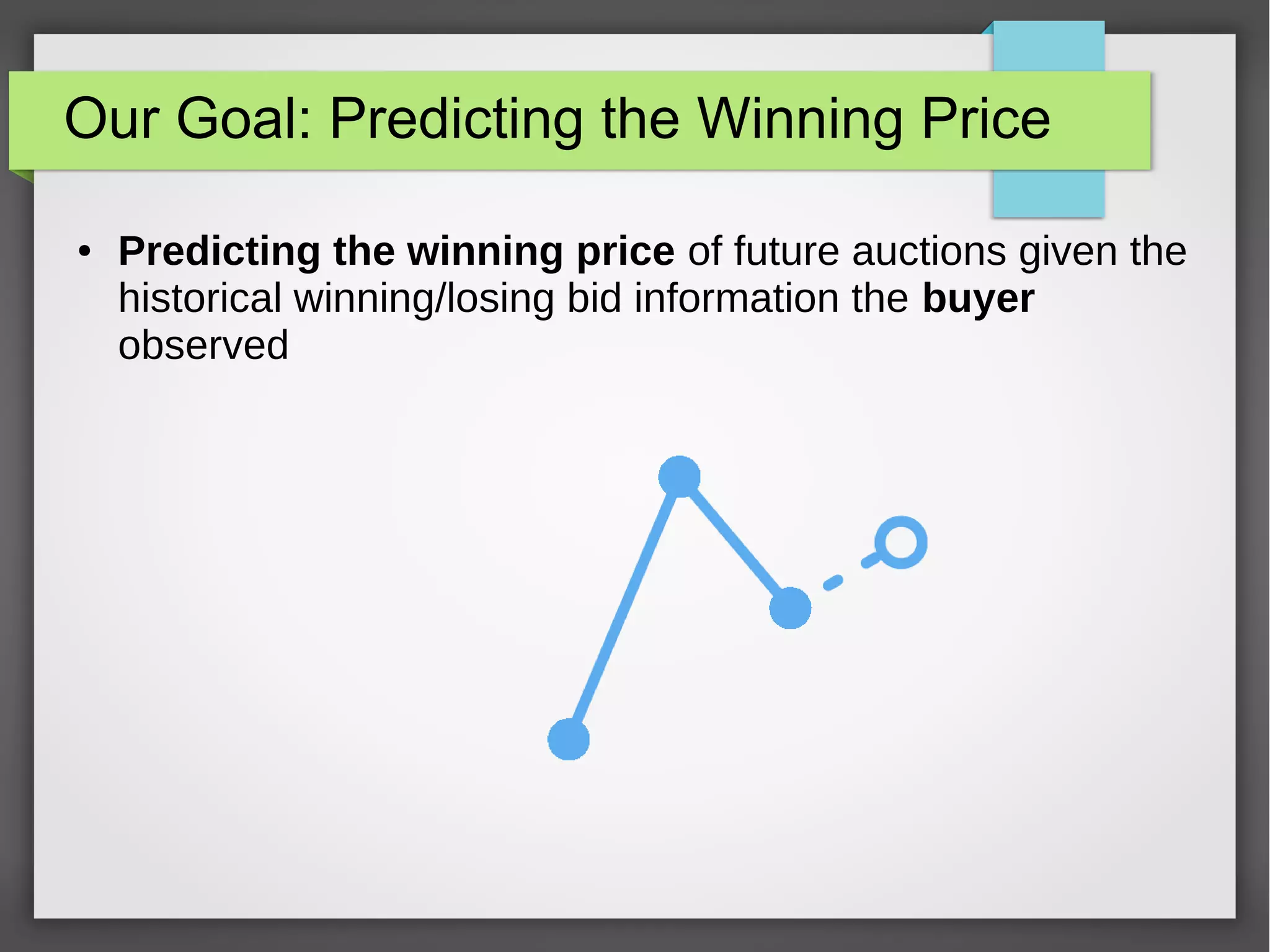
Our Goal: Predicting the Winning Price
● Predicting the winning price of future auctions given the
historical winning/losing bid information the buyer
observed
The importance of the Winning Price
● The winning price represents:
– the cost of the impression
– the value of the impression to the competitors
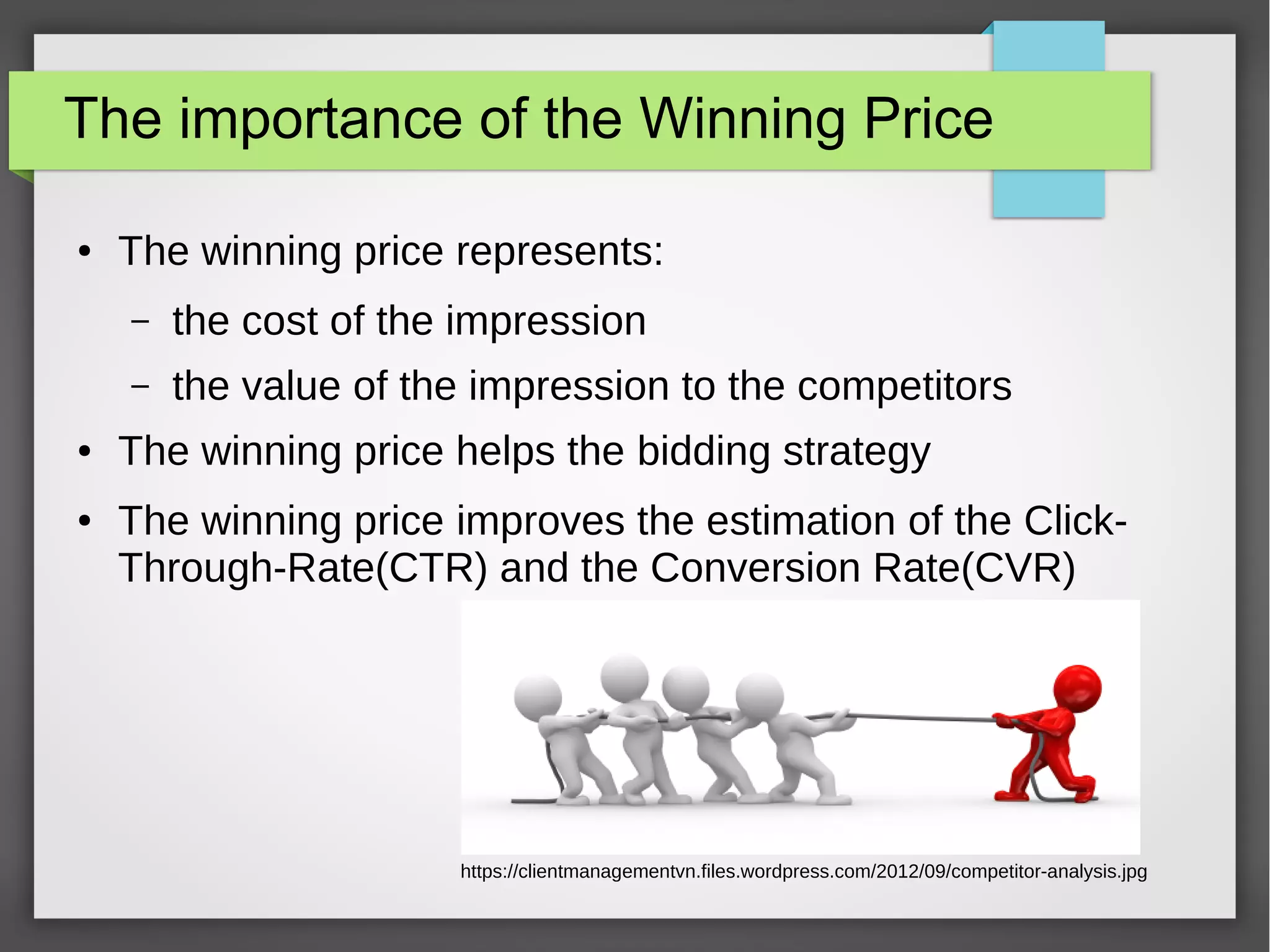
● The winning price helps the bidding strategy
● The winning price improves the estimation of the Click-
Through-Rate(CTR) and the Conversion Rate(CVR)
https://clientmanagementvn.files.wordpress.com/2012/09/competitor-analysis.jpg
Challenge of Predicting the Winning Price
● In second price auction, the winning price is unobserved if
the bid is lost.
● No previous work on predicting winning price on buyer
side
– Cui et al. modeled the winning price with the mixture-of-
log-normal distribution on various targeting attributes.
Outline
● Introduction of Real-Time Bidding (RTB)
● Introduction of Winning Price
● Modeling Winning Price
● Experiments
● Conclusions
Observation
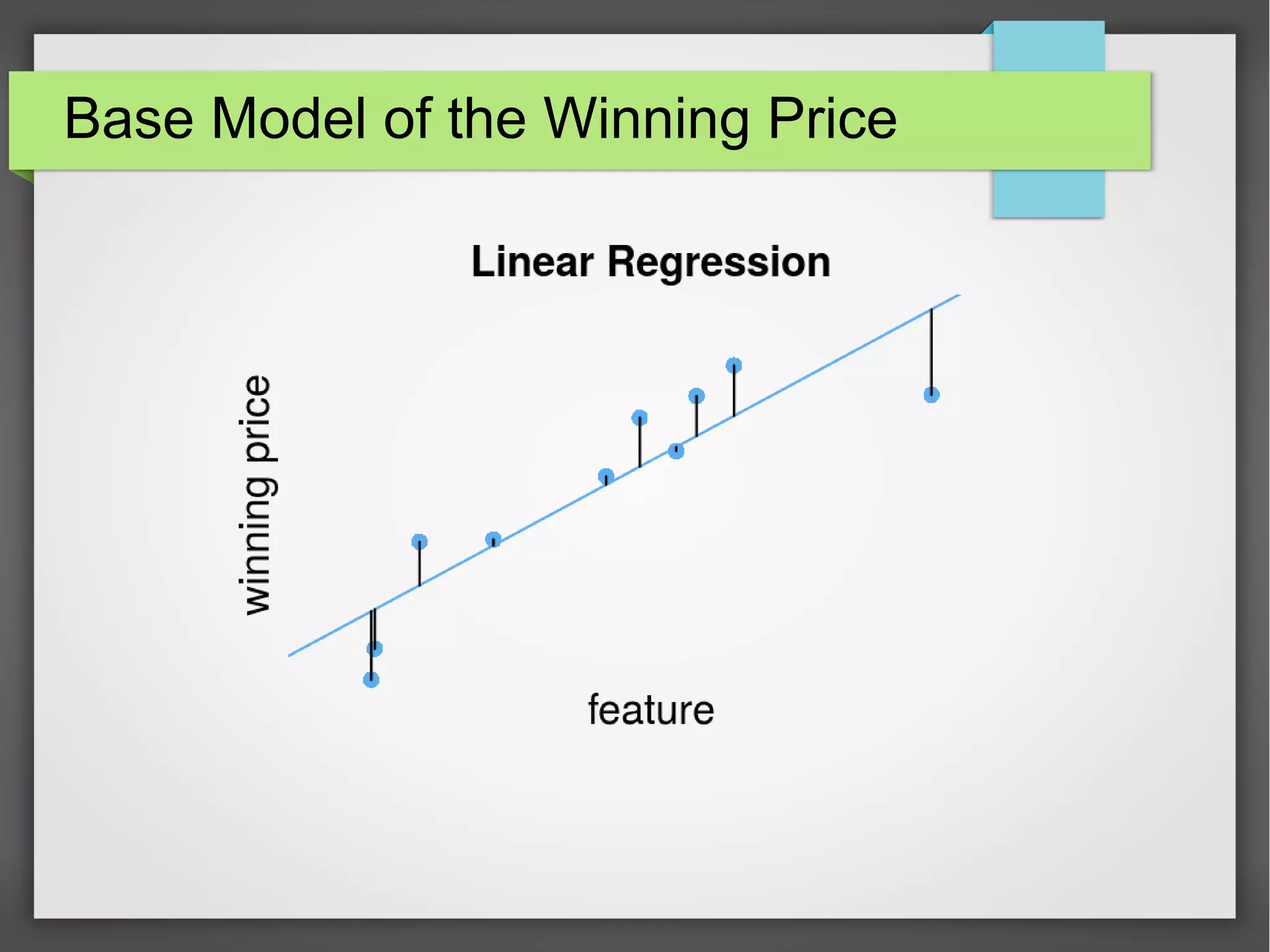
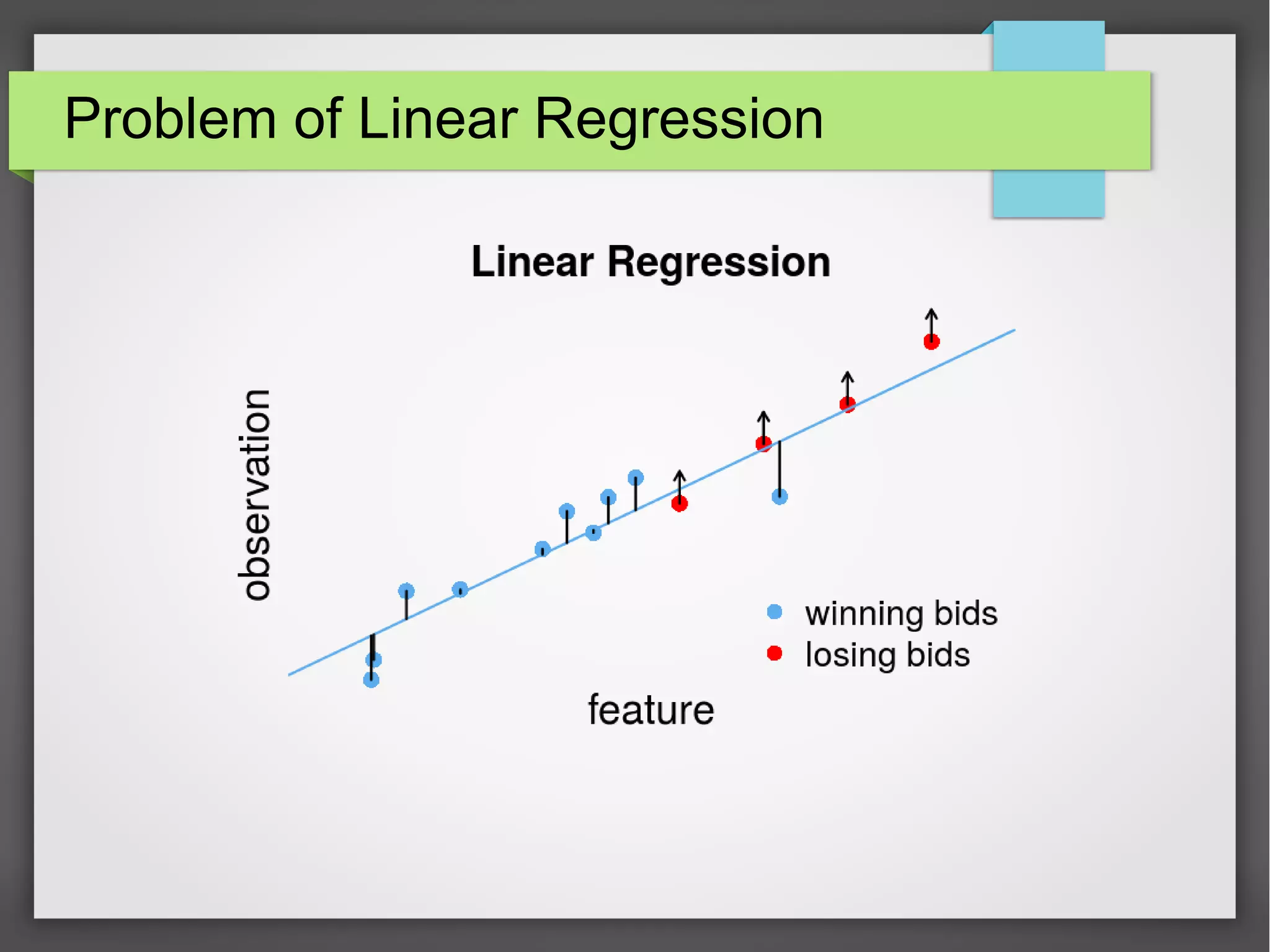
● For losing bids, The bidding price is the lower bound of
the winning price.
● It is called right censored
Base Model of the Winning Price
Problem of Linear Regression
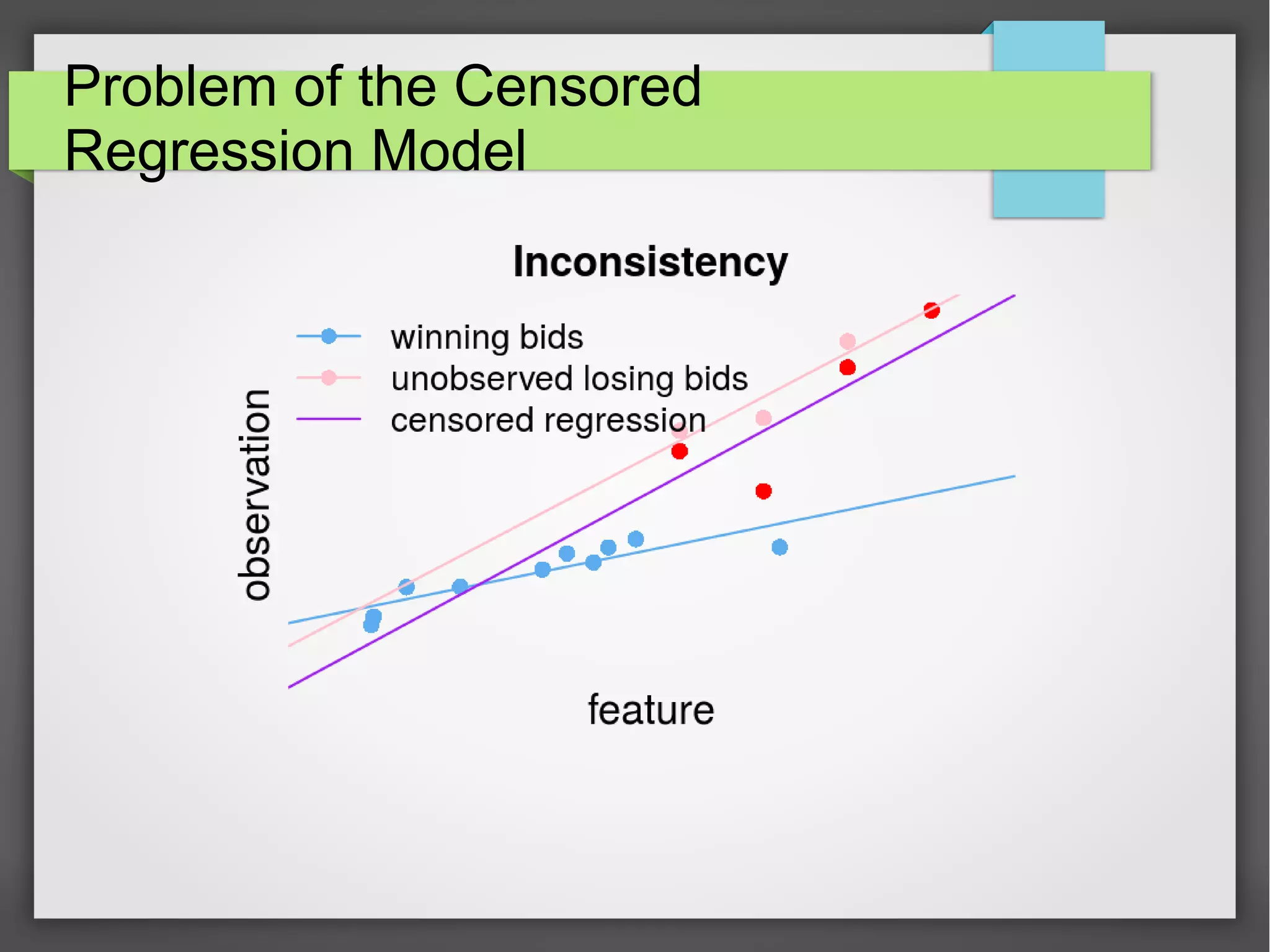
Problem of the Censored
Regression Model
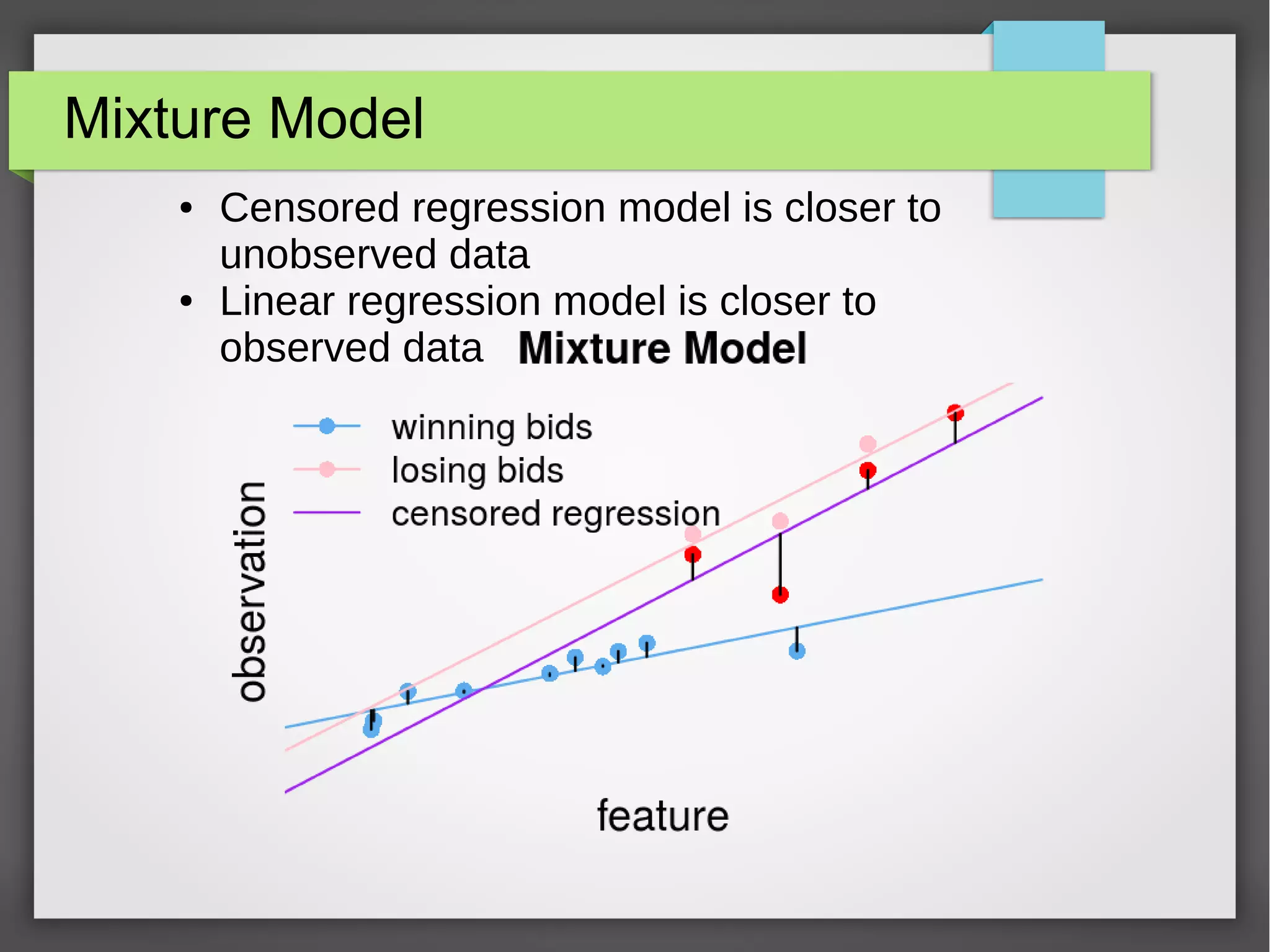
Mixture Model
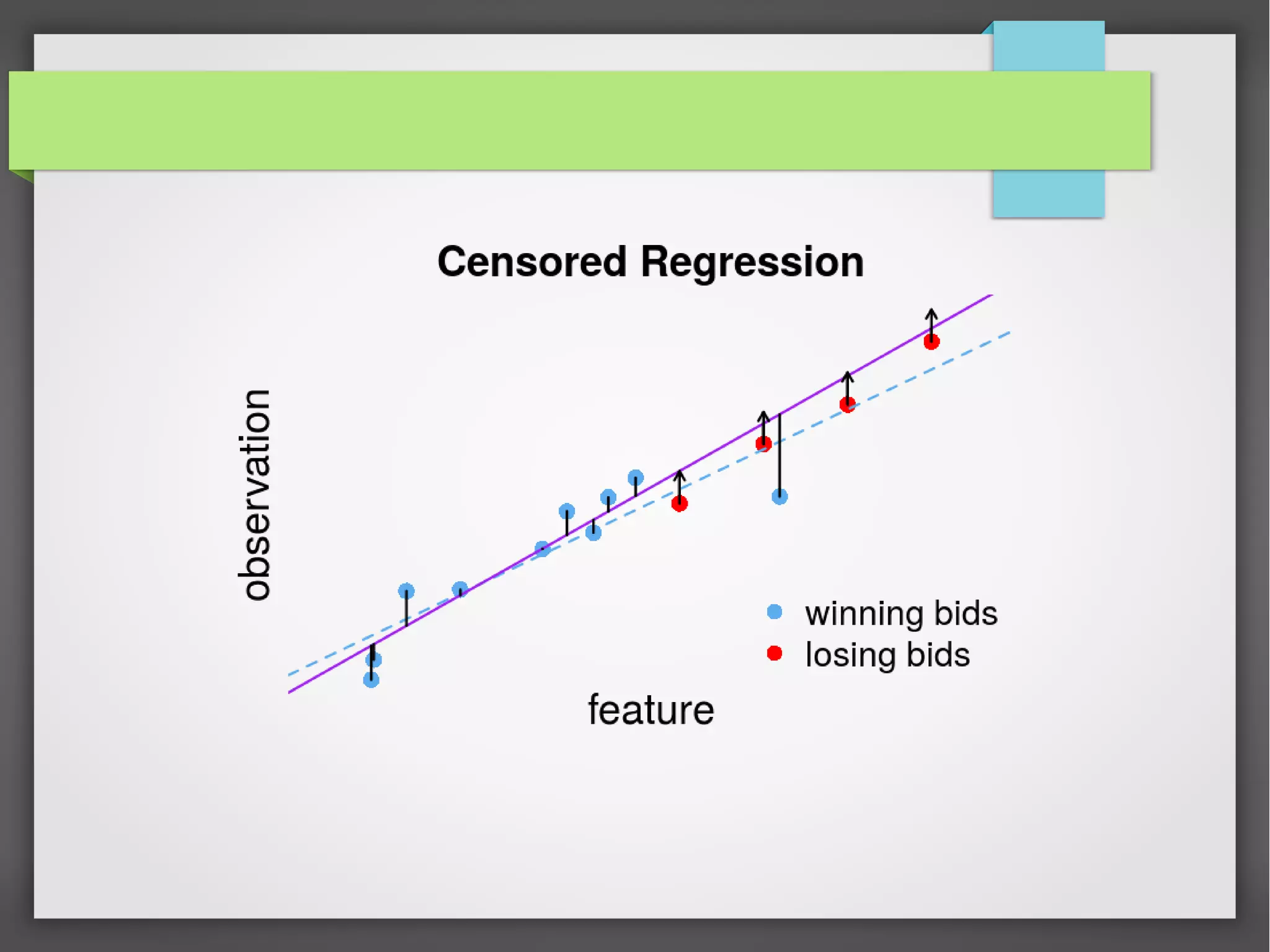
● Censored regression model is closer to
unobserved data
● Linear regression model is closer to
observed data
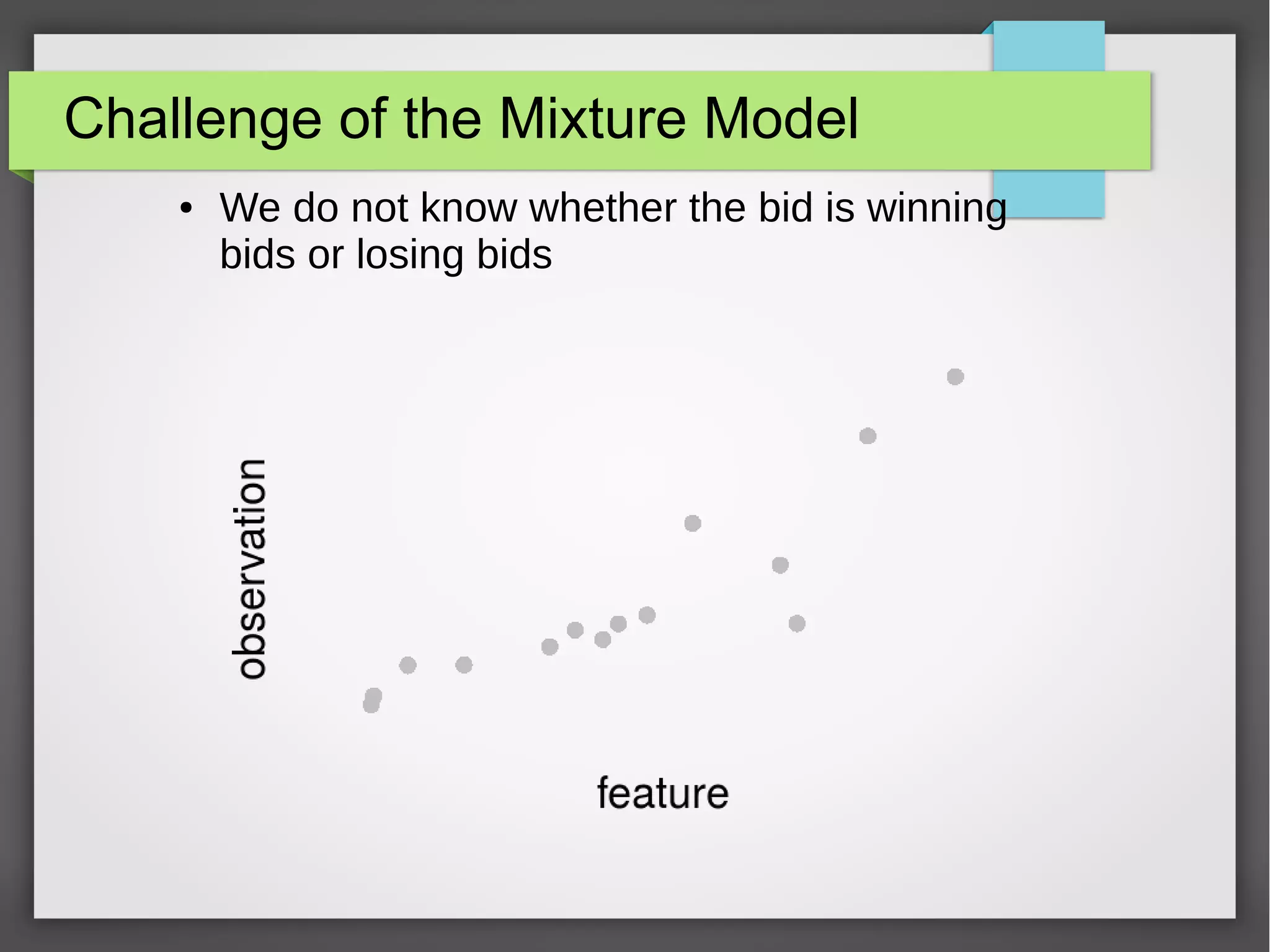
Challenge of the Mixture Model
● We do not know whether the bid is winning
bids or losing bids
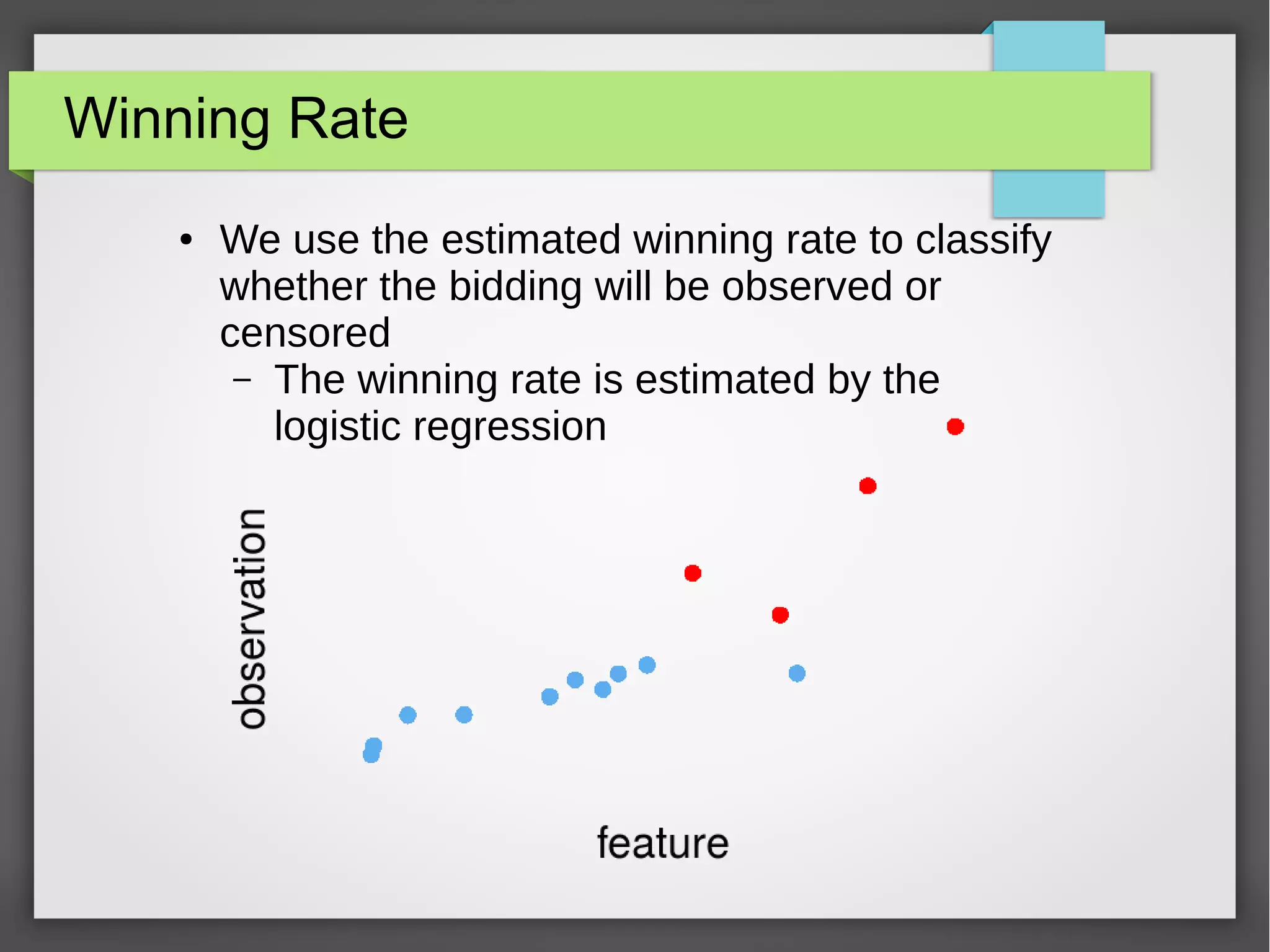
Winning Rate
● We use the estimated winning rate to classify
whether the bidding will be observed or
censored
– The winning rate is estimated by the
logistic regression
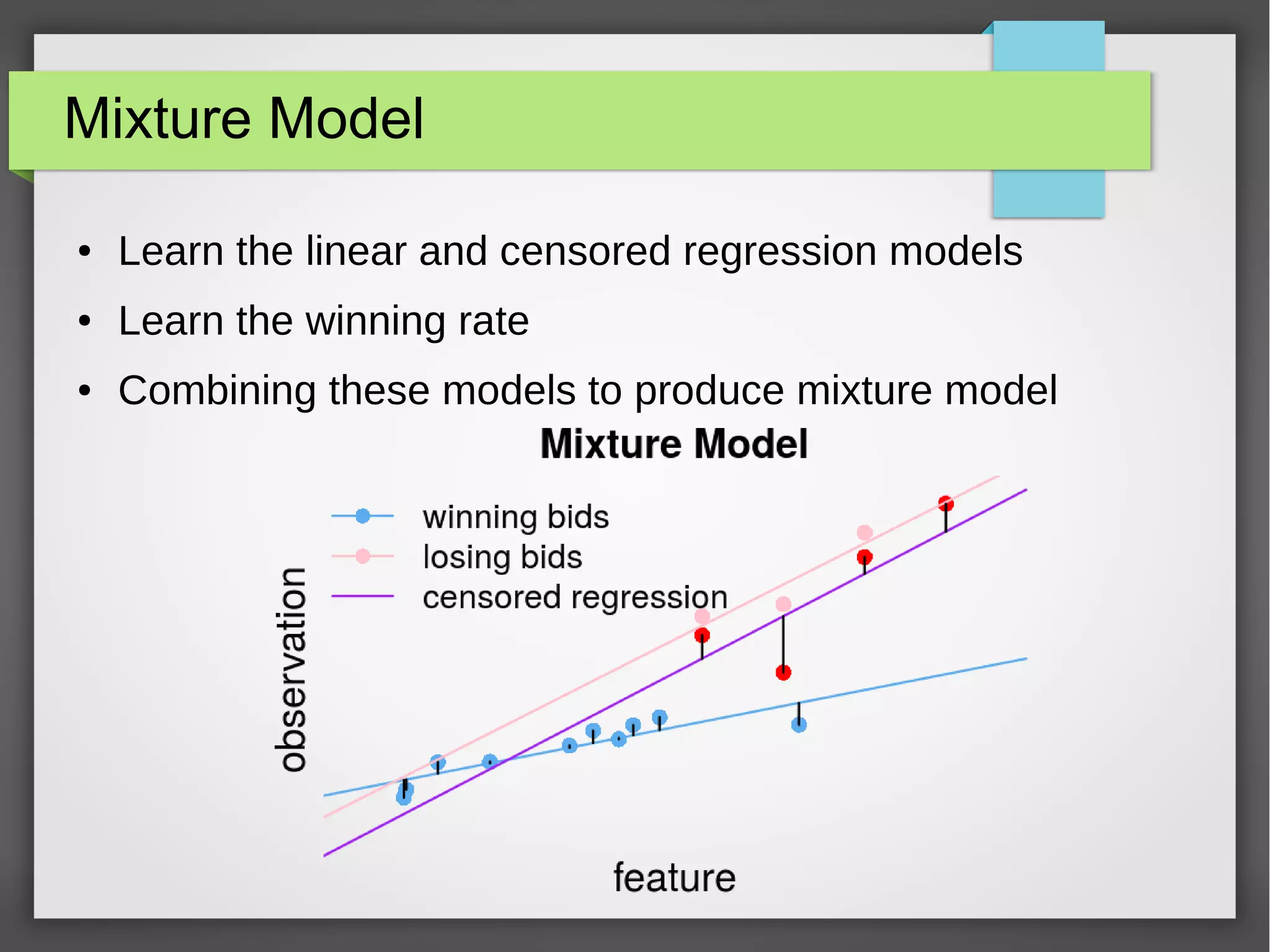
Mixture Model
● Learn the linear and censored regression models
● Learn the winning rate
● Combining these models to produce mixture model
Outline
● Introduction of Real-Time Bidding (RTB)
● Introduction of Winning Price
● Modeling Winning Price
● Experiments
● Conclusions
Datasets
● iPinYou Real-Time Bidding Dataset
– Available at: http://data.computational-advertising.org/
– The codes for related experiments:
https://github.com/wush978/KDD2015wpp
● Bridgewell Inc., the major DSP in Taiwan
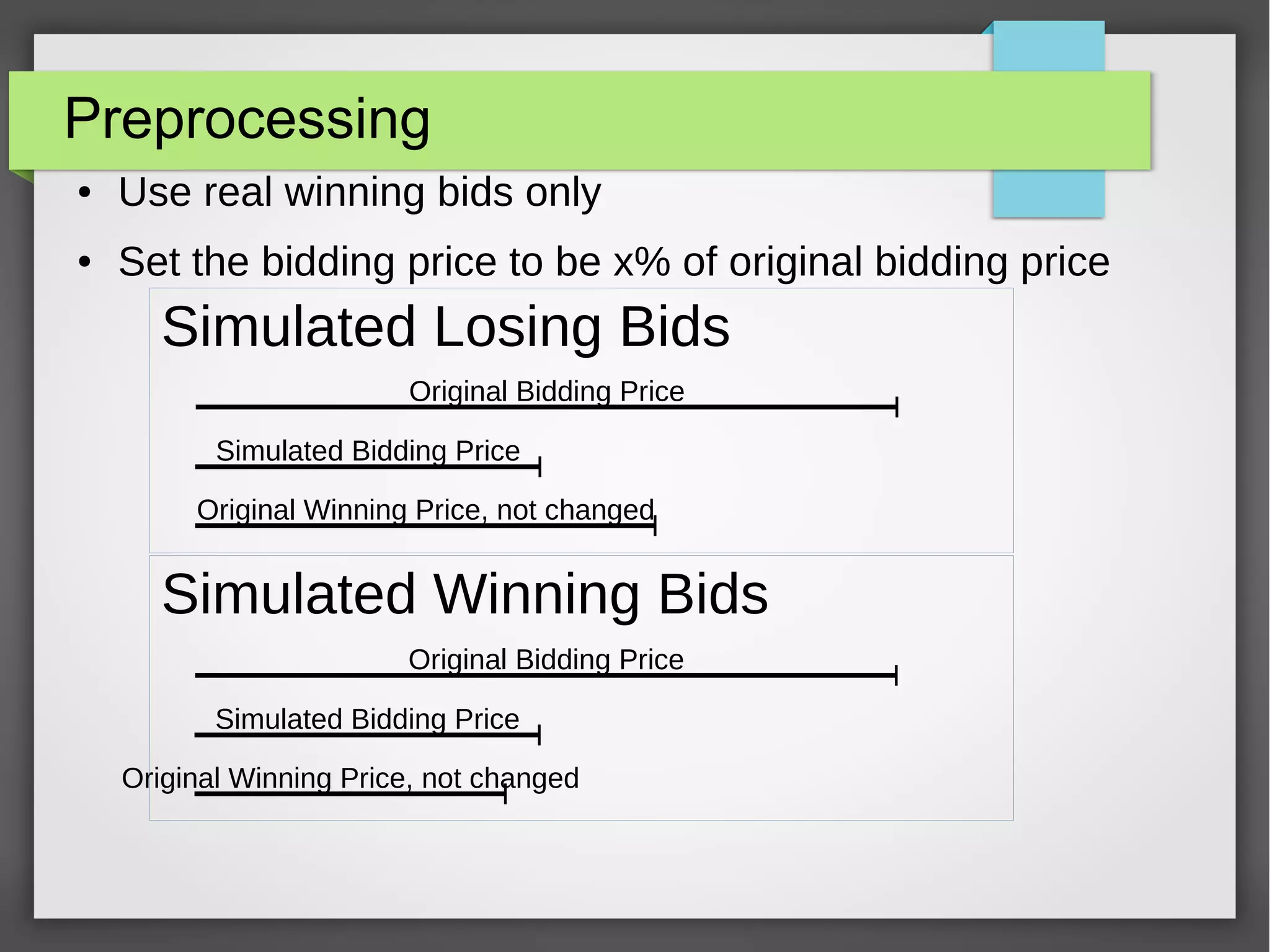
Preprocessing
● Use real winning bids only
● Set the bidding price to be x% of original bidding price
Original Bidding Price
Simulated Bidding Price
Original Winning Price, not changed
Original Bidding Price
Simulated Bidding Price
Original Winning Price, not changed
Simulated Losing Bids
Simulated Winning Bids
Questions
● (Q1) Different Winning Price Pattern
● (Q2) Censored regression model vs. linear regression
model
● (Q3) The Performance of the Mixture model
Inconsistent Pattern of Winning
Price (Q1)
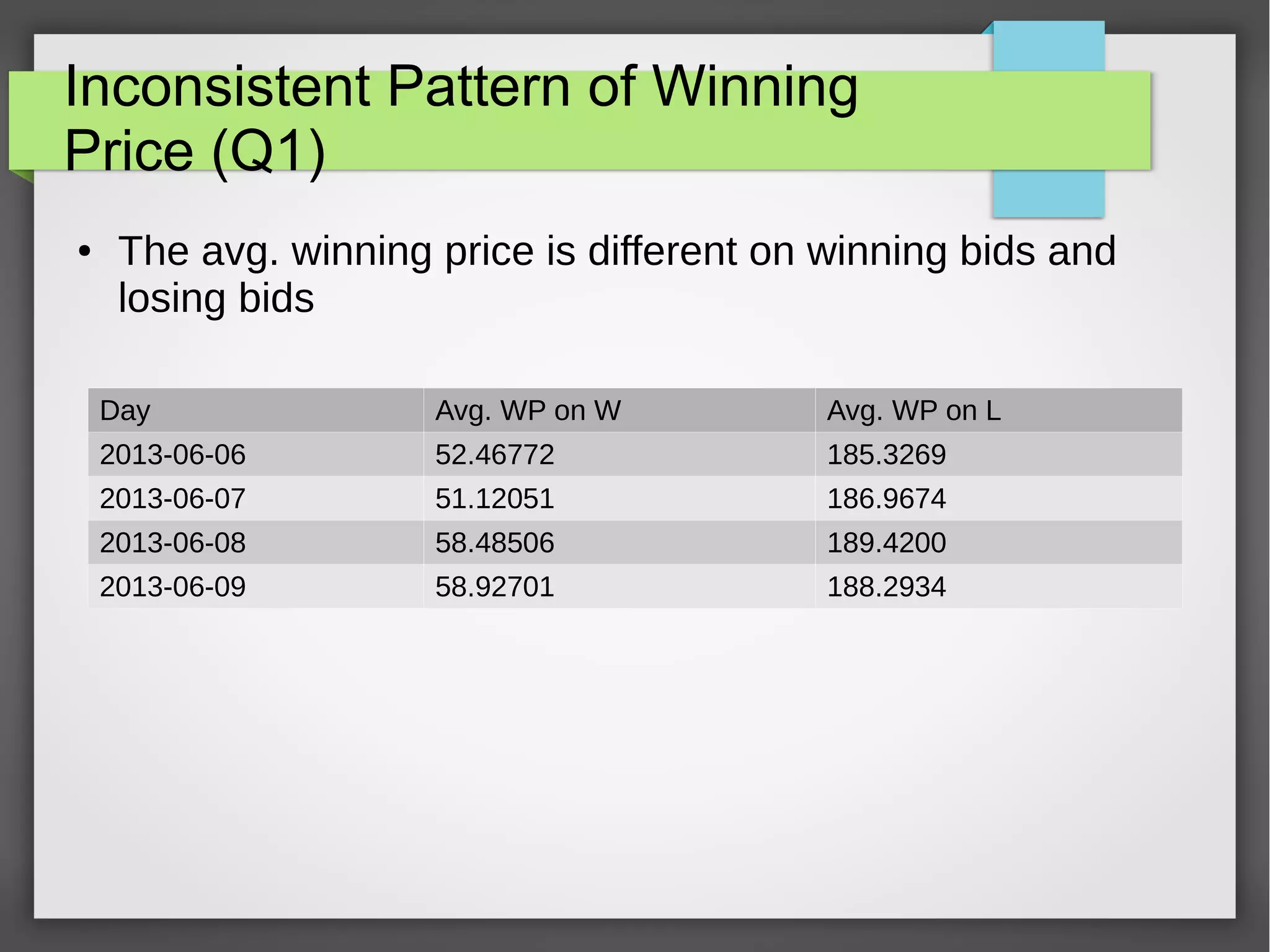
● The avg. winning price is different on winning bids and
losing bids
Day Avg. WP on W Avg. WP on L
2013-06-06 52.46772 185.3269
2013-06-07 51.12051 186.9674
2013-06-08 58.48506 189.4200
2013-06-09 58.92701 188.2934
Inconsistent Pattern of Winning
Price (Q1)
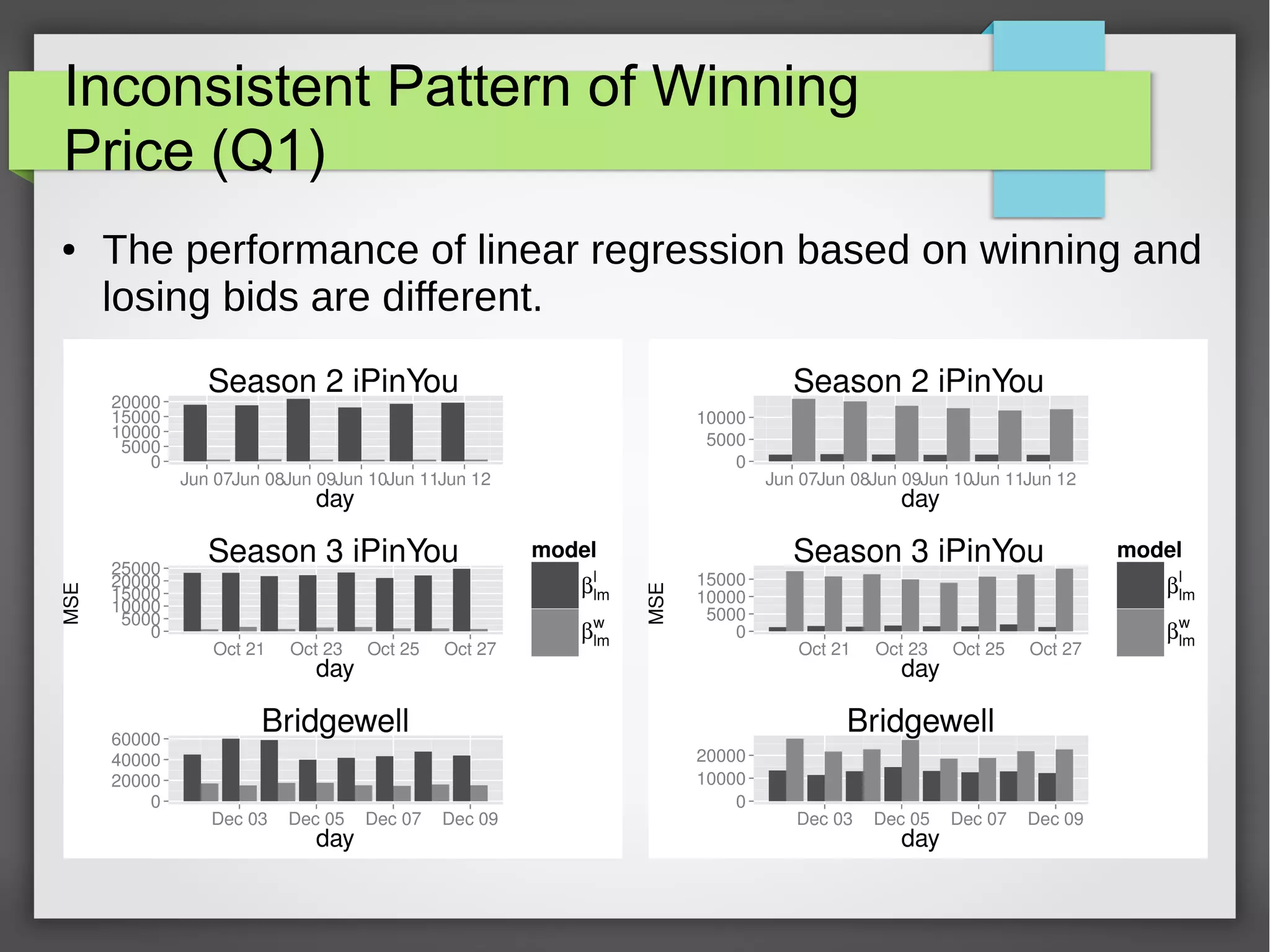
● The performance of linear regression based on winning and
losing bids are different.
Censored Regression vs. Linear
Regression (Q2)
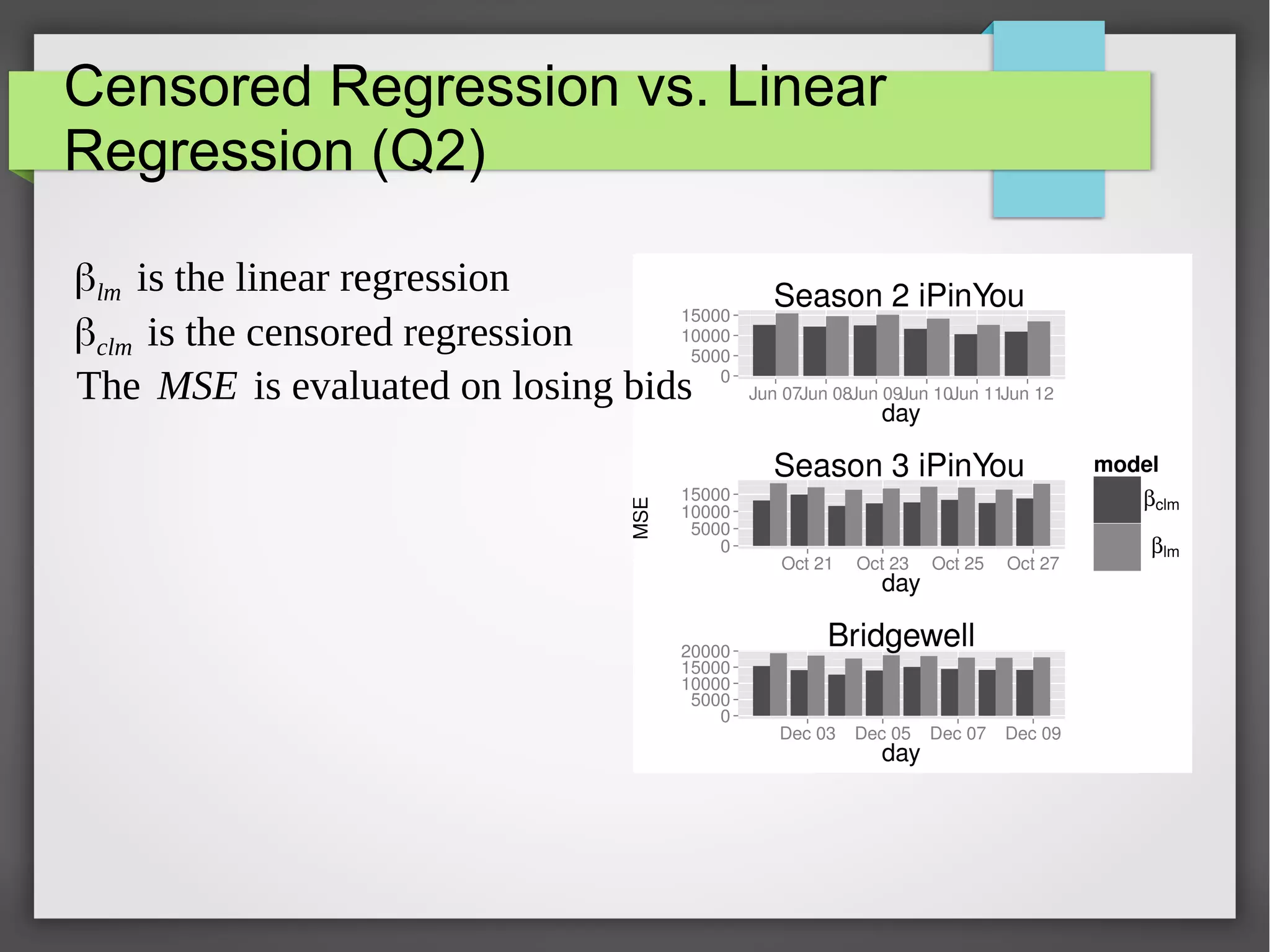
βlm is the linear regression
βclm is the censored regression
The MSE is evaluated on losing bids
Performance of the Mixture Model
(Q3)
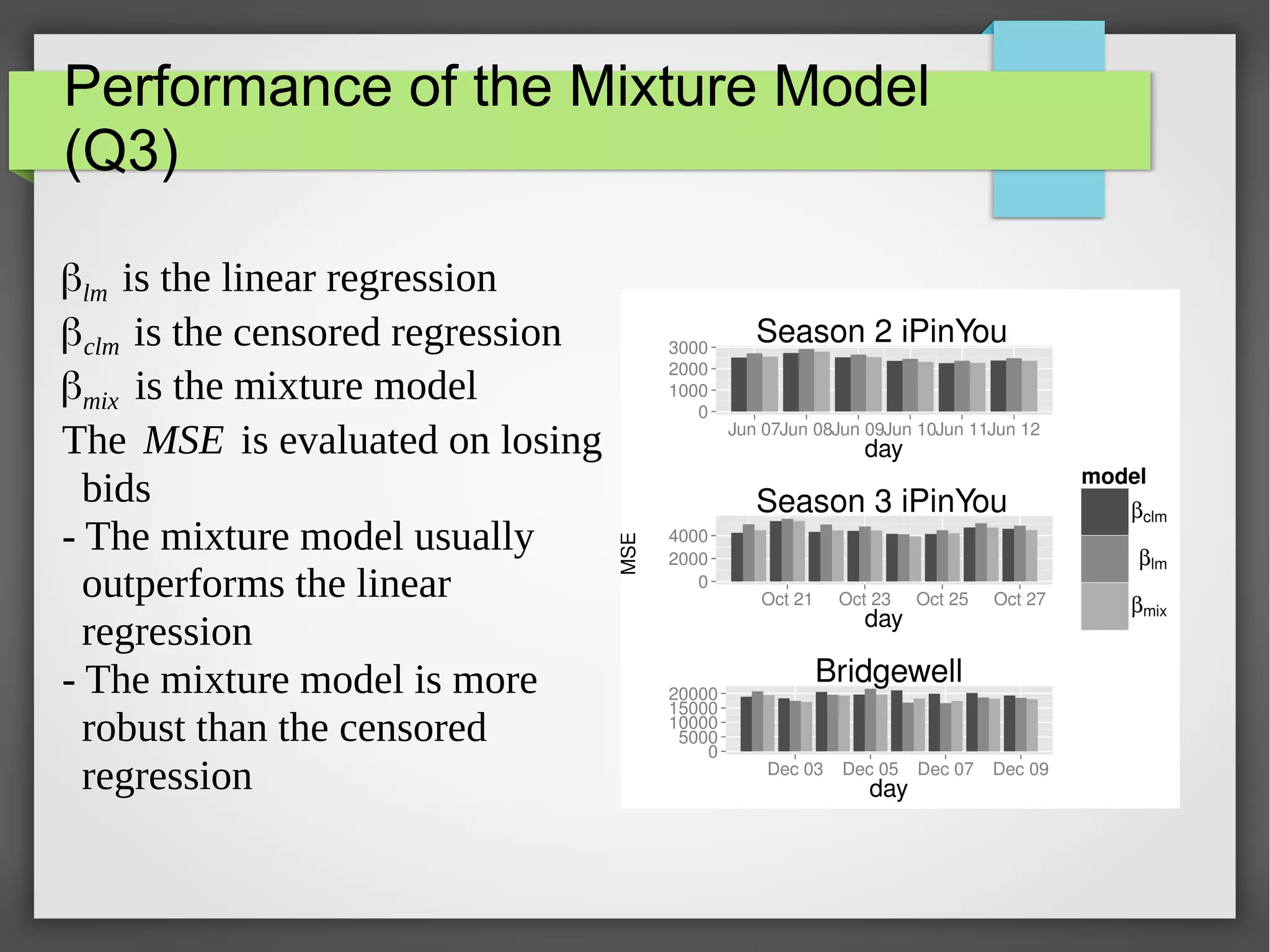
βlm is the linear regression
βclm is the censored regression
βmix is the mixture model
The MSE is evaluated on losing
bids
- The mixture model usually
outperforms the linear
regression
- The mixture model is more
robust than the censored
regression
Conclusion
● We are the first to tackle the winning price prediction
problem from the buyer side
● Prediction performance is improved by taking the censored
information into account
Thank You

Predicting Winning Price in Real Time Bidding with Censored Data

  • 1.
    Predicting Winning Pricein Real Time Bidding with Censored Data Wush Wu#, Mi-Yen Yeh*, and Ming-Syan Chen# #: Dept. of Electrical Engineering, National Taiwan University *:Inst. of Information Science, Academia Sinica
  • 2.
    Outline ● Introduction ofReal-Time Bidding (RTB) ● Introduction of Winning Price ● Modeling Winning Price ● Experiments ● Conclusions
  • 3.
  • 4.
    Trading the Impression ●The sellers provide: – Information of the publishers – Identification of the ad viewer ● The buyers estimate: – The value of the impression Bid Request: ● User Identity ● User IP ● URL ● Ad SlotVisibility ● Ad SlotSize Advertisers Publishers Demand-Side Platform (DSP) Supply-Side Platform (SSP) Bid Response: ● Bidding Price
  • 5.
    Second Price Auction Source:http://www.science4all.org/le-nguyen-hoang/auction-design/
  • 6.
    Outline ● Introduction ofReal-Time Bidding (RTB) ● Introduction of Winning Price ● Modeling Winning Price ● Experiments ● Conclusions
  • 7.
    Winning Price The highestbidding price from other competitors ● The winning price of purple: 200$ ● The winning price of others: 250$
  • 8.
    Our Goal: Predictingthe Winning Price ● Predicting the winning price of future auctions given the historical winning/losing bid information the buyer observed
  • 9.
    The importance ofthe Winning Price ● The winning price represents: – the cost of the impression – the value of the impression to the competitors ● The winning price helps the bidding strategy ● The winning price improves the estimation of the Click- Through-Rate(CTR) and the Conversion Rate(CVR) https://clientmanagementvn.files.wordpress.com/2012/09/competitor-analysis.jpg
  • 10.
    Challenge of Predictingthe Winning Price ● In second price auction, the winning price is unobserved if the bid is lost. ● No previous work on predicting winning price on buyer side – Cui et al. modeled the winning price with the mixture-of- log-normal distribution on various targeting attributes.
  • 11.
    Outline ● Introduction ofReal-Time Bidding (RTB) ● Introduction of Winning Price ● Modeling Winning Price ● Experiments ● Conclusions
  • 12.
    Observation ● For losingbids, The bidding price is the lower bound of the winning price. ● It is called right censored
  • 13.
    Base Model ofthe Winning Price
  • 14.
  • 16.
    Problem of theCensored Regression Model
  • 17.
    Mixture Model ● Censoredregression model is closer to unobserved data ● Linear regression model is closer to observed data
  • 18.
    Challenge of theMixture Model ● We do not know whether the bid is winning bids or losing bids
  • 19.
    Winning Rate ● Weuse the estimated winning rate to classify whether the bidding will be observed or censored – The winning rate is estimated by the logistic regression
  • 20.
    Mixture Model ● Learnthe linear and censored regression models ● Learn the winning rate ● Combining these models to produce mixture model
  • 21.
    Outline ● Introduction ofReal-Time Bidding (RTB) ● Introduction of Winning Price ● Modeling Winning Price ● Experiments ● Conclusions
  • 22.
    Datasets ● iPinYou Real-TimeBidding Dataset – Available at: http://data.computational-advertising.org/ – The codes for related experiments: https://github.com/wush978/KDD2015wpp ● Bridgewell Inc., the major DSP in Taiwan
  • 23.
    Preprocessing ● Use realwinning bids only ● Set the bidding price to be x% of original bidding price Original Bidding Price Simulated Bidding Price Original Winning Price, not changed Original Bidding Price Simulated Bidding Price Original Winning Price, not changed Simulated Losing Bids Simulated Winning Bids
  • 24.
    Questions ● (Q1) DifferentWinning Price Pattern ● (Q2) Censored regression model vs. linear regression model ● (Q3) The Performance of the Mixture model
  • 25.
    Inconsistent Pattern ofWinning Price (Q1) ● The avg. winning price is different on winning bids and losing bids Day Avg. WP on W Avg. WP on L 2013-06-06 52.46772 185.3269 2013-06-07 51.12051 186.9674 2013-06-08 58.48506 189.4200 2013-06-09 58.92701 188.2934
  • 26.
    Inconsistent Pattern ofWinning Price (Q1) ● The performance of linear regression based on winning and losing bids are different.
  • 27.
    Censored Regression vs.Linear Regression (Q2) βlm is the linear regression βclm is the censored regression The MSE is evaluated on losing bids
  • 28.
    Performance of theMixture Model (Q3) βlm is the linear regression βclm is the censored regression βmix is the mixture model The MSE is evaluated on losing bids - The mixture model usually outperforms the linear regression - The mixture model is more robust than the censored regression
  • 29.
    Conclusion ● We arethe first to tackle the winning price prediction problem from the buyer side ● Prediction performance is improved by taking the censored information into account
  • 30.