Behavioral Management
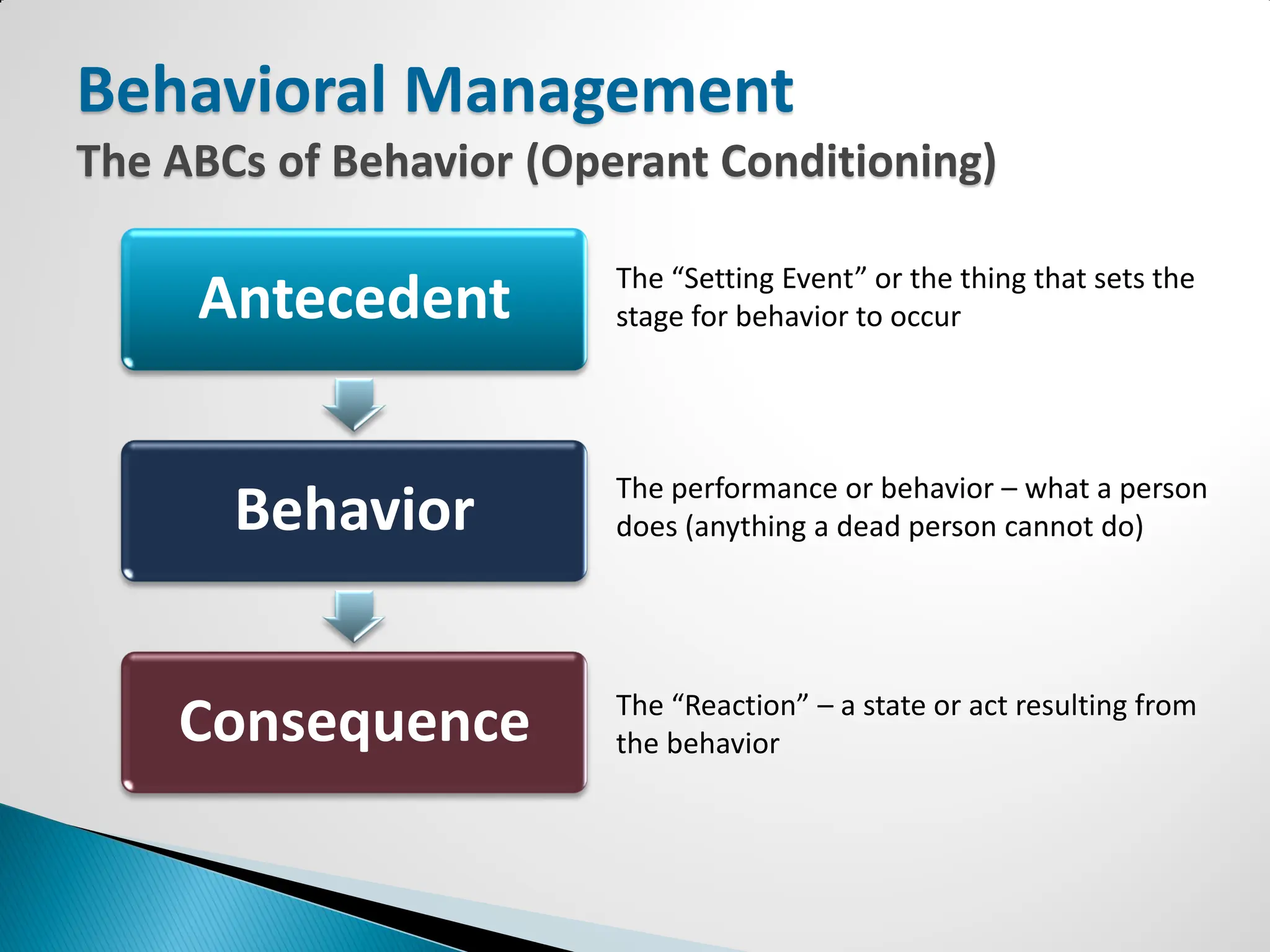
The ABCs of Behavior (Operant Conditioning)

                         The “Setting Event” or the thing that sets the
     Antecedent          stage for behavior to occur


                         The performance or behavior – what a person
       Behavior          does (anything a dead person cannot do)


                         The “Reaction” – a state or act resulting from
    Consequence          the behavior
Behavioral Management
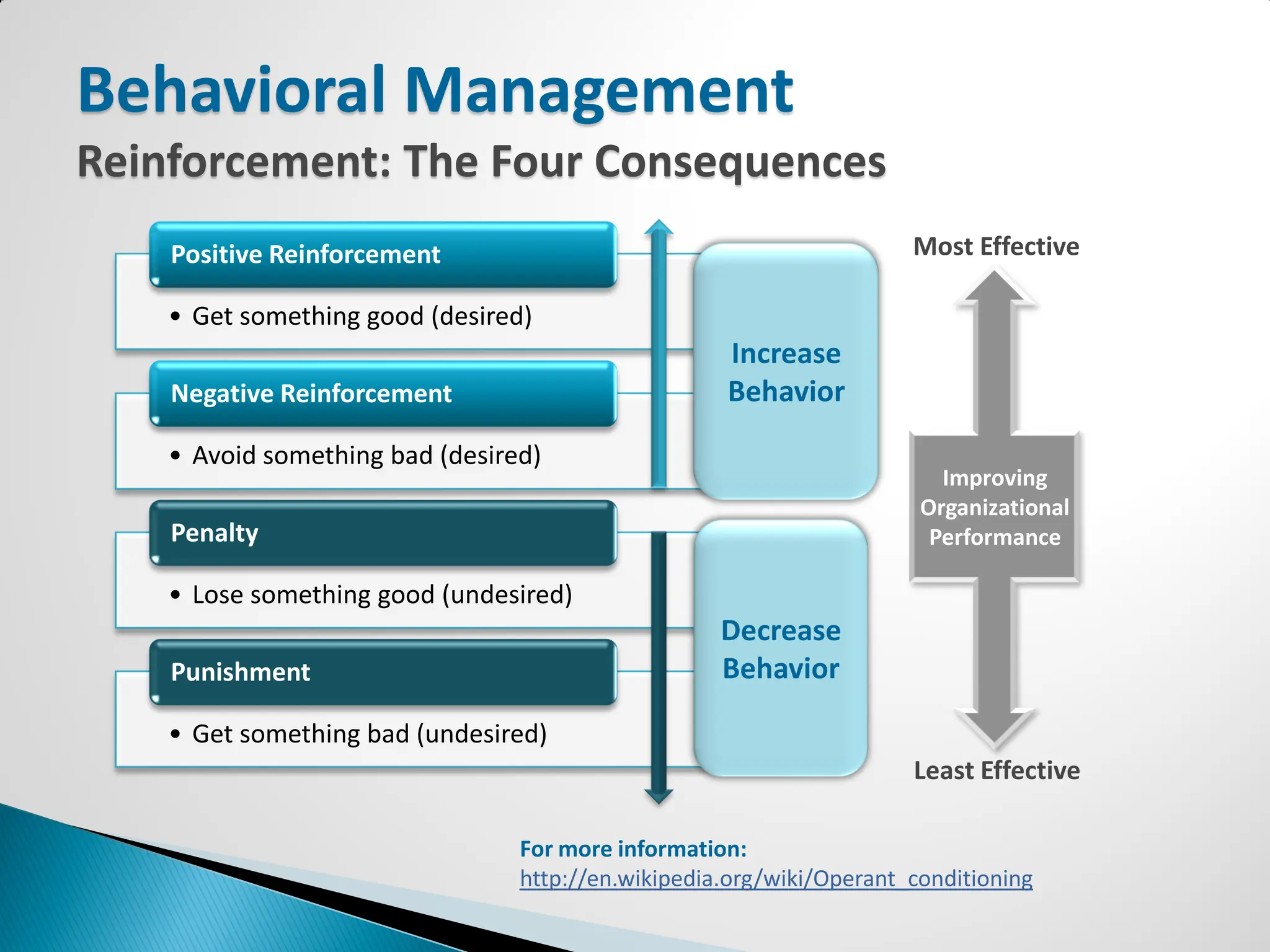
Reinforcement: The Four Consequences
    Positive Reinforcement                                            Most Effective

    • Get something good (desired)
                                                    Increase
    Negative Reinforcement                          Behavior
    • Avoid something bad (desired)
                                                                         Improving
                                                                       Organizational
    Penalty                                                             Performance

    • Lose something good (undesired)
                                                    Decrease
    Punishment                                      Behavior

    • Get something bad (undesired)
                                                                      Least Effective

                                 For more information:
                                 http://en.wikipedia.org/wiki/Operant_conditioning
Behavioral Management
Reinforcement: Extinction
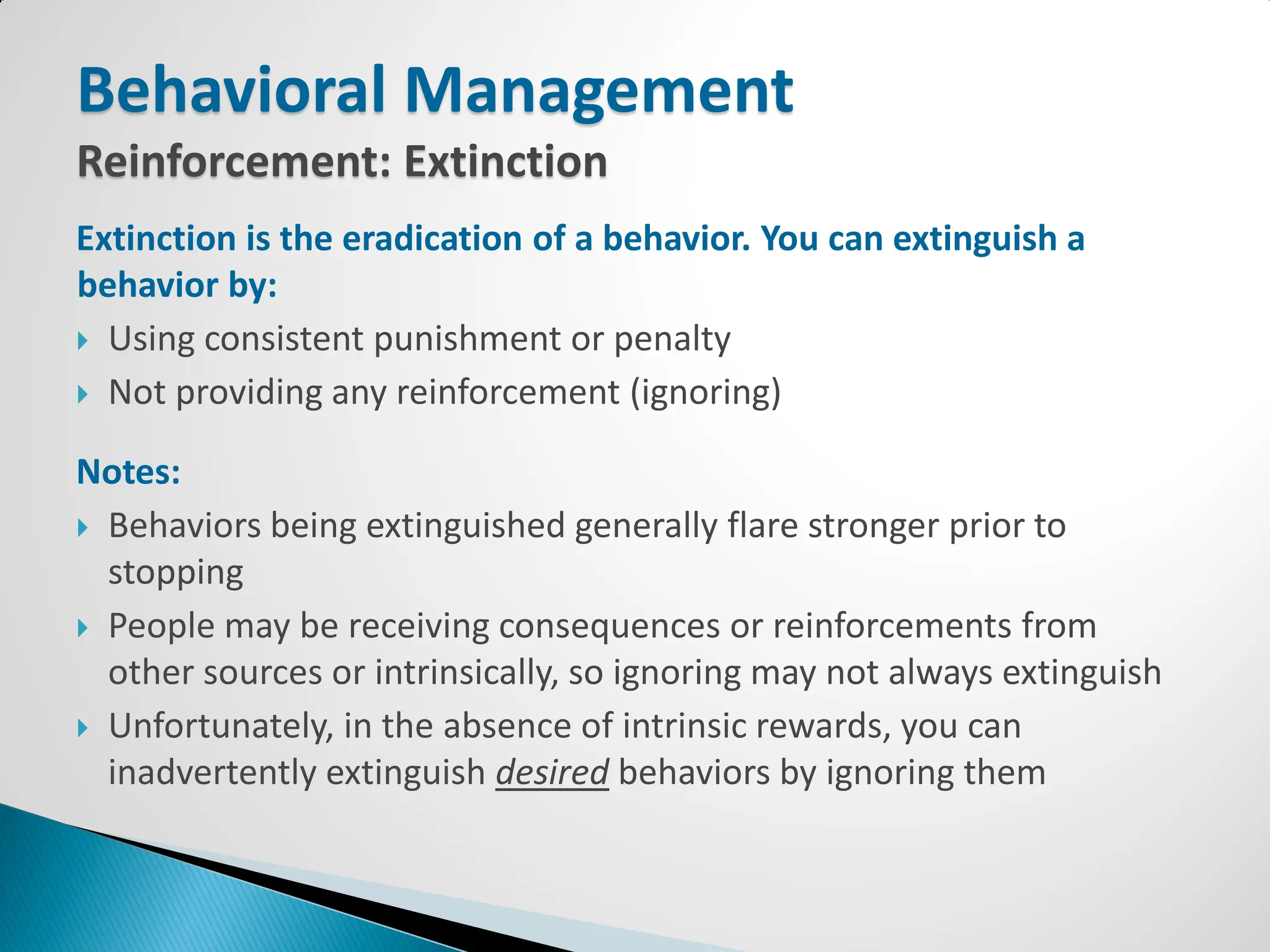
Extinction is the eradication of a behavior. You can extinguish a
behavior by:
 Using consistent punishment or penalty

 Not providing any reinforcement (ignoring)


Notes:
 Behaviors being extinguished generally flare stronger prior to
  stopping
 People may be receiving consequences or reinforcements from
  other sources or intrinsically, so ignoring may not always extinguish
 Unfortunately, in the absence of intrinsic rewards, you can
  inadvertently extinguish desired behaviors by ignoring them
Behavioral Management
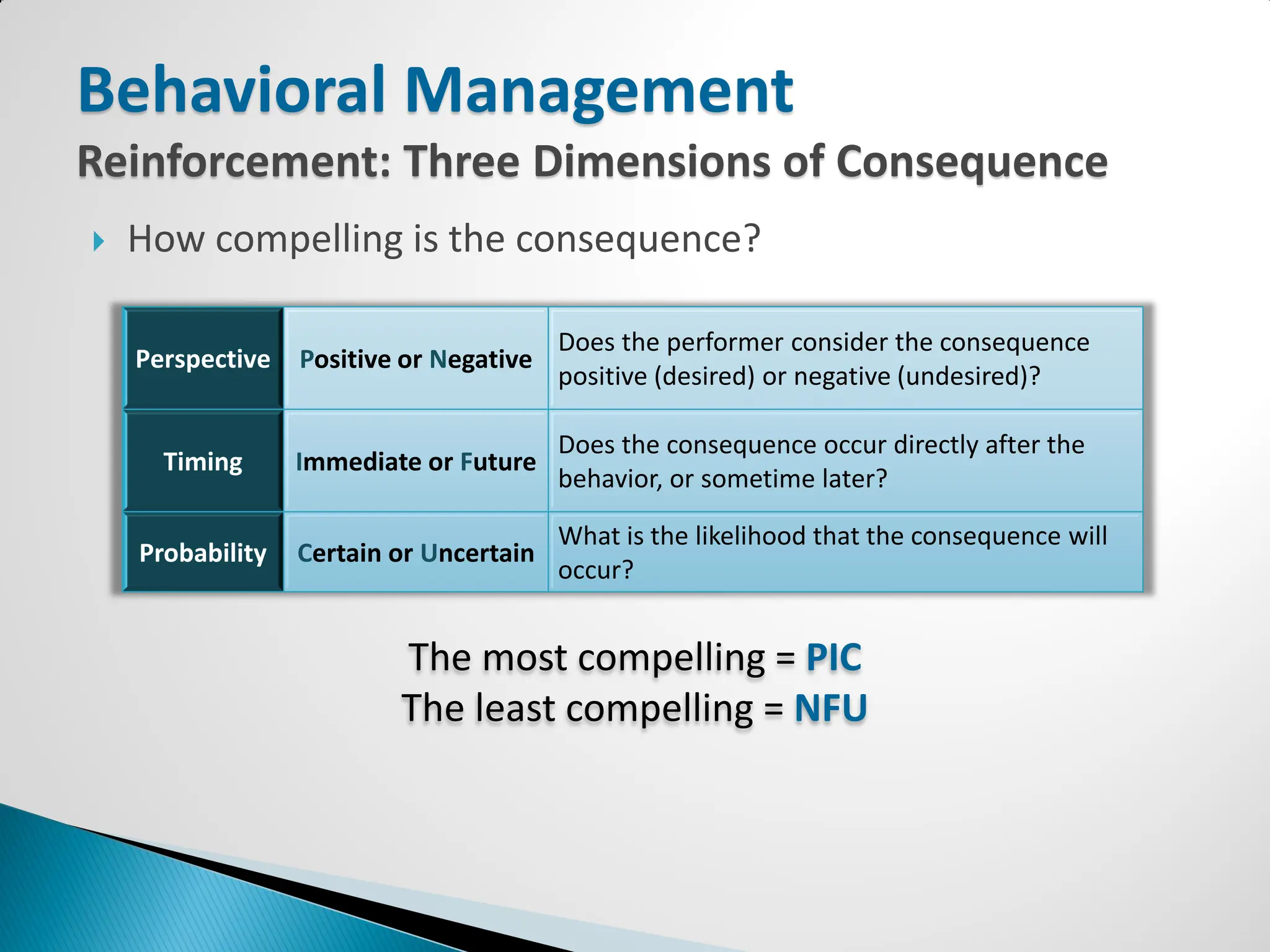
Reinforcement: Three Dimensions of Consequence
   How compelling is the consequence?

                                         Does the performer consider the consequence
    Perspective   Positive or Negative
                                         positive (desired) or negative (undesired)?

                                         Does the consequence occur directly after the
      Timing      Immediate or Future
                                         behavior, or sometime later?

                                         What is the likelihood that the consequence will
    Probability   Certain or Uncertain
                                         occur?


                          The most compelling = PIC
                          The least compelling = NFU
Behavioral Management
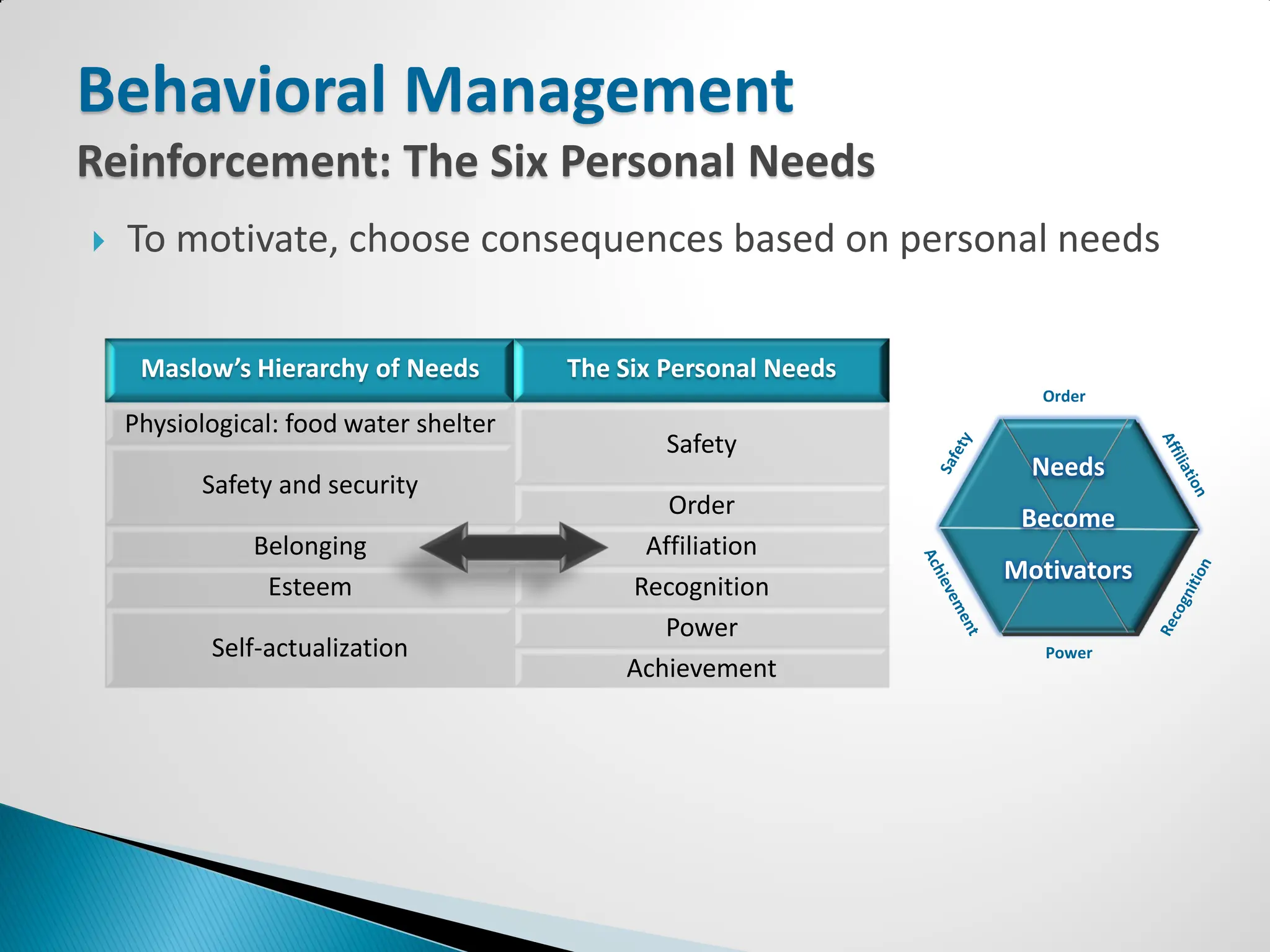
Reinforcement: The Six Personal Needs
   To motivate, choose consequences based on personal needs

     Maslow’s Hierarchy of Needs        The Six Personal Needs
                                                                    Order
    Physiological: food water shelter
                                                Safety
                                                                   Needs
          Safety and security
                                               Order              Become
               Belonging                     Affiliation
                                                                 Motivators
                Esteem                      Recognition
                                               Power
           Self-actualization                                       Power
                                            Achievement
Behavioral Management
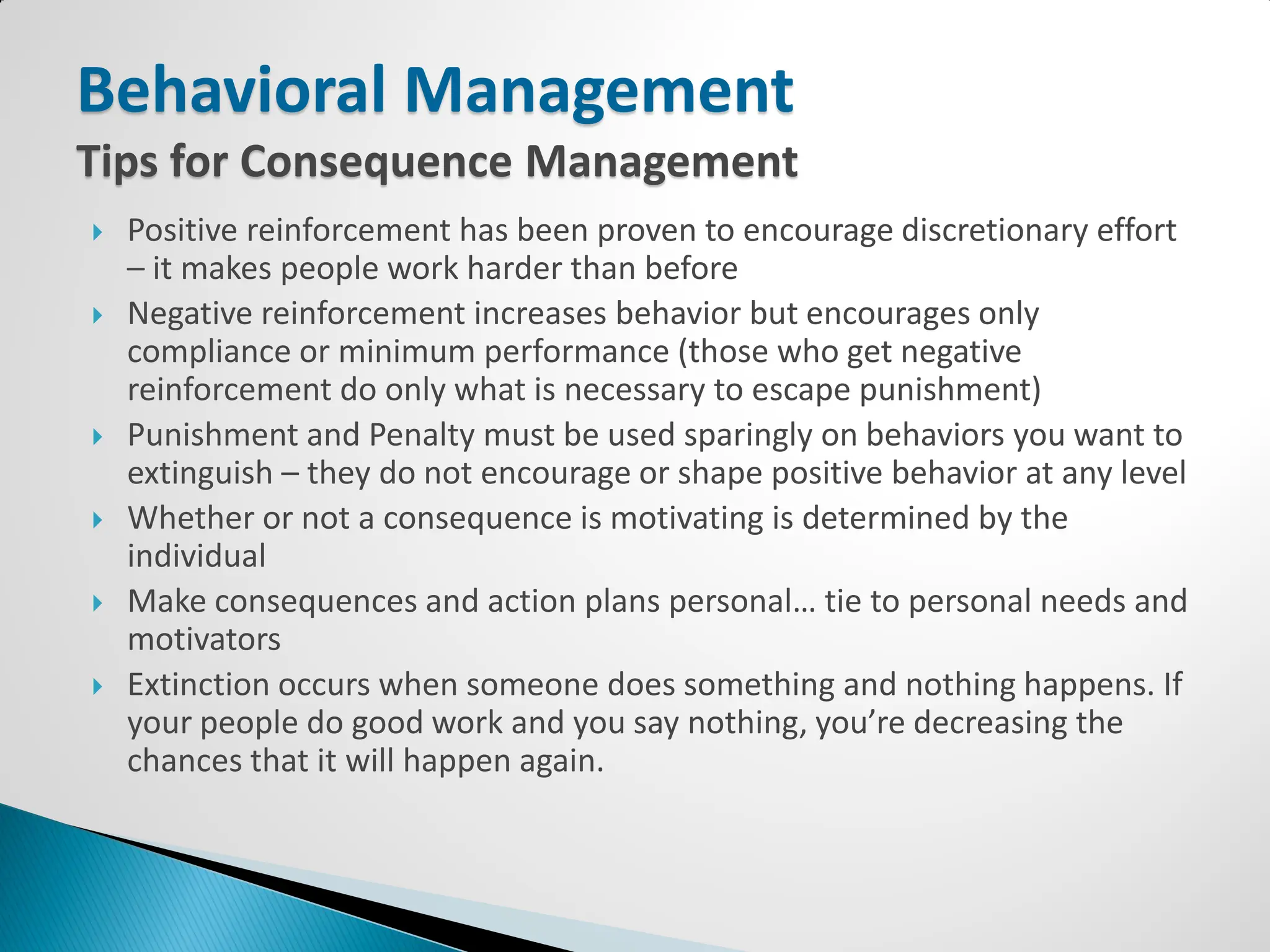
Tips for Consequence Management
   Positive reinforcement has been proven to encourage discretionary effort
    – it makes people work harder than before
   Negative reinforcement increases behavior but encourages only
    compliance or minimum performance (those who get negative
    reinforcement do only what is necessary to escape punishment)
   Punishment and Penalty must be used sparingly on behaviors you want to
    extinguish – they do not encourage or shape positive behavior at any level
   Whether or not a consequence is motivating is determined by the
    individual
   Make consequences and action plans personal… tie to personal needs and
    motivators
   Extinction occurs when someone does something and nothing happens. If
    your people do good work and you say nothing, you’re decreasing the
    chances that it will happen again.
Behavioral Management
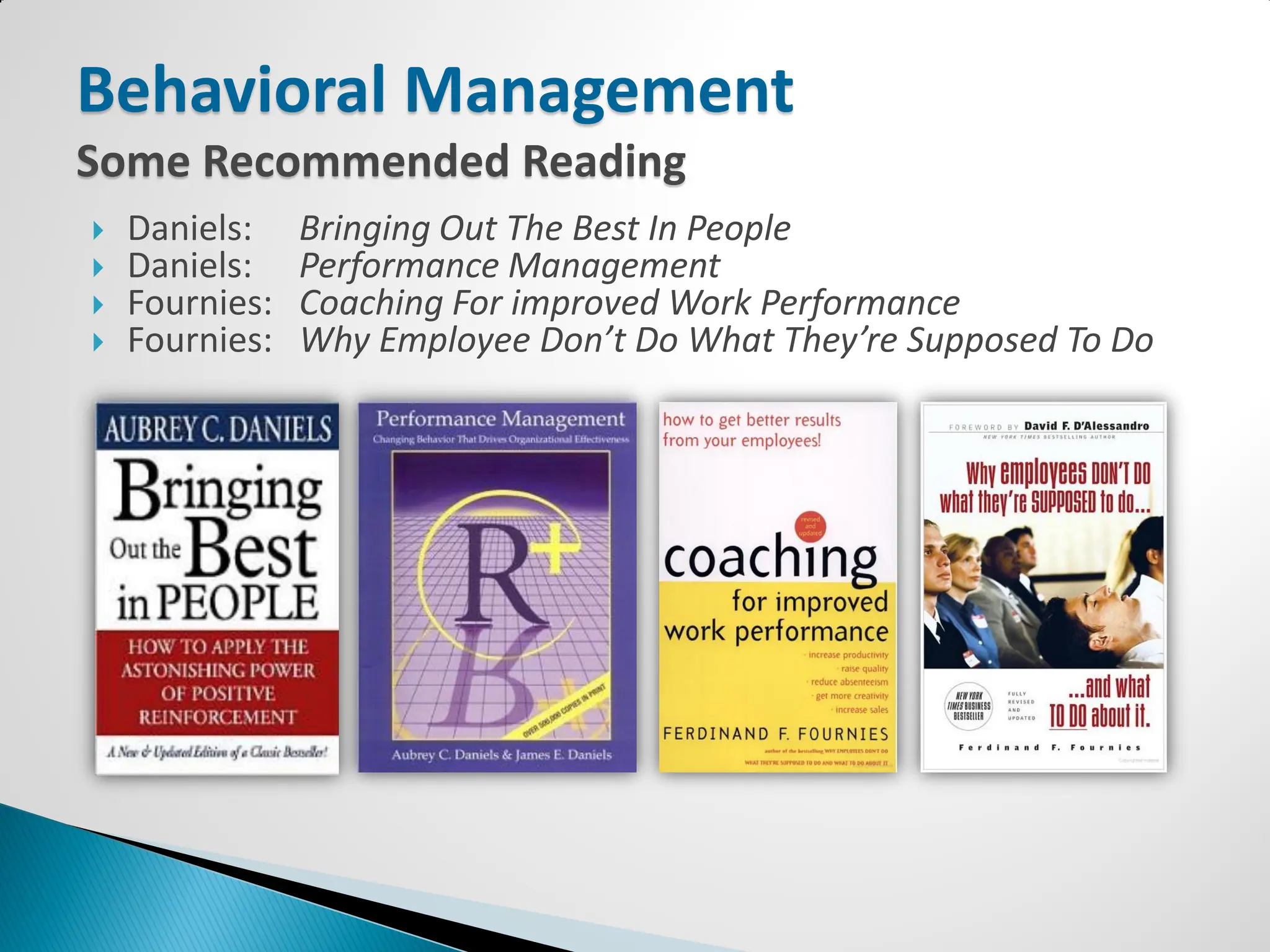
Some Recommended Reading
   Daniels:    Bringing Out The Best In People
   Daniels:    Performance Management
   Fournies:   Coaching For improved Work Performance
   Fournies:   Why Employee Don’t Do What They’re Supposed To Do
Behavioral Management Principles

  • 2.
    Behavioral Management The ABCsof Behavior (Operant Conditioning) The “Setting Event” or the thing that sets the Antecedent stage for behavior to occur The performance or behavior – what a person Behavior does (anything a dead person cannot do) The “Reaction” – a state or act resulting from Consequence the behavior
  • 3.
    Behavioral Management Reinforcement: TheFour Consequences Positive Reinforcement Most Effective • Get something good (desired) Increase Negative Reinforcement Behavior • Avoid something bad (desired) Improving Organizational Penalty Performance • Lose something good (undesired) Decrease Punishment Behavior • Get something bad (undesired) Least Effective For more information: http://en.wikipedia.org/wiki/Operant_conditioning
  • 4.
    Behavioral Management Reinforcement: Extinction Extinctionis the eradication of a behavior. You can extinguish a behavior by:  Using consistent punishment or penalty  Not providing any reinforcement (ignoring) Notes:  Behaviors being extinguished generally flare stronger prior to stopping  People may be receiving consequences or reinforcements from other sources or intrinsically, so ignoring may not always extinguish  Unfortunately, in the absence of intrinsic rewards, you can inadvertently extinguish desired behaviors by ignoring them
  • 5.
    Behavioral Management Reinforcement: ThreeDimensions of Consequence  How compelling is the consequence? Does the performer consider the consequence Perspective Positive or Negative positive (desired) or negative (undesired)? Does the consequence occur directly after the Timing Immediate or Future behavior, or sometime later? What is the likelihood that the consequence will Probability Certain or Uncertain occur? The most compelling = PIC The least compelling = NFU
  • 6.
    Behavioral Management Reinforcement: TheSix Personal Needs  To motivate, choose consequences based on personal needs Maslow’s Hierarchy of Needs The Six Personal Needs Order Physiological: food water shelter Safety Needs Safety and security Order Become Belonging Affiliation Motivators Esteem Recognition Power Self-actualization Power Achievement
  • 7.
    Behavioral Management Tips forConsequence Management  Positive reinforcement has been proven to encourage discretionary effort – it makes people work harder than before  Negative reinforcement increases behavior but encourages only compliance or minimum performance (those who get negative reinforcement do only what is necessary to escape punishment)  Punishment and Penalty must be used sparingly on behaviors you want to extinguish – they do not encourage or shape positive behavior at any level  Whether or not a consequence is motivating is determined by the individual  Make consequences and action plans personal… tie to personal needs and motivators  Extinction occurs when someone does something and nothing happens. If your people do good work and you say nothing, you’re decreasing the chances that it will happen again.
  • 8.
    Behavioral Management Some RecommendedReading  Daniels: Bringing Out The Best In People  Daniels: Performance Management  Fournies: Coaching For improved Work Performance  Fournies: Why Employee Don’t Do What They’re Supposed To Do