As storage hasgotten cheaper, those who generate data
have saved more and more of it.
Unfortunately,they’velostsightofwhatthey’vestored.
problem: dark data
Their data has gone dark.
3.
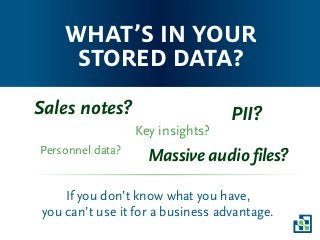
What’s in your
storeddata?
If you don’t know what you have,
you can’t use it for a business advantage.
Massive audio files?
Sales notes? PII?
Personnel data?
Key insights?
4.
What is darkdata?
It’s data your organization created, collected
and stored – but failed to use.
Data goes dark because owners lack the
tools, infrastructure or skills to leverage it.
5.
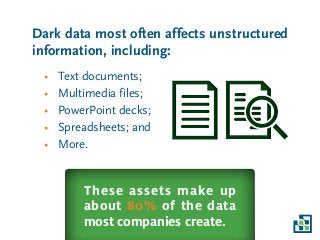
Dark data mostoften affects unstructured
information, including:
• Text documents;
• Multimedia files;
• PowerPoint decks;
• Spreadsheets; and
• More.
These assets make up
about 80% of the data
most companies create.
6.
Dark data =
missedopportunities
+ hidden pitfalls
You lose chances to:
• Learn more about employees and customers
• Decrease costs
• Increase productivity and profits
• Avoid liabilities
7.
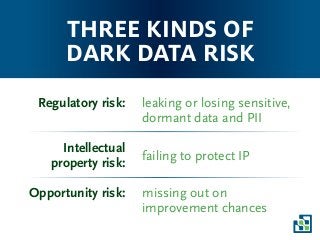
Three kinds of
darkdata risk
leaking or losing sensitive,
dormant data and PII
Regulatory risk:
failing to protect IP
Intellectual
property risk:
missing out on
improvement chances
Opportunity risk:
8.
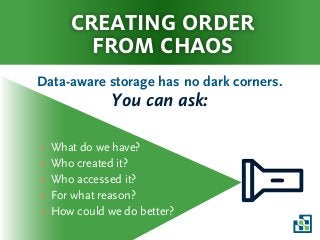
creating order
from chaos
Data-awarestorage has no dark corners.
You can ask:
• What do we have?
• Who created it?
• Who accessed it?
• For what reason?
• How could we do better?
9.
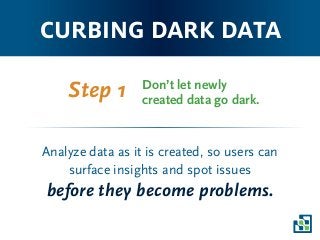
curbing dark data
Don’tlet newly
created data go dark.
Step 1
Analyze data as it is created, so users can
surface insights and spot issues
before they become problems.
10.
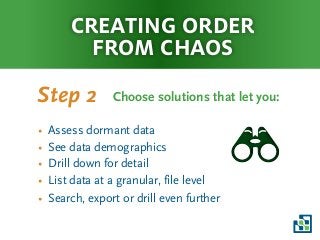
creating order
from chaos
Choosesolutions that let you:Step 2
• Assess dormant data
• See data demographics
• Drill down for detail
• List data at a granular, file level
• Search, export or drill even further
11.
Want to learnmore about what’s
lurking in your dark data?
Download our white paper “Unstructured Data: Friend or Foe.”
Follow DataGravity on Twitter.
Like us on Facebook.
Connect with us on LinkedIn.
Check out our blog.
Contact us.