Refresh Your Injection and Infusion Hospital Coding and Billing K
A Review of the CPT Coding Hierarchy, Including How to Report Initial, Sequential, and
Concurrent Services
Presenter - Jugna Shah
Follow us :
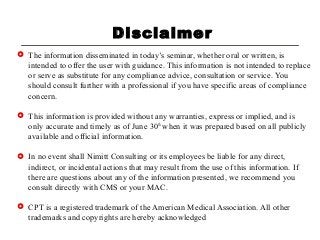
Disclaimer
 The information disseminated in today’s seminar, whether oral or written, is
intended to offer the user with guidance. This information is not intended to replace
or serve as substitute for any compliance advice, consultation or service. You
should consult further with a professional if you have specific areas of compliance
concern.
 This information is provided without any warranties, express or implied, and is
only accurate and timely as of June 30th
when it was prepared based on all publicly
available and official information.
 In no event shall Nimitt Consulting or its employees be liable for any direct,
indirect, or incidental actions that may result from the use of this information. If
there are questions about any of the information presented, we recommend you
consult directly with CMS or your MAC.
 CPT is a registered trademark of the American Medical Association. All other
trademarks and copyrights are hereby acknowledged
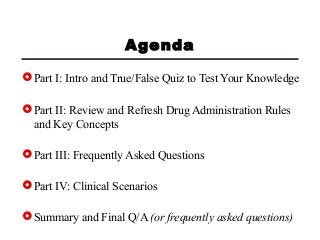
Agenda
Part I: Intro and True/False Quiz to Test Your Knowledge
Part II: Review and Refresh Drug Administration Rules
and Key Concepts
Part III: Frequently Asked Questions
Part IV: Clinical Scenarios
Summary and Final Q/A (or frequently asked questions)
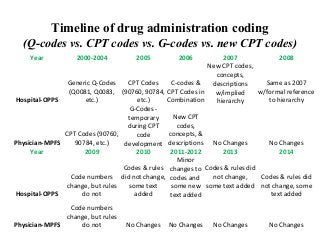
Timeline of drug administration coding
(Q-codes vs. CPT codes vs. G-codes vs. new CPT codes)
Year 2000-2004 2005 2006 2007 2008
Hospital-OPPS
Generic Q-Codes
(Q0081, Q0083,
etc.)
CPT Codes
(90760, 90784,
etc.)
C-codes &
CPT Codes in
Combination
New CPT codes,
concepts,
descriptions
w/implied
hierarchy
Same as 2007
w/formal reference
to hierarchy
Physician-MPFS
CPT Codes (90760,
90784, etc.)
G-Codes -
temporary
during CPT
code
development
New CPT
codes,
concepts, &
descriptions No Changes No Changes
Year 2009 2010 2011-2012 2013 2014
Hospital-OPPS
Code numbers
change, but rules
do not
Codes & rules
did not change,
some text
added
Minor
changes to
codes and
some new
text added
Codes & rules did
not change,
some text added
Codes & rules did
not change, some
text added
Physician-MPFS
Code numbers
change, but rules
do not No Changes No Changes No Changes No Changes
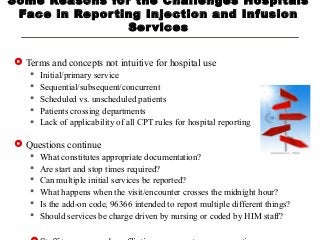
Some Reasons for the Challenges Hospitals
Face in Reporting Injection and Infusion
Services
 Terms and concepts not intuitive for hospital use
 Initial/primary service
 Sequential/subsequent/concurrent
 Scheduled vs. unscheduled patients
 Patients crossing departments
 Lack of applicability of all CPT rules for hospital reporting
 Questions continue
 What constitutes appropriate documentation?
 Are start and stop times required?
 Can multiple initial services be reported?
 What happens when the visit/encounter crosses the midnight hour?
 Is the add-on code, 96366 intended to report multiple different things?
 Should services be charge driven by nursing or coded by HIM staff?
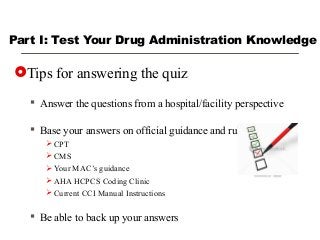
Part I: Test Your Drug Administration Knowledge
Tips for answering the quiz
 Answer the questions from a hospital/facility perspective
 Base your answers on official guidance and rules
 CPT
 CMS
 Your MAC’s guidance
 AHA HCPCS Coding Clinic
 Current CCI Manual Instructions
 Be able to back up your answers
To see the complete presentation check the
below link:
http://www.audioeducator.com/medical-coding-billing/cpt-
coding-07-10-14.html

Refresh Your Injection and Infusion Hospital Coding and Billing Knowledge

  • 1.
    Refresh Your Injectionand Infusion Hospital Coding and Billing K A Review of the CPT Coding Hierarchy, Including How to Report Initial, Sequential, and Concurrent Services Presenter - Jugna Shah Follow us :
  • 2.
    Disclaimer  The informationdisseminated in today’s seminar, whether oral or written, is intended to offer the user with guidance. This information is not intended to replace or serve as substitute for any compliance advice, consultation or service. You should consult further with a professional if you have specific areas of compliance concern.  This information is provided without any warranties, express or implied, and is only accurate and timely as of June 30th when it was prepared based on all publicly available and official information.  In no event shall Nimitt Consulting or its employees be liable for any direct, indirect, or incidental actions that may result from the use of this information. If there are questions about any of the information presented, we recommend you consult directly with CMS or your MAC.  CPT is a registered trademark of the American Medical Association. All other trademarks and copyrights are hereby acknowledged
  • 3.
    Agenda Part I: Introand True/False Quiz to Test Your Knowledge Part II: Review and Refresh Drug Administration Rules and Key Concepts Part III: Frequently Asked Questions Part IV: Clinical Scenarios Summary and Final Q/A (or frequently asked questions)
  • 4.
    Timeline of drugadministration coding (Q-codes vs. CPT codes vs. G-codes vs. new CPT codes) Year 2000-2004 2005 2006 2007 2008 Hospital-OPPS Generic Q-Codes (Q0081, Q0083, etc.) CPT Codes (90760, 90784, etc.) C-codes & CPT Codes in Combination New CPT codes, concepts, descriptions w/implied hierarchy Same as 2007 w/formal reference to hierarchy Physician-MPFS CPT Codes (90760, 90784, etc.) G-Codes - temporary during CPT code development New CPT codes, concepts, & descriptions No Changes No Changes Year 2009 2010 2011-2012 2013 2014 Hospital-OPPS Code numbers change, but rules do not Codes & rules did not change, some text added Minor changes to codes and some new text added Codes & rules did not change, some text added Codes & rules did not change, some text added Physician-MPFS Code numbers change, but rules do not No Changes No Changes No Changes No Changes
  • 5.
    Some Reasons forthe Challenges Hospitals Face in Reporting Injection and Infusion Services  Terms and concepts not intuitive for hospital use  Initial/primary service  Sequential/subsequent/concurrent  Scheduled vs. unscheduled patients  Patients crossing departments  Lack of applicability of all CPT rules for hospital reporting  Questions continue  What constitutes appropriate documentation?  Are start and stop times required?  Can multiple initial services be reported?  What happens when the visit/encounter crosses the midnight hour?  Is the add-on code, 96366 intended to report multiple different things?  Should services be charge driven by nursing or coded by HIM staff?
  • 6.
    Part I: TestYour Drug Administration Knowledge Tips for answering the quiz  Answer the questions from a hospital/facility perspective  Base your answers on official guidance and rules  CPT  CMS  Your MAC’s guidance  AHA HCPCS Coding Clinic  Current CCI Manual Instructions  Be able to back up your answers
  • 7.
    To see thecomplete presentation check the below link: http://www.audioeducator.com/medical-coding-billing/cpt- coding-07-10-14.html