By
Ram Kumar K R
Ganesh Arkalgud
Anshul Bansal
Z-Transforms and their applications
Introduction:
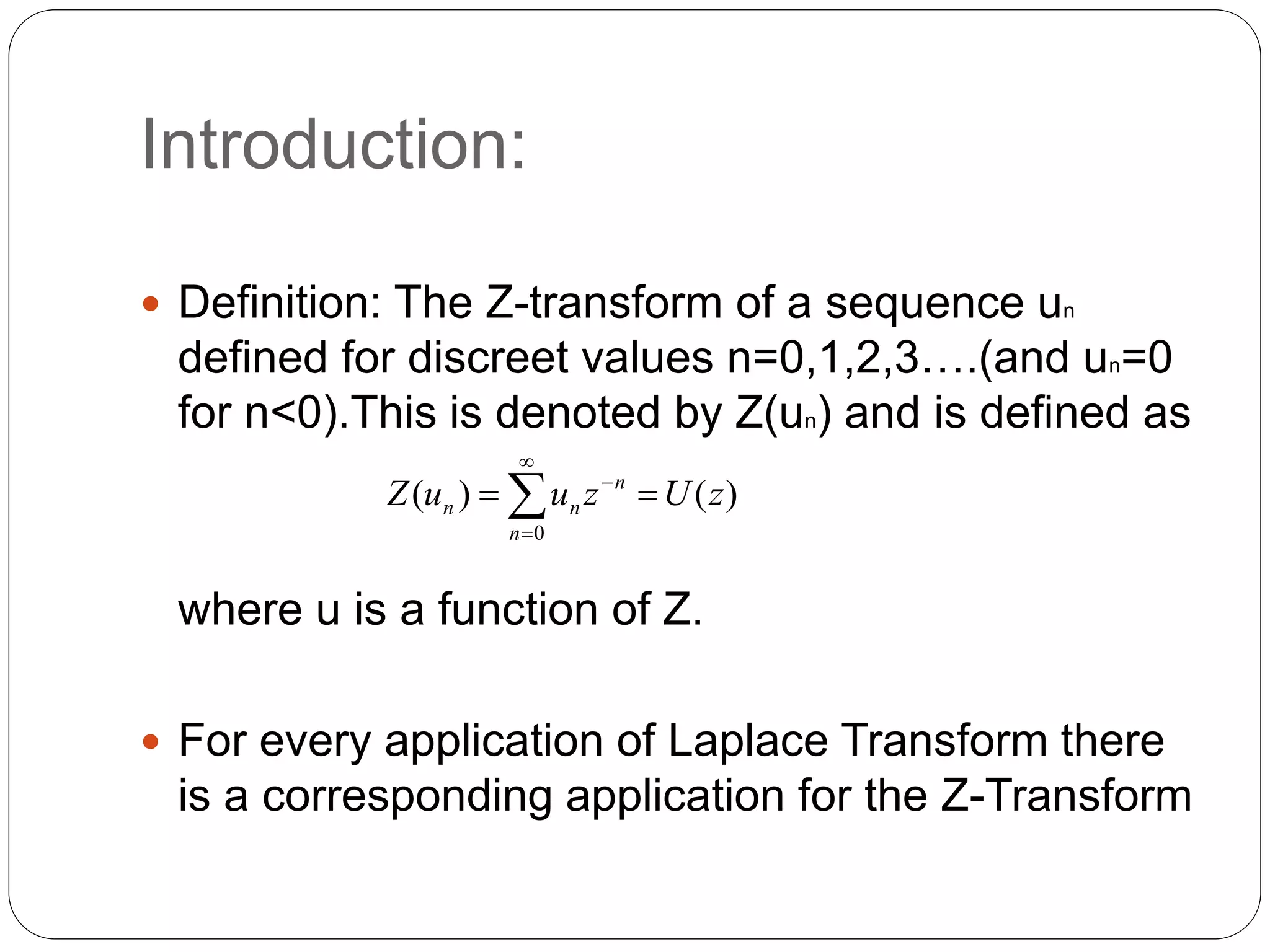
 Definition: The Z-transform of a sequence un
defined for discreet values n=0,1,2,3….(and un=0
for n<0).This is denoted by Z(un) and is defined as
where u is a function of Z.
 For every application of Laplace Transform there
is a corresponding application for the Z-Transform
)()(
0
zUzuuZ
n
n
nn  



Difference Equations
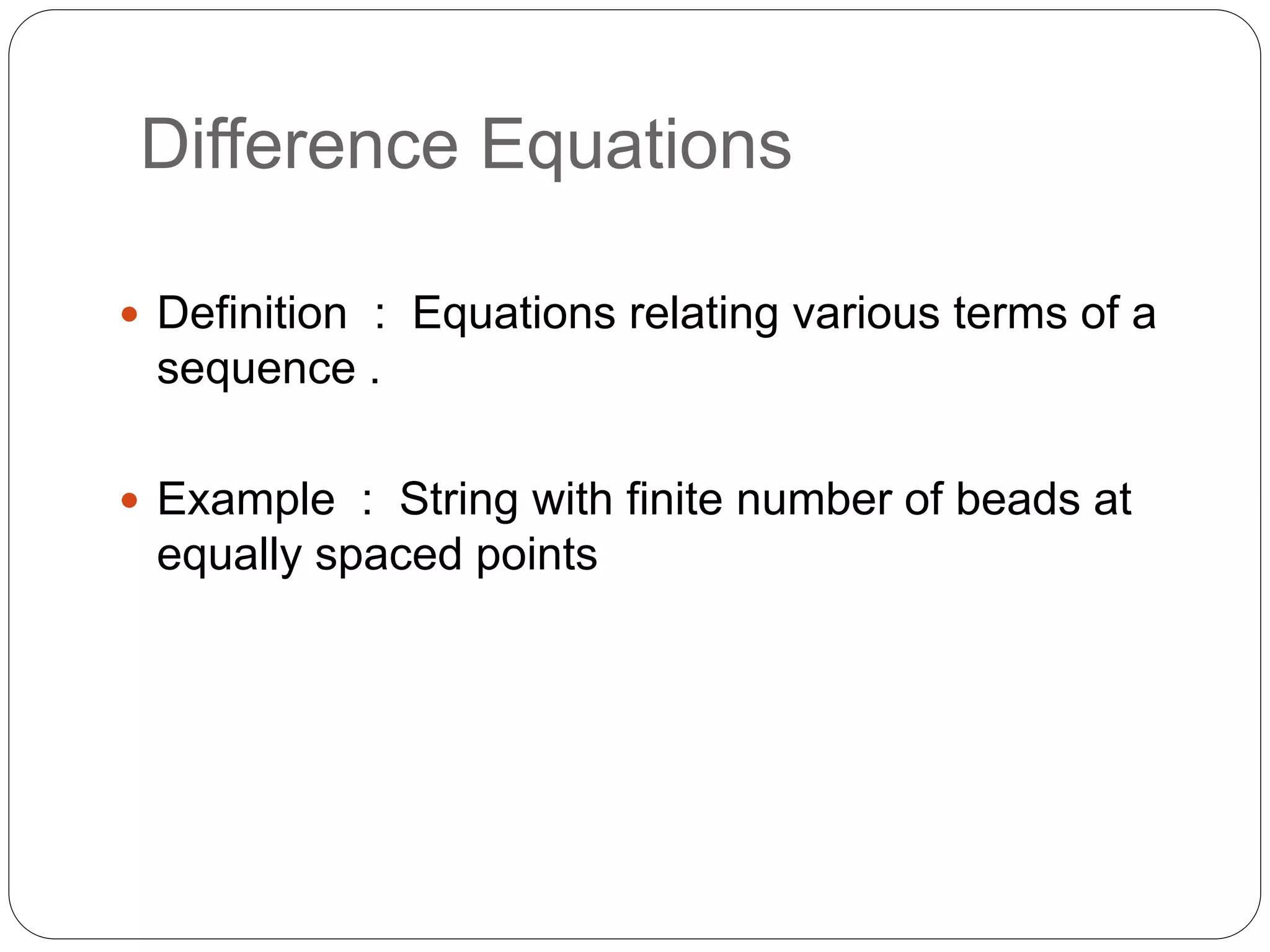
 Definition : Equations relating various terms of a
sequence .
 Example : String with finite number of beads at
equally spaced points
Applications of Difference Equation:
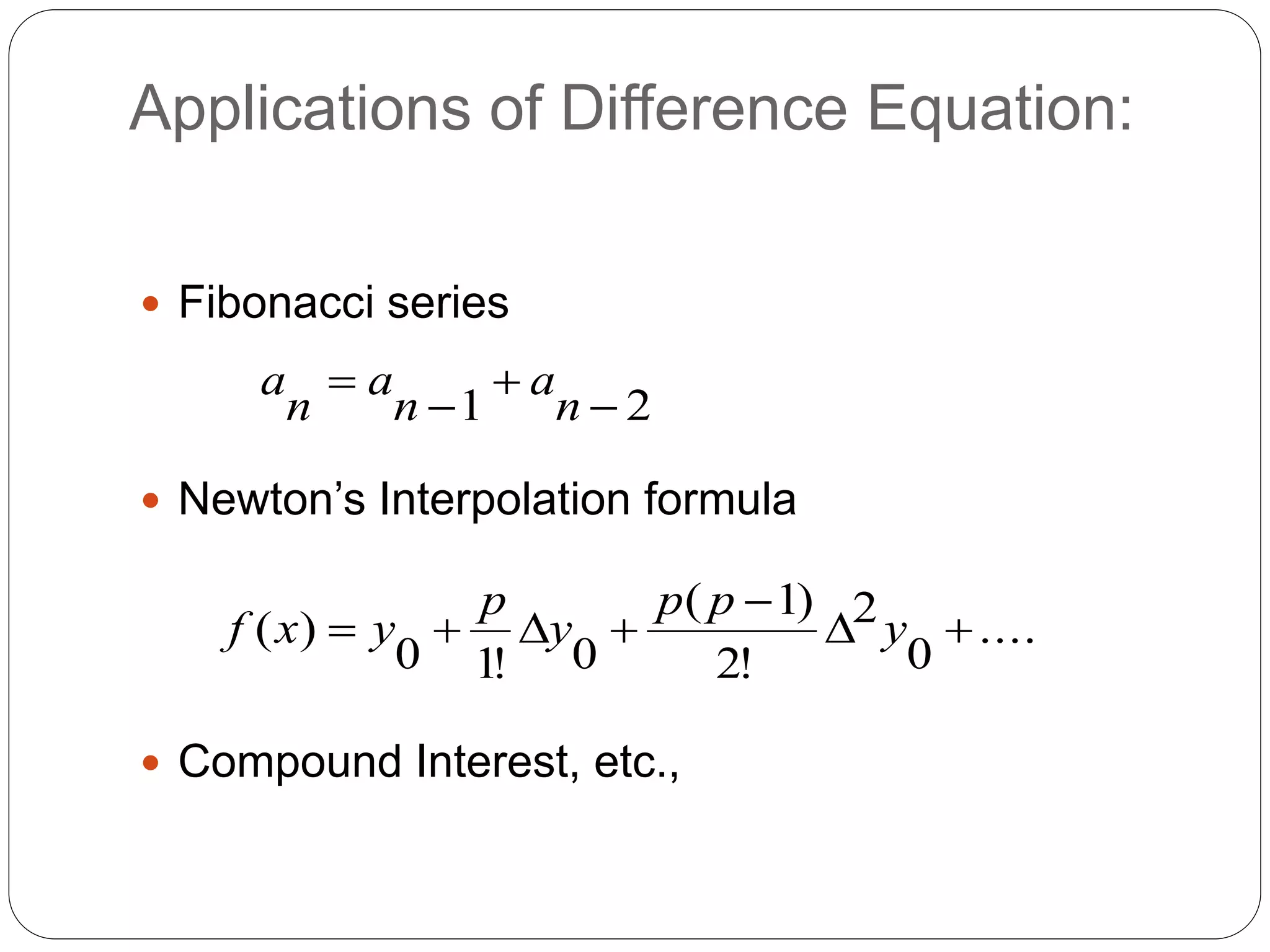
 Fibonacci series
 Newton’s Interpolation formula
 Compound Interest, etc.,
....
0
2
!2
)1(
0!10
)(
21







y
pp
y
p
yxf
n
a
n
a
n
a
Important results on Z-Transforms
 an
 Recurrence
 Linearity
 Damping Rule 











a
z
UuaZ
vbZuaZbvauZ
nZ
dz
d
znZ
az
z
aZ
n
n
nnnn
pp
n
)(
)()()(
)]([)(
)(
1
Important results on Z-Transforms
 Shifting Theorem
Z(a yk-1) = z-1 Y[z]
 Multiplication by a constant
Z(a yk) = a Y[z]
Some Basic Theorems
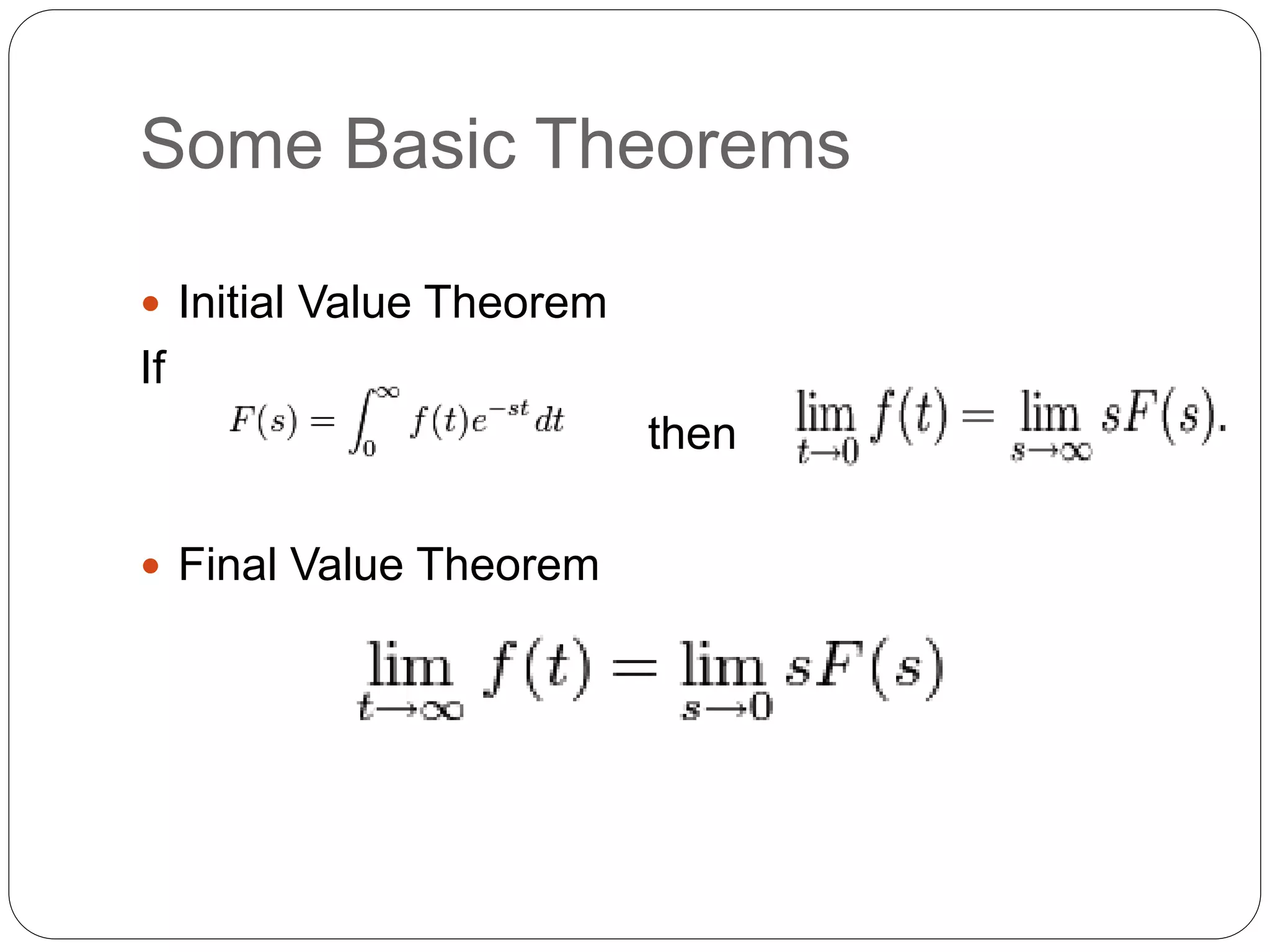
 Initial Value Theorem
If
then
 Final Value Theorem
Some Basic Theorems
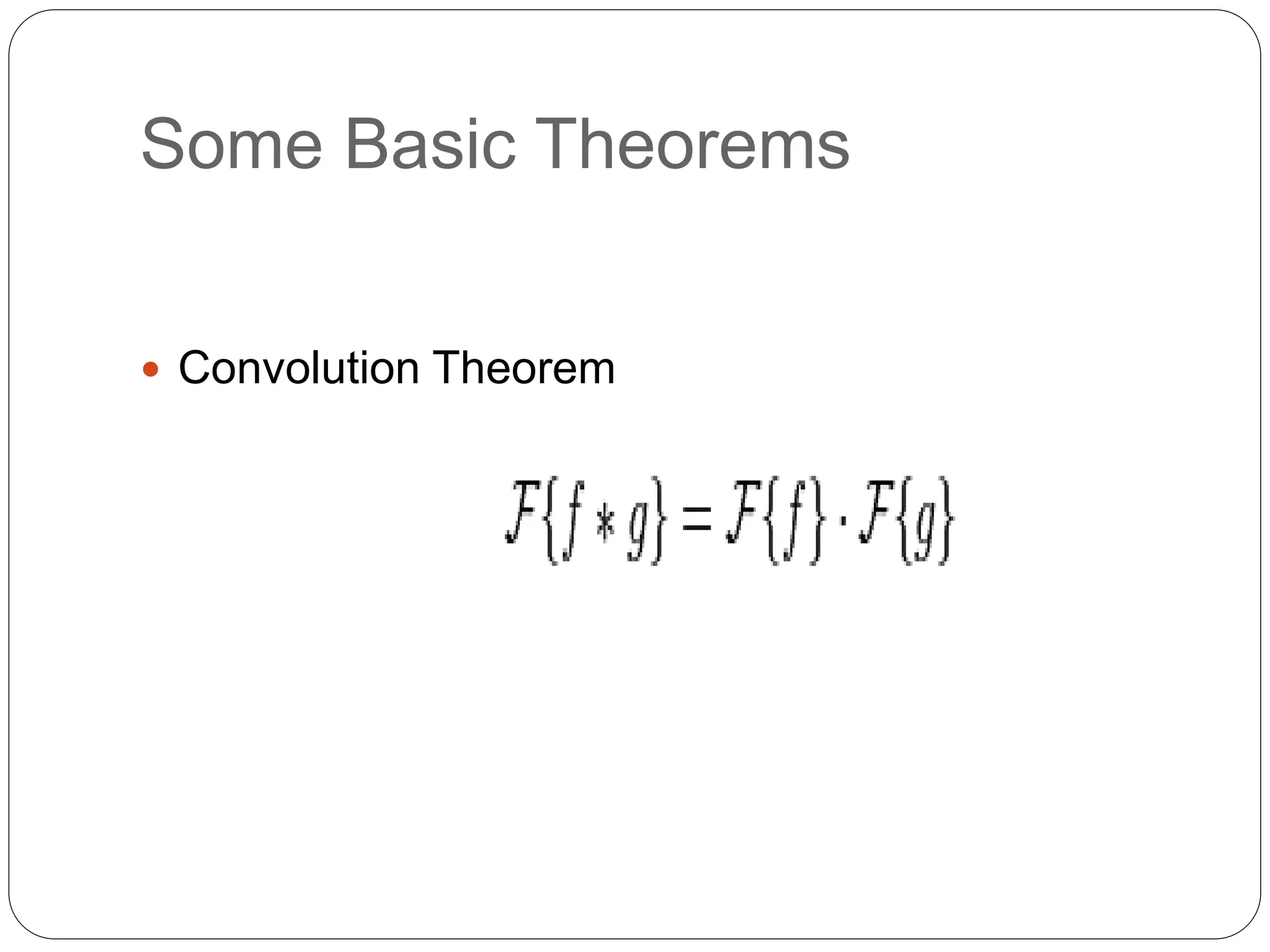
 Convolution Theorem
Connecting Z-Transforms with
other Transforms
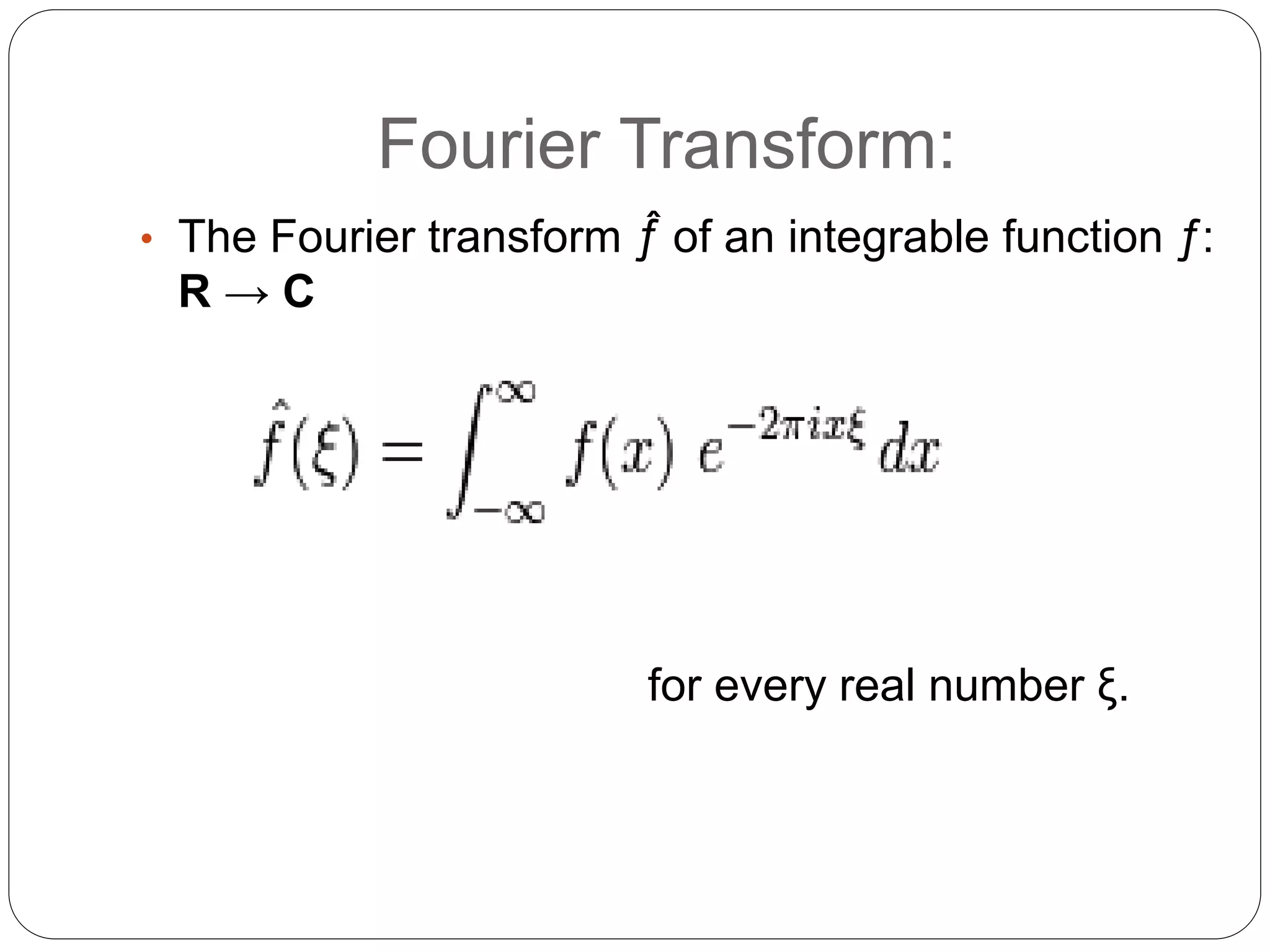
Fourier Transform:
• The Fourier transform ƒ̂ of an integrable function ƒ:
R → C
for every real number ξ.
Connecting Z and Fourier
transforms
 The DTFT is a special case of the Z-transform.
The bilateral Z-transform is defined as:
 special case is 
 Since ,
 it is the evaluation of the Z-transform around
the unit circle in the complex plane.
1||
][)(


 





i
i
n
n
e
ez
znxzX
Connecting Z and Laplace
Transforms
 Bilinear transform
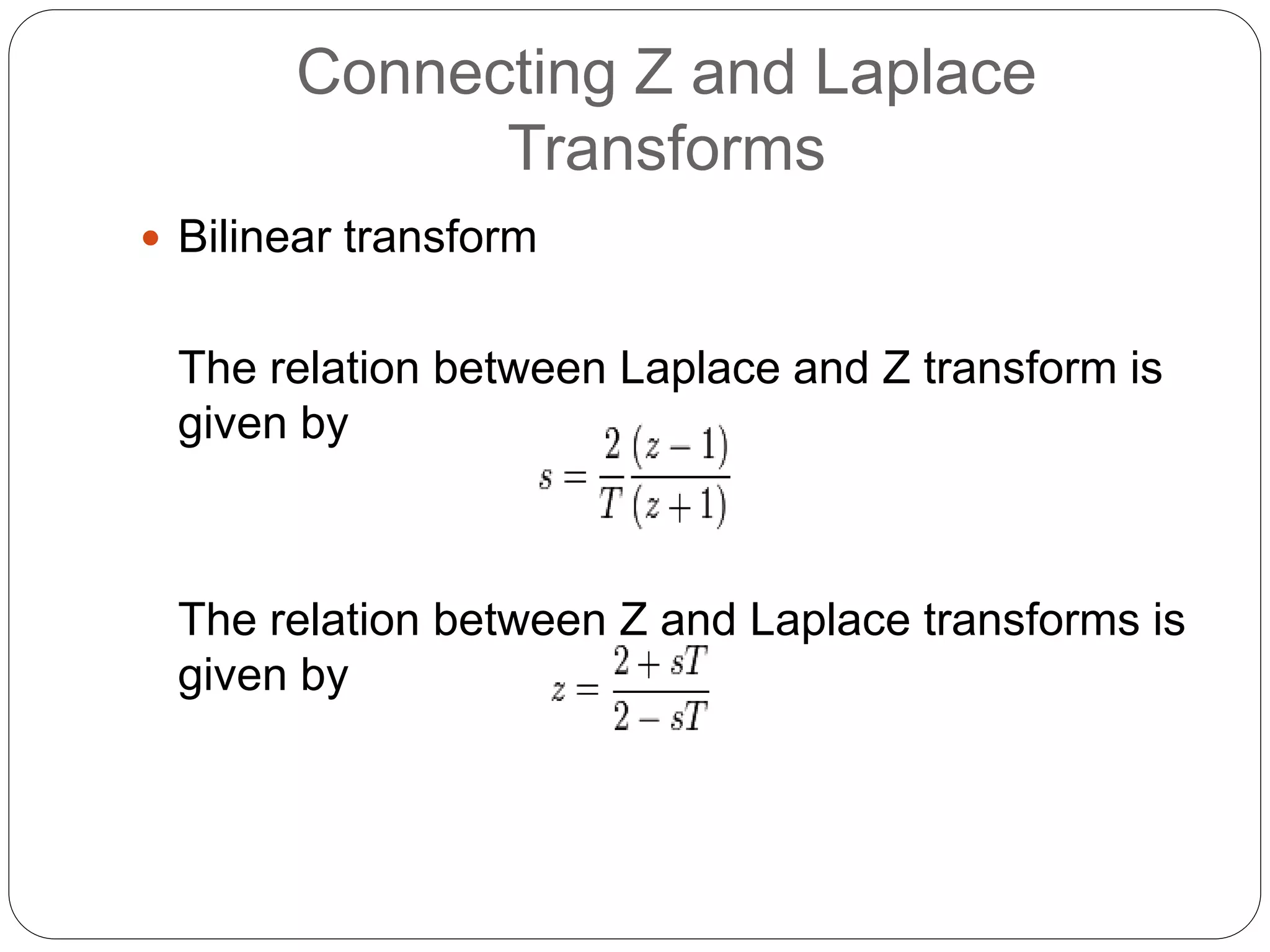
The relation between Laplace and Z transform is
given by
The relation between Z and Laplace transforms is
given by
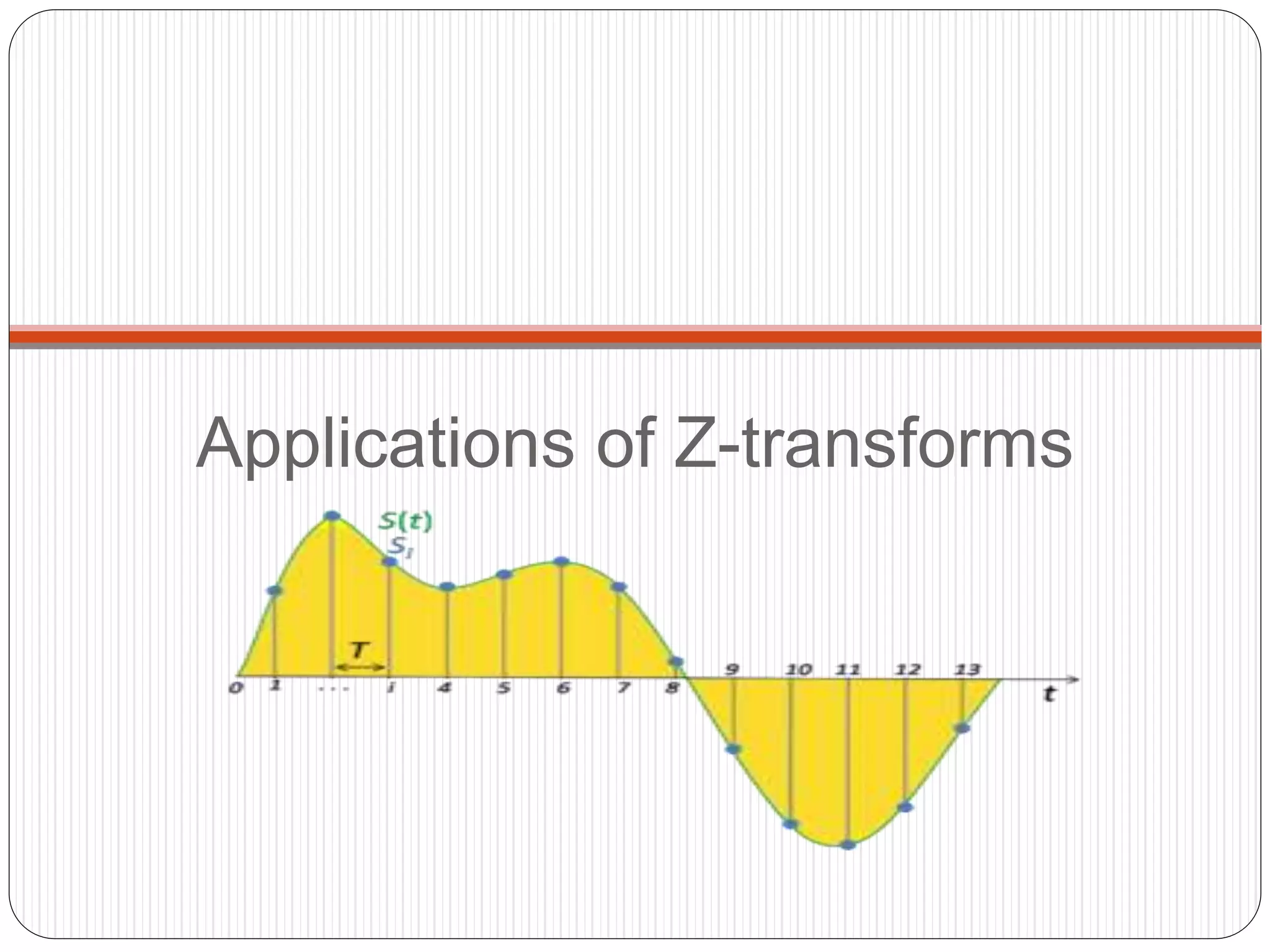
Applications of Z-transforms
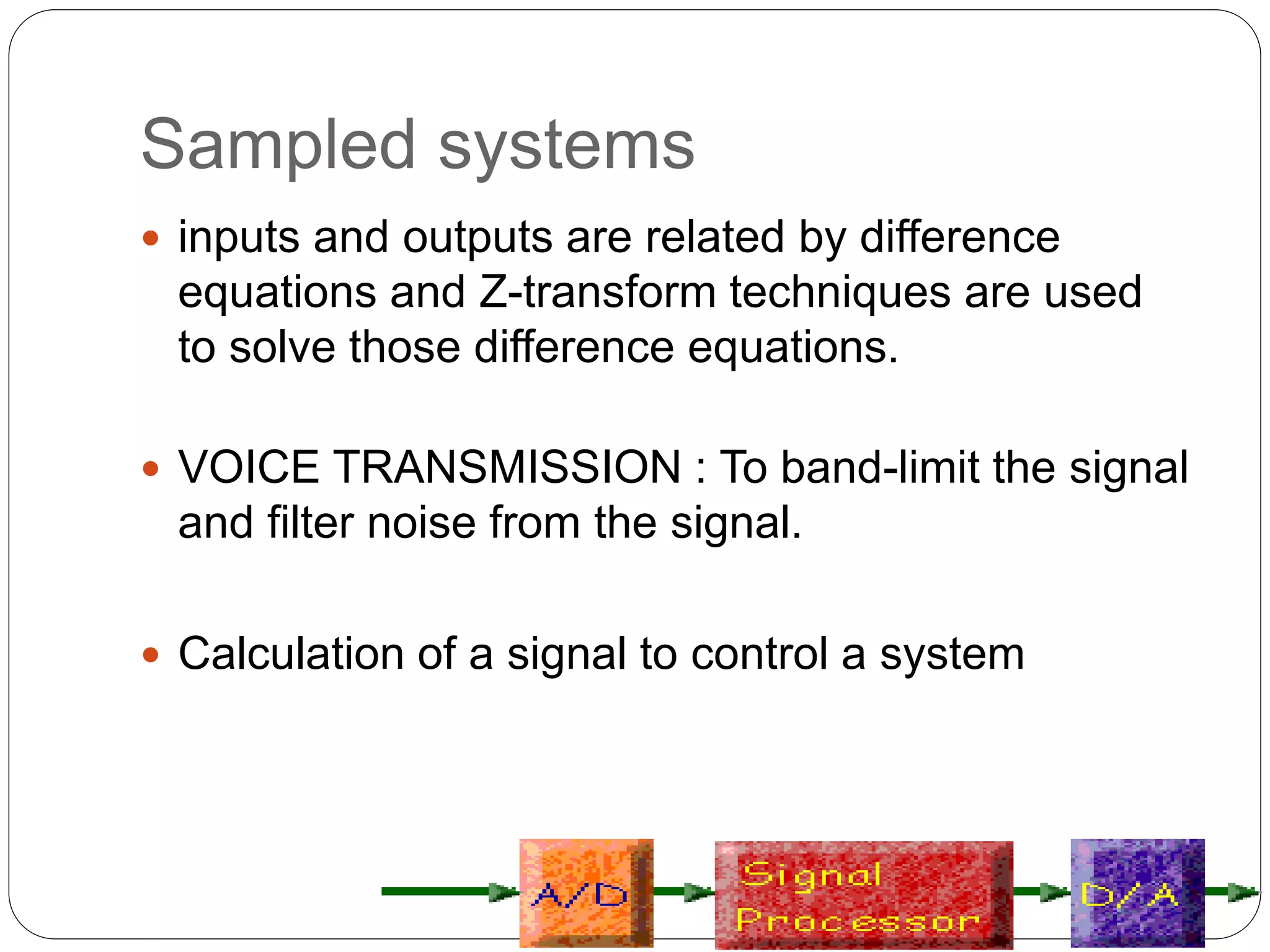
Sampled systems
 inputs and outputs are related by difference
equations and Z-transform techniques are used
to solve those difference equations.
 VOICE TRANSMISSION : To band-limit the signal
and filter noise from the signal.
 Calculation of a signal to control a system
Data Reading from a CD
 Digital Signals
 Transmission systems - Telephone
References
 Higher Engineering Mathematics by B.S. Grewal
 Higher Engineering Mathematics by B.V. Ramana
 Z-Transforms and applications by E. J.
Mastascusa. (http://www.facstaff.bucknell.edu/mastascu/econtrolhtml/Sa
mpled/Sampled1.html)
Thank You

Z transforms and their applications

  • 1.
    By Ram Kumar KR Ganesh Arkalgud Anshul Bansal Z-Transforms and their applications
  • 2.
    Introduction:  Definition: TheZ-transform of a sequence un defined for discreet values n=0,1,2,3….(and un=0 for n<0).This is denoted by Z(un) and is defined as where u is a function of Z.  For every application of Laplace Transform there is a corresponding application for the Z-Transform )()( 0 zUzuuZ n n nn     
  • 3.
    Difference Equations  Definition: Equations relating various terms of a sequence .  Example : String with finite number of beads at equally spaced points
  • 4.
    Applications of DifferenceEquation:  Fibonacci series  Newton’s Interpolation formula  Compound Interest, etc., .... 0 2 !2 )1( 0!10 )( 21        y pp y p yxf n a n a n a
  • 5.
    Important results onZ-Transforms  an  Recurrence  Linearity  Damping Rule             a z UuaZ vbZuaZbvauZ nZ dz d znZ az z aZ n n nnnn pp n )( )()()( )]([)( )( 1
  • 6.
    Important results onZ-Transforms  Shifting Theorem Z(a yk-1) = z-1 Y[z]  Multiplication by a constant Z(a yk) = a Y[z]
  • 7.
    Some Basic Theorems Initial Value Theorem If then  Final Value Theorem
  • 8.
    Some Basic Theorems Convolution Theorem
  • 9.
  • 10.
    Fourier Transform: • TheFourier transform ƒ̂ of an integrable function ƒ: R → C for every real number ξ.
  • 11.
    Connecting Z andFourier transforms  The DTFT is a special case of the Z-transform. The bilateral Z-transform is defined as:  special case is   Since ,  it is the evaluation of the Z-transform around the unit circle in the complex plane. 1|| ][)(          i i n n e ez znxzX
  • 12.
    Connecting Z andLaplace Transforms  Bilinear transform The relation between Laplace and Z transform is given by The relation between Z and Laplace transforms is given by
  • 13.
  • 14.
    Sampled systems  inputsand outputs are related by difference equations and Z-transform techniques are used to solve those difference equations.  VOICE TRANSMISSION : To band-limit the signal and filter noise from the signal.  Calculation of a signal to control a system
  • 15.
    Data Reading froma CD  Digital Signals  Transmission systems - Telephone
  • 17.
    References  Higher EngineeringMathematics by B.S. Grewal  Higher Engineering Mathematics by B.V. Ramana  Z-Transforms and applications by E. J. Mastascusa. (http://www.facstaff.bucknell.edu/mastascu/econtrolhtml/Sa mpled/Sampled1.html)
  • 18.

Editor's Notes

  • #10 Quite less,…I suggest Anshul
  • #14 I’m doing this part
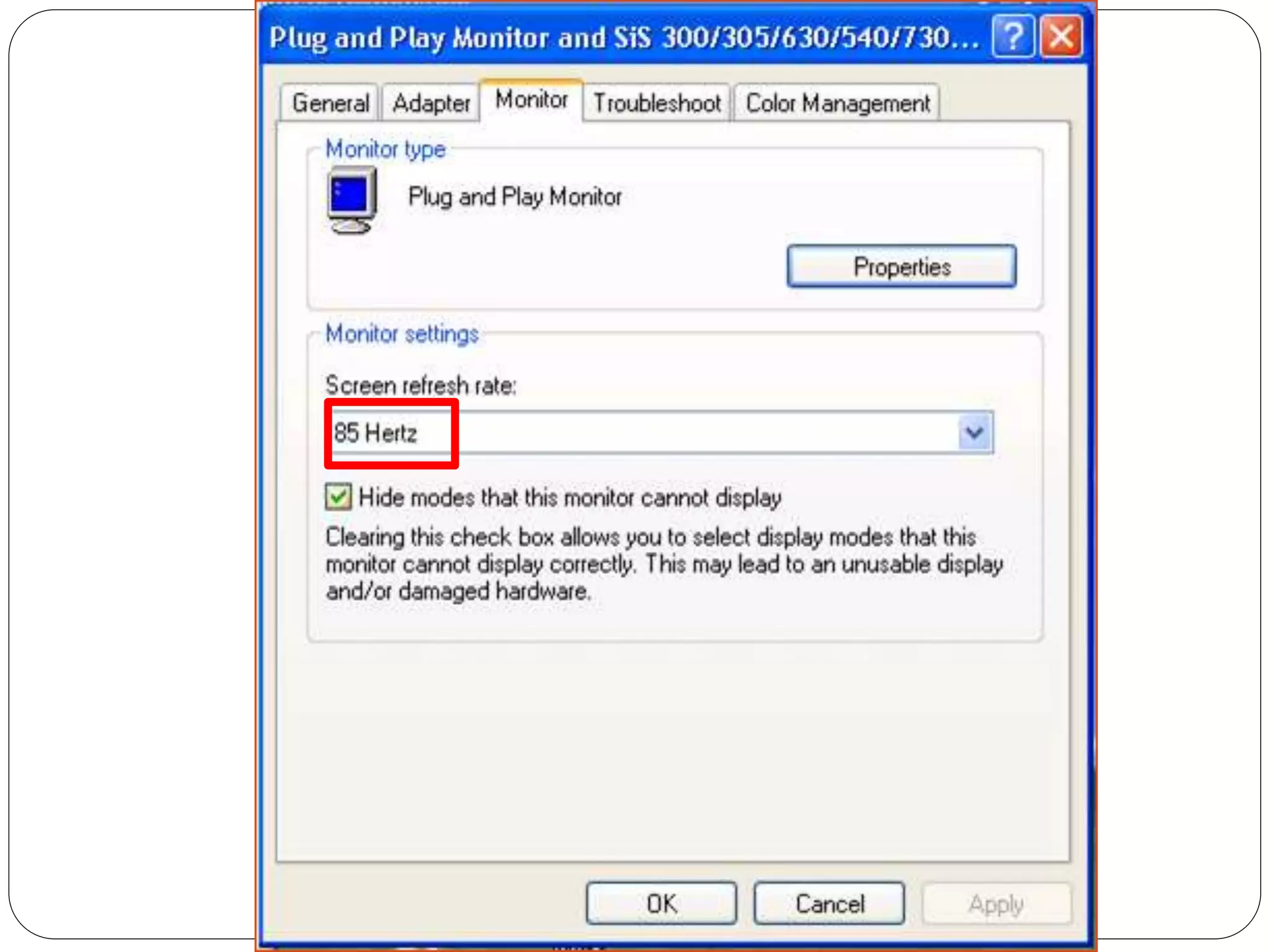
  • #17 Red Marked area shows the screen refresh rate which is a discrete function of frequency. The optimal screen refresh rate is determined during starting of computer. However the value can also be changed.
  • #18 3. from where I took the data reading from the CD