XENOSENSORS
• Several xenobiotic-biotransforming enzymes are inducible,
  :Expression can be increased (upregulated) usually in
  response to exposure to high concentrations of xenobiotics.

• Induction is mediated by ligand-activated receptors :
  xenosensors; that are activated by xenobiotics (ligands) to
  DNA-binding proteins that upregulate the transcription of
  various genes encoding xenobiotic-biotransforming enzymes

• Especially cytochrome P450 (CYP) enzymes, which are
  induced to the greatest extent .
• Xenobiotics can influence the extent of drug
  metabolism by activating transcription and
  inducing the expression of genes encoding
  drug-metabolizing enzymes.
• Thus, a foreign compound may induce its own
  metabolism, as may certain drugs.
• Consequence: A decrease in plasma drug
  concentration over the course of treatment,
  resulting in loss of efficacy, as the auto-
  induced metabolism of the drug exceeds the
  rate at which new drug enters the body.
• Among these target genes are certain CYPs
  and drug transporters.
• Thus, any drug that is a ligand for areceptor
  that induces CYPs and transporters could lead
  to drug interactions.
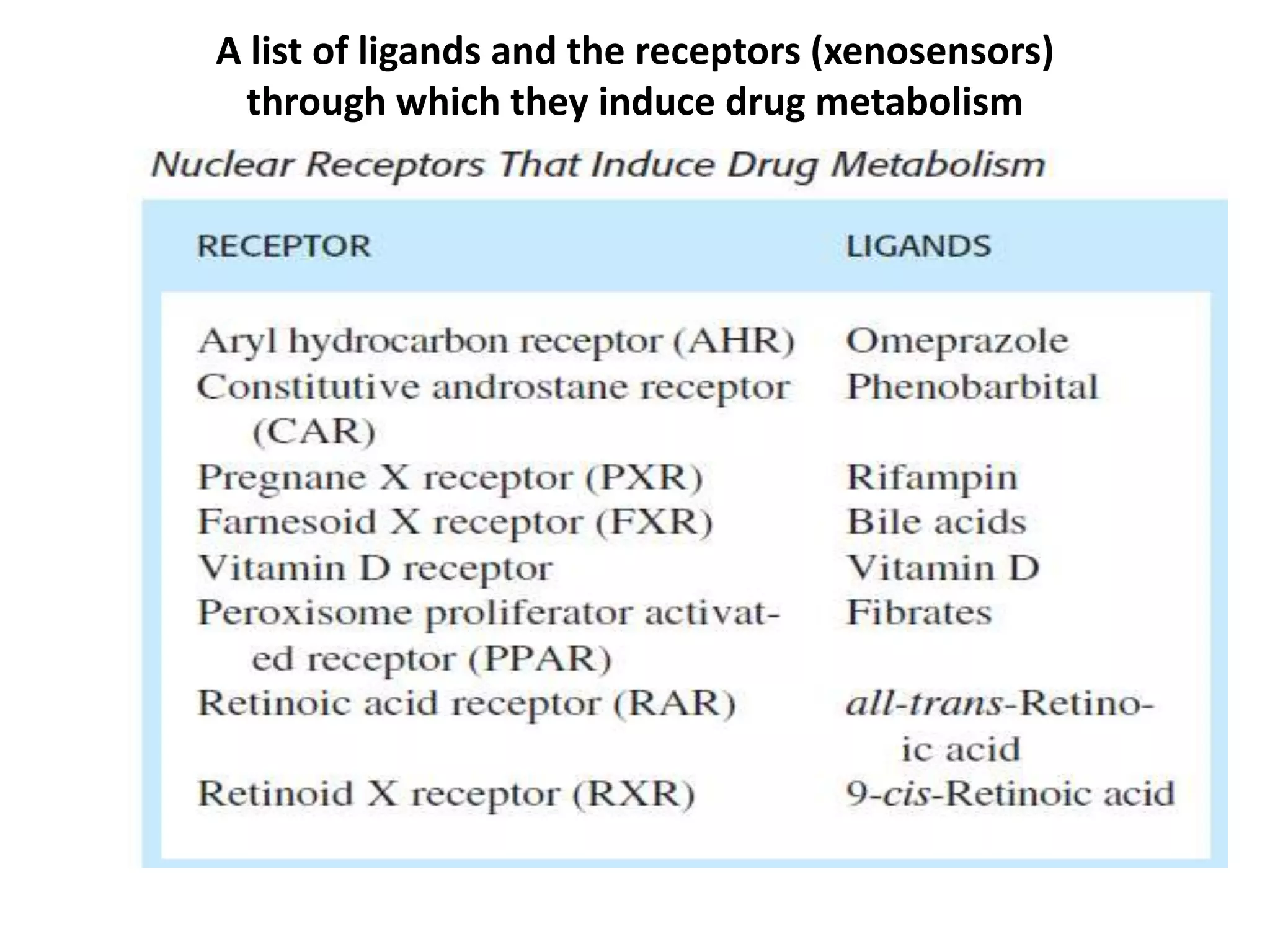
A list of ligands and the receptors (xenosensors)
  through which they induce drug metabolism
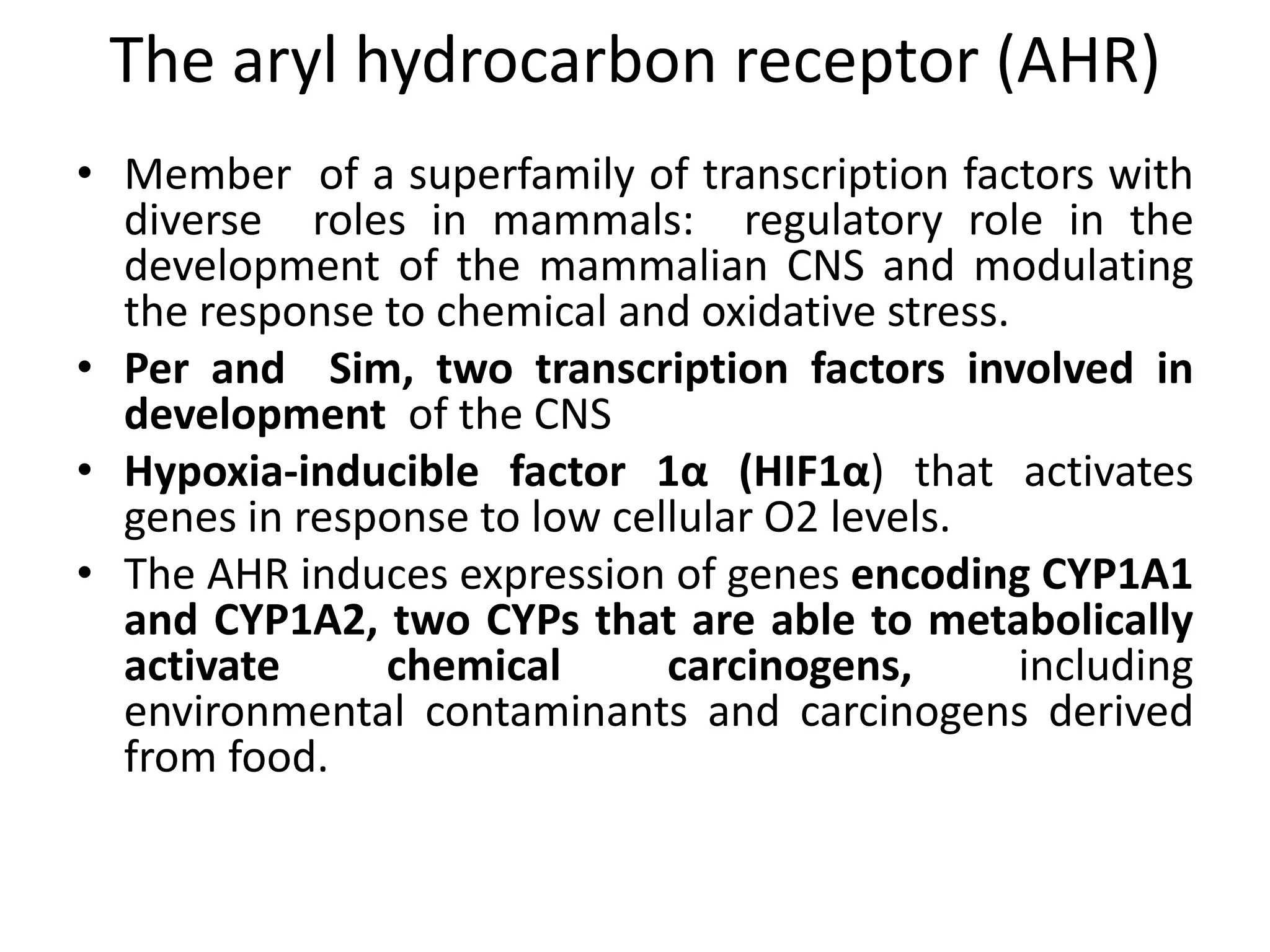
The aryl hydrocarbon receptor (AHR)
• Member of a superfamily of transcription factors with
  diverse roles in mammals: regulatory role in the
  development of the mammalian CNS and modulating
  the response to chemical and oxidative stress.
• Per and Sim, two transcription factors involved in
  development of the CNS
• Hypoxia-inducible factor 1α (HIF1α) that activates
  genes in response to low cellular O2 levels.
• The AHR induces expression of genes encoding CYP1A1
  and CYP1A2, two CYPs that are able to metabolically
  activate     chemical       carcinogens,       including
  environmental contaminants and carcinogens derived
  from food.
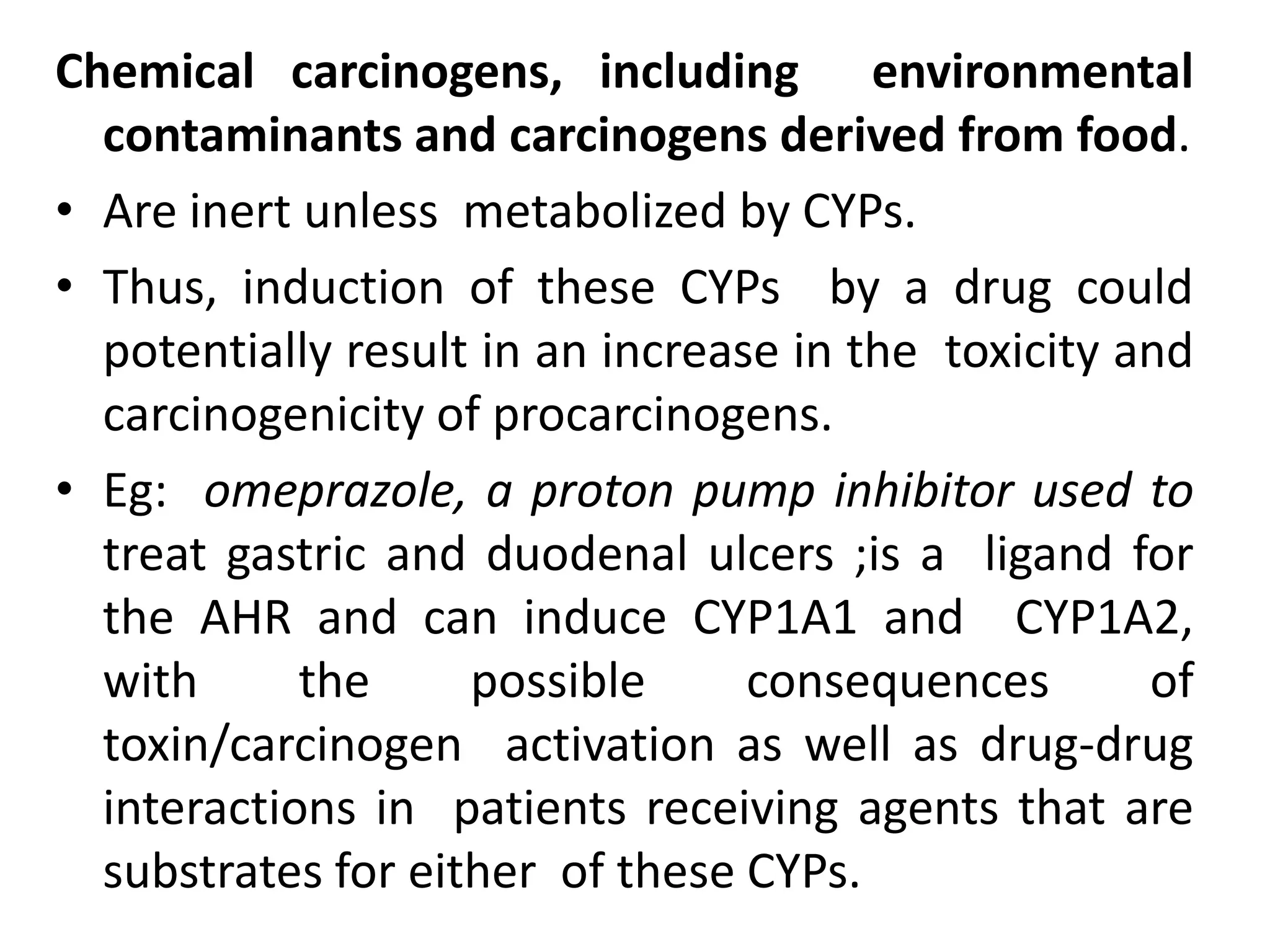
Chemical carcinogens, including environmental
  contaminants and carcinogens derived from food.
• Are inert unless metabolized by CYPs.
• Thus, induction of these CYPs by a drug could
  potentially result in an increase in the toxicity and
  carcinogenicity of procarcinogens.
• Eg: omeprazole, a proton pump inhibitor used to
  treat gastric and duodenal ulcers ;is a ligand for
  the AHR and can induce CYP1A1 and CYP1A2,
  with      the     possible      consequences       of
  toxin/carcinogen activation as well as drug-drug
  interactions in patients receiving agents that are
  substrates for either of these CYPs.
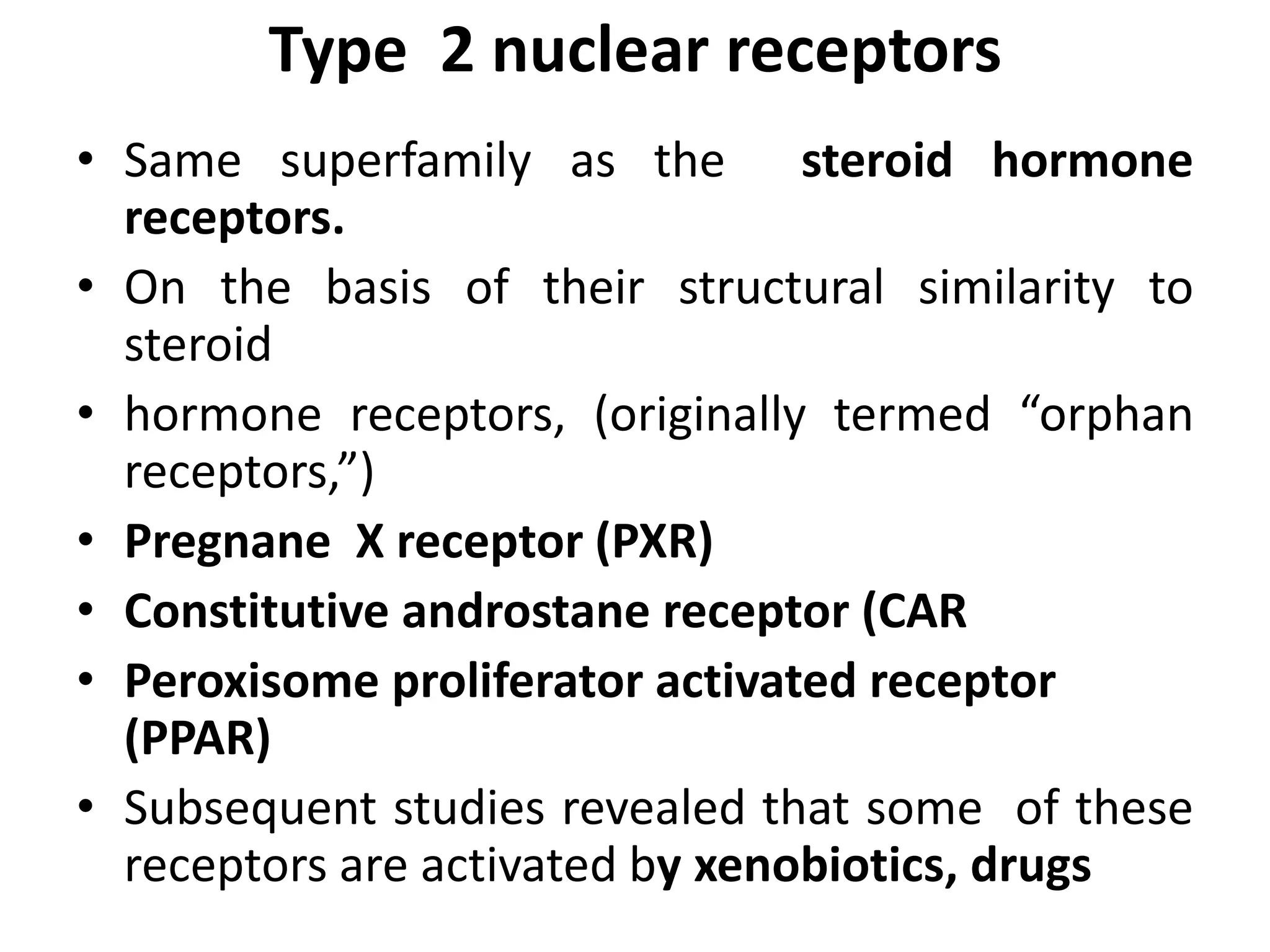
Type 2 nuclear receptors
• Same superfamily as the steroid hormone
  receptors.
• On the basis of their structural similarity to
  steroid
• hormone receptors, (originally termed “orphan
  receptors,”)
• Pregnane X receptor (PXR)
• Constitutive androstane receptor (CAR
• Peroxisome proliferator activated receptor
  (PPAR)
• Subsequent studies revealed that some of these
  receptors are activated by xenobiotics, drugs
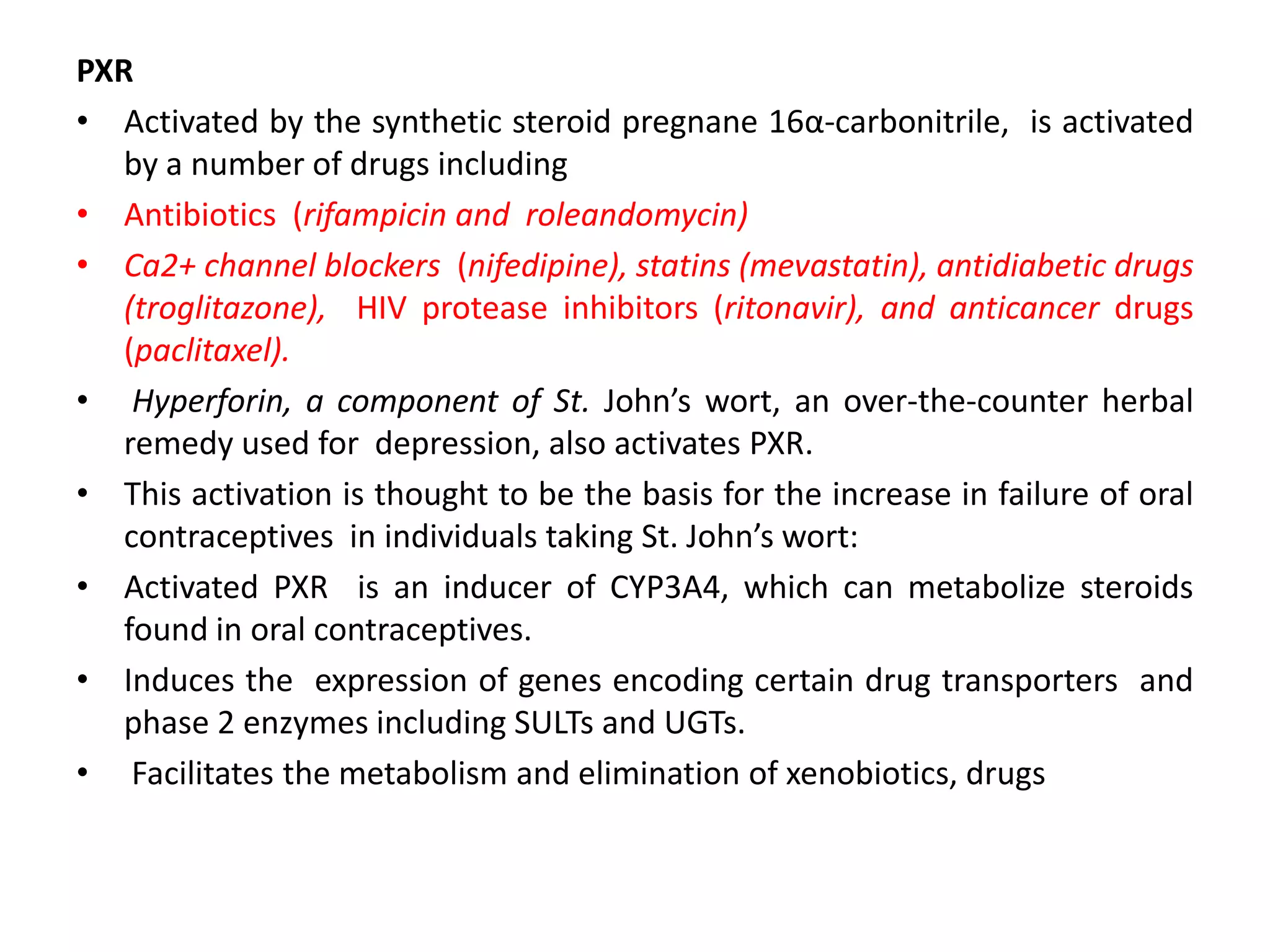
PXR
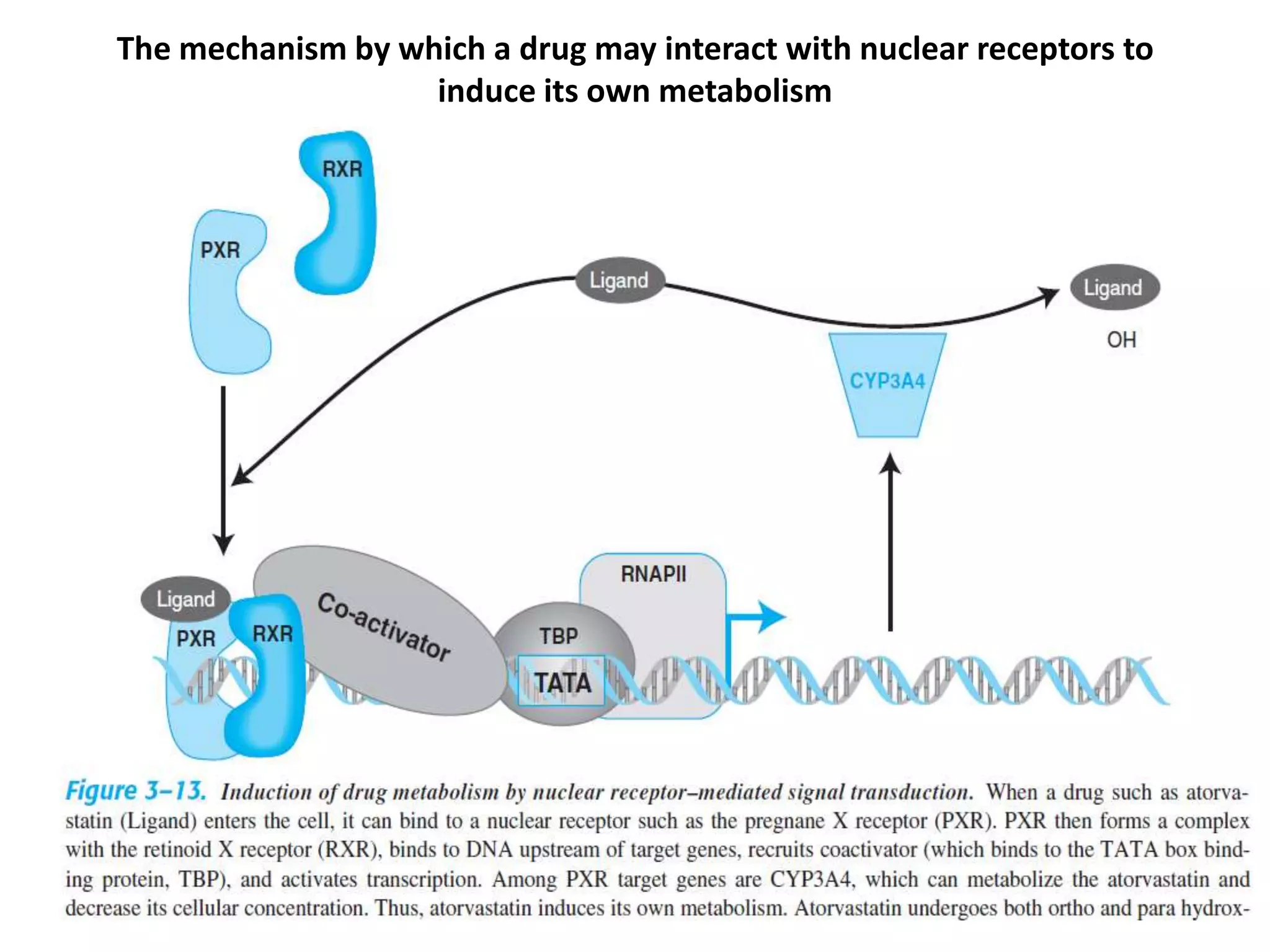
• Activated by the synthetic steroid pregnane 16α-carbonitrile, is activated
   by a number of drugs including
• Antibiotics (rifampicin and roleandomycin)
• Ca2+ channel blockers (nifedipine), statins (mevastatin), antidiabetic drugs
   (troglitazone), HIV protease inhibitors (ritonavir), and anticancer drugs
   (paclitaxel).
• Hyperforin, a component of St. John’s wort, an over-the-counter herbal
   remedy used for depression, also activates PXR.
• This activation is thought to be the basis for the increase in failure of oral
   contraceptives in individuals taking St. John’s wort:
• Activated PXR is an inducer of CYP3A4, which can metabolize steroids
   found in oral contraceptives.
• Induces the expression of genes encoding certain drug transporters and
   phase 2 enzymes including SULTs and UGTs.
• Facilitates the metabolism and elimination of xenobiotics, drugs
The mechanism by which a drug may interact with nuclear receptors to
                   induce its own metabolism
CAR :
• CAR and PXR are closely related, activated by the same ligands
  and bind to the sameDNA-response elements
• Ability to activate genes in the absence of ligand.
• Steroid- androstanol; clotrimazole,meclizine are inverse
  agonists that inhibit gene activation by CAR
• Pesticide1,4-bis[2-(3,5-dichloropyridyloxy)]benzene, steroid 5β-pregnane-
  3,20-dione, -activate gene exp.when bound to CAR.
• Genes induced : encoding several CYPs (CYP2B6, CYP2C9, and
  CYP3A4), Phase 2 enzymes (GSTs, UGTs, and SULTs), and drug
  and endobiotic transporters.
• CYP3A4 is induced by both PXR and CAR
• Potential role in inducing the      degradation of drugs-
  acetaminophen, also function in the control of bilirubin
  degradation, the process by which the liver decomposes
  heme.
The Peroxisome proliferator activated receptor (PPAR)


•   composed three members, α, β, and γ.
• PPARα is the target for the fibrate class of Hyperlipidemic drugs, :
  gemfibrozil and fenofibrate.

• Activation of PPARα results in induction of target genes encoding
  fatty acid metabolizing enzymes that result in lowering of serum
  triglycerides

• Induces CYP4 enzymes that carry out the oxidation of fatty acids and
  drugs with fatty acid–containing side chains, such as leukotriene and
  arachidonic acid analogs.
XENOSENSORS FACTORS
• Certain xenosensors are activated by endogenous ligands (e.g.
   bilirubin, bile acids, and fatty acids activate CAR, PXR, and PPARα,
   respectively)
• Certain nuclear receptors, such as the vitamin D receptor (VDR) can
   mimic PXR and induce CYP3A4, which inactivates the active
   metabolite of vitamin D.
• Xenosensors are not just involved in xenobiotic disposition but also
   play a role in endobiotic homeostasis.
• Induction is a pleiotropic response: Activation of AhR, CAR, PXR,
   PPARα, : result in alterations in the expression of numerous genes,
   some of which are upregulated (or induced) and some of which are
   downregulated (or suppressed).
• Species differences also exist in the ligand specificities of these
   receptors. Eg: rifampicin (activates human PXR but not mouse/rat)
• Meclizine ( activates mouse CAR but inhibits gene induction by
   human CAR. )
• Rodent model systems do not reflect the response of humans to
   drugs.

Xenosensors

  • 1.
  • 2.
    • Several xenobiotic-biotransformingenzymes are inducible, :Expression can be increased (upregulated) usually in response to exposure to high concentrations of xenobiotics. • Induction is mediated by ligand-activated receptors : xenosensors; that are activated by xenobiotics (ligands) to DNA-binding proteins that upregulate the transcription of various genes encoding xenobiotic-biotransforming enzymes • Especially cytochrome P450 (CYP) enzymes, which are induced to the greatest extent .
  • 3.
    • Xenobiotics caninfluence the extent of drug metabolism by activating transcription and inducing the expression of genes encoding drug-metabolizing enzymes. • Thus, a foreign compound may induce its own metabolism, as may certain drugs. • Consequence: A decrease in plasma drug concentration over the course of treatment, resulting in loss of efficacy, as the auto- induced metabolism of the drug exceeds the rate at which new drug enters the body.
  • 4.
    • Among thesetarget genes are certain CYPs and drug transporters. • Thus, any drug that is a ligand for areceptor that induces CYPs and transporters could lead to drug interactions.
  • 5.
    A list ofligands and the receptors (xenosensors) through which they induce drug metabolism
  • 6.
    The aryl hydrocarbonreceptor (AHR) • Member of a superfamily of transcription factors with diverse roles in mammals: regulatory role in the development of the mammalian CNS and modulating the response to chemical and oxidative stress. • Per and Sim, two transcription factors involved in development of the CNS • Hypoxia-inducible factor 1α (HIF1α) that activates genes in response to low cellular O2 levels. • The AHR induces expression of genes encoding CYP1A1 and CYP1A2, two CYPs that are able to metabolically activate chemical carcinogens, including environmental contaminants and carcinogens derived from food.
  • 7.
    Chemical carcinogens, includingenvironmental contaminants and carcinogens derived from food. • Are inert unless metabolized by CYPs. • Thus, induction of these CYPs by a drug could potentially result in an increase in the toxicity and carcinogenicity of procarcinogens. • Eg: omeprazole, a proton pump inhibitor used to treat gastric and duodenal ulcers ;is a ligand for the AHR and can induce CYP1A1 and CYP1A2, with the possible consequences of toxin/carcinogen activation as well as drug-drug interactions in patients receiving agents that are substrates for either of these CYPs.
  • 8.
    Type 2 nuclearreceptors • Same superfamily as the steroid hormone receptors. • On the basis of their structural similarity to steroid • hormone receptors, (originally termed “orphan receptors,”) • Pregnane X receptor (PXR) • Constitutive androstane receptor (CAR • Peroxisome proliferator activated receptor (PPAR) • Subsequent studies revealed that some of these receptors are activated by xenobiotics, drugs
  • 9.
    PXR • Activated bythe synthetic steroid pregnane 16α-carbonitrile, is activated by a number of drugs including • Antibiotics (rifampicin and roleandomycin) • Ca2+ channel blockers (nifedipine), statins (mevastatin), antidiabetic drugs (troglitazone), HIV protease inhibitors (ritonavir), and anticancer drugs (paclitaxel). • Hyperforin, a component of St. John’s wort, an over-the-counter herbal remedy used for depression, also activates PXR. • This activation is thought to be the basis for the increase in failure of oral contraceptives in individuals taking St. John’s wort: • Activated PXR is an inducer of CYP3A4, which can metabolize steroids found in oral contraceptives. • Induces the expression of genes encoding certain drug transporters and phase 2 enzymes including SULTs and UGTs. • Facilitates the metabolism and elimination of xenobiotics, drugs
  • 10.
    The mechanism bywhich a drug may interact with nuclear receptors to induce its own metabolism
  • 11.
    CAR : • CARand PXR are closely related, activated by the same ligands and bind to the sameDNA-response elements • Ability to activate genes in the absence of ligand. • Steroid- androstanol; clotrimazole,meclizine are inverse agonists that inhibit gene activation by CAR • Pesticide1,4-bis[2-(3,5-dichloropyridyloxy)]benzene, steroid 5β-pregnane- 3,20-dione, -activate gene exp.when bound to CAR. • Genes induced : encoding several CYPs (CYP2B6, CYP2C9, and CYP3A4), Phase 2 enzymes (GSTs, UGTs, and SULTs), and drug and endobiotic transporters. • CYP3A4 is induced by both PXR and CAR • Potential role in inducing the degradation of drugs- acetaminophen, also function in the control of bilirubin degradation, the process by which the liver decomposes heme.
  • 12.
    The Peroxisome proliferatoractivated receptor (PPAR) • composed three members, α, β, and γ. • PPARα is the target for the fibrate class of Hyperlipidemic drugs, : gemfibrozil and fenofibrate. • Activation of PPARα results in induction of target genes encoding fatty acid metabolizing enzymes that result in lowering of serum triglycerides • Induces CYP4 enzymes that carry out the oxidation of fatty acids and drugs with fatty acid–containing side chains, such as leukotriene and arachidonic acid analogs.
  • 13.
    XENOSENSORS FACTORS • Certainxenosensors are activated by endogenous ligands (e.g. bilirubin, bile acids, and fatty acids activate CAR, PXR, and PPARα, respectively) • Certain nuclear receptors, such as the vitamin D receptor (VDR) can mimic PXR and induce CYP3A4, which inactivates the active metabolite of vitamin D. • Xenosensors are not just involved in xenobiotic disposition but also play a role in endobiotic homeostasis. • Induction is a pleiotropic response: Activation of AhR, CAR, PXR, PPARα, : result in alterations in the expression of numerous genes, some of which are upregulated (or induced) and some of which are downregulated (or suppressed). • Species differences also exist in the ligand specificities of these receptors. Eg: rifampicin (activates human PXR but not mouse/rat) • Meclizine ( activates mouse CAR but inhibits gene induction by human CAR. ) • Rodent model systems do not reflect the response of humans to drugs.