Understanding
Karnataka's Tendering
Process
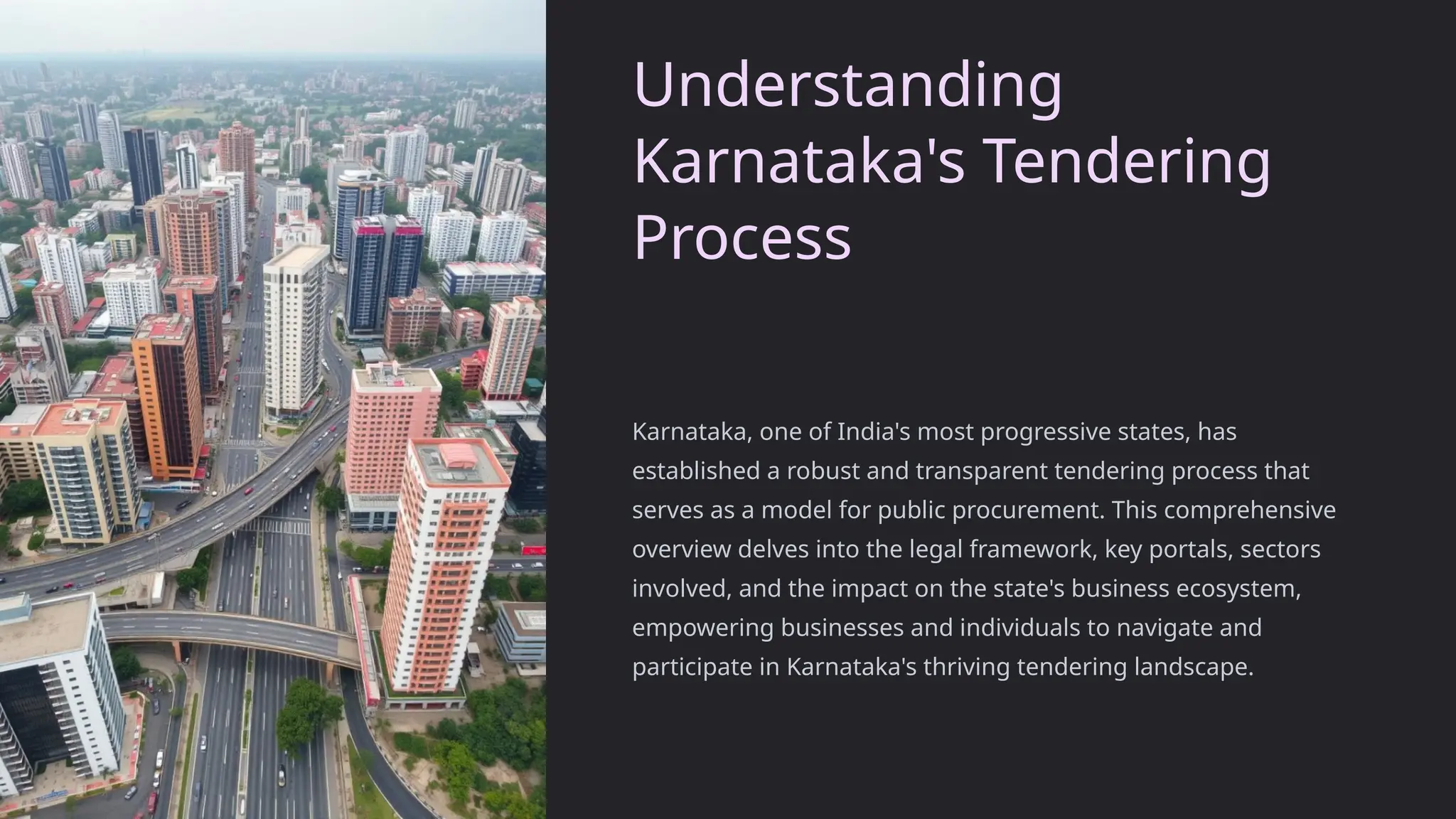
Karnataka, one of India's most progressive states, has
established a robust and transparent tendering process that
serves as a model for public procurement. This comprehensive
overview delves into the legal framework, key portals, sectors
involved, and the impact on the state's business ecosystem,
empowering businesses and individuals to navigate and
participate in Karnataka's thriving tendering landscape.
Legal Foundations of
Karnataka's Tendering
1 Karnataka Transparency in Public Procurements Act,
1999
The cornerstone legislation that mandates open tendering and
ensures fairness, transparency, and accountability in government
procurement.
2 General Financial Rules (GFR), 2017
Adopted by many departments to provide uniformity and
standardization in the tendering process.
3 e-Government Procurement (e-GP) Portal
The digital platform that facilitates the entire tender lifecycle, from
publication to bid submission and evaluation.
Navigating Karnataka's Tendering Portals
e-GP Karnataka
The primary portal where all state
government tenders are
published, enabling seamless
bidding, document submission,
and access to tender results.
Karnataka Public
Procurement Portal
A centralized government website
that consolidates the publishing
of tenders and procurement
notices, ensuring easy access for
businesses.
Government eMarketplace
(GeM)
A specialized platform for
procurement in sectors like
defense, police, and public works,
offering a streamlined and
efficient procurement process.
Types of Tenders in Karnataka
1 Open Tender
The most widely used tender type, where all qualified bidders
can participate, ensuring maximum competition and
transparency.
2 Limited Tender
For specialized projects requiring unique skills, where only
selected vendors are invited to bid, ensuring the right expertise
is engaged.
3 Two-stage Tender
Often used in complex projects where the scope and
specifications may not be well-defined at the outset, allowing for
a more iterative and collaborative process.
Sectors Driving Karnataka's Tendering
Infrastructure and Public
Works
Karnataka's tendering process is
heavily focused on the
development of roads, highways,
urban infrastructure, water
supply, and power projects,
driving the state's growth and
connectivity.
Healthcare
The state government actively
procures medical supplies,
equipment, and services for its
expansive healthcare system,
ensuring that citizens have access
to quality healthcare
infrastructure.
Education
Karnataka's tendering process
extends to the education sector,
covering the construction of
schools, procurement of
educational materials, and
implementation of digital learning
initiatives.
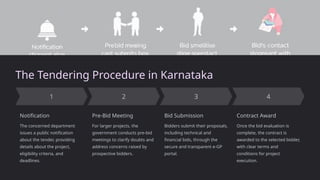
The Tendering Procedure in Karnataka
Notification
The concerned department
issues a public notification
about the tender, providing
details about the project,
eligibility criteria, and
deadlines.
Pre-Bid Meeting
For larger projects, the
government conducts pre-bid
meetings to clarify doubts and
address concerns raised by
prospective bidders.
Bid Submission
Bidders submit their proposals,
including technical and
financial bids, through the
secure and transparent e-GP
portal.
Contract Award
Once the bid evaluation is
complete, the contract is
awarded to the selected bidder,
with clear terms and
conditions for project
execution.
Challenges and Opportunities in Karnataka's
Tendering
Bureaucratic Delays
Prolonged approval cycles can
sometimes slow down the
procurement process, necessitating
further streamlining and
digitalization.
Bid Rigging
Instances of collusion between
bidders in certain sectors have been
reported, requiring increased
vigilance and stringent monitoring.
Lack of Awareness
Many smaller enterprises face
challenges in navigating the
tendering process, highlighting the
need for greater outreach and
capacity-building initiatives.
The Role of Technology in Karnataka's Tendering
e-Auctions
Karnataka is increasingly using
electronic auctions to facilitate real-time
bidding, fostering competitive pricing
and transparency.
Artificial Intelligence
Future advancements in the tendering
process will leverage AI-driven analytics
to predict project outcomes and
enhance decision-making.
e-Governance
The e-Government Procurement (e-GP)
system is a significant step toward
digitalization, reducing human
intervention and ensuring real-time
tracking of tender progress.
Enabling an Inclusive and Efficient Tendering Ecosystem
Transparency The legal framework and digital portals in Karnataka ensure a
transparent and accountable tendering process, building trust
among businesses.
Fostering Competition The state's commitment to open tendering and a level playing field
encourages participation from a wide range of businesses, driving
innovation and efficiency.
Empowering Small Enterprises Initiatives to increase awareness and provide support to smaller
businesses help ensure their active involvement in Karnataka's
tendering ecosystem.
Conclusion: Karnataka's
Tendering as a Model for
India
The tendering process in Karnataka serves as a shining example
of public procurement in India, driving infrastructure
development, fostering competition, and ensuring the efficient
utilization of public funds. As the state continues to innovate and
leverage technology, its focus on transparency, inclusivity, and
continuous improvement will further strengthen Karnataka's
tendering ecosystem, positioning it as a model for other states to
emulate.

"Winning Contracts through Karnataka Tenders"

  • 1.
    Understanding Karnataka's Tendering Process Karnataka, oneof India's most progressive states, has established a robust and transparent tendering process that serves as a model for public procurement. This comprehensive overview delves into the legal framework, key portals, sectors involved, and the impact on the state's business ecosystem, empowering businesses and individuals to navigate and participate in Karnataka's thriving tendering landscape.
  • 2.
    Legal Foundations of Karnataka'sTendering 1 Karnataka Transparency in Public Procurements Act, 1999 The cornerstone legislation that mandates open tendering and ensures fairness, transparency, and accountability in government procurement. 2 General Financial Rules (GFR), 2017 Adopted by many departments to provide uniformity and standardization in the tendering process. 3 e-Government Procurement (e-GP) Portal The digital platform that facilitates the entire tender lifecycle, from publication to bid submission and evaluation.
  • 3.
    Navigating Karnataka's TenderingPortals e-GP Karnataka The primary portal where all state government tenders are published, enabling seamless bidding, document submission, and access to tender results. Karnataka Public Procurement Portal A centralized government website that consolidates the publishing of tenders and procurement notices, ensuring easy access for businesses. Government eMarketplace (GeM) A specialized platform for procurement in sectors like defense, police, and public works, offering a streamlined and efficient procurement process.
  • 4.
    Types of Tendersin Karnataka 1 Open Tender The most widely used tender type, where all qualified bidders can participate, ensuring maximum competition and transparency. 2 Limited Tender For specialized projects requiring unique skills, where only selected vendors are invited to bid, ensuring the right expertise is engaged. 3 Two-stage Tender Often used in complex projects where the scope and specifications may not be well-defined at the outset, allowing for a more iterative and collaborative process.
  • 5.
    Sectors Driving Karnataka'sTendering Infrastructure and Public Works Karnataka's tendering process is heavily focused on the development of roads, highways, urban infrastructure, water supply, and power projects, driving the state's growth and connectivity. Healthcare The state government actively procures medical supplies, equipment, and services for its expansive healthcare system, ensuring that citizens have access to quality healthcare infrastructure. Education Karnataka's tendering process extends to the education sector, covering the construction of schools, procurement of educational materials, and implementation of digital learning initiatives.
  • 6.
    The Tendering Procedurein Karnataka Notification The concerned department issues a public notification about the tender, providing details about the project, eligibility criteria, and deadlines. Pre-Bid Meeting For larger projects, the government conducts pre-bid meetings to clarify doubts and address concerns raised by prospective bidders. Bid Submission Bidders submit their proposals, including technical and financial bids, through the secure and transparent e-GP portal. Contract Award Once the bid evaluation is complete, the contract is awarded to the selected bidder, with clear terms and conditions for project execution.
  • 7.
    Challenges and Opportunitiesin Karnataka's Tendering Bureaucratic Delays Prolonged approval cycles can sometimes slow down the procurement process, necessitating further streamlining and digitalization. Bid Rigging Instances of collusion between bidders in certain sectors have been reported, requiring increased vigilance and stringent monitoring. Lack of Awareness Many smaller enterprises face challenges in navigating the tendering process, highlighting the need for greater outreach and capacity-building initiatives.
  • 8.
    The Role ofTechnology in Karnataka's Tendering e-Auctions Karnataka is increasingly using electronic auctions to facilitate real-time bidding, fostering competitive pricing and transparency. Artificial Intelligence Future advancements in the tendering process will leverage AI-driven analytics to predict project outcomes and enhance decision-making. e-Governance The e-Government Procurement (e-GP) system is a significant step toward digitalization, reducing human intervention and ensuring real-time tracking of tender progress.
  • 9.
    Enabling an Inclusiveand Efficient Tendering Ecosystem Transparency The legal framework and digital portals in Karnataka ensure a transparent and accountable tendering process, building trust among businesses. Fostering Competition The state's commitment to open tendering and a level playing field encourages participation from a wide range of businesses, driving innovation and efficiency. Empowering Small Enterprises Initiatives to increase awareness and provide support to smaller businesses help ensure their active involvement in Karnataka's tendering ecosystem.
  • 10.
    Conclusion: Karnataka's Tendering asa Model for India The tendering process in Karnataka serves as a shining example of public procurement in India, driving infrastructure development, fostering competition, and ensuring the efficient utilization of public funds. As the state continues to innovate and leverage technology, its focus on transparency, inclusivity, and continuous improvement will further strengthen Karnataka's tendering ecosystem, positioning it as a model for other states to emulate.