




Information isChanging LearningMEETING THE NEEDS OF 21ST CENTURY LEARNERSWWW.DELL.COM/K12Adam GarryManagers of Global Professional Learning
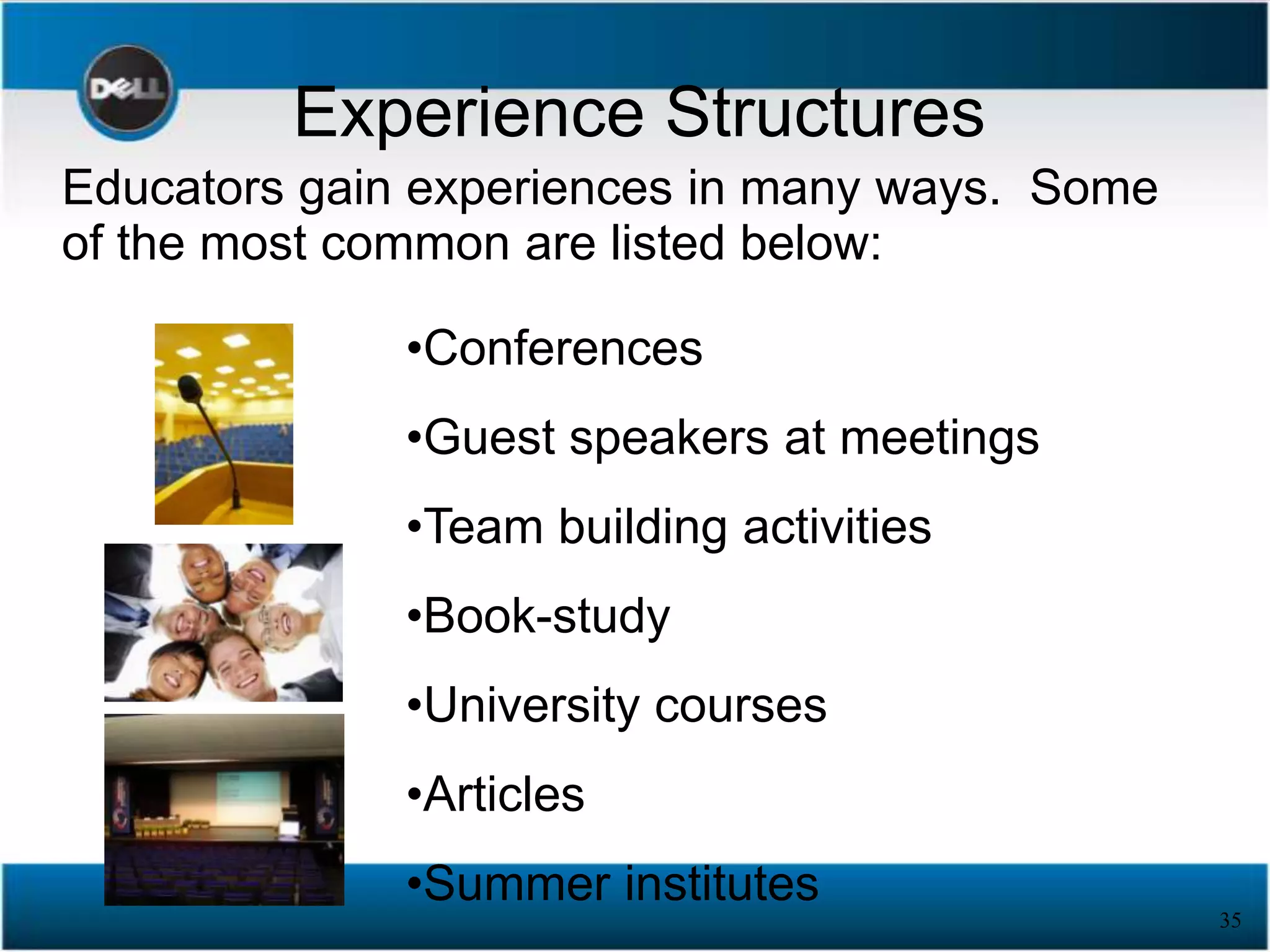
Experience
Driving Question:How are you defining 21st century learning?
Schools have always been about information Sharing?DELL CONFIDENTIAL515TrueFalse12 of 30
21st Century SkillsInformation Fluency
Communication and Collaboration
Problem Solving
Creativity and Innovation
Self-Direction
Information is changing learning
9Mash-upUSEPodcastsVideoCREATEREMIXInformation Flows9
10OUR CHILDRENARE GROWING UP IN THE DIGITAL  AGEGrades 3-528% Email, IM and Text
54% Play Video or Online Games
32% Share Music, Videos, and Photos
51% Use the Internet for ResearchGrades 6-1247% Email, IM and Text
71% Have a Cell Phone
26% Have a Smart Phone
38% Use Social Networking Site to Collaborate on School Projects© Project TomorrowSpeak Up 2008 National Data Findings
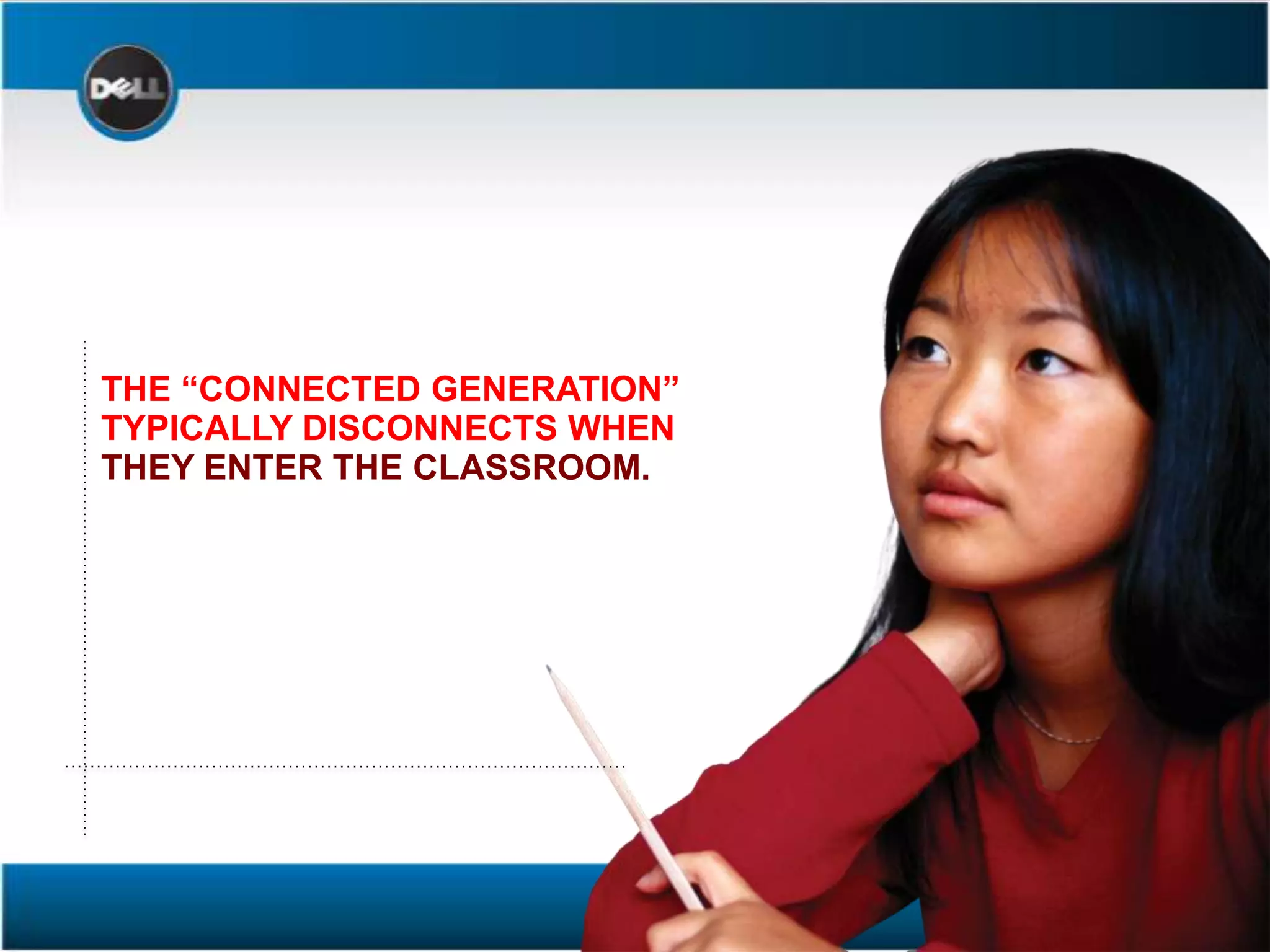
The “Connected Generation” typically disconnects when they enter the classroom.12
2Things
32Million650Mileshttp://upload.wikimedia.org/wikipedia/en/b/b4/Library_of_Congress_from_North.JPG
How many cups did we fill in 2002?
How many cups do you think we fill in 2002?37,000
Just 36 percent of 18- to 24-year-olds reported reading a daily newspaper in 2006, down from 73 percent in 1970..01%http://www.flickr.com/photos/mbg_photos/2484112082/
11111111
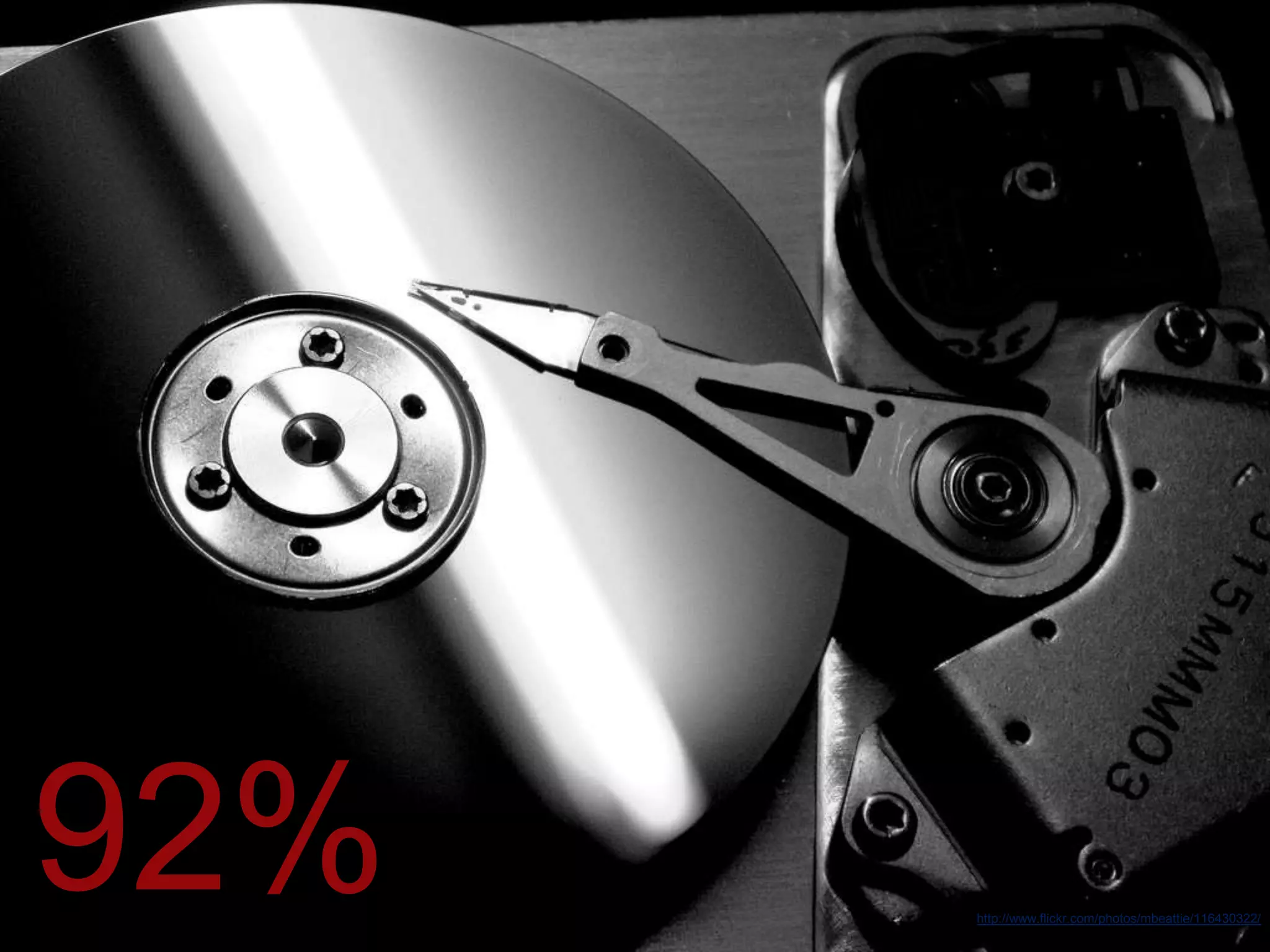
92%http://www.flickr.com/photos/mbeattie/116430322/
57000yearshttp://www.flickr.com/photos/jesse757/3094868007/
3,805YEARS
A Day2.7 BillionsearchesYouTubeWatch -100 million video clipsUpload-65,000
1 in 200page views on the Internet
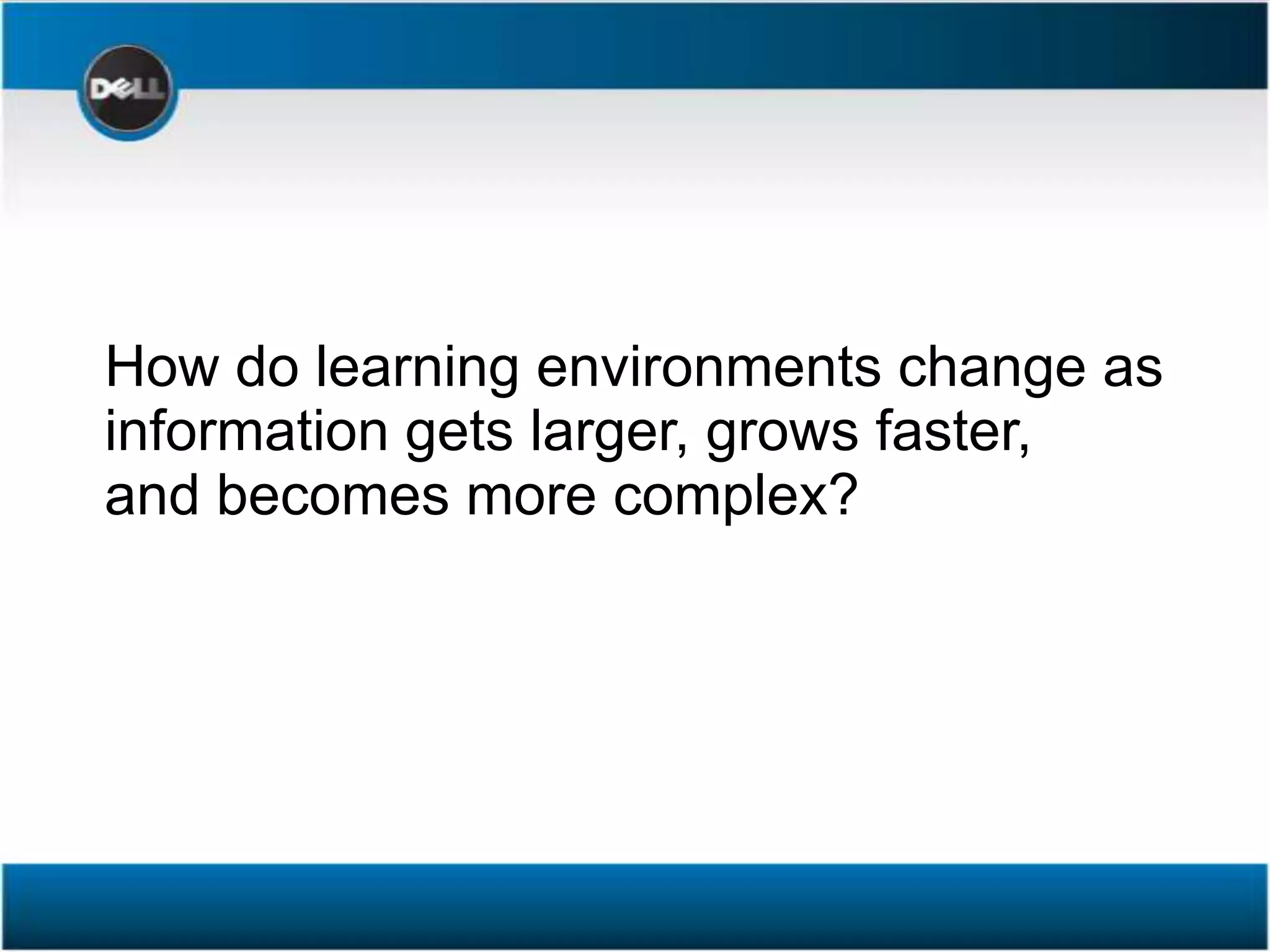
How do learning environments change as information gets larger, grows faster,and becomes more complex?
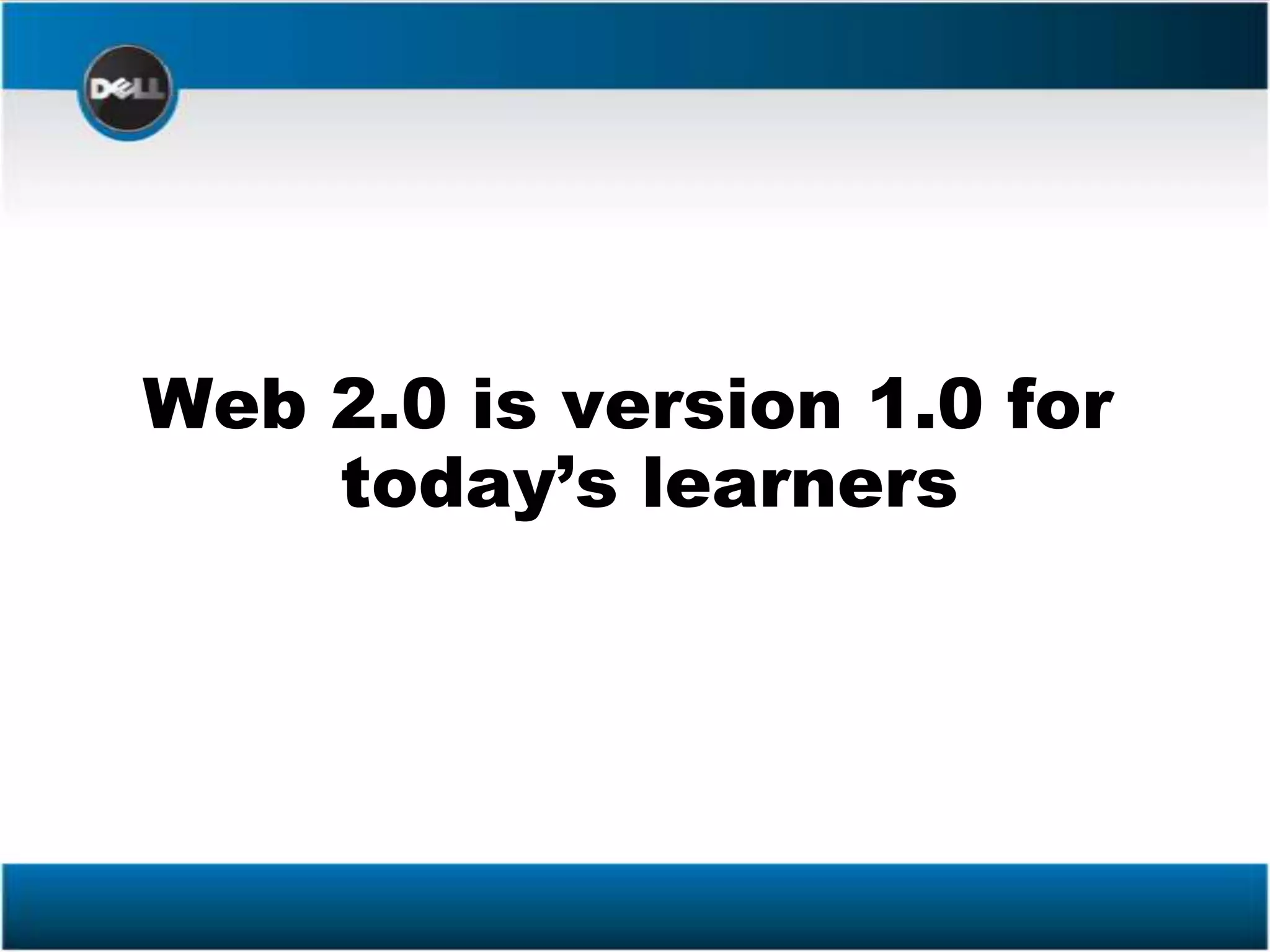
Web 2.0 is version 1.0 for today’s learners
LEGO Mike
Wonder Wheel
It’s About Bringing Information to You!Teacher Flake
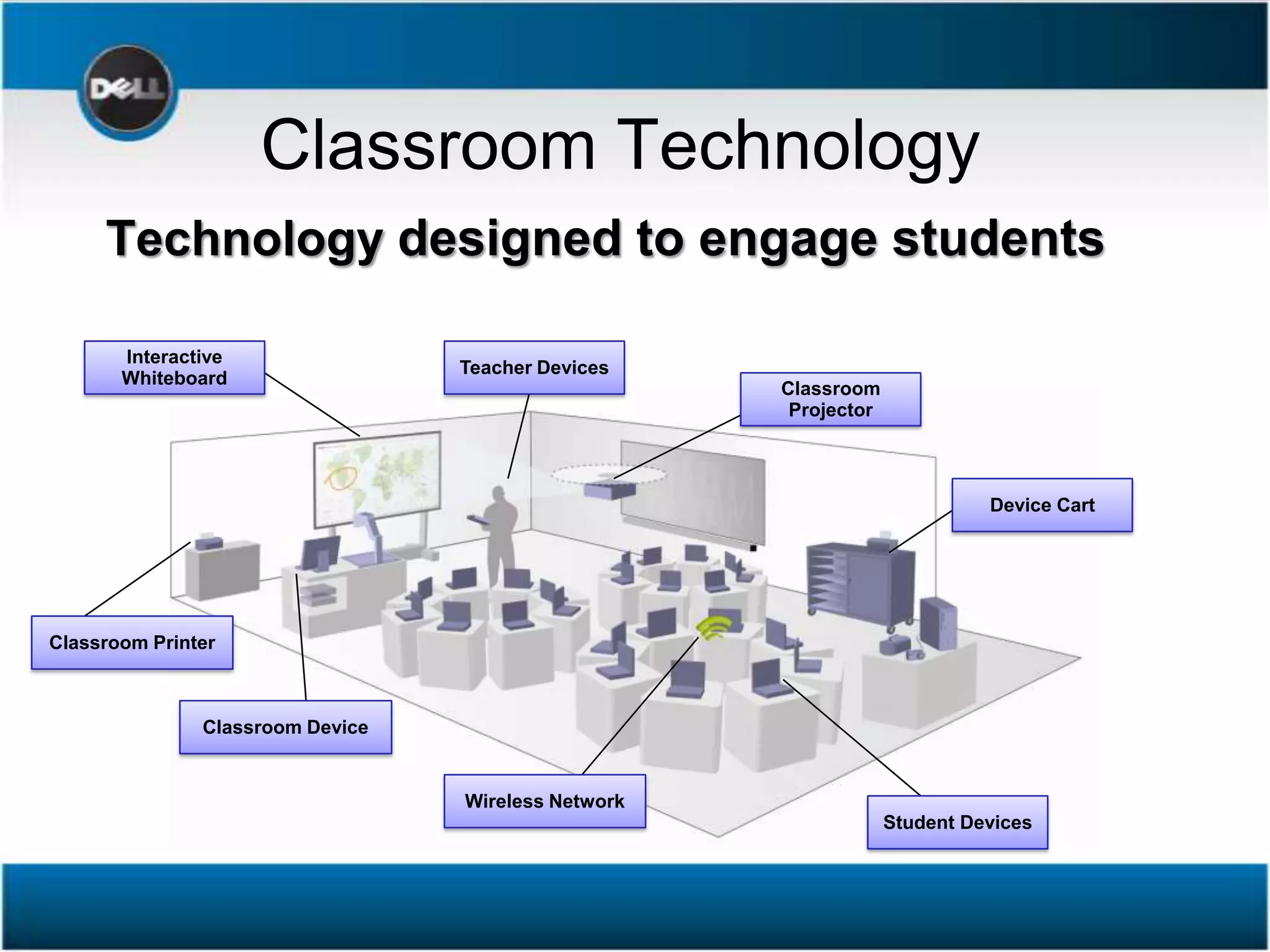
Classroom TechnologyTechnology designed to engage studentsTeacher DevicesInteractive WhiteboardClassroom ProjectorDevice CartClassroom PrinterClassroom DeviceWireless NetworkStudent Devices
A conceptual framework for understanding professional learning for schools 31
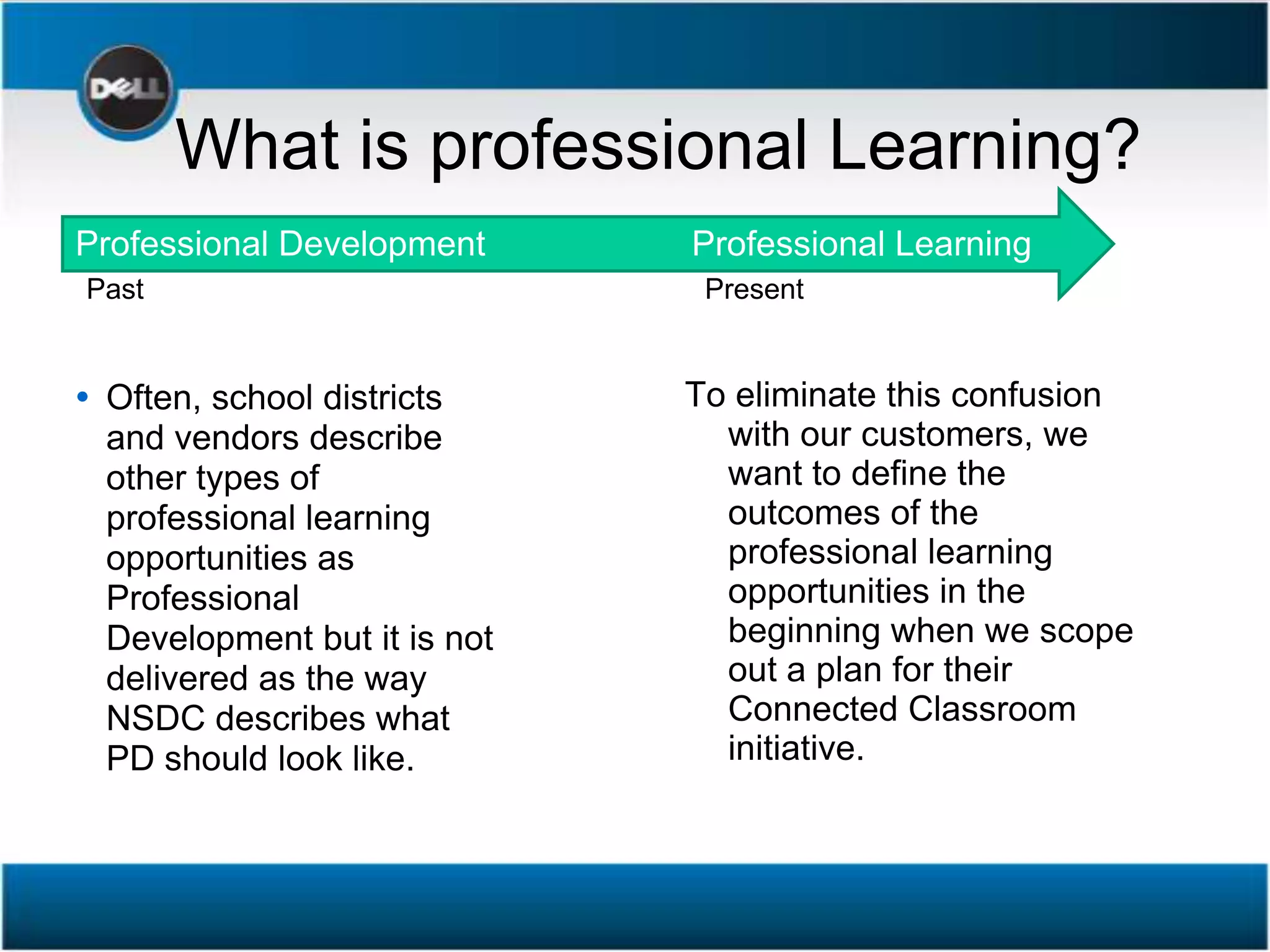
What is professional Learning?Professional Development                     Professional LearningPastPresentTo eliminate this confusion with our customers, we want to define the outcomes of the professional learning opportunities in the beginning when we scope out a plan for their Connected Classroom initiative.Often, school districts and vendors describe other types of professional learning opportunities as Professional Development but it is not delivered as the way NSDC describes what PD should look like.ExperienceDell’s Professional Learning options33
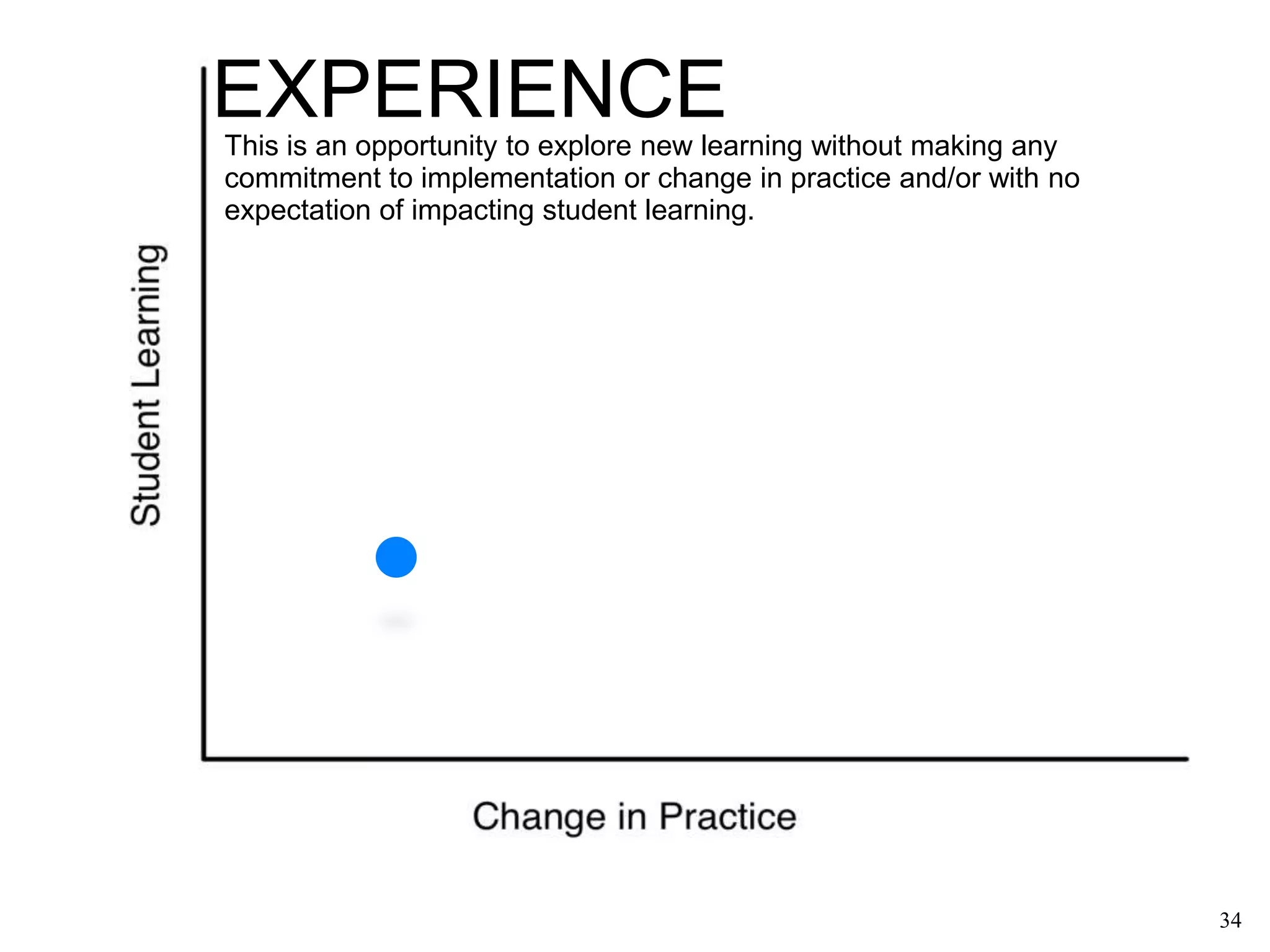
EXPERIENCEThis is an opportunity to explore new learning without making any commitment to implementation or change in practice and/or with no expectation of impacting student learning.Experience34

Wilson County

Editor's Notes

  • #10 You can link the mashup to the “Shining” video on trailer mashup.
  • #11 Our children are growing up in the digital age. They truly communicate and learn differently than past generations.The stats from Speak Up are striking:Students in Grades 3-5: regular use of technology outside of school  54% of both girls and boys play video or online games regularly 32% share music, videos and photos38% participate in virtual worlds (such as Webkinz, Club Penguin) 28% send emails, text messages or instant messages38% have a cell phone – 14% have smartphones Students in Grades 3-5: regular use of technology for schoolwork  34% take tests online7% have taken an online class52% play educational games24% check on their own grades51% use the Internet for research 33% practice writing   Students in Grades 6-12: regular use of technology outside of school  38% upload/download videos, podcasts and photos 23% create new work – mashup47% communicate via email/IM/Texting – additional 27% communicate through their social networking site40% update their social networking site20% use web tools to write collaboratively with others71% have a cell phone – 26% have a smartphone Students in Grades 6-12: regular use of technology for schoolwork 62% access grades and class information59% create slides shows, videos and web pages for assignments 32% take tests online15% use an online plagiarism checker 38% use their social networking site to collaborate with classmates on school projects 29% use online textbooks    Attribution: © Project TomorrowSpeak Up 2008 National Data Findings Speak Up is an annual research project of Project Tomorrow, a national education nonprofit organization (www.tomorrow.org) All rights reserved.    Yet, many of our schools are designed for the industrial age.-------------------Note: Re online games – includes portable and/or console players
  • #12 http://www.links999.net/utopia/education.htmlDon Knezek, chief executive officer of the International Society for Technology in Education (ISTE), says the “digital divide,” the gap between people with and without effective access to digital technology and its impact on their earnings, now also is seen as a “learning divide.” That means, he says, that “kids don’t have the opportunity to learn, as well as earn,” if they don’t have digital skills. While students formerly had the classroom teacher as their “sole guide,” they now can use those skills, as well as new digital tools, to connect and interact with experts around the world, and “that makes so much difference in helping kids learn and advance and stay engaged,” Knezek says.
  • #13 The impact is that the “Connected Generation” typically has to disconnect when they enter the classroom. This concept of disconnecting is a concern for many teachers, who want to meet children where they are – and they are digital learners.
  • #21 If you printed the internet it would take 57,000 years to read it and that is reading 24/7.Source: http://www.cartridgesave.co.uk/news/if-you-printed-the-internet/
  • #22 With a single ink jet printer it would take 3,805 years to print the internet.Source: http://www.cartridgesave.co.uk/news/if-you-printed-the-internet/
  • #26 Subquestions:What does 21st Century Learning Look Like for You?How Do You Currently use Technology In the Classroom?How Would You Like To See Technology Used In The Classroom? What Concerns do Your Teachers have with Classroom Technology?What Concerns does the School/District Leadership have with Classroom Technology?
  • #34 Experienceis the most basic structure with the lowest level of expectation. Training has with it the expectation to change practice. Professional Growthis the most complex type of staff development with the expectation to not only change practice, but also impact student learning.
  • #35 This is an opportunity to explore new learning without making any commitment to implementation or change in practice and/or with no expectation of impacting student learning.
  • #37 This type is typically required to carry out management or process tasks. There is a level of expectation that the new learning will change practice in someway, but with no direct link to or measurement of student learning. 
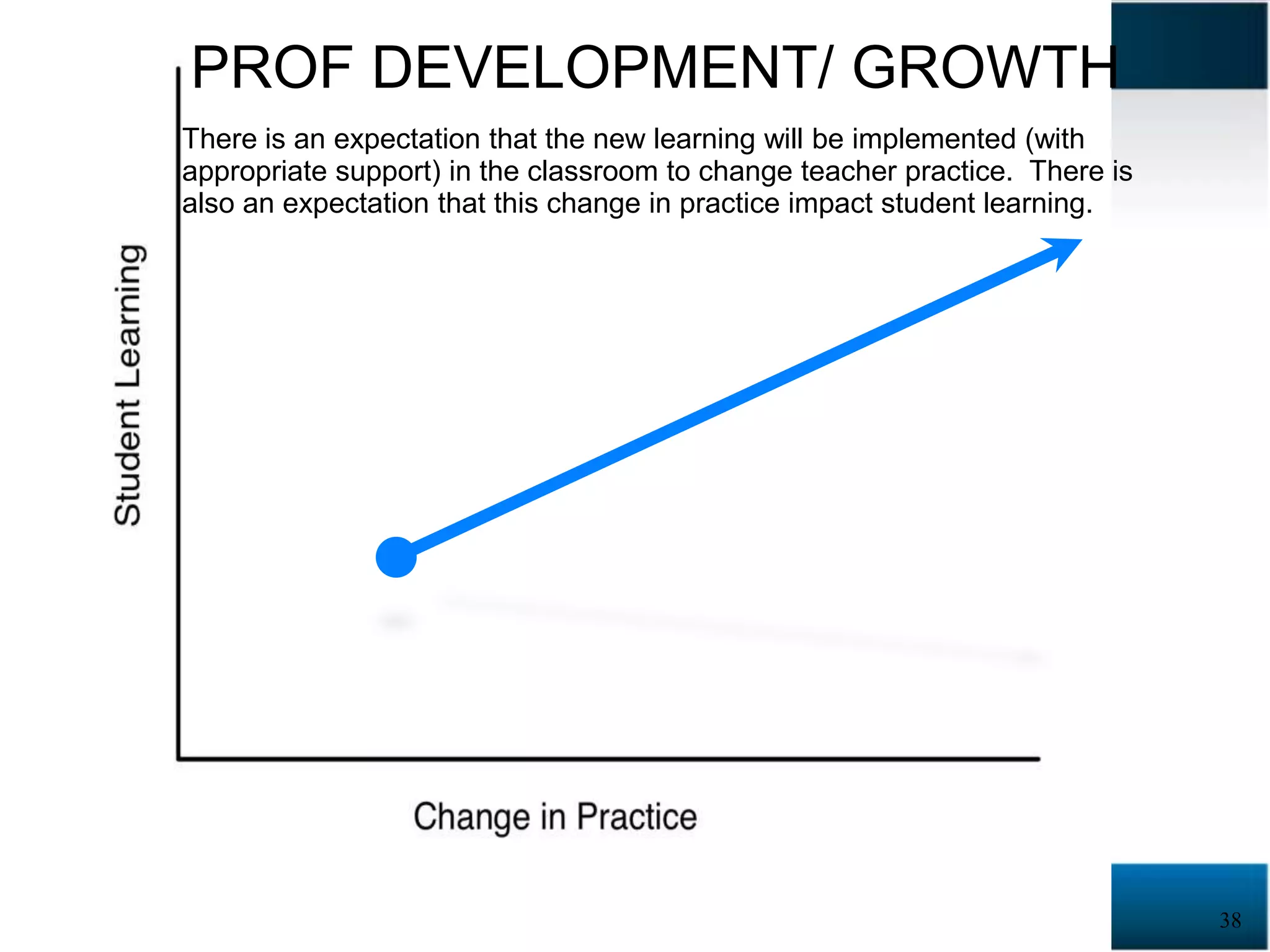
  • #39 There is an expectation that the new learning will be implemented (with appropriate support) in the classroom to change teacher practice. There is also an expectation that this change in practice impact student learning.
  • #40 NSDC-National Staff Development Council
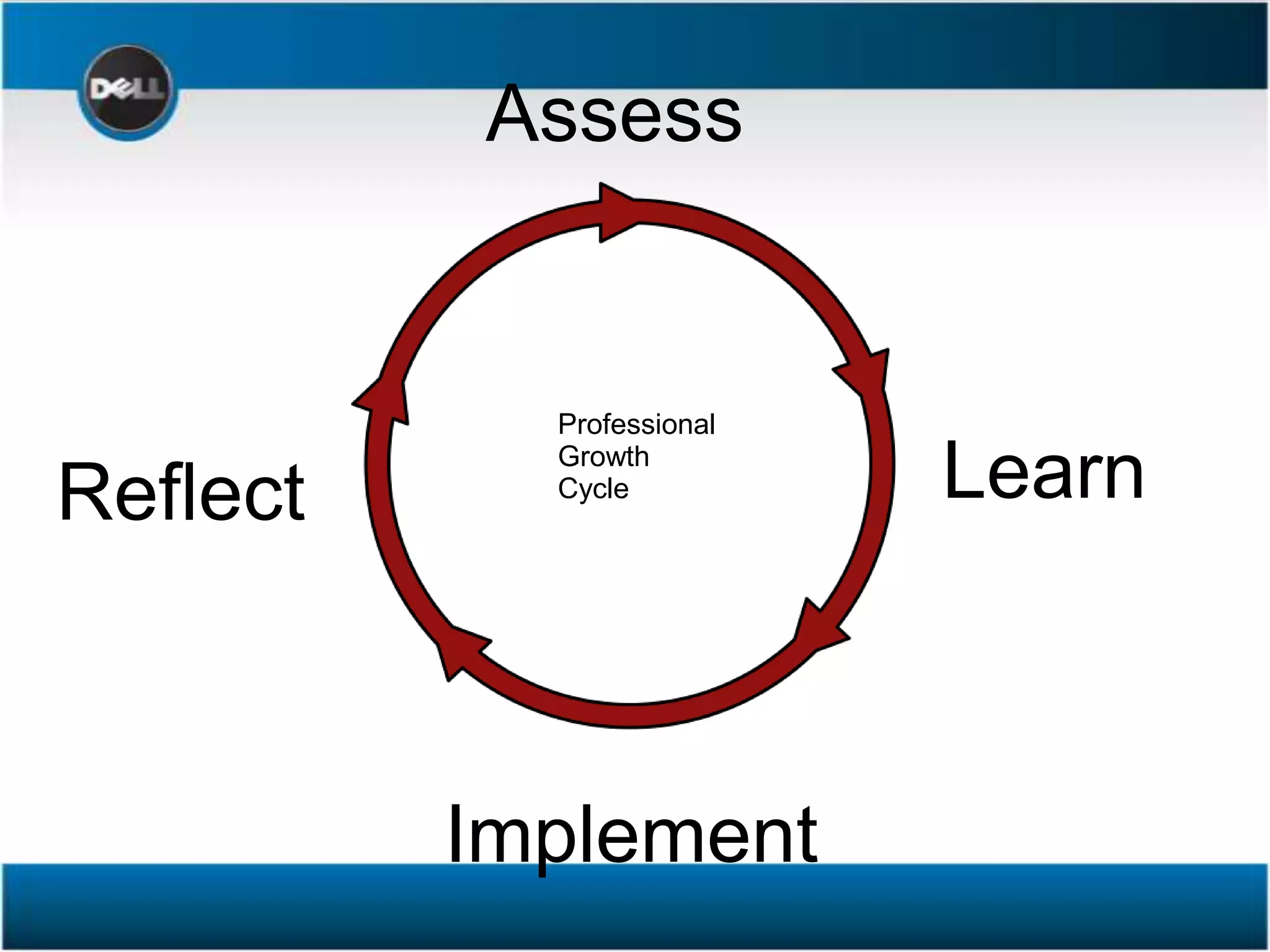
  • #42 Professional Growth Cycle-In order to both change practice and impact student learning, the following cycle should be implemented:Assess: Review of data to identify the need for improved student learning.Learn: Engage in new learning to meet the need.Implement: Receive support for implementing new learning.Reflect: Continually collect data and monitor outcomes of implementation of the new learning to determine if it is meeting the goal.Assess: Revisit the data to identify further need for improved student learning.