Why Venetian Masks Are the Heartbeat of Carnival - 9 Iconic Designs Explained
1.
Why Venetian MasksAre the Heartbeat of Carnival - 9 Iconic Designs Explained
Venice isn’t just a city - it's a stage, a dream, a living spectacle. And the beating heart of this
spectacle is its masks.
If you’ve ever wandered through the misty calli during Carnival of Venice, you know how the air
transforms: elegant faces fade into mystery, identities blur, and the ordinary becomes
fantastical.
Our “Top 9 Venetian Masks” guide reveals why these masks matter - not just as souvenirs, but
as symbols of freedom, equality, and art.
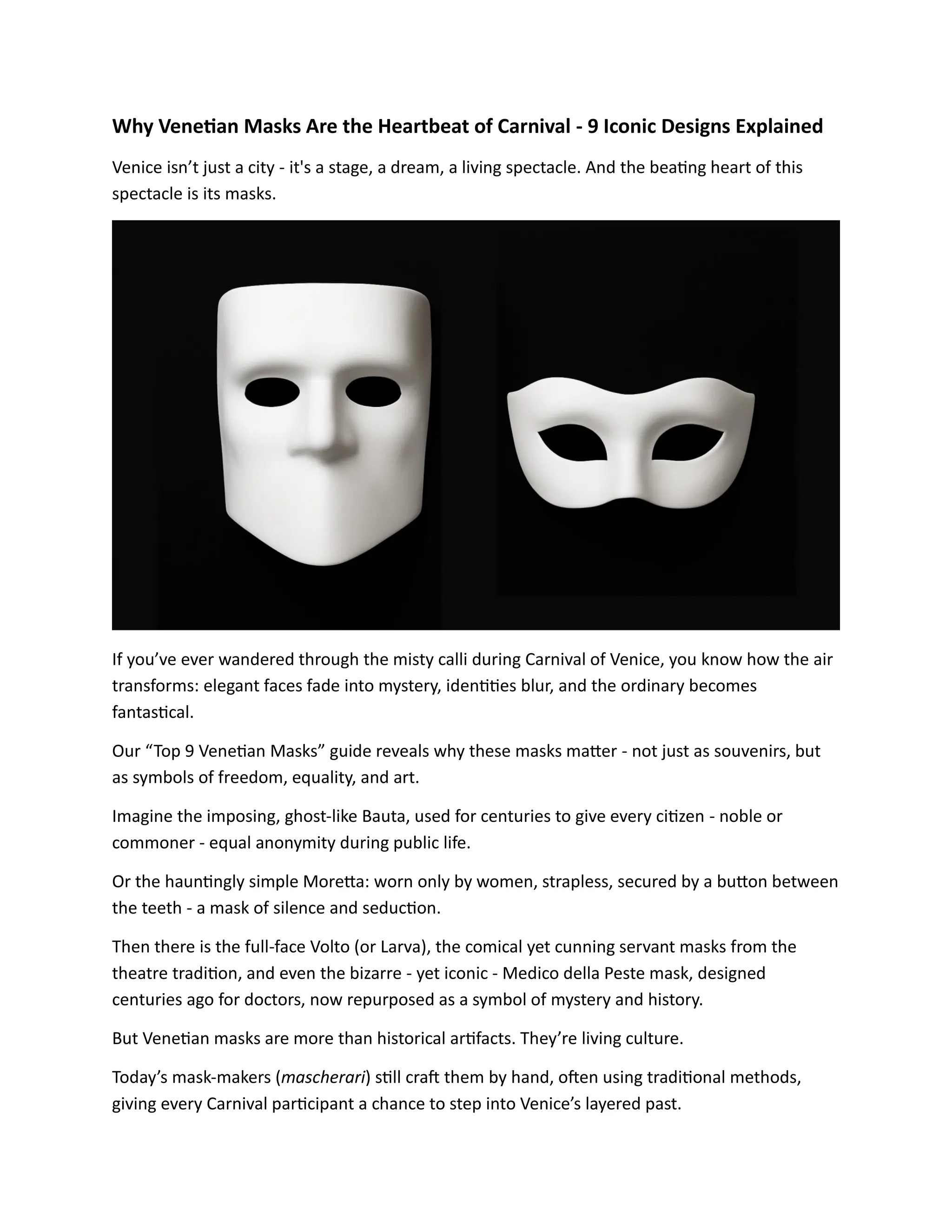
Imagine the imposing, ghost-like Bauta, used for centuries to give every citizen - noble or
commoner - equal anonymity during public life.
Or the hauntingly simple Moretta: worn only by women, strapless, secured by a button between
the teeth - a mask of silence and seduction.
Then there is the full-face Volto (or Larva), the comical yet cunning servant masks from the
theatre tradition, and even the bizarre - yet iconic - Medico della Peste mask, designed
centuries ago for doctors, now repurposed as a symbol of mystery and history.
But Venetian masks are more than historical artifacts. They’re living culture.
Today’s mask-makers (mascherari) still craft them by hand, often using traditional methods,
giving every Carnival participant a chance to step into Venice’s layered past.
2.
If you’re planninga trip to Venice - or just dreaming of one - dive into our full guide and discover
the 9 masks that shaped the Carnival. Because in Venice, every mask is a story waiting to unfold.