6-REASONS
ONE MOST COMMON QUESTION FROM BASIC BOTANY
WHY POACEAE IS CONSIDERED AS ADVANCE GROUP ?
पोएसी को अग्रिम वर्गक क्ोों माना जाता है?
Dr. Praveen Mohil
Assistant Professor
Department of Botany
University of Rajasthan
Jaipur-302004
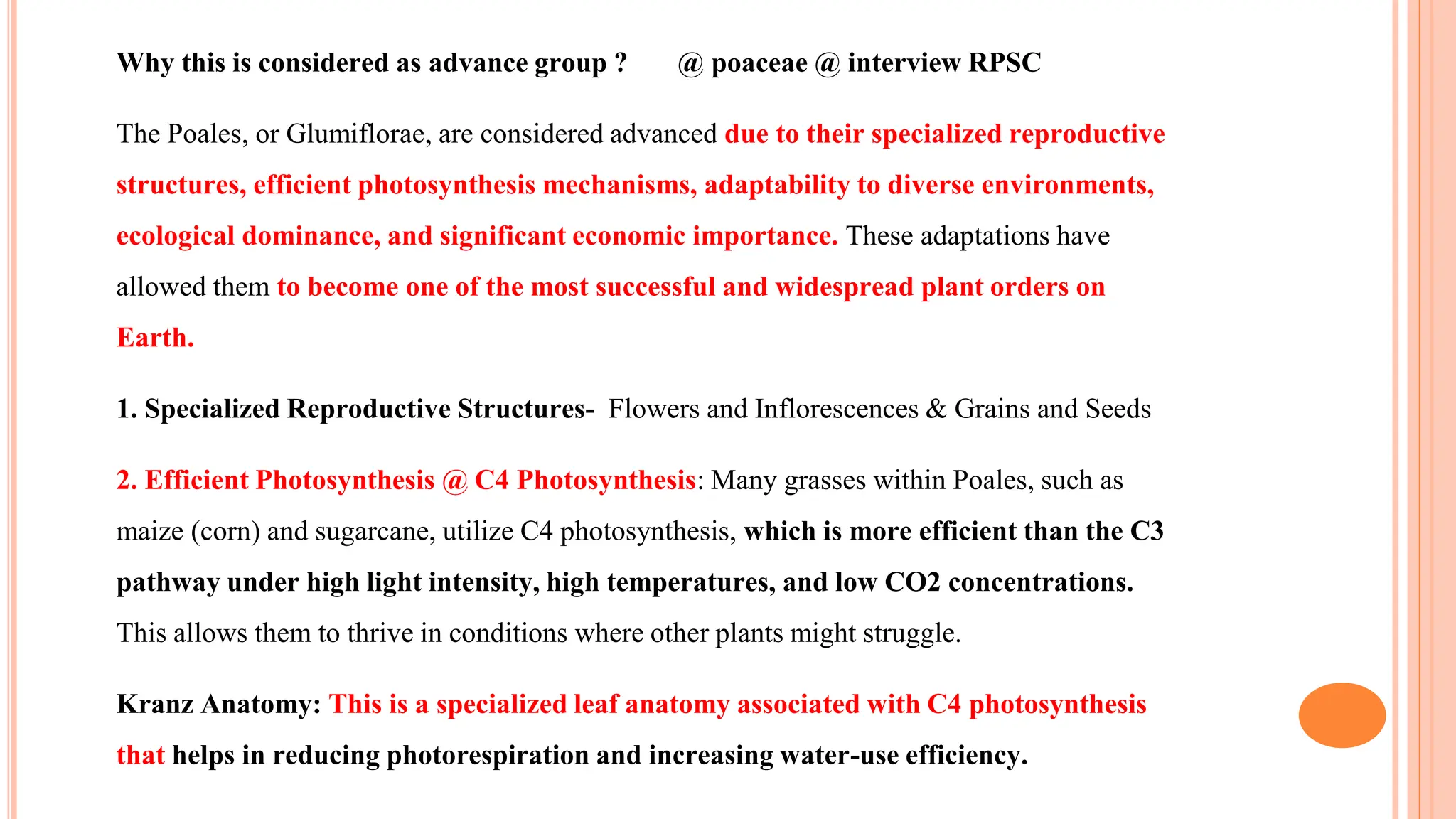
Why this is considered as advance group ? @ poaceae @ interview RPSC
The Poales, or Glumiflorae, are considered advanced due to their specialized reproductive
structures, efficient photosynthesis mechanisms, adaptability to diverse environments,
ecological dominance, and significant economic importance. These adaptations have
allowed them to become one of the most successful and widespread plant orders on
Earth.
1. Specialized Reproductive Structures- Flowers and Inflorescences & Grains and Seeds
2. Efficient Photosynthesis @ C4 Photosynthesis: Many grasses within Poales, such as
maize (corn) and sugarcane, utilize C4 photosynthesis, which is more efficient than the C3
pathway under high light intensity, high temperatures, and low CO2 concentrations.
This allows them to thrive in conditions where other plants might struggle.
Kranz Anatomy: This is a specialized leaf anatomy associated with C4 photosynthesis
that helps in reducing photorespiration and increasing water-use efficiency.
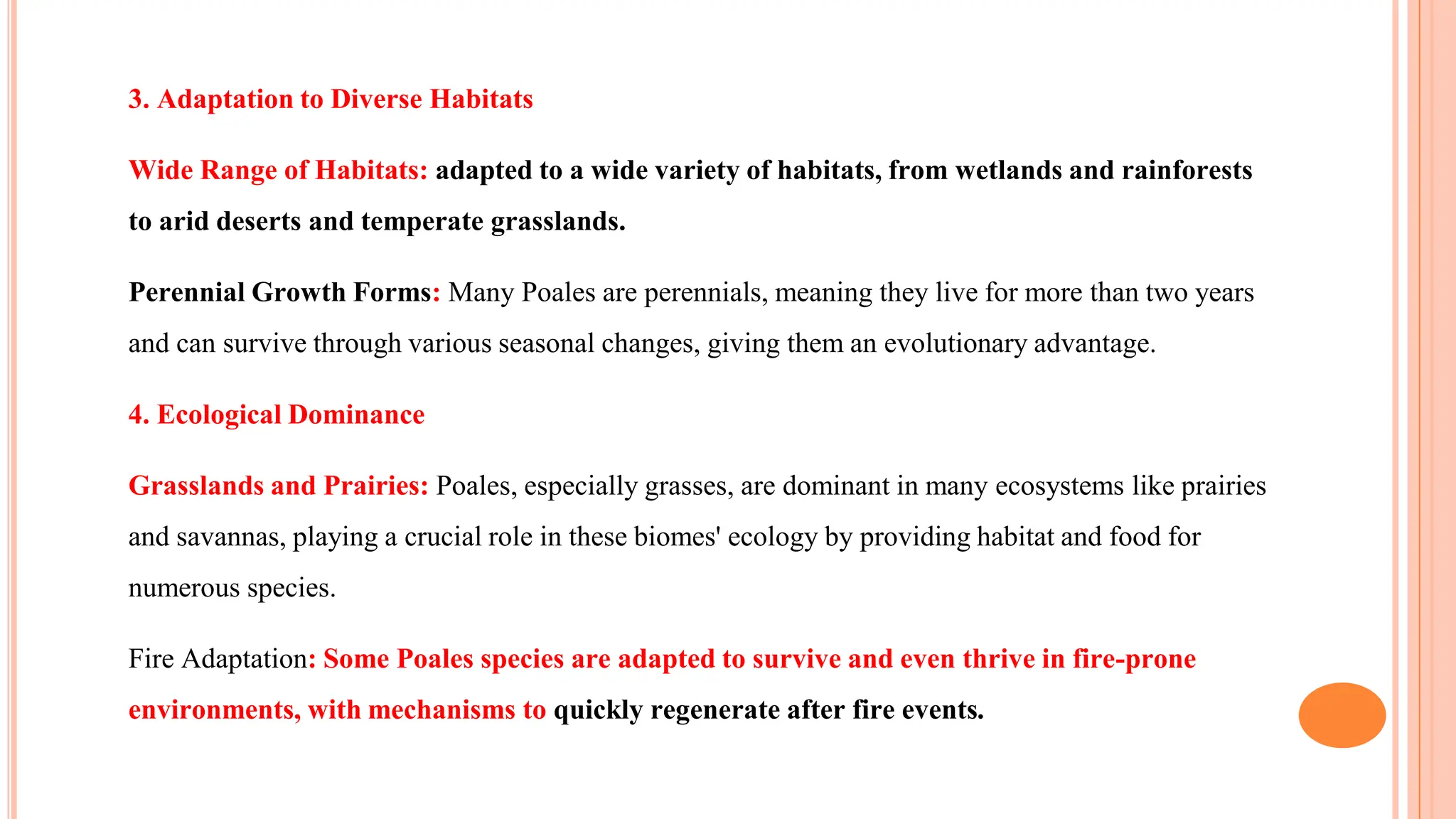
3. Adaptation to Diverse Habitats
Wide Range of Habitats: adapted to a wide variety of habitats, from wetlands and rainforests
to arid deserts and temperate grasslands.
Perennial Growth Forms: Many Poales are perennials, meaning they live for more than two years
and can survive through various seasonal changes, giving them an evolutionary advantage.
4. Ecological Dominance
Grasslands and Prairies: Poales, especially grasses, are dominant in many ecosystems like prairies
and savannas, playing a crucial role in these biomes' ecology by providing habitat and food for
numerous species.
Fire Adaptation: Some Poales species are adapted to survive and even thrive in fire-prone
environments, with mechanisms to quickly regenerate after fire events.
5. Economic and Agricultural Importance
Staple Crops: Poales includes many of the world’s major cereal crops like rice, wheat, and corn,
which are fundamental to human agriculture and food security.
Versatile Uses: Beyond food, Poales provide materials for construction (bamboo), biofuels
(sugarcane), and various industrial applications.
6. Advanced Root Systems
Extensive Root Networks: Many Poales have deep and extensive root systems that enhance their
ability to access water and nutrients from the soil, as well as stabilize the soil, preventing erosion.
DESIRABLE BASICS
Difference between Grass & sedges
@ theory & practical
YOUR DOUBTS /QUESTIONS
Your questions—Mail me
praveenmohil@gmail.com
KINDLY
LIKE& SHARE
SUBSCRIBE FOR RELATED VIDEO ON
TIME.
THANK YOU

Why poaceae is considered as advance group/family ?पोएसी को अग्रिम वर्गक क्यों माना जाता है?

  • 1.
    6-REASONS ONE MOST COMMONQUESTION FROM BASIC BOTANY
  • 2.
    WHY POACEAE ISCONSIDERED AS ADVANCE GROUP ? पोएसी को अग्रिम वर्गक क्ोों माना जाता है? Dr. Praveen Mohil Assistant Professor Department of Botany University of Rajasthan Jaipur-302004
  • 3.
    Why this isconsidered as advance group ? @ poaceae @ interview RPSC The Poales, or Glumiflorae, are considered advanced due to their specialized reproductive structures, efficient photosynthesis mechanisms, adaptability to diverse environments, ecological dominance, and significant economic importance. These adaptations have allowed them to become one of the most successful and widespread plant orders on Earth. 1. Specialized Reproductive Structures- Flowers and Inflorescences & Grains and Seeds 2. Efficient Photosynthesis @ C4 Photosynthesis: Many grasses within Poales, such as maize (corn) and sugarcane, utilize C4 photosynthesis, which is more efficient than the C3 pathway under high light intensity, high temperatures, and low CO2 concentrations. This allows them to thrive in conditions where other plants might struggle. Kranz Anatomy: This is a specialized leaf anatomy associated with C4 photosynthesis that helps in reducing photorespiration and increasing water-use efficiency.
  • 4.
    3. Adaptation toDiverse Habitats Wide Range of Habitats: adapted to a wide variety of habitats, from wetlands and rainforests to arid deserts and temperate grasslands. Perennial Growth Forms: Many Poales are perennials, meaning they live for more than two years and can survive through various seasonal changes, giving them an evolutionary advantage. 4. Ecological Dominance Grasslands and Prairies: Poales, especially grasses, are dominant in many ecosystems like prairies and savannas, playing a crucial role in these biomes' ecology by providing habitat and food for numerous species. Fire Adaptation: Some Poales species are adapted to survive and even thrive in fire-prone environments, with mechanisms to quickly regenerate after fire events.
  • 5.
    5. Economic andAgricultural Importance Staple Crops: Poales includes many of the world’s major cereal crops like rice, wheat, and corn, which are fundamental to human agriculture and food security. Versatile Uses: Beyond food, Poales provide materials for construction (bamboo), biofuels (sugarcane), and various industrial applications. 6. Advanced Root Systems Extensive Root Networks: Many Poales have deep and extensive root systems that enhance their ability to access water and nutrients from the soil, as well as stabilize the soil, preventing erosion.
  • 6.
    DESIRABLE BASICS Difference betweenGrass & sedges @ theory & practical
  • 7.
    YOUR DOUBTS /QUESTIONS Yourquestions—Mail me praveenmohil@gmail.com
  • 8.
    KINDLY LIKE& SHARE SUBSCRIBE FORRELATED VIDEO ON TIME.
  • 9.