WHAT IS WEBSITE
DESIGN? A
COMPREHENSIVE
GUIDE TO WEB DESIGN
In the current digital era, having an online presence is essential for both
individuals and businesses. Your website acts as your online showroom,
giving potential customers and site visitors their first impression. But what
is website design precisely, and why is it so crucial? We'll delve into the
realm of web design in this thorough guide to it, examining its essential
components, procedures, and best practices.
Introduction
UNDERSTANDING
WEBSITE DESIGN
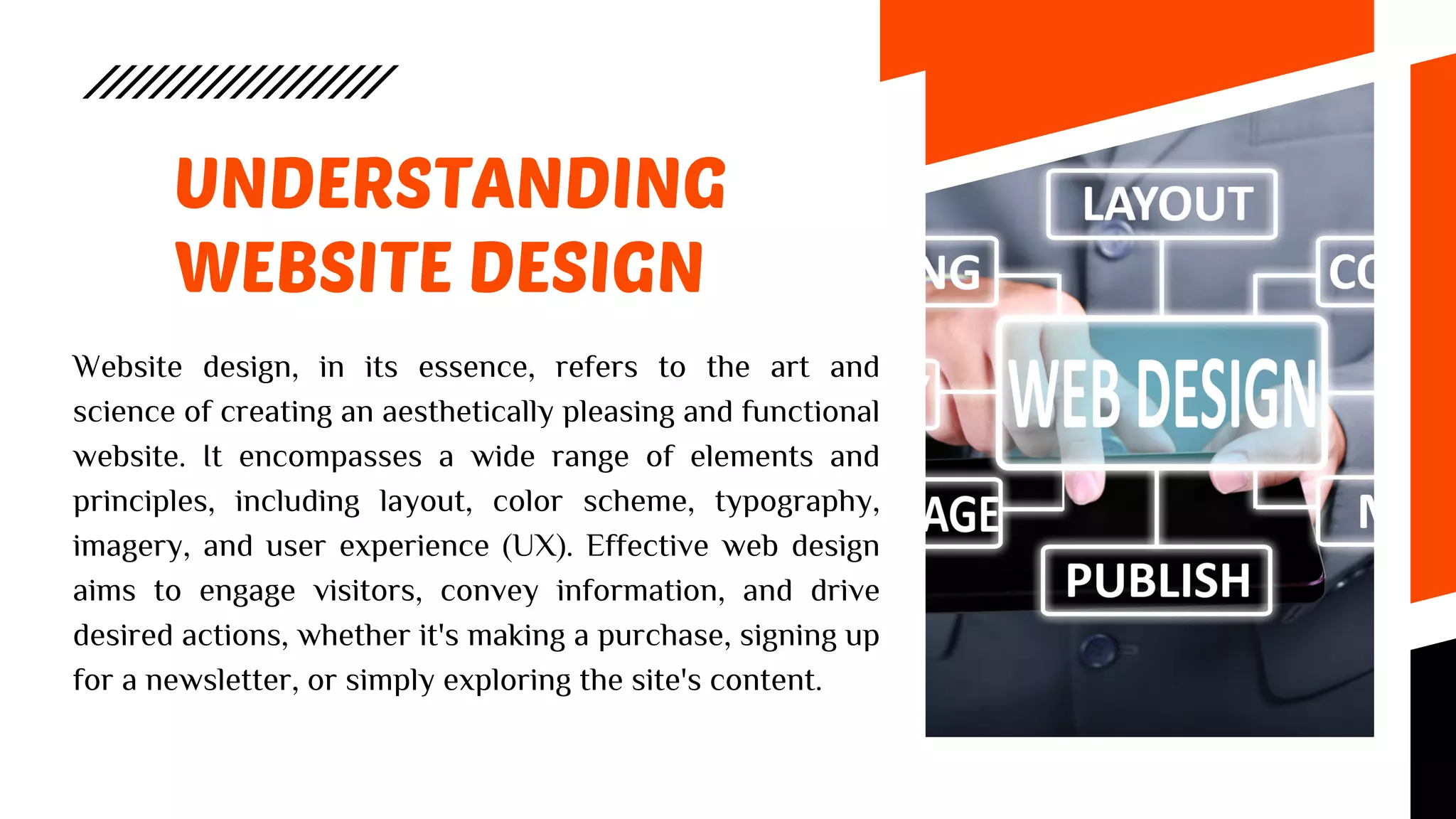
Website design, in its essence, refers to the art and
science of creating an aesthetically pleasing and functional
website. It encompasses a wide range of elements and
principles, including layout, color scheme, typography,
imagery, and user experience (UX). Effective web design
aims to engage visitors, convey information, and drive
desired actions, whether it's making a purchase, signing up
for a newsletter, or simply exploring the site's content.
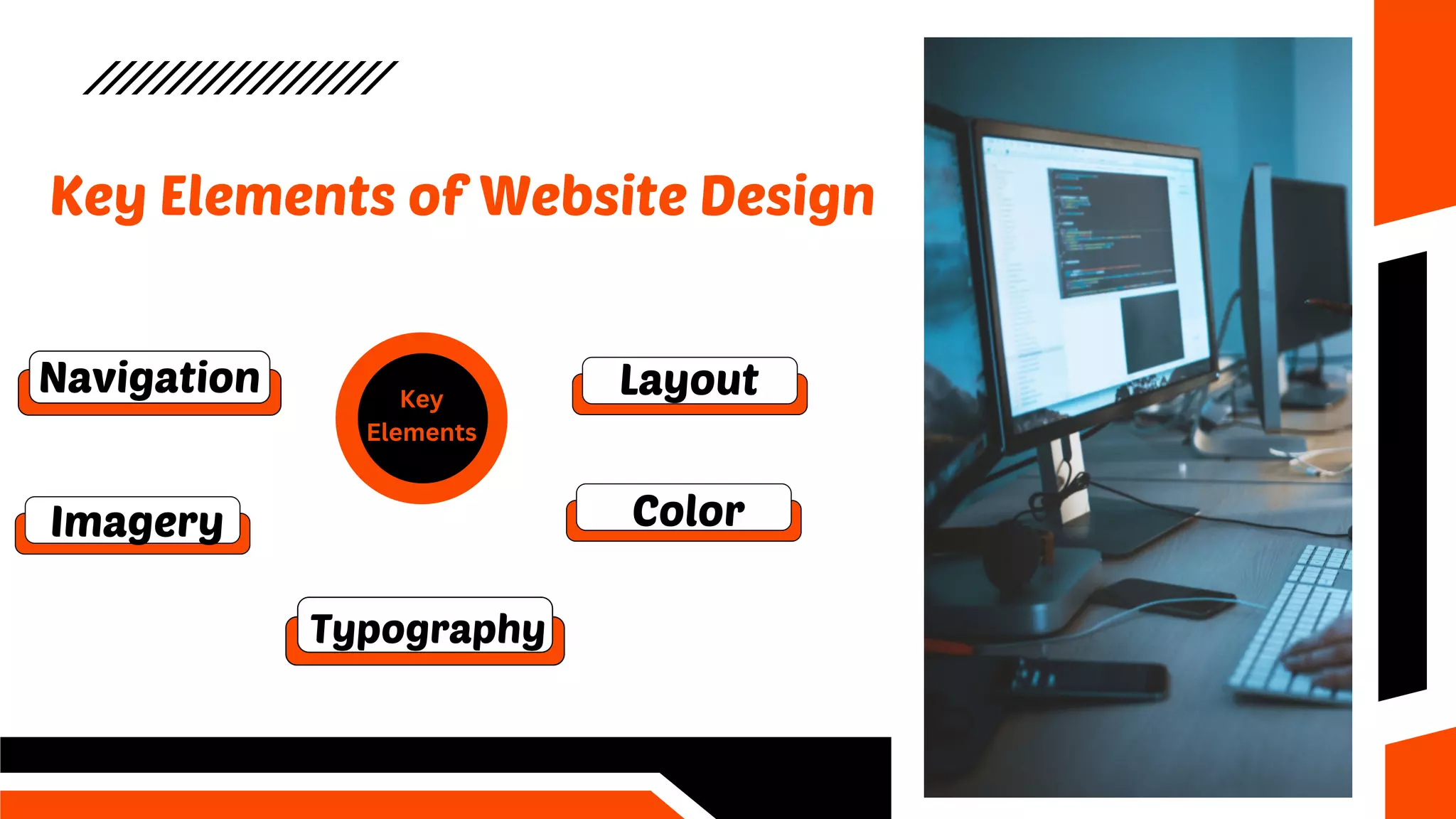
Key Elements of Website Design
Key
Elements
Layout
Color
Typography
Imagery
Navigation
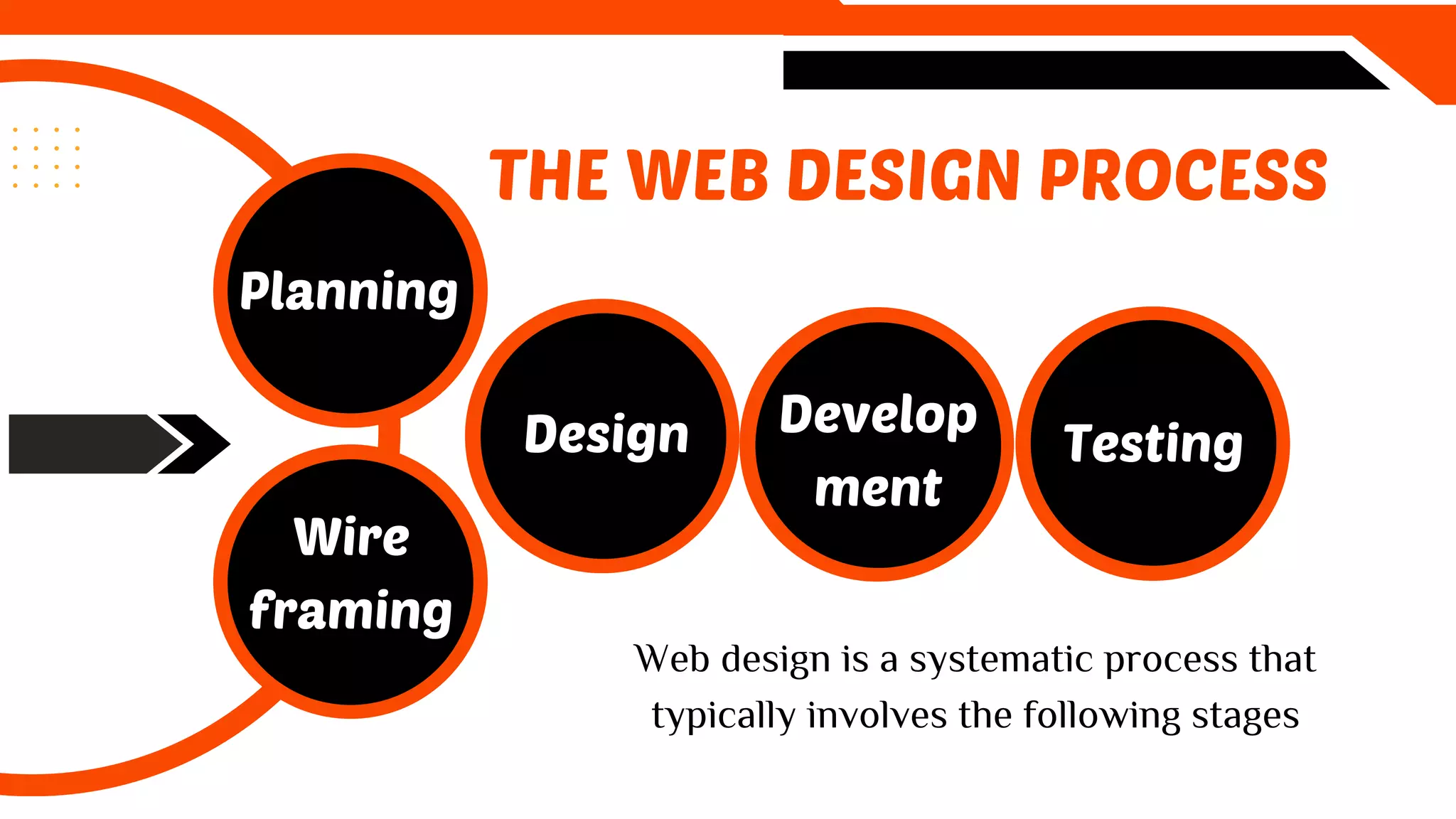
THE WEB DESIGN PROCESS
Planning
Wire
framing
Design Develop
ment
Testing
Testing
Web design is a systematic process that
typically involves the following stages
WEB DESIGN TOOLS AND TECHNOLOGIES
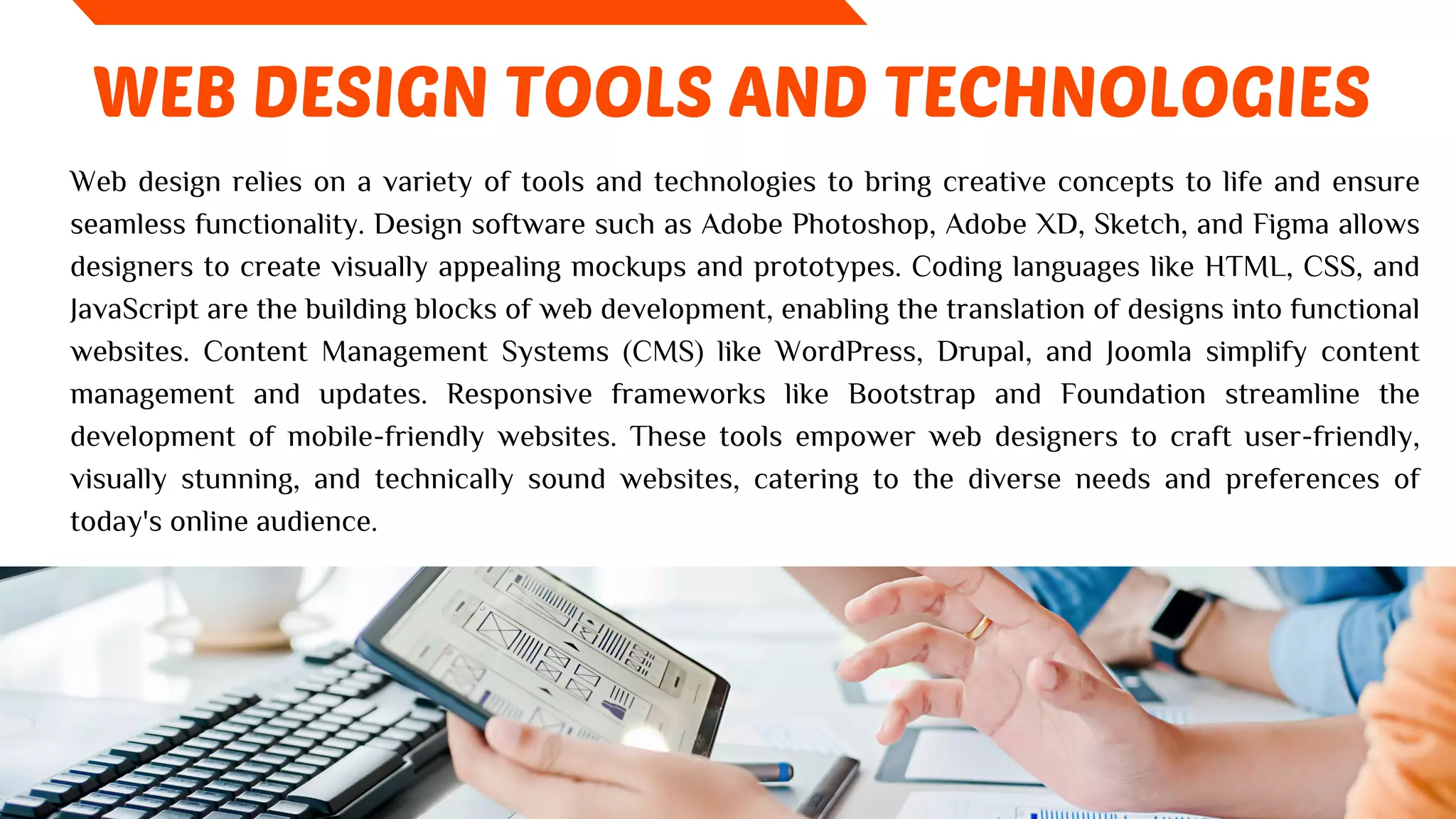
Web design relies on a variety of tools and technologies to bring creative concepts to life and ensure
seamless functionality. Design software such as Adobe Photoshop, Adobe XD, Sketch, and Figma allows
designers to create visually appealing mockups and prototypes. Coding languages like HTML, CSS, and
JavaScript are the building blocks of web development, enabling the translation of designs into functional
websites. Content Management Systems (CMS) like WordPress, Drupal, and Joomla simplify content
management and updates. Responsive frameworks like Bootstrap and Foundation streamline the
development of mobile-friendly websites. These tools empower web designers to craft user-friendly,
visually stunning, and technically sound websites, catering to the diverse needs and preferences of
today's online audience.
Conclusion
web design is a multifaceted discipline that combines art and
technology to create engaging, functional, and secure websites.
Understanding the key elements, following the web design process, and
staying updated with design trends are essential steps in mastering
web design. By focusing on user-centered design and SEO best
practices, you can create websites that not only look great but also
perform well and serve their intended purpose effectively.
www.shoutinusa.com
Get More
Information
THANK
YOU

What Is Website Design A Comprehensive Guide to Web Design.pdf

  • 1.
    WHAT IS WEBSITE DESIGN?A COMPREHENSIVE GUIDE TO WEB DESIGN
  • 2.
    In the currentdigital era, having an online presence is essential for both individuals and businesses. Your website acts as your online showroom, giving potential customers and site visitors their first impression. But what is website design precisely, and why is it so crucial? We'll delve into the realm of web design in this thorough guide to it, examining its essential components, procedures, and best practices. Introduction
  • 3.
    UNDERSTANDING WEBSITE DESIGN Website design,in its essence, refers to the art and science of creating an aesthetically pleasing and functional website. It encompasses a wide range of elements and principles, including layout, color scheme, typography, imagery, and user experience (UX). Effective web design aims to engage visitors, convey information, and drive desired actions, whether it's making a purchase, signing up for a newsletter, or simply exploring the site's content.
  • 4.
    Key Elements ofWebsite Design Key Elements Layout Color Typography Imagery Navigation
  • 5.
    THE WEB DESIGNPROCESS Planning Wire framing Design Develop ment Testing Testing Web design is a systematic process that typically involves the following stages
  • 6.
    WEB DESIGN TOOLSAND TECHNOLOGIES Web design relies on a variety of tools and technologies to bring creative concepts to life and ensure seamless functionality. Design software such as Adobe Photoshop, Adobe XD, Sketch, and Figma allows designers to create visually appealing mockups and prototypes. Coding languages like HTML, CSS, and JavaScript are the building blocks of web development, enabling the translation of designs into functional websites. Content Management Systems (CMS) like WordPress, Drupal, and Joomla simplify content management and updates. Responsive frameworks like Bootstrap and Foundation streamline the development of mobile-friendly websites. These tools empower web designers to craft user-friendly, visually stunning, and technically sound websites, catering to the diverse needs and preferences of today's online audience.
  • 7.
    Conclusion web design isa multifaceted discipline that combines art and technology to create engaging, functional, and secure websites. Understanding the key elements, following the web design process, and staying updated with design trends are essential steps in mastering web design. By focusing on user-centered design and SEO best practices, you can create websites that not only look great but also perform well and serve their intended purpose effectively.
  • 8.
  • 9.