Operational Effectiveness is Not Strategy

 The main problem is the failure to distinguish between
    operational effectiveness and strategy.
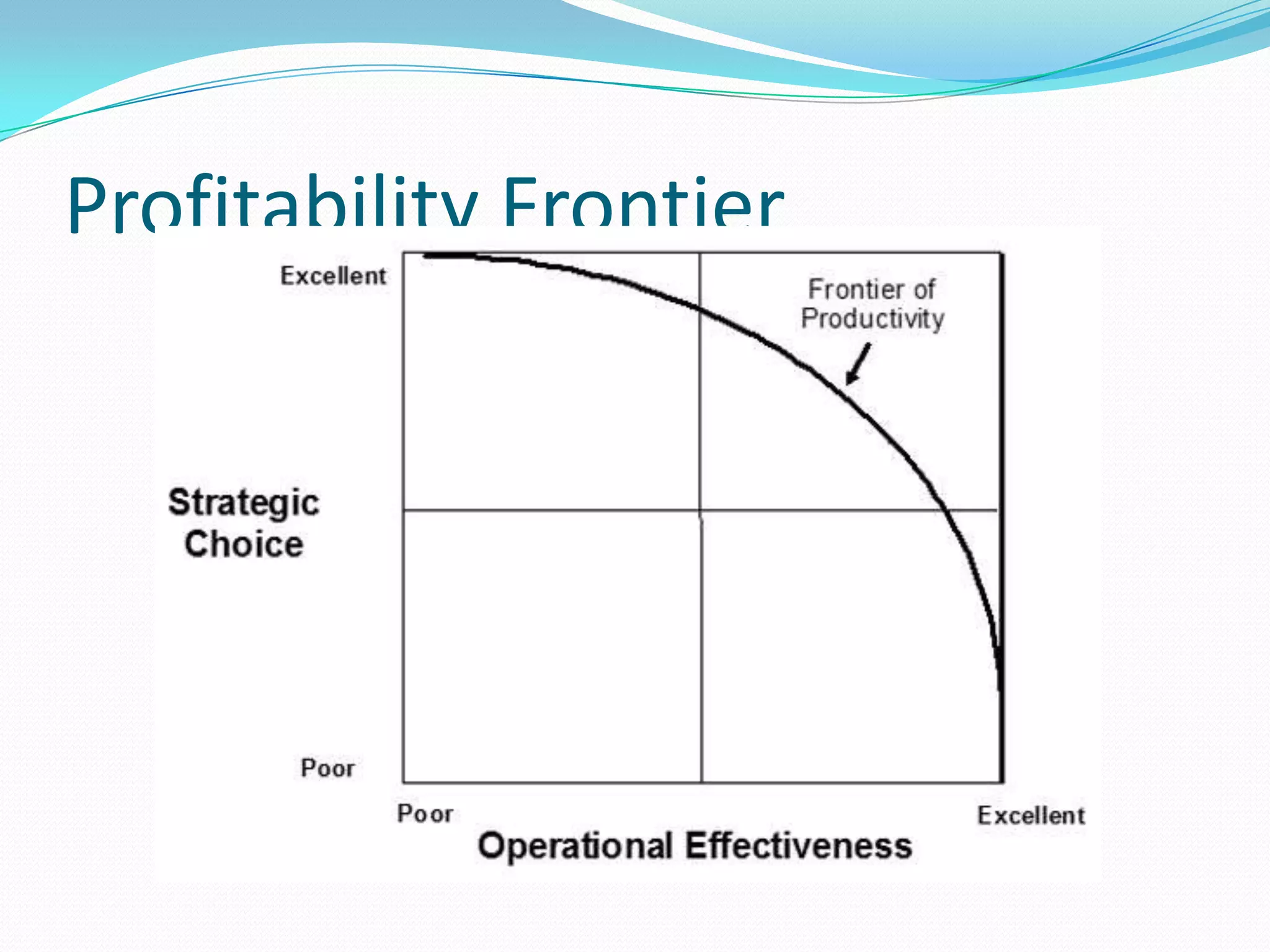
   Operational effectiveness- performing similar activities better
    than rivals. E.g: reducing defects in products
   Strategic positioning- performing different activities from
    rivals or performing similar activities in different ways.
   A company can outperform rivals only if it can establish a
    difference that it can preserve.
   Eg: Japanese companies rarely have strategy
Strategy Rests on Unique Activities
 Competitive strategy is about being different
 Essence of strategy is- choosing to perform activities
  differently or to perform different activities than rivals.
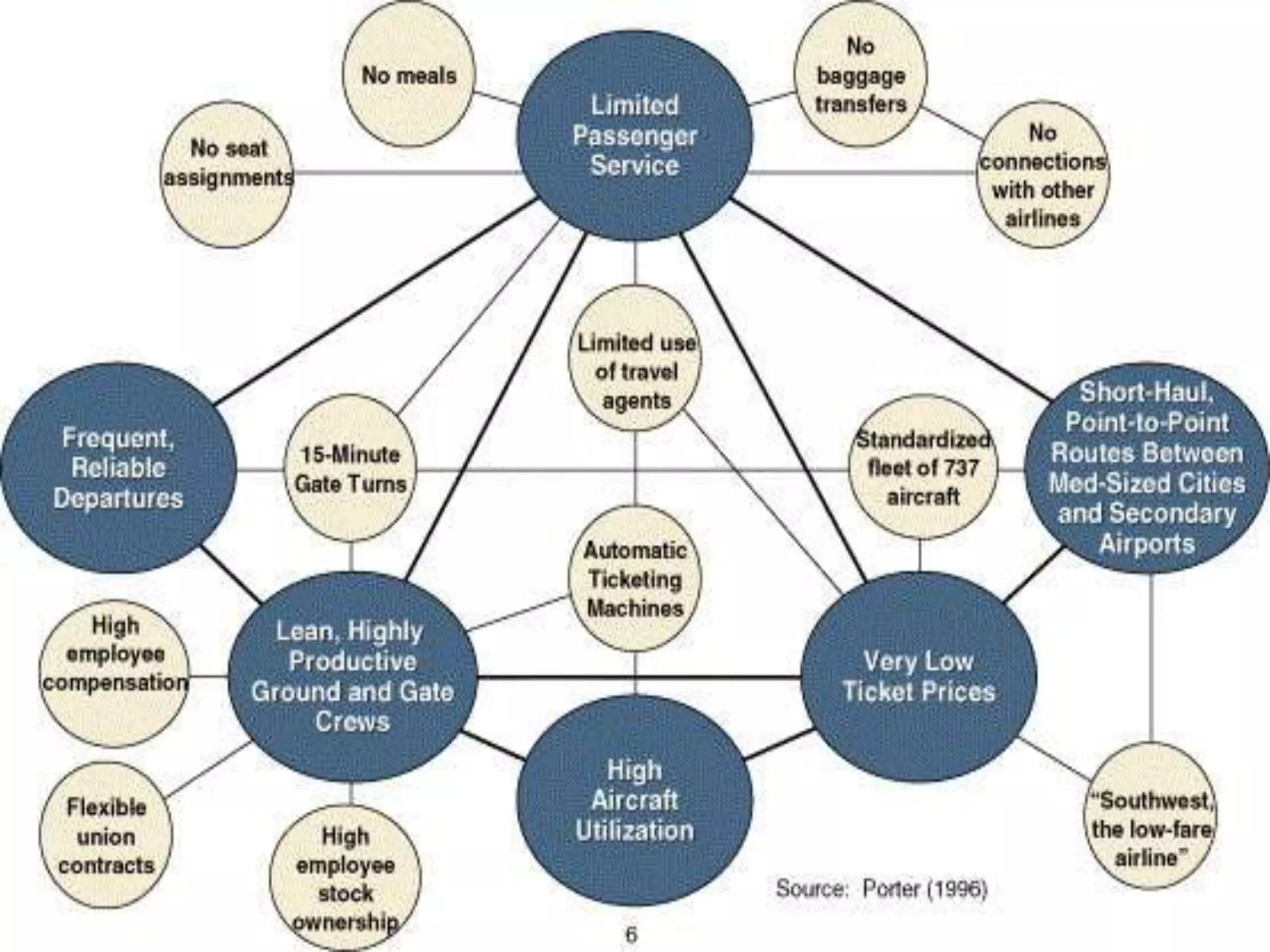
 Eg: Southwest Airlines-
          Short haul point to point
          Low cost
          No food
          Turnaround time
          Small Airports
          No agent commission
 Strategic position emerge from 3 sources
    Variety-based positioning- producing a subset of an
      industry’s products or services. Eg: Jiffy Lube
      International specializes in automotive lubricants only
    Need- based positioning- serving most or all the needs of a
      particular group of customers.
    Eg: Ikea furniture meets all the home furnishing needs of its
      target customers
    Access- based positioning- Segmenting customers who are
      accessible in different ways. Access can be customer
      geography or customer scale.
    Eg: Amazon.com, accessing customers exclusively through
      internet
A sustainable strategic position requires trade-offs
 A strategic position is not sustainable unless there are trade-offs
  with other positions.
 Trade-offs occur when activities are incompatible.
 Trade-offs create the need for choice and protect against
  repositioners and straddlers.
 Trade-offs arise for three reasons:
1. Inconsistencies in image or reputation
2. Trade-offs arise from activities themselves
3. Trade-offs arise from limits on internal coordination and
   control
 Tradeoffs are essential to strategy. They create the need for
   choice and purposefully limit what a company offers.
 Trade-offs add a new dimension to the definition of strategy
 Strategy is making trade-offs in competing.
 The essence of strategy is choosing what not to do.
 Without trade-offs, there would be no need for choice and thus
  no need for strategy
Fit drives both competitive advantage and
sustainability
 The importance of fit among functional policies is one of the
  oldest ideas in strategy.
 Fit is important because discrete activities often affect one
  another.
 Three types of fit
1. First-order fit is simple consistency between each activity
    (function)
2. Second-order fit occurs when activities are reinforcing
3. Third- order fit occurs when optimization of effort (reducing
    redundancy & waste)
   Competitive advantage grows out of the entire system of
    activities.
   The fit among activities substantially reduces cost or
    increases differentiation
   Strategy is creating fit among a company’s activities.
   The success of strategy depends on doing many things well-
    not just a few and integrating among them.
Rediscovering to a successful strategy, not Profit is the key to
 Profit is the key strategy
    a successful strategy, not growth.
   Compromises and inconsistencies in the pursuit of growth will
    erode the competitive advantage a company.
   Keep an eye on profitable growth.
   The role of top management in an organization is:
      Defining an organization’s position and strategy
      Making trade-offs
      Forging fit among activities
      Building an innovation machine
   And strategy may have to change along with major structural
    changes in an industry -- flexibility is vitally important.
Profitability Frontier
What is strategy- Michael Porter

What is strategy- Michael Porter

  • 2.
    Operational Effectiveness isNot Strategy  The main problem is the failure to distinguish between operational effectiveness and strategy.  Operational effectiveness- performing similar activities better than rivals. E.g: reducing defects in products  Strategic positioning- performing different activities from rivals or performing similar activities in different ways.  A company can outperform rivals only if it can establish a difference that it can preserve.  Eg: Japanese companies rarely have strategy
  • 3.
    Strategy Rests onUnique Activities  Competitive strategy is about being different  Essence of strategy is- choosing to perform activities differently or to perform different activities than rivals.  Eg: Southwest Airlines- Short haul point to point Low cost No food Turnaround time Small Airports No agent commission
  • 4.
     Strategic positionemerge from 3 sources Variety-based positioning- producing a subset of an industry’s products or services. Eg: Jiffy Lube International specializes in automotive lubricants only Need- based positioning- serving most or all the needs of a particular group of customers. Eg: Ikea furniture meets all the home furnishing needs of its target customers Access- based positioning- Segmenting customers who are accessible in different ways. Access can be customer geography or customer scale. Eg: Amazon.com, accessing customers exclusively through internet
  • 5.
    A sustainable strategicposition requires trade-offs  A strategic position is not sustainable unless there are trade-offs with other positions.  Trade-offs occur when activities are incompatible.  Trade-offs create the need for choice and protect against repositioners and straddlers.
  • 6.
     Trade-offs arisefor three reasons: 1. Inconsistencies in image or reputation 2. Trade-offs arise from activities themselves 3. Trade-offs arise from limits on internal coordination and control  Tradeoffs are essential to strategy. They create the need for choice and purposefully limit what a company offers.
  • 7.
     Trade-offs adda new dimension to the definition of strategy  Strategy is making trade-offs in competing.  The essence of strategy is choosing what not to do.  Without trade-offs, there would be no need for choice and thus no need for strategy
  • 8.
    Fit drives bothcompetitive advantage and sustainability  The importance of fit among functional policies is one of the oldest ideas in strategy.  Fit is important because discrete activities often affect one another.  Three types of fit 1. First-order fit is simple consistency between each activity (function) 2. Second-order fit occurs when activities are reinforcing 3. Third- order fit occurs when optimization of effort (reducing redundancy & waste)
  • 9.
    Competitive advantage grows out of the entire system of activities.  The fit among activities substantially reduces cost or increases differentiation  Strategy is creating fit among a company’s activities.  The success of strategy depends on doing many things well- not just a few and integrating among them.
  • 10.
    Rediscovering to asuccessful strategy, not Profit is the key to  Profit is the key strategy a successful strategy, not growth.  Compromises and inconsistencies in the pursuit of growth will erode the competitive advantage a company.  Keep an eye on profitable growth.  The role of top management in an organization is:  Defining an organization’s position and strategy  Making trade-offs  Forging fit among activities  Building an innovation machine  And strategy may have to change along with major structural changes in an industry -- flexibility is vitally important.
  • 12.