What Is SEO – Search Engine Optimization?
SEO, or Search Engine Optimization, is the practice of optimizing websites to
increase their visibility and ranking on search engine results pages (SERPs). SEO
involves various techniques and strategies that aim to improve the quality and quantity
of website traffic by increasing organic search engine rankings.
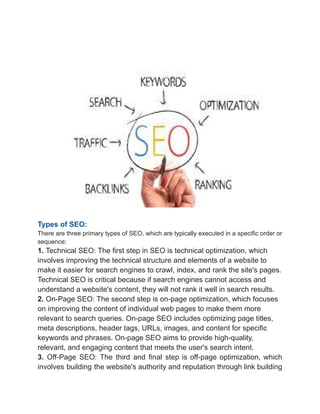
Types of SEO:
There are three primary types of SEO, which are typically executed in a specific order or
sequence:
1. Technical SEO: The first step in SEO is technical optimization, which
involves improving the technical structure and elements of a website to
make it easier for search engines to crawl, index, and rank the site's pages.
Technical SEO is critical because if search engines cannot access and
understand a website's content, they will not rank it well in search results.
2. On-Page SEO: The second step is on-page optimization, which focuses
on improving the content of individual web pages to make them more
relevant to search queries. On-page SEO includes optimizing page titles,
meta descriptions, header tags, URLs, images, and content for specific
keywords and phrases. On-page SEO aims to provide high-quality,
relevant, and engaging content that meets the user's search intent.
3. Off-Page SEO: The third and final step is off-page optimization, which
involves building the website's authority and reputation through link building
and social media engagement. Off-page SEO includes activities such as
link building, social media marketing, online directory submissions, and
influencer marketing. Off-page SEO aims to improve the website's
popularity and relevance in the eyes of search engines by demonstrating
that other high-quality websites find the website's content valuable and
worth linking to.
In conclusion, Technical SEO, On-Page SEO, and Off-Page SEO are the
three primary types of SEO that businesses should execute in a specific
order or sequence to achieve optimal results. Technical SEO ensures that
search engines can crawl and index a website's content, while on-page and
off-page SEO focuses on optimizing individual pages and building the
website's authority and reputation, respectively.
Why is SEO important:
SEO, or Search Engine Optimization, is an essential part of any digital
marketing strategy. It involves optimizing a website to rank higher in search
engine results pages (SERPs) for specific keywords and phrases. SEO is
important for different reasons:
1. Increased visibility and traffic: A high ranking on SERPs can significantly
increase website visibility and traffic, which can lead to more leads,
conversions, and revenue.
2. Better user experience: SEO can help improve the user experience by
providing relevant and valuable content that aligns with the user’s search
intent. This can increase user engagement, reduce bounce rates, and
improve conversion rates.
3. Cost-effective marketing: SEO is a cost-effective marketing strategy
compared to traditional marketing methods, such as print or television
advertising. By ranking higher in search engine results, businesses can
reach their target audience without spending a lot of money on ads.
4. Builds credibility and trust: A high ranking on SERPs can establish a
business as a credible and trustworthy source of information. This can
increase brand awareness and customer trust, which can lead to more
loyal customers and repeat business.
5. Long-term benefits: Unlike other marketing strategies, SEO provides
long-term benefits. Once a website is optimized for search engines, it can
continue to rank higher in SERPs and drive organic traffic for months or
even years.
In conclusion, SEO is essential for any business that wants to improve its
online visibility, attract more visitors, and generate more revenue. By
optimizing their website for search engines, businesses can improve their
user experience, build credibility and trust, and achieve their marketing and
business goals.

What is SEO.pdf

  • 1.
    What Is SEO– Search Engine Optimization? SEO, or Search Engine Optimization, is the practice of optimizing websites to increase their visibility and ranking on search engine results pages (SERPs). SEO involves various techniques and strategies that aim to improve the quality and quantity of website traffic by increasing organic search engine rankings.
  • 2.
    Types of SEO: Thereare three primary types of SEO, which are typically executed in a specific order or sequence: 1. Technical SEO: The first step in SEO is technical optimization, which involves improving the technical structure and elements of a website to make it easier for search engines to crawl, index, and rank the site's pages. Technical SEO is critical because if search engines cannot access and understand a website's content, they will not rank it well in search results. 2. On-Page SEO: The second step is on-page optimization, which focuses on improving the content of individual web pages to make them more relevant to search queries. On-page SEO includes optimizing page titles, meta descriptions, header tags, URLs, images, and content for specific keywords and phrases. On-page SEO aims to provide high-quality, relevant, and engaging content that meets the user's search intent. 3. Off-Page SEO: The third and final step is off-page optimization, which involves building the website's authority and reputation through link building
  • 3.
    and social mediaengagement. Off-page SEO includes activities such as link building, social media marketing, online directory submissions, and influencer marketing. Off-page SEO aims to improve the website's popularity and relevance in the eyes of search engines by demonstrating that other high-quality websites find the website's content valuable and worth linking to. In conclusion, Technical SEO, On-Page SEO, and Off-Page SEO are the three primary types of SEO that businesses should execute in a specific order or sequence to achieve optimal results. Technical SEO ensures that search engines can crawl and index a website's content, while on-page and off-page SEO focuses on optimizing individual pages and building the website's authority and reputation, respectively.
  • 4.
    Why is SEOimportant: SEO, or Search Engine Optimization, is an essential part of any digital marketing strategy. It involves optimizing a website to rank higher in search engine results pages (SERPs) for specific keywords and phrases. SEO is important for different reasons: 1. Increased visibility and traffic: A high ranking on SERPs can significantly increase website visibility and traffic, which can lead to more leads, conversions, and revenue. 2. Better user experience: SEO can help improve the user experience by providing relevant and valuable content that aligns with the user’s search intent. This can increase user engagement, reduce bounce rates, and improve conversion rates. 3. Cost-effective marketing: SEO is a cost-effective marketing strategy compared to traditional marketing methods, such as print or television advertising. By ranking higher in search engine results, businesses can reach their target audience without spending a lot of money on ads. 4. Builds credibility and trust: A high ranking on SERPs can establish a business as a credible and trustworthy source of information. This can
  • 5.
    increase brand awarenessand customer trust, which can lead to more loyal customers and repeat business. 5. Long-term benefits: Unlike other marketing strategies, SEO provides long-term benefits. Once a website is optimized for search engines, it can continue to rank higher in SERPs and drive organic traffic for months or even years. In conclusion, SEO is essential for any business that wants to improve its online visibility, attract more visitors, and generate more revenue. By optimizing their website for search engines, businesses can improve their user experience, build credibility and trust, and achieve their marketing and business goals.