What is Performance?:
Learning Objectives
• Recognize the basic characteristics that all performances share and use these
characteristics to differentiate various types of performances.
• Discuss the theatrical paradigm and describe how it is used to understand both
theatrical and nontheatrical activities.
• Determine how a performance functions as a ritual, a work of art, and/or a
cultural artifact.
• Discuss the differences and similarities between live and mediated performances
and suggest how these factors influence both artists and audiences.
What is Performance?
Key Concepts
• Because performances surround and penetrate modern culture, having some knowledge of
how performances work is important.
• Performances of all kinds share basic characteristics, but they are distinguished by their
objectives/purposes, organization, and self-awareness/consciousness.
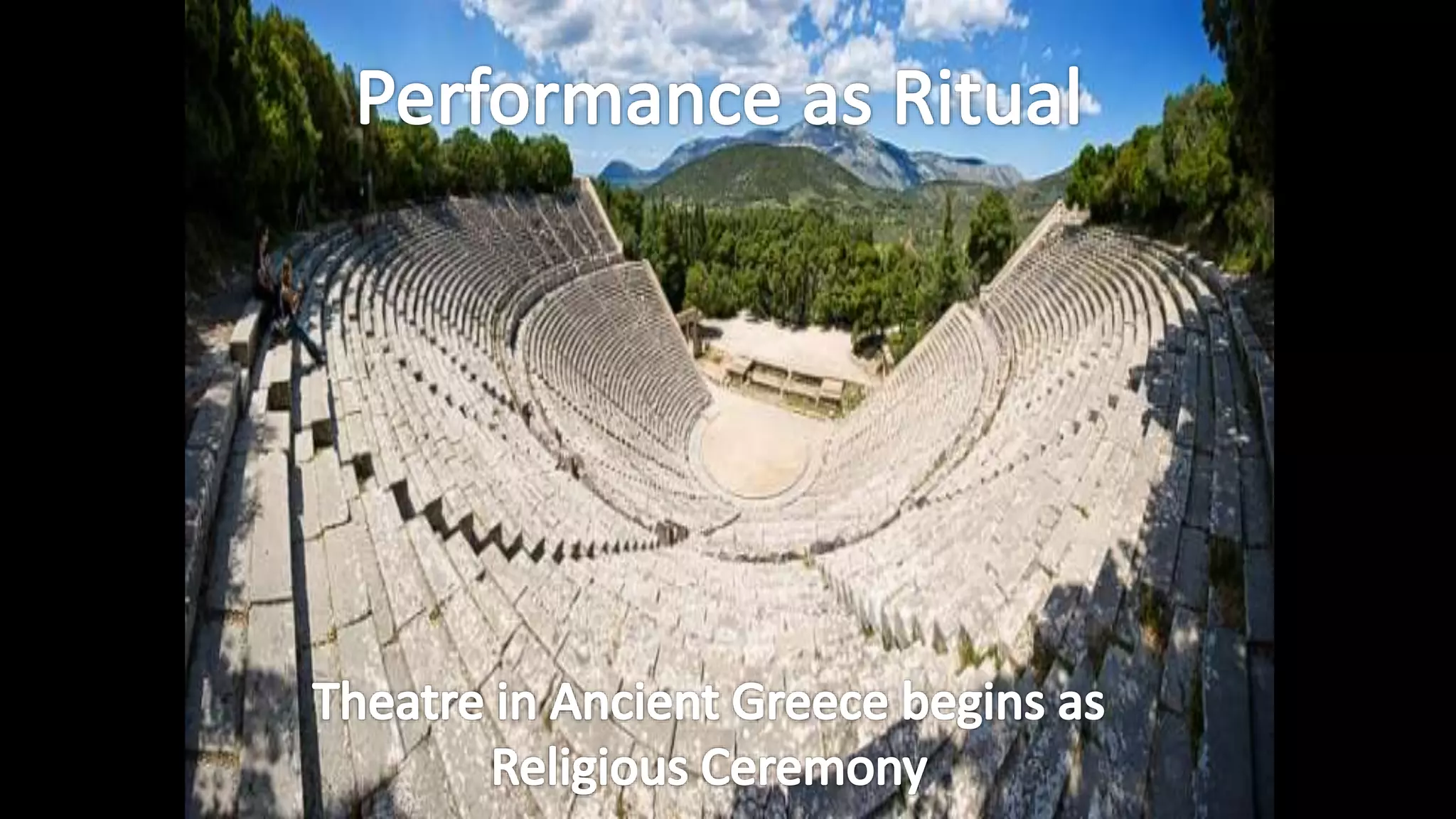
• Performances have been part of human culture since the beginning of human history, and
modern performances share some similarities with ancient practices.
• Performance is both a behavior and an art.
• Understanding the history and nature of performance can help us understand our lives.
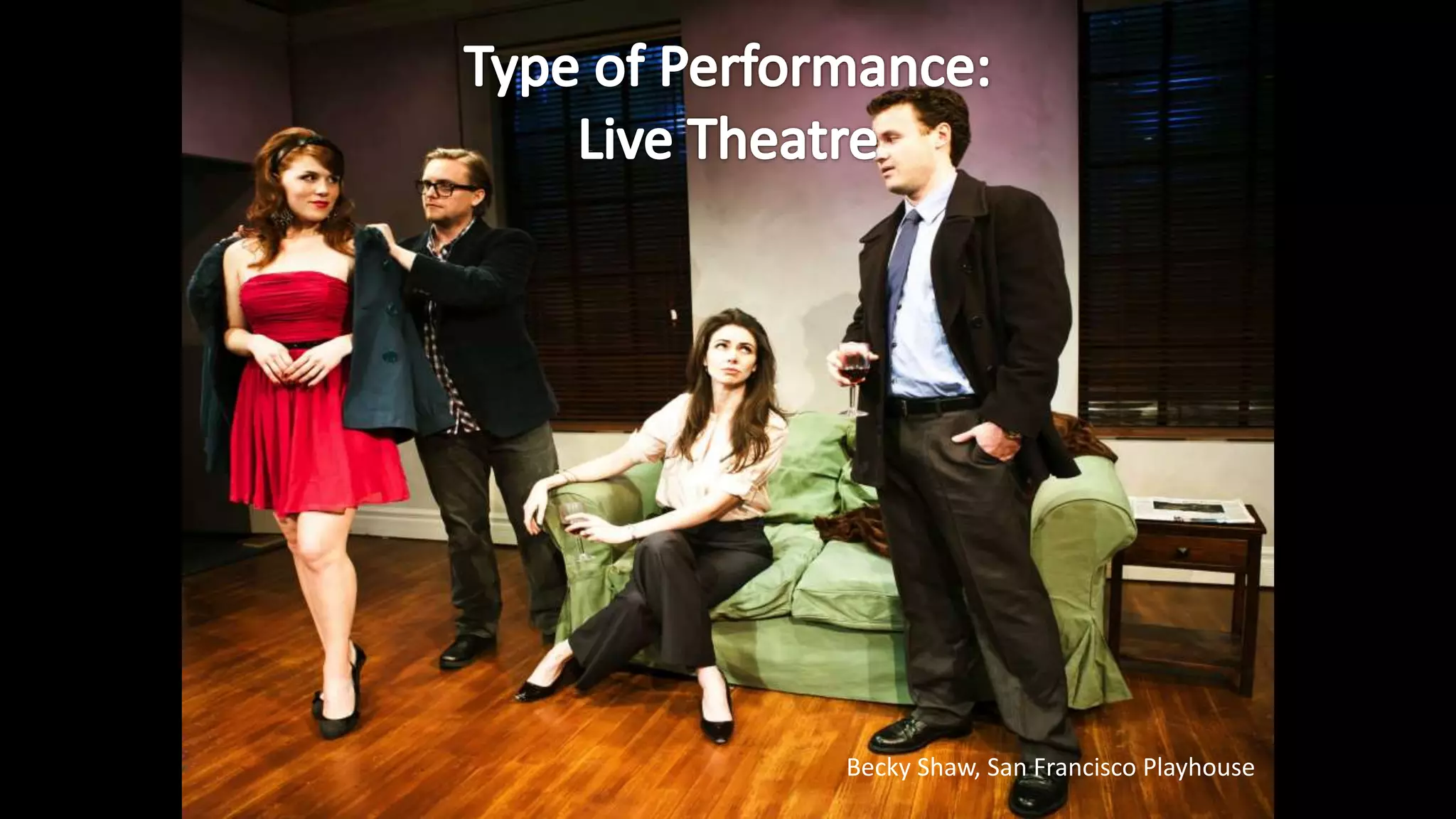
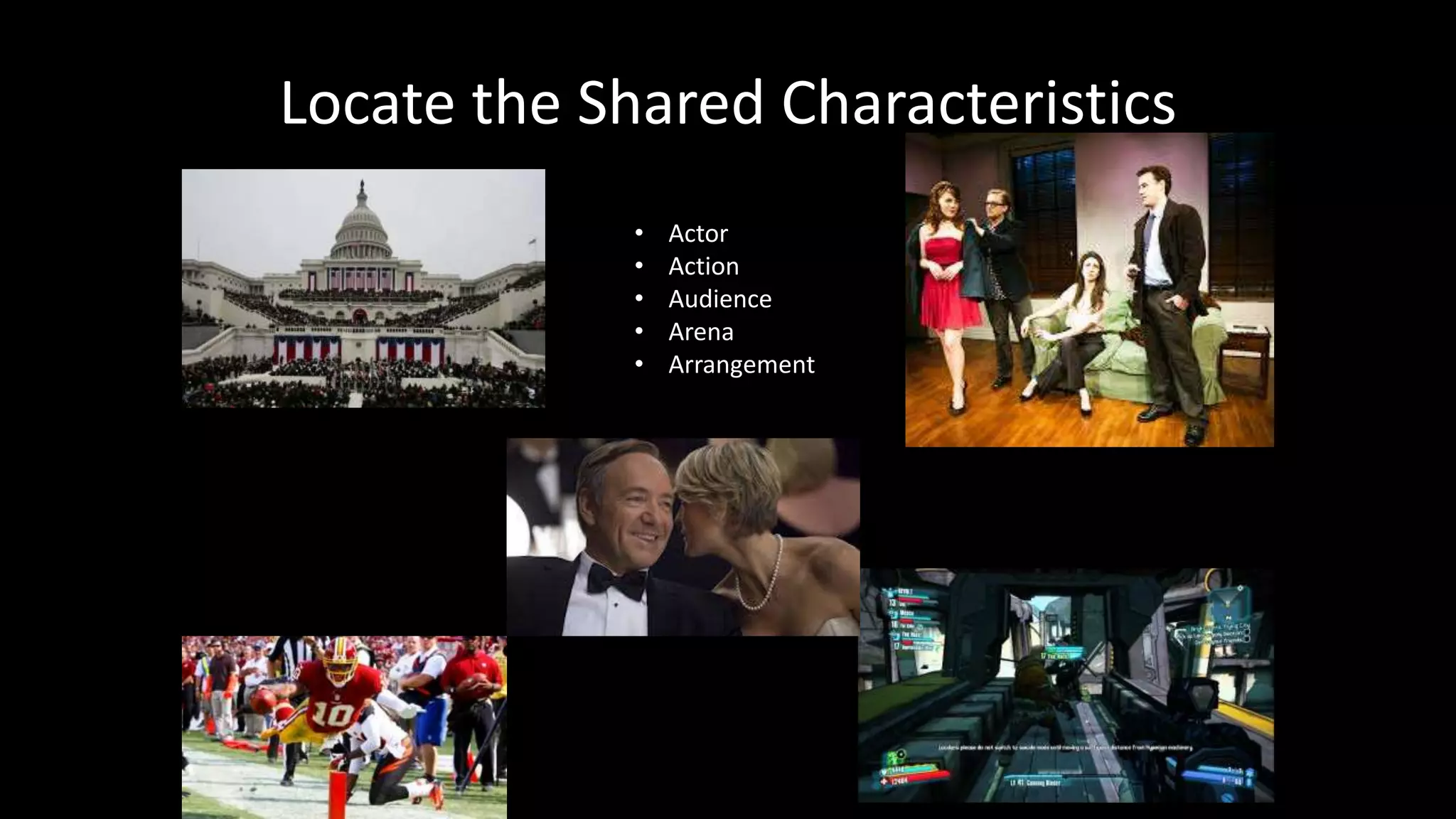
Becky Shaw, San Francisco Playhouse
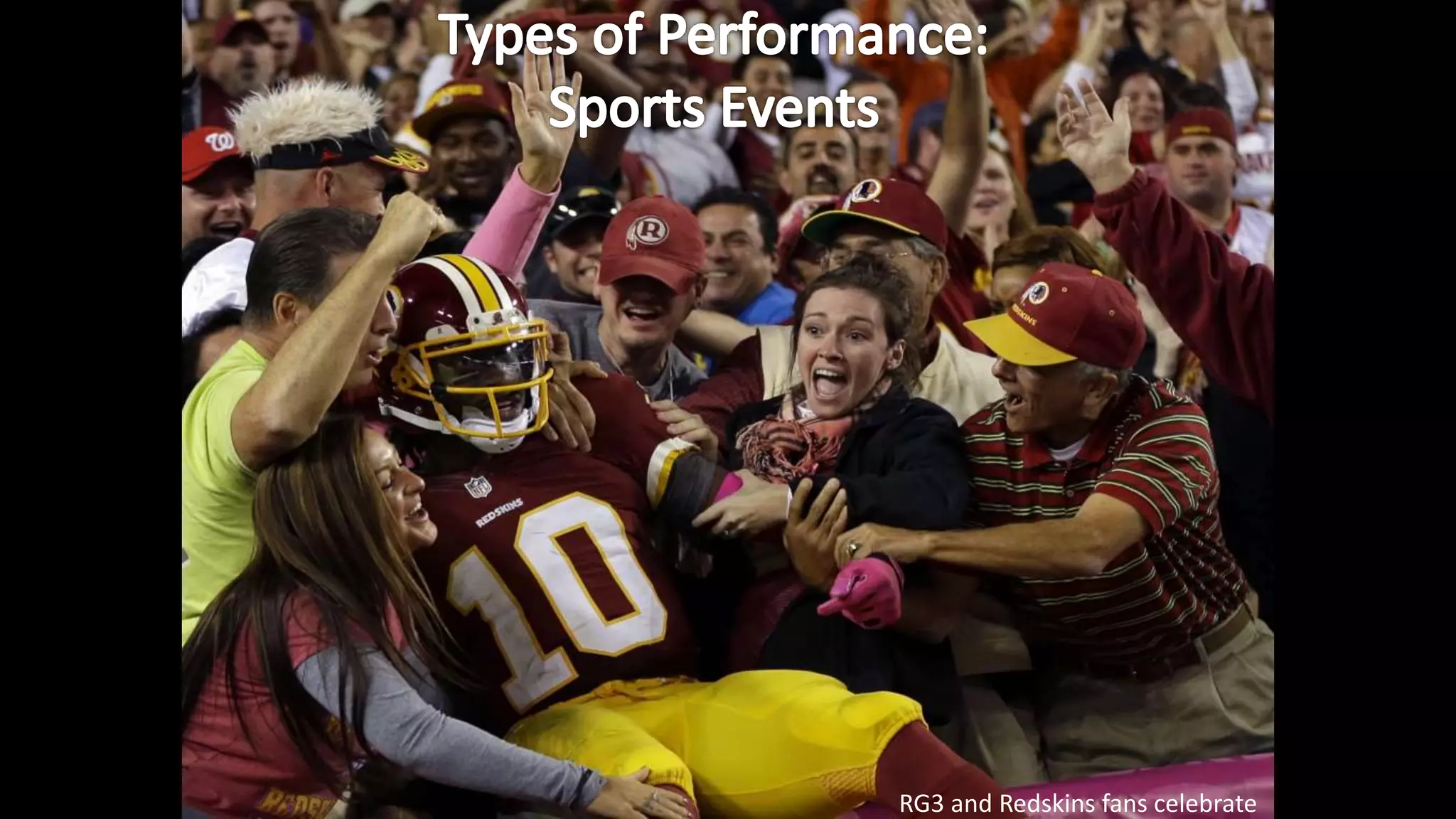
RG3 and Redskins fans celebrate
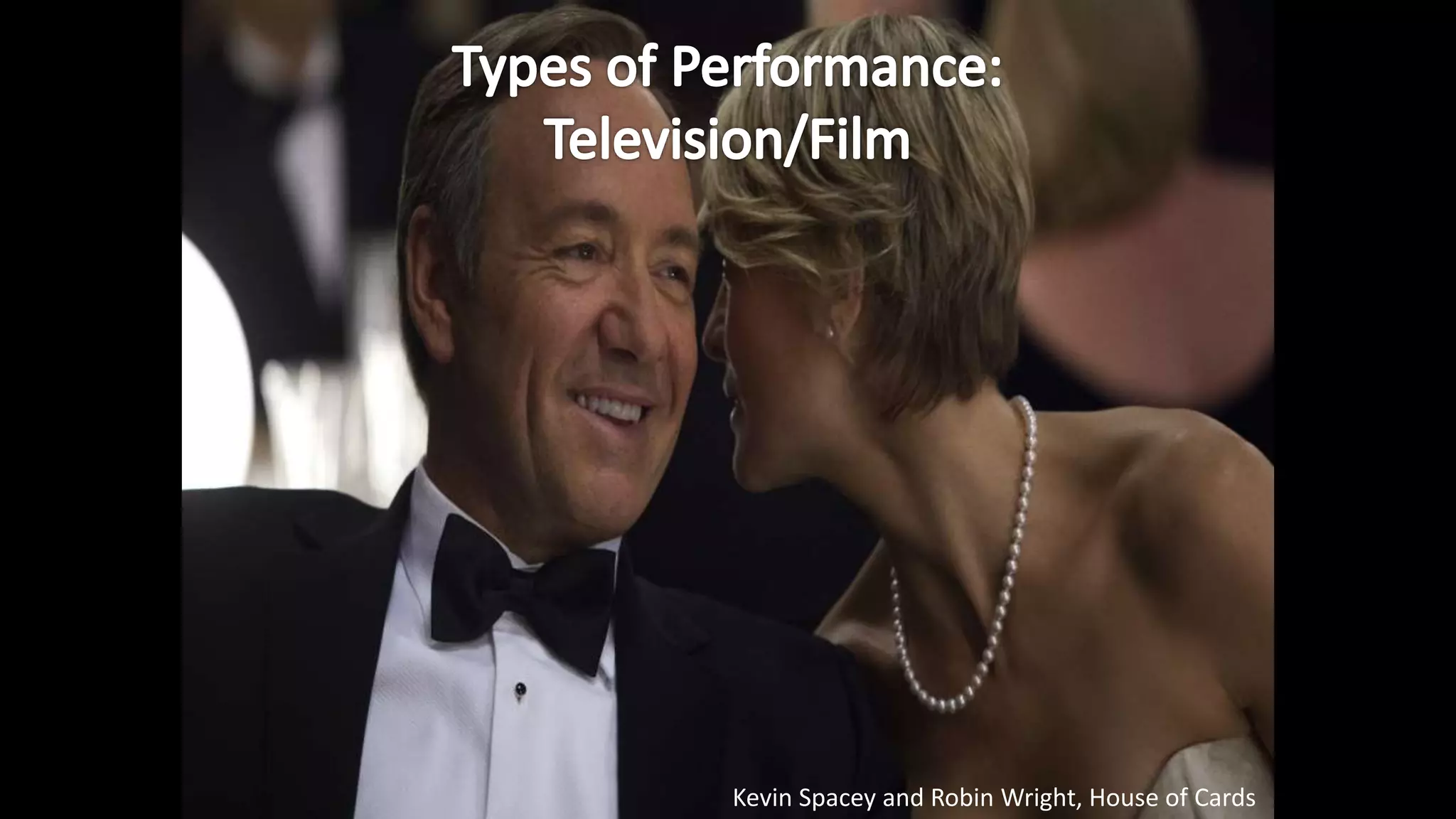
Kevin Spacey and Robin Wright, House of Cards
.
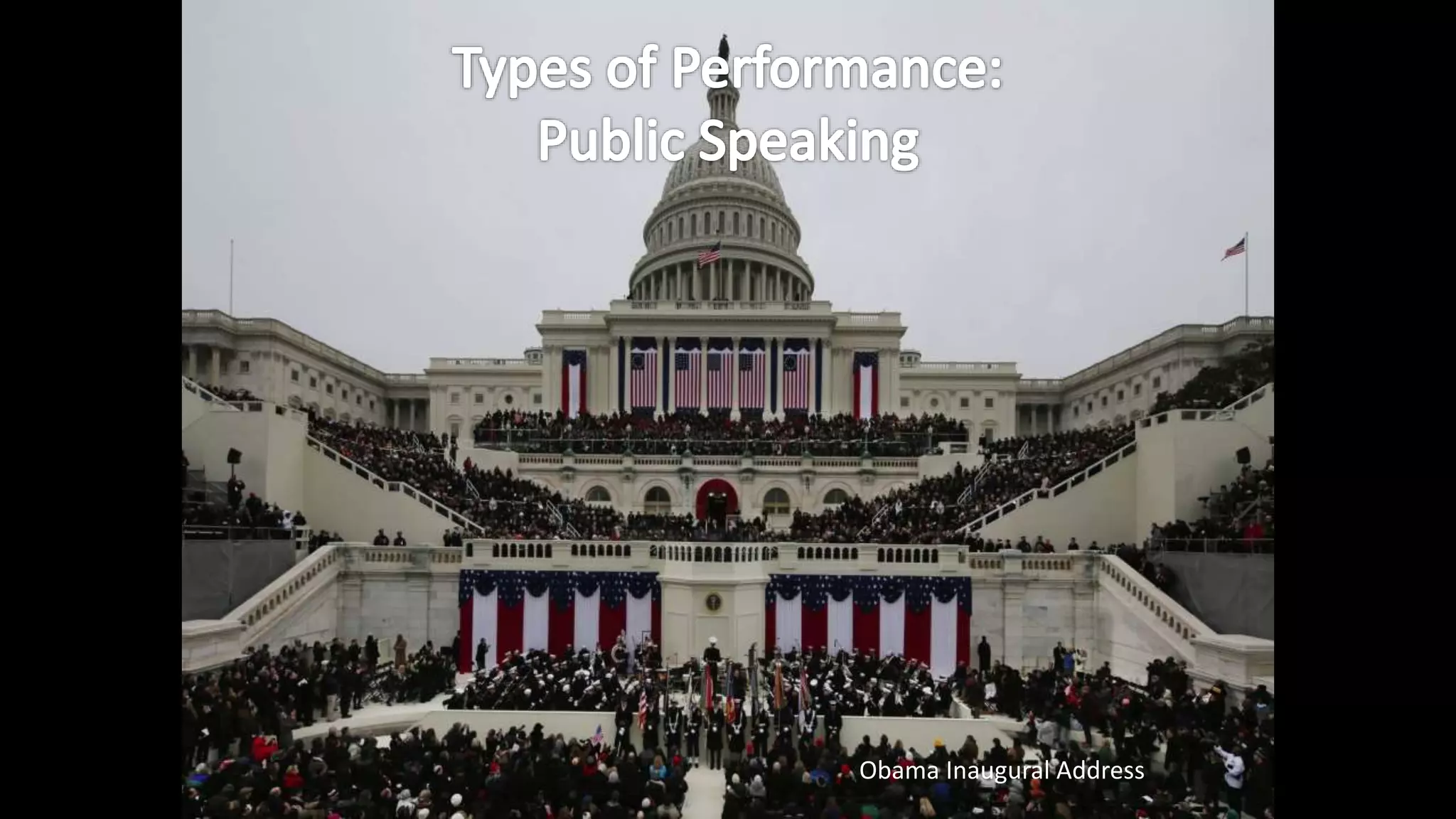
Obama Inaugural Address
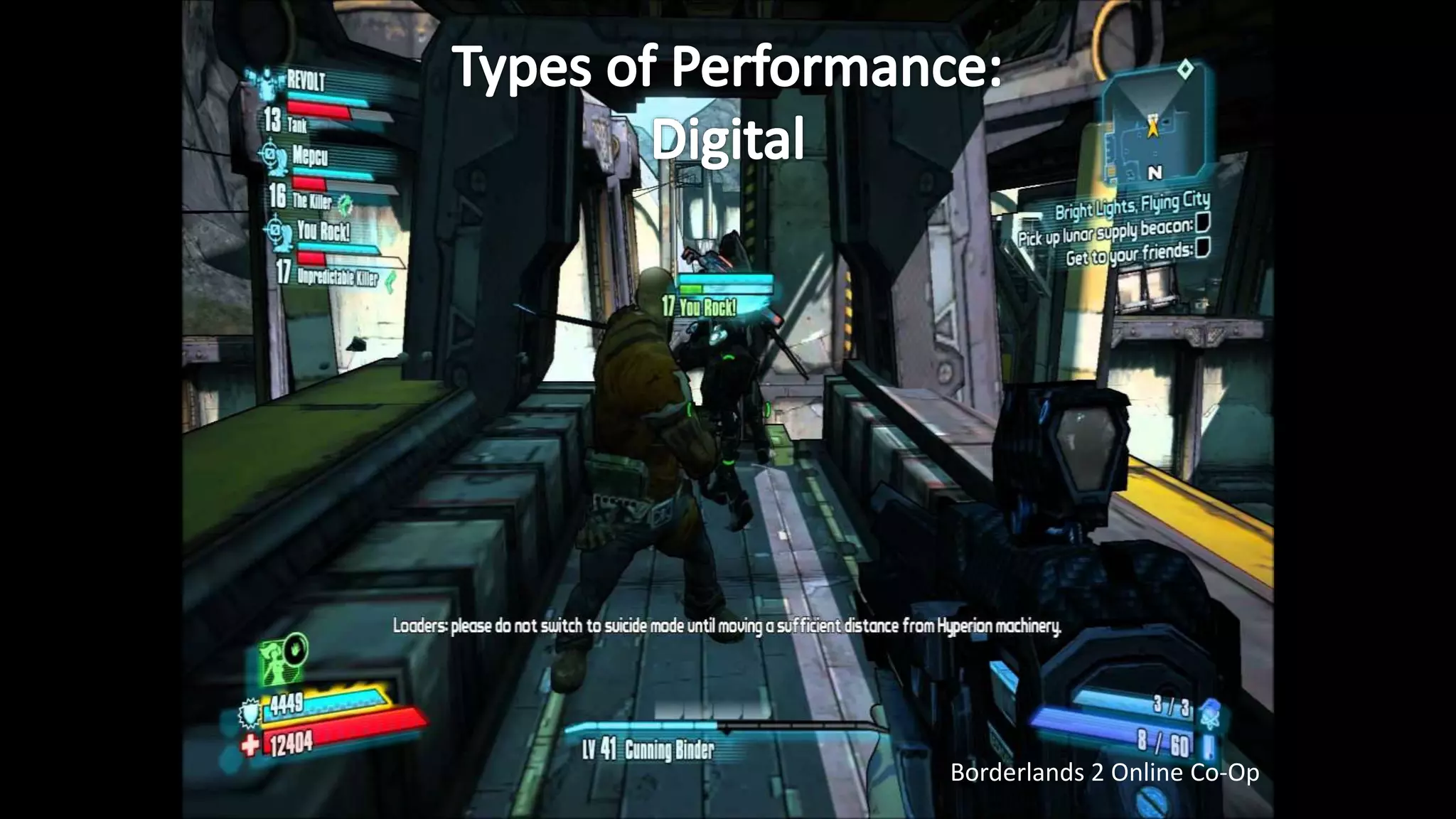
Borderlands 2 Online Co-Op
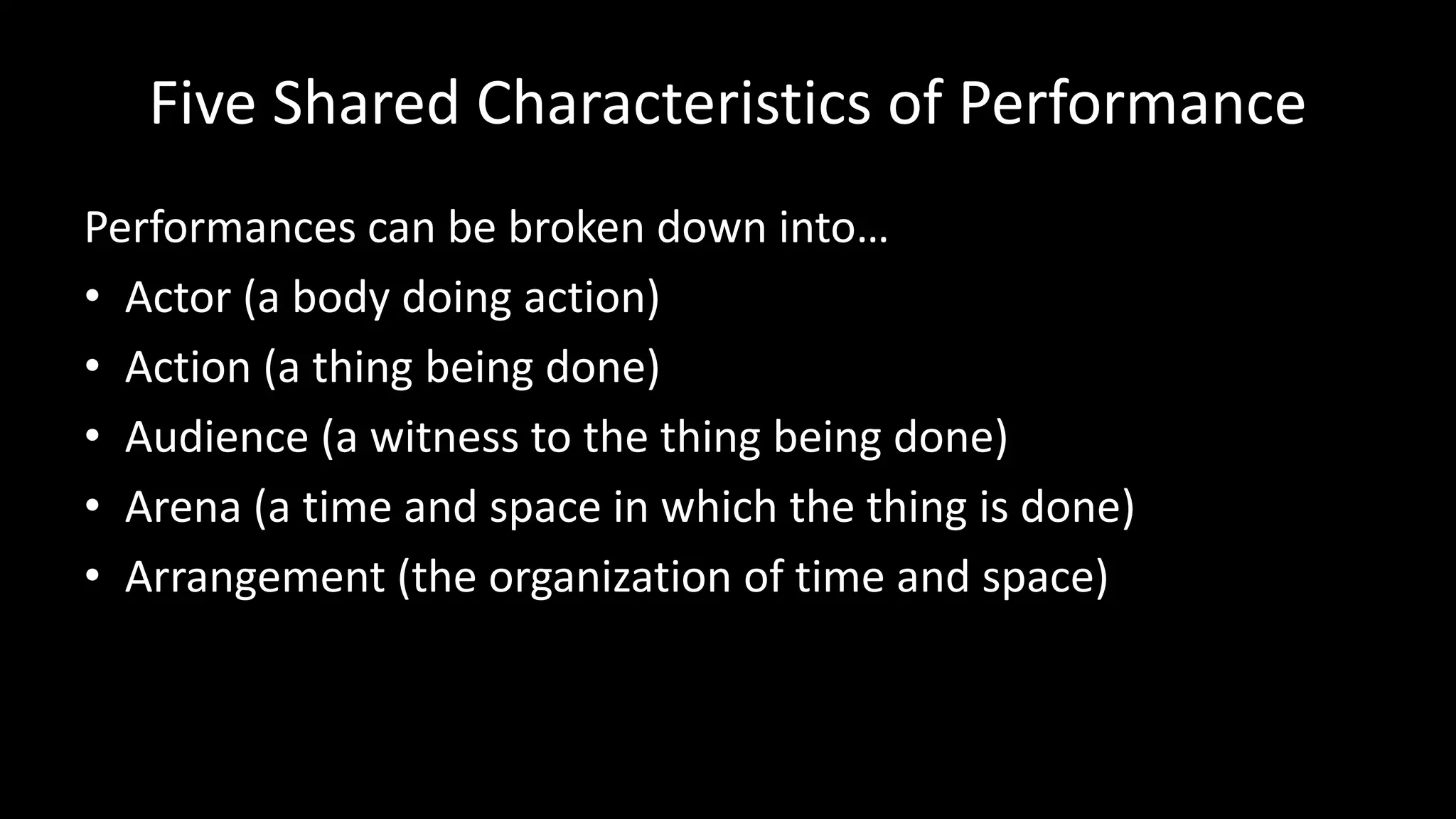
Five Shared Characteristics of Performance
Performances can be broken down into…
• Actor (a body doing action)
• Action (a thing being done)
• Audience (a witness to the thing being done)
• Arena (a time and space in which the thing is done)
• Arrangement (the organization of time and space)
Locate the Shared Characteristics
• Actor
• Action
• Audience
• Arena
• Arrangement
Performance Studies
A way of thinking about a variety of topics through the
vocabulary of performance. For example…
• Relationships (Performing for Someone)
– Parent/Child
– Student/Teacher
– Employer/Employee
– Significant Other
• Identity (Performance of Self)
– Race
– Gender
– Nationality
– Political views
Performance Studies
Performances are differentiated by…
• Objectives (expectations, reasons for performances)
• Organization (how actors, audiences, arenas, actions and
arrangements are organized in relation to one another)
• Consciousness (the degree of awareness of the actor’s and the
audience’s objectives)
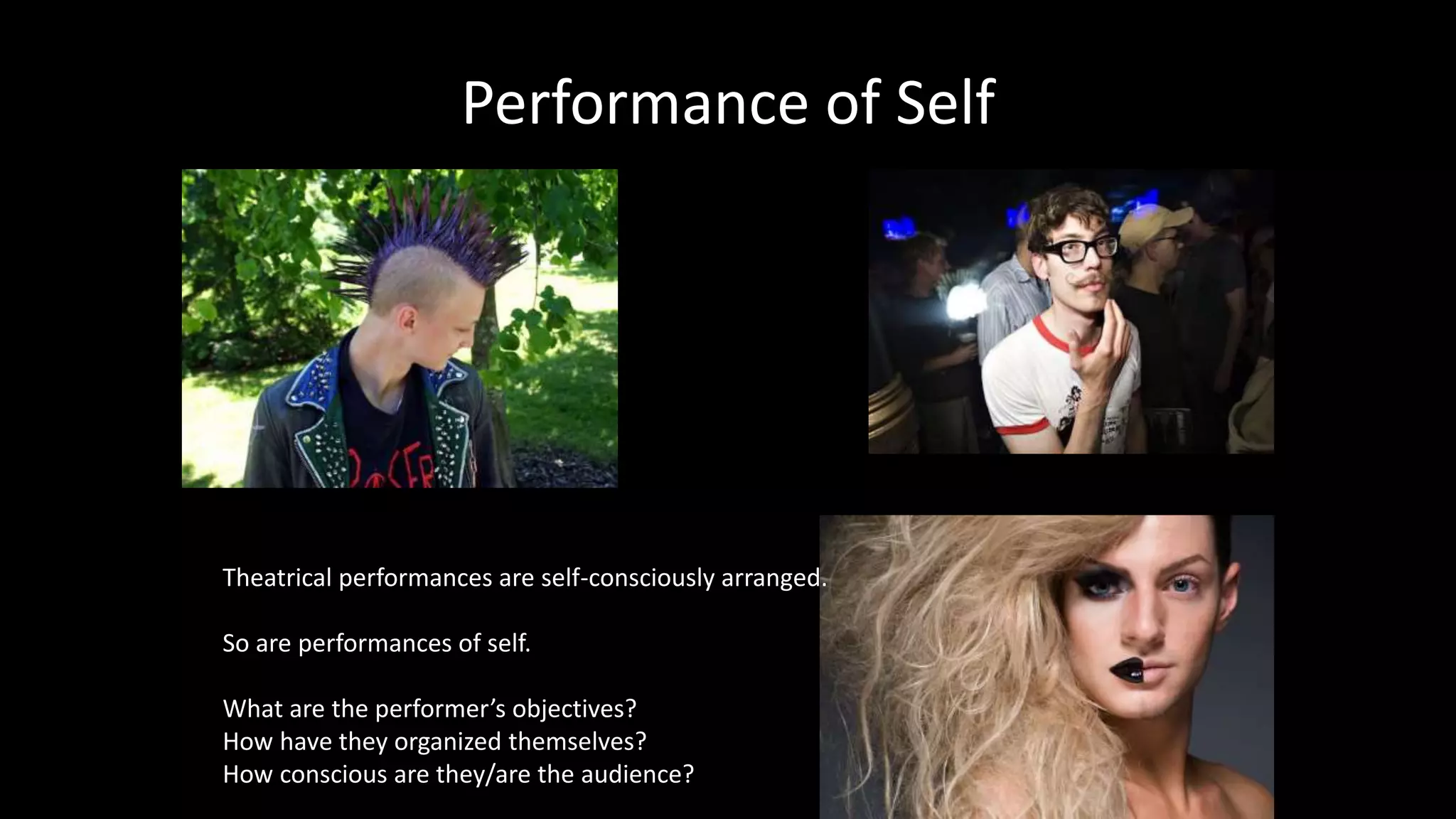
Performance of Self
Theatrical performances are self-consciously arranged.
So are performances of self.
What are the performer’s objectives?
How have they organized themselves?
How conscious are they/are the audience?
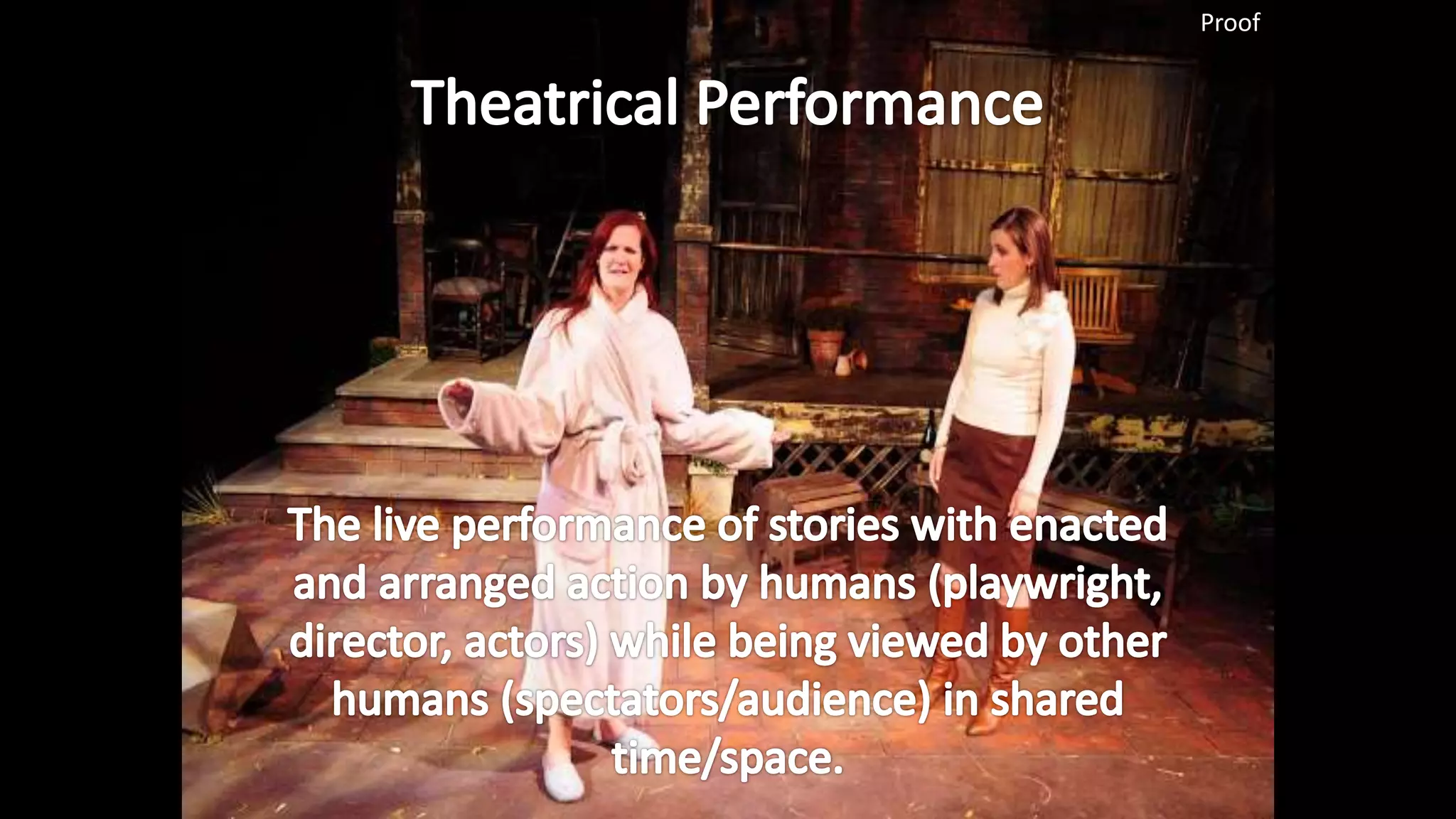
Proof
Theatrical Performance:
Unique Factors
• Theatre is always live
• Theatre happens when spectators and actors share time and
space
• Theatre is inherently subjective
• Theatre “becomes itself through disappearance” -> it is
inherently ephemeral
• Theatre is inherently collaborative (production team and
actor/audience relationship)
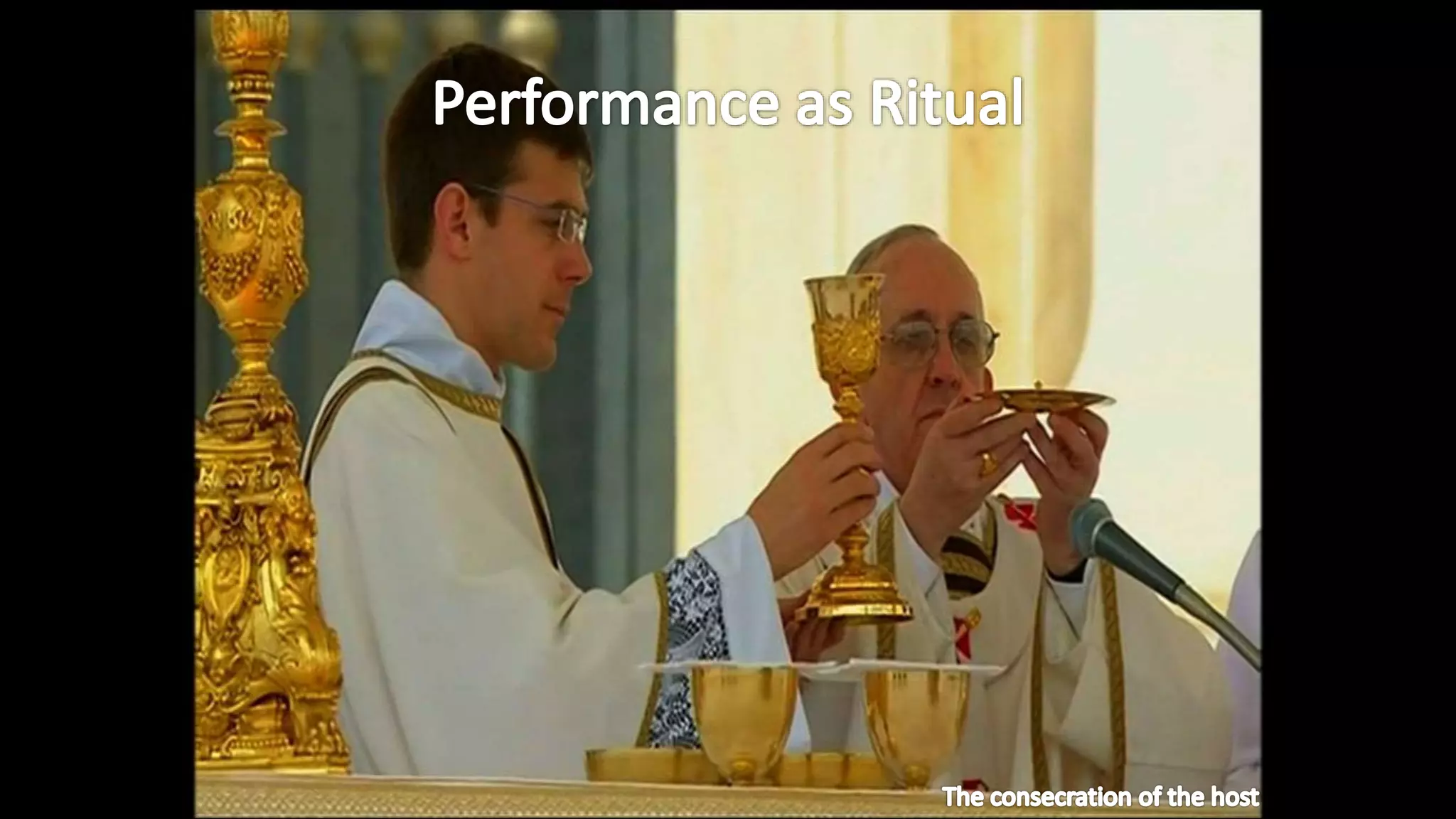
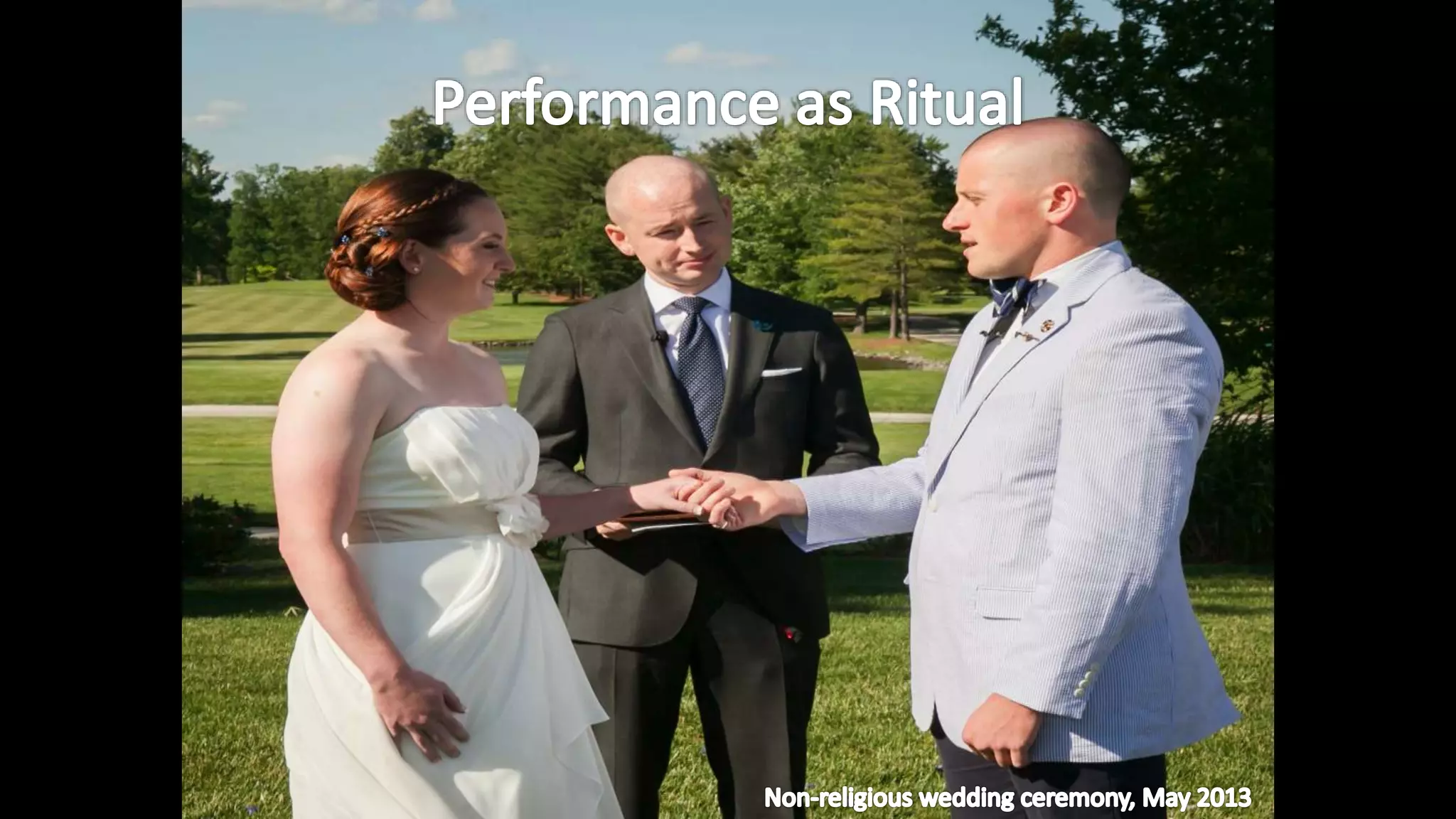
Performance as Ritual
• Ritual
• a series of actions performed in a certain order
with specific meaning and intention
• usually involves some kind of change resulting
FROM the ritual (ACTION)
• Performance
• carrying out or accomplishing an action
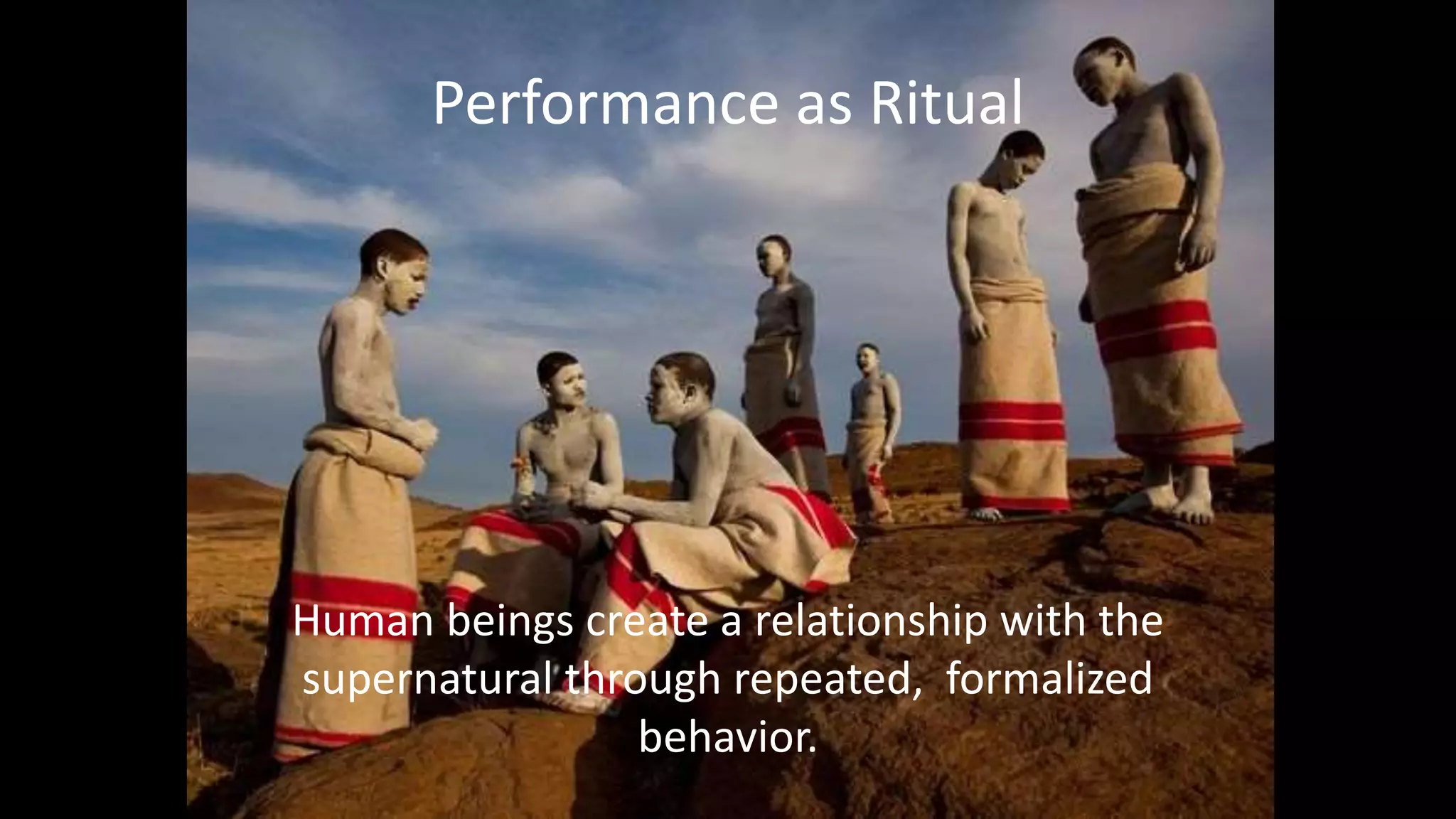
Performance as Ritual
Human beings create a relationship with the
supernatural through repeated, formalized
behavior.
Rituals of Everyday Life?
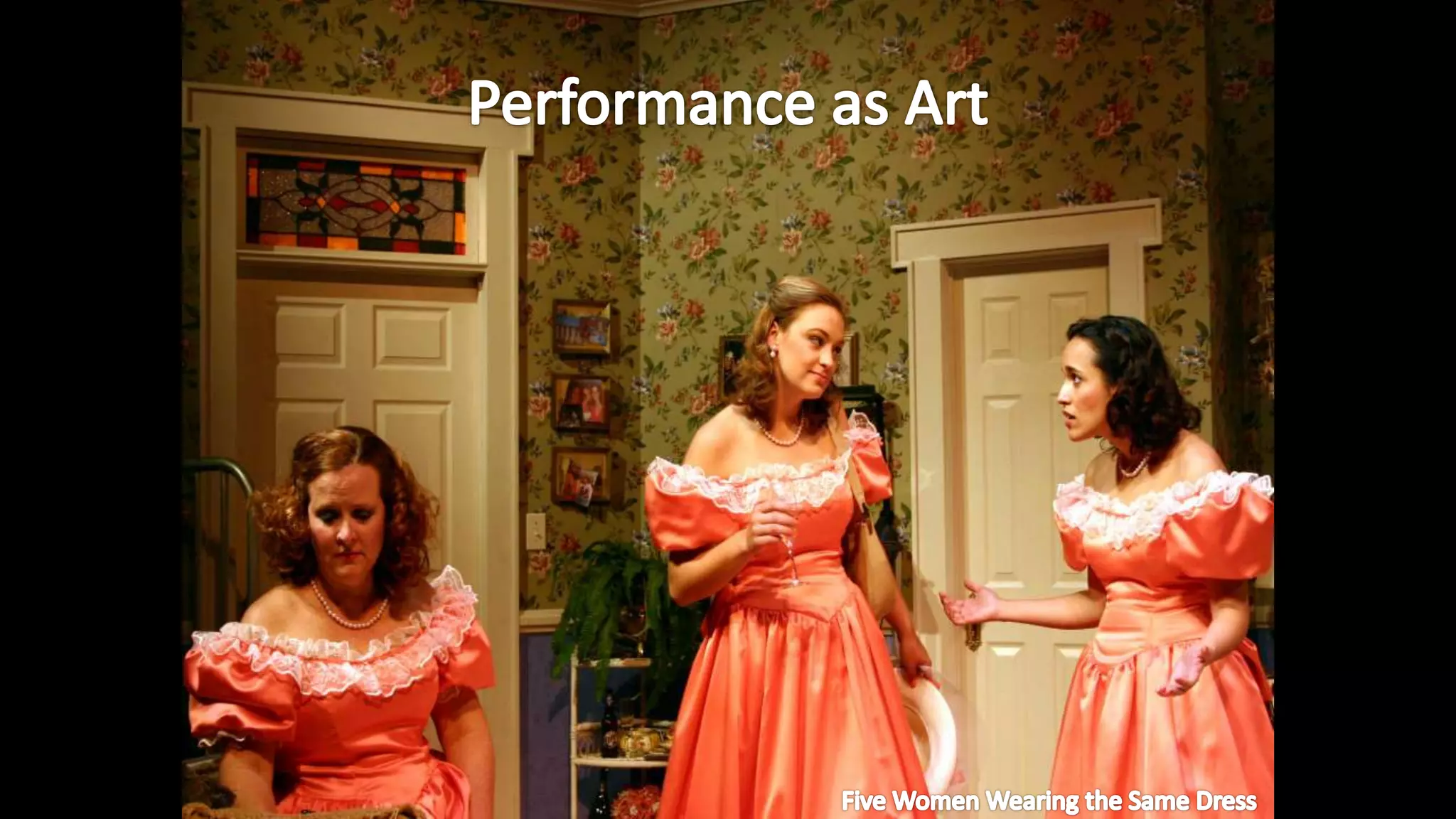
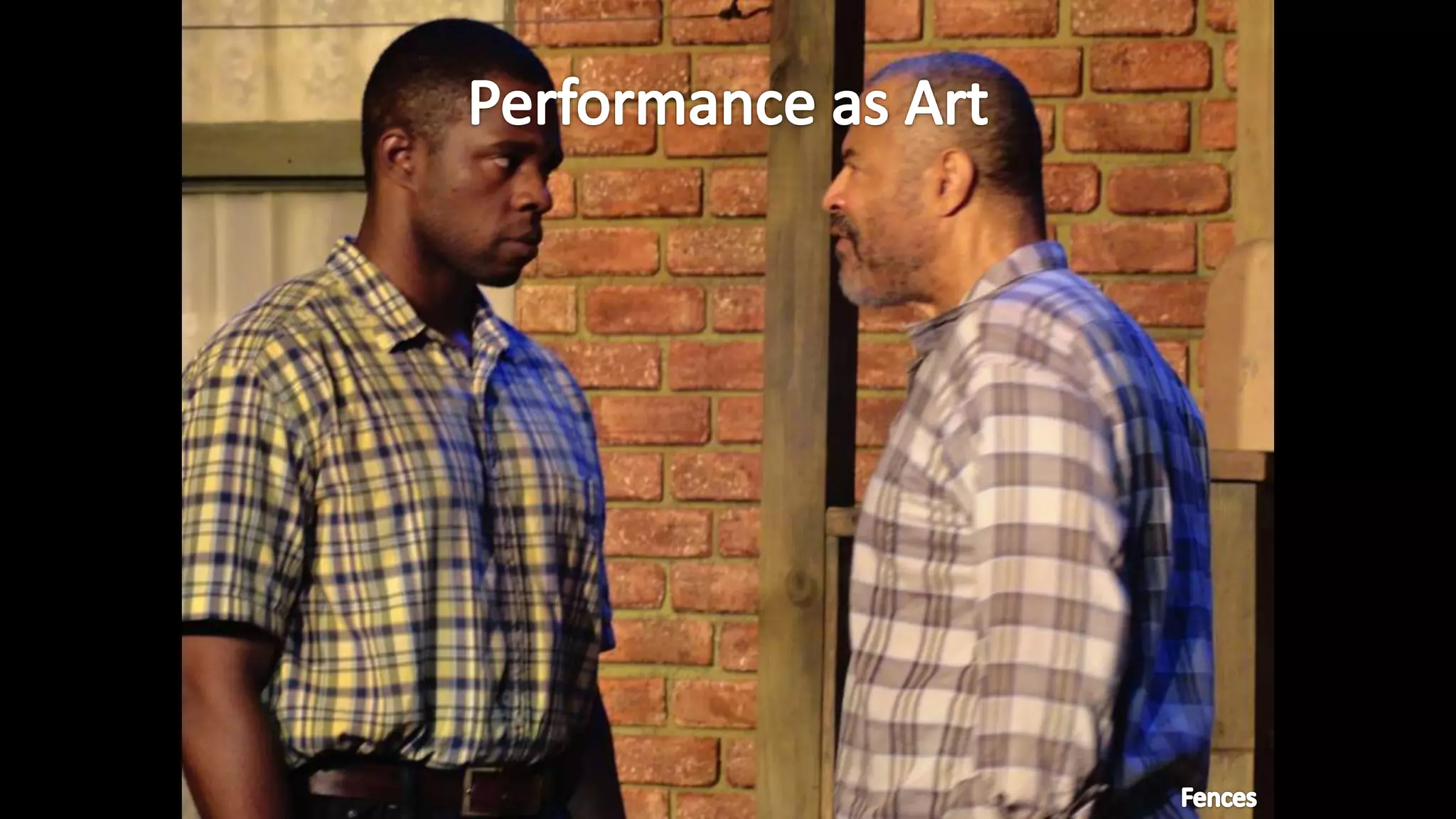
Performance as Art
• Art…
– Is the self-conscious creation of a person
– Seeks an Aesthetic Response/Experience
– Has both social and aesthetic value
– Has an objective
– Forms (media) have rules of organization
– Explains subjective views of the world
– Is meant to be interpreted subjectively and objectively
Performance as Art
• Theatre, like dance and singing, is a performance art.
• Theatre is a medium, a device through which art is created and
shared.
• Theatre is unmediated, occuring in live, shared space
– Film, television, and internet performances are mediated.
Performance as Art
• Theatre condenses reality (a heightened expression of real life)
– Similarly, theatre condenses time and space.
• Theatre is artifice, an arranged reality (script, rehearsal, design,
etc.)
• Theatre is a system, an interlocking series of ongoing
processes that create the ephemeral moment
• Theatre incorporates other forms of art.
Performance as Art:
The Idea of Play
• Theatre is inherently human
We are born with “dramatic instincts.”
– We play and perform roles daily
– We imitate and dramatize life
– We share stories and express ourselves
– We make our ordinary lives extraordinary
“All the world’s a stage . . .” (Shakespeare)
Performance as Art
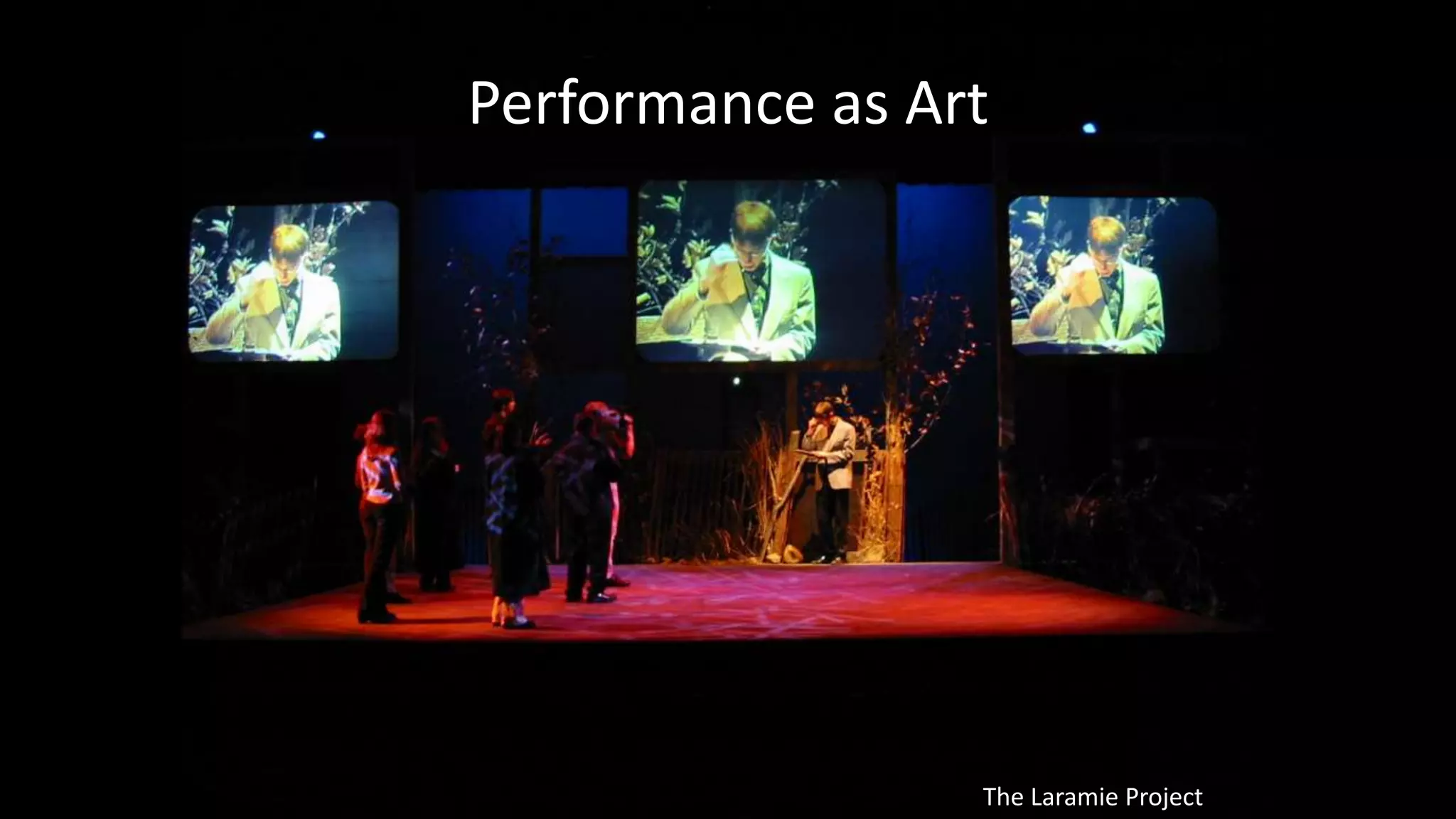
The Laramie Project
Performance as Art
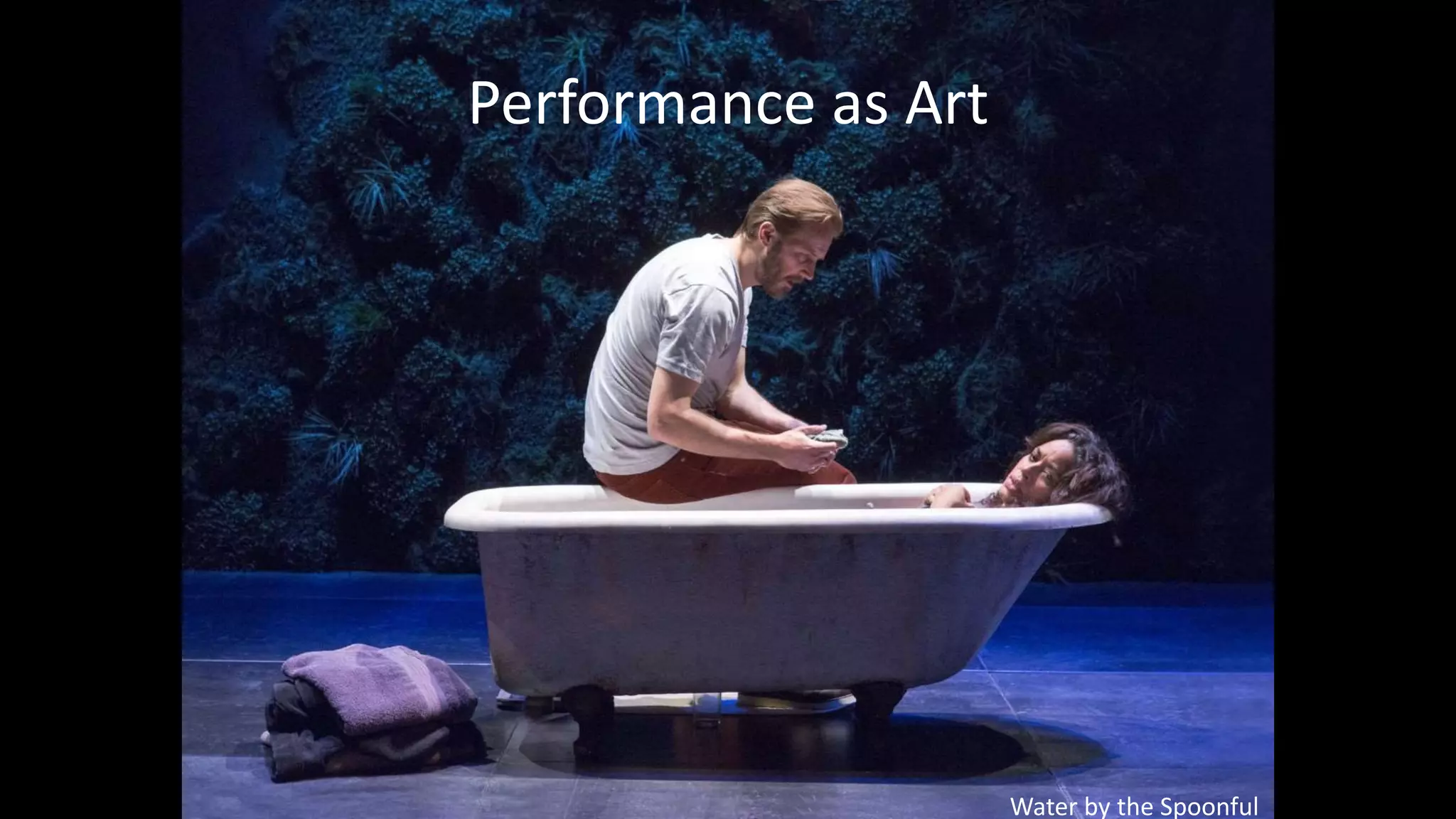
Water by the Spoonful
What is Performance?
• A paradigmatic way of thinking about the world and your place
in it.
• By focusing on deliberate acts of theatre (arranged artistic
performance) and the ability to critically appreciate them, you
learn to think performatively.
– How do deliberate and accidental performances shape your life?
– How can you grow your conscious awareness of these performative
forces?
Major Questions
• How does the performance paradigm help to explain or inform
non-theatrical activities in real life?
• What are the similarities and differences in live and mediated
performances?
• How does performance intersect with ritual?
• Why study performance? What value does it have to you?

What is performance

  • 1.
    What is Performance?: LearningObjectives • Recognize the basic characteristics that all performances share and use these characteristics to differentiate various types of performances. • Discuss the theatrical paradigm and describe how it is used to understand both theatrical and nontheatrical activities. • Determine how a performance functions as a ritual, a work of art, and/or a cultural artifact. • Discuss the differences and similarities between live and mediated performances and suggest how these factors influence both artists and audiences.
  • 2.
    What is Performance? KeyConcepts • Because performances surround and penetrate modern culture, having some knowledge of how performances work is important. • Performances of all kinds share basic characteristics, but they are distinguished by their objectives/purposes, organization, and self-awareness/consciousness. • Performances have been part of human culture since the beginning of human history, and modern performances share some similarities with ancient practices. • Performance is both a behavior and an art. • Understanding the history and nature of performance can help us understand our lives.
  • 3.
    Becky Shaw, SanFrancisco Playhouse
  • 4.
    RG3 and Redskinsfans celebrate
  • 6.
    Kevin Spacey andRobin Wright, House of Cards
  • 8.
  • 9.
  • 10.
  • 11.
    Five Shared Characteristicsof Performance Performances can be broken down into… • Actor (a body doing action) • Action (a thing being done) • Audience (a witness to the thing being done) • Arena (a time and space in which the thing is done) • Arrangement (the organization of time and space)
  • 12.
    Locate the SharedCharacteristics • Actor • Action • Audience • Arena • Arrangement
  • 13.
    Performance Studies A wayof thinking about a variety of topics through the vocabulary of performance. For example… • Relationships (Performing for Someone) – Parent/Child – Student/Teacher – Employer/Employee – Significant Other • Identity (Performance of Self) – Race – Gender – Nationality – Political views
  • 14.
    Performance Studies Performances aredifferentiated by… • Objectives (expectations, reasons for performances) • Organization (how actors, audiences, arenas, actions and arrangements are organized in relation to one another) • Consciousness (the degree of awareness of the actor’s and the audience’s objectives)
  • 15.
    Performance of Self Theatricalperformances are self-consciously arranged. So are performances of self. What are the performer’s objectives? How have they organized themselves? How conscious are they/are the audience?
  • 16.
  • 17.
    Theatrical Performance: Unique Factors •Theatre is always live • Theatre happens when spectators and actors share time and space • Theatre is inherently subjective • Theatre “becomes itself through disappearance” -> it is inherently ephemeral • Theatre is inherently collaborative (production team and actor/audience relationship)
  • 18.
    Performance as Ritual •Ritual • a series of actions performed in a certain order with specific meaning and intention • usually involves some kind of change resulting FROM the ritual (ACTION) • Performance • carrying out or accomplishing an action
  • 19.
    Performance as Ritual Humanbeings create a relationship with the supernatural through repeated, formalized behavior.
  • 23.
  • 24.
    Performance as Art •Art… – Is the self-conscious creation of a person – Seeks an Aesthetic Response/Experience – Has both social and aesthetic value – Has an objective – Forms (media) have rules of organization – Explains subjective views of the world – Is meant to be interpreted subjectively and objectively
  • 25.
    Performance as Art •Theatre, like dance and singing, is a performance art. • Theatre is a medium, a device through which art is created and shared. • Theatre is unmediated, occuring in live, shared space – Film, television, and internet performances are mediated.
  • 26.
    Performance as Art •Theatre condenses reality (a heightened expression of real life) – Similarly, theatre condenses time and space. • Theatre is artifice, an arranged reality (script, rehearsal, design, etc.) • Theatre is a system, an interlocking series of ongoing processes that create the ephemeral moment • Theatre incorporates other forms of art.
  • 27.
    Performance as Art: TheIdea of Play • Theatre is inherently human We are born with “dramatic instincts.” – We play and perform roles daily – We imitate and dramatize life – We share stories and express ourselves – We make our ordinary lives extraordinary “All the world’s a stage . . .” (Shakespeare)
  • 31.
    Performance as Art TheLaramie Project
  • 32.
    Performance as Art Waterby the Spoonful
  • 33.
    What is Performance? •A paradigmatic way of thinking about the world and your place in it. • By focusing on deliberate acts of theatre (arranged artistic performance) and the ability to critically appreciate them, you learn to think performatively. – How do deliberate and accidental performances shape your life? – How can you grow your conscious awareness of these performative forces?
  • 34.
    Major Questions • Howdoes the performance paradigm help to explain or inform non-theatrical activities in real life? • What are the similarities and differences in live and mediated performances? • How does performance intersect with ritual? • Why study performance? What value does it have to you?

Editor's Notes

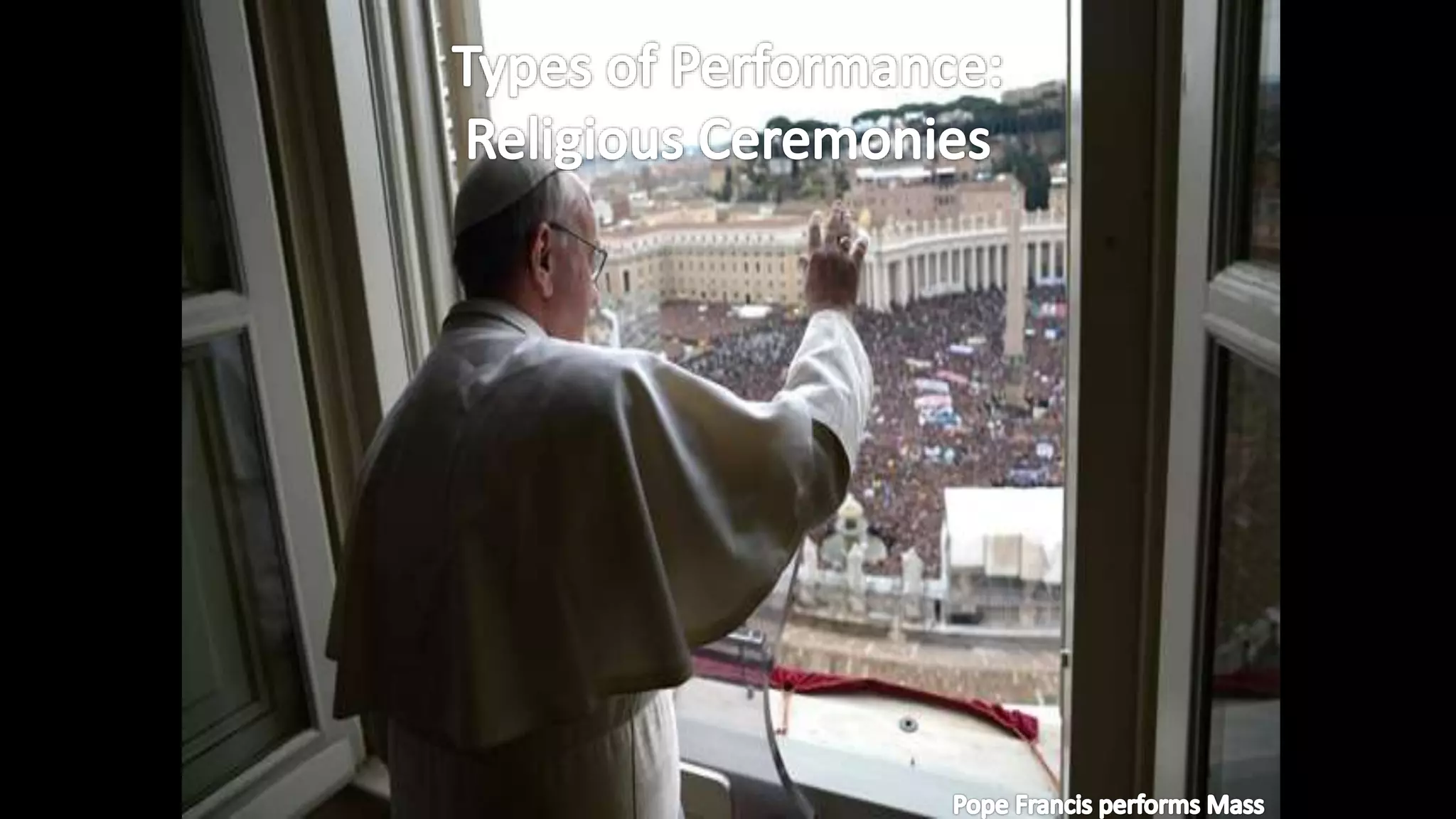
  • #22 Pope Francis delivering Sunday Mass
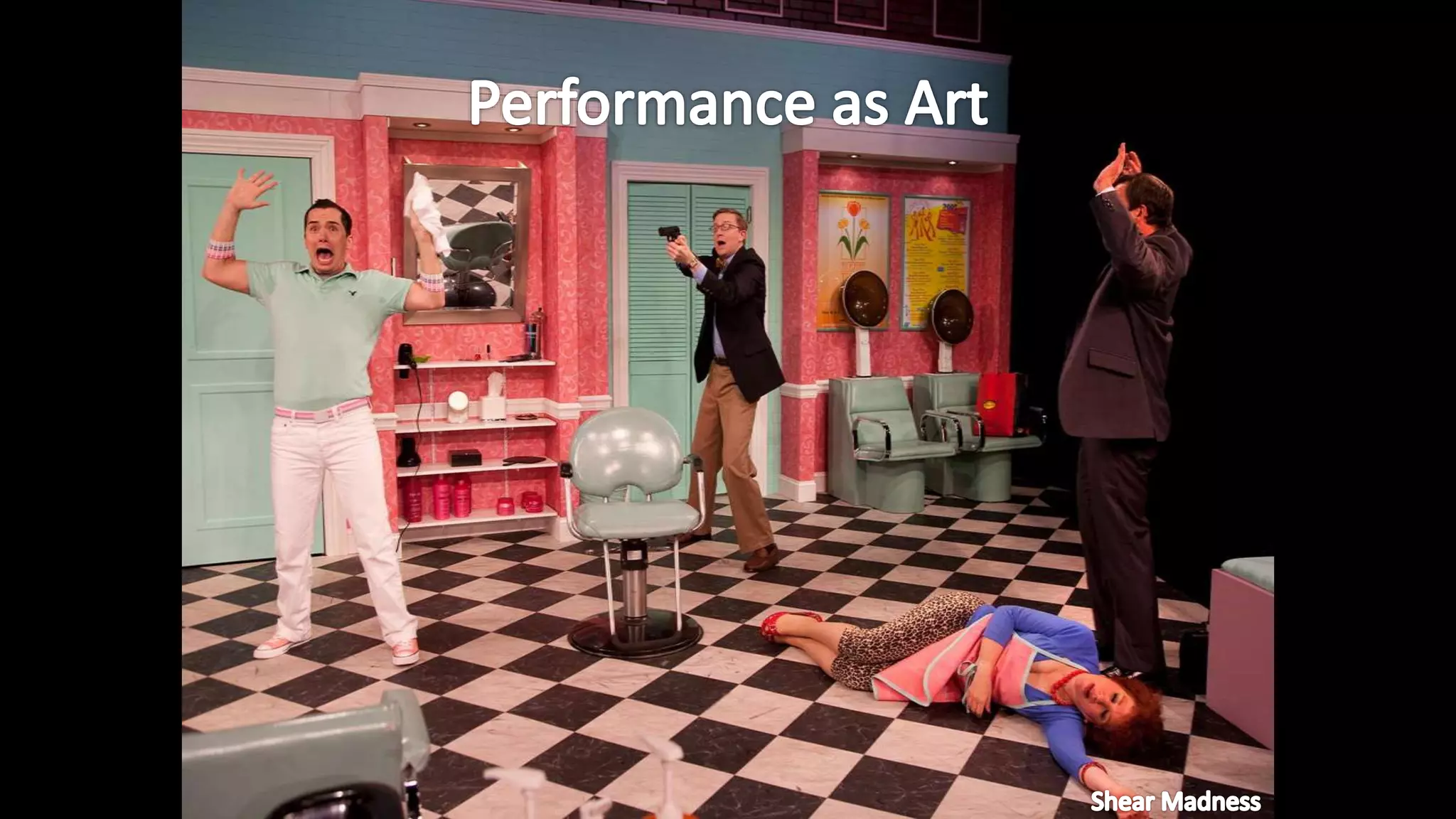
  • #29 From Top L: Laramie Project, When You Comin’ Back, Red Ryder?, Shear Madness, Proof