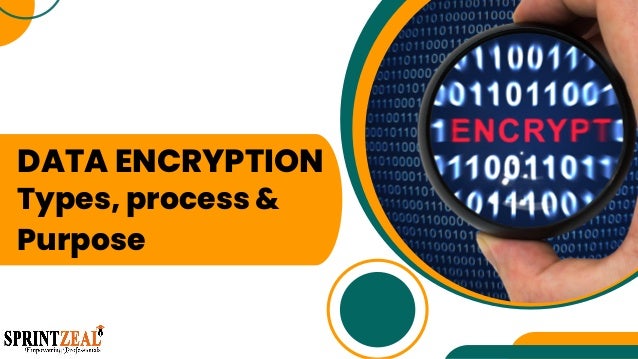
DATA ENCRYPTION
Types, process &
Purpose
A password or secret key may be used to encrypt data,
making it difficult for anybody except the person who
knows the password or key to access it. The two types are
ciphertext (encrypted data) and plaintext (unencrypted
information).
What is
Data Encryption
"The purpose is to protect
digital data privacy when
sent via the Internet or other
computer networks.
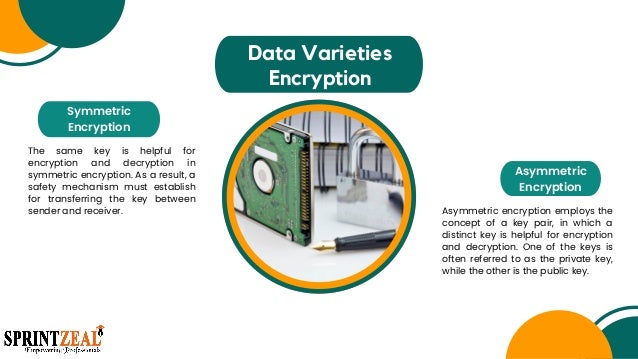
Data Varieties
Encryption


The same key is helpful for
encryption and decryption in
symmetric encryption. As a result, a
safety mechanism must establish
for transferring the key between
sender and receiver.
Symmetric
Encryption


Asymmetric encryption employs the
concept of a key pair, in which a
distinct key is helpful for encryption
and decryption. One of the keys is
often referred to as the private key,
while the other is the public key.
Asymmetric
Encryption
Symmetric Vs. Asymmetric
Symmetric
Asymmetric
All parties in an asymmetric key system (also known as
a private key system) share the same key. The keys are
helpful to encrypt and decode communications, and
they must keep secret, or the security is jeopardized.
Ensure that all parties get the same key and must
distribute the keys securely.
Asymmetric vital systems (public/private critical
systems) benefit from two keys. One key is secret (the
"private key"). The "public key" is made publicly
accessible. The mathematical connection between
public and private keys necessitates the other.
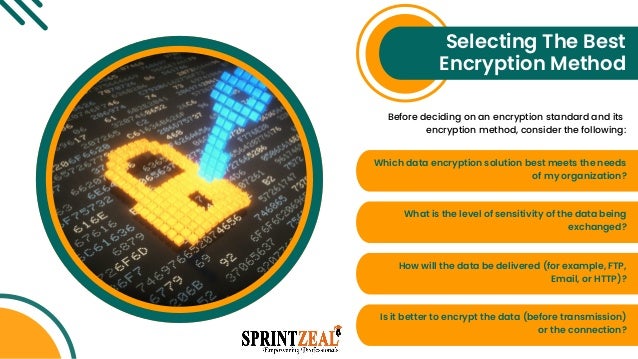
Selecting The Best
Encryption Method


Which data encryption solution best meets the needs
of my organization?
What is the level of sensitivity of the data being
exchanged?
How will the data be delivered (for example, FTP,
Email, or HTTP)?
Is it better to encrypt the data (before transmission)
or the connection?
Before deciding on an encryption standard and its
encryption method, consider the following:
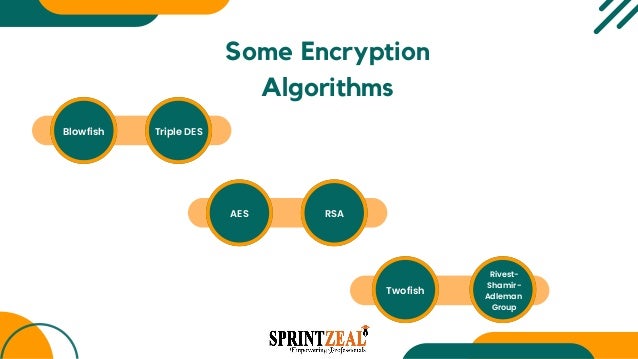
Some Encryption
Algorithms
Blowfish Triple DES
AES RSA
Twofish
Rivest-
Shamir-
Adleman
Group
Thank You
LIKE US IF YOU LOVE OUR POSTS

What Is Data Encryption - Types, Algorithms, Techniques & Methods

  • 1.
  • 2.
    A password orsecret key may be used to encrypt data, making it difficult for anybody except the person who knows the password or key to access it. The two types are ciphertext (encrypted data) and plaintext (unencrypted information). What is Data Encryption "The purpose is to protect digital data privacy when sent via the Internet or other computer networks.
  • 3.
    Data Varieties Encryption The samekey is helpful for encryption and decryption in symmetric encryption. As a result, a safety mechanism must establish for transferring the key between sender and receiver. Symmetric Encryption Asymmetric encryption employs the concept of a key pair, in which a distinct key is helpful for encryption and decryption. One of the keys is often referred to as the private key, while the other is the public key. Asymmetric Encryption
  • 4.
    Symmetric Vs. Asymmetric Symmetric Asymmetric Allparties in an asymmetric key system (also known as a private key system) share the same key. The keys are helpful to encrypt and decode communications, and they must keep secret, or the security is jeopardized. Ensure that all parties get the same key and must distribute the keys securely. Asymmetric vital systems (public/private critical systems) benefit from two keys. One key is secret (the "private key"). The "public key" is made publicly accessible. The mathematical connection between public and private keys necessitates the other.
  • 5.
    Selecting The Best EncryptionMethod Which data encryption solution best meets the needs of my organization? What is the level of sensitivity of the data being exchanged? How will the data be delivered (for example, FTP, Email, or HTTP)? Is it better to encrypt the data (before transmission) or the connection? Before deciding on an encryption standard and its encryption method, consider the following:
  • 6.
    Some Encryption Algorithms Blowfish TripleDES AES RSA Twofish Rivest- Shamir- Adleman Group
  • 7.
    Thank You LIKE USIF YOU LOVE OUR POSTS