Privacy Policy? What’s That?
 The rise of GDPR really forces marketers
to revisit how they are using our
personal data and shift the focus to
address any fears consumers have about
how their information is being used.
This will help not only avoid legal
consequences, but also allow marketers
to transform “creepy” tactics into
customized marketing that resonates
with their respective audiences.
GDPR Best Practices
 As marketers adjust their privacy policies, they
need to go a step further and make sure their
customers feel confident that their data isn’t been
used in unlawful ways. Customers should have the
right to opt out of your emails or other marketing
communications that may be collecting their
personal information. The organization should
have a written record of how they will be using
personal data and exactly what data they are
collecting.
First Party Data is King
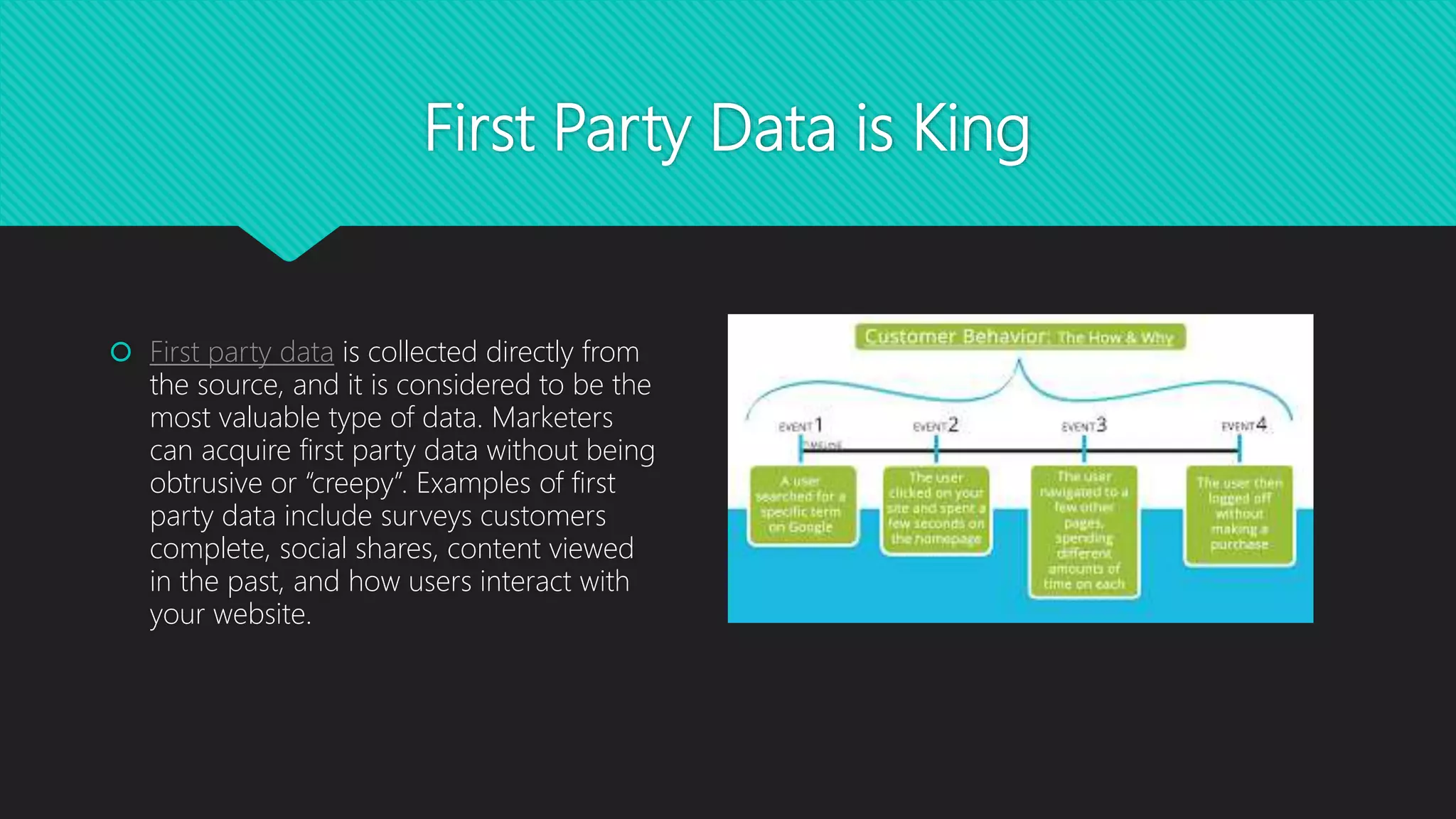
 First party data is collected directly from
the source, and it is considered to be the
most valuable type of data. Marketers
can acquire first party data without being
obtrusive or “creepy”. Examples of first
party data include surveys customers
complete, social shares, content viewed
in the past, and how users interact with
your website.
Where Second and Third Party Data Come Into Play
 Second party data is data that is acquired from other companies’ first party data. While it could
potentially provide marketers with more insights than first party data, it may not always be
legitimate or valuable, especially when it comes to protecting your customer data.
 Third party data is a combination of a variety of sources that is used to sell and exchange data on
a larger scale. While this type of data does offer more insights, it may not always be accurate to
your specific audience.
Discussion Questions
 What is your opinion on first, second, and third party data and how it is used?
 How can marketers provide personalized services to their consumers without being ”creepy”?
References
 https://marketingland.com/amazing-ways-use-first-party-data-122736
 https://hbr.org/2018/05/how-gdpr-will-transform-digital-marketing
 Q2 Insights – Kirsty Nunez
 http://digitalmarketingmagazine.co.uk/digital-marketing-features/how-brands-get-close-to-
consumers-without-being-creepy/4679

What Does GDPR Mean for Marketers?

  • 2.
    Privacy Policy? What’sThat?  The rise of GDPR really forces marketers to revisit how they are using our personal data and shift the focus to address any fears consumers have about how their information is being used. This will help not only avoid legal consequences, but also allow marketers to transform “creepy” tactics into customized marketing that resonates with their respective audiences.
  • 3.
    GDPR Best Practices As marketers adjust their privacy policies, they need to go a step further and make sure their customers feel confident that their data isn’t been used in unlawful ways. Customers should have the right to opt out of your emails or other marketing communications that may be collecting their personal information. The organization should have a written record of how they will be using personal data and exactly what data they are collecting.
  • 4.
    First Party Datais King  First party data is collected directly from the source, and it is considered to be the most valuable type of data. Marketers can acquire first party data without being obtrusive or “creepy”. Examples of first party data include surveys customers complete, social shares, content viewed in the past, and how users interact with your website.
  • 5.
    Where Second andThird Party Data Come Into Play  Second party data is data that is acquired from other companies’ first party data. While it could potentially provide marketers with more insights than first party data, it may not always be legitimate or valuable, especially when it comes to protecting your customer data.  Third party data is a combination of a variety of sources that is used to sell and exchange data on a larger scale. While this type of data does offer more insights, it may not always be accurate to your specific audience.
  • 6.
    Discussion Questions  Whatis your opinion on first, second, and third party data and how it is used?  How can marketers provide personalized services to their consumers without being ”creepy”?
  • 7.
    References  https://marketingland.com/amazing-ways-use-first-party-data-122736  https://hbr.org/2018/05/how-gdpr-will-transform-digital-marketing Q2 Insights – Kirsty Nunez  http://digitalmarketingmagazine.co.uk/digital-marketing-features/how-brands-get-close-to- consumers-without-being-creepy/4679