Choosing an Outcomes Measurement System
An Outcomes System
OR
An Outcomes Tool?
Keep in mind a tool is a single entity that focuses on the individual
patient in front of you. An outcomes tool is a patient reported
outcomes measure. It can be used for capturing change in function.
At times, it can help with reporting functional limitation and
documenting functional change.
An outcomes system includes a patient reported outcomes measure
and aggregates data. The power of data is at your fingertips.
Industry Trust and Recognition
Outcomes are the hot topic due to the changing climate in the
rehabilitation world. As you assess various companies to help you
capture your outcomes, consider company evolution over time, level
of support you’ll receive, and outcomes knowledge the staff bring to
the table.
It’s also nice to take into account industry recognition when making a
decision.
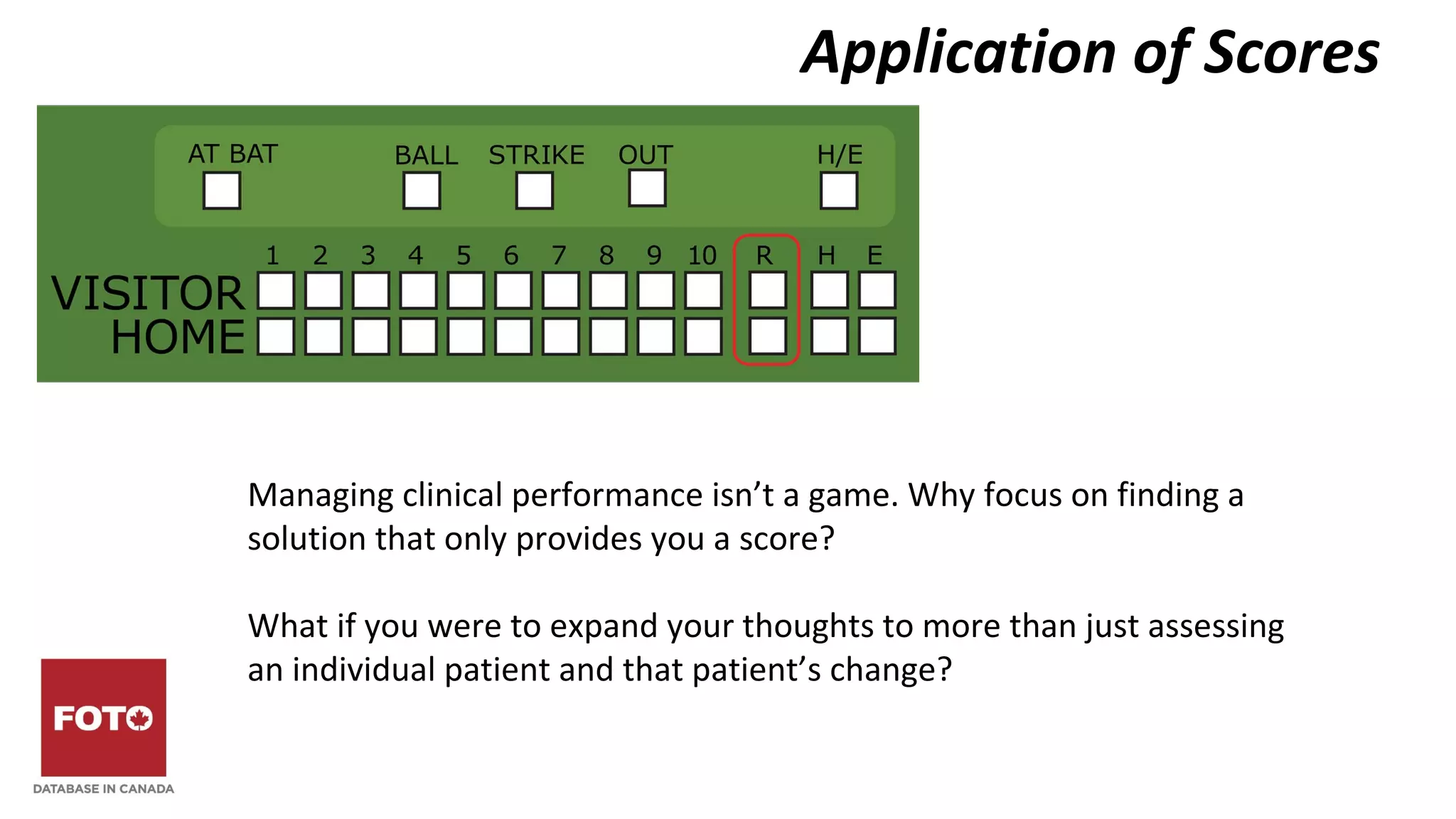
Application of Scores
Managing clinical performance isn’t a game. Why focus on finding a
solution that only provides you a score?
What if you were to expand your thoughts to more than just assessing
an individual patient and that patient’s change?
Compliance Capability
Time is money.
Does the outcomes measurement
system meet any documentation
requirements?
Remember to evaluate the ease to
steamline payer and regulator
reporting requirements.
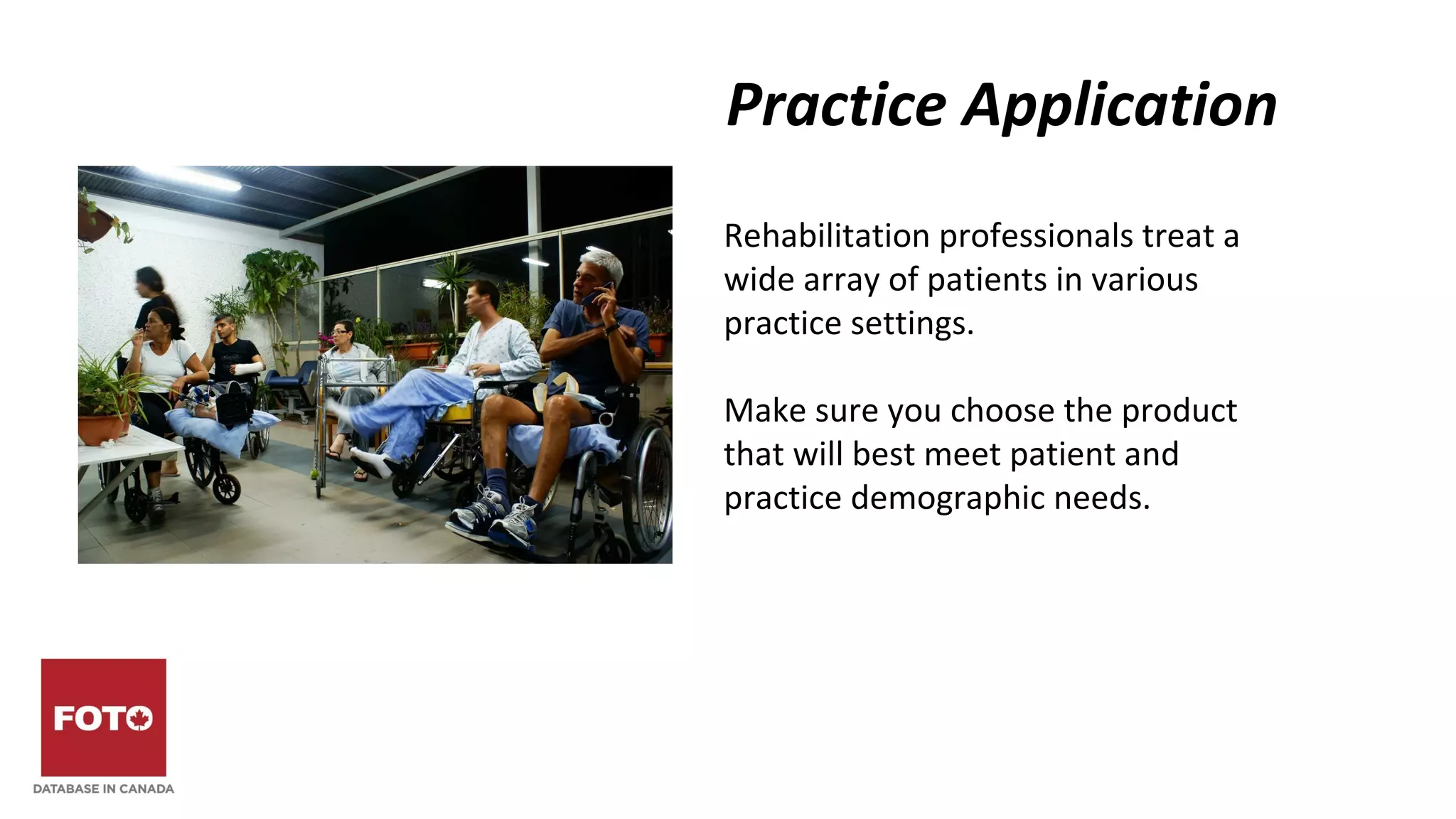
Practice Application
Rehabilitation professionals treat a
wide array of patients in various
practice settings.
Make sure you choose the product
that will best meet patient and
practice demographic needs.
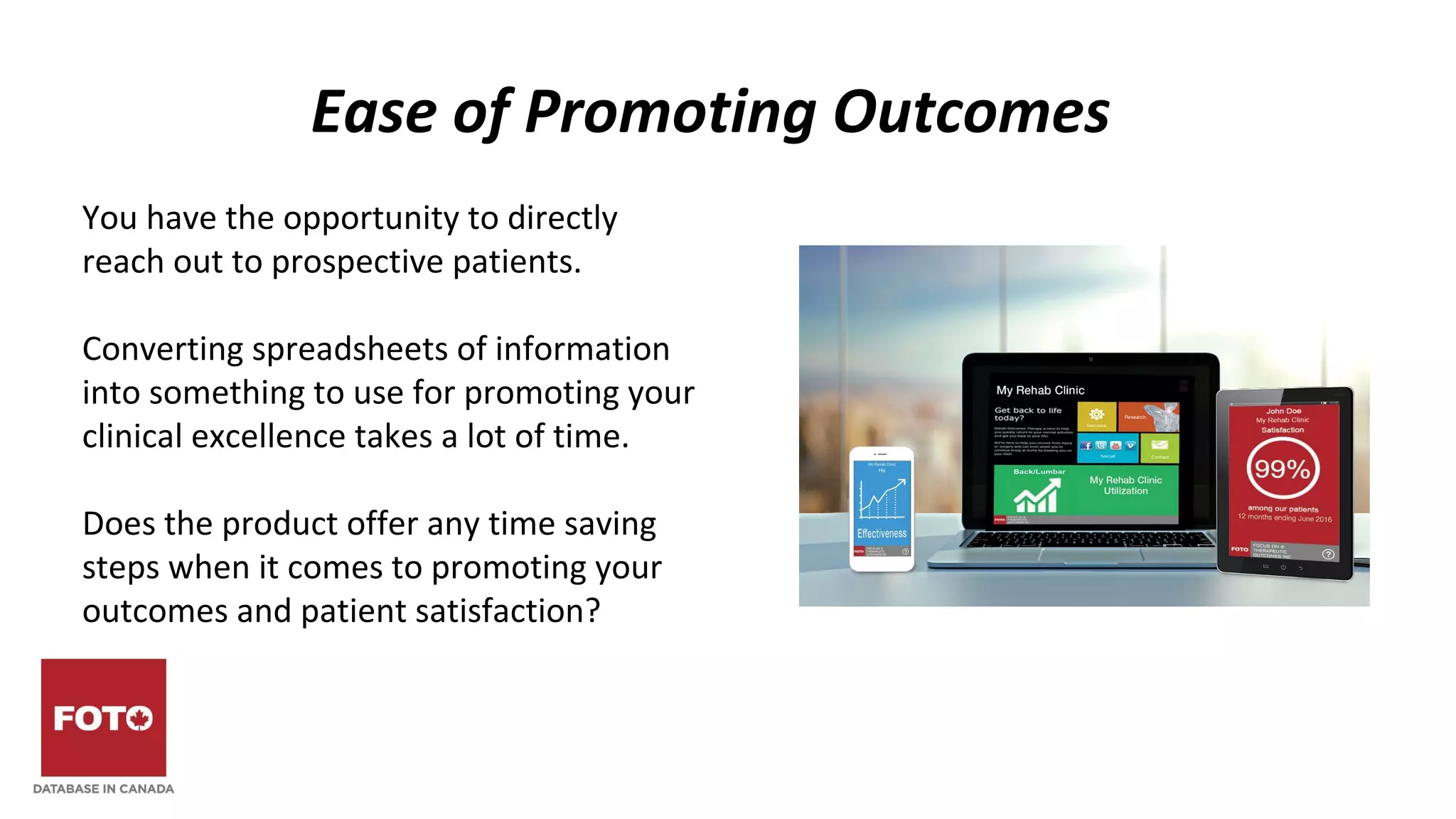
Ease of Promoting Outcomes
You have the opportunity to directly
reach out to prospective patients.
Converting spreadsheets of information
into something to use for promoting your
clinical excellence takes a lot of time.
Does the product offer any time saving
steps when it comes to promoting your
outcomes and patient satisfaction?
Benchmarked Reports
When you look at outcomes systems, a
variety of reports are available to you.
Do you want to take time to customize
reports?
Do you prefer nationally or
internationally, risk-adjusted,
comparative reports?
Do you want to know your
performance ranking?
Integration with EMR
You probably want seamless processes.
Integration reduces work load on your staff.
If an outcomes measurement system currently
integrates with more than 5 EMR, then you
know the integration process is reasonable.
Integration also is an indicator of the value of
the outcomes measurement system.
Integrating with many EMR indicates the
outcomes system is being demanded by EMR
customers.
Methods of Use
Ages ago, paper and pencil were the only way
to capture data.
Consider today’s technology.
Will your patients be able to use a mobile
device to answer self-report questions?
Would you like to have the option of emailing
the questionnaires?
Would you like the outcomes measurement
system to be web based?
Measurement Evaluation Capability
These additional capabilities are icing on the
cake.
Is MCID included to know clinically relevant
change occurred?
Does the measurement tool capture more
than just function?
Does the system take advantage of
sophisticated computer adaptive testing?
Complete the First Step – The Checklist
We’ve shared our expertise filled with lots of
questions and things to think about to guide
you to a solution that you’ll love.
Within a few weeks, after you have figured out
what you need in an outcomes measurement
system, we will be reaching out to you again.
We have compiled all the options we could
find and created a comparison of current
products.
We know you’ll definitely appreciate it.

Canada: What Do You Need in an Outcomes Measurement System?

  • 1.
    Choosing an OutcomesMeasurement System
  • 2.
    An Outcomes System OR AnOutcomes Tool? Keep in mind a tool is a single entity that focuses on the individual patient in front of you. An outcomes tool is a patient reported outcomes measure. It can be used for capturing change in function. At times, it can help with reporting functional limitation and documenting functional change. An outcomes system includes a patient reported outcomes measure and aggregates data. The power of data is at your fingertips.
  • 3.
    Industry Trust andRecognition Outcomes are the hot topic due to the changing climate in the rehabilitation world. As you assess various companies to help you capture your outcomes, consider company evolution over time, level of support you’ll receive, and outcomes knowledge the staff bring to the table. It’s also nice to take into account industry recognition when making a decision.
  • 4.
    Application of Scores Managingclinical performance isn’t a game. Why focus on finding a solution that only provides you a score? What if you were to expand your thoughts to more than just assessing an individual patient and that patient’s change?
  • 5.
    Compliance Capability Time ismoney. Does the outcomes measurement system meet any documentation requirements? Remember to evaluate the ease to steamline payer and regulator reporting requirements.
  • 6.
    Practice Application Rehabilitation professionalstreat a wide array of patients in various practice settings. Make sure you choose the product that will best meet patient and practice demographic needs.
  • 7.
    Ease of PromotingOutcomes You have the opportunity to directly reach out to prospective patients. Converting spreadsheets of information into something to use for promoting your clinical excellence takes a lot of time. Does the product offer any time saving steps when it comes to promoting your outcomes and patient satisfaction?
  • 8.
    Benchmarked Reports When youlook at outcomes systems, a variety of reports are available to you. Do you want to take time to customize reports? Do you prefer nationally or internationally, risk-adjusted, comparative reports? Do you want to know your performance ranking?
  • 9.
    Integration with EMR Youprobably want seamless processes. Integration reduces work load on your staff. If an outcomes measurement system currently integrates with more than 5 EMR, then you know the integration process is reasonable. Integration also is an indicator of the value of the outcomes measurement system. Integrating with many EMR indicates the outcomes system is being demanded by EMR customers.
  • 10.
    Methods of Use Agesago, paper and pencil were the only way to capture data. Consider today’s technology. Will your patients be able to use a mobile device to answer self-report questions? Would you like to have the option of emailing the questionnaires? Would you like the outcomes measurement system to be web based?
  • 11.
    Measurement Evaluation Capability Theseadditional capabilities are icing on the cake. Is MCID included to know clinically relevant change occurred? Does the measurement tool capture more than just function? Does the system take advantage of sophisticated computer adaptive testing?
  • 12.
    Complete the FirstStep – The Checklist We’ve shared our expertise filled with lots of questions and things to think about to guide you to a solution that you’ll love. Within a few weeks, after you have figured out what you need in an outcomes measurement system, we will be reaching out to you again. We have compiled all the options we could find and created a comparison of current products. We know you’ll definitely appreciate it.