Download as PDF, PPTX





This document discusses WebAssembly and its potential as a game changer for web development. It begins by providing background on how JavaScript evolved and its performance limitations. WebAssembly is presented as a solution to address JavaScript's performance issues by allowing code written in languages like C/C++ to run in the browser at near-native speed. The document explains that WebAssembly is a binary format and build target that works with JavaScript. It discusses how browsers execute WebAssembly, the interaction between WebAssembly and JavaScript, usage scenarios, security considerations, current support and future possibilities like garbage collection and threads. Examples of WebAssembly in use are also provided.
Presentation by Oleksandr Skachkov introducing Itera Ukraine 2017 and his role in software architecture.
Introduction to Web Assembly (WASM) and its significance in web development.
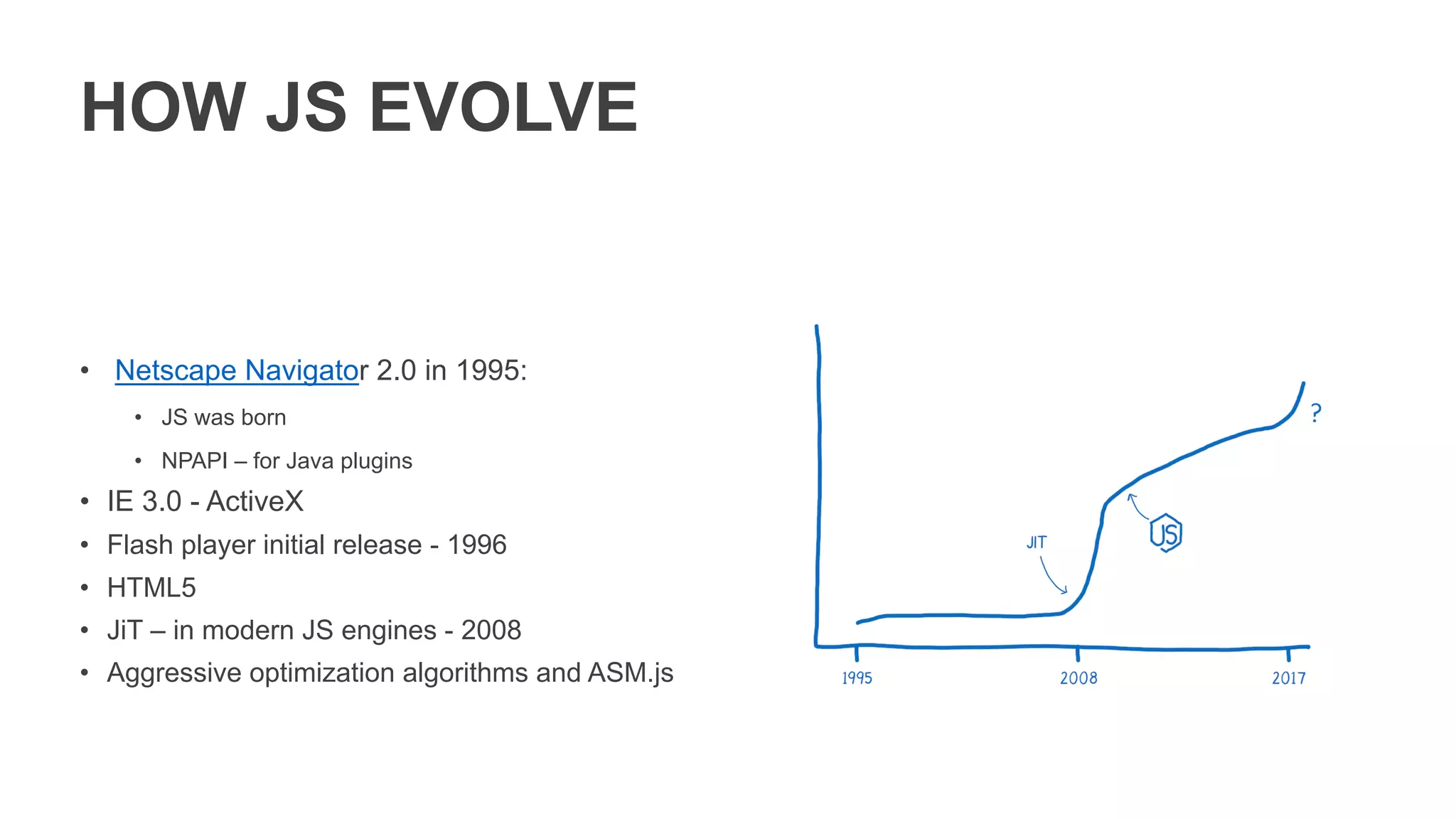
History and milestones of JavaScript from its inception to modern enhancements influencing web performance.
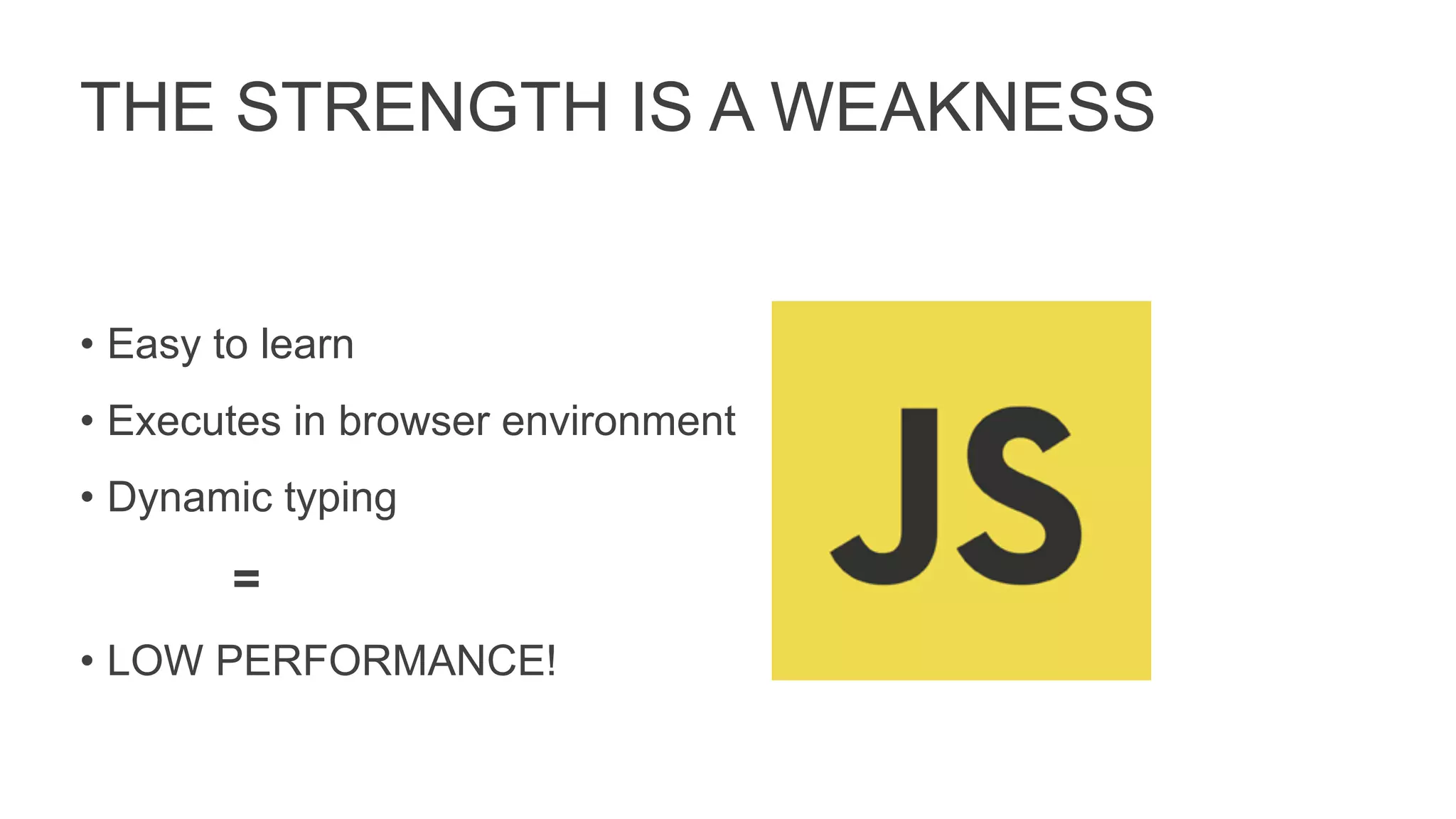
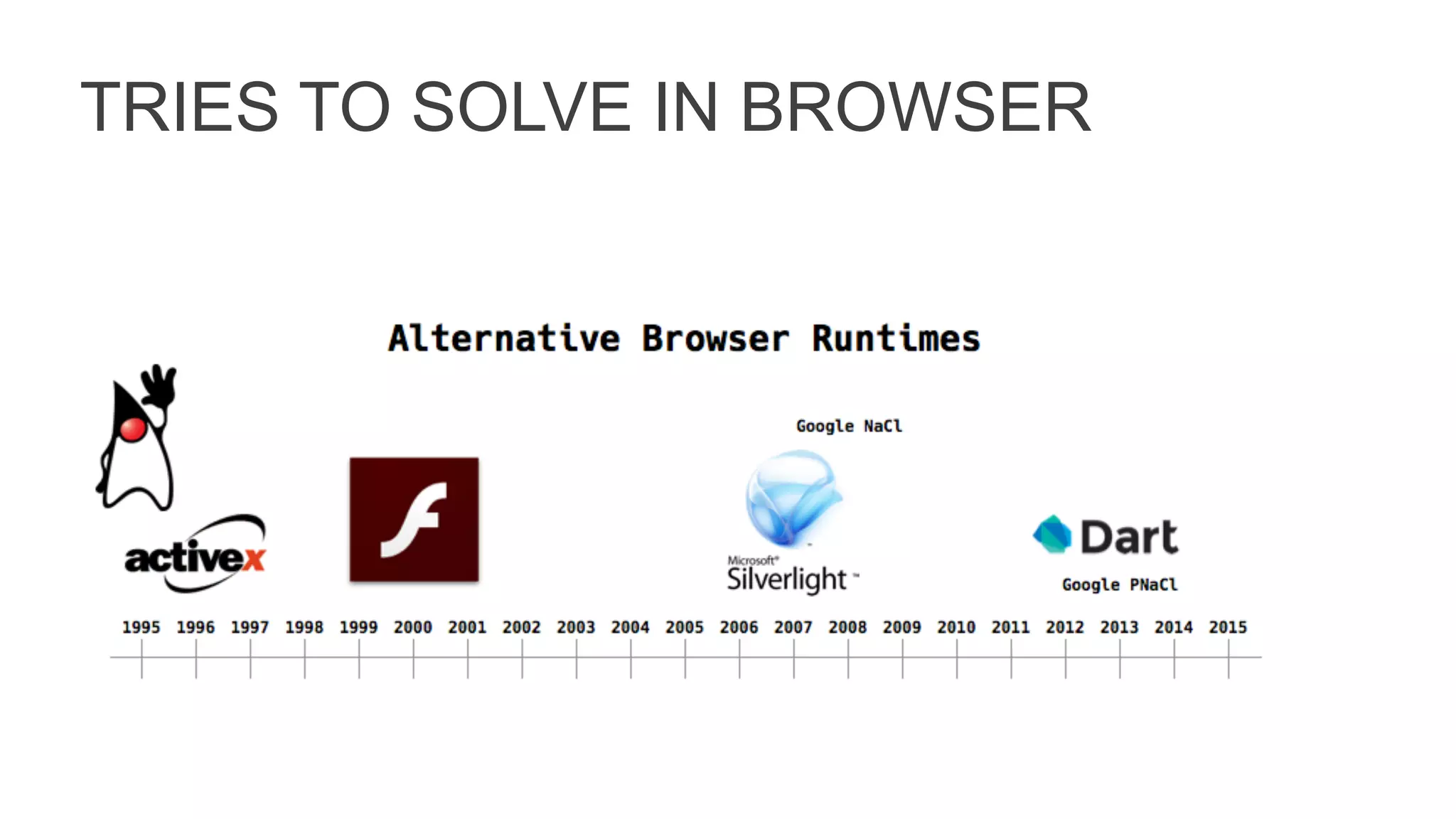
Discussion on JavaScript's performance issues and limitations due to its features like dynamic typing.
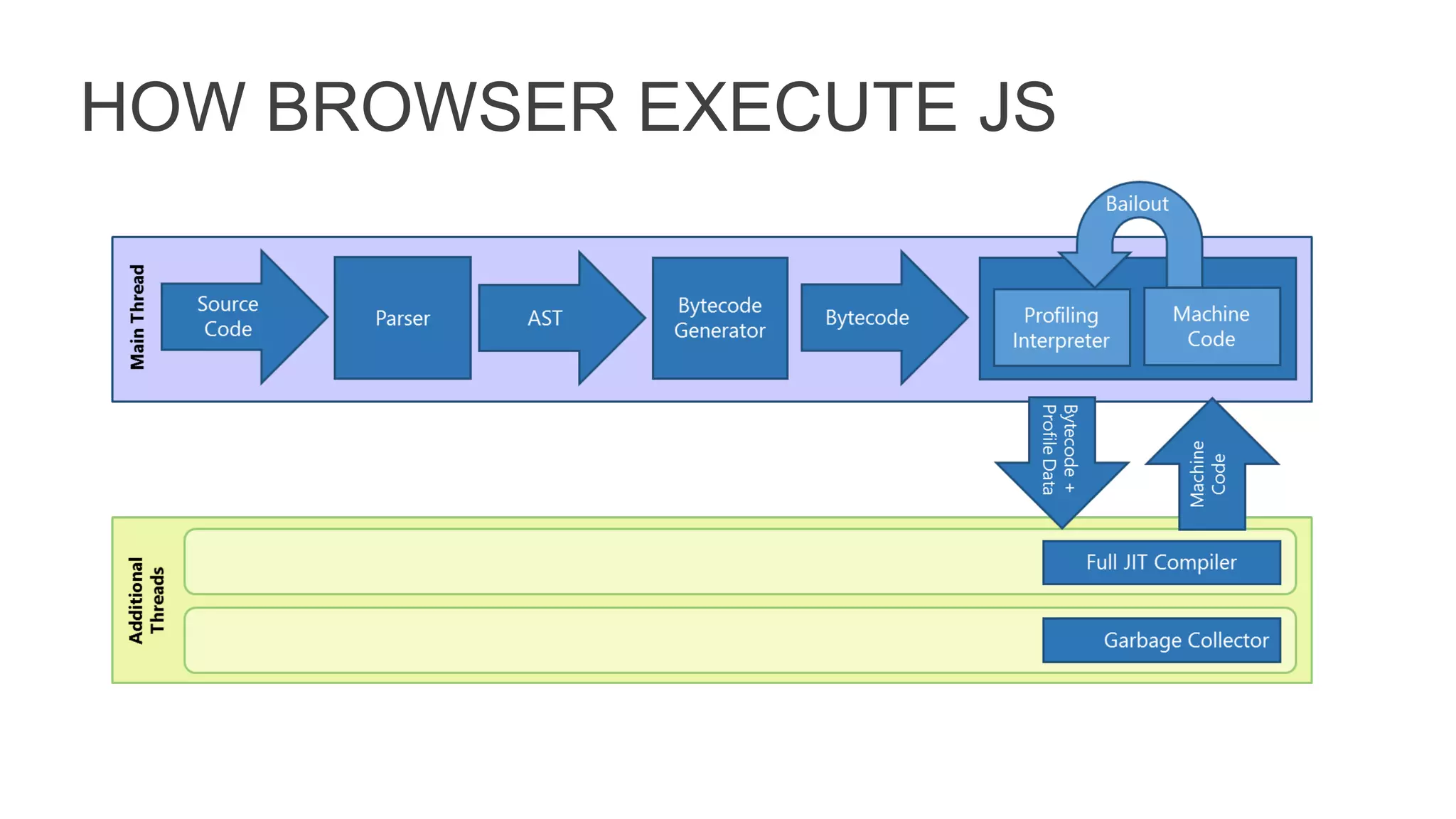
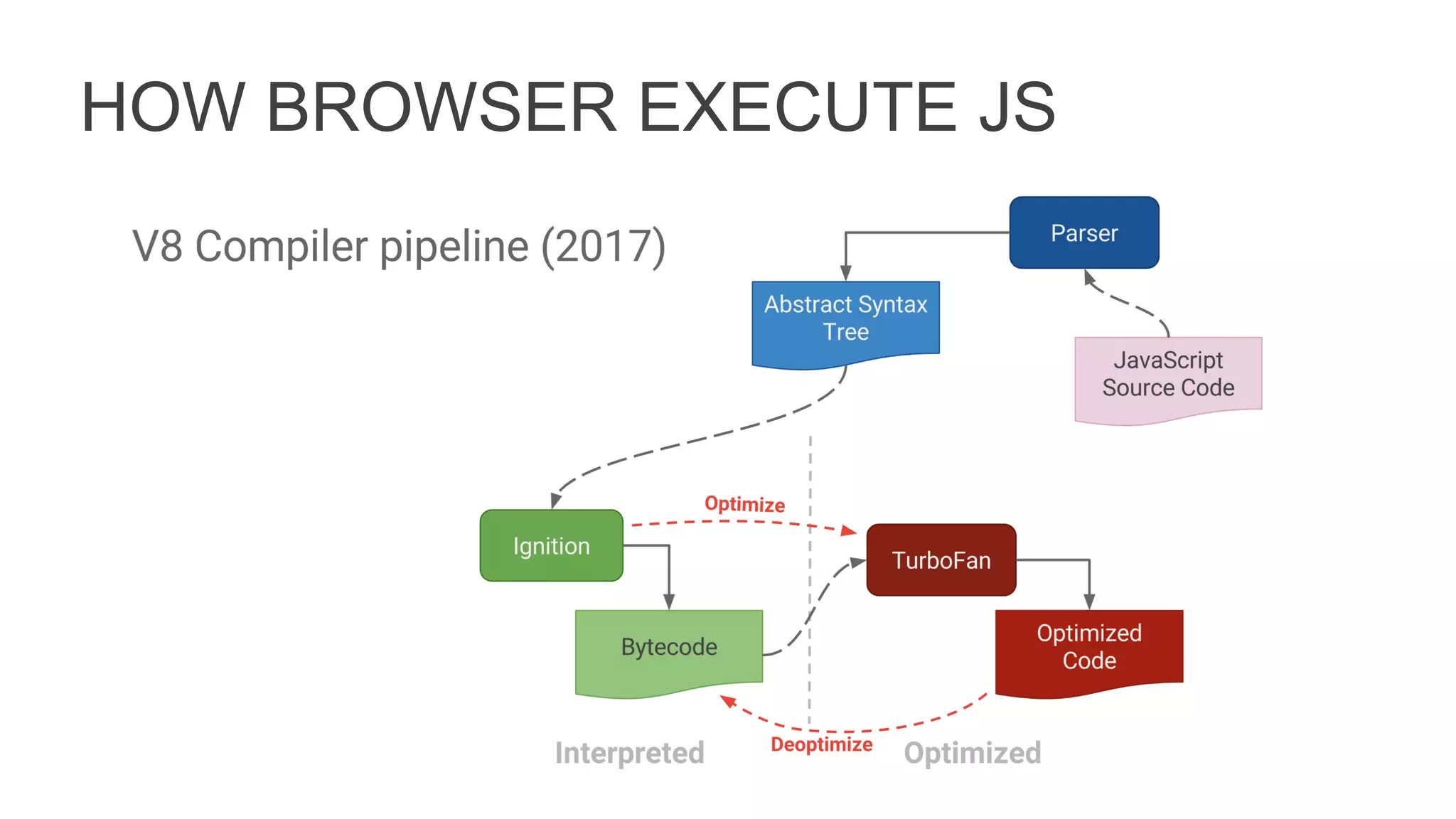
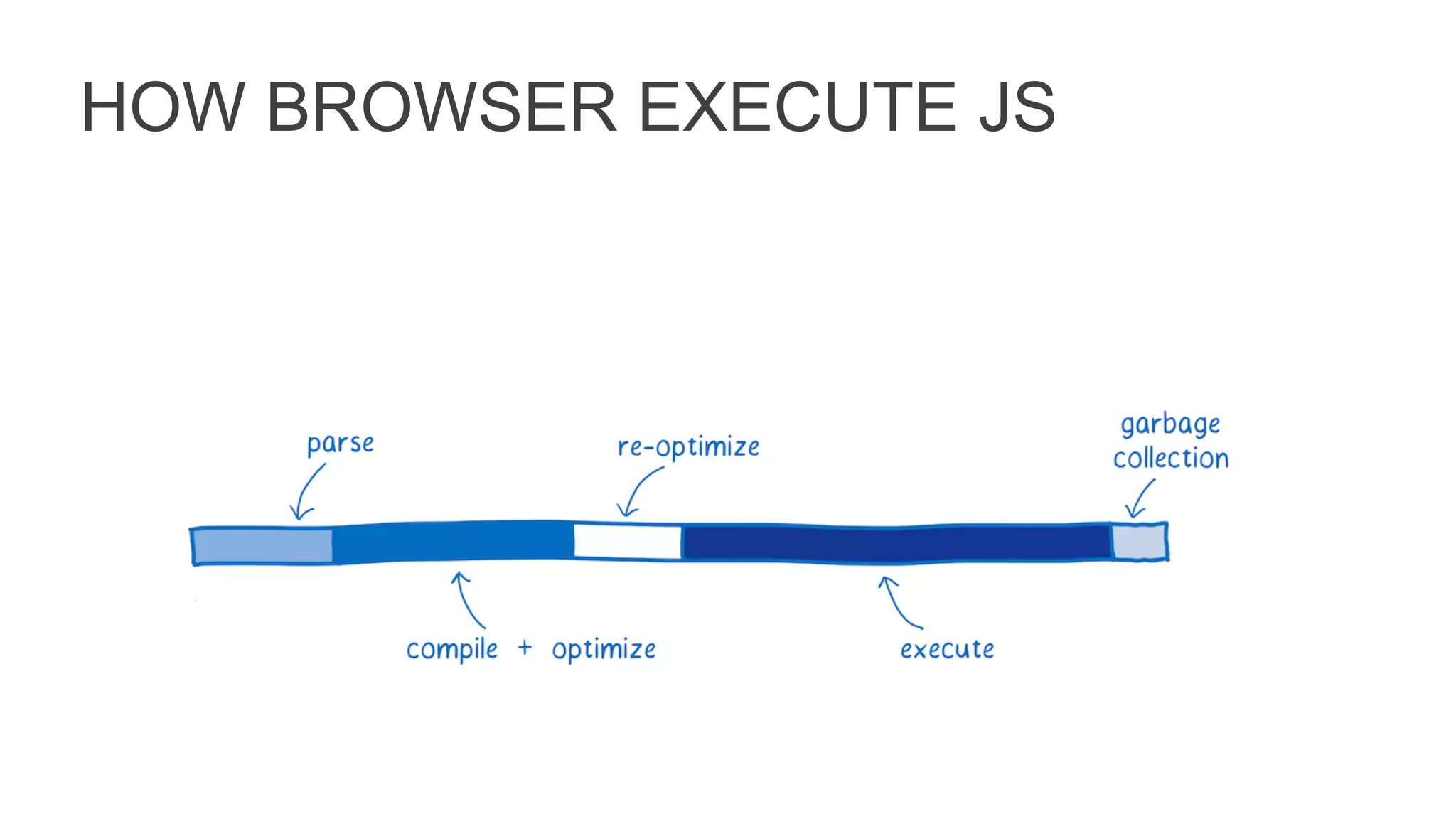
Technical overview of how browsers execute JavaScript code.
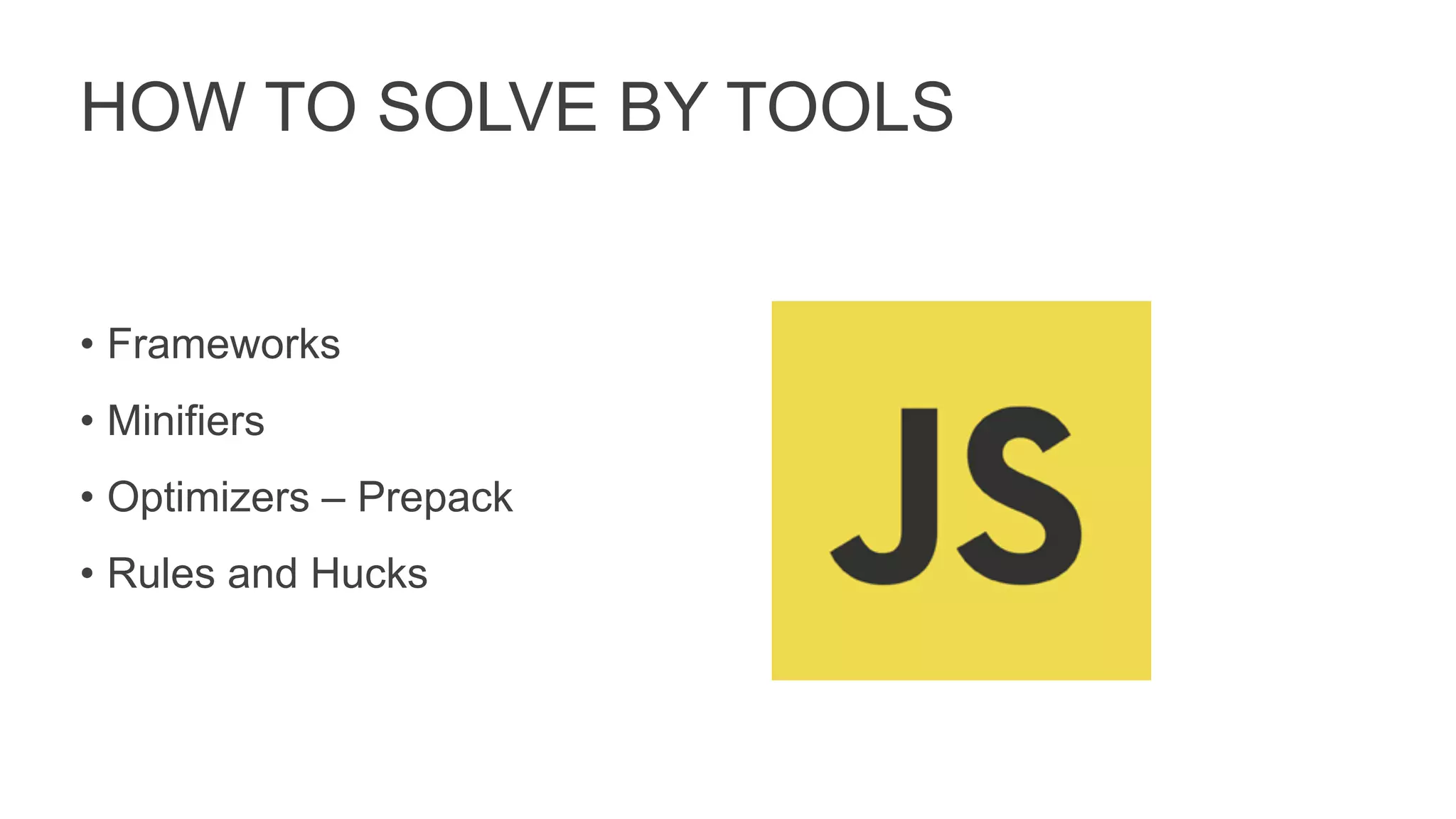
Methods and tools available to optimize JavaScript code execution, including frameworks and optimizers.
WebAssembly introduced as a bytecode standard, enabling performance improvements over JavaScript.
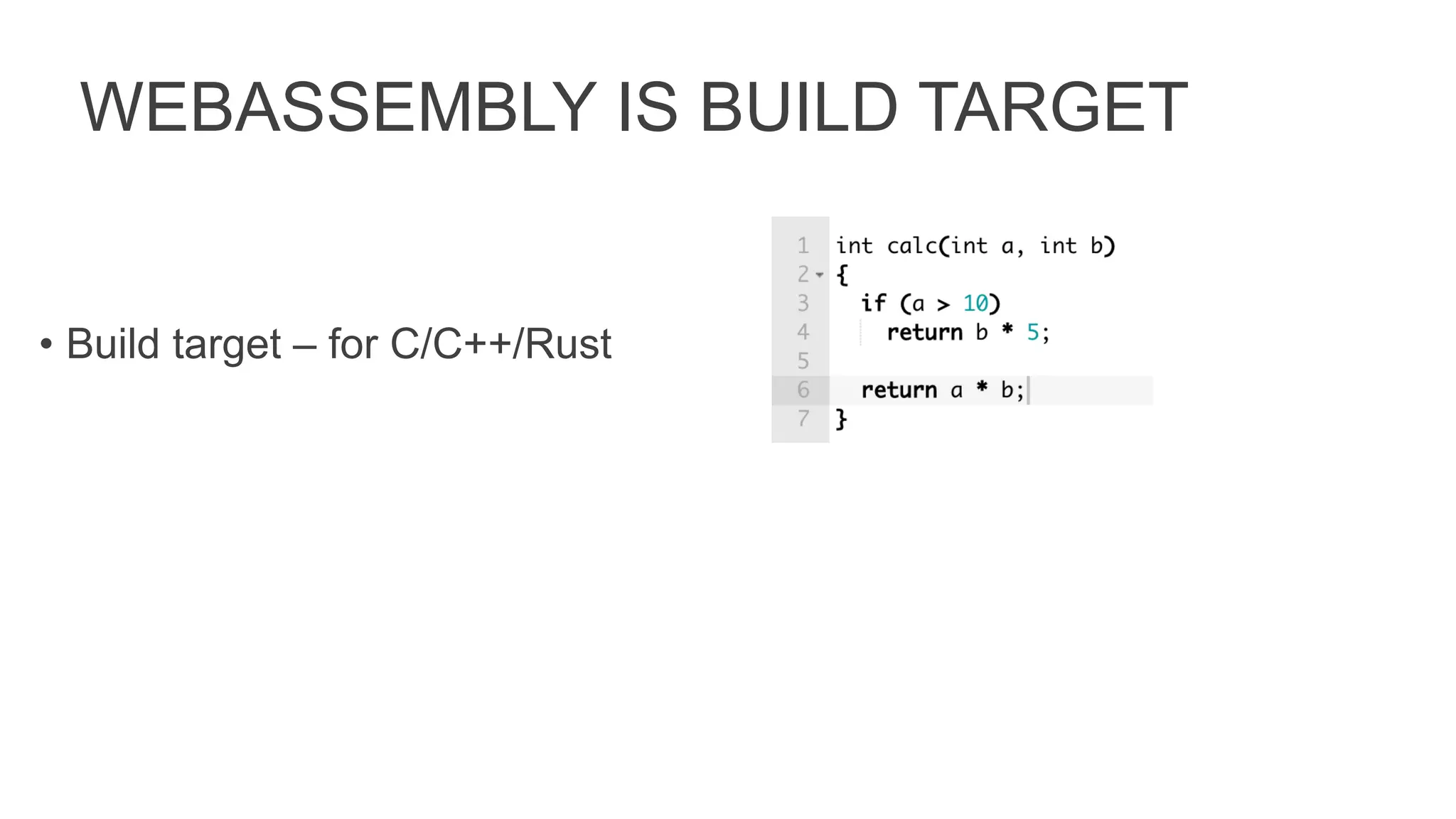
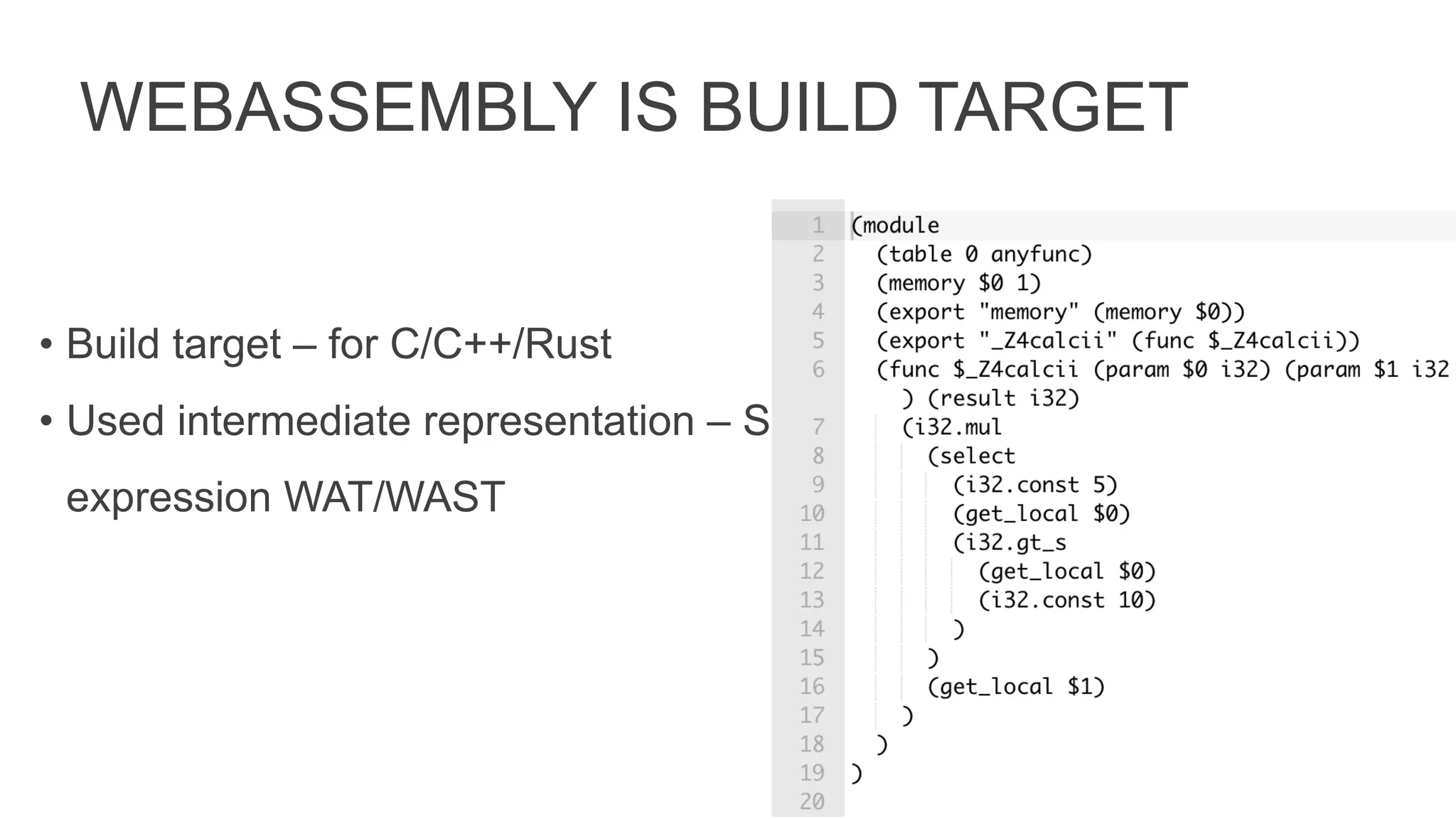
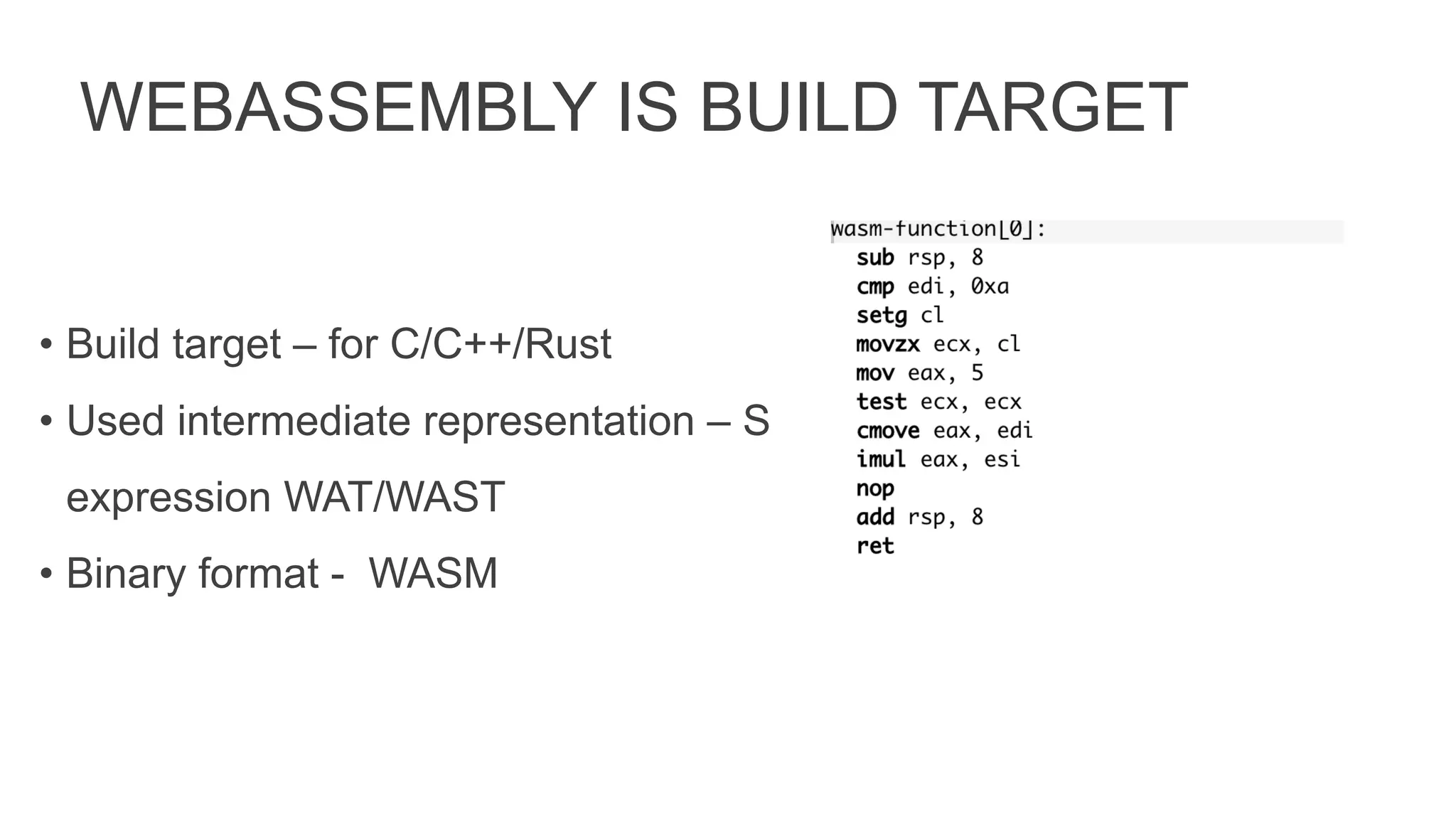
WebAssembly's capability to serve as a build target for programming languages like C/C++/Rust.
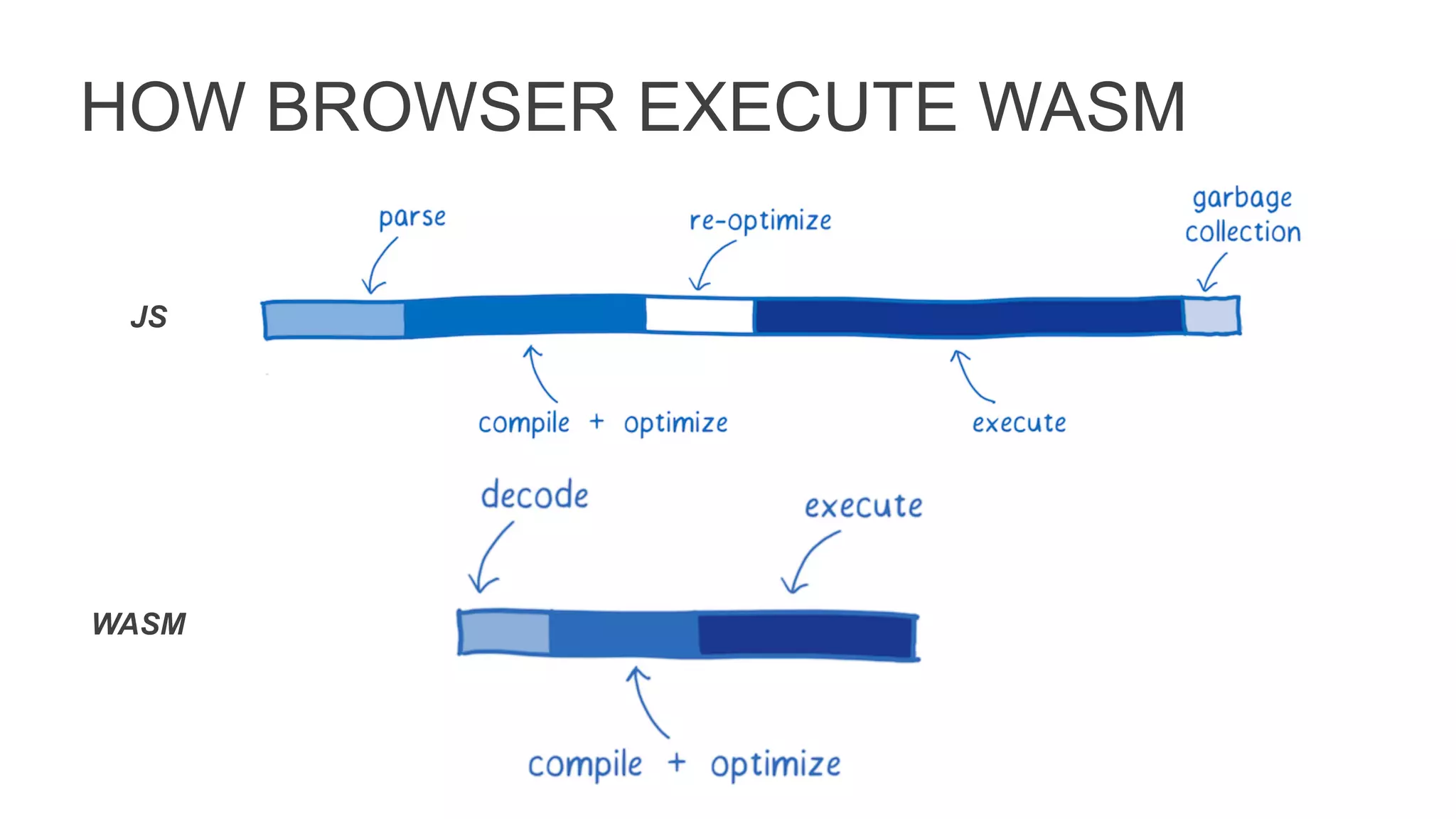
Description of how browsers execute WebAssembly code and its interaction with JavaScript.
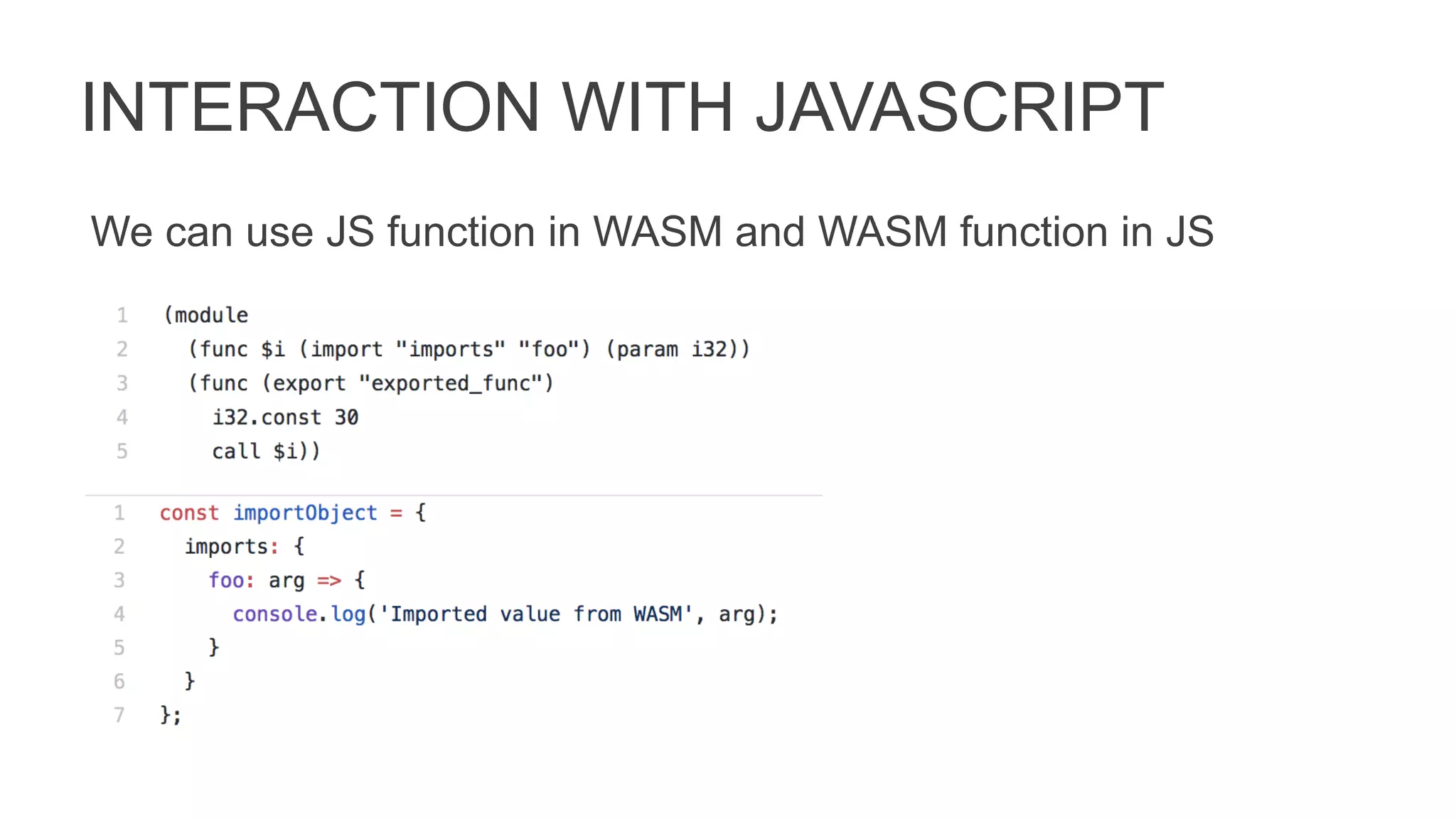
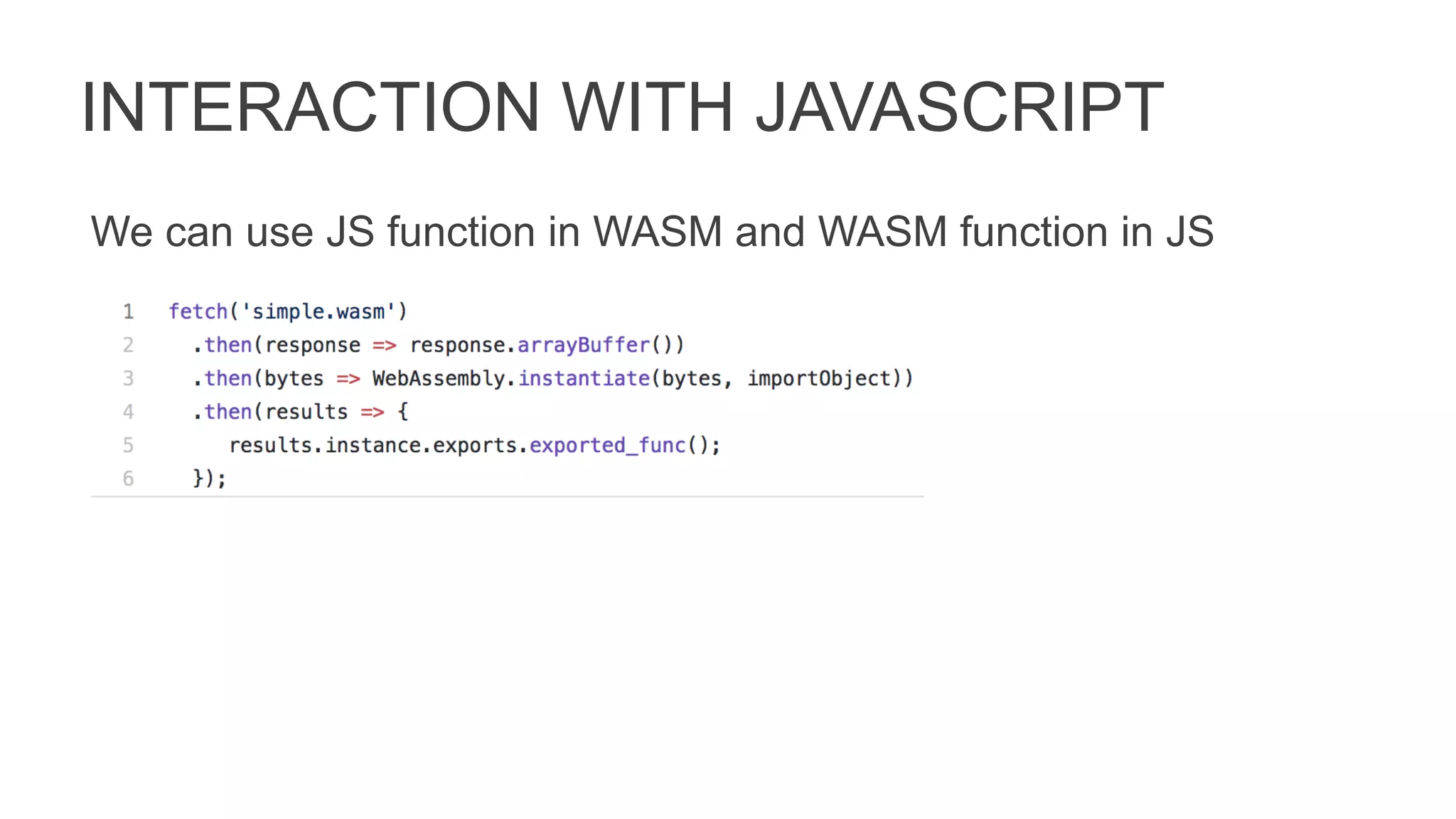
Explains how WebAssembly functions can interact with JavaScript functions for seamless integration.
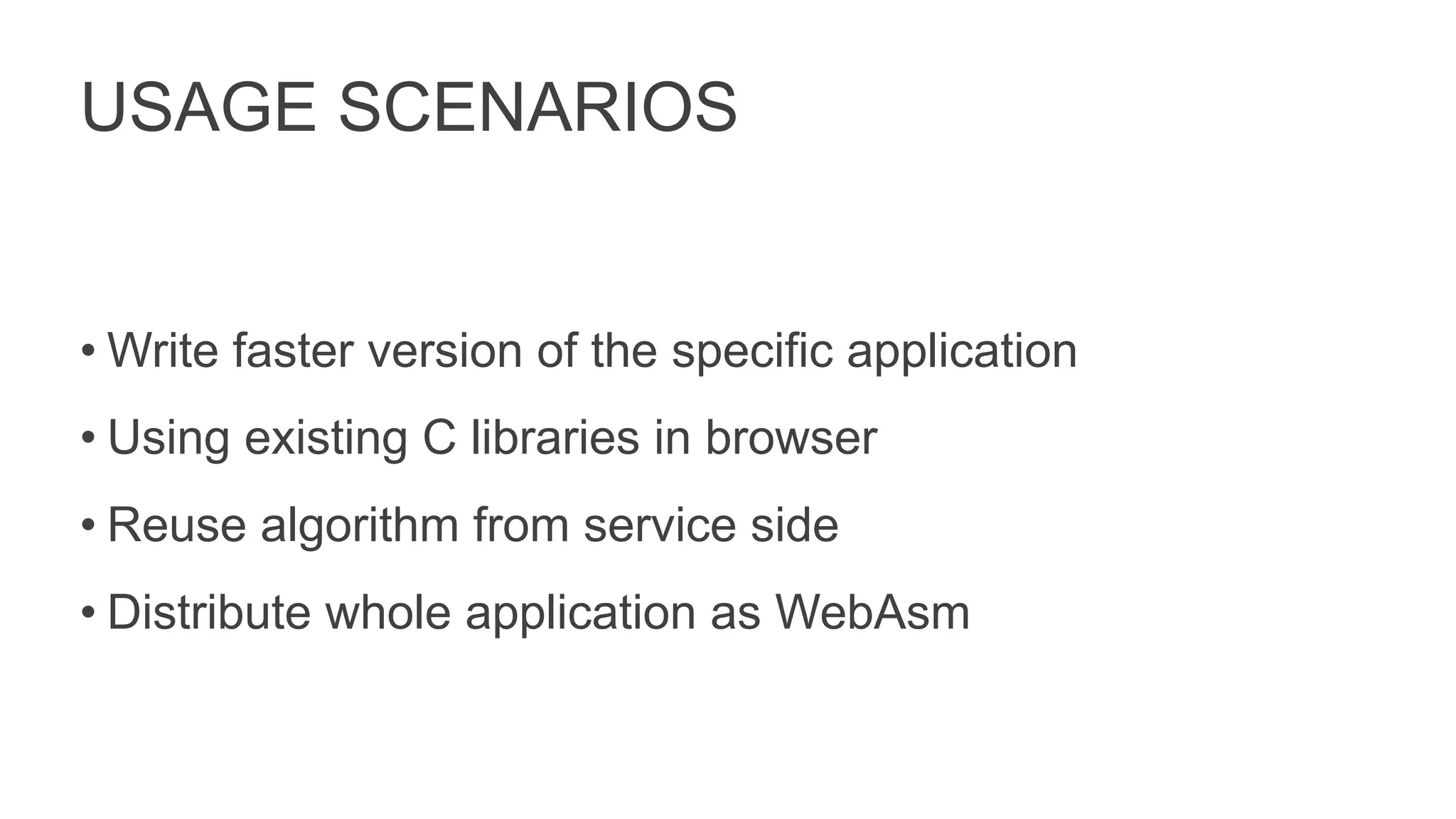
Practical applications of WebAssembly including performance enhancements and resource library usage.
Evaluates the security features of WebAssembly, focusing on controlled operations and memory management.
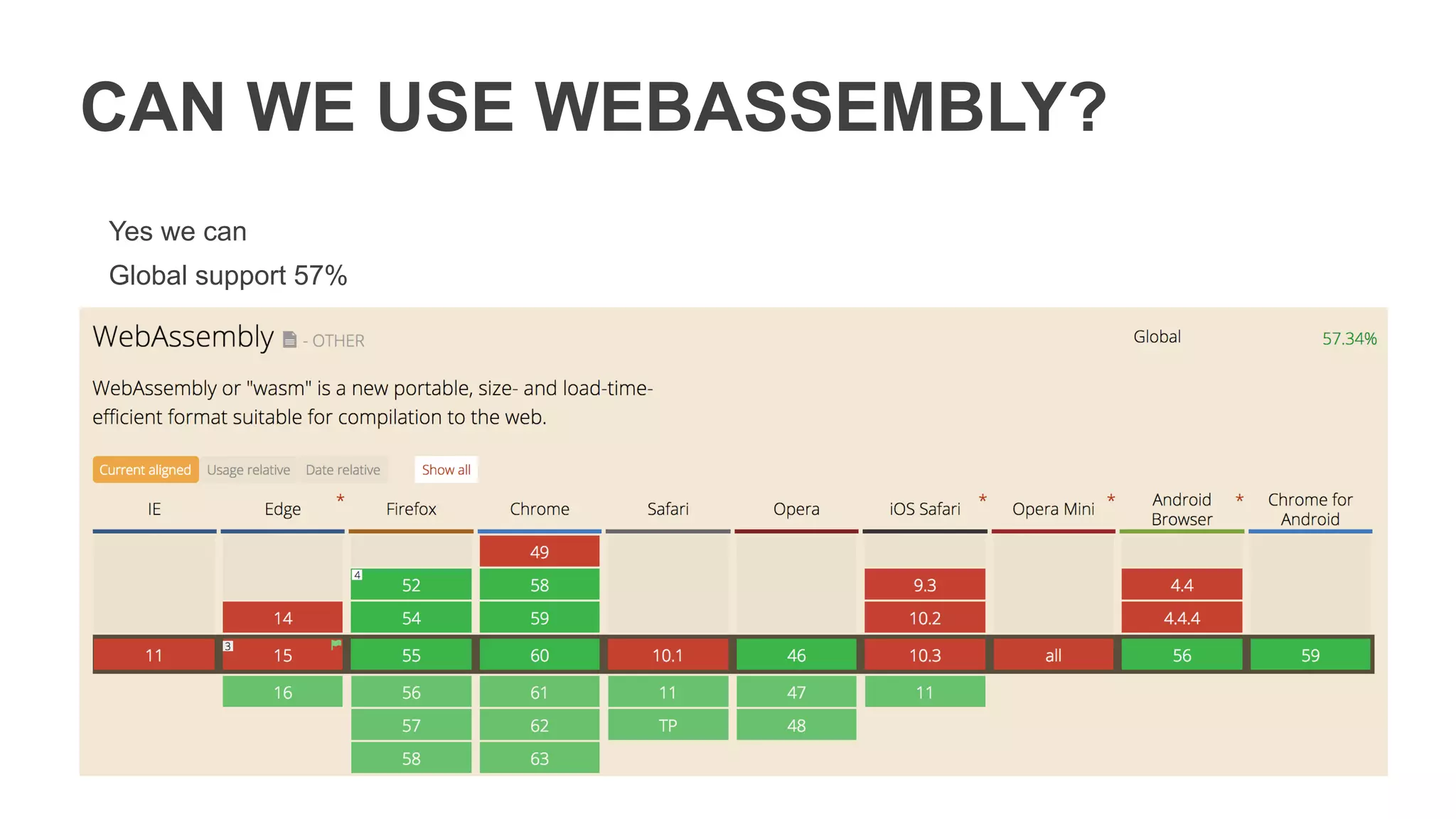
Current global support for WebAssembly standing at 57% and its readiness for usage.
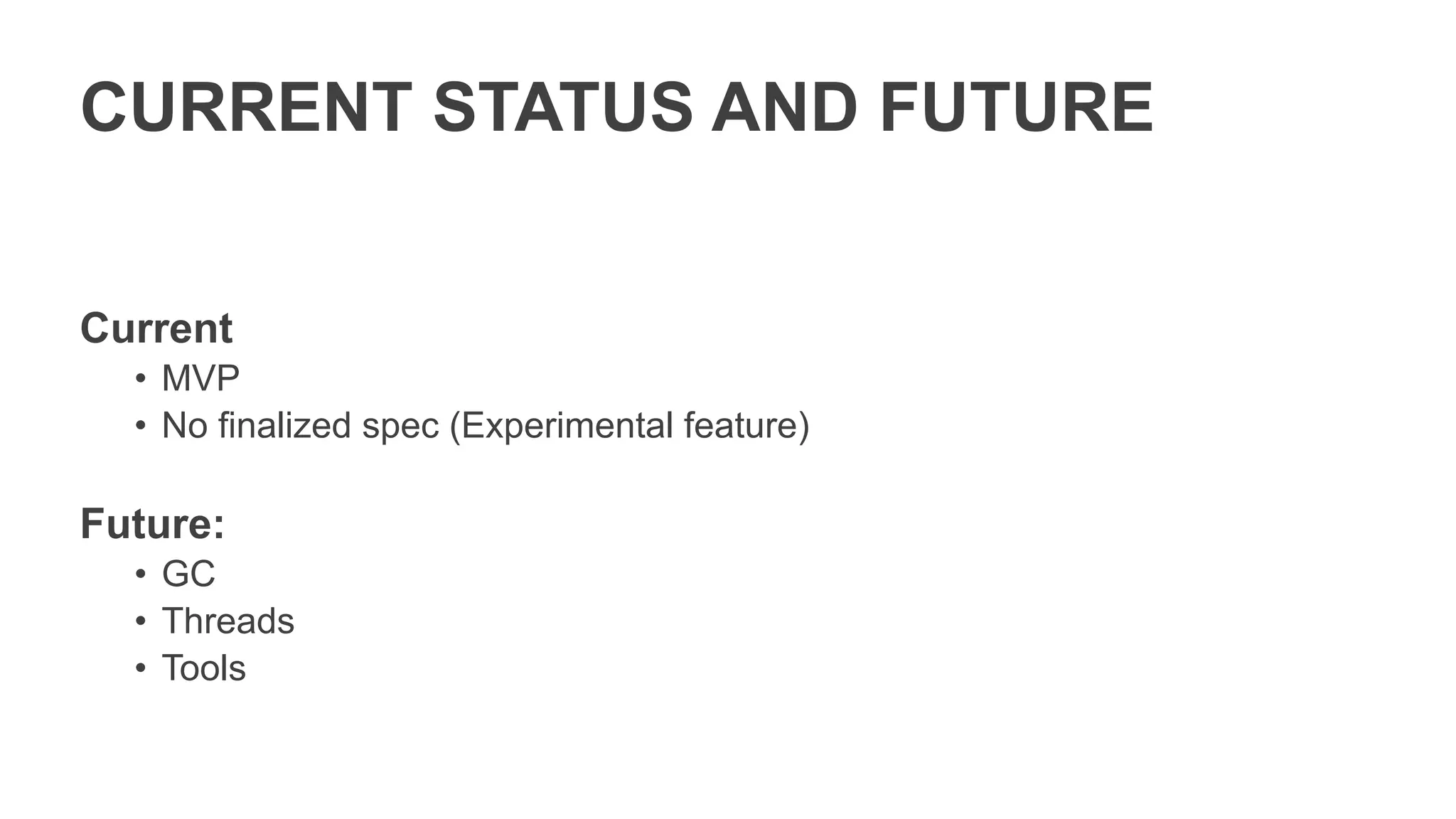
Current status and future expectations for WebAssembly including features like garbage collection and threading.
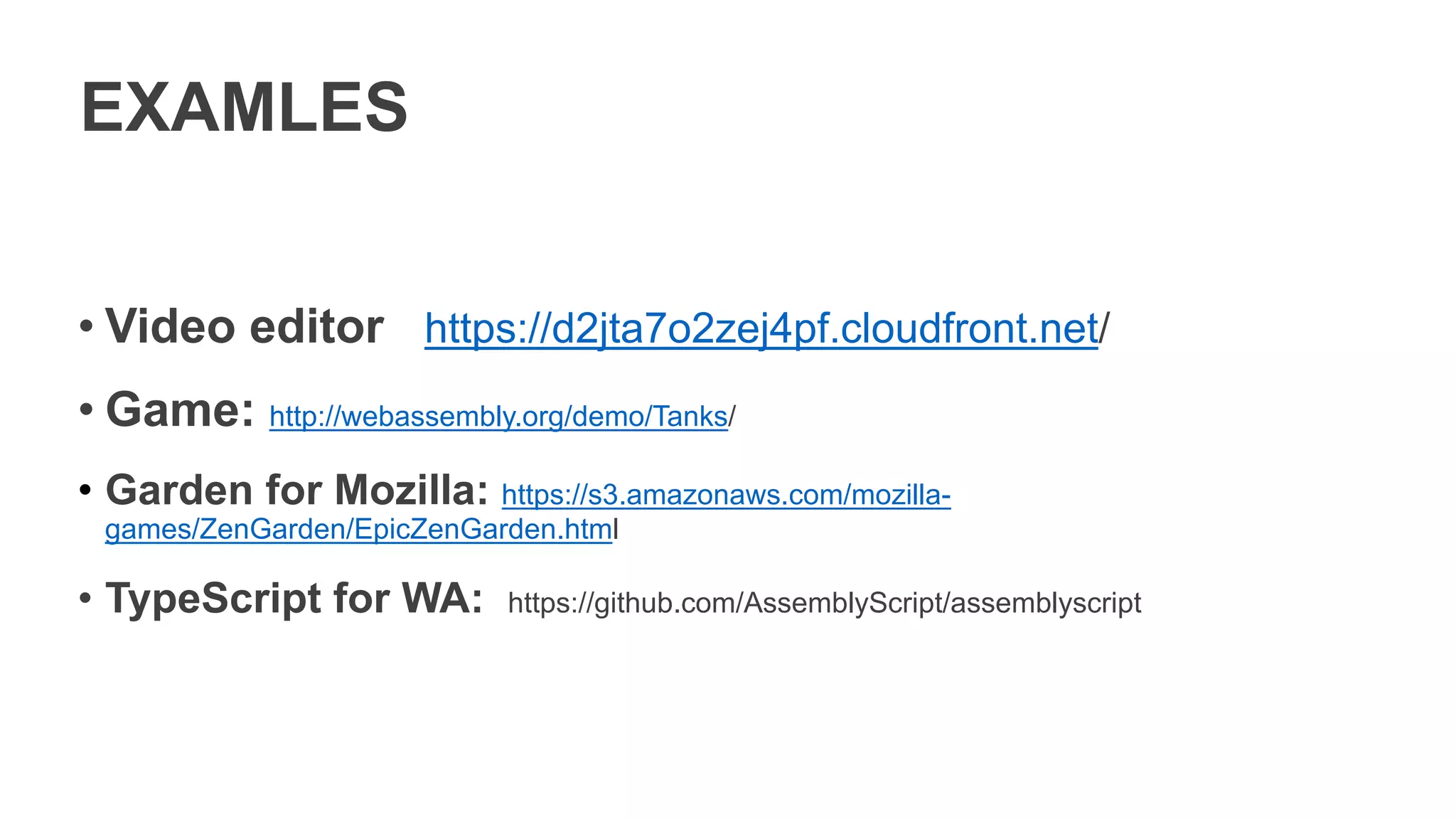
Showcases real-world applications built with WebAssembly including a video editor and games.
Open floor for questions regarding the presentation and WebAssembly.


![[Blibli Brown Bag] Nodejs - The Other Side of Javascript](https://cdn.slidesharecdn.com/ss_thumbnails/i9sycn9mqmawqhdzv0i6-signature-6c4174f35aa29065af3a8befc1a3a39ca764f84b5c082116486141991cd72c8c-poli-160225041632-thumbnail.jpg?width=640&height=640&fit=bounds)


