Web Designing
Introduction
Web designing is the art and science of creating visually
appealing and functional websites. It encompasses various
disciplines such as graphic design, user experience design, and
coding. Effective web design involves understanding the target
audience, optimizing usability, and ensuring compatibility
across different devices and browsers. It's about striking the
right balance between aesthetics and functionality to deliver
an engaging user experience. Designers use tools like Adobe
Photoshop, Sketch, and Figma to create mockups and
prototypes before translating them into code using languages
like HTML, CSS, and JavaScript. With the ever-evolving
landscape of technology and design trends, web designers
continually adapt and innovate to stay relevant and create
websites that not only look great but also serve their purpose
effectively.
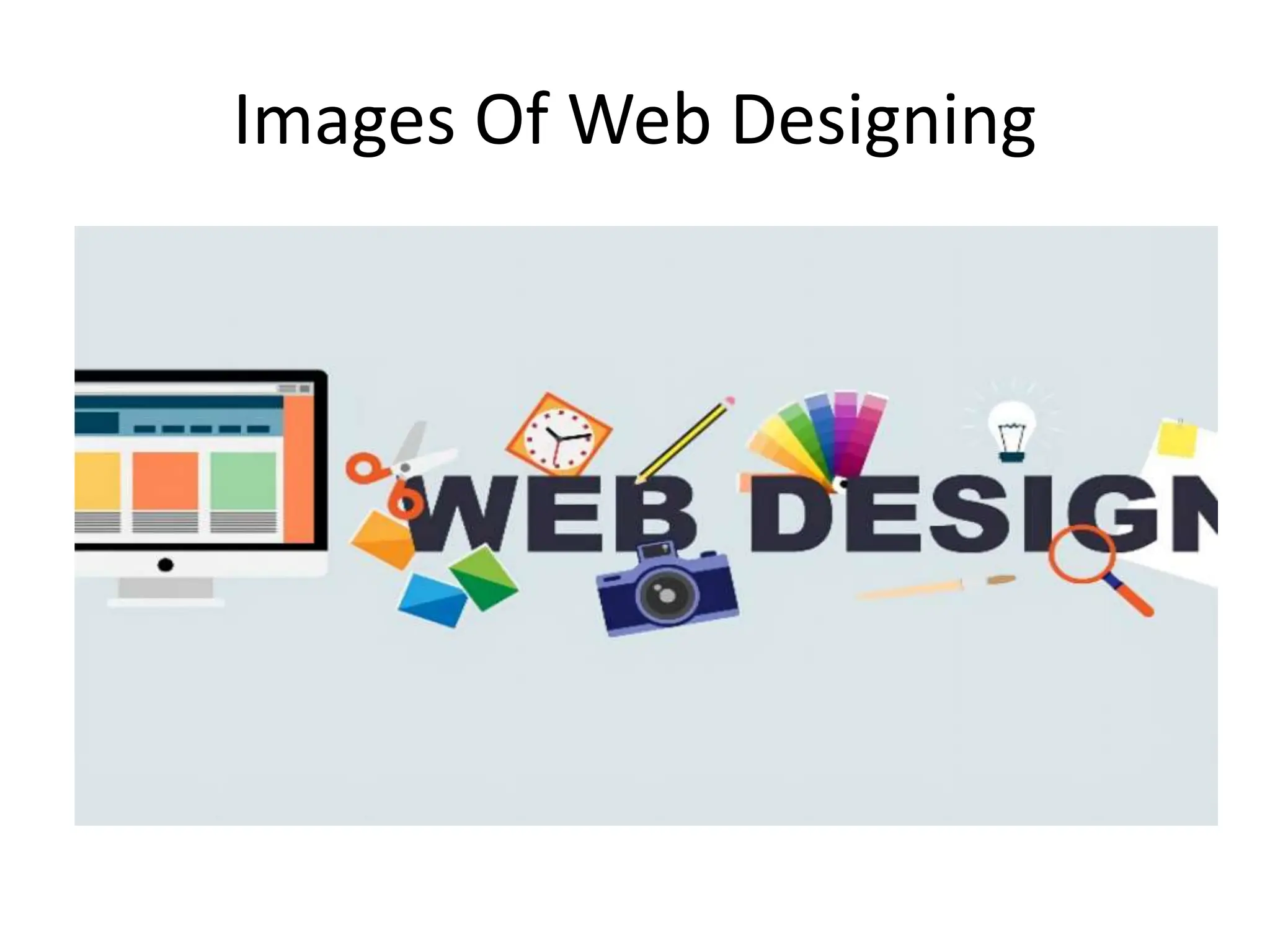
Images Of Web Designing
Type Of Web Designing
• Web designing encompasses various disciplines and skills used in the creation and maintenance of websites. It
involves both the aesthetic aspect of design and the technical aspects of coding and programming.
• 1. **Graphic Design**: This involves creating visual content such as logos, images, and layouts to enhance
the appeal and usability of a website.
• 2. **User Experience (UX) Design**: UX designers focus on optimizing the overall experience of users
when interacting with a website. This includes aspects like navigation, ease of use, and accessibility.
• 3. **User Interface (UI) Design**: UI designers are concerned with the look and feel of the website,
ensuring that it is visually appealing and easy to navigate.
• 4. **Responsive Design**: With the increasing use of mobile devices, responsive design ensures that
websites adapt to different screen sizes and devices, providing a consistent user experience.
• 5. **Interactive Design**: This involves creating engaging elements such as animations, videos, and
interactive features to enhance user engagement.
• 6. **Frontend Development**: Frontend developers translate designs into code using languages like
HTML, CSS, and JavaScript.
• 7. **Backend Development**: Backend developers focus on server-side programming and database
management to ensure the functionality of the website.
• In essence, web designing combines creativity and technical skills to create visually appealing, user-friendly, and
functional websites.
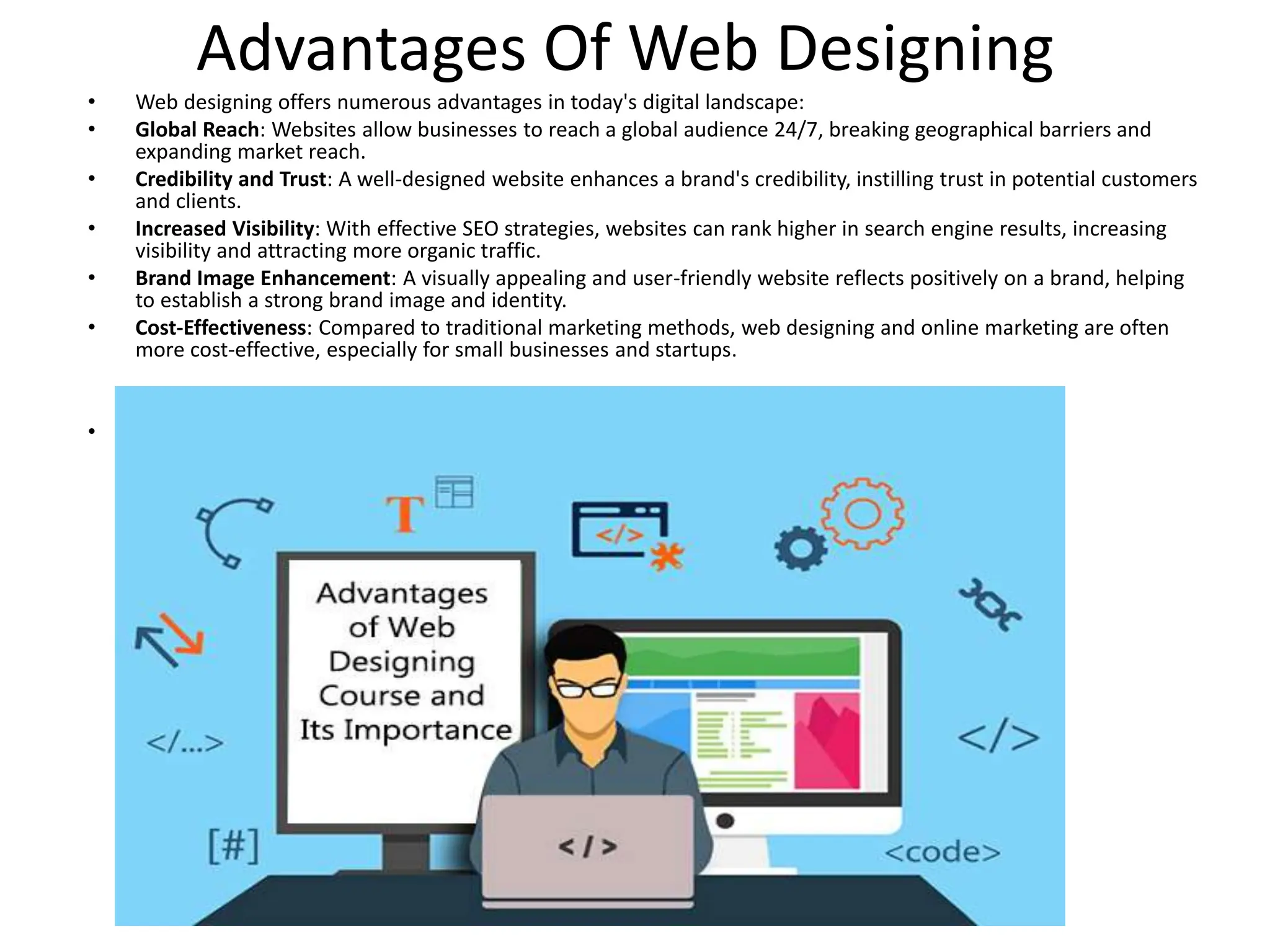
Advantages Of Web Designing
• Web designing offers numerous advantages in today's digital landscape:
• Global Reach: Websites allow businesses to reach a global audience 24/7, breaking geographical barriers and
expanding market reach.
• Credibility and Trust: A well-designed website enhances a brand's credibility, instilling trust in potential customers
and clients.
• Increased Visibility: With effective SEO strategies, websites can rank higher in search engine results, increasing
visibility and attracting more organic traffic.
• Brand Image Enhancement: A visually appealing and user-friendly website reflects positively on a brand, helping
to establish a strong brand image and identity.
• Cost-Effectiveness: Compared to traditional marketing methods, web designing and online marketing are often
more cost-effective, especially for small businesses and startups.
•
Feature Of Web Designing
• Web designing encompasses a multitude of features aimed at creating engaging and functional websites:
• 1. **Responsive Design**: Websites adapt seamlessly to various devices and screen sizes, ensuring optimal user
experience across desktops, tablets, and smartphones.
• 2. **Intuitive Navigation**: Clear and user-friendly navigation structures help visitors find information easily,
enhancing usability and reducing bounce rates.
• 3. **Visual Appeal**: Attention-grabbing visuals, including images, videos, and graphics, are strategically
incorporated to captivate visitors and convey brand identity effectively.
• 4. **Content Management Systems (CMS)**: CMS platforms like WordPress, Drupal, and Joomla enable easy
content creation, editing, and publishing, empowering website owners to manage their content efficiently.
• 5. **Interactivity**: Interactive elements such as forms, sliders, and animations engage visitors, encouraging
interaction and enhancing user experience.
• 6. **SEO Optimization**: Implementation of SEO best practices ensures websites rank higher in search engine
results, increasing visibility and driving organic traffic.
• 7. **Accessibility**: Compliance with accessibility standards ensures that websites are usable by individuals with
disabilities, promoting inclusivity and reaching a wider audience.
• These features collectively contribute to creating compelling, user-centric websites that effectively meet the needs and
Scope Of Web Designing
• The scope of web designing is expansive and continually evolving in line with advancements in technology and changes in
user behavior. With the increasing reliance on digital platforms for information, communication, and commerce, the
demand for skilled web designers is expected to remain robust.
• The scope of web designing includes:
• 1. **Career Opportunities**: Web designers can work in various industries, including technology, e-commerce, media,
advertising, and education.
• 2. **Freelancing and Entrepreneurship**: Many web designers choose to work independently as freelancers or start their
own web design agencies, offering services to clients globally.
• 3. **Continuous Learning**: The field of web designing is dynamic, requiring designers to stay updated with the latest
design trends, tools, and technologies.
• 4. **Diverse Specializations**: Web designers can specialize in areas such as user experience (UX) design, user interface
(UI) design, responsive design, or frontend/backend development, depending on their interests and skills.
• 5. **Global Reach**: The internet provides opportunities for web designers to collaborate with clients and teams from
around the world, expanding their reach and opportunities.
• Overall, the scope of web designing offers a promising career path with ample opportunities for growth, creativity, and
innovation.
Salary Packages Of Web Designing
• The average salary for Web Designer
is ₹1,36,435 per month in the India. The
average additional cash compensation for a
Web Designer in the India is ₹1,15,452, with
a range from ₹31,323 - ₹1,86,522. Salaries
estimates are based on 1706 salaries
submitted anonymously to Glassdoor by Web
Designer employees in India.
Thankyou
Visit Our Website
https://excellenceacademy.co.in/we
b-designing-course-in-chandigarh/
Contact Us On : 9317788822

Web Designing course in chandigarh Ppt .

  • 1.
    Web Designing Introduction Web designingis the art and science of creating visually appealing and functional websites. It encompasses various disciplines such as graphic design, user experience design, and coding. Effective web design involves understanding the target audience, optimizing usability, and ensuring compatibility across different devices and browsers. It's about striking the right balance between aesthetics and functionality to deliver an engaging user experience. Designers use tools like Adobe Photoshop, Sketch, and Figma to create mockups and prototypes before translating them into code using languages like HTML, CSS, and JavaScript. With the ever-evolving landscape of technology and design trends, web designers continually adapt and innovate to stay relevant and create websites that not only look great but also serve their purpose effectively.
  • 2.
    Images Of WebDesigning
  • 3.
    Type Of WebDesigning • Web designing encompasses various disciplines and skills used in the creation and maintenance of websites. It involves both the aesthetic aspect of design and the technical aspects of coding and programming. • 1. **Graphic Design**: This involves creating visual content such as logos, images, and layouts to enhance the appeal and usability of a website. • 2. **User Experience (UX) Design**: UX designers focus on optimizing the overall experience of users when interacting with a website. This includes aspects like navigation, ease of use, and accessibility. • 3. **User Interface (UI) Design**: UI designers are concerned with the look and feel of the website, ensuring that it is visually appealing and easy to navigate. • 4. **Responsive Design**: With the increasing use of mobile devices, responsive design ensures that websites adapt to different screen sizes and devices, providing a consistent user experience. • 5. **Interactive Design**: This involves creating engaging elements such as animations, videos, and interactive features to enhance user engagement. • 6. **Frontend Development**: Frontend developers translate designs into code using languages like HTML, CSS, and JavaScript. • 7. **Backend Development**: Backend developers focus on server-side programming and database management to ensure the functionality of the website. • In essence, web designing combines creativity and technical skills to create visually appealing, user-friendly, and functional websites.
  • 5.
    Advantages Of WebDesigning • Web designing offers numerous advantages in today's digital landscape: • Global Reach: Websites allow businesses to reach a global audience 24/7, breaking geographical barriers and expanding market reach. • Credibility and Trust: A well-designed website enhances a brand's credibility, instilling trust in potential customers and clients. • Increased Visibility: With effective SEO strategies, websites can rank higher in search engine results, increasing visibility and attracting more organic traffic. • Brand Image Enhancement: A visually appealing and user-friendly website reflects positively on a brand, helping to establish a strong brand image and identity. • Cost-Effectiveness: Compared to traditional marketing methods, web designing and online marketing are often more cost-effective, especially for small businesses and startups. •
  • 6.
    Feature Of WebDesigning • Web designing encompasses a multitude of features aimed at creating engaging and functional websites: • 1. **Responsive Design**: Websites adapt seamlessly to various devices and screen sizes, ensuring optimal user experience across desktops, tablets, and smartphones. • 2. **Intuitive Navigation**: Clear and user-friendly navigation structures help visitors find information easily, enhancing usability and reducing bounce rates. • 3. **Visual Appeal**: Attention-grabbing visuals, including images, videos, and graphics, are strategically incorporated to captivate visitors and convey brand identity effectively. • 4. **Content Management Systems (CMS)**: CMS platforms like WordPress, Drupal, and Joomla enable easy content creation, editing, and publishing, empowering website owners to manage their content efficiently. • 5. **Interactivity**: Interactive elements such as forms, sliders, and animations engage visitors, encouraging interaction and enhancing user experience. • 6. **SEO Optimization**: Implementation of SEO best practices ensures websites rank higher in search engine results, increasing visibility and driving organic traffic. • 7. **Accessibility**: Compliance with accessibility standards ensures that websites are usable by individuals with disabilities, promoting inclusivity and reaching a wider audience. • These features collectively contribute to creating compelling, user-centric websites that effectively meet the needs and
  • 7.
    Scope Of WebDesigning • The scope of web designing is expansive and continually evolving in line with advancements in technology and changes in user behavior. With the increasing reliance on digital platforms for information, communication, and commerce, the demand for skilled web designers is expected to remain robust. • The scope of web designing includes: • 1. **Career Opportunities**: Web designers can work in various industries, including technology, e-commerce, media, advertising, and education. • 2. **Freelancing and Entrepreneurship**: Many web designers choose to work independently as freelancers or start their own web design agencies, offering services to clients globally. • 3. **Continuous Learning**: The field of web designing is dynamic, requiring designers to stay updated with the latest design trends, tools, and technologies. • 4. **Diverse Specializations**: Web designers can specialize in areas such as user experience (UX) design, user interface (UI) design, responsive design, or frontend/backend development, depending on their interests and skills. • 5. **Global Reach**: The internet provides opportunities for web designers to collaborate with clients and teams from around the world, expanding their reach and opportunities. • Overall, the scope of web designing offers a promising career path with ample opportunities for growth, creativity, and innovation.
  • 8.
    Salary Packages OfWeb Designing • The average salary for Web Designer is ₹1,36,435 per month in the India. The average additional cash compensation for a Web Designer in the India is ₹1,15,452, with a range from ₹31,323 - ₹1,86,522. Salaries estimates are based on 1706 salaries submitted anonymously to Glassdoor by Web Designer employees in India.
  • 9.