Web designing course in
Chandigarh
Introduction
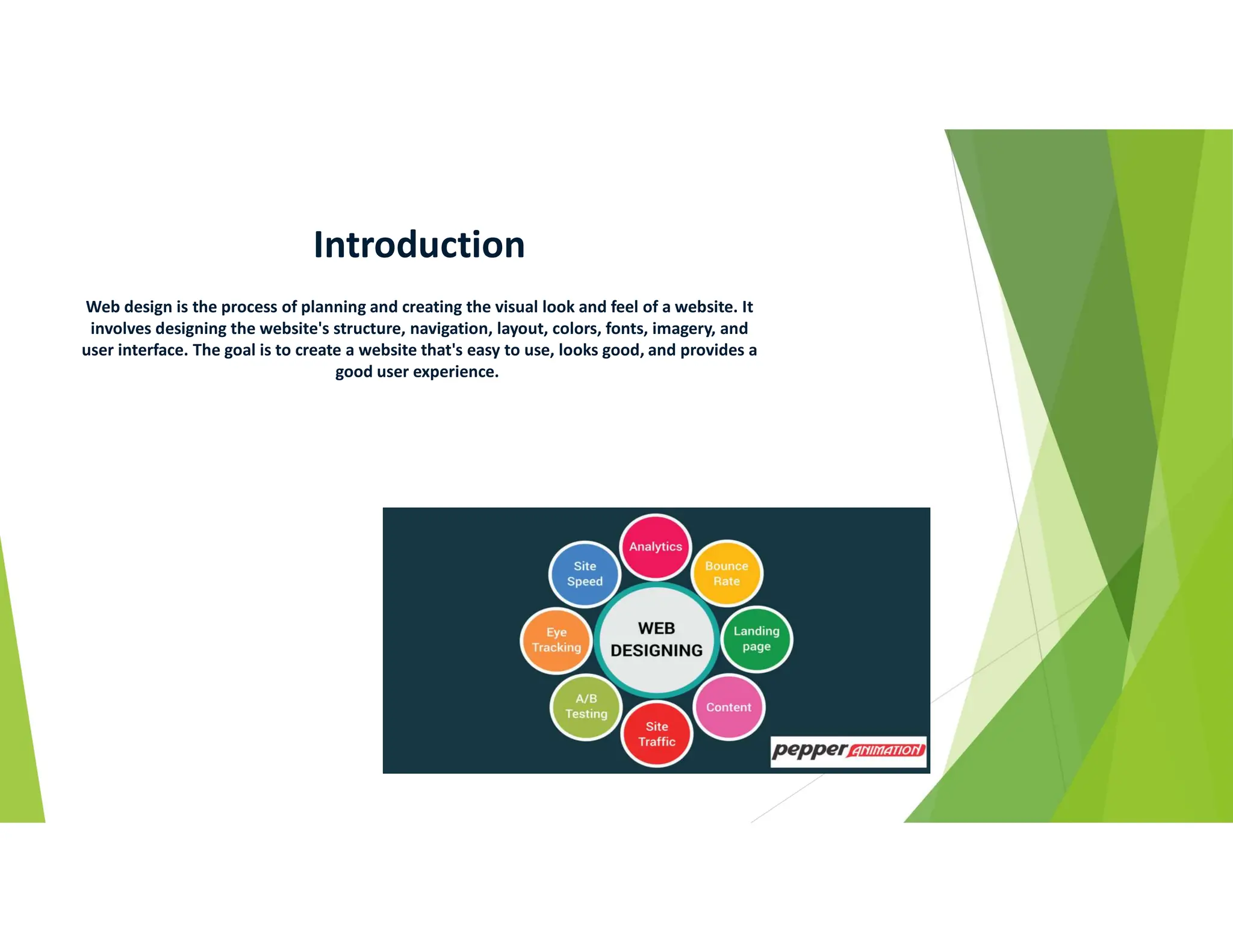
Web design is the process of planning and creating the visual look and feel of a website. It
involves designing the website's structure, navigation, layout, colors, fonts, imagery, and
user interface. The goal is to create a website that's easy to use, looks good, and provides a
good user experience.
Benefit of web designing
1. Skill Development:
Foundational Knowledge: Gain a solid understanding of core web design principles and
technologies, including HTML, CSS, and JavaScript.
Design Skills: Learn how to create visually appealing and user-friendly designs through principles
of typography, color theory, and layout.
2. Career Opportunities:
Job Market: Web design is a growing field with high demand for skilled professionals in various
industries.
Freelancing: Acquire the skills to work as a freelance web designer, offering flexibility and the
potential for diverse projects.
3. Enhanced Creativity:
Creative Expression: Develop the ability to bring creative ideas to life and solve design problems
in innovative ways.
Portfolio Building: Create a portfolio of work to showcase your skills and attract potential clients
or employers.
4. Technical Proficiency:
Software Knowledge: Get acquainted with industry-standard tools and software used for web
design, such as Adobe XD, Figma, or Sketch.
Responsive Design: Learn how to design websites that look great and function well on various
devices and screen sizes.
5. User Experience (UX) Understanding:
User-Centric Design: Learn to prioritize user experience by designing intuitive and accessible
websites.
Usability Testing: Understand how to test and refine designs based on user feedback and
behavior.
 6. Problem-Solving Skills:
 Troubleshooting: Develop the ability to troubleshoot and solve design and
coding issues.
 Attention to Detail: Enhance your ability to focus on the finer details that
contribute to a polished and professional final product.
 7. Networking Opportunities:
 Industry Connections: Connect with instructors, peers, and industry
professionals who can offer guidance and support.
 Collaborative Projects: Engage in group projects and discussions that can lead
to new collaborations and opportunities.
Web designing course :-
 1. Introduction to Web Design:
Overview: Introduction to the field of web design, including its importance and
how it differs from web development.
Web Design vs. Web Development: Understanding the distinction between
designing the look and feel of a website and building its functionality.
 2. HTML (Hypertext Markup Language):
Basics of HTML: Learning the structure of HTML documents, including elements,
tags, and attributes.
Building Web Pages: Creating simple web pages using HTML, including headings,
paragraphs, links, images, and lists.
 3. CSS (Cascading Style Sheets):
CSS Basics: Understanding how to style HTML elements using CSS, including
selectors, properties, and values.
Layout and Design: Techniques for designing layouts, working with colors, fonts,
and spacing to create visually appealing web pages.
Responsive Design: Ensuring websites look good on various devices and screen
sizes using media queries and flexible layouts.
 4. JavaScript Basics:
Introduction to JavaScript: Learning how JavaScript can add interactivity to web
pages.
Basic Syntax and Functions: Understanding variables, functions, and basic event
handling.
 5. Design Principles:
Visual Design: Applying principles of design such as color theory, typography, and
visual hierarchy to create aesthetically pleasing web pages.
User Experience (UX) Design: Learning how to design for usability and
accessibility, focusing on creating a positive user experience.
User Interface (UI) Design: Understanding how to design intuitive and engaging
interfaces.
 6. Web Design Tools:
Design Software: Introduction to tools like Adobe XD, Figma, Sketch, or other design
software used in creating web layouts and prototypes.
Code Editors: Using text editors or integrated development environments (IDEs) like
Visual Studio Code or Sublime Text for coding.
 7. Building and Managing Websites:
Creating a Website: Hands-on projects to build and publish websites using HTML,
CSS, and JavaScript.
Content Management Systems (CMS): Basic understanding of CMS platforms like
WordPress, which allow for easier website management and content updates.
 8. Web Development Basics:
Front-End vs. Back-End: Introduction to the basic concepts of web development,
including the role of front-end and back-end technologies.
Basic PHP/MySQL: Understanding server-side scripting and databases for those
interested in a deeper dive into web development.
Best institute in Chandigarh for web
designing:-
Excellence technology provide the web designing course. I have also 6th month
training experience in excellence technology. I can suggest the professional course
in excellence technology ,the institute also provide the courses like web
Developing , java ,C and C++, Digital Marketing etc.
Web developing :-
 web development involves creating and maintaining websites and web applications. It
encompasses two main areas: front-end and back-end. Front-end development focuses
on the user interface and experience, using languages like HTML, CSS, and JavaScript
to build interactive elements. Back-end development deals with server-side logic,
databases, and application functionality, often utilizing languages like Python, PHP, or
Ruby, along with database systems like MySQL or MongoDB. Web developers work to
ensure that websites are functional, user-friendly, and responsive across different
devices. The field requires knowledge of coding, design principles, and problem-
solving to create efficient and effective web solutions.
Java:-
Java is a versatile, high-level programming language
designed for portability and scalability. Developed by
Sun Microsystems, it uses the "write once, run
anywhere" philosophy, allowing code to run on any
platform with a Java Virtual Machine (JVM). Java is
object-oriented, supporting concepts like inheritance,
encapsulation, and polymorphism. It's widely used
for web applications (through technologies like
Servlets and Spring), mobile apps (primarily
Android), and enterprise solutions. With a strong
emphasis on security and performance, Java remains
a popular choice for developers across various
industries.
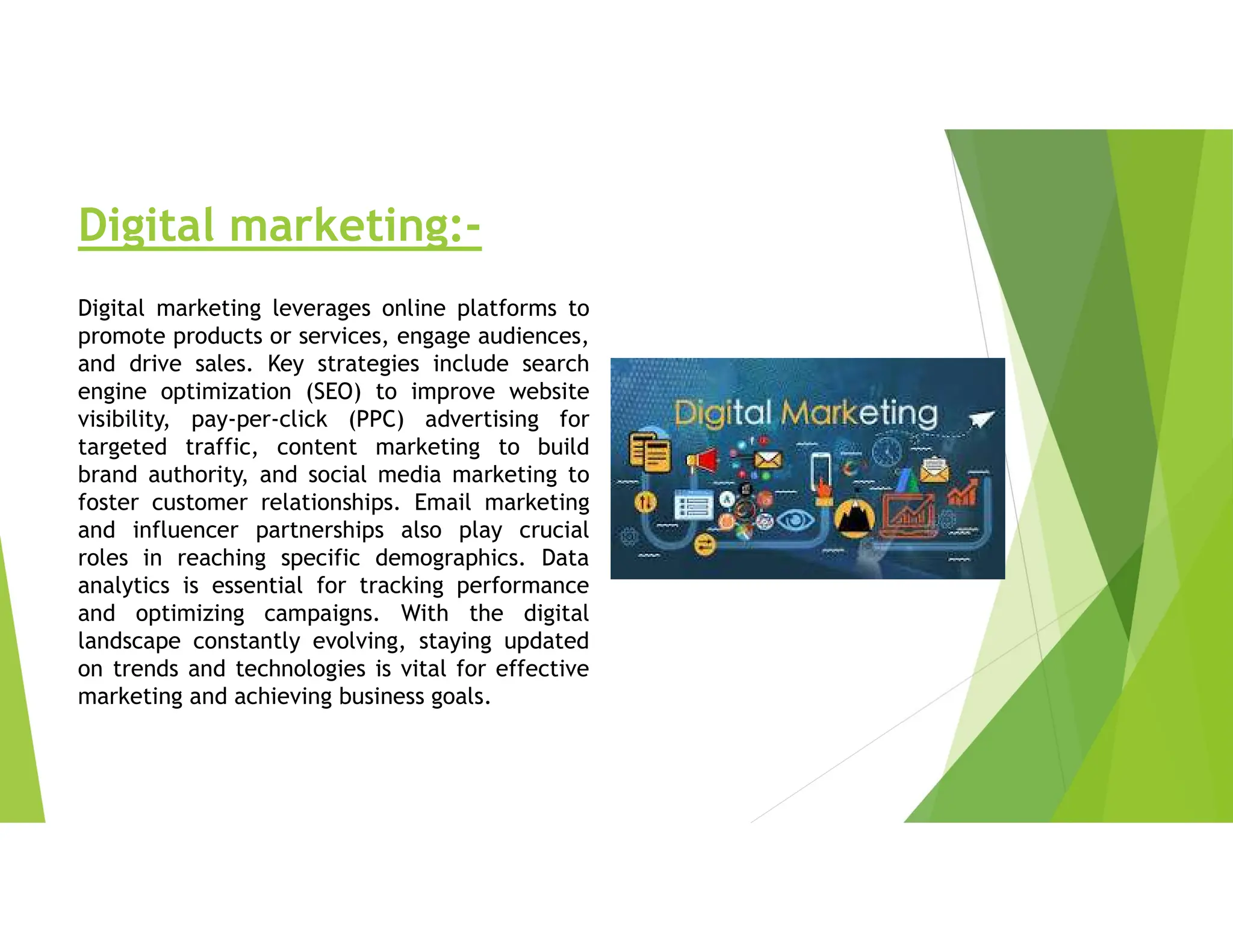
Digital marketing:-
Digital marketing leverages online platforms to
promote products or services, engage audiences,
and drive sales. Key strategies include search
engine optimization (SEO) to improve website
visibility, pay-per-click (PPC) advertising for
targeted traffic, content marketing to build
brand authority, and social media marketing to
foster customer relationships. Email marketing
and influencer partnerships also play crucial
roles in reaching specific demographics. Data
analytics is essential for tracking performance
and optimizing campaigns. With the digital
landscape constantly evolving, staying updated
on trends and technologies is vital for effective
marketing and achieving business goals.
Thank you

web designing course in chandigarh for excellence technology

  • 1.
    Web designing coursein Chandigarh
  • 2.
    Introduction Web design isthe process of planning and creating the visual look and feel of a website. It involves designing the website's structure, navigation, layout, colors, fonts, imagery, and user interface. The goal is to create a website that's easy to use, looks good, and provides a good user experience.
  • 3.
    Benefit of webdesigning 1. Skill Development: Foundational Knowledge: Gain a solid understanding of core web design principles and technologies, including HTML, CSS, and JavaScript. Design Skills: Learn how to create visually appealing and user-friendly designs through principles of typography, color theory, and layout. 2. Career Opportunities: Job Market: Web design is a growing field with high demand for skilled professionals in various industries. Freelancing: Acquire the skills to work as a freelance web designer, offering flexibility and the potential for diverse projects. 3. Enhanced Creativity: Creative Expression: Develop the ability to bring creative ideas to life and solve design problems in innovative ways. Portfolio Building: Create a portfolio of work to showcase your skills and attract potential clients or employers. 4. Technical Proficiency: Software Knowledge: Get acquainted with industry-standard tools and software used for web design, such as Adobe XD, Figma, or Sketch. Responsive Design: Learn how to design websites that look great and function well on various devices and screen sizes. 5. User Experience (UX) Understanding: User-Centric Design: Learn to prioritize user experience by designing intuitive and accessible websites. Usability Testing: Understand how to test and refine designs based on user feedback and behavior.  6. Problem-Solving Skills:  Troubleshooting: Develop the ability to troubleshoot and solve design and coding issues.  Attention to Detail: Enhance your ability to focus on the finer details that contribute to a polished and professional final product.  7. Networking Opportunities:  Industry Connections: Connect with instructors, peers, and industry professionals who can offer guidance and support.  Collaborative Projects: Engage in group projects and discussions that can lead to new collaborations and opportunities.
  • 4.
    Web designing course:-  1. Introduction to Web Design: Overview: Introduction to the field of web design, including its importance and how it differs from web development. Web Design vs. Web Development: Understanding the distinction between designing the look and feel of a website and building its functionality.  2. HTML (Hypertext Markup Language): Basics of HTML: Learning the structure of HTML documents, including elements, tags, and attributes. Building Web Pages: Creating simple web pages using HTML, including headings, paragraphs, links, images, and lists.  3. CSS (Cascading Style Sheets): CSS Basics: Understanding how to style HTML elements using CSS, including selectors, properties, and values. Layout and Design: Techniques for designing layouts, working with colors, fonts, and spacing to create visually appealing web pages. Responsive Design: Ensuring websites look good on various devices and screen sizes using media queries and flexible layouts.  4. JavaScript Basics: Introduction to JavaScript: Learning how JavaScript can add interactivity to web pages. Basic Syntax and Functions: Understanding variables, functions, and basic event handling.  5. Design Principles: Visual Design: Applying principles of design such as color theory, typography, and visual hierarchy to create aesthetically pleasing web pages. User Experience (UX) Design: Learning how to design for usability and accessibility, focusing on creating a positive user experience. User Interface (UI) Design: Understanding how to design intuitive and engaging interfaces.  6. Web Design Tools: Design Software: Introduction to tools like Adobe XD, Figma, Sketch, or other design software used in creating web layouts and prototypes. Code Editors: Using text editors or integrated development environments (IDEs) like Visual Studio Code or Sublime Text for coding.  7. Building and Managing Websites: Creating a Website: Hands-on projects to build and publish websites using HTML, CSS, and JavaScript. Content Management Systems (CMS): Basic understanding of CMS platforms like WordPress, which allow for easier website management and content updates.  8. Web Development Basics: Front-End vs. Back-End: Introduction to the basic concepts of web development, including the role of front-end and back-end technologies. Basic PHP/MySQL: Understanding server-side scripting and databases for those interested in a deeper dive into web development.
  • 5.
    Best institute inChandigarh for web designing:- Excellence technology provide the web designing course. I have also 6th month training experience in excellence technology. I can suggest the professional course in excellence technology ,the institute also provide the courses like web Developing , java ,C and C++, Digital Marketing etc.
  • 6.
    Web developing :- web development involves creating and maintaining websites and web applications. It encompasses two main areas: front-end and back-end. Front-end development focuses on the user interface and experience, using languages like HTML, CSS, and JavaScript to build interactive elements. Back-end development deals with server-side logic, databases, and application functionality, often utilizing languages like Python, PHP, or Ruby, along with database systems like MySQL or MongoDB. Web developers work to ensure that websites are functional, user-friendly, and responsive across different devices. The field requires knowledge of coding, design principles, and problem- solving to create efficient and effective web solutions.
  • 7.
    Java:- Java is aversatile, high-level programming language designed for portability and scalability. Developed by Sun Microsystems, it uses the "write once, run anywhere" philosophy, allowing code to run on any platform with a Java Virtual Machine (JVM). Java is object-oriented, supporting concepts like inheritance, encapsulation, and polymorphism. It's widely used for web applications (through technologies like Servlets and Spring), mobile apps (primarily Android), and enterprise solutions. With a strong emphasis on security and performance, Java remains a popular choice for developers across various industries.
  • 8.
    Digital marketing:- Digital marketingleverages online platforms to promote products or services, engage audiences, and drive sales. Key strategies include search engine optimization (SEO) to improve website visibility, pay-per-click (PPC) advertising for targeted traffic, content marketing to build brand authority, and social media marketing to foster customer relationships. Email marketing and influencer partnerships also play crucial roles in reaching specific demographics. Data analytics is essential for tracking performance and optimizing campaigns. With the digital landscape constantly evolving, staying updated on trends and technologies is vital for effective marketing and achieving business goals.
  • 9.