Web 2.0 in Teaching and
                         Learning

Julia Davies
j.a.davies@sheffield.ac.uk
New Technologies;

 New Literacies;

 New Practices;

 New Times…….
New literacies, new practices

    This presentation is based on
the premise that literacy is
changing in a new media world 

(Kress, 2003; Lankshear and
Knobel, 2006).
Thinking about books
•  Joe’s non netbook

•  Books for Christmas

     While I do not subscribe to an unresolvable binary that
     separates digital and print literacies, there is considerable
     research now that does indicate that there are distinctive
     ways of reading and producing digital texts that need to be
     specifically and explicitly taught to students (for example,
     Moje, 2009; Thomas, 2006; Walsh, Asha &
     Sprainger, 2007).
     (Honan 2009: 22)
Cult of the Amateur

“Useless and corrupt user
generated content”
“Self promotion - narcissism”
“Bloggery …. an enormous
threat”

 (Andrew Keen: BBC Radio 4.
                  25.6.07.)
“Kids are going on the internet and are
believing everything they read; we are
creating an increasingly media illiterate
culture … in order to understand the
internet you need to be literate before you
get to the screen….”

       (Andrew Keen: BBC Radio 4. 25.6.07.)
Tools of the Trade
 stylus and slate
 paper and pen
 blackboard and chalk
 duplicated texts
 overhead projectors
 electronic whiteboards
 portable computer
 New technologies have replicated many
  familiar practices
 More polished performances of conventional
  practices 
 "Old wine in new bottles" (Lankshear and
  Knobel, 2007) 
 Who put the C in ICT? 
 Radical break promised by new technology is
  the potential for opening up new learning
  spaces
 Peer to peer interactivity and learning
Web 2.0 (O’Reilly,2005)
 User friendly
 Interactive
 User Generated Content can be
          •    Uploaded
          •    Copied
          •    Disseminated
          •    Altered …
 Authorship: 
          •  Shared
          •  Distributed
          •  Uncertain
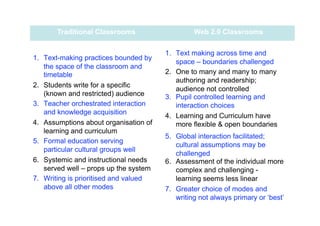
Traditional Classrooms                    Web 2.0 Classrooms


                                        1.  Text making across time and
1.  Text-making practices bounded by
                                            space – boundaries challenged
    the space of the classroom and
    timetable                           2.  One to many and many to many
                                            authoring and readership;
2.  Students write for a specific
                                            audience not controlled
    (known and restricted) audience     3.  Pupil controlled learning and
3.  Teacher orchestrated interaction        interaction choices
    and knowledge acquisition
                                        4.  Learning and Curriculum have
4.  Assumptions about organisation of       more flexible & open boundaries
    learning and curriculum
                                        5.  Global interaction facilitated;
5.  Formal education serving
                                            cultural assumptions may be
    particular cultural groups well
                                            challenged
6.  Systemic and instructional needs    6.  Assessment of the individual more
    served well – props up the system       complex and challenging -
7.  Writing is prioritised and valued       learning seems less linear
    above all other modes               7.  Greater choice of modes and
                                            writing not always primary or ‘best’
Web 2.0

Students Today?
Does the ‘Students Today’ video reflect
the way Maltese learners live?

Think about Your Web 2.0 video ….


• What would go in your video?
• Based in the HERE and NOW?
• In Malta?
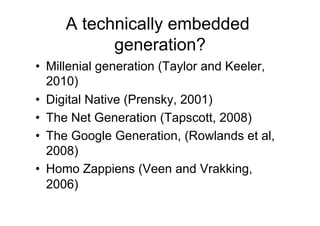
A technically embedded
           generation?
•  Millenial generation (Taylor and Keeler,
   2010)
•  Digital Native (Prensky, 2001)
•  The Net Generation (Tapscott, 2008)
•  The Google Generation, (Rowlands et al,
   2008)
•  Homo Zappiens (Veen and Vrakking,
   2006)
Is the Internet an important
     tool for teachers as
           teachers?"

   How do they use it in
       teaching?"
Useful tools for developing new
             literacies


• Blogs
• Twitter
• Wikis
What is a blog?

• Date ordered entries
• Most recent entry = first
• Can be about any topic
• Immediate publication tool
• Hyperlinking easy
• Embedding of objects (pix; films; sound
  files; hyperlinks) = easy 
• Blog rolls / Link lists common
19                                 19
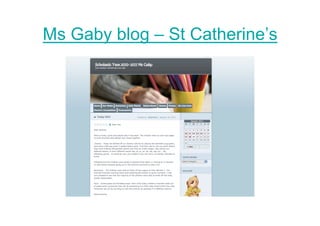
Ms Gaby blog – St Catherine’s
Mrs Cassidy’s Blog
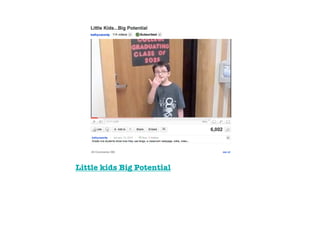
Little kids Big Potential!
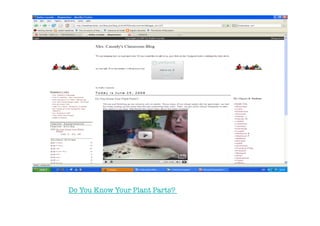
Do You Know Your Plant Parts?
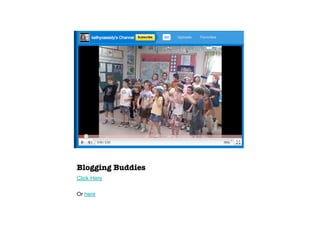
Blogging Buddies
Click Here

Or here
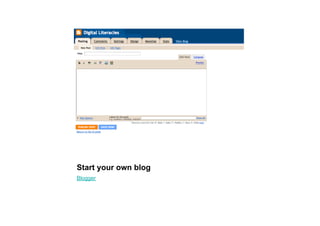
Start your own blog
Blogger
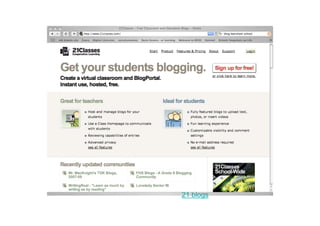
21 blogs
Twitter
•  Classroom Tweets
•  Orange Class blog
What is a wiki?

WIKIPEDIA
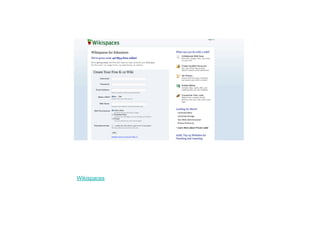
Wikispaces
What are the barriers for teachers who want to use Web 2.0
     in schools?


In terms of the metaphor that is provided in this issue’s title,
these teachers were drowning in a sea of normative and
autonomous views of literacy, and in engaging with digital texts,
were fighting against a dangerous rip filled with antiquated,
conservative, and unrewarding literacy pedagogical practices
that appeared to be pulling them towards the rocks of
disengagement and irrelevance.

(Honan 2009: 21)
  Many children and young people are already engaged in Web 2.0
   practices;
  Important kinds of learning can be developed in Web 2.0
   environments through knowledge sharing and distributed cognition;
  Web 2.0 users are developing new online social practices that are
   likely to become more useful in work and leisure settings of the
   future;
  Web 2.0 is enjoyable – it motivates the young and can also be
   attractive to teachers;
  New web-spaces are dependent on new literacy practices, providing
   real world environments to practice and develop these;
  The risks and opportunities of life online can be carefully explored in
   educational environments;
  Web 2.0 environments give voice to participants and suggest new
   possibilities for social engagement and citizenship;
  Collaboration and criticality can be developed in Web 2.0
   engagement.
•  Web 2.0 products and services have great potential
   for work on the media.
•  Pupils can create blogs, wikis and webpages for
   relaying news as well as exploring the way in which
   news is created and reported across Web 2.0
   platforms.
•  Web 2.0 is changing the nature of journalism and the
   newspaper industry – contemporary pupils can be at
   the forefront of tracing these changes and their
   implications.
•  New literacy practices are needed for new times –
   educators need to take risks and explore potential.
Large numbers of         A significant number
school-age children      of school-age children
are already engaged in   do not have access to
Web 2.0 practices.
      these practices (the
                         digital divide)
Most young people’s      Learners seem to
online practices are     enjoy practising until
repetitive and limited   they perfect their
in ambition 
            digital skills. Web 2.0
                         in the classroom
                         means teachers can
                         move learners
                         forward.
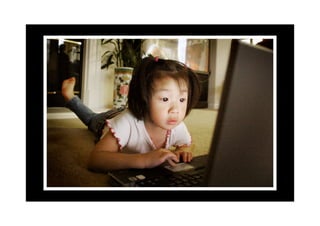
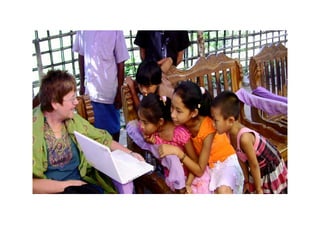
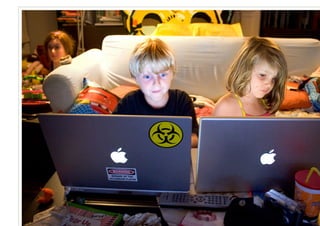
•  Image:

•  Kids standing round laptops
Web 2.0 practices may be trivial     Young Web 2.0 users are
and unproductive 
                   developing new online practices
                                     which will be transferable and
                                     useful in the future 


Children, young people and           Online social networking and
their teachers may have had          related Web 2.0 practices are
negative experiences of new          enjoyable and motivating for
technology and find it ‘difficult’ 
   young learners and their
                                     teachers
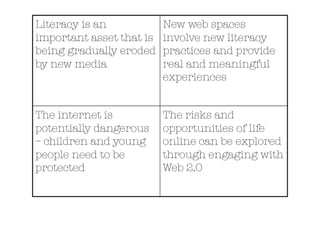
Literacy is an            New web spaces
important asset that is   involve new literacy
being gradually eroded    practices and provide
by new media 
            real and meaningful
                          experiences 


The internet is           The risks and
potentially dangerous     opportunities of life
– children and young      online can be explored
people need to be         through engaging with
protected 
               Web 2.0
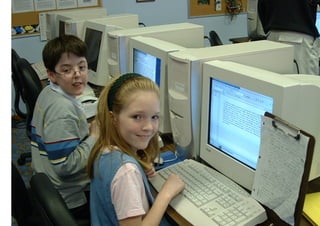
•  Image
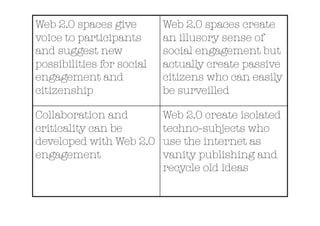
Web 2.0 spaces give        Web 2.0 spaces create
voice to participants      an illusory sense of
and suggest new            social engagement but
possibilities for social   actually create passive
engagement and             citizens who can easily
citizenship 
              be surveilled 

Collaboration and          Web 2.0 create isolated
criticality can be         techno-subjects who
developed with Web 2.0     use the internet as
engagement 
               vanity publishing and
                           recycle old ideas
Web 2.0 t & l
Web 2.0 t & l

Web 2.0 t & l

  • 3.
    Web 2.0 inTeaching and Learning Julia Davies j.a.davies@sheffield.ac.uk
  • 4.
    New Technologies; NewLiteracies; New Practices; New Times…….
  • 5.
    New literacies, newpractices This presentation is based on the premise that literacy is changing in a new media world (Kress, 2003; Lankshear and Knobel, 2006).
  • 6.
    Thinking about books • Joe’s non netbook •  Books for Christmas While I do not subscribe to an unresolvable binary that separates digital and print literacies, there is considerable research now that does indicate that there are distinctive ways of reading and producing digital texts that need to be specifically and explicitly taught to students (for example, Moje, 2009; Thomas, 2006; Walsh, Asha & Sprainger, 2007). (Honan 2009: 22)
  • 7.
    Cult of theAmateur “Useless and corrupt user generated content” “Self promotion - narcissism” “Bloggery …. an enormous threat” (Andrew Keen: BBC Radio 4. 25.6.07.)
  • 8.
    “Kids are goingon the internet and are believing everything they read; we are creating an increasingly media illiterate culture … in order to understand the internet you need to be literate before you get to the screen….” (Andrew Keen: BBC Radio 4. 25.6.07.)
  • 9.
    Tools of theTrade  stylus and slate  paper and pen  blackboard and chalk  duplicated texts  overhead projectors  electronic whiteboards  portable computer
  • 10.
     New technologies havereplicated many familiar practices  More polished performances of conventional practices  "Old wine in new bottles" (Lankshear and Knobel, 2007)  Who put the C in ICT?  Radical break promised by new technology is the potential for opening up new learning spaces  Peer to peer interactivity and learning
  • 11.
    Web 2.0 (O’Reilly,2005)  Userfriendly  Interactive  User Generated Content can be •  Uploaded •  Copied •  Disseminated •  Altered …  Authorship: •  Shared •  Distributed •  Uncertain
  • 13.
    Traditional Classrooms Web 2.0 Classrooms 1.  Text making across time and 1.  Text-making practices bounded by space – boundaries challenged the space of the classroom and timetable 2.  One to many and many to many authoring and readership; 2.  Students write for a specific audience not controlled (known and restricted) audience 3.  Pupil controlled learning and 3.  Teacher orchestrated interaction interaction choices and knowledge acquisition 4.  Learning and Curriculum have 4.  Assumptions about organisation of more flexible & open boundaries learning and curriculum 5.  Global interaction facilitated; 5.  Formal education serving cultural assumptions may be particular cultural groups well challenged 6.  Systemic and instructional needs 6.  Assessment of the individual more served well – props up the system complex and challenging - 7.  Writing is prioritised and valued learning seems less linear above all other modes 7.  Greater choice of modes and writing not always primary or ‘best’
  • 14.
  • 15.
    Does the ‘StudentsToday’ video reflect the way Maltese learners live? Think about Your Web 2.0 video …. • What would go in your video? • Based in the HERE and NOW? • In Malta?
  • 16.
    A technically embedded generation? •  Millenial generation (Taylor and Keeler, 2010) •  Digital Native (Prensky, 2001) •  The Net Generation (Tapscott, 2008) •  The Google Generation, (Rowlands et al, 2008) •  Homo Zappiens (Veen and Vrakking, 2006)
  • 17.
    Is the Internetan important tool for teachers as teachers?" How do they use it in teaching?"
  • 18.
    Useful tools fordeveloping new literacies • Blogs • Twitter • Wikis
  • 19.
    What is ablog? • Date ordered entries • Most recent entry = first • Can be about any topic • Immediate publication tool • Hyperlinking easy • Embedding of objects (pix; films; sound files; hyperlinks) = easy • Blog rolls / Link lists common 19 19
  • 20.
    Ms Gaby blog– St Catherine’s
  • 21.
  • 22.
    Little kids BigPotential!
  • 23.
    Do You KnowYour Plant Parts?
  • 24.
  • 25.
    Start your ownblog Blogger
  • 26.
  • 27.
  • 28.
    What is awiki? WIKIPEDIA
  • 29.
  • 30.
    What are thebarriers for teachers who want to use Web 2.0 in schools? In terms of the metaphor that is provided in this issue’s title, these teachers were drowning in a sea of normative and autonomous views of literacy, and in engaging with digital texts, were fighting against a dangerous rip filled with antiquated, conservative, and unrewarding literacy pedagogical practices that appeared to be pulling them towards the rocks of disengagement and irrelevance. (Honan 2009: 21)
  • 31.
      Many childrenand young people are already engaged in Web 2.0 practices;   Important kinds of learning can be developed in Web 2.0 environments through knowledge sharing and distributed cognition;   Web 2.0 users are developing new online social practices that are likely to become more useful in work and leisure settings of the future;   Web 2.0 is enjoyable – it motivates the young and can also be attractive to teachers;   New web-spaces are dependent on new literacy practices, providing real world environments to practice and develop these;   The risks and opportunities of life online can be carefully explored in educational environments;   Web 2.0 environments give voice to participants and suggest new possibilities for social engagement and citizenship;   Collaboration and criticality can be developed in Web 2.0 engagement.
  • 32.
    •  Web 2.0products and services have great potential for work on the media. •  Pupils can create blogs, wikis and webpages for relaying news as well as exploring the way in which news is created and reported across Web 2.0 platforms. •  Web 2.0 is changing the nature of journalism and the newspaper industry – contemporary pupils can be at the forefront of tracing these changes and their implications. •  New literacy practices are needed for new times – educators need to take risks and explore potential.
  • 33.
    Large numbers of A significant number school-age children of school-age children are already engaged in do not have access to Web 2.0 practices. these practices (the digital divide) Most young people’s Learners seem to online practices are enjoy practising until repetitive and limited they perfect their in ambition digital skills. Web 2.0 in the classroom means teachers can move learners forward.
  • 34.
    •  Image: •  Kidsstanding round laptops
  • 35.
    Web 2.0 practicesmay be trivial Young Web 2.0 users are and unproductive developing new online practices which will be transferable and useful in the future Children, young people and Online social networking and their teachers may have had related Web 2.0 practices are negative experiences of new enjoyable and motivating for technology and find it ‘difficult’ young learners and their teachers
  • 37.
    Literacy is an New web spaces important asset that is involve new literacy being gradually eroded practices and provide by new media real and meaningful experiences The internet is The risks and potentially dangerous opportunities of life – children and young online can be explored people need to be through engaging with protected Web 2.0
  • 38.
  • 39.
    Web 2.0 spacesgive Web 2.0 spaces create voice to participants an illusory sense of and suggest new social engagement but possibilities for social actually create passive engagement and citizens who can easily citizenship be surveilled Collaboration and Web 2.0 create isolated criticality can be techno-subjects who developed with Web 2.0 use the internet as engagement vanity publishing and recycle old ideas