Watermelon
Breeding
Indranil Bhattacharjee
Scientist
Directorateof Research, SHUATS
Prayagraj
When one has tasted watermelon, he knows what the angels eat.
Mark Twain
Common Name: Watermelon
Scientific Name: Citrullus lanatus
Family: Cucurbitaceae
Chromosome Complement (2n = 2x = 22)
Classification (breeding standpoint)
1. Sweet-fleshed cultivated tyes (C. lanatus var. lanatus),
2. Citron-types (C. lanatus var. citroides) and
3. Egusi-types (C. lanatus subsp. mucosospermus).
Related species: melons, gourds, luffa, cucumber
Origin of Watermelon:
•Primary centre of diversity - Southern Africa (where wild forms
are still found).
•Secondary centre - China (related species can be found in India).
•Domestication occurred in Egypt and India.
•Common Areas of Cultivation - Middle East, the United
States of America (Florida, Georgia, California, Texas),
Africa, India, Japan and Europe
Watermelon
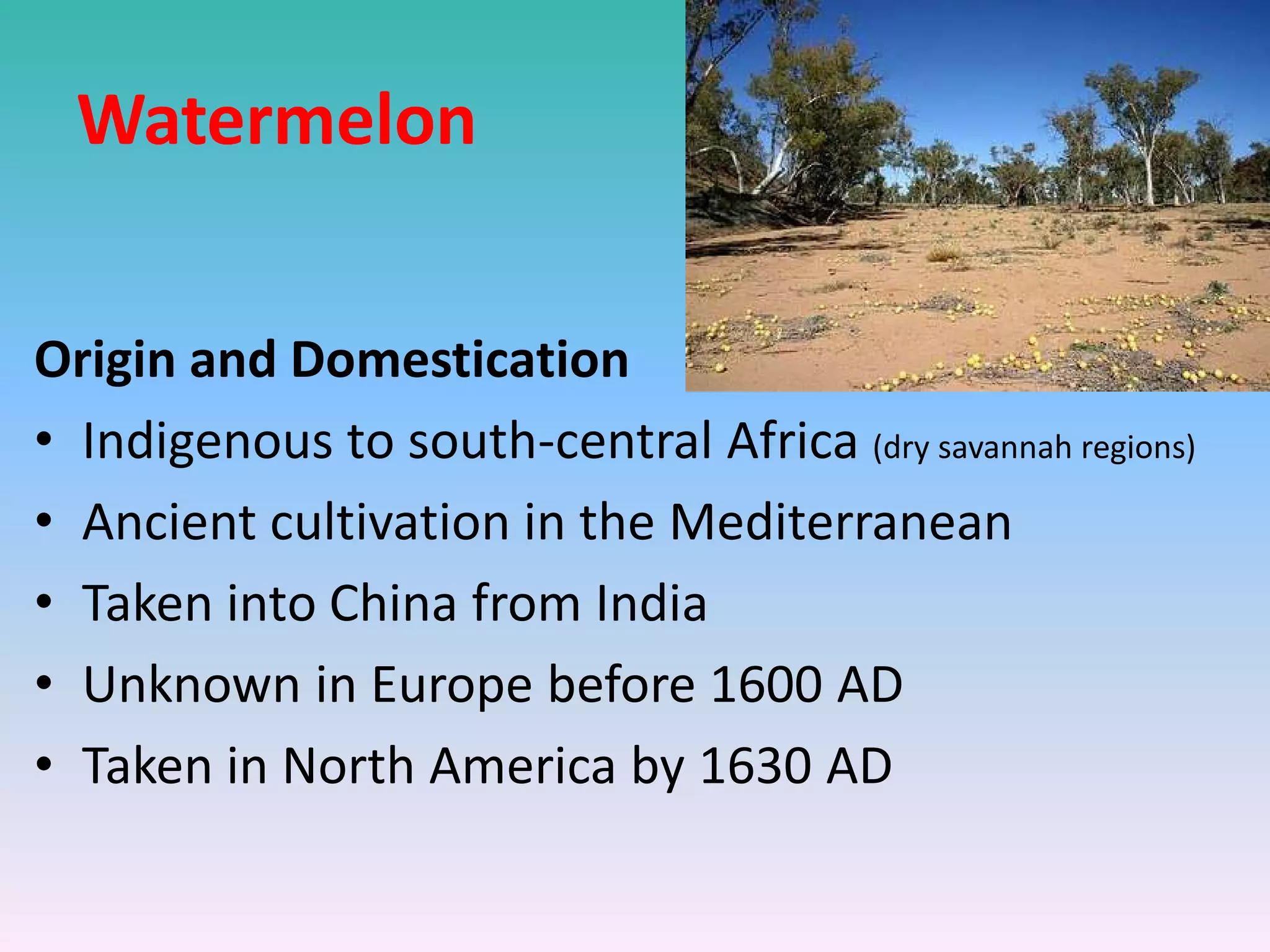
Origin and Domestication
• Indigenous to south-central Africa (dry savannah regions)
• Ancient cultivation in the Mediterranean
• Taken into China from India
• Unknown in Europe before 1600 AD
• Taken in North America by 1630 AD
Interspecific crosses
•Interspecific crosses in Citrullus are possible to varying degrees
(Robinson and Decker-Walters, 1997), but not unambiguous. e.g.,
crosses between C. lanatus and C. colocynthis have been
successful, but fruit set was low and directionality of the crosses
influenced results (Sain et al., 2002).
•Infra-specific crossed within C. lanatus is relatively easy, however,
high levels of marker segregation distortion, low fruit set and
diminished pollen viability have been observed (Hawkins et al.,
2001; Levi et al., 2004b; Sandlin et al., 2012; Ren et al., 2012).
Watermelon
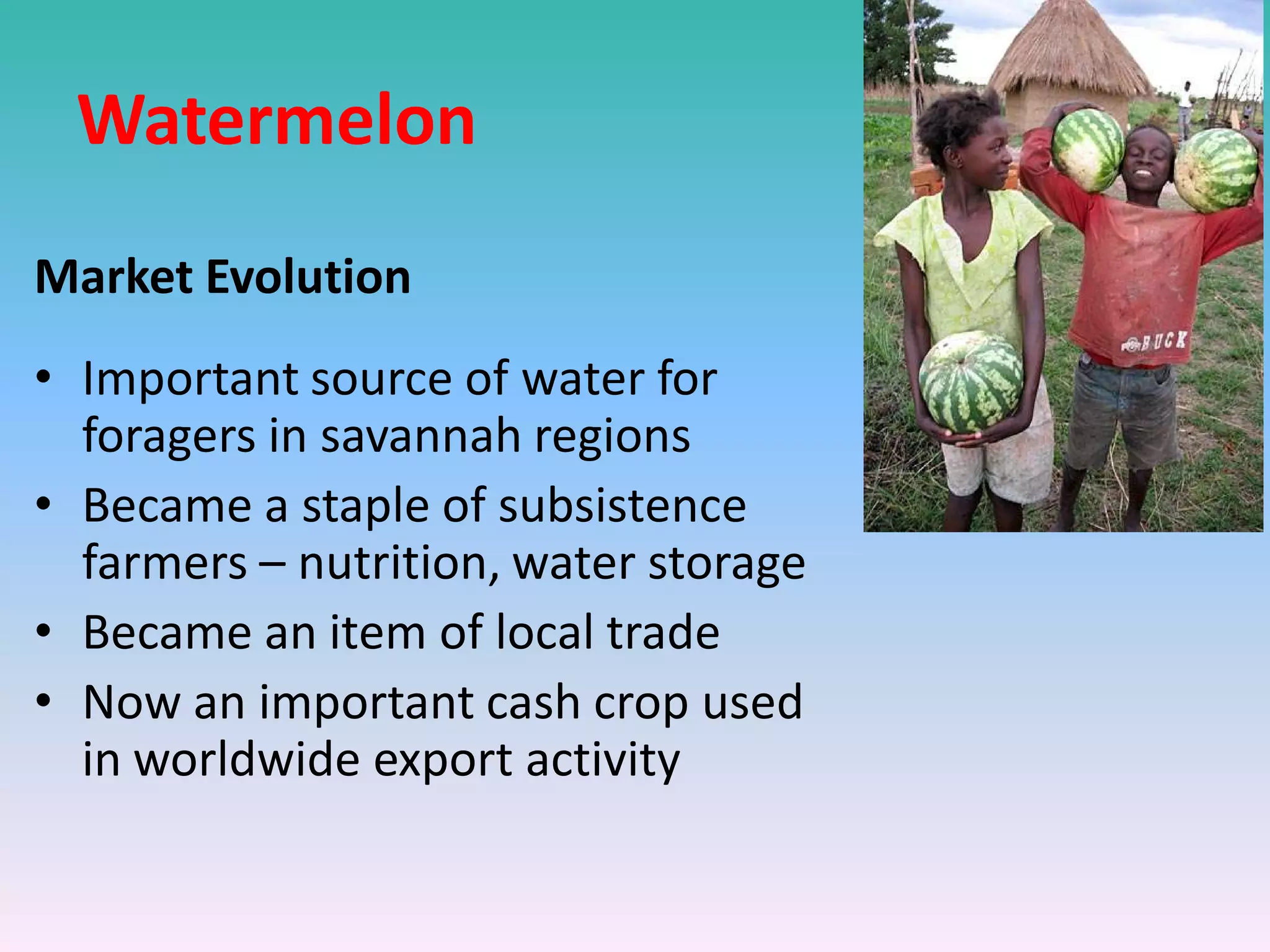
Market Evolution
• Important source of water for
foragers in savannah regions
• Became a staple of subsistence
farmers – nutrition, water storage
• Became an item of local trade
• Now an important cash crop used
in worldwide export activity
Watermelon
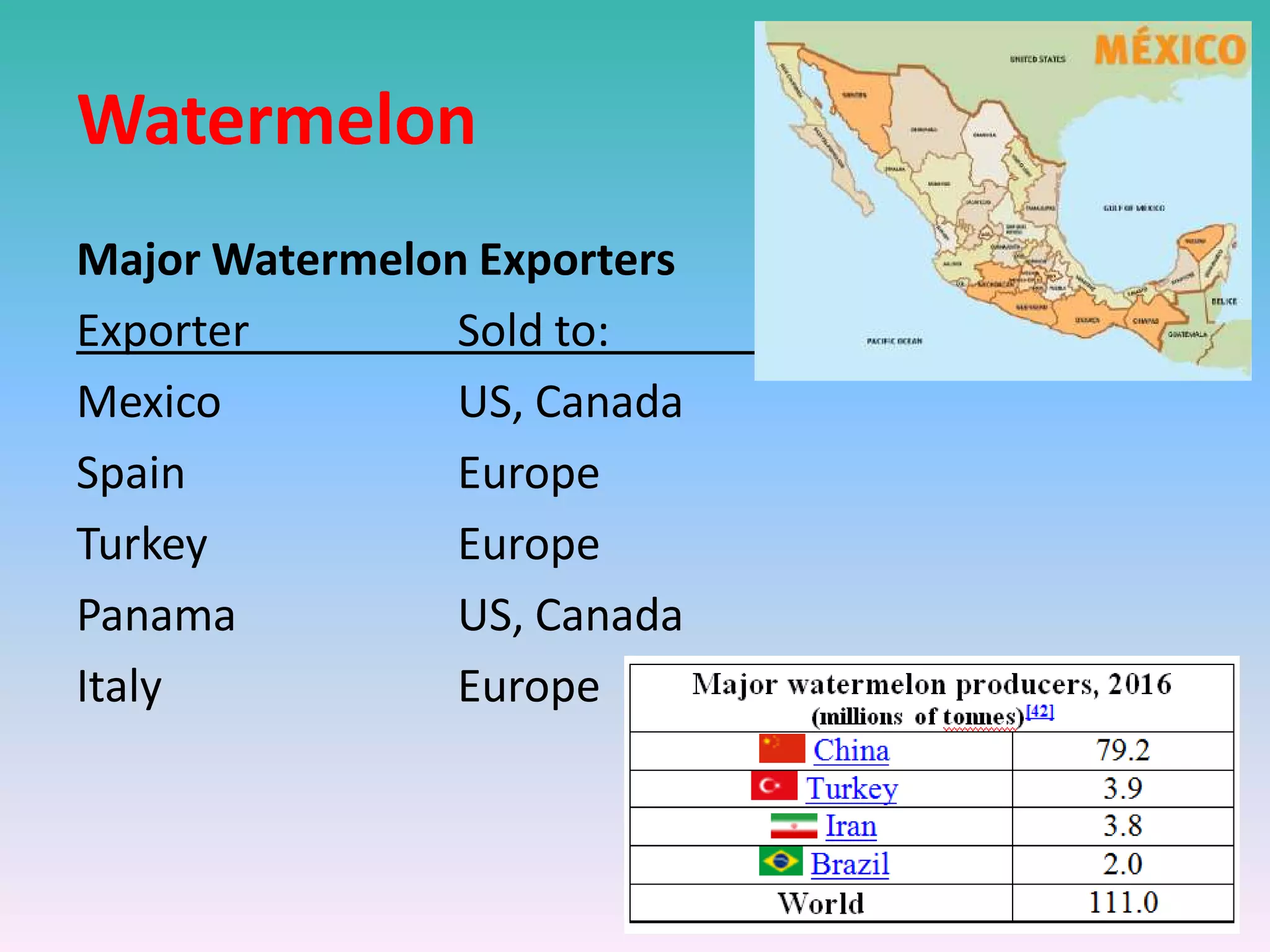
Major Watermelon Exporters
Exporter Sold to:
Mexico US, Canada
Spain Europe
Turkey Europe
Panama US, Canada
Italy Europe
Watermelon
Use and importance
• Nutritionally lean due to high
water content
• Good source of carbohydrates,
energy, and calories
• Moderate source of vitamin A
and vitamin C
Watermelon flesh, raw
Nutritional value per 100 g (3.5 oz)
Energy 127 kJ (30 kcal)
Carbohydrates 7.55 g
Sugars 6.2 g
Dietary fiber 0.4 g
Fat 0.15 g
Protein 0.61 g
Vitamins Quantity %DV†
Vitamin A equiv.
beta-Carotene
4% 28 μg
3% 303 μg
Thiamine (B1) 3% 0.033 mg
Riboflavin (B2) 2% 0.021 mg
Niacin (B3) 1% 0.178 mg
Pantothenic acid (B5) 4% 0.221 mg
Vitamin B6 3% 0.045 mg
Choline 1% 4.1 mg
Vitamin C 10% 8.1 mg
Minerals Quantity %DV†
Calcium 1% 7 mg
Iron 2% 0.24 mg
Magnesium 3% 10 mg
Manganese 2% 0.038 mg
Phosphorus 2% 11 mg
Potassium 2% 112 mg
Sodium 0% 1 mg
Zinc 1% 0.1 mg
Other constituents Quantity
Water 91.45 g
Lycopene 4532 µg
Watermelon
Subsistence Production
• Mostly located in Africa
• Historical uses remain in play
• Production during dry season
• Supplemental nutrition to
augment staple crops such as
cassava, sweet potatoes, yams
• Production very labor intensive
Watermelon
• Watermelons are among the most popular
cultigens for forager-farmers in the Kalahari for
the following reasons: "First, they provide a
source of water; second, they are relatively
drought-resistant, especially when compared to
seed crops like sorghum and maize; and third,
dried melons are an article of food for both
humans and livestock and, after they have been
cut into strips and hung on thorn trees to dry,
they are easy to store" (Hitchcock and Ebert
1984).
Watermelon
Market Garden Production
• Located worldwide
• Opportunities for market
identified products
• Small producers participate in
export through wholesalers
• Production very labor intensive
• Crop not amenable to vertical
production systems
Watermelon
Modern-Intensive Production
• Located throughout northern
hemisphere (Australia)
• Practiced in many undeveloped
countries
• Marketed through major
shippers/wholesalers
• Seasonal production dictated by
price
• Harvest labor intensive
Watermelon
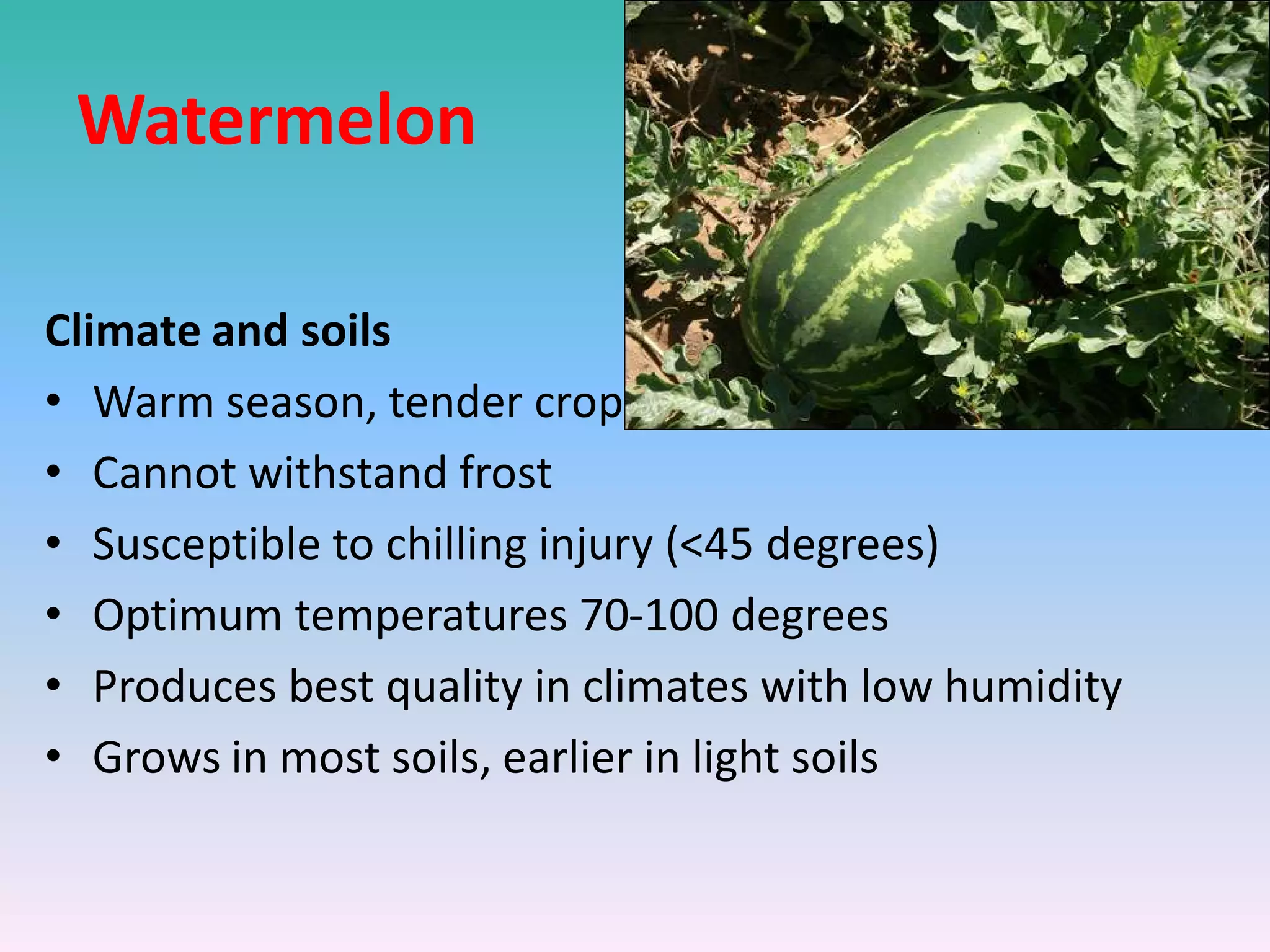
Climate and soils
• Warm season, tender crop
• Cannot withstand frost
• Susceptible to chilling injury (<45 degrees)
• Optimum temperatures 70-100 degrees
• Produces best quality in climates with low humidity
• Grows in most soils, earlier in light soils
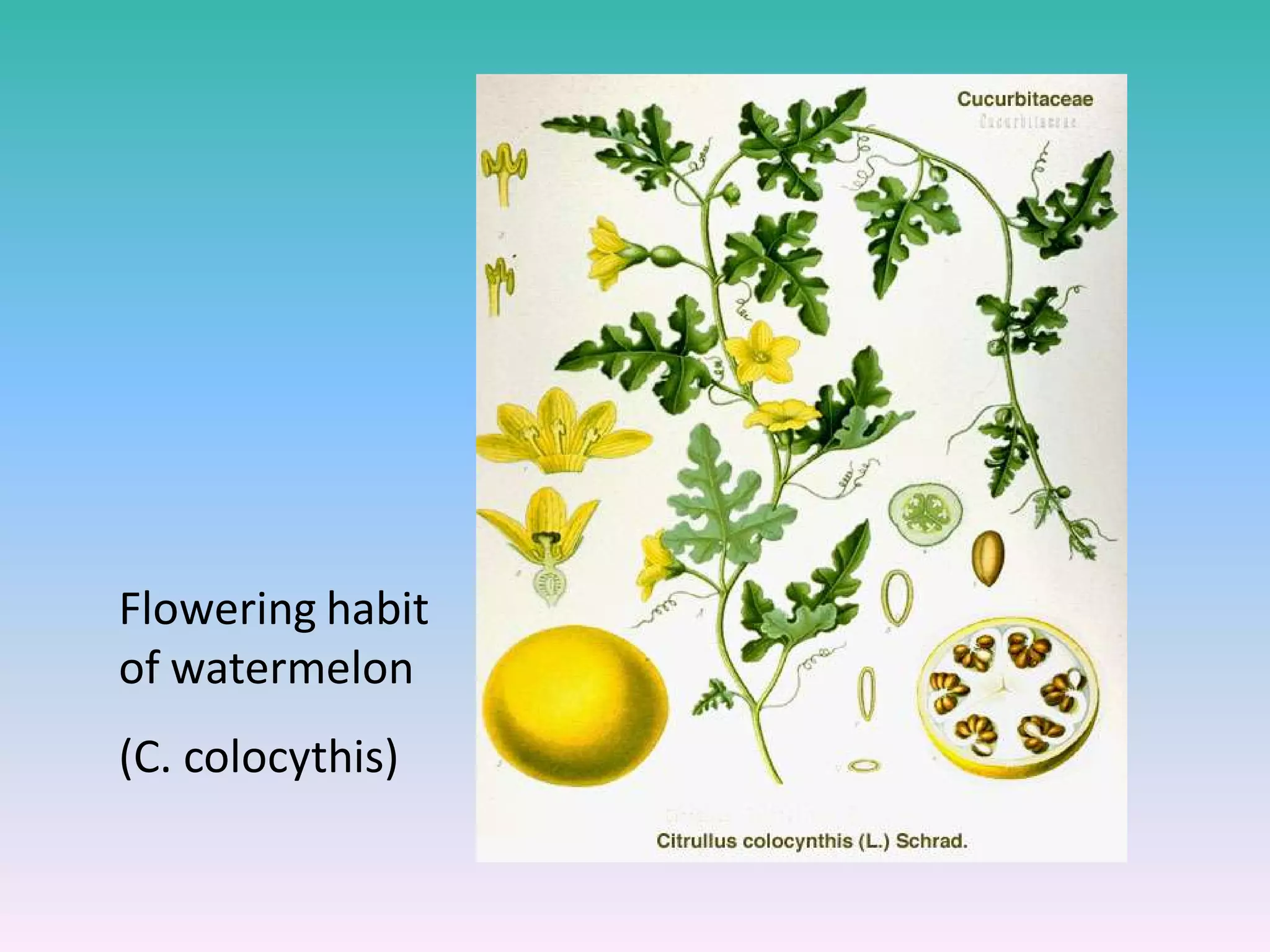
Flowering habit
of watermelon
(C. colocythis)
Watermelon
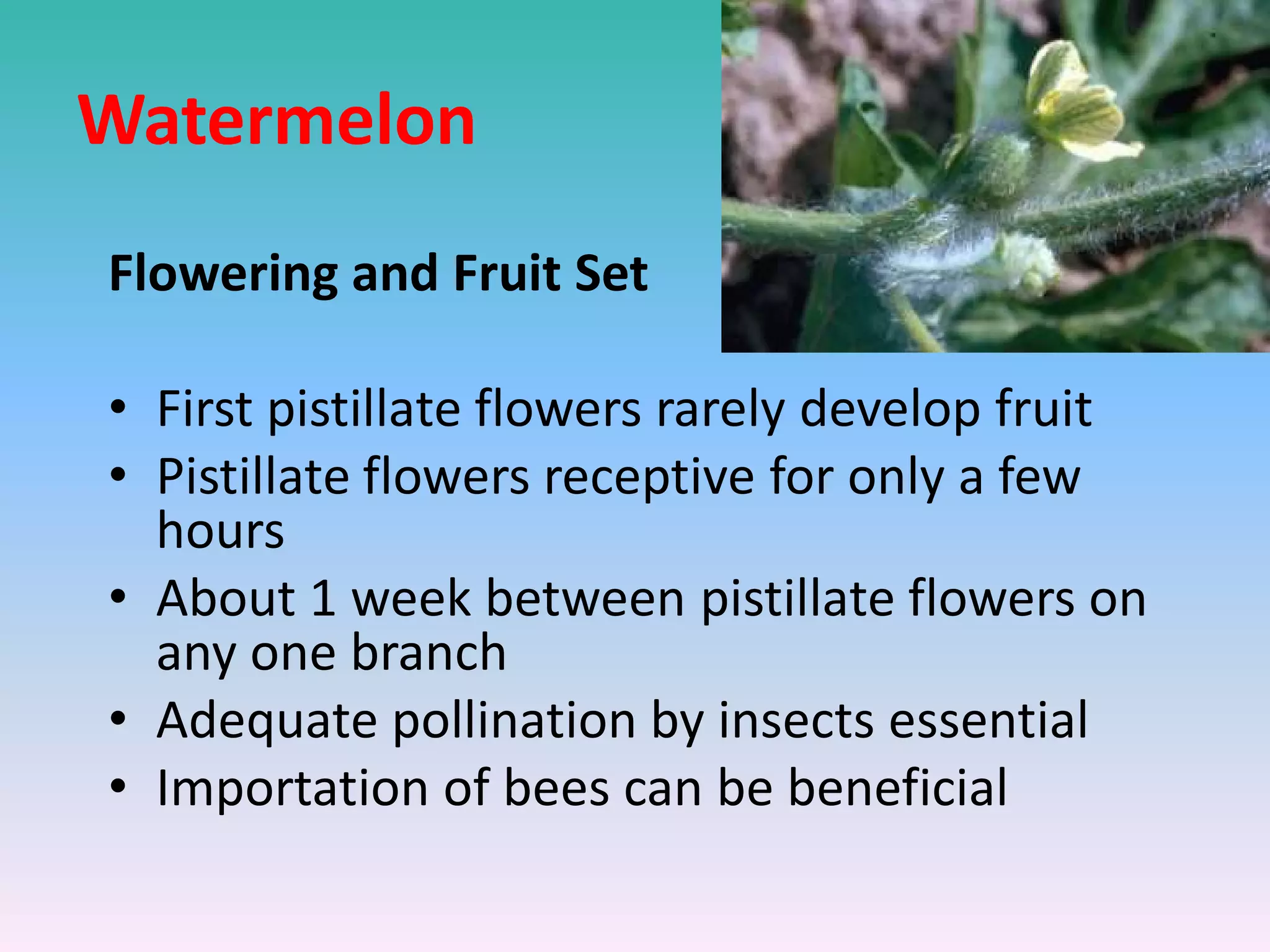
Flowering and Fruit Set
• First pistillate flowers rarely develop fruit
• Pistillate flowers receptive for only a few
hours
• About 1 week between pistillate flowers on
any one branch
• Adequate pollination by insects essential
• Importation of bees can be beneficial
Watermelon
Production – Disease Control
Fungal
Fusarium wilt – rotation (6-10 yrs), resistance
Physiological
Blossom-end rot – proper irrigation, calcium
Watermelon
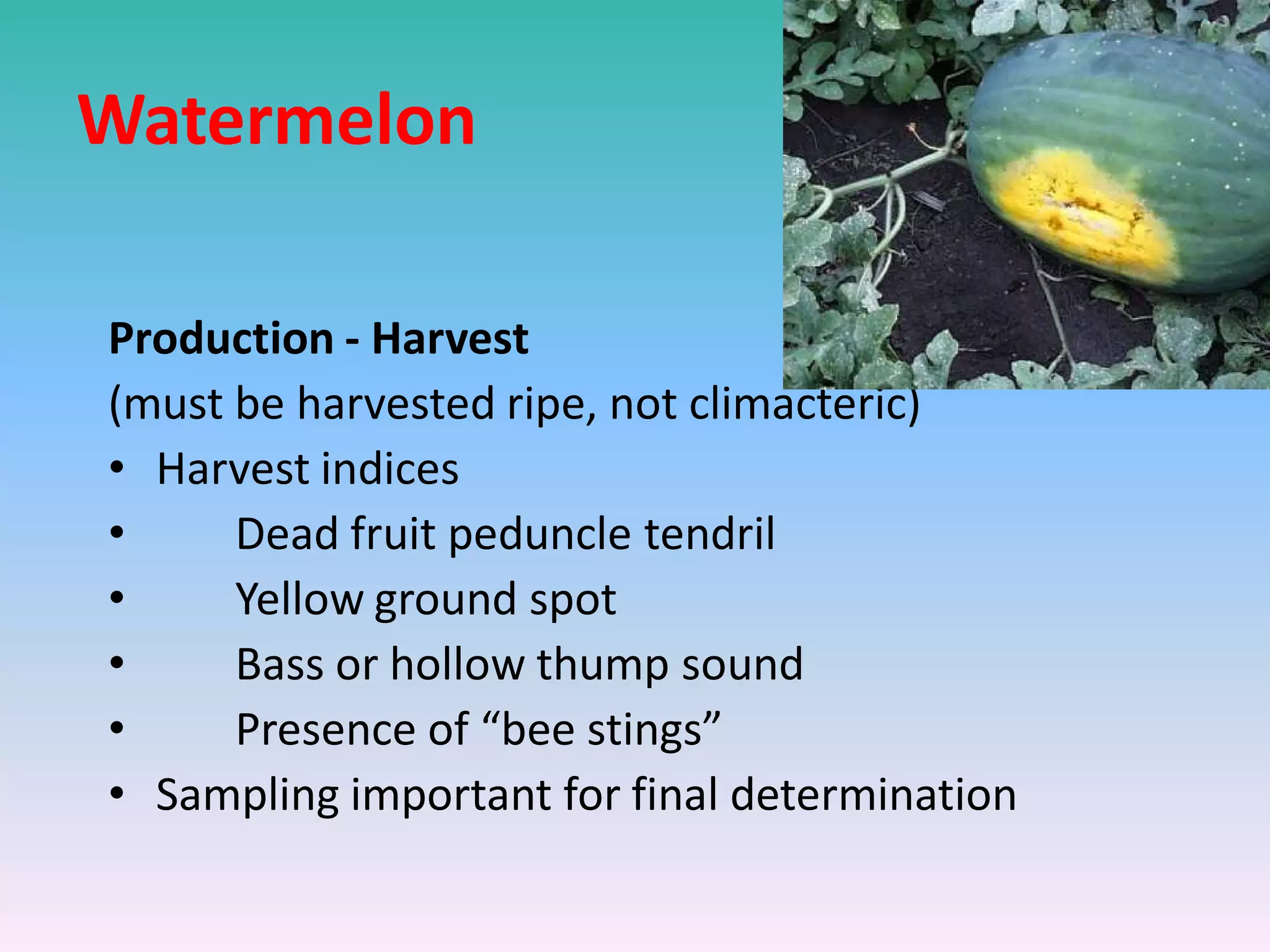
Production - Harvest
(must be harvested ripe, not climacteric)
• Harvest indices
• Dead fruit peduncle tendril
• Yellow ground spot
• Bass or hollow thump sound
• Presence of “bee stings”
• Sampling important for final determination
Watermelon
Quality and Grading
Based on:
• Sweetness (measured as soluble solids,
minimum 10.5 %)
• Size
• Color
• Texture
• Freedom from injury or rot
Watermelon
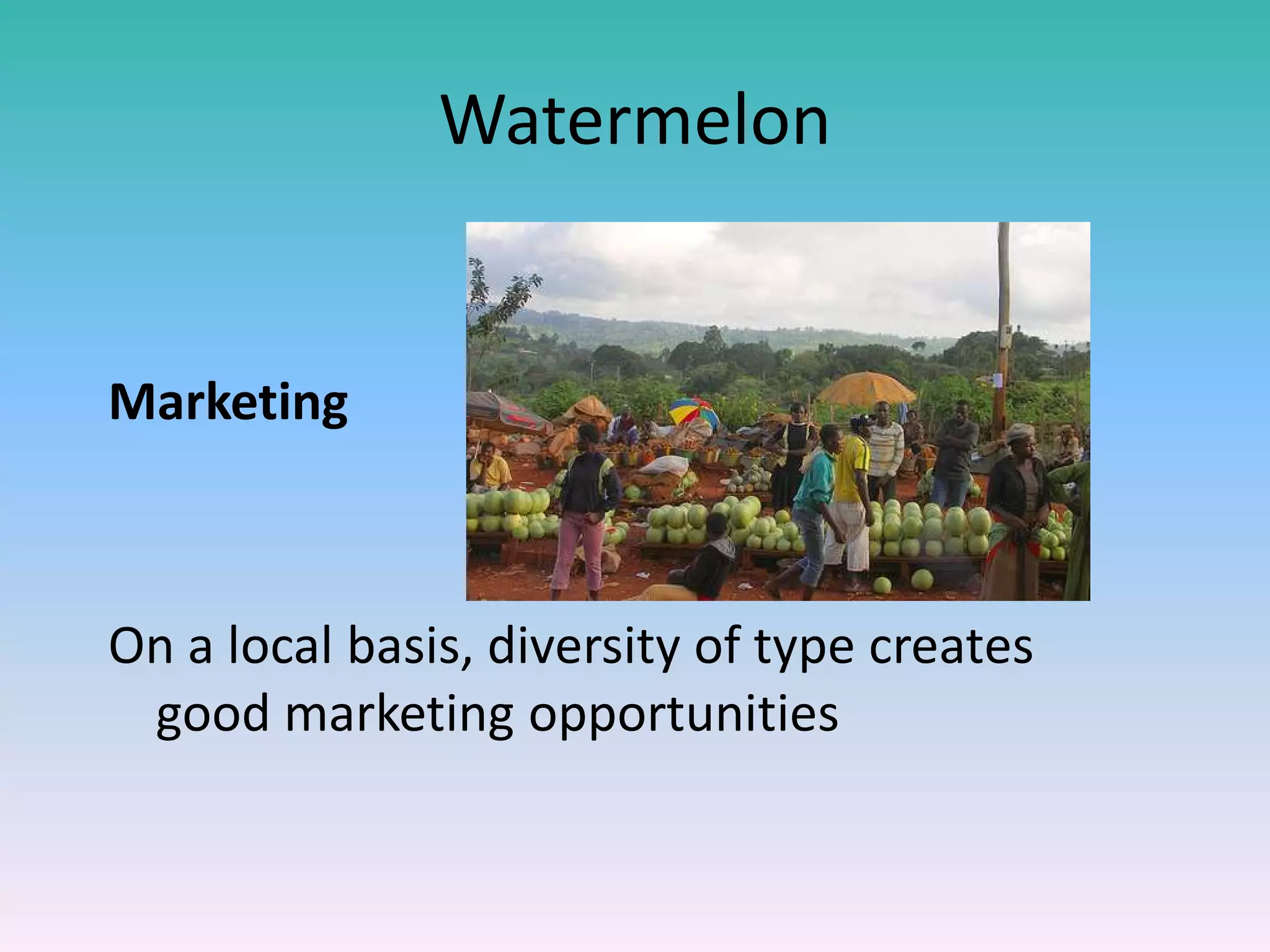
Marketing
On a local basis, diversity of type creates
good marketing opportunities
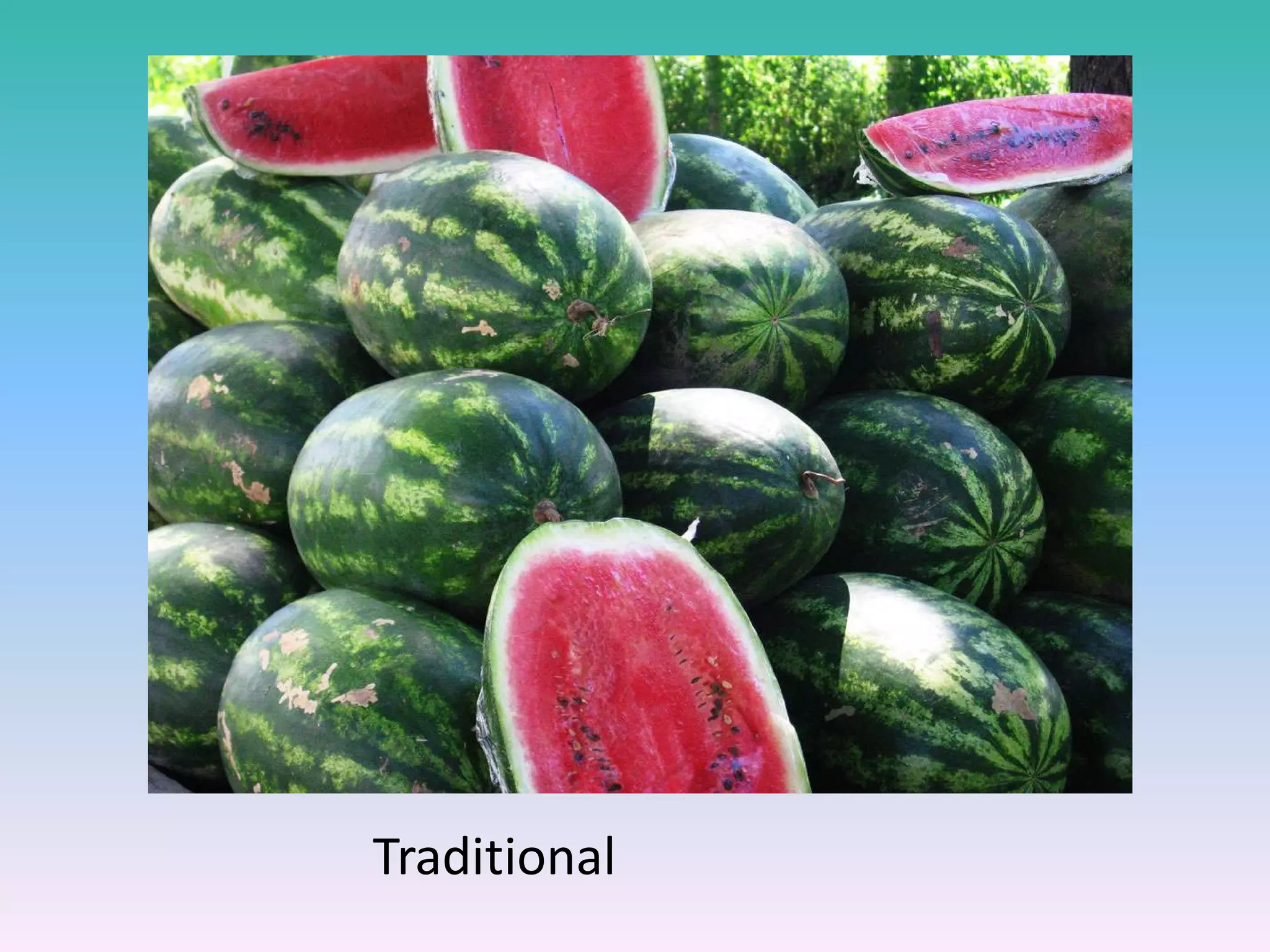
Traditional
Seedless
Yellow
flesh
Orange flesh
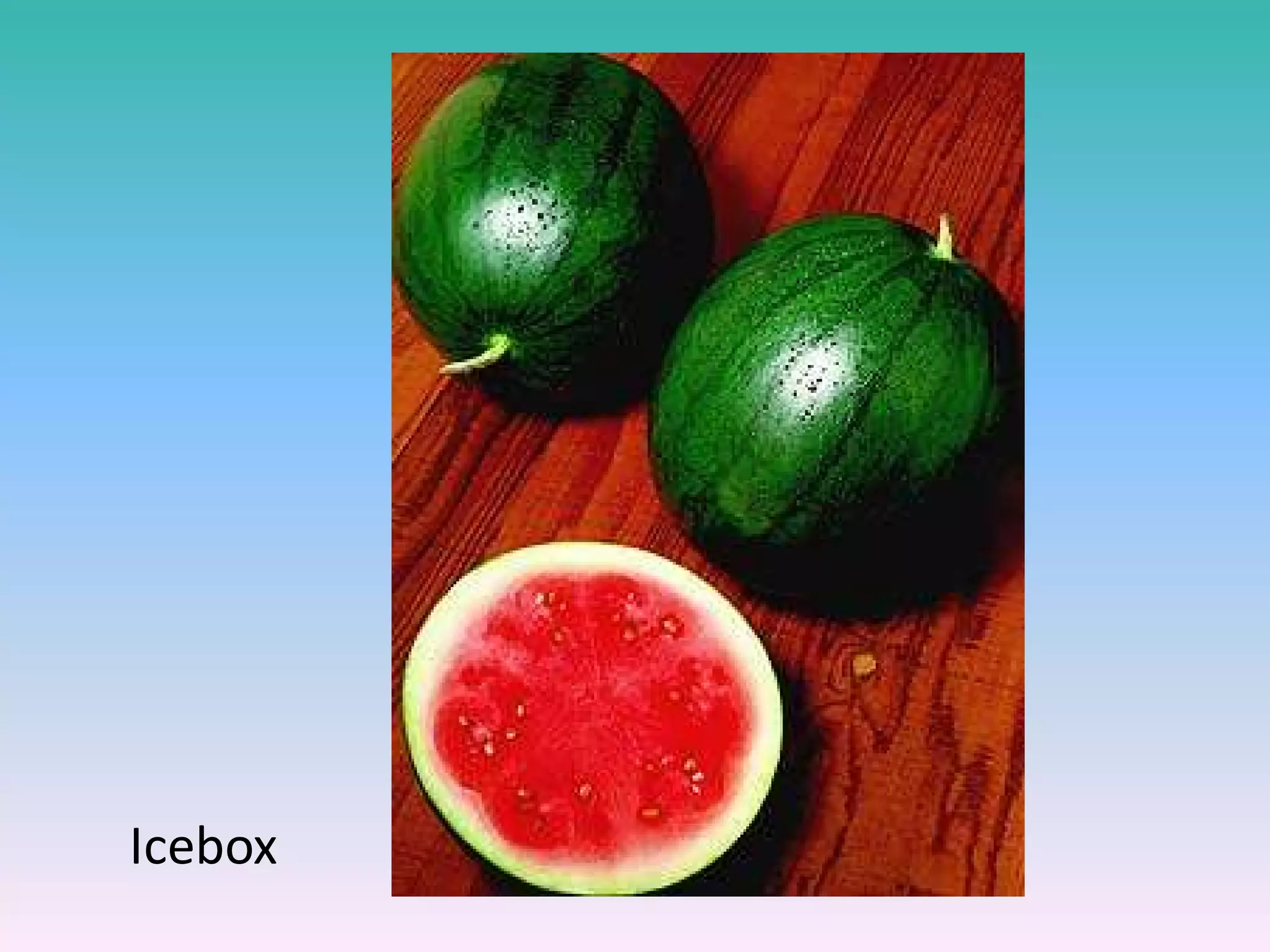
Icebox
Reproductive System
•Cultivated watermelon plants are monoecious, with separate male
and female flowers.
•Emasculation is not required, but selfing requires hand pollination.
•C. lanatus var. citroides plants are often androdioecious and
requires emasculation before cross-pollination.
•The ratio of male:female flowers vary but for most cultivars it is
between 4:1 and 7:1.
Male and female flowers of C. lanatus var. lanatus. Perfect flower of C. lanatus var. citroides.
Seedlings Trailed watermelon plants in the greenhouse
•The ideal greenhouse temperatures 70-85 ºF.
•During the winter months artificial light should be supplied (14 hours light: 10 h
darkness). Precautions should be taken to exclude pollinators (e.g. bees) from the
greenhouse. Preventative spray programs for diseases, especially powdery
mildew are essential.
•Using a shade cloth in the greenhouse will promote development of powdery
mildew, but is essential to keep greenhouse temperatures down in summer.
•Insects such as whiteflies should also be carefully controlled.
•All pollinations should be completed before 11 am.
•Female watermelon flowers generally stay open for only a single day and if the
flowers are not pollinated, then wait for the next female flower to open.
•Therefore plants should be inspected every day.
•When the petals of the bud turn yellow, you can expect the flower to open the
following day
Female and male flowers with petals starting to turn yellow, indicating that they will
open the next day.
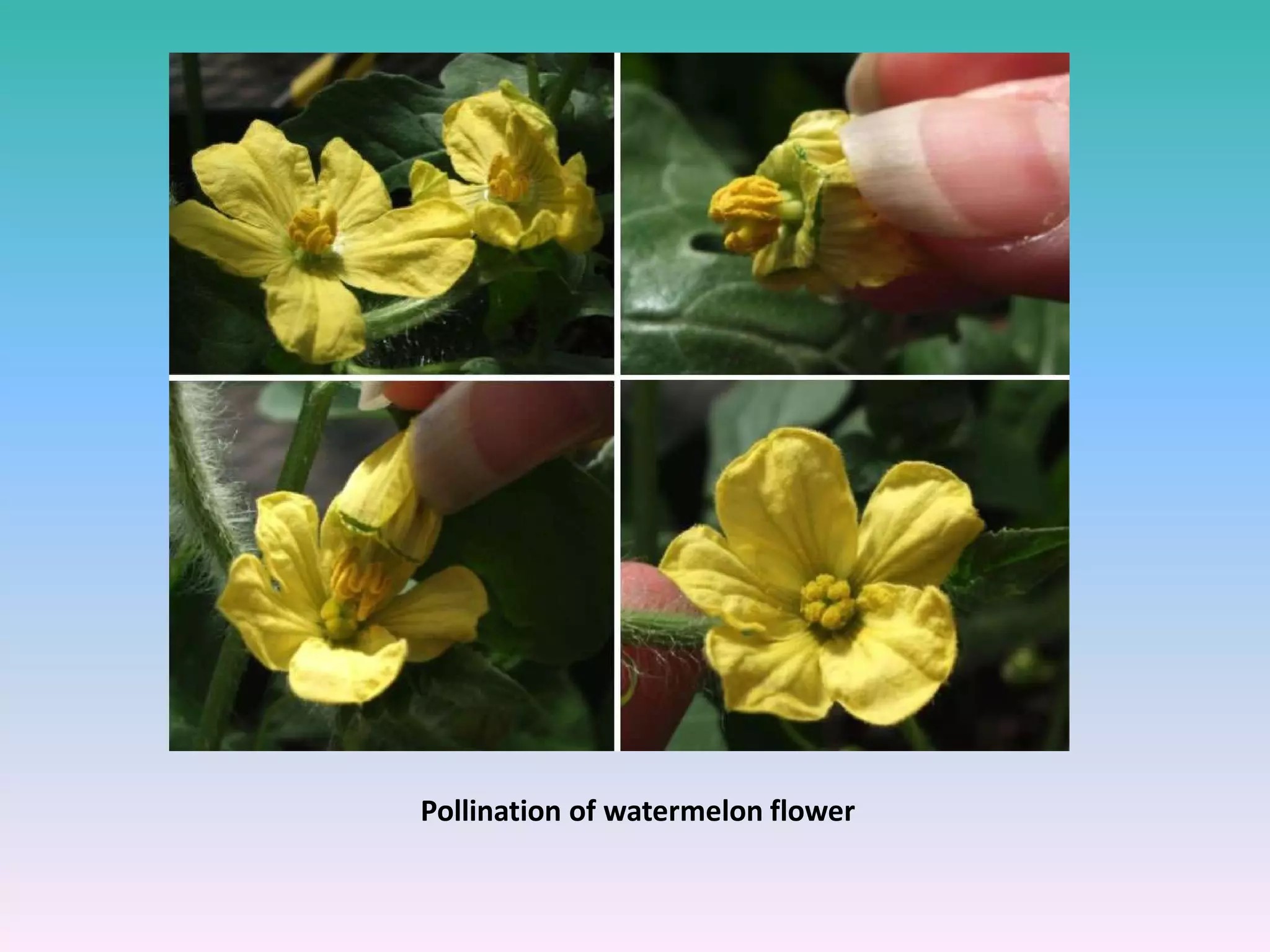
Pollination of watermelon flower
Pollination:
•Watermelon flowers are insect pollinated, mainly by honeybees.
•The plants are self-compatible, but because flowers are unisexual a
high percentage of cross-pollination occurs.
•It is essential to place colonies of bees hive on the perimeter of
watermelon fields.
•This is done to increase seed yield and it is also claimed that by
supplying a high population of pollinating insects adjacent to, or
within the seed production plot or field, the incidence of cross-
pollination with other fields of watermelon which may be a
different seed category or cultivar is minimized.
Isolation Distance of Watermelon:
a. Breeder/foundation seed – 800 m
b. Certified seed – 400 m
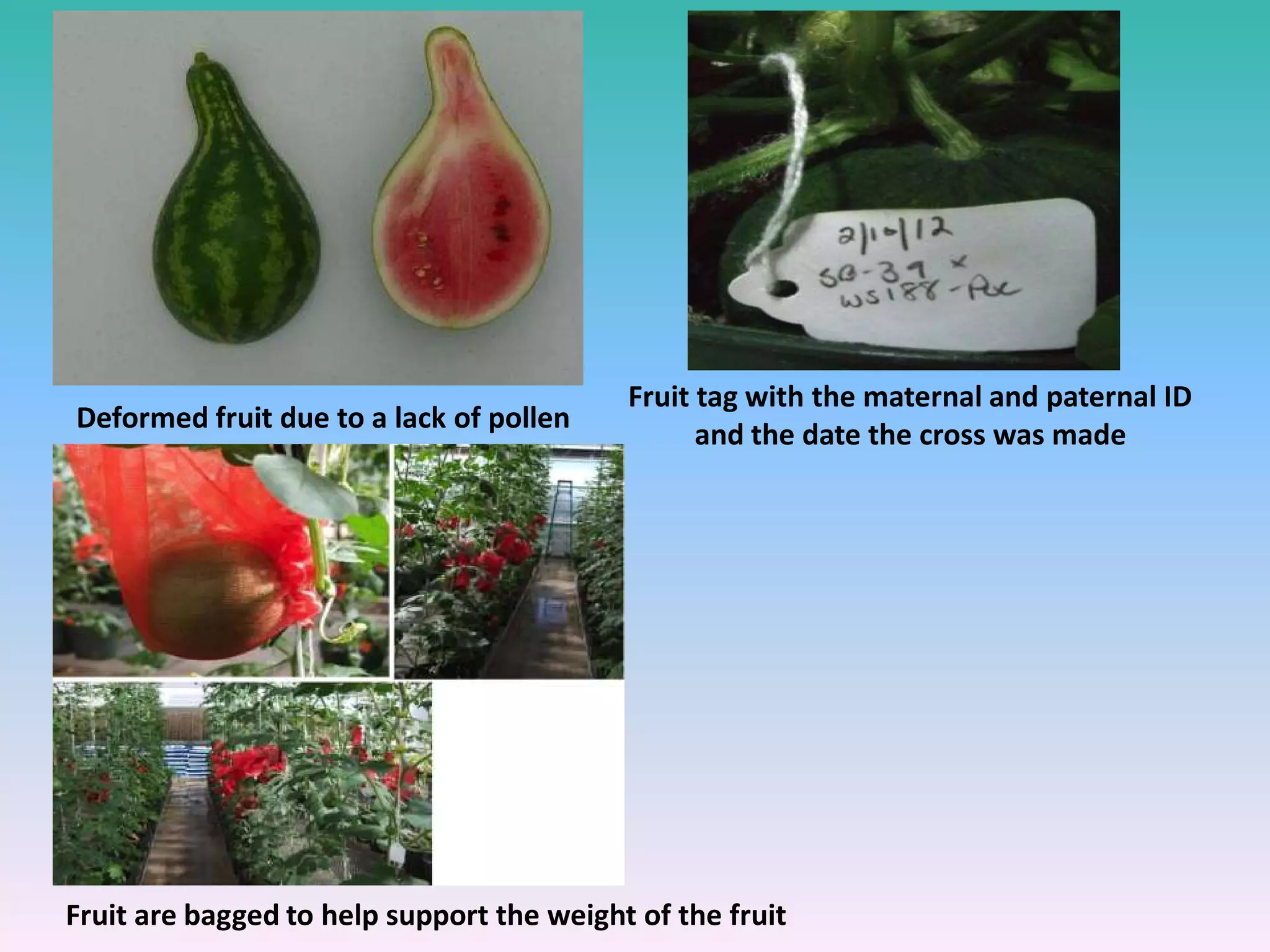
Deformed fruit due to a lack of pollen
Fruit tag with the maternal and paternal ID
and the date the cross was made
Fruit are bagged to help support the weight of the fruit
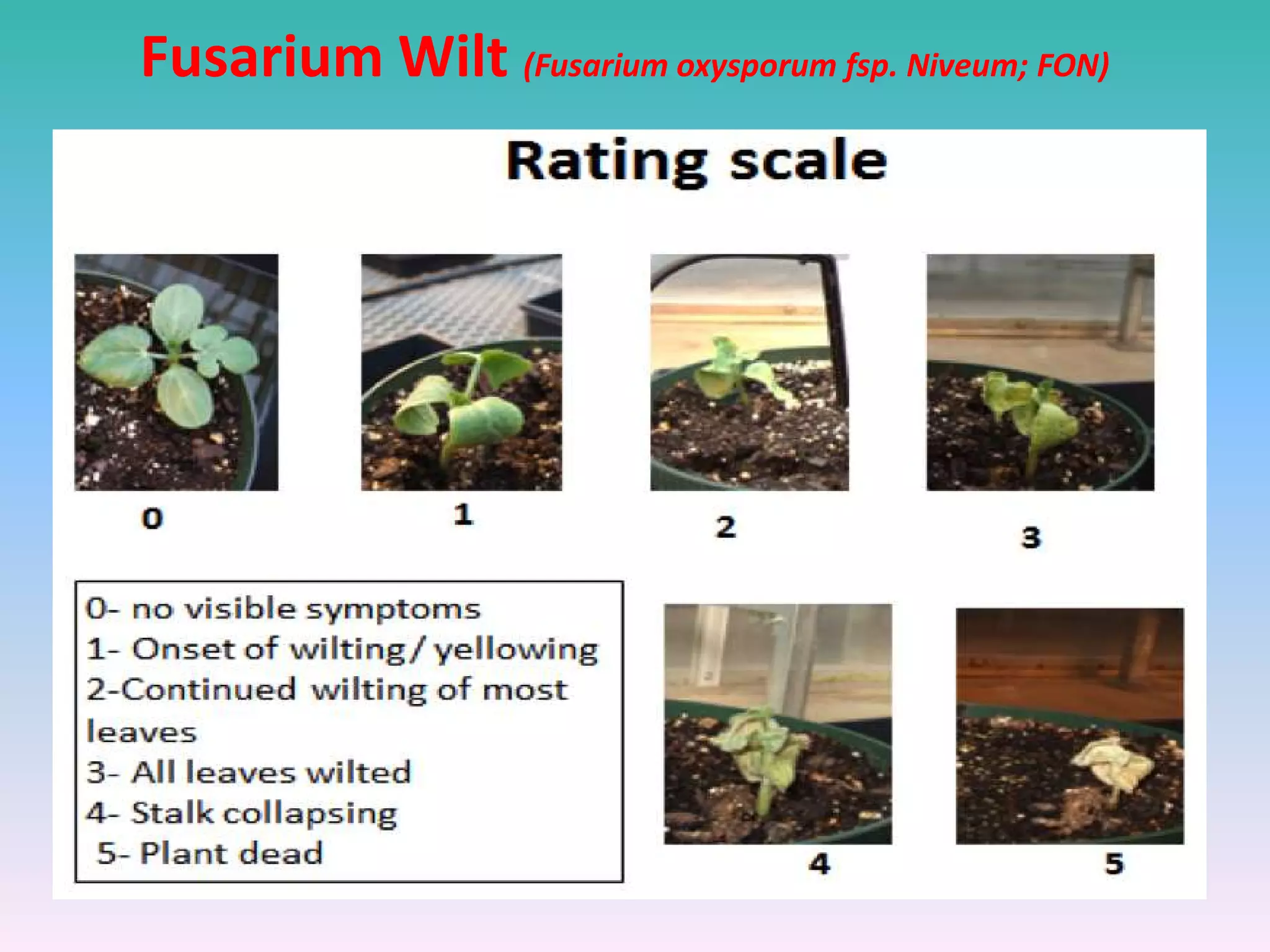
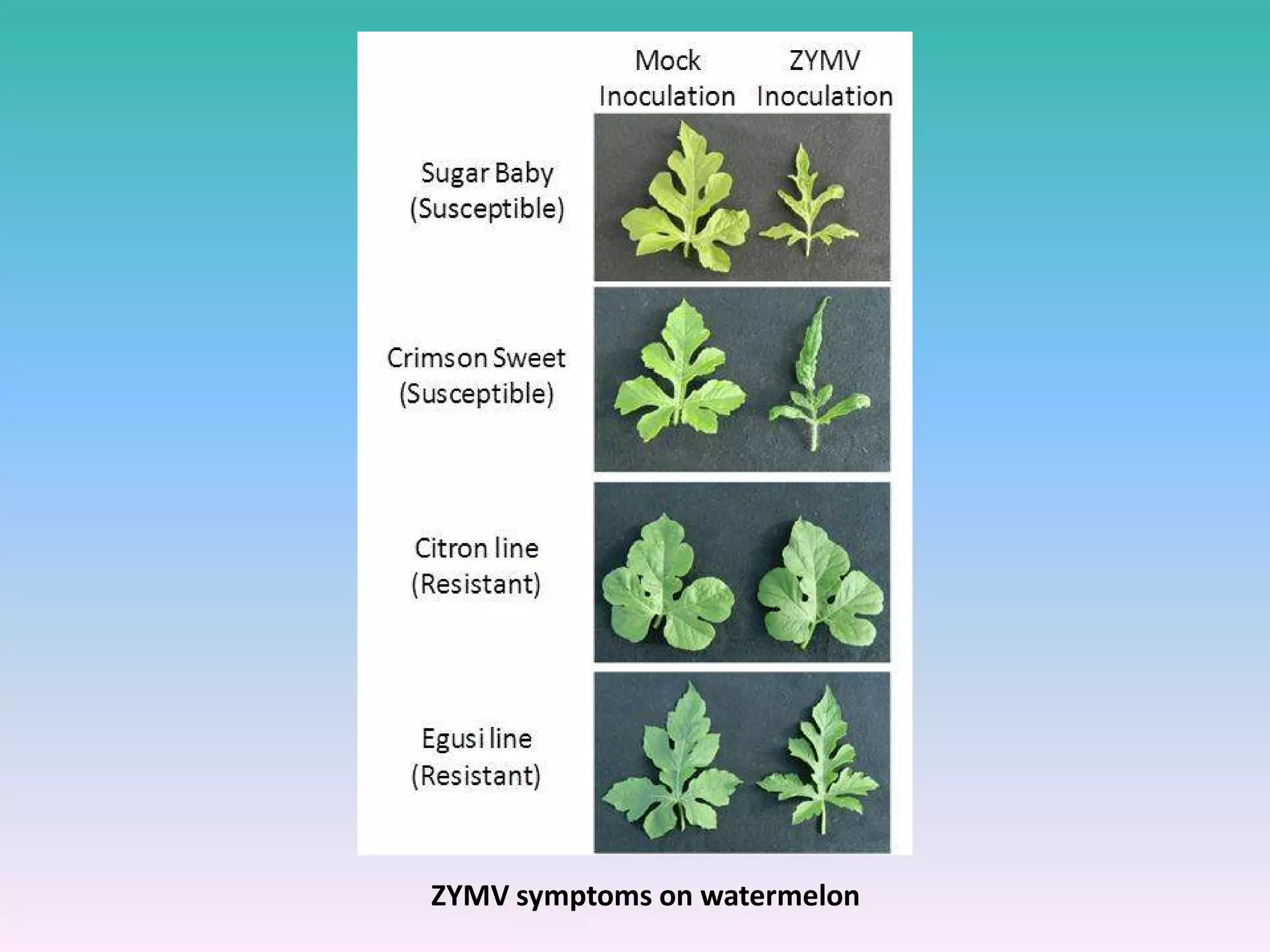
Fusarium Wilt (Fusarium oxysporum fsp. Niveum; FON)
Poty virus
There are three poty viruses that infect watermelon,
I. Zucchini yellow mosaic virus (ZYMV);
II. Papaya ringspot virus – watermelon strain (PRSV-W) and
III. Watermelon mosaic virus-2 (WMV-2).
Watermelon seedlings can be easily inoculated using mechanical
inoculation with infected squash or zucchini leaves ground up in 0.02
M phosphate buffer.
ZYMV symptoms on watermelon
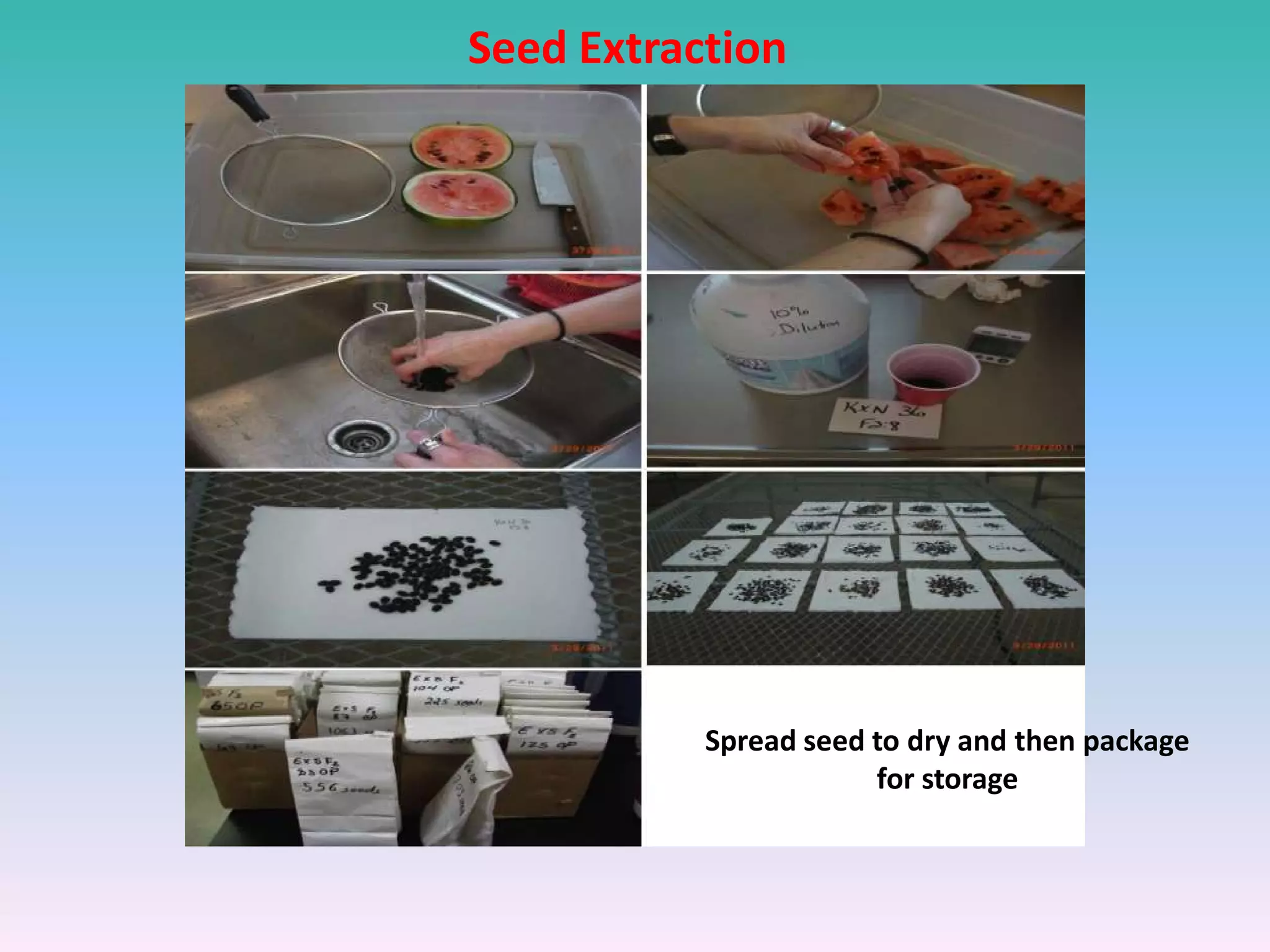
Seed Extraction
Spread seed to dry and then package
for storage
Germination test
Watermelon
Genetics and breeding
The bitter principle
Caused by cucurbitacins
Inherited by a single gene
Toxic to humans at high levels
Human population – tasters and non-tasters
Cultivar Description George (1999)
1. Ploidy
2. Season of cultivation: including suitability for intensive and/or extensive
protected cropping
3. Plant vigour
4. Foliage leaf protection against sun-scald
5. Fruit
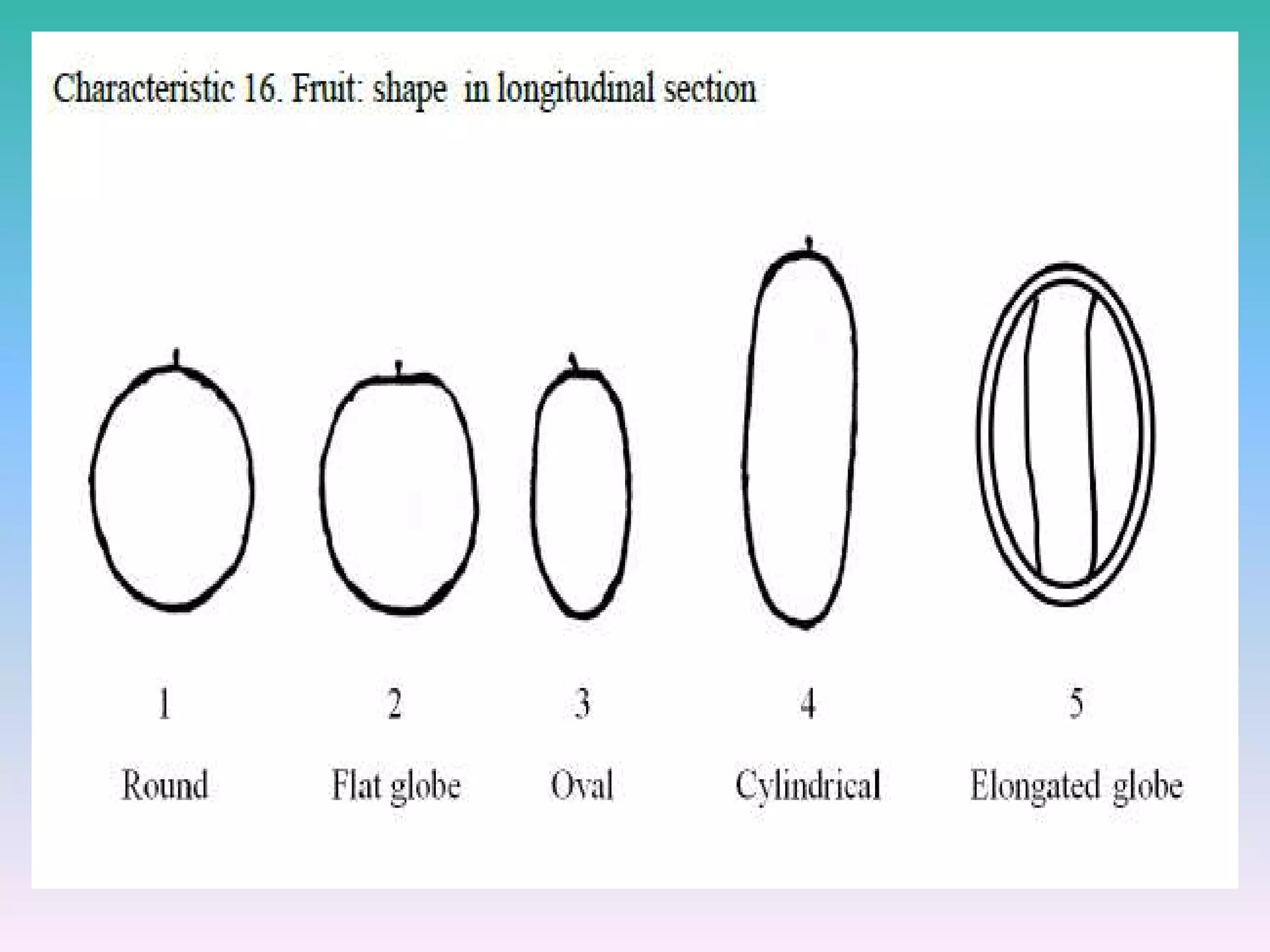
6. External shape round, oval or long
7. Relative size and weight at market maturity
8. Rind colour, bi-colour, colour pattern, striped
9. Internal thickness of rind, flesh colour, intensity of flesh colour (especially
towards the centre of the fruit), absence of central cavity
10. Seed external colour when mature, striped or single colour, relative size
11. Resistance to specific pests, pathogens or other disorders, e.g. Fusarium
sp., Didymella bryoniae (gummy stem blight) and Colletotrichum sp.
(anthracnose or sun-scald).
Breeding Goals of Watermelon
1. Earliness
2. Pistillate flowers at lower node number
3. Tough skinned fruits for long distance transportation
4. Dark red flesh
5. Firm and non-fibrous flesh texture
6. Black seed
7. Proper sugar to acid ratio
8. TSS content not less than 10%
9. Fruits with smaller and fewer seeds with attractive deep red flesh
10. Firm flesh
11. Intermediate fruit shape between typical long and round ones as most elongated
cultivars have a tendency to produce so called gourd neck fruit, whereas round-
fruited cultivars tend to be susceptible to ‘hollow heart’. The intermediate fruit
shape is the advantage of F1 hybrids between long and round-fruited parental lines.
12. High yield
13. Resistance to diseases, viz., Virus
14. Fusarium wilt (race 0, 1,2) Anthracnose, gummy stem blight Powdery mildew
15. Resistance to insects (cucumber aphid, fruitfly, cucumber beetle, red pumpkin
beetle)
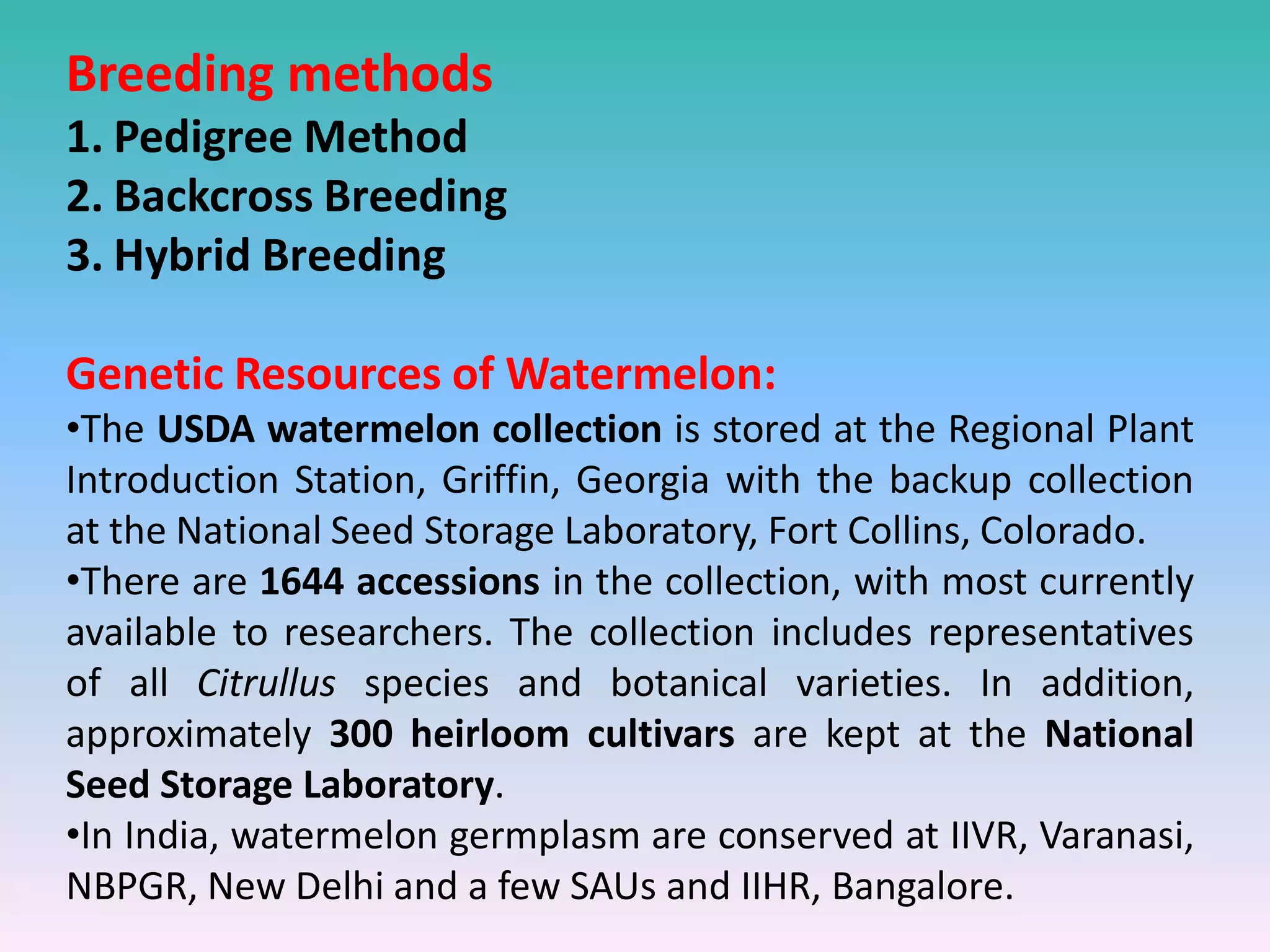
Breeding methods
1. Pedigree Method
2. Backcross Breeding
3. Hybrid Breeding
Genetic Resources of Watermelon:
•The USDA watermelon collection is stored at the Regional Plant
Introduction Station, Griffin, Georgia with the backup collection
at the National Seed Storage Laboratory, Fort Collins, Colorado.
•There are 1644 accessions in the collection, with most currently
available to researchers. The collection includes representatives
of all Citrullus species and botanical varieties. In addition,
approximately 300 heirloom cultivars are kept at the National
Seed Storage Laboratory.
•In India, watermelon germplasm are conserved at IIVR, Varanasi,
NBPGR, New Delhi and a few SAUs and IIHR, Bangalore.
Disease Resistance of Watermelon:
Fusarium wilt (Fusarium oxysporum f. sp nivenum)
Donors: Conqueror, Summit, Charleston Gray, Dixielee
Anthracnose (Colletotrichum lagenarium)
Donors: Congo, Fairfax, Charleston Gray, PI 189 225, PI 271 775, PI
271 778
Integration of New Biotechnologies into Breeding in
Watermelon
•Tissue Culture- For propagation of valuable plants such as tetraploid
parental inbreds, or triploid seedless hybrids.
•Marker Assisted Selection - Over 40 genes have been described in
watermelon. The genes are involved in disease resistance, flower type, fruit
shape, and fruit quality.
Markers can also be used to identify cultivars (DNA fingerprinting), and to
estimate the genetic relatedness of a set of cultivars or individuals in a
population.
•Genetic Transformation - Transformation of watermelon plants has been
used to confer virus resistance. e.g., squash mosaic virus (SQMV), cucumber
mosaic virus (CMV), papaya ring-spot virus-watermelon strain (PRSV-W),
zucchini yellow mosaic virus (ZYMV), and watermelon mosaic virus (WMV).
Transfer of virus coat protein genes into watermelon plants may confer
resistance to the virus disease, and provide plant breeders with new resistance
genes.
Varieties of Watermelon
Sugar Baby:
This is a variety originally introduced by M Hardin, Geary,
Oklahoma, USA in the year 1956. It is early and resistant to
drought. From USA, it was introduced to India by 1ARI. The
vines are medium long. Fruits are smaller (3-5 kg), round in
shape. The rind is bluish black. Flesh is sweet (11-13% TSS)
with deep pink colour. Seeds are brown and small. Yield
potential is 150 q/ha.
Asahi Yamato:
It is a mid-season Japanese introduction by IARI. Fruits are
medium weighing 6-8 kg. The fruits are round oblong, non-
striped with light green rind. Flesh is deep pink with 11-13%
TSS. Fruits ripen in about 95 days. Yield is 225 q/ha.
Pusa Bedana:
It is a seedless triploid variety of watermelon
developed at IARI, from a cross of Tetra-2 (4X) x
Pusa Rasaal (2X). The fruits have dark green skin
with faint stripes. Fruits are somewhat triangular in
shape with tough rind, red flesh and white
remnants of false seed.
TSS is 12-13%. Average fruit weight is 5-6 kg. The
number of fruits per vine varies from 3 to 6. It
takes 115-120 days for first fruit harvest. It could
not become popular due to irregular fruit shape
and high cost of seed. Now it is not available.
Arka Manik:
This has been bred at IIHR, Bangalore from a cross
of IIHR 21 x Crimson Sweet. Fruits are round to oval
with green rind, dark green stripes and weight is
about 6 kg. The flesh is deep crimson, with
granular texture. It is very sweet with 12-15% TSS.
It has multiple resistance to powdery mildew,
downy mildew and anthracnose. Yield potential is
500 q/ha.
Arka Jyoti:
It is a mid-season F1 hybrid cultivar evolved at IIHR,
Bangalore by crossing a local watermelon of Rajasthan
(IIHR 20) with Crimson Sweet. Fruit are oval and deep blue
angular stripes. Average fruit weight is 5-6 kg. Flesh is
bright crimson, sweet with 11-13% TSS. Yield potential is
600 q/ha.
Durgapura Meetha:
It is a late maturing cultivar (125 days). Fruit is round and
light-green. Rind is thick with good keeping quality. Flesh is
sweet with TSS around 11% and dark-red colour. Average
fruit weight is 6-8 kg. Seeds have black tip and margin.
Yield is 40-45 tonnes/ha. It is released by Agricultural
Research Station, Durgapura, Rajasthan.
Durgapura Kesar:
It is a late cultivar. Fruit weight is 4-5 kg. Skin is green with
stripes. Flesh is yellow in colour, and moderately sweet.
Seeds are large. It is released by Agricultural Research
Station, Durgapura, Rajasthan.
Local cultivars
•Farrukhabadi, Moradabadi of Uttar Pradesh have fruits with dark-
green colour or pale-green with black stripes, oblong to round shape
weighing 8-10 kg with thick rind.
•Mateera cultivar in Rajasthan is grown in rainy season around
Bikaner
•Katagolan is grown in Jamuna river-bed whose flesh is not sweet
but it keeps well for over 2-3 months at ambient temperature during
July-September.
Hybrids (by private seed companies)
•NS 295, Tambola, Madhuri (all Jubilee segment, oval, 6-10 kg
fruits, striped rind, red flesh),
•Black Magic, Black Sugar, Augusta (spherical, 6-8 kg, black rind,
Sugar Baby type) and
•Kiran and Rasraj (3-4 kg, oblong, green skin/striped skin, ice box
type).
All these hybrids are sweeet, juicy (12-13% TSS) and have high
shelf- life and transportability. With the introduction of these
hybrids, Indian consumers are enjoying delicious watermelons
round the year. This is the impact of hybrid technology for anybody
to see.
Breeding Strategies: Triploid (Seedless) Watermelon
Seedless watermelon fruit is produced by stimulative
parthenogenesis when sterile hybrid triploid watermelon plants are
pollinated by diploid plants.
Steps in development of triploid hybrid watermelon cultivars
(i) Production of tetraploids from diploids using colchicine or
dinitroaniline
(ii) Development of stable inbred tetraploid lines and
(iii) Develop hybrid triploid cultivars.
Limiting factor in seedless watermelon production
(i) Susceptibility of triploid cultivars to Fusarium wilt.
(ii) Resistance to Fusarium wilt races 0 and 1 is common in diploid
(seeded) cultivars.
Triploid watermelon cultivar development and production.
Watermelon
Production of Seedless Seeds
Tetraploid Parent X Diploid Parent
(hand pollination)
Triploid Seed
(Produces seedless melon)
Commercial Seed Production of Triploid Watermelon:
1. Through Manual Pollination:
•In this method tetraploid and diploid lines are planted in alternate rows or in
alternating hills within each row. Female buds are capped in evening.
•Next morning, freshly opened staminate flowers are collected from diploid male
parent and are used to pollinate the pistillate flowers bagged/covered previous
evening.
•Again the pollinated flowers are covered to prevent self or sib-pollination.
•The flowers should be tagged with the date so that the fruit can be harvested after
40-50 days.
2. Pollination through Bees in Isolation Block:
•In this method, tetraploid (seed parent) and diploid (pollen parent) are planted in
alternate rows in isolation block.
•During flowering, all staminate flowers from seed parent are removed for a period
lasting several weeks.
•Pistillate flowers on female (seed parent/tetraploid line) are tagged with date to
ensure their harvesting after 40-50 days after anthesis.
Life is like eating a watermelon, you know you're going to
get some seeds; just spit them out and take another
bite.
Jeff Steinmann
Men and Melons are hard to know.
Benjamin Franklin
A watermelon that breaks open by itself tastes better
than one cut with a knife.
Hualing Nieh Engle

Watermelon breeding

  • 1.
    Watermelon Breeding Indranil Bhattacharjee Scientist Directorateof Research,SHUATS Prayagraj When one has tasted watermelon, he knows what the angels eat. Mark Twain
  • 2.
    Common Name: Watermelon ScientificName: Citrullus lanatus Family: Cucurbitaceae Chromosome Complement (2n = 2x = 22) Classification (breeding standpoint) 1. Sweet-fleshed cultivated tyes (C. lanatus var. lanatus), 2. Citron-types (C. lanatus var. citroides) and 3. Egusi-types (C. lanatus subsp. mucosospermus). Related species: melons, gourds, luffa, cucumber
  • 3.
    Origin of Watermelon: •Primarycentre of diversity - Southern Africa (where wild forms are still found). •Secondary centre - China (related species can be found in India). •Domestication occurred in Egypt and India. •Common Areas of Cultivation - Middle East, the United States of America (Florida, Georgia, California, Texas), Africa, India, Japan and Europe
  • 4.
    Watermelon Origin and Domestication •Indigenous to south-central Africa (dry savannah regions) • Ancient cultivation in the Mediterranean • Taken into China from India • Unknown in Europe before 1600 AD • Taken in North America by 1630 AD
  • 6.
    Interspecific crosses •Interspecific crossesin Citrullus are possible to varying degrees (Robinson and Decker-Walters, 1997), but not unambiguous. e.g., crosses between C. lanatus and C. colocynthis have been successful, but fruit set was low and directionality of the crosses influenced results (Sain et al., 2002). •Infra-specific crossed within C. lanatus is relatively easy, however, high levels of marker segregation distortion, low fruit set and diminished pollen viability have been observed (Hawkins et al., 2001; Levi et al., 2004b; Sandlin et al., 2012; Ren et al., 2012).
  • 7.
    Watermelon Market Evolution • Importantsource of water for foragers in savannah regions • Became a staple of subsistence farmers – nutrition, water storage • Became an item of local trade • Now an important cash crop used in worldwide export activity
  • 8.
    Watermelon Major Watermelon Exporters ExporterSold to: Mexico US, Canada Spain Europe Turkey Europe Panama US, Canada Italy Europe
  • 9.
    Watermelon Use and importance •Nutritionally lean due to high water content • Good source of carbohydrates, energy, and calories • Moderate source of vitamin A and vitamin C
  • 10.
    Watermelon flesh, raw Nutritionalvalue per 100 g (3.5 oz) Energy 127 kJ (30 kcal) Carbohydrates 7.55 g Sugars 6.2 g Dietary fiber 0.4 g Fat 0.15 g Protein 0.61 g Vitamins Quantity %DV† Vitamin A equiv. beta-Carotene 4% 28 μg 3% 303 μg Thiamine (B1) 3% 0.033 mg Riboflavin (B2) 2% 0.021 mg Niacin (B3) 1% 0.178 mg Pantothenic acid (B5) 4% 0.221 mg Vitamin B6 3% 0.045 mg Choline 1% 4.1 mg Vitamin C 10% 8.1 mg Minerals Quantity %DV† Calcium 1% 7 mg Iron 2% 0.24 mg Magnesium 3% 10 mg Manganese 2% 0.038 mg Phosphorus 2% 11 mg Potassium 2% 112 mg Sodium 0% 1 mg Zinc 1% 0.1 mg Other constituents Quantity Water 91.45 g Lycopene 4532 µg
  • 11.
    Watermelon Subsistence Production • Mostlylocated in Africa • Historical uses remain in play • Production during dry season • Supplemental nutrition to augment staple crops such as cassava, sweet potatoes, yams • Production very labor intensive
  • 12.
    Watermelon • Watermelons areamong the most popular cultigens for forager-farmers in the Kalahari for the following reasons: "First, they provide a source of water; second, they are relatively drought-resistant, especially when compared to seed crops like sorghum and maize; and third, dried melons are an article of food for both humans and livestock and, after they have been cut into strips and hung on thorn trees to dry, they are easy to store" (Hitchcock and Ebert 1984).
  • 13.
    Watermelon Market Garden Production •Located worldwide • Opportunities for market identified products • Small producers participate in export through wholesalers • Production very labor intensive • Crop not amenable to vertical production systems
  • 15.
    Watermelon Modern-Intensive Production • Locatedthroughout northern hemisphere (Australia) • Practiced in many undeveloped countries • Marketed through major shippers/wholesalers • Seasonal production dictated by price • Harvest labor intensive
  • 16.
    Watermelon Climate and soils •Warm season, tender crop • Cannot withstand frost • Susceptible to chilling injury (<45 degrees) • Optimum temperatures 70-100 degrees • Produces best quality in climates with low humidity • Grows in most soils, earlier in light soils
  • 17.
  • 18.
    Watermelon Flowering and FruitSet • First pistillate flowers rarely develop fruit • Pistillate flowers receptive for only a few hours • About 1 week between pistillate flowers on any one branch • Adequate pollination by insects essential • Importation of bees can be beneficial
  • 19.
    Watermelon Production – DiseaseControl Fungal Fusarium wilt – rotation (6-10 yrs), resistance Physiological Blossom-end rot – proper irrigation, calcium
  • 20.
    Watermelon Production - Harvest (mustbe harvested ripe, not climacteric) • Harvest indices • Dead fruit peduncle tendril • Yellow ground spot • Bass or hollow thump sound • Presence of “bee stings” • Sampling important for final determination
  • 21.
    Watermelon Quality and Grading Basedon: • Sweetness (measured as soluble solids, minimum 10.5 %) • Size • Color • Texture • Freedom from injury or rot
  • 22.
    Watermelon Marketing On a localbasis, diversity of type creates good marketing opportunities
  • 23.
  • 24.
  • 25.
  • 26.
  • 27.
  • 29.
    Reproductive System •Cultivated watermelonplants are monoecious, with separate male and female flowers. •Emasculation is not required, but selfing requires hand pollination. •C. lanatus var. citroides plants are often androdioecious and requires emasculation before cross-pollination. •The ratio of male:female flowers vary but for most cultivars it is between 4:1 and 7:1. Male and female flowers of C. lanatus var. lanatus. Perfect flower of C. lanatus var. citroides.
  • 30.
    Seedlings Trailed watermelonplants in the greenhouse •The ideal greenhouse temperatures 70-85 ºF. •During the winter months artificial light should be supplied (14 hours light: 10 h darkness). Precautions should be taken to exclude pollinators (e.g. bees) from the greenhouse. Preventative spray programs for diseases, especially powdery mildew are essential. •Using a shade cloth in the greenhouse will promote development of powdery mildew, but is essential to keep greenhouse temperatures down in summer. •Insects such as whiteflies should also be carefully controlled. •All pollinations should be completed before 11 am.
  • 31.
    •Female watermelon flowersgenerally stay open for only a single day and if the flowers are not pollinated, then wait for the next female flower to open. •Therefore plants should be inspected every day. •When the petals of the bud turn yellow, you can expect the flower to open the following day Female and male flowers with petals starting to turn yellow, indicating that they will open the next day.
  • 32.
  • 33.
    Pollination: •Watermelon flowers areinsect pollinated, mainly by honeybees. •The plants are self-compatible, but because flowers are unisexual a high percentage of cross-pollination occurs. •It is essential to place colonies of bees hive on the perimeter of watermelon fields. •This is done to increase seed yield and it is also claimed that by supplying a high population of pollinating insects adjacent to, or within the seed production plot or field, the incidence of cross- pollination with other fields of watermelon which may be a different seed category or cultivar is minimized. Isolation Distance of Watermelon: a. Breeder/foundation seed – 800 m b. Certified seed – 400 m
  • 35.
    Deformed fruit dueto a lack of pollen Fruit tag with the maternal and paternal ID and the date the cross was made Fruit are bagged to help support the weight of the fruit
  • 36.
    Fusarium Wilt (Fusariumoxysporum fsp. Niveum; FON)
  • 37.
    Poty virus There arethree poty viruses that infect watermelon, I. Zucchini yellow mosaic virus (ZYMV); II. Papaya ringspot virus – watermelon strain (PRSV-W) and III. Watermelon mosaic virus-2 (WMV-2). Watermelon seedlings can be easily inoculated using mechanical inoculation with infected squash or zucchini leaves ground up in 0.02 M phosphate buffer.
  • 38.
    ZYMV symptoms onwatermelon
  • 39.
    Seed Extraction Spread seedto dry and then package for storage
  • 40.
  • 41.
    Watermelon Genetics and breeding Thebitter principle Caused by cucurbitacins Inherited by a single gene Toxic to humans at high levels Human population – tasters and non-tasters
  • 43.
    Cultivar Description George(1999) 1. Ploidy 2. Season of cultivation: including suitability for intensive and/or extensive protected cropping 3. Plant vigour 4. Foliage leaf protection against sun-scald 5. Fruit 6. External shape round, oval or long 7. Relative size and weight at market maturity 8. Rind colour, bi-colour, colour pattern, striped 9. Internal thickness of rind, flesh colour, intensity of flesh colour (especially towards the centre of the fruit), absence of central cavity 10. Seed external colour when mature, striped or single colour, relative size 11. Resistance to specific pests, pathogens or other disorders, e.g. Fusarium sp., Didymella bryoniae (gummy stem blight) and Colletotrichum sp. (anthracnose or sun-scald).
  • 48.
    Breeding Goals ofWatermelon 1. Earliness 2. Pistillate flowers at lower node number 3. Tough skinned fruits for long distance transportation 4. Dark red flesh 5. Firm and non-fibrous flesh texture 6. Black seed 7. Proper sugar to acid ratio 8. TSS content not less than 10% 9. Fruits with smaller and fewer seeds with attractive deep red flesh 10. Firm flesh 11. Intermediate fruit shape between typical long and round ones as most elongated cultivars have a tendency to produce so called gourd neck fruit, whereas round- fruited cultivars tend to be susceptible to ‘hollow heart’. The intermediate fruit shape is the advantage of F1 hybrids between long and round-fruited parental lines. 12. High yield 13. Resistance to diseases, viz., Virus 14. Fusarium wilt (race 0, 1,2) Anthracnose, gummy stem blight Powdery mildew 15. Resistance to insects (cucumber aphid, fruitfly, cucumber beetle, red pumpkin beetle)
  • 49.
    Breeding methods 1. PedigreeMethod 2. Backcross Breeding 3. Hybrid Breeding Genetic Resources of Watermelon: •The USDA watermelon collection is stored at the Regional Plant Introduction Station, Griffin, Georgia with the backup collection at the National Seed Storage Laboratory, Fort Collins, Colorado. •There are 1644 accessions in the collection, with most currently available to researchers. The collection includes representatives of all Citrullus species and botanical varieties. In addition, approximately 300 heirloom cultivars are kept at the National Seed Storage Laboratory. •In India, watermelon germplasm are conserved at IIVR, Varanasi, NBPGR, New Delhi and a few SAUs and IIHR, Bangalore.
  • 50.
    Disease Resistance ofWatermelon: Fusarium wilt (Fusarium oxysporum f. sp nivenum) Donors: Conqueror, Summit, Charleston Gray, Dixielee Anthracnose (Colletotrichum lagenarium) Donors: Congo, Fairfax, Charleston Gray, PI 189 225, PI 271 775, PI 271 778
  • 51.
    Integration of NewBiotechnologies into Breeding in Watermelon •Tissue Culture- For propagation of valuable plants such as tetraploid parental inbreds, or triploid seedless hybrids. •Marker Assisted Selection - Over 40 genes have been described in watermelon. The genes are involved in disease resistance, flower type, fruit shape, and fruit quality. Markers can also be used to identify cultivars (DNA fingerprinting), and to estimate the genetic relatedness of a set of cultivars or individuals in a population. •Genetic Transformation - Transformation of watermelon plants has been used to confer virus resistance. e.g., squash mosaic virus (SQMV), cucumber mosaic virus (CMV), papaya ring-spot virus-watermelon strain (PRSV-W), zucchini yellow mosaic virus (ZYMV), and watermelon mosaic virus (WMV). Transfer of virus coat protein genes into watermelon plants may confer resistance to the virus disease, and provide plant breeders with new resistance genes.
  • 52.
    Varieties of Watermelon SugarBaby: This is a variety originally introduced by M Hardin, Geary, Oklahoma, USA in the year 1956. It is early and resistant to drought. From USA, it was introduced to India by 1ARI. The vines are medium long. Fruits are smaller (3-5 kg), round in shape. The rind is bluish black. Flesh is sweet (11-13% TSS) with deep pink colour. Seeds are brown and small. Yield potential is 150 q/ha. Asahi Yamato: It is a mid-season Japanese introduction by IARI. Fruits are medium weighing 6-8 kg. The fruits are round oblong, non- striped with light green rind. Flesh is deep pink with 11-13% TSS. Fruits ripen in about 95 days. Yield is 225 q/ha.
  • 53.
    Pusa Bedana: It isa seedless triploid variety of watermelon developed at IARI, from a cross of Tetra-2 (4X) x Pusa Rasaal (2X). The fruits have dark green skin with faint stripes. Fruits are somewhat triangular in shape with tough rind, red flesh and white remnants of false seed. TSS is 12-13%. Average fruit weight is 5-6 kg. The number of fruits per vine varies from 3 to 6. It takes 115-120 days for first fruit harvest. It could not become popular due to irregular fruit shape and high cost of seed. Now it is not available. Arka Manik: This has been bred at IIHR, Bangalore from a cross of IIHR 21 x Crimson Sweet. Fruits are round to oval with green rind, dark green stripes and weight is about 6 kg. The flesh is deep crimson, with granular texture. It is very sweet with 12-15% TSS. It has multiple resistance to powdery mildew, downy mildew and anthracnose. Yield potential is 500 q/ha.
  • 54.
    Arka Jyoti: It isa mid-season F1 hybrid cultivar evolved at IIHR, Bangalore by crossing a local watermelon of Rajasthan (IIHR 20) with Crimson Sweet. Fruit are oval and deep blue angular stripes. Average fruit weight is 5-6 kg. Flesh is bright crimson, sweet with 11-13% TSS. Yield potential is 600 q/ha. Durgapura Meetha: It is a late maturing cultivar (125 days). Fruit is round and light-green. Rind is thick with good keeping quality. Flesh is sweet with TSS around 11% and dark-red colour. Average fruit weight is 6-8 kg. Seeds have black tip and margin. Yield is 40-45 tonnes/ha. It is released by Agricultural Research Station, Durgapura, Rajasthan. Durgapura Kesar: It is a late cultivar. Fruit weight is 4-5 kg. Skin is green with stripes. Flesh is yellow in colour, and moderately sweet. Seeds are large. It is released by Agricultural Research Station, Durgapura, Rajasthan.
  • 57.
    Local cultivars •Farrukhabadi, Moradabadiof Uttar Pradesh have fruits with dark- green colour or pale-green with black stripes, oblong to round shape weighing 8-10 kg with thick rind. •Mateera cultivar in Rajasthan is grown in rainy season around Bikaner •Katagolan is grown in Jamuna river-bed whose flesh is not sweet but it keeps well for over 2-3 months at ambient temperature during July-September.
  • 58.
    Hybrids (by privateseed companies) •NS 295, Tambola, Madhuri (all Jubilee segment, oval, 6-10 kg fruits, striped rind, red flesh), •Black Magic, Black Sugar, Augusta (spherical, 6-8 kg, black rind, Sugar Baby type) and •Kiran and Rasraj (3-4 kg, oblong, green skin/striped skin, ice box type). All these hybrids are sweeet, juicy (12-13% TSS) and have high shelf- life and transportability. With the introduction of these hybrids, Indian consumers are enjoying delicious watermelons round the year. This is the impact of hybrid technology for anybody to see.
  • 66.
    Breeding Strategies: Triploid(Seedless) Watermelon Seedless watermelon fruit is produced by stimulative parthenogenesis when sterile hybrid triploid watermelon plants are pollinated by diploid plants. Steps in development of triploid hybrid watermelon cultivars (i) Production of tetraploids from diploids using colchicine or dinitroaniline (ii) Development of stable inbred tetraploid lines and (iii) Develop hybrid triploid cultivars. Limiting factor in seedless watermelon production (i) Susceptibility of triploid cultivars to Fusarium wilt. (ii) Resistance to Fusarium wilt races 0 and 1 is common in diploid (seeded) cultivars.
  • 68.
    Triploid watermelon cultivardevelopment and production.
  • 69.
    Watermelon Production of SeedlessSeeds Tetraploid Parent X Diploid Parent (hand pollination) Triploid Seed (Produces seedless melon)
  • 70.
    Commercial Seed Productionof Triploid Watermelon: 1. Through Manual Pollination: •In this method tetraploid and diploid lines are planted in alternate rows or in alternating hills within each row. Female buds are capped in evening. •Next morning, freshly opened staminate flowers are collected from diploid male parent and are used to pollinate the pistillate flowers bagged/covered previous evening. •Again the pollinated flowers are covered to prevent self or sib-pollination. •The flowers should be tagged with the date so that the fruit can be harvested after 40-50 days. 2. Pollination through Bees in Isolation Block: •In this method, tetraploid (seed parent) and diploid (pollen parent) are planted in alternate rows in isolation block. •During flowering, all staminate flowers from seed parent are removed for a period lasting several weeks. •Pistillate flowers on female (seed parent/tetraploid line) are tagged with date to ensure their harvesting after 40-50 days after anthesis.
  • 71.
    Life is likeeating a watermelon, you know you're going to get some seeds; just spit them out and take another bite. Jeff Steinmann Men and Melons are hard to know. Benjamin Franklin A watermelon that breaks open by itself tastes better than one cut with a knife. Hualing Nieh Engle