VITAMIN E
• Vitamin E (tocopherol) is a naturally occurring
antioxidant. It is essential for normal reproduction
in many animals, hence known as anti-sterility
vitamin. These compounds possess antioxidant
properties and are essential for maintaining the
health of various tissues in the body
• Evans and his associates (1936) isolated the
compounds of vitamin E activity and named
them as tocopherols (Greek : tokos-child birth;
• pheros-to bear; ol-alcohol.
• Chemistry:
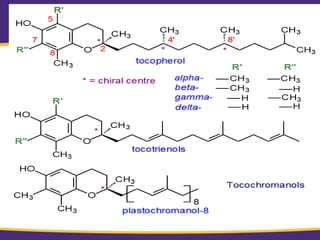
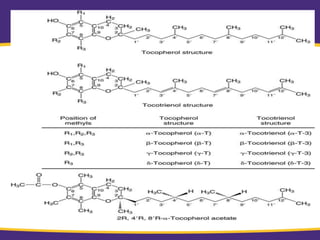
• Vitamin E is the collective term for all of the structurally
related tocopherols and tocotrienols (collectively termed
tocochromanols, or the “vitamers” of vitamin E)
• Vitamin E is the name given to a group of
• tocopherols and tocotrienols. About eight
• tocopherols (vitamin E vitamers) have been
• Identified alpha, beta, gamma, and delta. etc. Among
these,D-tocopherol is the most active. The tocopherols
• are derivatives of 6-hydroxy chromane (tocol)
• ring with isoprenoid (3 units) side chain. The
• antioxidant property is due to the hydroxyl group
• of chromane ring
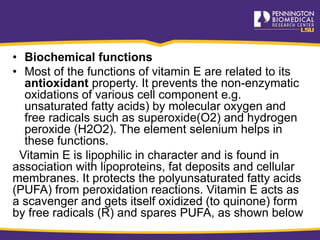
• Biochemical functions
• Most of the functions of vitamin E are related to its
antioxidant property. It prevents the non-enzymatic
oxidations of various cell component e.g.
unsaturated fatty acids) by molecular oxygen and
free radicals such as superoxide(O2) and hydrogen
peroxide (H2O2). The element selenium helps in
these functions.
Vitamin E is lipophilic in character and is found in
association with lipoproteins, fat deposits and cellular
membranes. It protects the polyunsaturated fatty acids
(PUFA) from peroxidation reactions. Vitamin E acts as
a scavenger and gets itself oxidized (to quinone) form
by free radicals (R) and spares PUFA, as shown below
• The biochemical functions of vitamin E,
related either directly or indirectly to its .
antioxidant property, are given hereunder.
01. Vitamin E is essential for the membrane
. structure and integrity of the cell, hence it is
regarded as a membrane antioxidant.
2. It prevents the peroxidation of poly-
unsaturated fatty acids in various tissues and
membranes. It protects RBC from hemolysis by
oxidizing agents (e.g. H2O2).
• 3. It is closely associated with reproductive
functions and prevents sterility. Vitamin E
preserves and maintains germinal epithelium
of gonads for proper reproductive function.
04.Vitamin E prevents the oxidation of
vitamin A and carotenes.
06.Vitamin E is needed for optimal absorption
• of amino acids from the intestine.
07. It is involved in proper synthesis of nucleic
acids.
08. Vitamin E protects liver from being
damaged by toxic compounds such as carbon
tetrachloride.
09. It works in association with vitamins A, C
and E-carotene, to delay the onset of cataract.
• Heart Health: Vitamin E has been associated with a
reduced risk of heart disease. It helps prevent the
oxidation of low-density lipoprotein (LDL) cholesterol,
which is a key step in the development of
atherosclerosis. It may also help improve blood
vessel function and reduce inflammation.
• Vitamin E and selenium
• The element selenium is found in the enzyme
• glutathione peroxidase that destroys free
• radicals. Thus, Se is also involved in antioxidant
• functions like vitamin E, and both of them act
• synergistically. To a certain extent, Se can spare
• the requirement vitamin E, and vice versa.
• Absorption, transport and storage
• Vitamin E is absorbed along with fat in the
• small intestine. Bile salts are necessary for the
• absorption. In the liver, it is incorporated into
• lipoproteins (VLDL and LDL) and transported.
• Vitamin E is stored in adipose tissue, liver and
• muscle. The normal plasma level of tocopherol
• is less than 1 mg/dl.
• Recommended dietary allowance (RDA)
Intake of vitamin E is directly related to the
consumption of polyunsaturated fatty acids
(PUFA) i.e., requirement increases with increased
intake of PUFA. A daily consumption of about
10 mg (15 IU) of D-tocopherol for man and 8 mg
(12 IU) for woman is recommended. One mg of
D-tocopherol is equal to 1.5 IU. Vitamin E
supplemented diet is advised for pregnant and
lactating women.
• Dietary sources
Many vegetable oils are rich sources of
vitamin E. Wheat germ oil, cotton seed oil,
peanut oil, corn oil and sunflower oil are the
good sources of this vitamin. It is also
present in
meat, milk, butter and eggs.
• Deficiency symptoms
The symptoms of vitamin E deficiency vary
from one animal species to another. In many
animals, the deficiency is associated with
sterility, degenerative changes in muscle,
megaloblastic anaemia and changes in central
nervous system. Severe symptoms of vitamin E
deficiency are not seen in humans except
increased fragility of erythrocytes and minor
neurological symptoms.
• Toxicity of vitamin E
Among the fat soluble vitamins (A, D, E, K),
vitamin E is the least toxic. No toxic effect has
been reported even after ingestion of 300 mg/
day for 23 years.

Vitamin E lec.pptx

  • 1.
  • 2.
    • Vitamin E(tocopherol) is a naturally occurring antioxidant. It is essential for normal reproduction in many animals, hence known as anti-sterility vitamin. These compounds possess antioxidant properties and are essential for maintaining the health of various tissues in the body • Evans and his associates (1936) isolated the compounds of vitamin E activity and named them as tocopherols (Greek : tokos-child birth; • pheros-to bear; ol-alcohol.
  • 3.
    • Chemistry: • VitaminE is the collective term for all of the structurally related tocopherols and tocotrienols (collectively termed tocochromanols, or the “vitamers” of vitamin E) • Vitamin E is the name given to a group of • tocopherols and tocotrienols. About eight • tocopherols (vitamin E vitamers) have been • Identified alpha, beta, gamma, and delta. etc. Among these,D-tocopherol is the most active. The tocopherols • are derivatives of 6-hydroxy chromane (tocol) • ring with isoprenoid (3 units) side chain. The • antioxidant property is due to the hydroxyl group • of chromane ring
  • 6.
    • Biochemical functions •Most of the functions of vitamin E are related to its antioxidant property. It prevents the non-enzymatic oxidations of various cell component e.g. unsaturated fatty acids) by molecular oxygen and free radicals such as superoxide(O2) and hydrogen peroxide (H2O2). The element selenium helps in these functions. Vitamin E is lipophilic in character and is found in association with lipoproteins, fat deposits and cellular membranes. It protects the polyunsaturated fatty acids (PUFA) from peroxidation reactions. Vitamin E acts as a scavenger and gets itself oxidized (to quinone) form by free radicals (R) and spares PUFA, as shown below
  • 7.
    • The biochemicalfunctions of vitamin E, related either directly or indirectly to its . antioxidant property, are given hereunder. 01. Vitamin E is essential for the membrane . structure and integrity of the cell, hence it is regarded as a membrane antioxidant. 2. It prevents the peroxidation of poly- unsaturated fatty acids in various tissues and membranes. It protects RBC from hemolysis by oxidizing agents (e.g. H2O2).
  • 8.
    • 3. Itis closely associated with reproductive functions and prevents sterility. Vitamin E preserves and maintains germinal epithelium of gonads for proper reproductive function. 04.Vitamin E prevents the oxidation of vitamin A and carotenes.
  • 9.
    06.Vitamin E isneeded for optimal absorption • of amino acids from the intestine. 07. It is involved in proper synthesis of nucleic acids. 08. Vitamin E protects liver from being damaged by toxic compounds such as carbon tetrachloride. 09. It works in association with vitamins A, C and E-carotene, to delay the onset of cataract.
  • 10.
    • Heart Health:Vitamin E has been associated with a reduced risk of heart disease. It helps prevent the oxidation of low-density lipoprotein (LDL) cholesterol, which is a key step in the development of atherosclerosis. It may also help improve blood vessel function and reduce inflammation. • Vitamin E and selenium • The element selenium is found in the enzyme • glutathione peroxidase that destroys free • radicals. Thus, Se is also involved in antioxidant • functions like vitamin E, and both of them act • synergistically. To a certain extent, Se can spare • the requirement vitamin E, and vice versa.
  • 11.
    • Absorption, transportand storage • Vitamin E is absorbed along with fat in the • small intestine. Bile salts are necessary for the • absorption. In the liver, it is incorporated into • lipoproteins (VLDL and LDL) and transported. • Vitamin E is stored in adipose tissue, liver and • muscle. The normal plasma level of tocopherol • is less than 1 mg/dl.
  • 12.
    • Recommended dietaryallowance (RDA) Intake of vitamin E is directly related to the consumption of polyunsaturated fatty acids (PUFA) i.e., requirement increases with increased intake of PUFA. A daily consumption of about 10 mg (15 IU) of D-tocopherol for man and 8 mg (12 IU) for woman is recommended. One mg of D-tocopherol is equal to 1.5 IU. Vitamin E supplemented diet is advised for pregnant and lactating women.
  • 13.
    • Dietary sources Manyvegetable oils are rich sources of vitamin E. Wheat germ oil, cotton seed oil, peanut oil, corn oil and sunflower oil are the good sources of this vitamin. It is also present in meat, milk, butter and eggs.
  • 14.
    • Deficiency symptoms Thesymptoms of vitamin E deficiency vary from one animal species to another. In many animals, the deficiency is associated with sterility, degenerative changes in muscle, megaloblastic anaemia and changes in central nervous system. Severe symptoms of vitamin E deficiency are not seen in humans except increased fragility of erythrocytes and minor neurological symptoms.
  • 15.
    • Toxicity ofvitamin E Among the fat soluble vitamins (A, D, E, K), vitamin E is the least toxic. No toxic effect has been reported even after ingestion of 300 mg/ day for 23 years.