Downloaded 216 times


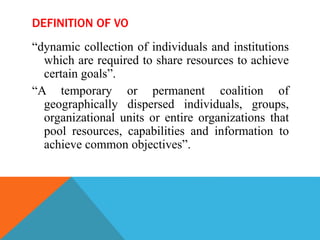
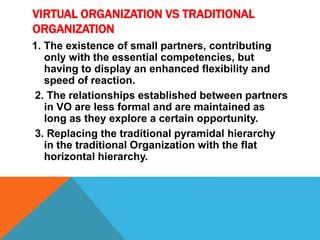
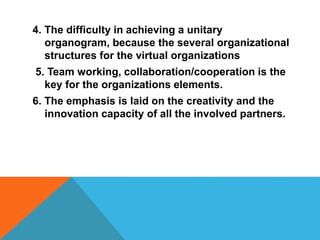
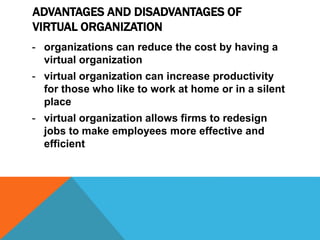


A virtual organization is defined as a temporary or permanent coalition of individuals and groups that pool resources to achieve common goals, without regard to geographical location. Key characteristics include flexible, horizontal hierarchies; emphasis on creativity and innovation; and coordination through trust and shared norms rather than formal processes. Challenges include measuring employee performance and building corporate culture without face-to-face interaction. Effectiveness relies on knowledge sharing, clearly defined processes, trust, and depth of relationships between members. Technology and electronic collaboration tools are essential for communication and coordination in virtual organizations.


