VENEZUELA What can we learn?
MOTIVE: WHY ARE WE STUDYING VENEZUELA It may help us to understand the path to our OBJECTIVE OBJECTIVE  -> Dis-alienation of the producer from the means of production. (Understanding evolving from Marxism – not the direct subject of our discussion)
BASIC PREMISES Democratic mass movements lead to destruction of pre capitalist social order Leading to the creation of capitalism and thus proper working class Marxist forces in a semi feudal society (or society with pre capitalist social structure) thus has the dual responsibility Organizing working class Organizing Democratic mass movements
PERSPECTIVES Role of democratic mass movements in shaping the history of Venezuela Role of Marxist forces in organizing the movement Stage of development of working class Marginalization Limitation
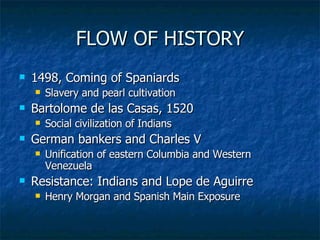
FLOW OF HISTORY 1498, Coming of Spaniards Slavery and pearl cultivation Bartolome de las Casas, 1520 Social civilization of Indians German bankers and Charles V Unification of eastern Columbia and Western Venezuela Resistance: Indians and Lope de Aguirre Henry Morgan and Spanish Main Exposure
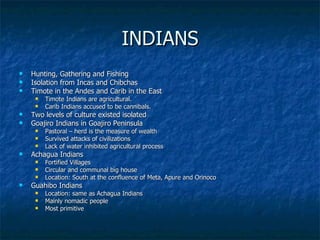
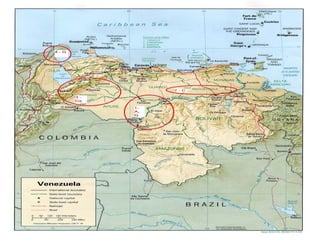
INDIANS Hunting, Gathering and Fishing Isolation from Incas and Chibchas Timote in the Andes and Carib in the East Timote Indians are agricultural.  Carib Indians accused to be cannibals.  Two levels of culture existed isolated Goajiro Indians in Goajiro Peninsula Pastoral – herd is the measure of wealth Survived attacks of civilizations Lack of water inhibited agricultural process Achagua Indians Fortified Villages Circular and communal big house Location: South at the confluence of Meta, Apure and Orinoco Guahibo Indians Location: same as Achagua Indians Mainly nomadic people Most primitive
INDIANS CONTD.
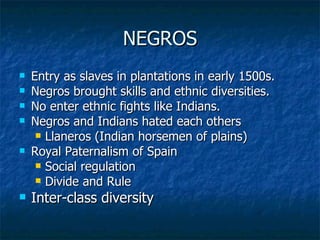
NEGROS Entry as slaves in plantations in early 1500s. Negros brought skills and ethnic diversities. No enter ethnic fights like Indians. Negros and Indians hated each others Llaneros (Indian horsemen of plains) Royal Paternalism of Spain Social regulation Divide and Rule Inter-class diversity
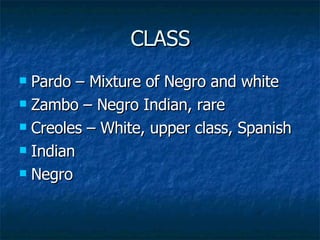
CLASS Pardo – Mixture of Negro and white Zambo – Negro Indian, rare Creoles – White, upper class, Spanish Indian  Negro
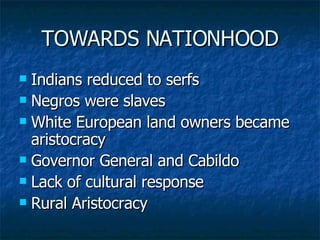
TOWARDS NATIONHOOD Indians reduced to serfs Negros were slaves White European land owners became aristocracy Governor General and Cabildo Lack of cultural response Rural Aristocracy
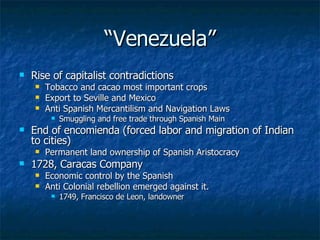
“ Venezuela” Rise of capitalist contradictions Tobacco and cacao most important crops Export to Seville and Mexico Anti Spanish Mercantilism and Navigation Laws Smuggling and free trade through Spanish Main End of encomienda (forced labor and migration of Indian to cities) Permanent land ownership of Spanish Aristocracy 1728, Caracas Company Economic control by the Spanish Anti Colonial rebellion emerged against it. 1749, Francisco de Leon, landowner
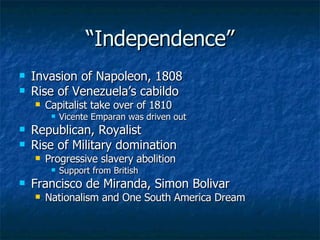
“ Independence” Invasion of Napoleon, 1808 Rise of Venezuela’s cabildo Capitalist take over of 1810 Vicente Emparan was driven out Republican, Royalist Rise of Military domination Progressive slavery abolition Support from British Francisco de Miranda, Simon Bolivar Nationalism and One South America Dream
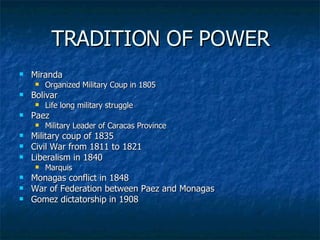
TRADITION OF POWER Miranda Organized Military Coup in 1805 Bolivar Life long military struggle Paez Military Leader of Caracas Province Military coup of 1835 Civil War from 1811 to 1821 Liberalism in 1840 Marquis Monagas conflict in 1848 War of Federation between Paez and Monagas Gomez dictatorship in 1908
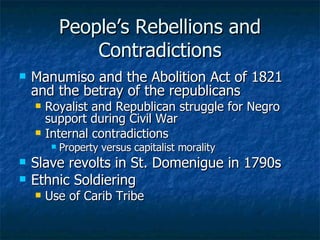
People’s Rebellions and Contradictions Manumiso and the Abolition Act of 1821 and the betray of the republicans Royalist and Republican struggle for Negro support during Civil War Internal contradictions Property versus capitalist morality Slave revolts in St. Domenigue in 1790s Ethnic Soldiering Use of Carib Tribe
MAKING OF WORKING CLASS Oil Factor

Venezuela

  • 1.
  • 2.
    MOTIVE: WHY AREWE STUDYING VENEZUELA It may help us to understand the path to our OBJECTIVE OBJECTIVE -> Dis-alienation of the producer from the means of production. (Understanding evolving from Marxism – not the direct subject of our discussion)
  • 3.
    BASIC PREMISES Democraticmass movements lead to destruction of pre capitalist social order Leading to the creation of capitalism and thus proper working class Marxist forces in a semi feudal society (or society with pre capitalist social structure) thus has the dual responsibility Organizing working class Organizing Democratic mass movements
  • 4.
    PERSPECTIVES Role ofdemocratic mass movements in shaping the history of Venezuela Role of Marxist forces in organizing the movement Stage of development of working class Marginalization Limitation
  • 5.
    FLOW OF HISTORY1498, Coming of Spaniards Slavery and pearl cultivation Bartolome de las Casas, 1520 Social civilization of Indians German bankers and Charles V Unification of eastern Columbia and Western Venezuela Resistance: Indians and Lope de Aguirre Henry Morgan and Spanish Main Exposure
  • 6.
    INDIANS Hunting, Gatheringand Fishing Isolation from Incas and Chibchas Timote in the Andes and Carib in the East Timote Indians are agricultural. Carib Indians accused to be cannibals. Two levels of culture existed isolated Goajiro Indians in Goajiro Peninsula Pastoral – herd is the measure of wealth Survived attacks of civilizations Lack of water inhibited agricultural process Achagua Indians Fortified Villages Circular and communal big house Location: South at the confluence of Meta, Apure and Orinoco Guahibo Indians Location: same as Achagua Indians Mainly nomadic people Most primitive
  • 7.
  • 8.
    NEGROS Entry asslaves in plantations in early 1500s. Negros brought skills and ethnic diversities. No enter ethnic fights like Indians. Negros and Indians hated each others Llaneros (Indian horsemen of plains) Royal Paternalism of Spain Social regulation Divide and Rule Inter-class diversity
  • 9.
    CLASS Pardo –Mixture of Negro and white Zambo – Negro Indian, rare Creoles – White, upper class, Spanish Indian Negro
  • 10.
    TOWARDS NATIONHOOD Indiansreduced to serfs Negros were slaves White European land owners became aristocracy Governor General and Cabildo Lack of cultural response Rural Aristocracy
  • 11.
    “ Venezuela” Riseof capitalist contradictions Tobacco and cacao most important crops Export to Seville and Mexico Anti Spanish Mercantilism and Navigation Laws Smuggling and free trade through Spanish Main End of encomienda (forced labor and migration of Indian to cities) Permanent land ownership of Spanish Aristocracy 1728, Caracas Company Economic control by the Spanish Anti Colonial rebellion emerged against it. 1749, Francisco de Leon, landowner
  • 12.
    “ Independence” Invasionof Napoleon, 1808 Rise of Venezuela’s cabildo Capitalist take over of 1810 Vicente Emparan was driven out Republican, Royalist Rise of Military domination Progressive slavery abolition Support from British Francisco de Miranda, Simon Bolivar Nationalism and One South America Dream
  • 13.
    TRADITION OF POWERMiranda Organized Military Coup in 1805 Bolivar Life long military struggle Paez Military Leader of Caracas Province Military coup of 1835 Civil War from 1811 to 1821 Liberalism in 1840 Marquis Monagas conflict in 1848 War of Federation between Paez and Monagas Gomez dictatorship in 1908
  • 14.
    People’s Rebellions andContradictions Manumiso and the Abolition Act of 1821 and the betray of the republicans Royalist and Republican struggle for Negro support during Civil War Internal contradictions Property versus capitalist morality Slave revolts in St. Domenigue in 1790s Ethnic Soldiering Use of Carib Tribe
  • 15.
    MAKING OF WORKINGCLASS Oil Factor