Value Driven Regulatory Use Case Simulation
Aaron Benningfield, PMP
208.585.1798
aaron.b.benningfield@outlook.com
For Further Discussion Please Contact:
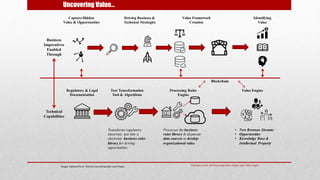
Uncovering Value…
*Operates across the Processing Rules Engine and Value EngineImages captured from: flaticon.com and google.com/images
Business
Imperatives
Enabled
Through
Technical
Capabilities
Regulatory & Legal
Documentation
Text Transformation
Tool & Algorithms
Processing Rules
Engine
Value Engine
Transforms regulatory
electronic text into a
electronic business rules
library for driving
opportunities.
Processes the business
rules library & disparate
data sources to develop
organizational value.
• New Revenue Streams
• Opportunities
• Knowledge Base &
Intellectual Property
CaptureHidden
Value & Opportunities
Driving Business &
Technical Strategies
Value Framework
Creation
Identifying
Value
Blockchain
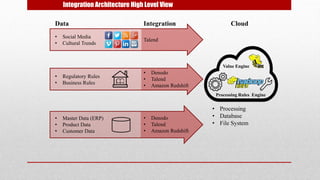
• Social Media
• Cultural Trends
• Regulatory Rules
• Business Rules
• Master Data (ERP)
• Product Data
• Customer Data
Data Integration
Talend
• Denodo
• Talend
• Amazon Redshift
Cloud
• Processing
• Database
• File System
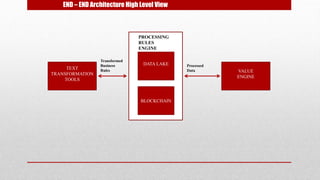
Processing Rules Engine
Value Engine
Integration Architecture High Level View
• Denodo
• Talend
• Amazon Redshift
TEXT
TRANSFORMATION
TOOLS
Transformed
Business
Rules
DATA LAKE
BLOCKCHAIN
PROCESSING
RULES
ENGINE
VALUE
ENGINE
Processed
Data
END – END Architecture High Level View
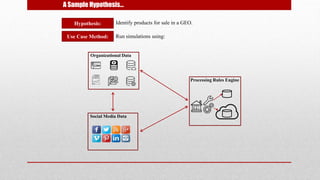
A Sample Hypothesis…
Hypothesis: Identify products for sale in a GEO.
Use Case Method: Run simulations using:
Processing Rules Engine
Social Media Data
Organizational Data
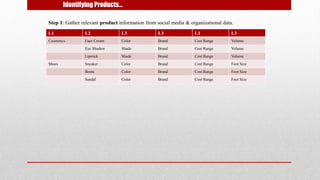
Step 1: Gather relevant product information from social media & organizational data.
Identifying Products…
L1 L2 L3 L3 L3 L3
Cosmetics Face Cream Color Brand Cost Range Volume
Eye Shadow Shade Brand Cost Range Volume
Lipstick Shade Brand Cost Range Volume
Shoes Sneaker Color Brand Cost Range Foot Size
Boots Color Brand Cost Range Foot Size
Sandal Color Brand Cost Range Foot Size
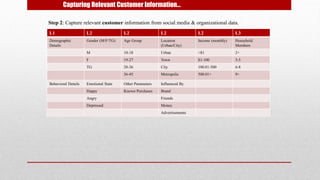
Step 2: Capture relevant customer information from social media & organizational data.
Capturing Relevant Customer Information…
L1 L2 L2 L2 L2 L3
Demographic
Details
Gender (M/F/TG) Age Group Location
(Urban/City)
Income (monthly) Household
Members
M 10-18 Urban >$1 2+
F 19-27 Town $1-100 3-5
TG 28-36 City 100.01-500 6-8
36-45 Metropolis 500.01+ 9+
Behavioral Details Emotional State Other Parameters Influenced By
Happy Known Purchases Brand
Angry Friends
Depressed Money
Advertisements
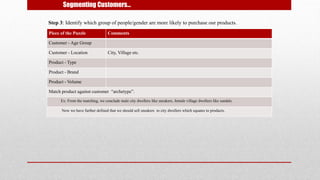
Piece of the Puzzle Comments
Customer - Age Group
Customer - Location City, Village etc.
Product - Type
Product - Brand
Product - Volume
Match product against customer “archetype”.
Ex: From the matching, we conclude male city dwellers like sneakers, female village dwellers like sandals.
Now we have further defined that we should sell sneakers to city dwellers which equates to products.
Step 3: Identify which group of people/gender are more likely to purchase our products.
Segmenting Customers…
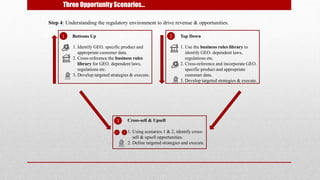
Step 4: Understanding the regulatory environment to drive revenue & opportunities.
Three Opportunity Scenarios…
1. Identify GEO. specific product and
appropriate customer data.
2. Cross-reference the business rules
library for GEO. dependent laws,
regulations etc.
3. Develop targeted strategies & execute.
Bottoms Up1
1. Use the business rules library to
identify GEO. dependent laws,
regulations etc.
2. Cross-reference and incorporate GEO.
specific product and appropriate
customer data.
3. Develop targeted strategies & execute.
Top Down2
Cross-sell & Upsell3
1. Using scenarios 1 & 2, identify cross-
sell & upsell opportunities.
2. Define targeted strategies and execute.
1 2
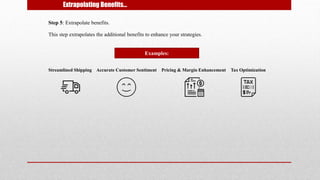
Step 5: Extrapolate benefits.
This step extrapolates the additional benefits to enhance your strategies.
Extrapolating Benefits…
Examples:
Streamlined Shipping Accurate Customer Sentiment Pricing & Margin Enhancement Tax Optimization
Follow Up?
Please Feel Free to Contact:
• Aaron Benningfield, PMP
• 208.585.1798
• aaron.b.benningfield@outlook.com

Value Driven Regulatory Use Case Simulation

  • 1.
    Value Driven RegulatoryUse Case Simulation Aaron Benningfield, PMP 208.585.1798 aaron.b.benningfield@outlook.com For Further Discussion Please Contact:
  • 2.
    Uncovering Value… *Operates acrossthe Processing Rules Engine and Value EngineImages captured from: flaticon.com and google.com/images Business Imperatives Enabled Through Technical Capabilities Regulatory & Legal Documentation Text Transformation Tool & Algorithms Processing Rules Engine Value Engine Transforms regulatory electronic text into a electronic business rules library for driving opportunities. Processes the business rules library & disparate data sources to develop organizational value. • New Revenue Streams • Opportunities • Knowledge Base & Intellectual Property CaptureHidden Value & Opportunities Driving Business & Technical Strategies Value Framework Creation Identifying Value Blockchain
  • 3.
    • Social Media •Cultural Trends • Regulatory Rules • Business Rules • Master Data (ERP) • Product Data • Customer Data Data Integration Talend • Denodo • Talend • Amazon Redshift Cloud • Processing • Database • File System Processing Rules Engine Value Engine Integration Architecture High Level View • Denodo • Talend • Amazon Redshift
  • 4.
  • 5.
    A Sample Hypothesis… Hypothesis:Identify products for sale in a GEO. Use Case Method: Run simulations using: Processing Rules Engine Social Media Data Organizational Data
  • 6.
    Step 1: Gatherrelevant product information from social media & organizational data. Identifying Products… L1 L2 L3 L3 L3 L3 Cosmetics Face Cream Color Brand Cost Range Volume Eye Shadow Shade Brand Cost Range Volume Lipstick Shade Brand Cost Range Volume Shoes Sneaker Color Brand Cost Range Foot Size Boots Color Brand Cost Range Foot Size Sandal Color Brand Cost Range Foot Size
  • 7.
    Step 2: Capturerelevant customer information from social media & organizational data. Capturing Relevant Customer Information… L1 L2 L2 L2 L2 L3 Demographic Details Gender (M/F/TG) Age Group Location (Urban/City) Income (monthly) Household Members M 10-18 Urban >$1 2+ F 19-27 Town $1-100 3-5 TG 28-36 City 100.01-500 6-8 36-45 Metropolis 500.01+ 9+ Behavioral Details Emotional State Other Parameters Influenced By Happy Known Purchases Brand Angry Friends Depressed Money Advertisements
  • 8.
    Piece of thePuzzle Comments Customer - Age Group Customer - Location City, Village etc. Product - Type Product - Brand Product - Volume Match product against customer “archetype”. Ex: From the matching, we conclude male city dwellers like sneakers, female village dwellers like sandals. Now we have further defined that we should sell sneakers to city dwellers which equates to products. Step 3: Identify which group of people/gender are more likely to purchase our products. Segmenting Customers…
  • 9.
    Step 4: Understandingthe regulatory environment to drive revenue & opportunities. Three Opportunity Scenarios… 1. Identify GEO. specific product and appropriate customer data. 2. Cross-reference the business rules library for GEO. dependent laws, regulations etc. 3. Develop targeted strategies & execute. Bottoms Up1 1. Use the business rules library to identify GEO. dependent laws, regulations etc. 2. Cross-reference and incorporate GEO. specific product and appropriate customer data. 3. Develop targeted strategies & execute. Top Down2 Cross-sell & Upsell3 1. Using scenarios 1 & 2, identify cross- sell & upsell opportunities. 2. Define targeted strategies and execute. 1 2
  • 10.
    Step 5: Extrapolatebenefits. This step extrapolates the additional benefits to enhance your strategies. Extrapolating Benefits… Examples: Streamlined Shipping Accurate Customer Sentiment Pricing & Margin Enhancement Tax Optimization
  • 11.
    Follow Up? Please FeelFree to Contact: • Aaron Benningfield, PMP • 208.585.1798 • aaron.b.benningfield@outlook.com