UTILITARIANIS
M
Comes from the word utility (the state of being
useful)
What is UTILITARIANISM?
● Prescribes actions that are useful in getting ‘maximum
pleasure or happiness for maximum people.’
● Found in 1789 by JEREMY BENTHAM in the book,
‘An Introduction to the Principles of Morals and
Legislations.’ [later modified
by JOHN STUART MILL in 1863 in the book
‘Utilitarianism’]
● Branch of the theory of CONSEQUENTIALISM.
● First worked upon by philosophers like Aristippus,
Epicurus, Shantideva.
Principles of Utilitarianism
Pleasure or happiness is the only thing that has intrinsic
value.
Actions are right if they produce happiness, wrong if they
produce unhappiness.
Everyone’s happiness counts equally.
Mill said that both quality and quantity of the pleasure is to be
considered, as opposed to Bentham’s consideration of
quantity (hedonic calculus).
Collectively known as ACT UTILITARIANISM.
Deviations from Act Utilitarianism
RULE UTILITARIANISM : an action is right as long it conforms to a
rule. (eg. Stopping at a red light)
NEGATIVE UTILITARIANISM : an action that gives maximum pain
instead of pleasure
Total utilitarianism, average utilitarianism, preference utilitarianism,
motive utilitarianism, etc
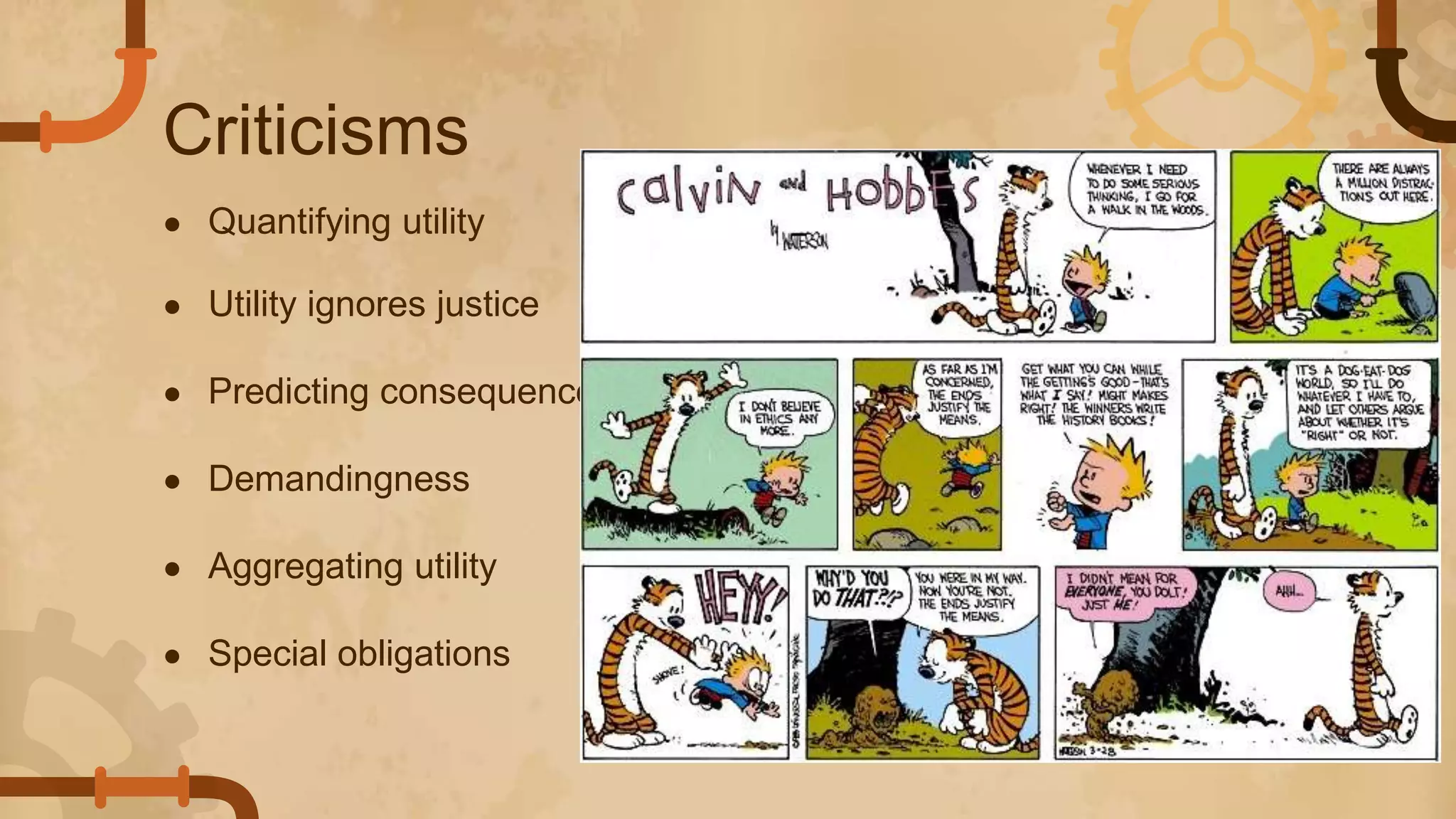
Criticisms
● Quantifying utility
● Utility ignores justice
● Predicting consequences
● Demandingness
● Aggregating utility
● Special obligations
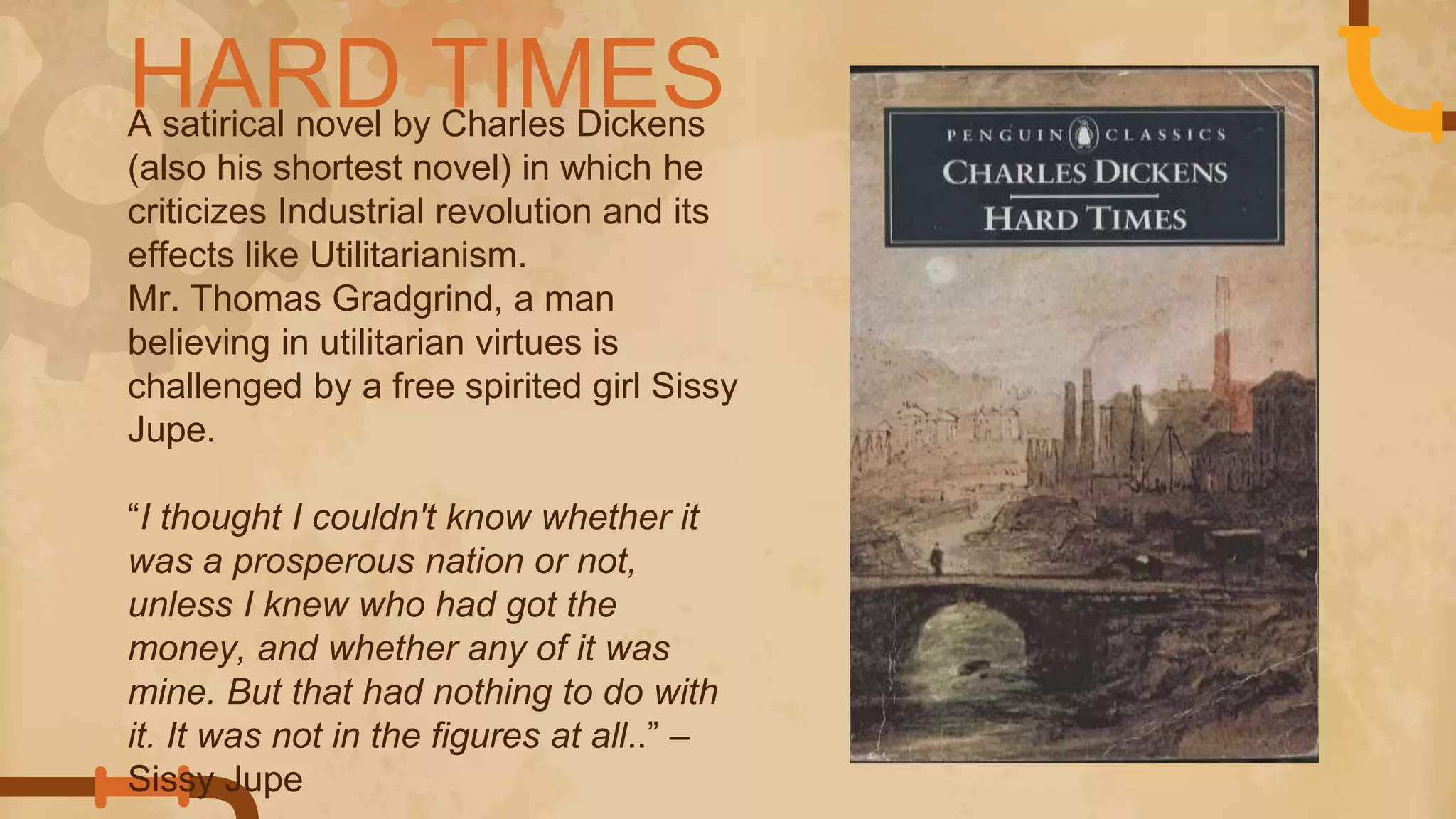
HARD TIMES
A satirical novel by Charles Dickens
(also his shortest novel) in which he
criticizes Industrial revolution and its
effects like Utilitarianism.
Mr. Thomas Gradgrind, a man
believing in utilitarian virtues is
challenged by a free spirited girl Sissy
Jupe.
“I thought I couldn't know whether it
was a prosperous nation or not,
unless I knew who had got the
money, and whether any of it was
mine. But that had nothing to do with
it. It was not in the figures at all..” –
Sissy Jupe
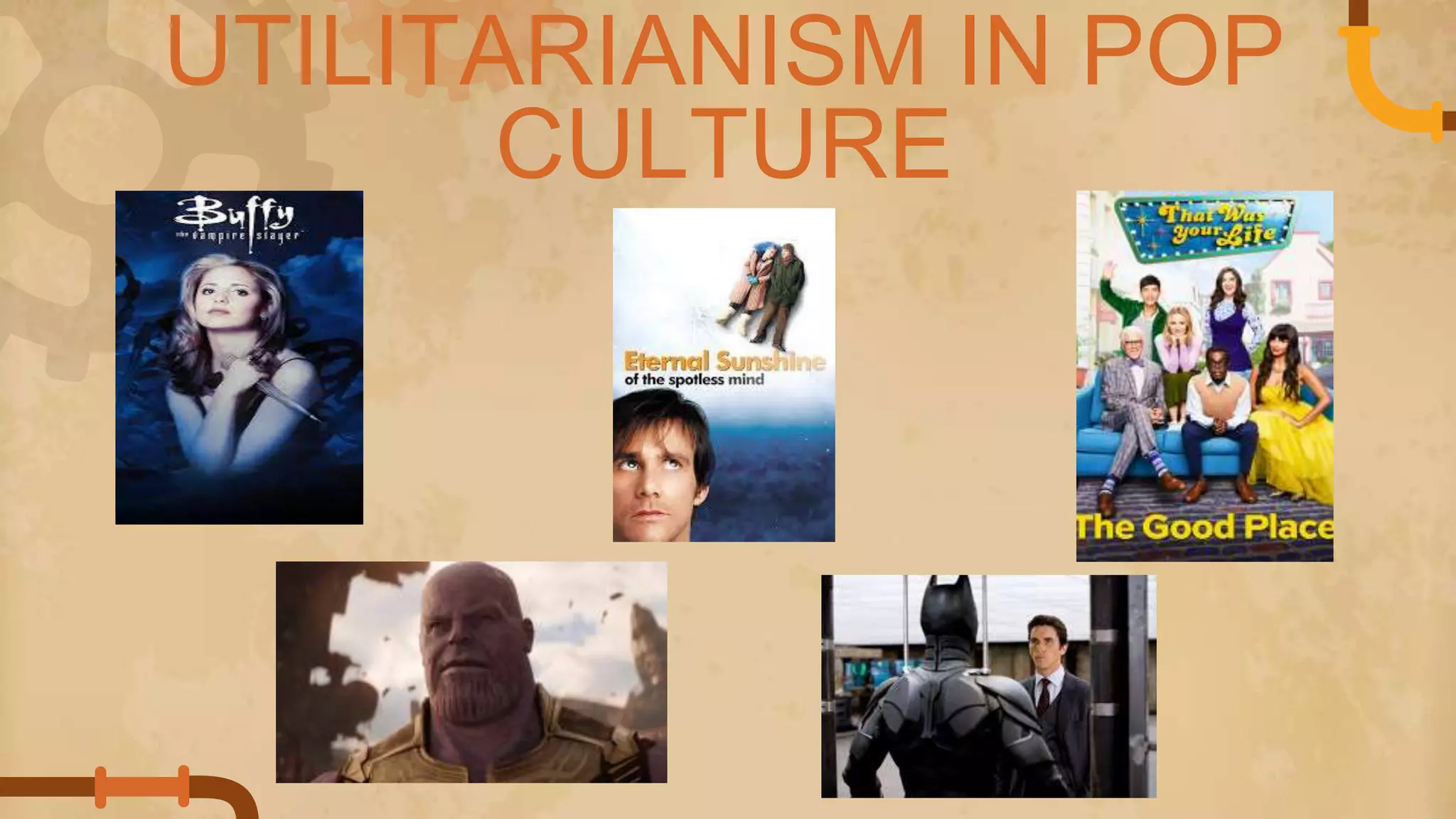
UTILITARIANISM IN POP
CULTURE
CREDITS: This presentation template was created
by Slidesgo, including icons by Flaticon,
infographics & images by Freepik and illustrations by
Stories
THANK
YOU

Utilitarianism

  • 1.
    UTILITARIANIS M Comes from theword utility (the state of being useful)
  • 2.
    What is UTILITARIANISM? ●Prescribes actions that are useful in getting ‘maximum pleasure or happiness for maximum people.’ ● Found in 1789 by JEREMY BENTHAM in the book, ‘An Introduction to the Principles of Morals and Legislations.’ [later modified by JOHN STUART MILL in 1863 in the book ‘Utilitarianism’] ● Branch of the theory of CONSEQUENTIALISM. ● First worked upon by philosophers like Aristippus, Epicurus, Shantideva.
  • 3.
    Principles of Utilitarianism Pleasureor happiness is the only thing that has intrinsic value. Actions are right if they produce happiness, wrong if they produce unhappiness. Everyone’s happiness counts equally. Mill said that both quality and quantity of the pleasure is to be considered, as opposed to Bentham’s consideration of quantity (hedonic calculus). Collectively known as ACT UTILITARIANISM.
  • 4.
    Deviations from ActUtilitarianism RULE UTILITARIANISM : an action is right as long it conforms to a rule. (eg. Stopping at a red light) NEGATIVE UTILITARIANISM : an action that gives maximum pain instead of pleasure Total utilitarianism, average utilitarianism, preference utilitarianism, motive utilitarianism, etc
  • 5.
    Criticisms ● Quantifying utility ●Utility ignores justice ● Predicting consequences ● Demandingness ● Aggregating utility ● Special obligations
  • 6.
    HARD TIMES A satiricalnovel by Charles Dickens (also his shortest novel) in which he criticizes Industrial revolution and its effects like Utilitarianism. Mr. Thomas Gradgrind, a man believing in utilitarian virtues is challenged by a free spirited girl Sissy Jupe. “I thought I couldn't know whether it was a prosperous nation or not, unless I knew who had got the money, and whether any of it was mine. But that had nothing to do with it. It was not in the figures at all..” – Sissy Jupe
  • 7.
  • 8.
    CREDITS: This presentationtemplate was created by Slidesgo, including icons by Flaticon, infographics & images by Freepik and illustrations by Stories THANK YOU