Teaching skills: How to develop and keep
the momentum going

Using technologies for authentic learning
Daniela Gachago, Educational Technology Unit, Fundani
Veronica Barnes, Industrial Design, Faculty of Informatics and Design
Cape Peninsula University of Technology
What is your biggest
challenge when it
comes to your
students’ learning?
-> discuss with the person next to you (BUZZ)
New generation of students…
• My computer is the nucleus of my workspace
• When I need information I go online
• Besides IM or email my cell phone is my primary method of
  communication
• I’m usually juggling five things at once
• My attention span is very small
• I want instant gratification
• I get bored very easily       Oblinger 2008
Lack of class participation


                                          Lack of student engagement
Under-preparedness


                                                       Linking
                                                       theory and
                                                       practice


 Graduate attributes / 21st century skills?

                       How to make learning relevant?????
Trends Horizon Report 2012


                      Johnson et al. 2012
What staff are using…
What are students using?
How do we
bridge the gap?
Flipped classroom
Anton Thiart, Civil Engineering


  Link to video
Clickers
Mazur Sequence


“You can forget facts but you cannot forget understanding”
                  Prof. Eric Mazur, Harvard
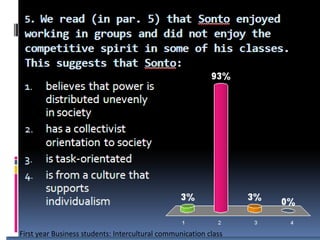
First year Business students: Intercultural communication class
VERONICA BARNES PRESENTATION
Authentic learning
• Main authors: Jan and
  Anthony Herrington,
  Christopher Reeves
• Origins: University of
  Wollongong, Australia
• Critique for current HE
  – prevalence of academic, de-
    contextualised exercises, that
    make it difficult for students to
    transfer the knowledge from
    formal education into their
    future workplace
Authentic learning
• Learning where students are situated in
  authentic learning contexts and where they
  are exposed to learning activities that are as
  close as possible to problems they will
  encounter in their real world professional
  context
• ‘centred on rich, real-world, immersive and
  engaging tasks’ (Herrington & Herrington,
  2006: x)
Authentic learning dimensions
1. Authentic contexts
2. Authentic activities
3. Access to expert performances
4. Multiple roles and perspectives
5. Collaboration
6. Opportunities for reflection
7. Opportunities for articulation – authentic
   audience
8. Coaching and scaffolding
9. Authentic assessment
                                 Herrington and Herrington 2006
Lecturer: “The best thing a film where two students had gone to
Newlands Forest: they literally walked until they found the burr
to film. Previously you would get a diagram and later you could
show students a burr and ask them what that is and they
wouldn’t know…because the disconnect between the diagram
and the actual thing was huge... but for this project they actually
went out into a forest and found one on a tree ... they will never
forget what that is.”


                                    Student B: “Actually researching it ourselves
                                    and then almost going through the process
                                    physically you learn a lot better sometimes
                                    especially the way people learn differently -
                                    sometimes you learn better like that and
                                    actually physically understanding what a
                                    season is for example as opposed to you
                                    writing up an essay about that. ”
Student A : “The whole time in the production of the
movie you will have the idea that the whole class is going
to see it so it’s from a different perspective than say
you’re writing an essay just for one lecture… so you’re
much more involved and intrigued and I think that's what
makes it fun and to have the response of the class
afterwards.”

Student B: “I just wanted to say is something that I think
you have the audience in mind throughout the production
which made it a little bit different than your essay”
Development of portable skills
• The judgment to distinguish reliable from
  unreliable information
• The patience to follow longer arguments
• The synthetic ability to recognize relevant
  patterns in unfamiliar contexts
• The flexibility to work across disciplinary and
  cultural boundaries to generate innovative
  solutions
                                  Lombardi and Oblinger 2007
2011 CPUT graduate attributes
• Our students should be
   1. Technologically adept both in the ability to use
      technology and in the capacity to apply knowledge in
      real life issues
   2. Eminently employable because they have a solid
      disciplinary knowledge base and the capabilities to apply
      this knowledge
   3. Socially responsive in the sense that they should be
      aware of the important social issues in SA and be able to
      apply their knowledge and skills to address social needs
   4. Innovative in their thinking and actions
   5. Environmentally conscious.
• Educational researchers have found that students
  involved in authentic learning are motivated to
  persevere despite initial disorientation or frustration,
  as long as the exercise simulates what really counts—
  the social structure and culture that gives the discipline
  its meaning and relevance. The learning event
  essentially encourages students to compare their
  personal interests with those of a working disciplinary
  community: “Can I see myself becoming a member of
  this culture? What would motivate me? What would
  concern me? How would I work with the people
  around me? How would I make a difference?”

                                        Lombardi and Oblinger 2007, 4
How authentic is the
current CISCO
curriculum?
Buzz
What are industry’s
expectations?
Questions?
Acknowledgements
• Fundani, CPUT lecturers and students
• www.edutechcput.wordpress.com
References
• Herrington, T., & Herrington, J. (2006). Authentic learning
  environments in Higher Education. Hershey PA: Information Science
  Publishing.
• Johnson, L. (2012). NMC Horizon Project Preview 2012 Higher
  Education Edition. Higher Education. Retrieved from
  http://www.nmc.org/publications/horizon-report-2012-higher-ed-
  edition
• Lombardi, M. M., & Oblinger, D. G. (2007). Authentic Learning for
  the 21st Century: An Overview. EducauseLearningInitiative.
  Retrieved from http://net.educause.edu/ir/library/pdf/ELI3009.pdf
• Oblinger, D. G. (2008). Emerging technologies for learning: Growing
  up with Google, What it means to education. I Can (Vol. 3).
  Retrieved from
  http://hcvs.wikispaces.com/file/view/Growing+Up+With+Google.p
  df
Using technologies for authentic learning

Using technologies for authentic learning

  • 1.
    Teaching skills: Howto develop and keep the momentum going Using technologies for authentic learning Daniela Gachago, Educational Technology Unit, Fundani Veronica Barnes, Industrial Design, Faculty of Informatics and Design Cape Peninsula University of Technology
  • 2.
    What is yourbiggest challenge when it comes to your students’ learning? -> discuss with the person next to you (BUZZ)
  • 4.
    New generation ofstudents… • My computer is the nucleus of my workspace • When I need information I go online • Besides IM or email my cell phone is my primary method of communication • I’m usually juggling five things at once • My attention span is very small • I want instant gratification • I get bored very easily Oblinger 2008
  • 5.
    Lack of classparticipation Lack of student engagement Under-preparedness Linking theory and practice Graduate attributes / 21st century skills? How to make learning relevant?????
  • 6.
    Trends Horizon Report2012 Johnson et al. 2012
  • 7.
  • 8.
  • 9.
  • 11.
  • 13.
    Anton Thiart, CivilEngineering Link to video
  • 14.
  • 15.
    Mazur Sequence “You canforget facts but you cannot forget understanding” Prof. Eric Mazur, Harvard
  • 16.
    First year Businessstudents: Intercultural communication class
  • 17.
    First year Businessstudents: Intercultural communication class
  • 19.
  • 20.
    Authentic learning • Mainauthors: Jan and Anthony Herrington, Christopher Reeves • Origins: University of Wollongong, Australia • Critique for current HE – prevalence of academic, de- contextualised exercises, that make it difficult for students to transfer the knowledge from formal education into their future workplace
  • 21.
    Authentic learning • Learningwhere students are situated in authentic learning contexts and where they are exposed to learning activities that are as close as possible to problems they will encounter in their real world professional context • ‘centred on rich, real-world, immersive and engaging tasks’ (Herrington & Herrington, 2006: x)
  • 22.
    Authentic learning dimensions 1.Authentic contexts 2. Authentic activities 3. Access to expert performances 4. Multiple roles and perspectives 5. Collaboration 6. Opportunities for reflection 7. Opportunities for articulation – authentic audience 8. Coaching and scaffolding 9. Authentic assessment Herrington and Herrington 2006
  • 23.
    Lecturer: “The bestthing a film where two students had gone to Newlands Forest: they literally walked until they found the burr to film. Previously you would get a diagram and later you could show students a burr and ask them what that is and they wouldn’t know…because the disconnect between the diagram and the actual thing was huge... but for this project they actually went out into a forest and found one on a tree ... they will never forget what that is.” Student B: “Actually researching it ourselves and then almost going through the process physically you learn a lot better sometimes especially the way people learn differently - sometimes you learn better like that and actually physically understanding what a season is for example as opposed to you writing up an essay about that. ”
  • 24.
    Student A :“The whole time in the production of the movie you will have the idea that the whole class is going to see it so it’s from a different perspective than say you’re writing an essay just for one lecture… so you’re much more involved and intrigued and I think that's what makes it fun and to have the response of the class afterwards.” Student B: “I just wanted to say is something that I think you have the audience in mind throughout the production which made it a little bit different than your essay”
  • 25.
    Development of portableskills • The judgment to distinguish reliable from unreliable information • The patience to follow longer arguments • The synthetic ability to recognize relevant patterns in unfamiliar contexts • The flexibility to work across disciplinary and cultural boundaries to generate innovative solutions Lombardi and Oblinger 2007
  • 26.
    2011 CPUT graduateattributes • Our students should be 1. Technologically adept both in the ability to use technology and in the capacity to apply knowledge in real life issues 2. Eminently employable because they have a solid disciplinary knowledge base and the capabilities to apply this knowledge 3. Socially responsive in the sense that they should be aware of the important social issues in SA and be able to apply their knowledge and skills to address social needs 4. Innovative in their thinking and actions 5. Environmentally conscious.
  • 27.
    • Educational researchershave found that students involved in authentic learning are motivated to persevere despite initial disorientation or frustration, as long as the exercise simulates what really counts— the social structure and culture that gives the discipline its meaning and relevance. The learning event essentially encourages students to compare their personal interests with those of a working disciplinary community: “Can I see myself becoming a member of this culture? What would motivate me? What would concern me? How would I work with the people around me? How would I make a difference?” Lombardi and Oblinger 2007, 4
  • 29.
    How authentic isthe current CISCO curriculum? Buzz
  • 31.
  • 33.
  • 34.
    Acknowledgements • Fundani, CPUTlecturers and students • www.edutechcput.wordpress.com
  • 35.
    References • Herrington, T.,& Herrington, J. (2006). Authentic learning environments in Higher Education. Hershey PA: Information Science Publishing. • Johnson, L. (2012). NMC Horizon Project Preview 2012 Higher Education Edition. Higher Education. Retrieved from http://www.nmc.org/publications/horizon-report-2012-higher-ed- edition • Lombardi, M. M., & Oblinger, D. G. (2007). Authentic Learning for the 21st Century: An Overview. EducauseLearningInitiative. Retrieved from http://net.educause.edu/ir/library/pdf/ELI3009.pdf • Oblinger, D. G. (2008). Emerging technologies for learning: Growing up with Google, What it means to education. I Can (Vol. 3). Retrieved from http://hcvs.wikispaces.com/file/view/Growing+Up+With+Google.p df

Editor's Notes

  • #4 Press F5 or enter presentation mode to view the poll\r\nIn an emergency during your presentation, if the poll isn't showing, navigate to this link in your web browser:\r\nhttp://www.polleverywhere.com/free_text_polls/MjA4NzY1NjA4MQIf you like, you can use this slide as a template for your own voting slides. You might use a slide like this if you feel your audience would benefit from the picture showing a text message on a phone.
  • #8 Radical change Is needed in the design and delivery of teaching if HEIs are to be ‘fit for purpose’ for the 21st Century (Bates & Sangra, 2011:4)‘Recognizing the fact that learning is a lifelong process that occurs naturally outside of the classroom, designers are advised to designopportunities for activities that allow learners to engage with course-related topics outside of the classroom. Such activities should occur in open-ended learning environments that allow for learner flexibility, self-direction, and student-centered control of learning (Land & Hannafin,1996), to accommodate learner interests. For instance, introducing learners to communities of practice should be an integral part of higher education curricula’. Veletsianos, 2011)‘transformative learning experiences cannot be “imposed” on learners. Parrish and Wilson (this issue) make a similar argument when they claim that “deeper forms of learning can’t just be made to happen; they are invited, and encouraged, and facilitated. Experience, after all is largely a subjective thing – it’s how real people encounter their worlds, not how they should respond or what the materials are meant to do to them.” This paper is grounded on a similar premise, as technology has been described as an agent of change, as a way to provideopportunities for transformation while sculpting pedagogical practice. Second, since it is not possible to construct transformative experiences but, to provide opportunities for transformation, these learning experiences are bound to encompass unknown outcomes. In other words, the outcomes associated with these opportunities may or may not be transformational. Consequently, the outcomes of opportunities for transformation do not lend themselves well to being evaluated using pre-defined objectives. An added complexity relates to the definition of the term transformation as a personally fulfilling and meaningful outcome. If transformation is a personalized, it is difficult to assess it based on pre-established guidelines. Indeed, individualized assessment may be the only meaningful approach available to evaluate transformative learning.’ (Velestianos,2011)
  • #9 Parry, W., “School orders students to remove blogs”. USA Today, 26/10/2005. Downloaded from: http://www.usatoday.com/tech/news/techpolicy/2005-10-26-school-bans-blogs_x.htmThe over-adoption of tools can lead to what has been termed ‘creepy tree house’ syndrome (Stein 2008) when authority is seen to try and invade a young person's social space. There is strong resistance from students to universities and lecturers making formal use of social networks as this is seen as an invasion of their social space (e.g. Madge 2009). When parents and professors start inhabiting these spaces it creates a role conflict (Selwyn 2009) for students, as they struggle to know which face to present and find their communication stifled. These tools may have significant potential for learning, but students don't want them to become the next LMS: organisationally controlled, bland and singular in focus (i.e. teaching). For the teaching function of scholarship then the question is ‘How can educators utilise the potential of these tools without destroying what makes them valuable to students?’ Weller,2011:
  • #31 Press F5 or enter presentation mode to view the poll\r\nIn an emergency during your presentation, if the poll isn't showing, navigate to this link in your web browser:\r\nhttp://www.polleverywhere.com/multiple_choice_polls/ODA1MDI3MzE1If you like, you can use this slide as a template for your own voting slides. You might use a slide like this if you feel your audience would benefit from the picture showing a text message on a phone.
  • #33 Press F5 or enter presentation mode to view the poll\r\nIn an emergency during your presentation, if the poll isn't showing, navigate to this link in your web browser:\r\nhttp://www.polleverywhere.com/free_text_polls/Nzg3MTY2NDA4If you like, you can use this slide as a template for your own voting slides. You might use a slide like this if you feel your audience would benefit from the picture showing a text message on a phone.